Category: Dance

  • Boston Ballet @ Lincoln Center

    10492224_10152189404857607_7335500118768821092_n

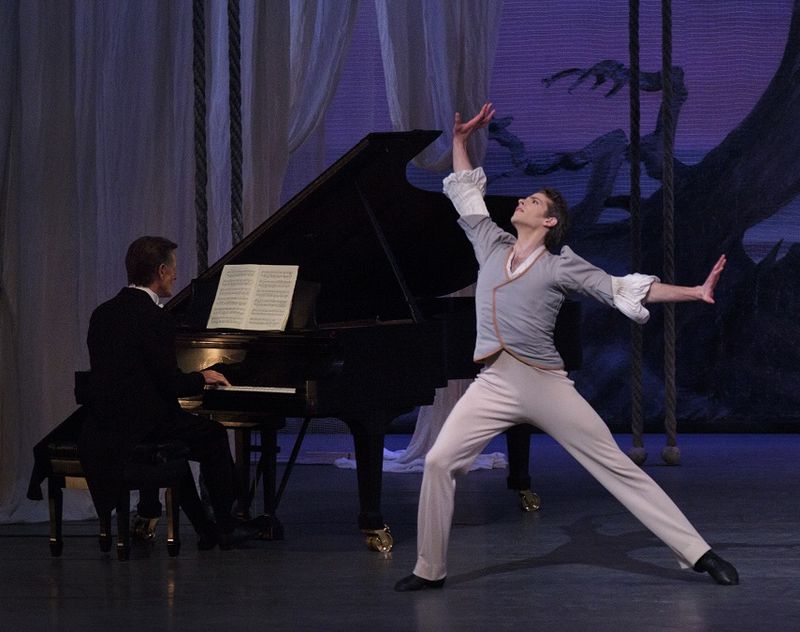
    Friday June 27th, 2014 – Boston Ballet have been celebrating their 50th season with performances at Lincoln Center this week. Tonight’s programme looked so tantalizing on paper, and it turned out to be a magnificent evening overall: Vaslav Nijinsky’s Afternoon of a Faun, George Balanchine’s Symphony in Three Movements, Jorma Elo’s Plan to B and Jiří Kylián’s Bella Figura were all superbly danced by the Boston troupe.

    When visiting companies bring Balanchine to New York, I sometimes wonder if it’s a good idea. Can’t you bring us something we don’t see all the time? But understandably, other companies are proud of their Balanchine and want to show off their abilities. Boston Ballet did a great job with The Master’s Symphony in Three Movements, even bringing their own orchestra to play the score. And Boston Ballet has strong Balanchine ties: he became Artistic Advisor to the Company in 1963, gifting them with more than seventeen of his ballets as a gesture of support.

    Curtain up, and I immediately found Shelby Elsbree in the diagonal. The ballet surges forward, with delightful performances by Misa Kuranaga and Jeffrey Curio – the high-bouncing couple – and Rie Ichikawa and Bradley Schlagheck. In the ballet’s central pas de deux, Lia Curio and Lasha Khozashvili excelled. The audience, fortified by a contigent of Bostonians, gave liberal and much-deserved applause to the dancers.

    Boston Ballet had brought their production of Vaslav Nijinsky’s Afternoon of a Faun to Fall for Dance in 2009 and I was mesmerized by it. Seeing the Leon Bakst backdrop and costumes again this evening provided a tangible link to the history of ballet and to that scandalous night over a century ago when Faun set Paris on its collective ear. Tonight, Altan Dugaraa embodied the exotic beauty of the Faun, his mystique and his longings, and Erica Cornejo was the Nymph, miming with stylized perfection. So grateful to have had another opportunity to see this production.

    In 2006, I experienced Jorma Elo’s work for the first time at the New York City Ballet’s premiere of Slice to Sharp. Slice received the longest ovation of any new work I’ve encountered at the ballet over the years: endless curtain calls and a state of euphoria among the crowd. Boston Ballet‘s performance of Mr. Elo’s Plan to B had something of the same a dynamic pungency about it. Illuminated by a large glowing screen stage right, six dancers reveled in fantastical choreographic patterns, flinging themselves into off-kilter leaps and flying across the stage, arms whirling like windmills in a tornado. Dusty Button, Whitney Jensen, Bo Busby, Jeffrey Cirio, John Law, and Sabi Varga danced thrillingly and were deservedly cheered for their jaw-dropping virtuosity.

    Alas, I am afraid Jiří Kylián’s Bella Figura was not really to my liking. Returning from the intermission, we find the dancers already onstage…warming up? Or is it a choreographed passage to start the ballet? Either way, it’s pretentious. Purgatorial and several minutes too long, the Bella Figura seemed to be more about the staging than anything else: black curtains endlessly re-arranged, a complex lighting scheme, flaming braziers bringing a taste of Hell to the stage, dancers coming and going almost randomly. The dancing was of course remarkable, and there are some very attractive passages, most especially when the topless dancers in long red skirts dance in unison. But it seemed to go on and on.
  • Cherylyn Lavagnino Dance @ St. Mark’s

    5941803_orig

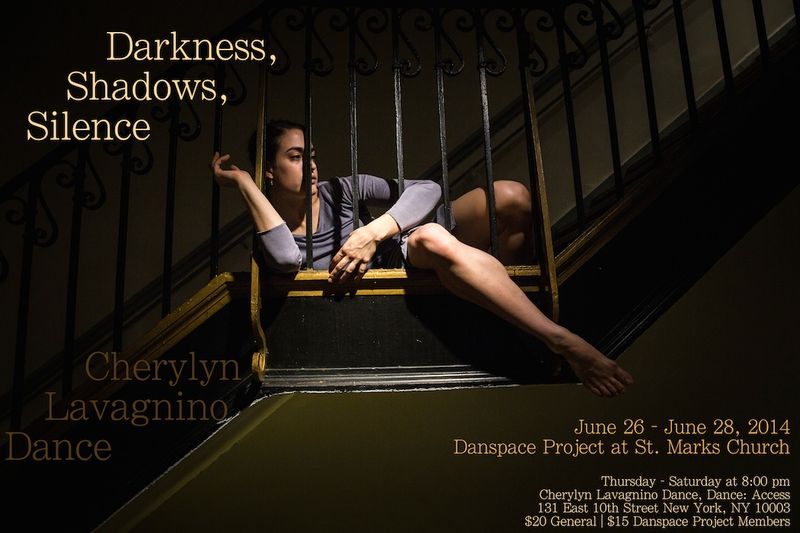
    Thursday June 26th, 2014 – Cherylyn Lavagnino Dance presenting a programme entitled Darkness, Shadows, Silence as part of the Danspace Project at St. Mark’s Church. It was rather stuffy inside the church on this summer evening, but the music and the dancing soon took my mind off any such concerns.

    Tonight’s first ballet is perhaps my favorite of Cherylyn’s works that I have experienced to date: TRYPTYCH is set to music by Francois Couperin and danced in bare feet. It opens with Claire Westby, invoking the dance from the mezzanine above. The four couples enter and commence a series of ensemble dances meshed with fleeting solo, duet or trio passages, the women wearing soft grey frocks and the men clad in simple dark costumes. Some of the phrases for the four women draw to mind the sisterly ensembles of Isadora Duncan. TRYPTYCH is spiritual though not heavy-handed: ritualistic yet human.

    I very much enjoyed the expressive interaction between Cherylyn’s beautiful dancers in this work: Giorgia Bovo, Selina Chau, Giovanna Gamna and Christine Luciano seemed deeply immersed in the music, and their partners – Michael D Gonzalez, Elliot Hammans, Travis Magee and Adrian Silver – came and went with a sense of quiet urgency. The ballet seems to draw to a lovely closing, but there is a pendant still to come.

    Scott Killian’s score for the final movement of TRYPTYCH alludes to Couperin yet is distinctly contemporary. An excellent duet for two men – Travis Magee and Elliot Hammans – gives way to another duet danced by Selina Chau (now on pointe) and Adrian Silver. The work ends with Ms. Westby in a benedictive phrase. This appended final movement at first seems somewhat unrelated to what’s gone on before, but Ms. Lavagnino and her dancers draw it convincingly full-circle in the end.

    Two movements of Cherylyn Lavagnino’s Schubert ballet TREIZE EN JEU were presented: this is a ballet for large ensemble wherein the dancers from TRYPTYCH are joined by Kristen Stevens, Eliza Sherlock-Lewis, Lila Simmons, and Justin Faircloth. Set to Schubert’s E-flat major trio, opus 929, the work displays the choreographer’s sense of structure, with a particularly memorable ‘pacing’ motif at the opening of the second movement as two phalanxes of dancers approach from opposite sides of the stage. Once again the individual personalities of the dancers played a vital element in the success of the piece. My only reservation was that the women’s costumes seemed too sporty and contemporary for the musical atmosphere: I would have addded long, gossamer black skirts. 

    Back in April, I visited Cherylyn’s studio where the works presented this evening were in rehearsal. And in the ensuing weeks I have read Kim Thúy’s novel, RU, from which Cherylyn’s newest work draws its inspiration. RU is a contemporary-style ballet set to a commissioned score by Scott Killian.

    The novel by Kim Thúy, which describes a young woman’s life as a post-Vietnam War political refugee, revolves around cultural dislocation and the struggle for identity. T’ai Chi’s passive resistance serves as gestural influence for the choreographer, and Christopher Metzger’s costumes for the women are reminiscent of the traditional Vietnamese áo dài dress: they are clad in white, with red accents indicating the bloodshed of war.

    Ms. Thúy’s novel is more like a book of poetry: each page contains only a few sentences (or, at most, a few paragraphs) describing in no specific order the details of escape from Asia to Canada, the cultural shock of this transplantation, and the writer’s emeging personality as a wife and mother. The choreography moves the female ensemble across a darkening landscape, suggesting their furtive escape from war and the formation of new bonds as their former lives are left behind. The men, bare-chested, can seem threatening or protective by turns. 

    In RU, Cherylyn Lavagnino and Scott Killian have summoned up the atmosphere of the novelist’s poetic vignettes yet the ballet also takes a wider view of displaced peoples, their exposure to abuse and treachery, and their assimilation into new cultures. I look forward to seeing this piece again in the future.

  • A Novel: ASTONISH ME by Maggie Shipstead

    Astonish-Me

    Maggie Shipstead’s ballet-based novel ASTONISH ME draws its title from something Serge Diaghilev reportedly used to say to his dancers: “”Etonnez-moi!” The novel will make a good Summer read for balletomanes who will likely enjoy getting to know book’s characters who are based (loosely or otherwise) on Gelsey Kirkland, Mikhail Baryshnikov, Natalia Makarova, George Balanchine and Suzanne Farrell, among others.

    In the novel, a young American ballerina named Joan is rather mysteriously tapped to assist the great Russian dancer Arslan Rusakov in defecting to the West in 1975. A romance between the two follows, but Arslan eventually ends up with Ludmilla, his Russian lover who has also defected. Joan gives up her dancing career and settles into a solid but conventional marriage. But as her son Harry grows up, he displays a remarkable natural affinity for ballet and he plunges headlong into that world, meeting and being mentored by his idol, Arslan Rusakov.

    The novel is at its most convincing when dealing with the world of ballet and with the devotion, disappointments, amours, addictions and quirks of the various dancers who people the story. Chapters dealing with Joan’s life away from ballet are a bit tedious, but as Harry’s career seems poised to take off, she is drawn back into the center of things. What might be considered the ‘big revelation’ of the story will in fact be rather obvious to alert readers way before it occurs to the characters involved.

    One interesting aspect of the story is that the ‘Balanchine’ character, here called “Mr. K”, succumbs to AIDS.

    The ending of the novel is somewhat under-mined by the convention of having the various interactions of the characters and the inter-twinings of their lives danced out in a ballet; I kept wishing that Shipstead could have found a more vivid way of drawing the threads of the story together, providing us with a less predictable denouement.

    Despite some reservations, the book is very well-written and definitely worth checking out.

  • Paul B Goode’s VISION #4

    Vision04_cover

    Above: ABT‘s Cynthia Harvey, Robert Hill, and Susan Jaffe in MacMillan’s REQUIEM, photographed in 1986 by Paul B Goode

    Photographer Paul B Goode has produced the fourth issue of his magazine, VISION. In this issue, Paul looks back on his formative years and at the people who influenced his development as a photographic artist in the realm of dance.

    Paul’s earliest work shooting dance was for Dianne McPherson’s dance company and for Ekstasis Modern Dance Company back in 1981. Following the path of his development, this reflective issue of VISION includes essays by choreographer Charlie Moulton, and by dancers Linda Kent (Paul Taylor Dance Company), John Carrafa (Twyla Tharp Dance Company) and Marie de la Palme, as well as Paul’s commentary on his work shooting at ABT. The current issue also features lavish spreads devoted to the dance drawings of Valerie Sonnenthal and to the photography of Gordon Munro. It was Munro’s work for the 1981-1982 Danskin catalog that initially inspired Paul B Goode – who was Munro’s assistant on the Danskin shoot – to venture into dance photography himself.

    Rounding out VISION #4 are some of Paul’s images from a recent studio rehearsal of the Steps Repertory Ensemble, which is now under the artistic direction of Bradley Shelver. My dancer/friend Lane Halperin contributes a beautiful essay to accompany Paul’s images.

    VISION #4, as well as the magazine’s previous ssues, may be ordered (either in hard-copy or digitally) via Paul B Goode’s website: LINK.

  • RIOULT: Martha, May and Me @ The Joyce

    Rioult_4181

    Above: Charis Haines of RIOULT; photo by Paul B Goode

    Saturday June 21st, 2014 matinee – Celebrating twenty years of dance, RIOULT– named for their founder/choreographer Pascal Rioult – offered two programmes at The Joyce. My over-stuffed, end-of-season calendar only showed space for a single performance, and it was a great afternoon of dance.

    May O’Donnell was only a name to me, and one that I honestly had heard only in passing. I knew nothing of her work beyond the fact that she had danced for Martha Graham. RIOULT have revived O’Donnell’s 1943 work, SUSPENSION, set to a score by Ray Green. This ‘blue ballet’ made an absolutely stunning effect as the opening work on today’s programme at The Joyce – a programme in which Pascal Rioult honored the creative influence of two women for whom he danced: Ms. O’Donnell and Martha Graham. In a brief film shown before the O’Donnell was performed, Pascal Rioult spoke of the deep impression made on him when he first saw SUSPENSION; the piece had the same powerful effect on me today. 

    SUSPENSION opens with a marvelous solo danced today by Sara E. Seger. In deep blue body tights, her hair in a ponytail, Ms. Seger is perched upon a pair of powder-blue boxes set stage left. This solo has the feel of an Olympic balance-beam ‘routine’ and was performed with a combination of athleticism and grace by the dancer. Her colleagues, in vari-hued blue body tights then assemble: Jane Sato, Anastasia Soroczynski, Catherine Cooch, Jere Hunt, Holt Walborn, and Sabatino A Verlezza. In stylized movement, they display deep arabesques and open wingspans, striking sustained poses with great control. Their communal rituals are at once stripped-down and ornate; SUSPENSION is as clear as a pristine Summer sky.

    Pascal Rioult’s BLACK DIAMOND (2003) shows O’Donnell’s influence in the gestural language. This duet for two women is set to Igor Stravinsky’s ‘Duo Concertant‘, a work familiar to ballet-goers thru George Balanchine’s ballet of the same name. The curtain rises on a black space pierced by David Finley’s shafts of light. In a smoky atmosphere, dancers Charis Haines and Jane Sato – each atop a large black box – begin to move in parallel solos, sometimes in-sync and sometimes echoing one another. Later they descend to stage level and the dancing becomes more spacious. They return to the heights for the final moments of the ballet, with a breath-taking lighting coup as the curtain falls.

    Earlier this month, photographer Matt Murphy and I watched Charis and Jane rehearsing BLACK DIAMOND – a memorable hour in Pascal’s studio. Read about that experience here, with Matt’s striking images.

    Martha Graham’s 1940 work EL PENITENTE employs a specially-written score by Graham’s ‘dear  indispensability’ Louis Horst. Inspired by the simple penitential morality plays presented by traveling players in the American Southwest, we see the self-inflicted torture of flagellation, the temptation of Adam by Eve, repentance, crucifixtion, and redemption all played out with naive simplicity. Michael S Phillips is the Christ figure and Charis Haines plays all the female roles, from virgin to temptress. With his god-like physique and powerful dancing, Jere Hunt’s Penitent was a perfect portrayal.

    For the afternoon’s closing work, VIEWS OF THE FLEETING WORLD, master-choreographer Pascal Rioult turns to the music of Bach – from ‘The Art of the Fugue‘ – for this seven-part dancework interpersed with empty-stage interludes which create a pensive atmosphere. The ensemble passages, with the dancers sometimes clad in long red skirts, give way to three duets in which the couples appear in evocative vignettes: Marianna Tsartolia and Michael S Phillips in Dusk, Charis Haines and Jere Hunt in Summer Wind, and Sara E Seger and Brian Flynn in Moonlight. Here – and throughout the afternoon – the technical prowess and personal allure of the RIOULT dancers set the choreography in high relief; their commitment and artistry are wonderfully satsfying to behold.

  • In the Studio with Breton Tyner-Bryan

    L1420506

    Wednesday May 28th, 2014 – Following my ‘discovery’ of Breton Tyner-Bryan earlier this year when I saw her gorgeous duet Un Tanguito Cualquiera at The Current Sessions, I had the opportunity to meet her on May Day this Spring when she was rehearsing Tanguito with her colleague Catherine Correa for performances at Dixon Place. 

    Today, Breton invited me to her studio again to watch a rehearsal of a new work-in-process, Self, which may be seen June 12th and 13th at the Tisch Summer Residency Festival and on July 9th at the HOT Festival at Dixon Place. For Self, a dancework about gender perception, Breton has teamed up with one of the Gotham dance scene’s most intriguing personalities, Shay Bares, and a dancer who sings (awesomely): Mary Carter. The three are good friends offstage, and they are obviously enjoying their collaboration on Self.

    L1420434

    Breton

    L1420554

    Mary…her rich, natural vocals are incorporated into the dancing, and Breton tells me there’s also a bass player who’ll be involved in Self.

    L1420544

    Shay…in addition to dancing, singing, and being his sexy self, Shay is designing the costumes for Self

    Breton’s plan is that Self will eventually expand into a three-part, full evening dancework. It will be interesting to follow the development of the piece. Meanwhile, for today, it was a pleasure to watch these three friends working together.

    L1420447

  • Ballet Next in Rehearsal

    L1420269

    Tuesday May 27th, 2014 – Michele Wiles (above), artistic director of Ballet Next, invited me to her studio today where she is re-structuring Querencia, a ballet she created earlier this year for Columbia Ballet Collaborative, on her own Ballet Next dancers.

    In this ballet, set to a ‘Passacaglia‘ by Heinrich Ignaz Franz von Biber, a violinist playing live mingles onstage with the dancers.

    L1420185

    The ballet opens with the girls – Kaitlyn Gilliland, Tiffany Mangulabnan, and Brittany Cioce – in a cluster. From there the movement becomes expansive and technically quite demanding. The dancers today were concentrating on the nuances of the work, preparing for a studio showing next week.

    L1420380

    Tiffany

    L1420209

    Brittany

    L1420182

    Kaitlyn

    L1420335

    Michele, demonstrating the fine points

    Join Ballet Next for a studio showing of Querenica and Brian Reeder’s Rameau ballet, Strange Flowers:

    ImageProxy.mvc

    And Ballet Next will be at Kaatsbaan June 7th and 8th, 2014. Information here.

  • Honoring Isadora Duncan’s GRANDE MARCHE

    AVT_Isadora-Duncan_4025

    On Saturday, May 31, 2014 at 5:00 PM, the Green-Wood Historic Fund will host a tribute to Isadora Duncan (above), one of the most innovative and fascinating figures in the history of dance, as Catherine Gallant and her dance company (Catherine Gallant/DANCE) perform some of Duncan’s most memorable works. 

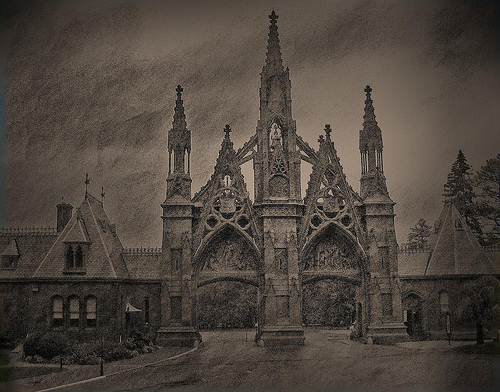
    Green-wood

    Green-Wood (above) is located at 5th Avenue and 25th Street in Brooklyn.  Further information and tickets here.

    L1420039

    The performance marks the centennial of Duncan’s GRANDE MARCHE (created in 1914), set to the music of Franz Schubert, and further includes other late-period Duncan dances born of her sorrow. The Company will also present works of hope and rebirth, set to a Nocturne and Polonaise of Chopin, followed by Isadora Duncan’s dances of exuberance and light to celebrate the rising of the sun.

    L1410784

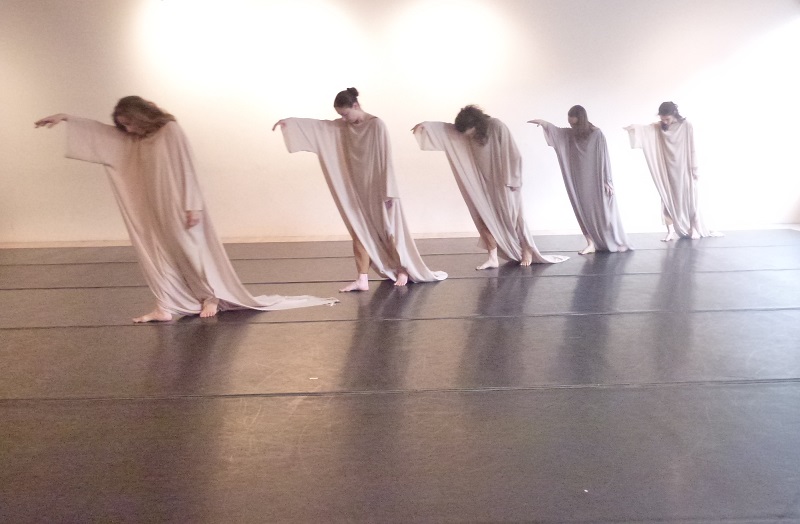
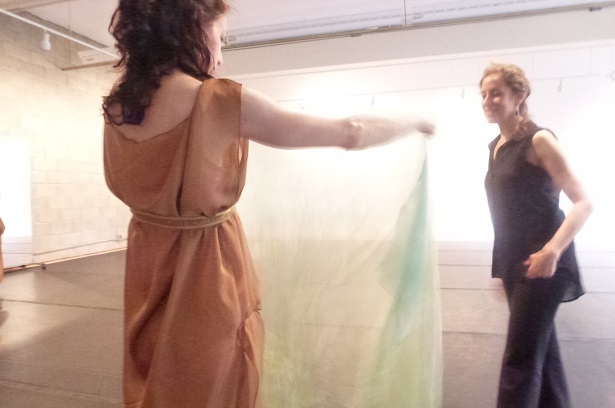
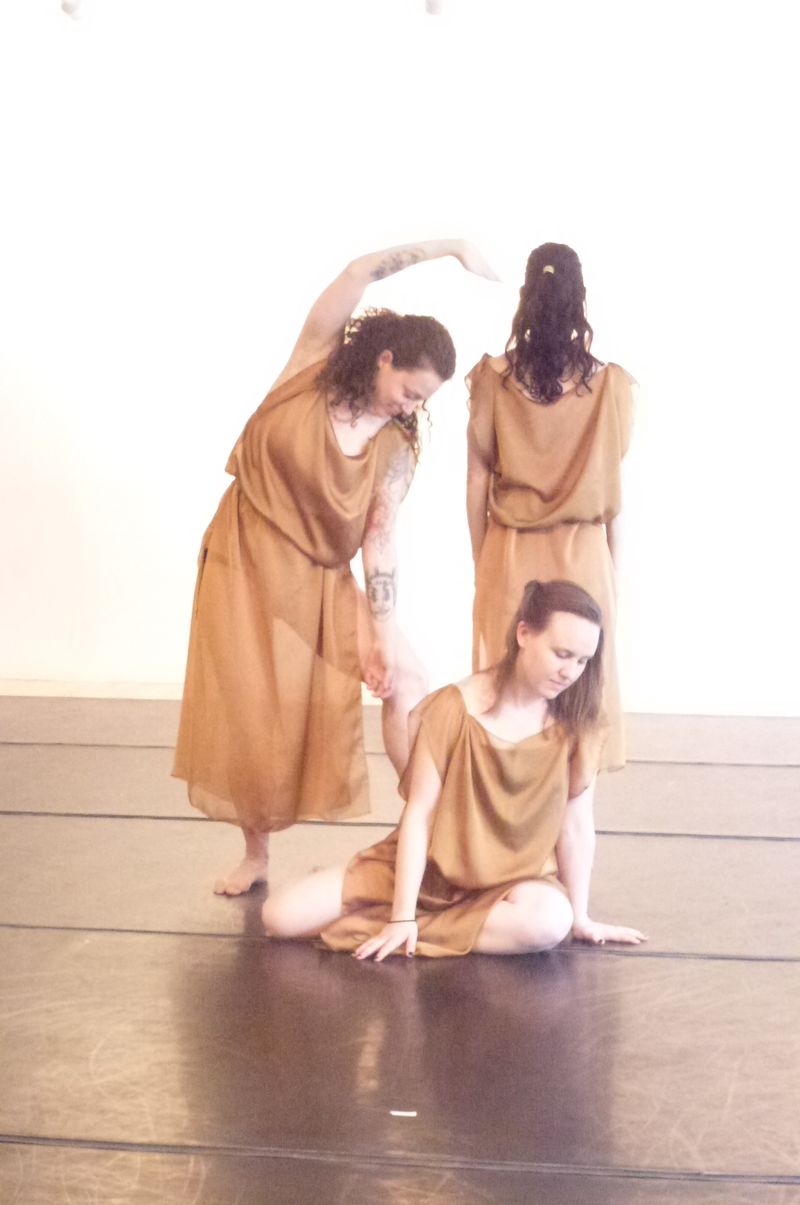
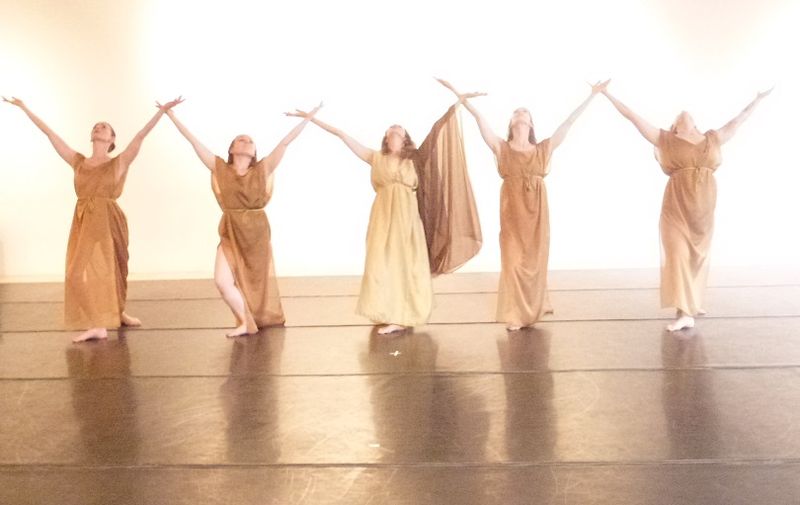
    Since I was otherwise engaged on the day of the performance, Ms. Gallant (above, with dancer Michelle Cohen) very kindly welcomed me to a studio run-thru of her programme; this took place on an overcast, rainy afternoon at the Gibney Dance Center. Beautiful atmosphere in the studio as the women prepared their costumes and arranged their hair for the dances to come.

    In addition to the Duncan works beging presented, Catherine Gallant has created new pieces which resonate with the inspiration of Isadora. One of these, WAVE (set to Chopin) was being rehearsed when I arrived:

    L1410643

    Above: Magherita Tisato, Megan Minturn (seated) and Michelle Cohen rehearsing WAVE

    L1410758

    …and (above), the same moment in costume. Ms. Gallant has also created PRAYER, set to music of Leonard Bernstein, which will close the programme.

    In addition to GRANDE MARCHE, the Duncan works to be presented are: POLONAISE (1919); HARP (1920); MOTHER (1923); ANDANTE (1917); SCHERZO (1917); and NOCTURNE (1914).

    Here are some photos from my studio visit:

    L1410761

    Megan Minturn in WAVE

    L1410856

    The ensemble in POLONAISE

    L1410971

    Margherita Tisato, Megan Minturn, and Natalia Brillante

    L1410967

    Michelle Cohen

    L1410984

    Catherine Gallant

    L1420077

    Loretta Thomas, soloist in GRANDE MARCHE

    L1420123

    Margherita Tisato and Loretta Thomas in GRANDE MARCHE

    L1420134

    Loretta Thomas and Margherita Tisato

    L1420149

    Loretta Thomas

    L1420098

    Recessional from GRANDE MARCHE

    This was one of those studio experiences that seemed to touch upon the very essence of dance; as Miki Orihara said of her recent solo concert RESONANCE, we must look to the past to find the future of this art form.  Those who think that Isadora’s dances are outdated and irrelevant today should perhaps stop thinking and start feeling. In the work of Ms. Gallant and her dancers, the past finds us in the present; I commend them all for keeping the flame burning.

  • Balanchine’s “Davidsbündlertänze” @ NYCB

    C37708-3_Davidsb_LaraceySuozzi

    Above: Ashley Laracey and Sean Suozzi in Robert Schumann’s Davidsbündlertänze, photo by Paul Kolnik

    Tuesday May 20, 2014 – Created in 1980, George Balanchine’s setting of Robert Schumann’s Davidsbündlertänze was one of the choreographer’s last works. It’s a unique ballet, deeply moving in its depiction of the composer Robert Schumann’s descent into madness. 

    During the winter of 1854, Schumann’s developing insanity took a dramatic turn: he began hearing “angelic” voices which evolved into the bestial cries of wild animals. One February morning he walked to a bridge over the Rhine and threw himself in; he was rescued by fishermen. Schumann himself asked to be institutionalized, to prevent his becoming a burden on his wife, Clara. He was placed in a sanatorium. His doctors prevented Clara from seeing him for more than two years, until days before his death.

    The Rouben Ter-Arutunian setting for this ballet, which has an antique look, surrounds the dancing area with gauzy curtains. The backdrop shows a body of water – perhaps alluding to Schumann’s attempt to drown hmself – and a far-shining cathedral hovering in the sky, the source perhaps of the “angelic” voices summoning the composer. At one point, mysterious figues all in black and holding large quill pens appear: these represent the Philistines, whose admonishing writings were poised to oppose art or innovation in the arts and against who the Davidsbündler (the League of Davidthe composer’s imaginary society of artists) took a firm stance.

    The ballet, danced by four couples, seems to depict various phases of the relationship between Schumann and Clara; it may also hint as certain aspects of Balanchine’s many romances. In Suzanne Farrell’s book, Holding Onto The Air, the great ballerina says that Balanchine never told her what Davidsbündlertänze was “about” during the course of the ballet’s creation. It wasn’t until later that she made the connection to Schumann’s own life.

    Suzanne Farrell came very much to mind tonight in the ballet’s opening duet, for Rebecca Krohn reminded me more than ever of Farrell, who was of course Balanchine’s longtime muse. Partnered by the dashing Zachary Catazaro, Rebecca’s sweeping lyricism and the communicative range of her expressions and gestures kept me riveted to her throughout the ballet. This was Farrell’s role (the girl in blue) at the ballet’s premiere and – like Suzanne – Rebecca may eventually take on the “Clara” role (the woman in white). Tonight her dancing was spell-binding.

    C37699-15_Davidsb_Krohn

    Above: Rebecca Krohn in Robert Schumann’s Davidsbündlertänze, photo by Paul Kolnik

    This evening’s entire cast in fact were new to this ballet, having all debuted in it together the previous week. Continuing to make a vibrant effect in each new assignment, Ashley Laracey was at her most delightful here…impetuous, charming, and dancing so very well. Sean Suozzi, who always brings his own distinctive energy to each role he undetakes, was her excellent cavalier. Tyler Angle, dancing with space-filling generosity and fineness of line, courted Tiler Peck with gentle urgency. Tiler, who to my mind seems to move from one pinnacle to another in the progress of her career, was just spectacular, her lush swirls of pirouettes radiating confidence and grace.

    In her portrait of Clara, Teresa Reichlen, so elegant in her presence and so refined in her line and port de bras, strove poignantly to comprehend the changes that were overtaking her beloved. Her attempts to draw him back to her embracing tenderness became increasingly desperate, and Tess at the end must finally accept their parting: in an exquisite moment, she bows her head in silent grief as the light fades.

    In a major career leap, the tall and poetic Russell Janzen’s portrayal developed a melancholy acceptance of Schumann’s tragic destiny. At the end of his very first duet with Tess, Russell’s visage showed an early indication of madness with a far-away look. These momentary drifts away from reality eventually overtake him, and at the end of the ballet he withdraws with an expression mingling fear and resignation. Earlier, Russell’s solo – set to the score’s most haunting melody – was beautifully danced.

    C37701-8_Davidsb_Janzen_Crop1

    Above: Russell Janzen, with Cameron Grant at the piano, in Robert Schumann’s Davidsbündlertänze, photo by Paul Kolnik

    Cameron Grant, seated at the onstage grand piano, played the Schumann score with clarity and with tempos that seemed to propel the dancers while allowing them opportuniy for nuance. 

    Just as singers have sometimes told me they can’t sing anything after performing Franz Schubert’s “An die Musik”, it’s difficult to imagine watching (or dancing in) another ballet after Davidsbündlertänze, such is the haunting atmosphere it creates. And so I didn’t stay beyond the intermission: even going out to the Promenade seemed too hasty a return to reality. I was in a very subdued mood, and glad of a peaceful train ride home to reflect on the beauty of Schumann and touching artistry of tonight’s dancers.     

    ROBERT SCHUMANN’S “DAVIDSBÜNDLERTÄNZE”: Reichlen, Krohn, Laracey, T.Peck; Janzen, Catazaro, Suozzi, T. Angle [Solo Pianist: Grant]

  • All-Robbins @ New York City Ballet

    Wendy-Henry-Leutwyler-©-2010

    Above: Wendy Whelan, photo by Henry Leutwyler

    Saturday May 17th, 2014 (evening) – My first opportunity to see Wendy Whelan dancing since her return to the stage following surgery. She danced tonight in Jerome Robbins’ GLASS PIECES. I can’t begin to tell you how much I’ve missed her; at least I had the pleasure of running into her a few times in the interim.

    From the moment she appeared tonight, seemingly floating into view in Adrian Danchig-Waring’s big, beautiful hands, everything suddenly seemed right with the world again: the rift in the time-space continuum was sewn up, clocks started ticking again, the lights came back on. This is what’s been missing these past few months, why everything has seemed ever-so-slightly awry. Wendy’s been such a symbol for me of my whole New York Experience, of my dream that came true; seeing her dancing again was like an affirmation of faith.

    She and Adrian cast a spell over the crowd in their mesmerizing, other-worldly duet. With their stylized gestures, they speak to us over the trance-like repetitive musical motif. We are drawn into their parallel universe, and it’s breath-taking to behold. Beautiful creatures. 

    If their pas de deux could have gone on and on I would have been content, but as Wendy is gently borne away the jungle drums begin to beat. And who is this tall, handsome demi-god who comes wheeling into view? It’s Russell Janzen, and he’s coming into his own at NYC Ballet now: Barber Violin Concerto this past February, and now he’s been cast in the lead role of Davidsbundlertanze, which I hope to see in the coming week. He looked fantastic tonight, leading off the third movement of the Glass. 

    Earlier, in the ballet’s opening segment, the three ‘angels-among-us’ couples were Ashley Laracey with Daniel Applebaum, Meagan Mann with Joseph Gordon, and Emilie Gerrity with Andrew Scordato. They all look wonderful, and Mr. Gordon is stepping up nicely in each assignment.

    Clothilde Otranto was on the podium tonight, and for the Prokofiev score of OPUS 19/THE DREAMER, she had City Ballet’s excellent concert-master Kurt Nikkanen spinning out the music, by turns tranquil and restless. Speaking of gods, Gonzalo Garcia certainly looked divine and his dancing was powerfully expressive. Sterling Hyltin has just debuted in this ballet and she makes a vibrant impression; the ballerina here is not always dreamy – she has some jagged, almost harsh moments mixed in – and Sterling handled these transitions with compelling musicality.  She and Gonzalo looked superb throughout; the ballet ends in its iconic pose with the dancers resting their heads gently in one another’s open palms. Quiet murmurs from the crowd as the music faded indicated that OPUS 19 had again bewitched us.

    Several newcomers to the cast of THE CONCERT were enough to keep me in the theatre for this ballet, one that I often skip out on. Good thing I stayed, because it was a genuinely great performance. Pianist Elaine Chelton not only played the Chopin selections very well indeed, but entered into the drama with gusto. Sterling Hyltin was back in a role as different from OPUS 19 as one could imagine; she is as fine a comic muse as she is a lyrical one. Joaquin de Luz was perfect as the hen-pecked husband who finally rebels, and Lydia Wellington debuted in the role of the wife – which has been so memorably undertaken by Delia Peters and Gwyneth Muller – and made it her own: Lydia’s timing was spot on, and her facial expressions were a characterful delight. I hardly recognized Troy Schumacher, even though I had bumped into him before the show: he had transformed himself into a total nerd. Marika Anderson’s be-spectacled ballerina was another gem; she is so versatile, and – joined by five other off-beat sylphs – drew a prolonged round of applause and laughs as they presented an epically un-coordinated pas de six.

    GLASS PIECES: Laracey, *Mann, *Gerrity, Whelan, Applebaum, *Gordon, Scordato, Danchig-Waring

    OPUS 19/THE DREAMER: Hyltin, Garcia [Solo Violinist: Nikkanen]

    THE CONCERT: Hyltin, *Scordato, *Adams, *Segin, Anderson, De Luz, *Wellington, Schumacher, Peiffer, Nelson