Category: Dance

  • Intermezzo Dance Company: Rehearsal

    L1310640

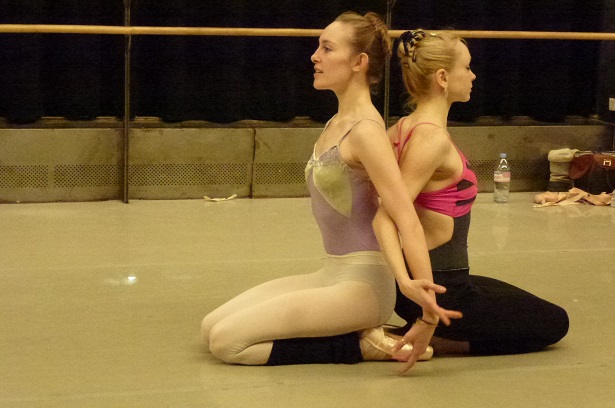
    Above: dancers Kaitlyn Gilliland and Stephen Hanna

    Thursday January 30th, 2014 – Intermezzo Dance Company are in rehearsal, preparing for their January 31st appearance at the 92nd Street Y as part of the series “Movement Talks” presented by Edward Henkel. The program, which will explore the theme of beauty in dance and choreography, is sold out. Newly created works by Gemma Bond, Claudia Schreier, and Craig Salstein will be danced by Intermezzo‘s Kaitlyn Gilliland, Amber Neff, Nadezhda Vostrikov, and Stephen Hanna. I was able to see a run-thru of all three ballets this evening at DANY Studios.

    L1310802

    Above: Kaitlyn Gilliland rehearsing Claudia Schreier’s ballet Harmonic which originally premiered at Columbia Ballet Collaborative‘s November 2013 performances; a great score for dancing by Douwe Eisenga propels a quartet of dancers thru this fast-paced work.

    L1310925

    Gemma Bond, a member of ABT‘s corps de ballet, has created a sisterly duet to Schubert, danced by Amber Neff and Nadia Vostrikov (above). And Craig Salstein has choreographed an arrangement of Beethoven’s Ode to Joy as a pas de trois for Kaitlyn Gilliland, Amber Neff, and Stephen Hanna.

    L1310666

    Nadia

    L1310730

    Amber

    L1310918

    Stephen

    L1310866

    Kaitlyn

    Following the evening at the Y, Intermezzo Dance Company will begin preparations for their upcoming performances at Vassar College.

    Performance dates are March 29th (evening) and 30th (matinee), 2014. Tickets are free. Send an e-mail to [email protected] write “Intermezzo” in the subject line and the number of tickets and which performance date you wish to attend in the body of the e-mail.

    Details of repertory and participating dancers for the Vassar performances will be forthcoming.

  • Gina Gibney’s Celebration

    L1310562

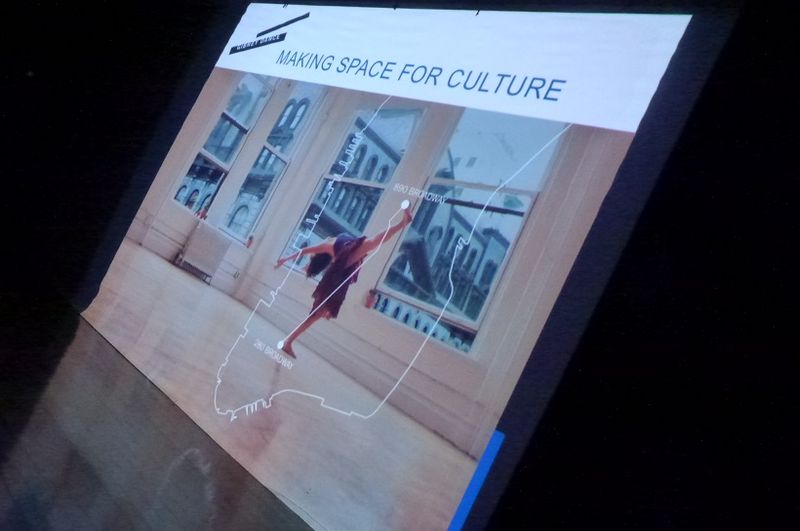
    January 29th, 2014 – The recent announcement by Gina Gibney that Gibney Dance would be expanding their activities to 280 Broadway, known for years as Dance New Amsterdam, is cause for celebration: the Gibney Dance Center at 890 Broadway now has a sister site further downtown where classes, rehearsals, performances and community events will bring this space back to vibrant life.

    Tonight at a gathering at 280 Broadway, a standing-room-only crowd assembled in the venue’s theater as Ms. Gibney outlined plans for the re-opening of this space which has stood forlornly empty for the past several weeks. I frankly never thought I’d see the inside of 280 Broadway again – a place where I have spent many happy hours watching classes, rehearsalsperformances and other dance-related activities over the past few seasons – so I was particularly pleased to be back in the columned hall this evening as Gina set forth her extraordinary vision of a Renaissance in these studios, so redolent with the essence of dance.

    Gina Gibney’s plans for 280 Broadway include creating a digital media center, a high-tech performance lab, and a black box theater. And the latest good news – a $3-million gift from the Agnes Varis Trust – will help bring these plans to fruition sooner rather than later.

    Among the many exciting aspects of the revival of 280 Broadway is the news that The Playground, the vibrant series of affordable dance labs founded by Loni Landon and Gregory Dolbashian, will be partnered by Gibney Dance in their mission to bring choreographers and dancers together in an open, dynamically creative setting.

    This evening’s announcement/kick-off event, liberally laced with applause as each new facet of Gina Gibney’s grand design for 280 Broadway was revealed, seemed to herald a bright new day for dance in New York City.

  • Classical Flowering @ Chamber Music Society

    Spohr

    Above: the composer Louis Spohr

    Sunday January 26th, 2014 – The recent snowstorm and its resulting impact on the MTA made me miss the Orion String Quartet’s program of Haydn and Mozart at Chamber Music Society of Lincoln Center on January 21st – a program that drew such a rush on the box office that it was repeated the following evening at the Rose Studio. Tonight, still in an Arctic deep-freeze, I made it to Alice Tully Hall for Classical Flowering, a performance which brought together ten superb players in the following program:

    The three works, all written within a twenty-year span, made for a genuinely pleasing experience in the peaceful ambiance of Alice Tully Hall: a refuge not only from the Winter weather but also from increasingly dark and upsetting world events. 

    Schubert’s Trio in B-flat major is an incomplete composition; only the first movement (and some thirty-nine bars of a second, slower one) has come down to us. Perhaps the 19-year-old composer intended to return to the work at some point but – with his active musical imagination – countless other projects took up his time. So we are left with this very appealing single movement, a beautiful prelude to the two larger works on tonight’s program. Elmar Oliveira, Cynthia Phelps and Nicholas Canellakis played superbly and the piece was over almost before it began. But Ms. Phelps and Mr. Canellakis were with us all evening – playing in all three offerings tonight – and Mr. Oliveira returned for the closing Beethoven.

    Louis Spohr, the least-well-known of today’s three composers, received a commission in 1813 from  Johann Tost, a wealthy merchant and amateur musician, for a chamber work featuring both winds and strings. Spohr thus penned his Grand Nonetto, one of the few of his compositions to remain in active repertory over the ensuing two centuries.

    The Nonetto‘s opening Allegro draws upon a lyrical main theme first heard as a four-note motif at the work’s very beginning. The second movement is an Allegro Scherzo comprising two trios: the first with the violin prominent in a dance-rhythm called the landler, and the other featuring the wind voices. This is followed by an Adagio with song-like themes played alternately by strings and winds; then the Nonetto reaches its finale in a sonata-form movement with tuneful episodes calling forth the solo voices from the ensemble.

    A remarkable ensemble of musicians took the Tully Hall stage for the Spohr: the strings arranged on our left and the woodwinds on our right. And in the center, Radovan Vlatkovic with his horn; for it is the horn that gives this work its special, burnished glow. Mr. Vlatkovic’s mellow playing was a delight here, and then later – in the Beethoven – he surpassed himself. Marvelous inter-action among the string players: the excellent violinist Arnaud Sussman taking the lead with Cynthia Phelps, Nicholas Canellakis and Kurt Muroki giving clarity to the inner voices; across the way, the regal flautist Tara Helen O’Connor  piped beautifully in her melodic flights. Romie De Guise-Langlois displayed impressive breath-control in the flowing clarinet passages; Stephen Taylor (oboe) and Peter Kolkay (bassoon) played with fluent expression.

    Beethoven’s Septet in E-flat Major, written in 1799, was the oldest work on the program today. In six movements, this work was one of Beethoven’s most popular during his lifetime, though he is said to have wished it had been burned. Luckily, he didn’t get his wish and the Septet comes down to us today as an outstanding musical delight.

    The six-movement structure has the flavour of a classic divertimento. The third movement, the most popular section of the work, is an adaptation of the minuet from the composer’s Piano Sonata in G major; the fourth movement is a series of variations in which each player has the opportunity to shine. The Septet‘s final movement features a violin cadenza, delivered today with silken virtuosity by Elmar Olveira.

    The audience – a full house held in rapt attentiveness throughout the program – gave the collective of magical music-makers a rousing ovation at the end of the concert, calling the players out for an extra bow. The Beethoven was outstanding in every regard and special kudos to cellist Nicholas Canellakis for his finely-wrought solo passage in the fifth movement and to Mr. Vlatkovic’s wonderfully plush horn-playing, especially in the last three movements. Ms. De Guise-Langlois and Mr. Kolkay were the polished woodwind voices, and along with Messrs. Oliveira and Canellakis, Cynthia Phelps and Kurt Muroki made a string quartet of the highest calibre. A brilliant performance overall.

    The evening’s participating artists:

  • BalaSole: IDIOMS

    L1310260

    Above: dancer Marion Helfenstein

    Saturday January 25th, 2014 – BalaSole Dance Company presenting IDIOMS at the Ailey Citigroup Theatre.  A sold-out house, including many people who were experiencing BalaSole for the first time, reacted enthusiastically to each solo work performed, covering a wide stylistic and musical range. The Company’s artistic director Roberto Villanueva selected and mentored nine solo artists for this program which also featured Emerging/Re-Emerging artists Hailey Bates, Lea Clay, and Nicole Roberts. And no BalaSole performance would be complete without Roberto himself dancing.

    True to the customary BalaSole formula, all of the evening’s participating dancers appear together in the opening and closing pieces on the program; these danceworks are created during the week-long run up to the performance dates, and for IDIOMS they were danced to a delicious musical fusion of Richter and Vivaldi.

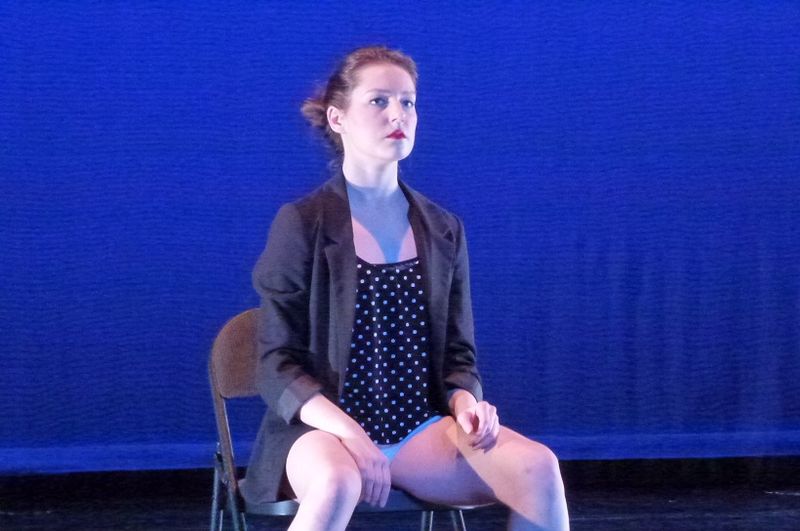
    Marion Helfenstein commenced her solo Who Are Those Ugly Ladies In The Mirror? seated in a chair. A spoken passage gives way to a pulsing mandolin rhythm as the dancer’s gestures tell her story. When the music (by Rene Aubry) develops a deeper resonance and more intense beat, she rises to dance swiftly about the space; yet in the end she cannot escape her chair.

    Trashina Conner first enters in a state of calm wonderment to the sound of a piano; as the cello takes over, a ritual of mourning takes place. The dancer then veers between hope and despair as the music becomes more intense; she runs around the space – either pursuing something or being pursued. At last she speaks: a date – March 26, 2006 – “A nightmare…with eyes wide open…” This recollection of a traumatic event gives this solo its title 3.26.06. This intensely personal work was expressively danced, evoking real emotion from both dancer and viewer.

    Jonathan Breton’s solo Memories was performed to a beautiful score by Ezio Basso; the dancer’s slender form moved with supple grace and lyrical port de bras thru combinations from the classic ballet vocabulary persuasively meshed into a contemporary statement. Jonathan’s lithe torso and handsome line created a lyrical atmosphere, whether he was standing in a pool of light or moving freely about the space. A self-embrace near the end was a fine expressive touch.

    Ashley Peters appeared as an Emerging Artist in BalaSole‘s Autumn 2013 concert: VISAGES. I thought then that she showed real potential, and tonight she was back in a solo work: Past and Pending. To music by Outside – violin over a heavy metallic beat – Ashley covered the space in restless, dynamic moves, her body talking to us directly.

    Paulina Bracone’s solo It’s Possible developed well in the unusual juxtaposition of spoken word and ballet-based movement. This restless solo showed the dancer’s vulnerable femininity; as the music swells under the spoken narrative, her movement becomes more expansive. This improbable combination of masculine (the voice) and feminine (the dancer) elements ended up working well thanks to Paulina’s sense of commitment.

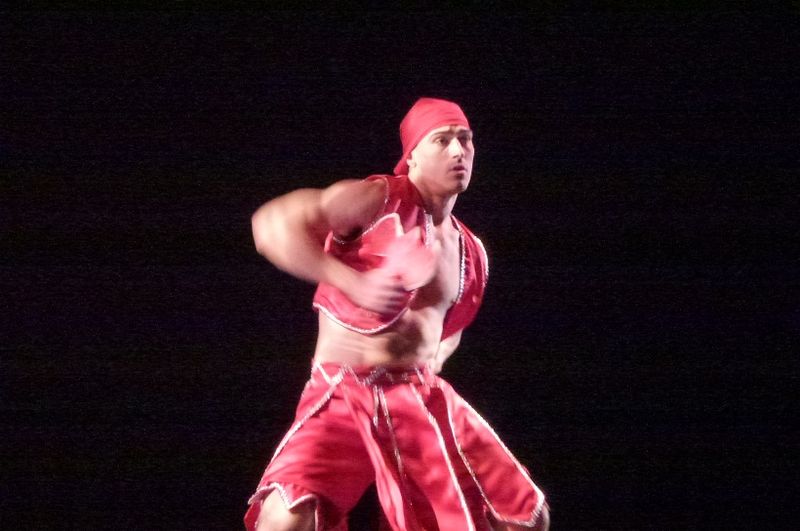
    Hunter Frederick Houde’s Afro-Cuban solo Changó emerges from Santeria folk legend: Changó is the owner of fire, lightening, thunder, and war, but he is also the patron of music, drumming, and dancing. He represents male beauty and virility, passion and power. Dressed in red and carrying a small hatchet, the dancer’s moves were vibrant and instinctive; rolling thunder, folklike chant/vocals and intense drumming push this fiery solo to its conclusion: a huge thunderclap as the lights go out. 

    Christen Quattlebaum’s solo Fireflies opens to a piano tune and is later taken up with the whimsical lyrics of the title-song. Christen shows off an expansive developpé and zooming extension, but her quirky choreography also includes gentle hops and an arcane gestural language. This off-kilter solo drew our focus in its movement, while making us wonder what the song was really about. 

    Tracy Singer enters rather dejectedly for her solo What I Did With What You Left Me. This is a proud woman who’s been shot down by love, but she’s going to bounce back. Sultry jazz marks her sense of post-breakup lethargy, but agitation emerges in supple nuances. She hits the floor – literally – but then takes off in a space-filling self-absorbed danced passage to a big blues anthem.

    Caroline Brethenoux’s solo Message Send Failure opens in silence, the dancer having difficulty breathing. At last she is able to enunciate: “There was something that I wanted to tell you.” Since she finds difficulty in speaking, she hesitantly begins to express herself in dance, though remaining on the floor; her frustration leads to a silent scream. In the end she rises, suggesting she is ready to pull herself together. But then…she can’t.

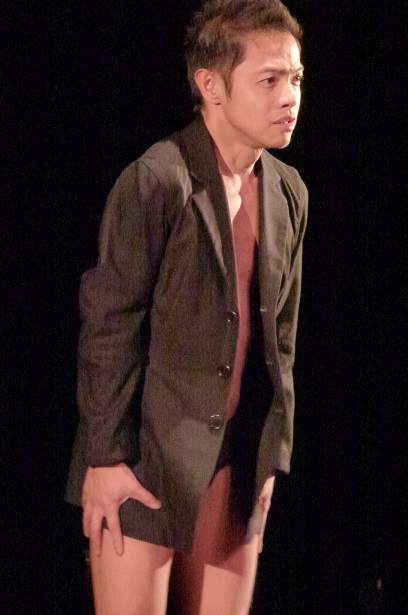
    Roberto Villanueva’s solo Incomplete – performed to solo guitar – found the dancer clad in abbreviated black briefs and a dinner jacket. He alternately reveals and conceals his torso; the dance however is not provocative but instead reflects an inner dilemma: it’s sexy but not at all sexual. On the surface we can savor Roberto’s handsome physique, but there’s more going on beneath the exterior attraction. The apex of expression is reached in a long, slow-developing arabesque. As the solo ends, delicate tremors in the hands indicate the dancer has a lot on his mind. This dance is personal: while it exposes the dancer physically, in the end Roberto retains his mystique.

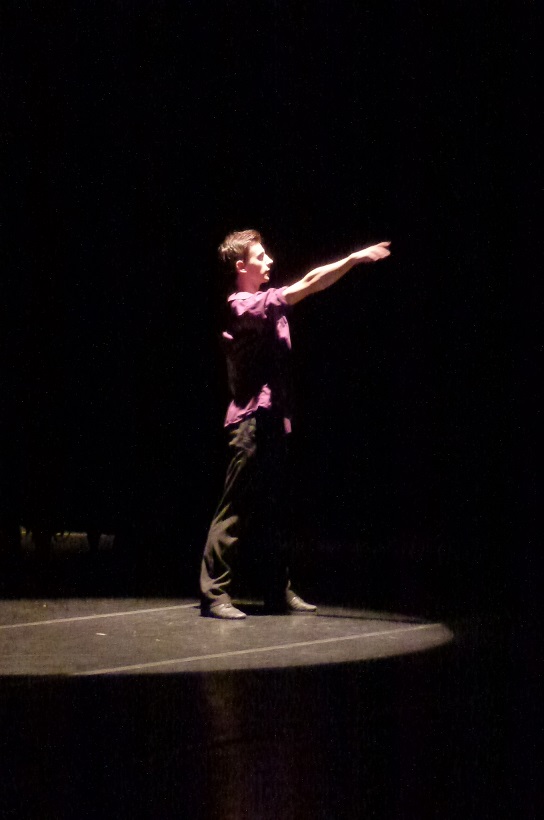
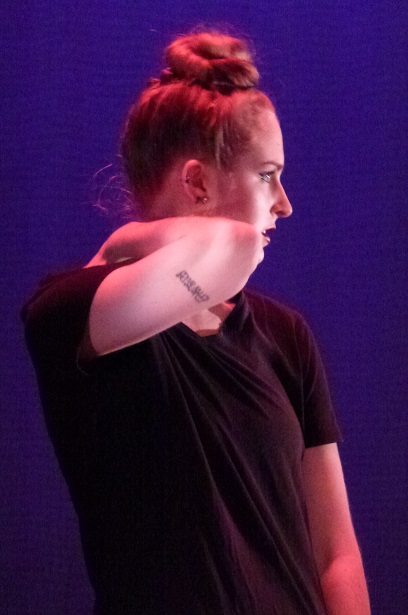
    I didn’t have very good luck taking pictures at the dress rehearsal, but here are a few of the individual dancers (sorry that I didn’t get everyone!):
    L1310169

    Christen Quattlebaum

    L1310302

    Trashina Conner

    L1310321

    Jonathan Breton

    L1310389

    Hunter Frederick Houde

    L1310525

    Roberto Villanueva

  • Gautier Capuçon @ The NY Philharmonic

    Gc

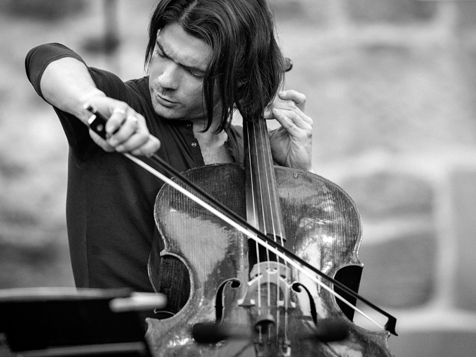
    Friday January 24th, 2014 matinee – Cellist Gautier Capuçon (above) gave an inspired rendering of the Shostakovich cello concerto #1 at this afternoon’s New York Philharmonic concert. Conducted by Andrey Boreyko, the programme was book-ended by works of two Russian composers with close ties to the world of classical ballet.

    The name Nikolai Tcherepnin immediately conjures visions of the Ballets Russes, for it was he who not only conducted the first performance of Diaghilev’s troupe in the West (on May 19th, 1909, at the Chatelet) but also composed the score of that evening’s opening ballet – Le Pavillon d’Armide – which swept the Parisians into a fever as they beheld Karsavina and Nijinsky onstage.

    Today the Philharmonic opened their concert with Tcherepnin’s tone poem The Enchanted Kingdom which dates from 1909-1910. The “kingdom” referred to in the work’s title is that of Katschei the Immortal – yes, the same sorcerer who was soon to appear in the Fokine/Stravinsky Firebird. In seems fact, Tchrepnin’s score may have been under consideration by Diaghilev as a setting for Fokine’s ballet. That didn’t transpire, but the score Tchrepnin left us is quite magical in its own right.

    The huge orchestra under Maestro Boreyko gave a richly-coloured performance: right from its sombre opening, this music reveals a vibrant sound-palette: celesta, piano and harp produce magical effects while solo wind voices add characterful touches. The cinematic central melody is simply gorgeous.

    Gautier Capuçon then took the stage for the Shostakovich; this charismatic artist took all the demands that the composer sets before the cellist in his stride. M. Capuçon’s playing of the central theme of the moderato literally gave me the chills, such was the spell he was able to cast; and as he played he sometimes seemed to be gazing off into some distant horizon: truly poetic. In the very long and technically demanding cadenza, the cellist’s clarity and his mastery of dynamics was most impressive – and a great smile illuminated his face when this sustained solo passage came to an end and the orchestra began to play again. Capuçon’s playing won the audience’s unstinting praise, and after the customary bows with the conductor the soloist was called out yet again for a solo bow, evoking a standing ovation.

    The Shostakovich was excellently played by the artists of the Philharmonic, with the prominent horn solos finding Philip Myers at his finest: amazingly plush sound, a real treat for the ear.

    Boreyko

    Above: conductor Andrey Boreyko

    The Philharmonic’s final offering today was the Tchaikovsky Suite #3, immortalized for dance lovers in Balanchine’s marvelous ballet of the same name. Of course throughout this performance the Balanchine choreography unfolded in the mind’s eye. Is there any music so romantically overpowering as the Élégie, especially when played as sumptuously as it was today? Throughout the forty-minute piece (it seems much shorter when there’s dancing to be watched), Maestro Boreyko kept a precise pulse: he was especially adept in the subtle rhythmic shifts of the Valse, and the final polonaise was regally done. The playing was stellar.

  • GrahamDeconstructed: CAVE OF THE HEART

    Light-a-fire

    Thursday January 23rd, 2014 – Tonight Martha Graham’s CAVE OF THE HEART was danced in a studio setting at the Martha Graham Dance Company‘s home space on Bethune Street. Although described as an open rehearsal – the dancers wore practice clothes and the ballet’s Noguchi set pieces had already been shipped out West for the Company’s upcoming tour performances – the work’s power and immediacy provided a vibrant theatrical experience.

    In both her opening remarks and in a Q & A at the end of the evening, the Company’s artistic director Janet Eilber gave us valuable insights into CAVE OF THE HEART. It was interesting to learn, for example, that Graham first approached Aaron Copland to write the music for this work which she was conceiving: Copland demurred. She then turned to the Mexican composer Carlos Chavez who delivered a score that  the choreographer found unsuited to her needs (she eventually set another work, DARK MEADOW, to the Chavez music…and now my curiosity is piqued indeed: I want to see it!). And so it was Samuel Barber who crafted the music that became CAVE OF THE HEART; later Barber excerpted his famed piece Medea’s Dance of Vengeance from the score. 

    Before showing us the work, Janet asked each of the participating dancers to demonstrate a key movement motif from their role; these provide keys to the individual characters. Once the ballet began, the communicative powers of the four dancers – Graham has stripped the Medea story down to the bare essentials – took things beyond the context of a rehearsal: they danced with an expressive clarity that revealed yet again the depth of Graham’s genius.

    Miki Orihara’s Medea moved from the torment of jealousy to final triumph in a performance rich in intimate detail, and Tadej Brdnik’s compelling athleticism as Jason perfectly embodied the character’s masculine vanity. At once majestic and lyrical, Carrie Ellmore-Tallitsch’s appeared as The Chorus with her elegant wingspan and the face of a goddess. Jacquelyn Elder’s princess was lovely in her bridal innocence and terrifying as Medea’s wedding gift – a poisoned crown – began to work its insidious power. Together these generous artists gave us a richly rewarding evening, so inspiring to watch at close range.

    The Martha Graham Dance Company will be at New York’s City Center in March. Details here.

  • Parsons Dance at The Joyce

    Parsons-dance

    Sunday January 19th, 2014 (evening performance) – Parsons Dance are holding forth at The Joyce for a two-week season. Due to my ever-crowded calendar, this was my only chance to see them this time around. It was a typically top-flight Parsons programme, danced with the artistry and boundless verve I’ve come to expect from the Company over my long years of following them. The Company are celebrating 30 years of dancing…and I feel I’ve been with them almost from day one. 

    Introduction is a Parsons premiere and it is just what the title says: the audience is introduced to each member of the Company. David’s longtime lighting designer Howell Binkley has done the dancers proud yet again – Binkley lit all but one of the danceworks seen today. Rubin Kodheli‘s colorful score sets the stage as the Company’s luscious Italian firecracker Elena D’Amario steps forth first in a vibrant solo passage; and then we meet in turn the rest of the dancers: welcome to newcomers Geena Pacareu and Omar Roman De Jesus, and a warm welcome-back to Parsons favorites Sarah Braverman and Miguel Quinones. The lively and lyrical Christina Ilisije and those two handsome devils – Steve Vaughn and Ian Spring – are essential members of the Parsons family.

    Brothers is next: typically, Steve and Ian bounced back immediately from the opening work and were back onstage seconds later to give classic Parsons-style energy to this two boyz duet: an athletic and witty piece (co-choreographed by Parsons and Daniel Ezralow). To a quirky Stravinsky score (Concertino for 12 Instruments) the two boys nudge, flip, twist and turn their way thru this comradely duet. 

    Parsons Dance commissioned The Hunt from choreographer Robert Battle in 2001. Set to a savage, compulsive percussion score by Les Tambours du Bronx, this amazing piece is being alternately danced by the men and the women of Parsons Dance during this Joyce season. Today we had the men – Miguel Quinones, Steve Vaughn, Ian Spring, and Omar Roman de Jesus – and what a sensational performance they gave! Clad in long black skirts lined in blood red, the dancers move with fercious attack through this almost violent choreography. The audience seemed held in a state of amazement by the sheer dynamic passion of both the music and the movement and gave the guys a massive ovation at the end, so thoroughly deserved.

    Miles Davis’ “So What?” sets the stage for a jazzy quartet, Kind of Blue, danced with tenderness and a touch of seduction by Mlles. Ilisije and D’Amario along with Ian Spring and Omar Roman De Jesus. This was an interlude of near-calm in an otherwise power-packed programme, and Mr. De Jesus seems already to be developing a fan club among Parsons aficianados.   

    Steve Vaughn enjoyed a rock-star triumph in the famed Parsons solo Caught; last year I had the good fortune of watching Steve in one of his rehearsals for this challenging dancework: an iconic piece in which the dancer – caught by strobe flashes – seems to literally be walking on air. Timing and stamina are the keys to success here: the solo contains more that 100 jumps which must be perfectly coordinated with the lighting. Steve, with his boyishly beautiful torso, simply thrilled the crowd, and at the end he basked in wave after wave of applause and cheers, bowing gallantly to the adoring throng.

    Nascimento Novo is a superb Parsons closing work: the music of the Brazilian composer Milton Nascimento seems tailor-made for the Parsons style and in this (yet again) marvelously lit ensemble piece the dancers celebrate, sway, and seduce with effortless charismatic appeal. Two duets – one for Sarah and Christina, the second for Elena and Steve – are highlights in this evocative tapestry of dance which evoked sultry sunlight on a freezing Winter’s evening.

    The frosting on this delicious 30th-birthday cake was running into Abby Silva Gavezzoli, a beloved Parsons star who has taken some time off to raise her adorable son. So nice to see her, it really made my evening complete.

    I missed my usual rehearsal invite to David’s studio this year where I might have had the opportunity to bring a photographer to capture the new configuration of dancers; but perhaps there’ll be another chance at some point.

    What has maintained over the years of watching Parsons Dance is the sensation of dance at its most satisfying: no filler, no marking time or standing about; just perpetual motion and – always – remarkable dancing.

  • Grace at Christmas

    557938_10151566968317034_1076314972_n

    Dancer Grace Song, rehearsing for Jacqulyn Buglisi’s Table of Silence. Photo by Paul B Goode. 

  • SenseDance @ Peridance

    6a00d8341c4e3853ef017c31d57b4e970b-800wi

    Above: Erin Ginn of SenseDance

    Sunday November 24th, 2013 – Henning Rubsam’s SenseDance in a programme of new and older works at Peridance. On a frigid evening I trekked across The Village to attend this performance in which several friends were involved. The performance, which played to a full house, started late which put me in a grumpy funk. As the evening progressed, the dancers slowly dispelled my cranky mood.

    Much of the programme was given over to duets, well-danced, in many different styles. The first two of these were from past works: Sarabande from MERCILESS BEAUTY (2006) is a straight-up ballet pas de deux to Bach danced by the lyrically lovely Erin Ginn and and her partner, Nathan Bland; it ends with the girl borne off in a sustained overhead lift. On a more playful note, Save The Country from the 1997 Laura Nyro tribute ART OF LOVE found Jacqueline Stewart and Oisín Monaghan rolling around on the floor.

    Three premieres sustained the duet motif: in the first – RUSSIAN LESSON – to a ‘spoken’ score, Juan Rodriguez and Matt Van overcome a language barrier with some athletic sparring mixed with some cozying up: it feels like they are headed for a hotel room. This piece could be sub-titled Found In Translation.

    6a00d8341c4e3853ef01538f8b348f970b-800wi

    Above: Temple Kemezis, photo by Matt Murphy

    Spoken word features also in BORDERS, a stylized and other-worldly duet danced by Temple Kemezis and  Henning Rubsam; this displayed Mr. Rubsam’s choreography at its most impressive, and Temple, with her unique look and potent dancing, seemed wonderfully at home in this dancescape.

    6a00d8341c4e3853ef0148c70fd5a0970c

    Above: Oisín Monaghan, photo by Kokyat

    Oisín Monaghan then joined Heidi Green in a ‘young romance” duet – AN EINSAMER QUELLE – set to music of Richard Strauss. Some dancers are blessed with a unique and instantly identifiable ‘signature’ and Oisín is surely one of these. To date, no choreographer seems to have truly captured Oisín’s essence in dance – several have come very, very close – but perhaps it is exactly that elusive quality that keeps us fascinated. Here he and Ms. Green gave an attractive performance.

    Henning Rubsam’s HALF-LIFE is something of a signature piece for the choreographer. RELOAD has now been added to the title, and the cast has expanded from four to seven. I felt the original quartet setting to be preferable – our focus is now drawn in too many different directions as the dancers come and go. I missed the clarity and crispness of the original. Nevertheless, the ballet was very well-danced tonight with an outstanding performance from Matt Van.

    The evening’s final new work was SARAO, a jazzy pas de deux to music by Ricardo Llorca. This piece featured some of the evening’s most imaginative partnering and was finely executed by Erin Ginn & Matt Van. 

    6a00d8341c4e3853ef0192ac7d1e48970d-800wi

    Above: Lloyd Knight, photo by Nir Arieli

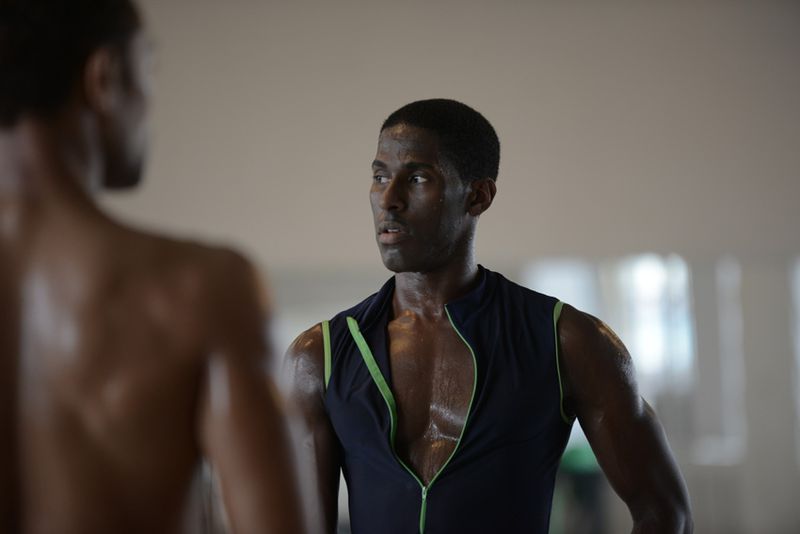
    Making a guest appearance with SenseDance, Lloyd Knight of the Martha Graham Dance Company joined Temple Kemezis in CAVES, a 2006 duet to a Ricardo Llorca score with a Spanish guitar ambiance. The two dancers brought both their physical prowess and their strong personalities to bear on this work which seems to alternate between allure and antagonism. Ms. Kemezis executes deep pliés in second and a sort of crab-walk reminiscent of Wendy Whelan in Christopher Wheeldon’s MORPHOSES. Lloyd Knight’s authoritative partnering, keen feeling for dynamic tension, and tantalizing torso all meshed into a compellingly charismatic performance. In this suggestive’ battle of the sexes’ duet, the woman wins – doesn’t she always? Sustained applause followed this pas de deux, though the bows were saved for the end of the evening.

    Excerpts from Henning Rubsam’s 2012 BRAHMS DANCES closed the evening on a romantic note. Duets for Ms. Stewart with Matt Van and Ms. Green with Nathan Bland had a nocturnal feeling, and then a large ensemble passage which evoked a waltz-filled ballroom.

  • Columbia Ballet Collaborative @ MMAC

    L1280914

    Above: Audrey Crabtree-Hannigan of Columbia Ballet Collaborative; she appeared tonight in works by Dan Pahl and Donna Salgado

    Friday November 22, 2013 – Columbia Ballet Collaborative danced for a packed house at Manhattan Movement and Arts Center tonight; extra rows of chairs were set out to accomodate an over-flow crowd which included many dancers and choreographers. Enthusiasm ran high for the six new works which were offered: well-contrasted pieces in a well-lit production and featuring an energetic ensemble of dancers, many of whom appeared in more than one ballet.

    Claudia Schreier’s Harmonic opened the evening: yet another success for this choreographer who has an instinctive gift for movement and musicality. Her pas de quatre, to vividly danceable music by Douwe Eisenga, was well-danced by John Poppe, Rebecca Green, Sarah Silverblatt-Buser and Claire Wampler, each of whom has a solo passage woven into the fast-paced ensemble; John partners each of the girls in turn. Strong individual performances and good eye contact between the dancers held our focus, with excellent use of space and interesting patterns evolving in this seamless dancework. I have a feeling we’ll be seeing this piece again.

    Dan Pahl set his new work The Sum of Its Parts to music by The Shanghai Restoration Project. The score opens like a giant machine, progressing to elements of rock, electric fiddle, and club music. Six girls filled the space with so much energy that they seemed like a dozen dancers: some really fine individual work here. Wearing metallic silver tops, the girls look like contemporary Valkyries with a suggestive sway in their movement. Two chairs are sat in, danced on and vaulted over; there’s quite a bit of floor-work and it’s very well integrated into the ballet’s overall structure.

    6a00d8341c4e3853ef019afffd9bfa970d-800wi

    Above: Rebecca Walden danced in ballets by Ja’ Malik and Richard Isaac

    Ja’ Malik created an on-pointe ballet to Philip Glass’s exciting four-part suite ‘Company’; the ballet is entitled Brief Company. Ja’ makes excellent use of the classic ballet vocabulary in a contemporary setting and his dancers met all the demands of Ja’s choreography with both energy and artistry. Rebecca Walden opens the ballet in a beautiful solo passage; clad in pale aquamarine, she then begins to circle the stage in silence. In the darkness she comes upon the prone body of a man: guest dancer Joshua Henry. He rises as if from deep sleep and they dance a duet with complex partering motifs. Mr. Henry, tall and powerful of physique, was a good match for the impassioned Ms. Walden. Four girls form an integrated ensemble around the central couple. Mr. Henry’s expressive solo is danced in a patch of light, and then the ballet seemed poised to end in an agitated ensemble movement; but instead Ja’  interestingly clears the stage, leaving Ms. Walden to circle the space, resuming her silent, questing walk as darkness falls. Ja’s ballet elicited a whooping ovation from the crowd.

    Richard Isaac has created a contemporary ‘white ballet’ with its title Night Music drawn from Mozart’s immortal ‘Eine Kleine Nachtmusik’. The piece has a formal feeling, the dancers stepping out of a line-up to perform solos in the opening passage which is set to an Alexander Rastakov Mozart-hommage. As the lights blaze up, a spacious quartet ensues, danced to the Nachtmusik proper. After a structured walkabout the dancers re-group in a row before erupting into movement again. An especially intriguing segment finds Rebecca Walden being manipulated like a doll by her fellow dancers (Dan Pahl, Delaney Wing and Ms. Silverblatt-Buser).   

    L1280636

    Above: Rebecca Green appeared in new works by Devin Alberda and Claudia Schreier

    A relentess pulsing rhythm marks the opening of Devin Alberda’s pas de trois entitled Sissy Fists, the title a play on ‘Sisyphus’ but loaded with other implications. To music by Anna Meredith, two tall boys – John Poppe and Taylor Minich, in sleek body tights – are joined by Rebecca Green, dancing on pointe. The boys seem to be bonding but Ms. Green tends to intervene. Tension and traces of levity thread thru this dancework; as the music turns ominous, the boys’ mutual partnering becomes more fervent. The choreography’s dynamics reflect the music; there’s a darkening quality that I really like. It’s a ballet I want to see again.

    The evening’s largest piece, A Portrait of Growth, is an all-female ensemble work by Donna Salgado to music by the husband-and-wife duo Houses, is the programe’s finale. Exploring the development of self-identity, this dancework seems especially suited to a college-based company. The ten girls break from unison passages to individual expression; solos danced by Audrey Crabtree-Hannigan, Julia Davis-Porada and Melissa Kaufman-Gomez draw us to their distinctiveness. And there is a line-up from which each girl momentarily steps forward in a brief phrase with a personal hue. The ballet reflects a period of time when life seems fulls of promise and possibility.