Category: Dance

  • The Virtuoso Clarinetist @ CMS

    David_shifrin

    Above: clarinet virtuoso David Shifrin

    Tuesday November 19th, 2013 – A delightful programme of music celebrating the clarinet was featured at Chamber Music Society of Lincoln Center. The Society gathered a distinctive ensemble of artists tonight, among them one of my favorite singers, mezzo-soprano Sasha Cooke. This week I have the pleasure of experiencing Sasha’s artistry twice, for she follows up tonight’s chamber evening with performances of Britten’s Spring Symphony with the New York Philharmonic. 

    The Society’s Wu Han greeted us with irrepressible, energetic charm; she explained that she had left the evening’s programming up to Mr. Shifrin and then turned the stage over to the musicians. A packed house seemed eager to hear everything that was offered: again, CMS is the place to be for serious music-lovers.

    The evening commenced with an unusual Mozart adagio for two clarinets and three basset horns (K. 411) which the composer purportedly arranged as a sort of entree for the members of the Masonic lodge which he had joined in 1784. The piece is brief, with organ-like sonorities.   
    Sasha_Cooke_-_profile_-_credit_Rikki_Cooke

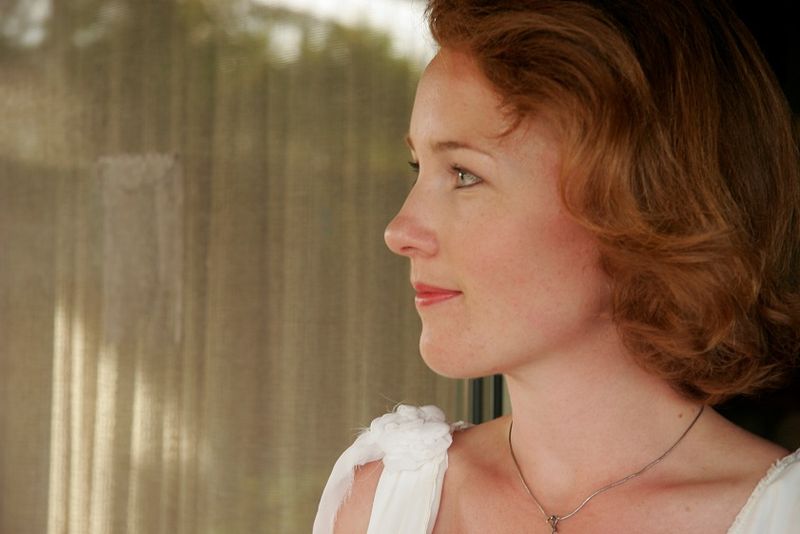
    Above: Sasha Cooke, photo by Rikki Cooke 

    In the splendid aria “Parto, parto…” from Mozart’s penultimate opera, LA CLEMENZA DI TITO, Sasha Cooke’s timbre seems to have taken on an added richness since I last heard her. The singer’s expressive qualities were, as ever, to the fore, and the power and beauty of her interpretation made me long to hear her at The Met again where lesser artists hold forth in roles that would suit Ms. Cooke to perfection. Be that as it may, her singing of the aria tonight, graced by Mr. Shifrin’s polished roulades, was a thoroughly engrossing musico-dramatic experience.  The Opus One Piano Quartet’s first-rate playing of this chamber arrangement was an ideal compliment to the singer and clarinetist. 
    Leaping forward from the 18th century to the 21st, Sasha Cooke displayed her versatility in the New York premiere performance of Lowell Liebermann‘s Four Seasons. In setting poems by Edna St. Vincent Millay, the composer seems to me to have crafted a contemporary masterpiece: his highly evocative, coloristic writing summons visions of the changing seasons with spine-tingling textures. There are several remarkable passages – the transition from Spring to Summer was especially marvelous – and the composer set The Death of Autumn twice, with the singer’s poetic response to the text varying in mood between the two. A chilly misterioso motif depicts swirls of snowflakes at the singer intones the beautiful ‘What lips my lips have kissed’ and the work closes with the poignant recollection of lost love: ‘But you were something more than young and sweet and fair – and the long year remenbers you’.

    Sasha Cooke, with her gift for communicating not just words but emotions, gave a sublime performance of this fascinating new work; Mr. Shifrin and the musicians of Opus One – Anne-Marie McDermott, Ida Kavafian, Steven Tenenbom and Peter Wiley – produced a glowing soundscape in which the voice was heard in all its affecting radiance.

    Following the intermission, Stravinsky’s Berceuses du chat were performed by Ms. Cooke and three clarinetists: Mr. Shifrin, Romie De Guise-Langlois, and Ashley William Smith. These wryly charming  lullabies were sung with soulful ‘Russian’ tone by the delightful Sasha.

    The evening’s second New York premiere, Christopher TheofanidisQuasi una fantasia is dedicated to Mr. Shifrin and was performed by him and fellow-clarinetist Chad Burrow, with the Opus One Quartet. Facing one another, the two clarinets engage in a musical conversation and sometimes blend in duet; the ensemble provide commentary and pulsing rhythmic motifs. 

    Sasha Cooke’s lovely rendering of four contrasting Mendelssohn lieder – accompanied by Ms. McDermott – was followed by the composer’s melodious Concertpiece No. #1 which was lovingly played by Mr. Shifrin with Mlles. De Guise-Langlois (on Basset horn) and McDermott at the Steinway.

    A rarity, Ponchielli’s Il Convegno (The Meeting), which featured Mr. Shifrin and Miss De Guise-Langlois in a gentle virtuoso dialogue backed by the ensemble, ended the evening. All was well – and beautifully played, of course – though I did feel that the Mendelssohn and Ponchielli were too similar in mood to be played back-to-back. I think interjecting the Stravinsky songs after the Mendelssohn Concertpiece might have set the two ensemble pieces in higher relief. 

    The Program:

    • Mozart Adagio in B-flat major for Two Clarinets and Three Basset Horns, K. 411 (1782)
    • Mozart “Parto! Ma tu ben mio” from La clemenza di Tito, K. 621 for Mezzo-Soprano, Clarinet, and Piano Quartet (1791)
    • Liebermann Four Seasons for Mezzo-Soprano, Clarinet, and Piano Quartet (2013) (New York Premiere)
    • Stravinsky Berceuses du chat (Cat’s Cradle Songs) for Voice and Three Clarinets (1915)
    • Theofanidis Quasi Una Fantasia for Two Clarinets and String Quartet (2013) (New York Premiere)
    • Mendelssohn Concertpiece No. 1 in F minor for Clarinet, Basset Horn, and Piano, Op. 113 (1832)
    • Mendelssohn Selected Songs for Mezzo-Soprano and Piano
    • Ponchielli Il Convegno (The Meeting), Divertimento for Two Clarinets and Strings (1868)

    The Artists:

  • MADboots Prepare for ACADEMY

    MADboots_rehearsal-9

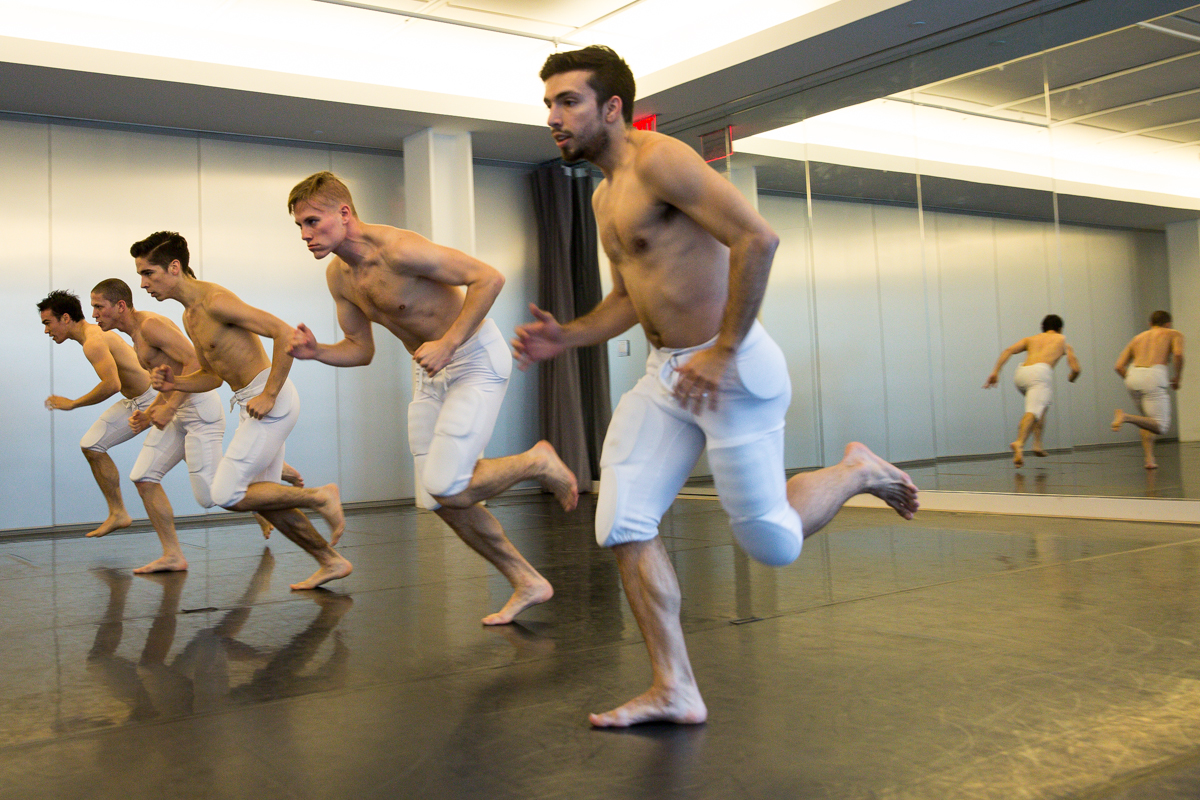
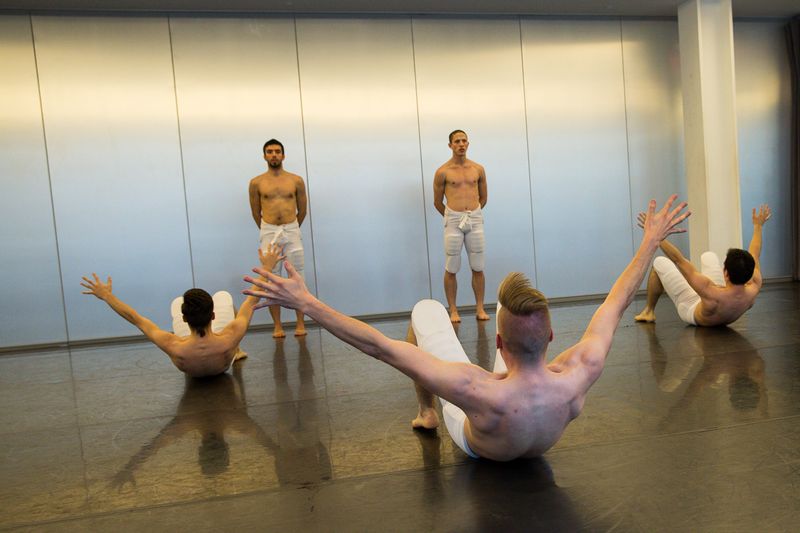
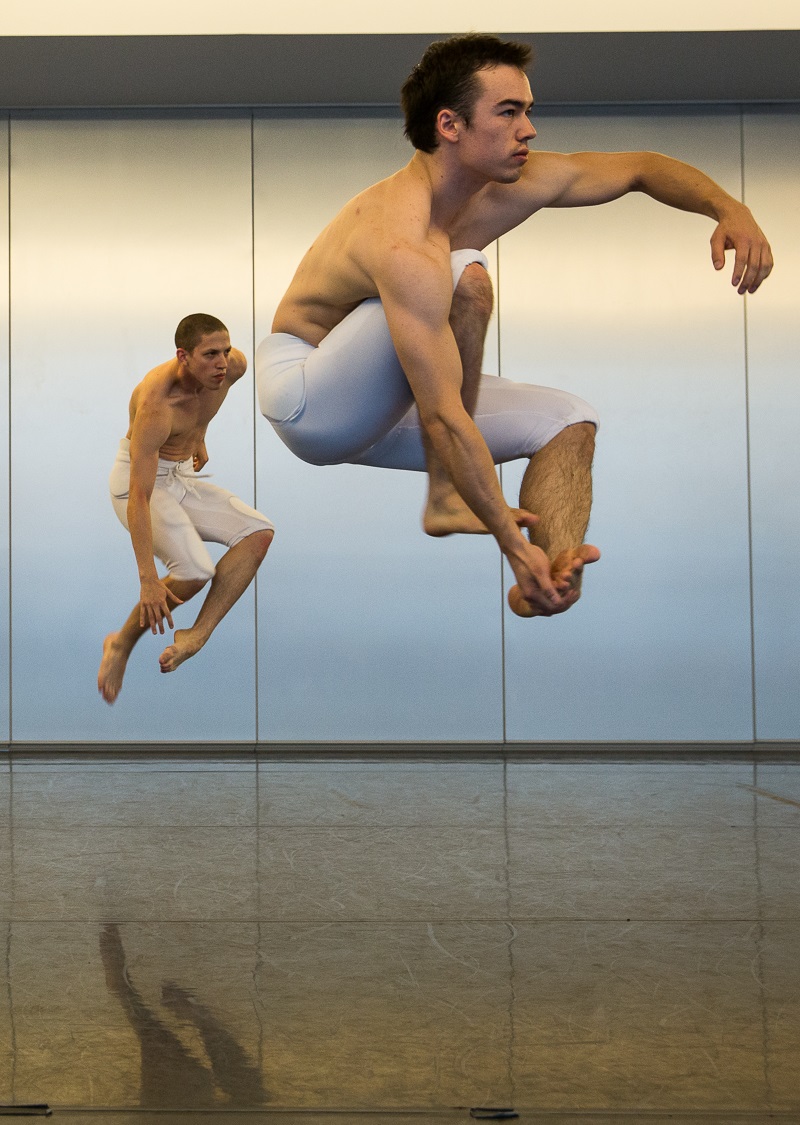
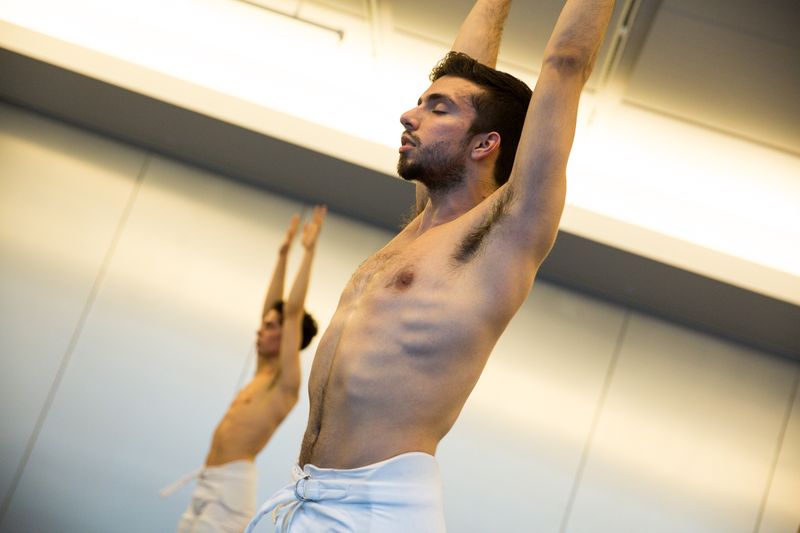
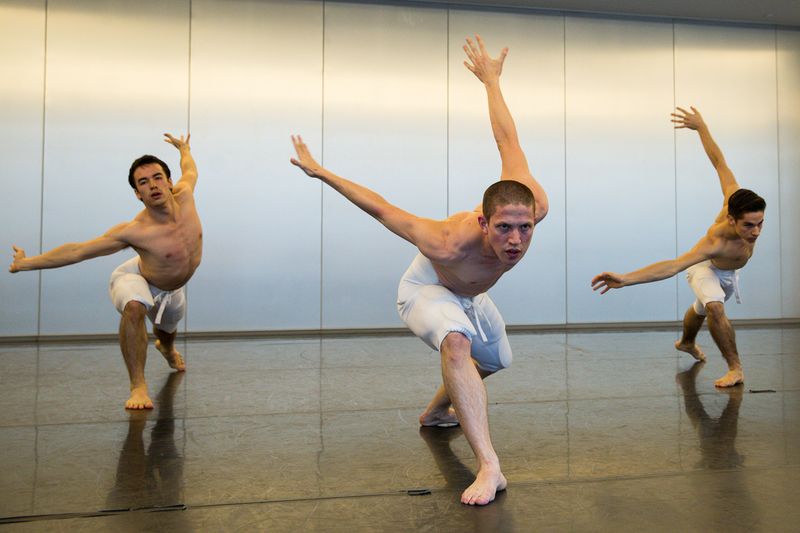
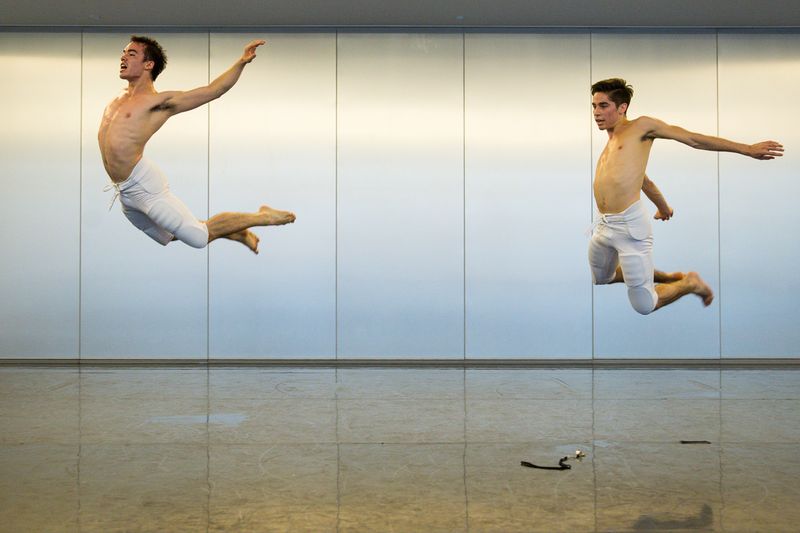
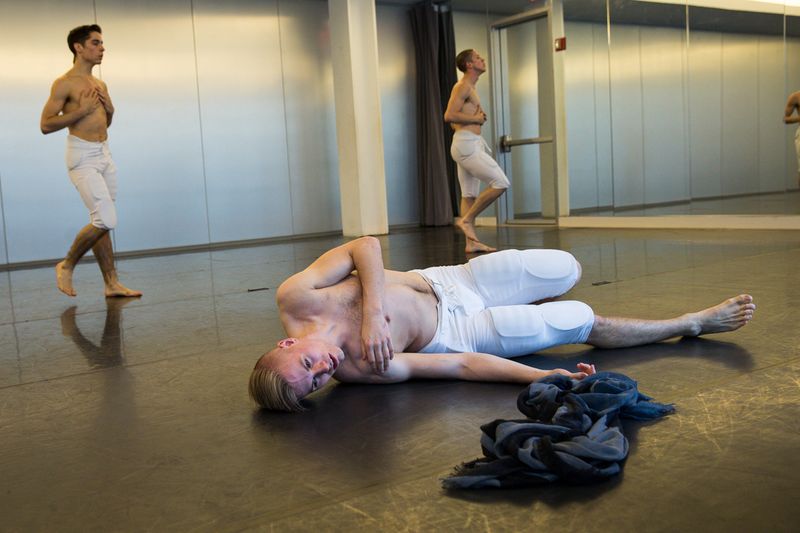
    Tuesday November 12, 2013 – Photographer Matt Murphy and I dropped in at New York Live Arts today to watch the MADboyz of MADboots working on their latest creation, ACADEMY.

    Jonathan Campbell and Austin Diaz, the founders of MADboots, were joined last season by Eli Bauer; and now the trio have embraced another new dancer, Garth Johnson, and also have a guest artist for this work: David Norsworthy. ACADEMY will be presented at the 92nd Street Y on December 7th and 8th, 2013. Information here.

    ACADEMY will stand as a counterpoise to the boys’ most recent previous creation, blue, which will be sharing the bill at the 92nd Street Y. Whereas blue is lyrical and intimate, ACADEMY is dynamic, intense and madly physical.

    My first thought when I heard that the MADboys were creating ACADEMY was that it would be about life at a prep school or first-year college – like something out of Maurice or Another Country – where young men would be experiencing both academic and athletic competition whilst at the same time grappling (sometimes literally) with their awakening sexuality and forming their first relationships. But in fact, it’s more like a military academy or a police training program: rigorous, sweaty, boisterously masculine, and highly competitive. 

    Calisthenics and running dominate the action, laced with poignant or disturbing moments of physical contact in which a transient glimmer of tenderness can be followed by almost violent abuse. The five dancers gave a full-tilt run-thru of the piece for me and Matt, and their generosity was much appreciated.

    Here are some of Matt’s images from the studio:

    MADboots_rehearsal-5

    David, Austin and Eli

    MADboots_rehearsal-11

    Jonathan

    MADboots_rehearsal-12

    MADboots_rehearsal-3

    Austin, David

    MADboots_rehearsal-4

    Garth

    MADboots_rehearsal-13

    Jonathan

    MADboots_rehearsal-15

    MADboots_rehearsal-14

    Garth

    MADboots_rehearsal-7

    David, Austin, Eli

    MADboots_rehearsal-17

    MADboots_rehearsal-18

    David, Eli

    MADboots_rehearsal-16

    David

    MADboots_rehearsal-8

    Garth (foreground)

    My thanks to Austin and Jonathan for giving me a preview of ACADEMY, and to Matt Murphy who managed to find a free hour in his madly busy schedule to come and photograph this rehearsal.

  • Joshua Beamish @ Ailey Citigroup Theater

    Joshua Beamish in PIERCED by MOVE the company 2

    Above: choreographer Joshua Beamish

    Saturday October 26, 2013 – The planned New York City premiere presentation of Joshua Beamish’s PIERCED at Ailey Citigroup had to be abandoned on very short notice due to extenuating circumstances. A combination of dancer injuries and a delay in obtaining visas (a result of the recent US government shutdown) caused the Canadian choreographer to assemble a new programme, literally on the spur of the moment. The evening proved rewarding in its own right, thanks to Joshua’s charismatic personality, his gifts as both choreographer and dancer, and the assistance of two of Gotham’s loveliest ladies: Deborah Wingert and Cathy Eilers.

    Cathy introduced the evening, describing how she fell under Joshua’s spell right from her first meeting with him at Joyce SoHo a few years ago. A film of a pas de deux from PIERCED was then shown, performed by Harrison James (National Ballet of Canada) and Jo-Ann Sundermeier (Smuin Ballet). The music is by David Lang, and the title PIERCED refers to Cupid’s arrow.

    Live dancing started with a solo that followed: Joshua – as the self-described ‘guardian of love’ – danced with hypnotic fluidity: his clarity of movement and caressive port de bras enhance his god-given handsomeness, creating a distinctive self-portrait.

    In an interview that followed, Deborah Wingert posed just the right questions so that we got to know Joshua – his process and his way of thinking – without compromising his personal mystique. Many dance interviews fall flat, but Deborah’s thorough understanding of dance from the inside out – as dancer, teacher, choreographer, stager and coach – assured an articulate and meaningful dialogue with Joshua, one coloured by honest emotion.

    For now we must put PIERCED on our wish-list and hope that a future opportunity will bring Joshua’s MOVE: the company to New York City in full force.

    Tonight’s performance continued with Jacklyn Wheatley of The Ailey School performing a new Beamish solo, Some is Lost, to music by Hauschka. The movement here is a feminine counter-poise to the solo Joshua danced earlier in the evening.

    Music from Bach’s cello suite #1 set the stage for Joshua’s expressive dancing of a solo from his 2011 work Allemande. Sticking with the music of the great masters, Vivaldi was then summoned for a particularly satisfying performamce of an extended excerpt from This Black Vale which premiered earlier this year. Davon Rainey, totally at home in Joshua Beamish’s flowing movement style, danced a solo and then a duet in which Joshua kept coming and going, their relationship a mystery. Davon’s second solo was a more animated piece, and then, as the music seemed to fracture, Joshua re-appeared for the evening’s final solo.

    Joshua Beamish will be dancing a duet he choreographed for Wendy Whelan and himself at The Joyce as part of Wendy’s production Restless Creature April 1st – 6th, 2014. Further details will be forthcoming.

  • Robin Becker’s INTO SUNLIGHT

    War-memorial dc

    Above: the Vietnam War Memorial in Washington DC

    Friday October 25th, 2013 – My association with Robin Becker’s dancework INTO SUNLIGHT, set during the Vietnam War era, stretches back to November 2010 when my dancer/friend Paul (Oisin) Monaghan suggested that Kokyat and I drop in to one of Robin’s rehearsals. I was immediately drawn to Robin’s movement style and to the theme of the work.

    Inspired by Pulitzer prize-winning author David Maraniss’s book THEY MARCHED INTO SUNLIGHT,
    Robin Becker has crafted an hour-long dancework with a musical score by Chris
    Lastovicka. While the events depicted –
    the ambush of a batallion of American soldiers in the Vietnam jungle and
    the protest against Dow Chemical at the University of Wisconsin – took
    place on two consecutive days in October of 1967, INTO SUNLIGHT
    resonates far beyond those specific incidents, and will continue to
    resonate as long as mankind resorts to warfare as a way of settling
    religious and idelogical differences – differences which will never be settled anyway.

    INTO SUNLIGHT was shown in June 2011 at the 92nd Street Y; now it has come to
    the Florence Gould Theater. For the most part, the leading dancers have
    retained their roles from the original cast: Nicole Sclafani, Yoko Sagimoto-Ikezawa, Lisa Clementi, Oisin Monaghan, Chazz Fenner-McBride and Edwardo Brito.  Sarah Parker is new to the Company and makes a beautiful impression.

    Over the two years since I saw this dancework, the original dancers have matured: in physique, technique and stagecraft, they now give the work more nuance and complexity while maintaining their individual appeal as personalities. This developmental process has given INTO SUNLIGHT a more polished and compelling look, without sacrificing freshness. The Company are supplemented by an ensemble of nine young dancers who bring their own faces and forms into play.

    Among the most vivid moments of INTO SUNLIGHT are
    two duets: in one, Nicole Sclafani and Paul Monaghan depict the dream a
    young woman had of her brother’s horrific death from a massive abdominal
    wound – a dream which came true. Later – in the work’s most poignant passage – Yoko Sugimoto-Ikezawa visits
    the grave of her beloved (the ensemble dancer Ricky Wenthen) where she seeks to
    connect with his spirit.

    There is also an animated trio for three soldiers – Oisin Monaghan, Chazz
    Fenner-McBride and Edwardo Brito – recalling the innocent rough-housing of their younger days while dealing with the realities of serving in a war in a far-away land and watching their buddies being killed or maimed. Chazz also has a physically demanding solo depicting the moment that West Point football hero Don
    Holleder rushed heedlessly onto the battleground towards his vanquished
    comrades only to be gunned down. The three boys are distinctive stage personalities: Oisin, pale and enigmatic; Edwardo with his easy moves, handsome torso and expressive face; and Chazz, who has lost his puppy-dog boyishness and is now a muscularized young man, moving with compelling energy.

    The work shifts between solemn rites and more animated emsemble passages; only near the end does the balance go off somewhat: the final two movements are perfomed mostly in slow-motion, the dancers re-arranging themselves in structures which then dissolve and re-form. As lovely as this is to watch, after a while it can’t sustain us visually and our focus begins to falter. Some compression here would make for a more powerful experience as the work moves to its pensive conclusion.

    But despite this concern, INTO SUNLIGHT is beautifully performed: it’s a dancework that is thought-provoking and meaningful, even as civilization continues to blunder thru war after war. I congratulate Robin Becker, Chris Lastovicka, and everyone involved in bringing this work to the stage.

  • Intermezzo Dance Company/Update

    _G1A0851

    Above: Carlos Lopez and Kurt Froman in the ‘drunken duet’ from Raymond Lukens’ ballet VEILS from Intermezzo Dance Company‘s debut performance at the 92nd Street Y; photo by Sarah Sterner

    Mary Cargill writes about the Intermezzo performance here, and Deborah Wingert covers it here.

    _G1A0918

    Above: Aran Bell and Kurt Froman in VEILS; photo by Sarah Sterner

    _G1A1002

    Above: Intermezzo ballerinas Kaitlyn Gilliland and Rina Barrantes; photo by Sarah Sterner

    IMG_3939

    After the show: Craig Salstein (center) with the Intermezzo dancers and the members of the Wyrick String Quartet.

  • Ballet Next: New Works-in-Progress

    L1270067

    Above: Michele Wiles of Ballet Next

    Monday October 21st, 2013 – Ballet Next had a huge turn-out (intentional pun!) for their choreographic exhibition at Ailey tonight. Three works being created for the Company’s upcoming season at New York Live Arts were shown, all performed to live music under the direction of cellist Elad Kabilio.

    The dates for the Ballet Next performances at New York Live Arts are January 13th – 18th, 2014; further information will be forthcoming.


    L1260983

    Above: violinist Mario Gotoh played the Chaconne from the ‘Partita #2′  for the pas de deux entitled Bach 260, choreographed by Robert Sher-Machernndl, and danced by Michele Wiles and Mr. Machernndl (photo below).


    L1270057

    This duet, anchored in the classic vocabulary, takes a contemporary overlay with elements of pursuit and capture carrying the dancers about the space in movement that both sustains and sometimes counter-acts the Bach score, which Ms. Gotoh played so beautifully.


    L1270122

    All the Drops of Water
    is a duet choreographed by Michele Wiles and danced by Tiffany Mangulabnan and Ms Wiles (above). The music, a lyrical quintet by Max Richter, was performed by Hajnal Karman Pivnik and Ms. Gotoh (violins), Caroline Gilbert (viola), Mr. Kabilio (cello) and Ben Laude (piano). The musicians were seated literally inches away from me – in fact, I could read Hajnal’s score – while the two dancers in deep blue with their hair down seemed like contemporary nymphs. The choreography has a restless quality, inter-laced with moments of repose and tenderness.


    L1270222

    Surmisable Units is an ensemble work with choreography by Brian Reeder. The dancers (above) are Tiffany Mangulabanan, Michele Wiles, Steven Melendez, Kaitlyn Gilliland, and Brittany Cioce. The score, Steve Reich’s tricky and repetitive ‘Piano Phase‘, was played by Peter Dugan and Ben Laude.

    The choreography utilizes the space in quirky ways, with the dancers sometimes standing behind the two pianos (which are center-stage) and executing semaphoric arm gestures. At times the dancers wear metallic-silver face masks, making them anonymous. Solo dancing is woven in, and the combinations echo the speed and articulation of the relentless musical pulse.


    L1270157

    Above: Kaitlyn Gilliland and Michele Wiles in Surmisible Units.

    The large crowd of Company friends and supporters seemed very taken with the dancing and the music; I look forward to seeing these works in their staged settings at NYLA in the new year.

  • Lar Lubovitch @ The Joyce – Program B

    6a00d8341c4e3853ef017d3dc260d3970c

    Above: Kate Skarpetowska and Brian McGinnis in Lar Lubovitch’s CRISIS VARIATIONS; photo by Kokyat

    Sunday matinee October 20th, 2013 – Lar Lubovitch Dance Company‘s 45th anniversary was celebrated this afternoon at The Joyce as the Company marked the finale of their two-week season. Two familiar works – Transparent Things and Crisis Variations – were followed by a trio of new pieces: a stunning all-male ensemble work called As Sleep Befell, a new duet choreographed by Company dancer Kate Skarpetowska entitled Listen, and an over-the-top cowboy caper Crazy 8s. If the dancers were feeling any end-of-season fatigue, it didn’t show. They danced their hearts out.

    Family_of_Saltimbanques

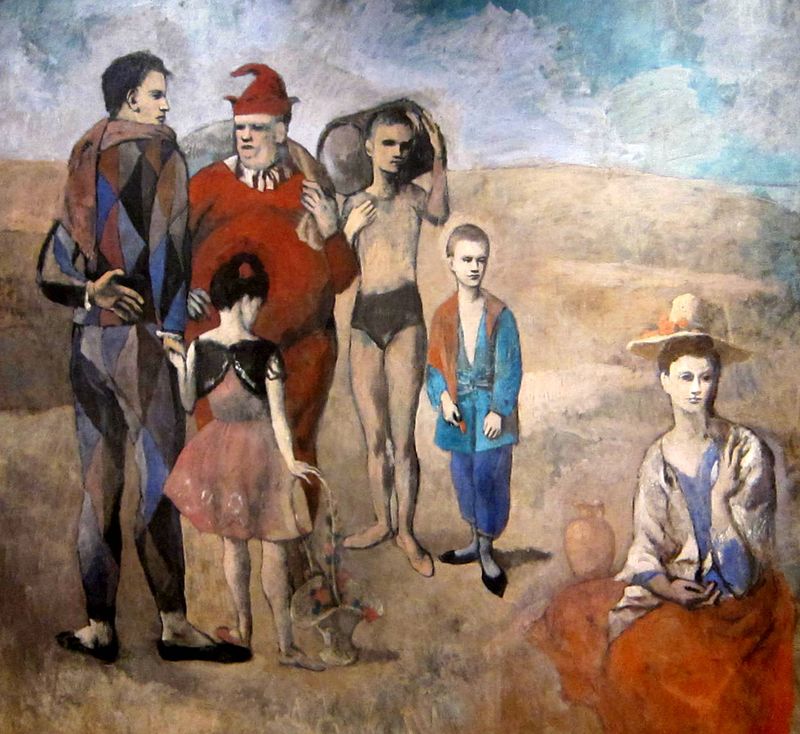
    Lar Lubovitch was inspired by the Picasso painting ‘Family of Saltimbanques‘ (above) for his 2012 ballet Transparent Things, set to the Debussy string quartet in G-minor. With the score performed live onstage by the Bryant Park Quartet, the union of music and dance was celebrated by the charming characterizations of the six dancers, each costumed exactly like a figure in the painting. 

    This ballet weaves a very particular spell; the melding of art, music and movement gives it a Ballets Russes feeling – Diaghilev would approve, I am sure. The musicians played so well, and the dancers excelled. Attila Joey Csiki gave a wonderfully expressive performance as the Harlequin figure, his movement so fluent and graceful. As the quartet’s third movement draws to a close, the dancers invade the musicians’ space and wriggle their way between the chairs; as the light fades, Attila gently lays his head against the cello. A lovely murmur passed thru the house at that moment.

    But the quartet has another movement still to come, and although it seemed to me that a perfect ending might have been forsaken, the actual end of the ballet is equally well-judged and drew more sighs of admiration from the crowd. The dancers – Katarzyna Skarpetowska, Laura Rutledge, Brian McGinnis, Clifton Brown and Reed Luplau (a dreamy Blue Boy) – were all endearing as individuals and, in addition to Attila’s perfect rendering of Harlequin, made the ballet a poetic experience.

    Lar’s CRISIS VARIATIONS is set to a nightmarish score by Yevgeny Sharlat which features the unusual juxtaposition of harpsichord and saxophone; glimmers of melody shoot thru a dark, dense cloud of sound. This turbulent ballet is essentially an extended pas de deux for two remarkable dancers: Kate Skarpetowska and Brian McGinnis. Their partnering is risky, passionate but unromantic, and they perform it with unfettered physicality and angst. The ensemble – Nicole Corea, Laura Rutledge, Jonathan Alsberry, Reed Luplau and Anthony Bocconi – lay down, writhe. pile up, and periodically seem to try to escape from this ongoing dream. The ballet ends on a quizzical note as Kate suddenly vanishes beneath a mound of bodies.

    Both of these first two works seem to have taken on new depths and fascinations since their premieres, showing that the more we devote ourselves to watching dance the more we will see.

    UI3A4733

    Above: from AS SLEEP BEFELL, photo by Steven Schreiber

    After the second intermission, new works were brought forth: the first of these, Lar’s AS SLEEP BEFELL, was a staggeringly beautiful experience. Once again the unity of music, dance and setting combined to please, and to seduce. The musicians of Le Train Bleu are ranged in a semi-circle at the rear of the stage: all dressed in casual summer whites, they are barefooted. They strike up Paola Prestini‘s multi-hued score, conducted by Ransom Wilson. A tall, white-gowned priestess -vocalist Helga Davis – begins her chant which takes her from distrubing growls in chest voice to uncanny, sustained high tones; a throaty quality imbues her singing with a raw earthiness.

    Ranged on the floor are six male dancers – Clifton Brown, Jonathan Alsberry, Reed Luplau, Anthony Bocconi, Oliver Greene-Cramer and Tobin del Cuore. They are bare-chested and wearing long diaphanous white skirts. They rise in a tribal ritual of dance that is primitive, sensuous, and hypnotic to behold. Expressive port de bras, fluid torsos, and long, muscular legs emerging from the white gowns create an alluring vision of male beauty. To a seductive rhythm, they link arms and sway in unison: a provocative passage.

    AS SLEEP BEFELL might be viewed as a male counterpart to the sisterhood Jerome Robbins created in his masterpiece ANTIQUE EPIGRAPHS. Both ballets evoke communal rites and timeless visions of ancient realms and forgotten gods. 

    UI3A4867

    Above: Nicole Corea and Reed Luplau in LISTEN, photo by Steven Schreiber

    Kate Skarpetowska also turns to the music of Paola Prestini for her new pas de deux LISTEN. This duet will eventually be half of a longer work but even as it stands now, it’s another excellent entry into Ms. Skarpetowska’s catalog of work. In a shaft of bright light, Nicole Corea and Reed Luplau seem to be having a conversation set against Ms. Prestini’s elaborate clockwork score. The movement is restless and quirky as the energy passes back and forth between the two dancers. The interjection of a soulful cello theme brings a new element to the ballet; then Nicole suddenly vanishes, leaving Reed to dance an animated solo. 

    Nicole and Reed make a perfect pairing, and I’ll look forward to seeing the resolution of this duet. This was my fourth experience with Kate Skarpetowska’s choreographic work; in her musicality, her sense of visual poetry, and her imaginative use of both the physical and emotional characteristics of her dancers, she is already taking a distinctive place in the choreographic community.

    IMG_8621

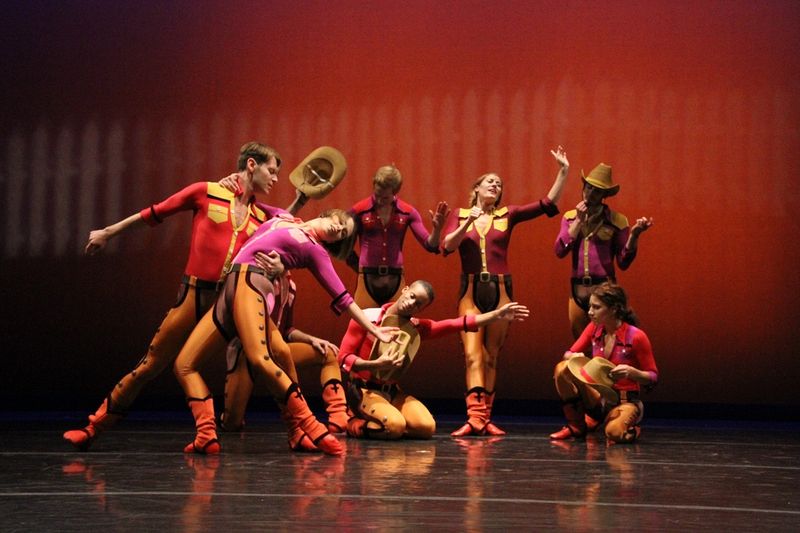
    Above: from CRAZY 8s, photo by Phyllis McCabe

    The afternoon ended with a terrific little ballet called CRAZY 8s. After a half-century of creativity, a choerographer is entitled to a bit of fun, and Lar Lubovitch took off on a totally unexpected tangent with this piece which spoofs hoe-downs, square dancing, the Grand Ole Opry, the rodeo, and the whole cowboy culture. The score is a fractured mash-up of Wild West rhythms, square dance calls, and a country-Western heartbreak song. The dancers, clad in garish bright yellow tights and ten-gallon hats, threw high-falutin’ artsy hogwash to the prairie winds and set to it with tongues-in-cheeks and a glint in their eyes. A special howdy-do to Jonathan Alsberry for his crazy/sexy-boy solo. This deft little romp sent the crowd home in high spirits.

  • San Francisco Ballet @ Lincoln Center

     86a4391427c16a88026b98851ca7d934

    Above: San Francisco Ballet‘s Vitor Luiz and Vanessa Zahorian in Helgi Tomasson’s TRIO; photo © Erik Tomasson

    Saturday October 19th, 2013 (evening) – Welcoming back to New York City one of the world’s greatest ballet companies: San Francisco Ballet!  I had hoped to attend both of the Company’s programs during their first week at Lincoln Center, but things didn’t turn out that way. When the Company were last here in 2008, I went to see everything they offered, and I fell in love with all the dancers. Fortunately tonight I was able to see many of those beautiful dancers again, though I missed some other favorites – like Lorena Feijoo and Taras Domitro. I very much admired the Company’s programming, bringing works to New York City that we’ve not seen before. 

    Triotomassonsfb

    Above: the Company in Helgi Tomasson’s TRIO; photo © Erik Tomasson

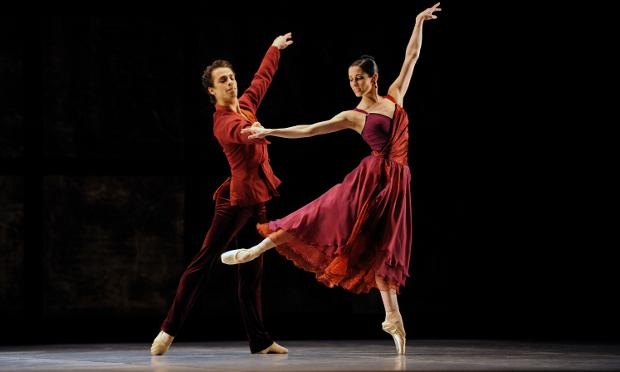
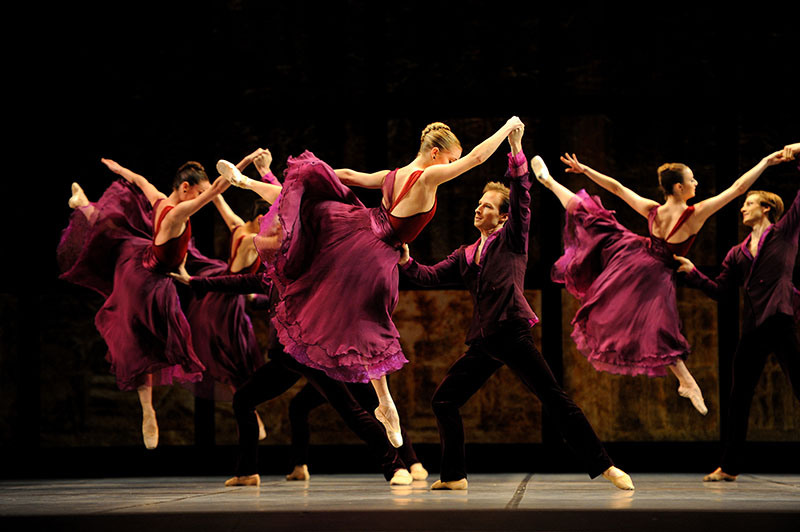
    Helgi Tomasson’s TRIO, which opened the performance, is a four-movement work in the Romantic style danced before an antique/Renaissance backdrop (by Alexander V Nichols). Mark Zappone’s costumes, in shades of wine and dusty Autumn flame, set the dancers off beautifully. Tomasson’s ballets always please the ear as well as the eye: TRIO is danced to Tchaikovsky’s richly melodic Souvenir de Florence.

    After a striking entrée where the ballerina is held aloft, the gorgeously elegant, the dark-haired Vanessa Zahorian swirls thru lovely supported pirouettes and covers the space beautifully with her joyous dance; her cavalier, Vitor Luiz, shows off some unusual flourishes in his combinations. Their duet, backed by the ensemble, is filled with demanding partnering motifs; they gave a wonderful performance, setting the tone for the entire evening.

    Et-trio-sarah-van-patten-tiit-helimets-skip_1000

    Above: Sarah Van Patten and Tiit Helimets in TRIO; photo © Erik Tomasson

    New York City has Wendy Whelan and San Francisco has Sarah Van Patten: I feel these two dancers might be sisters under the skin. Ms. Van Patten’s striking presence and passionate physicality transcend the steps and music. In the adagio of TRIO she appears first in a sensual duet with the marvelous Tiit Helimets; we are basking in their expressive perfection when the charismatic Anthony Spaulding suddenly appears, making his own claim to the ballerina. The trio’s passions and tensions ebb and flow thru their pas de trois, a finely-crafted dance drama.

    Maria Kochetkova, a petite ballerina with who radiates enormous charm and technical authority, dazzled the audience with her ebullient dancing; she and her vividly handsome partner Davit Karapetyan led the ballet’s third and fourth movements which range from classic partnering à la Russe to some stylized motifs that maintained the ballet’s freshness.

    Among the ensemble, soloist Hansuke Yamamoto made an outstanding impression. This Tomasson ballet made me crave a revival of his 2000 Beethoven work for New York City Ballet: PRISM

    Martin West
    conducted the Tchaikovsky score for TRIO and also had the baton for the evening’s second work: Christopher Wheeldon’s GHOSTS set to music by C F Kip Winger.

    Et-ghosts-yuan-yuan-tan-damian-smith_1000

    Above: Yuan Yuan Tan and Damian Smith in Wheeldon’s GHOSTS. Photo © Erik Tomasson.

    Christopher Wheeldon’s GHOSTS, which premiered in 2010, is performed by an ensemble of dancers in gossamer white beneath the pallid glow of a full moon. CF Kip Winger’s score has a cinematic feel, with passages of Romantic styling mingled with quirky, more angular effects.

    Christopher Wheeldon (who was on the Promenade this evening during the intermission) describes GHOSTS as a “mass gathering of souls … creating only atmosphere, not story.” The ballet’s marriage of music and mood evoke a dreamworld in which the dancers move with sonnambulistic grace, often falling to the floor only to rise again in a restless quest for some elusive sense of closure.

    The ravishing Yuan Yuan Tan and her superb partner Damian Smith perform an ethereal pas de deux; Seeing Yuan Yuan Tan onstage again reminded me of a very special hour Kokyat and I spent in Jessica Lang’s studio two years ago when the ballerina was rehearsing with Clifton Brown for an appearance at Fall for Dance.

    Et-ghosts-sofiane-sylve-leg-reach_1000

    Sofiane Sylve (above in a © Erik Tomasson photo) is a more restless spirit: the beauteous ballerina is still
    missed here at Lincoln Center where she danced as a principal at New
    York City Ballet from 2003 – 2007. Sylve in GHOSTS casts a spell in her pas de trois
    with Mr. Helimets and Shane Wuerthner.

    Soloist Clara Blanco, a
    particular favorite of mine during the Company’s last New York visit in
    2008, stood out among the ensemble…I couldn’t take my eyes off her.

    628x471

    Above: from Wayne MacGregor’s BORDERLANDS, photo © Erik Tomasson

    BORDERLANDS, a 2013 Wayne McGregor ballet, has a strong contemporary feel and demands great stamina and focus from a dozen of the Company’s generously talented dancers. Set in an enormous bare-walled enclosure, the stage is first bathed in steely-grey light; this will shift to Autumnal gold for the central pas de deux and then to vivid neon blue as the ballet moves to its end. The dancers wear shorts, displaying their leggy allure. They often stand or kneel around the edges of the space to observe their fellow-dancers.

    In this austere, stylized ballet the music of Joel Cadbury and Paul Stoney ranges from the kozmic and other-worldly thru a cinematic/romance to a rock-like statement and a final anthem. The dancers move with athletic intensity; the choreographic and partnering demands are strenuous and the dancers come and go throughout the work: their relationships uncharted, sometimes mechanical and always mystifying.

    The San Francisco dancers threw themselves with complusive energy into this unusual movement style: particularly excellent work from Frances Chung and Mlles. Sylve, Van Patten and Kochetkova, and from the ever-fascinating Mr. Spaulding.

    62c310f6f199abfcc0bb3adf35da96a9

    Above: Maria Kochetkova and Lonnie Weeks in McGregor’s BORDERLANDS. Photo © Erik Tomasson

    All photos in this article are copyright: Erik Tomasson.

    Repertoire and dancers: Saturday evening, October 19th, 2013:

    Trio
    Choreographer: Helgi Tomasson
    Composer: Peter Ilyich Tchaikovsky
    Conductor: Martin West

    Vanessa Zahorian, Vitor Luiz
    Sarah Van Patten, Tiit Helimets
    Anthony Spaulding
    Maria Kochetkova, Davit Karapetyan

    Ghosts
    Choreographer: Christopher Wheeldon
    Composer: C.F. Kip Winger
    Conductor: Martin West

    Yuan Yuan Tan, Damian Smith
    Sofiane Sylve, Tiit Helimets, Shane Wuerthner

    Borderlands
    Choreographer: Wayne McGregor
    Composer: Joel Cadbury and Paul Stoney
    Conductor: Martin West

    Maria Kochetkova, Jaime Garcia Castilla
    Sarah Van Patten, Pascal Molat

    Frances Chung, Carlos Quenedit
    Sofiane Sylve, Anthony Spaulding
    Koto Ishihara, Lonnie Weeks
    Elizabeth Powell, Francisco Mungamba

  • Fall for Dance 2013 – Program 2

    Dance Theatre of Harlem Gloria, Photo by Matthew Murphy

    Above: Dance Theater of Harlem in Gloria; photograph by Matthew Murphy

    Saturday September 28th, 2013 – The annual – and very popular – Fall for Dance festival is underway at New York’s City Center. Tonight was the first of three programs – out of five being offered – that I’ll be reporting on. The theater was packed, of course, and there was nary a peep from the audience during the dancing, but plenty of genuine enthusiasm after each work.


    Nrityagram -Surupa Sen & Bijayini Satpathy - Photo by Uma Dhanwatey

    Above: Nrityagram (Surupa Sen & Bijayini Satpathy) in a photo by Uma Dhanwatey

    Nrityagram is one of India’s foremost dance companies; for nearly 20 years, Surupa Sen and Bijayini Satpathy have taken traditional Indan dance all over the world while also commissioning new compositions from leading Indian classical musicians. Tonight the the two dancers opened this Fall for Dance performance with Vibhakta (2008, choreographed by Surupa Sen). Inspired by the belief that creation begins when The One splits into
    two and becomes Ardhanārīśvara (…’the Lord who is half-woman’…), this duet was performed to live music played by a small ensemble of excellent musicians seated stage right. Wearing gorgeous costumes of red, gold and pink, with jingling bells on their anklets, the two dancers cast a spell over the House with their graceful synchronized moves, long balances, accentuated footwork, and elegant gestures.

    Most of the audience seemed to enjoy 605 Collective‘s offering, Selected Play, more than I did. I’ve seen this type of dancework countless times in recent seasons: the dancers clad in everyday clothes doing everyday dance moves to a vaguely ominous soundtrack. It was well-performed and well-lit, but there was nothing to set it apart from the many other similar works in this style that I have seen.

    With the City Center stage stripped back to the bare walls and lighting scaffolds, HeadSpaceDance from London performed Light Beings, a duet choreographed by Mats Ek and set to Sibelius’ Andante Festivo. The dancers – Charlotte Broom and Christopher Arkill – burst joyously onto the stage and filled the space with witty combinations which seemed to gently spoof the traditional steps, port de bras and partnering motifs of the art of ballet. Their dancing, wth droll facial expressions, drew constant laughs from the crowd. The piece was a fun interlude and – at just under ten-minutes duration – showed that the choreographer understood the concept that brevity is the soul of wit.

    Harlem-3

    Above: Da’Von Doane and corps de ballet of Dance Theatre of Harlem in Gloria; photo by Matthew  Murphy

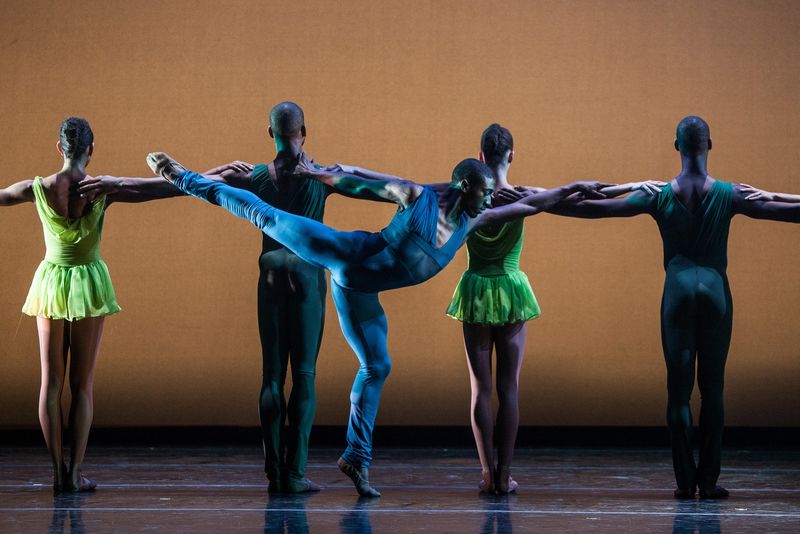
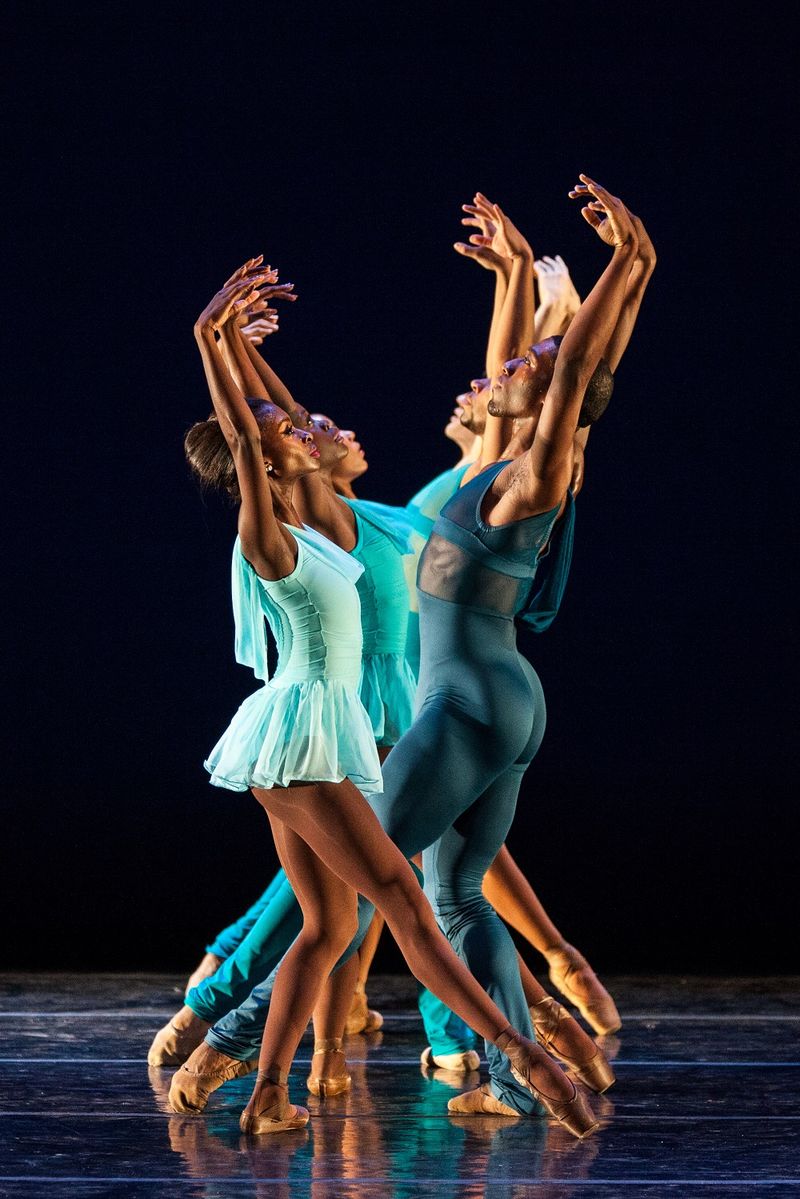
    Gloria, choreographed by Robert Garland and performed by Dance Theatre of Harlem to the classic sacred work by Francis Poulenc, was s striking finale for the evening. The dancers, clad in rich hues of blue, forest green and chartreuse, moved thru Mr. Garland’s well-structured choreography with assurance and commitment. The girls are on pointe and the vocabulary is classic, but with some fresh accents that give it a distinct flavor; a troupe of small girls from the Company’s school also participate in this ballet. In leading roles, Ashley Murphy and Da’Von Doane looked superb. The combined effect of Poulenc’s uplifting score, the beautifully-lit space, and the very attractive dancing evoked an enthusiastic ovation from the audience.

  • TAKE Dance: Dark Mourning

    555594_10151919266405929_1933576248_n

    Above photo by ‘M’ Apisak Vithyanond; Elise Drew and Kile Hotchkiss in the foreground

    Friday September 27th, 2013 – TAKE Dance presented the premiere of Takehiro Ueyama’s DARK MOURNING at Symphony Space tonight. The programme further featured a new duet entitled A BAITED SOUL created by Kazuko Hirabayashi and danced by Jill Echo and Take Ueyama, and a revival of Take’s FLIGHT which was created in 2010.

    I’ve been following TAKE Dance since 2008, when my friend Sophie Bromberg first mentioned the Company to me. Take was one of the first to bring dance bloggers into the fold, and he has often shared his creative process with me. In May 2011, Take’s evening-length SALARYMAN seemed to have attained a peak – both theatrical and choreographic – for the Company. Tonight, watching DARK MOURNING, I felt that Take has surpassed himself yet again. This somber new work, in which movement, music, and silence are meshed into a cogent whole, expresses both the terror and tranquiity of death, and presents a haunting view of bereavement.

    To the tolling of bells, a black-clad dancers appear as shuffling mourners moving across the darkening landscape. We are reminded at first of Take’s 2009 creation FOOTSTEPS IN THE SNOW; but DARK MOURNING takes a very different path. Take’s musical choice of the Kronos Quartet’s Lachrymae Antiquae gives DARK MOURNING a timeless sprituality. In structuring the work, silences are as profound as the Renaissance-inspired music.

    Alternating ensemble passages – marked by fluid movement – with four solos, Take presents his dancers at their most compelling. Kile Hotchkiss, appearing nearly nude in a pool of dazzling white light – a sharp contrast to the prevailing gloom – appears as a fallen angel, his long limbs and expressive hands simply spellbinding. In a long black gown, Kristen Arnold evokes images of Martha Graham with her expansive gestures of mourning and supplication. John Eirich, showing his customary disdain for personal safety, gives a restless athleticism to his bold gymnastic combinations. And Gina Ianni ended the work as a broken spirit, her blonde vulnerability succumbing at last to the inevitable. Lynda Senisi, Elise Drew (now dancing with Limon) and Brynt Beitman completed the cast for this impressive new creation, a work which I hope to experience again soon.

    Take Ueyama and Jill Echo performed the Hirabayashi duet, A BAITED SOUL, which was inspired by a Japanese ghost story. To the lonely sound of a flute, the two dancers appear in ritualistic moves in a state of courtly wariness that evolves into tempestuous conflict. Smoke wafts across the space, and Jill carries a decorative rose-hued parasol, sometimes hiding behind it. The back curtain is opened as Take begins a long, physically demanding solo to the sound of chant. As the voice becomes distorted the dancer’s movements suggest he is trapped in a spirit world. It was of course wonderful to see Jill and Take dancing together, and Anthony Aiu as a mysterious black-clad attendant also made his mark here.

    In a work inspired by flocks of birds banking or racing across the Roman sky, the revival of FLIGHT has taken on a new visual dimension: the costumes have been changed, so that the dancers who – at the premiere – appeared as brown-clad starlings, now look like doves in their gossamer white trousers and shirts.

    Barry Wizoreck, a former Paul Taylor dancer, appears in FLIGHT‘s opening solo which Take had originally danced himself. Projections of swarming birds appear, and the dancer casts a shadow as he moves in a state of quiet wonder. A quartet of dancers – Gina Ianni, Elise Drew, John Eirich and Kile Hotchkiss – dance the second movement, sometimes in unison and sometimes perched in their arrested trajectories; John Eirich again erupts with a dazzling combination. In a dynamic, turbulent build-up, more doves appear. Dancing to Philip Glass’s Meetings Along the Edge, the large ensemble moves fast while the quartet moves slowly: a striking justaposition. Barry Wizoreck reappears, wandering cautiously among the fluttering doves as he scatters white feathers on the ground.

    The performance was well-attended and well-applauded; among the audience were four beloved Taylor women from different generations: Linda Kent, Karla Wolfangle, Rachel Berman and Amy Young.

    Performers:
    Kristen Arnold, Brynt Beitman, Jill Echo, Elise Drew, John
    Eirich, Kile Hotchkiss, Gina Ianni, Lynda Senisi, Marie Zvosec &
    Take Ueyama with Jesse Dunham, Jamison Goodnight, Jillian Hollis, Lauren
    Elise Kravitz, Anthony Aiu and Barry Wizoreck (Guest Artist)

    Music by Philip Glass, Ana Milosavljevic, Kronos Quartet,
    Terry Riley, Aleksandra Vrebalov, Houzan Yamamoto

    Lighting Design: Lauren Parrish
    Costume Design: Jesse Dunham, Elena Comendador