
Sumi Jo and Dmitri Hvorostovsky in the great father-daughter duet from Verdi’s RIGOLETTO, from a concert at Seoul in 2005. Watch and listen here.
Sumi Jo and Dmitri Hvorostovsky in the great father-daughter duet from Verdi’s RIGOLETTO, from a concert at Seoul in 2005. Watch and listen here.
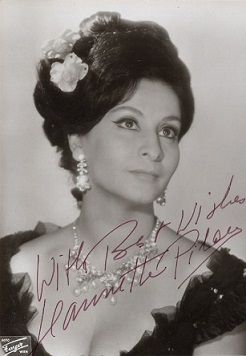
My beloved soprano Jeannette Pilou has passed away at the age of 83. By chance, I was at her last-minute Metropolitan Opera debut as Juliette on October 7, 1967, and it was love at first sight…and first hearing.
I have so many beautiful memories of Mlle. Pilou: not only of her expressive and wonderfully detailed portrayals of such iconic roles as Violetta, Mimi, Mélisande, and Mozart’s Susanna, but also of her great kindness to me as a young and ardent admirer.
In 2007, I wrote a long appreciation of Jeannette Pilou which includes details of her performances as well as many pictures – for she was a great beauty.
Her voice was a masterpiece of pastels, with a vein of stainless steel which allowed her to penetrate the orchestra in the heavier passages of FAUST and MADAMA BUTTTERFLY. She could turn the most familiar phrases in a role into something distinctly personal. Singing Mimi’s narrative in Act I of LA BOHEME, Jeannette sang: “Non vado sempre a messa, ma prego assai al Signor” (“I don’t always go to Mass, but I pray often to the Lord”), putting an emphasis on “assai” that gave the statement a charming tongue-in-cheek feeling. Over time, she developed a lovely gift for threading piani/pianissimi into a vocal line. Mlle. Pilou was a singer who could draw the listener in; this made her Mélisande a particular treasure.
Jeannette was extremely photogenic; I have a whole folder of photos of her. If she were singing today, everyone would want a selfie with her.
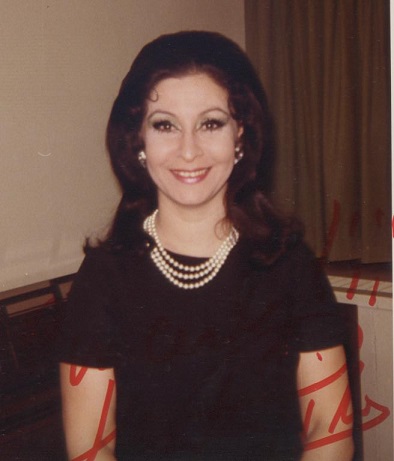
She especially loved the above photo that I took of her. After having it developed and blown up, I presented it to her to sign (you can see her exclamations marks), and she asked if I could send her a copy. I did, of course.
Despite my shyness, I managed to have several conversations with Ms. Pilou; her speaking voice was so enchanting, and so very intimate.
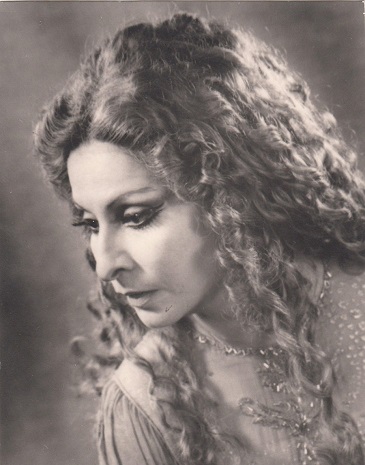
Above: Jeannette Pilou as Thaïs
~ Oberon

On April 24, 2020, Lisette Oropesa was one of several Met Opera stars to perform on a special webcast concert wherein everyone sang from their homes. Lisette sang an aria from Meyerbeer’s ROBERT LE DIABLE, live from her hometown: Baton Rouge, Louisiana. Michael Borowitz is the pianist.
Watch and listen here.

Above: Arlene Saunders as Eva in DIE MEISTERSINNGER
It’s so sad to read of the death of soprano Arlene Saunders, who I saw in four different roles over the course of her career. She died on April 17th, 2020, of complications associated with COVID-19.
Just last Summer, I discovered a series of films made in the 1970s by the Hamburg State Opera and truly enjoyed watching Ms. Saunders as the Countess in NOZZE DI FIGARO, Agathe in FREISCHUTZ, and most especially her Eva in DIE MEISTERSINGER. The Hamburg film of the Wagner opera can in fact be watched in its entirety on YouTube here.
It was as Eva that Arlene Saunders sang her only performances with the Metropolitan Opera, in 1976. But I had the good fortune to see her on the Met stage earlier, when the Hamburg company brought Stravinsky’s RAKE’S PROGRESS to Lincoln Center in 1967. She was an ideal Anne Trulove.

In the years to come, I saw Ms. Saunders as the Marschallin (Opera Company of Boston), as Minnie in FANCIULLA DEL WEST (New York City Opera), and as Elsa in LOHENGRIN (at The Bushnell in Hartford). As each of these vastly different characters, she seemed perfect.
In 2007, I attended a solo recital attended by a young American tenor; during the interval, a woman came over to speak to the people seated in front of me. I was pretty sure it was Arlene Saunders, and sure enough, the couple greeted her as “Arlene…!” I so wanted to speak to her and thank her for the wonderful performances I’d seen her give, but my innate shyness took over. I always regretted that missed opportunity…now, more than ever.
And here’s Ms. Saunders in music from my favorite opera, ARIADNE AUF NAXOS:
Arlene Saunders – Ariadne Monolog Part II ~ ARIADNE AUF NAXOS – Hamburg 1968
~ Oberon
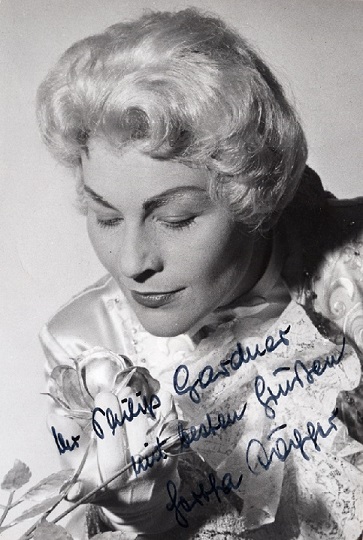
Above: Hertha Töpper as Octavian in DER ROSENKAVALIER
[Update: Hertha Töpper passed away on March 28th, 2020, at the age of 95]
I’ll never forget listening to Strauss’s DER ROSENKAVALIER for the first time: it was a Saturday matinee broadcast from the Old Met at Christmastime in 1962. I was 14 years old and had been in love with opera for three years.
At that time, the German operas were not easy for me; I had made it thru my first broadcast RING Cycle in 1961 and I seem to recall having been more thrilled by the story than by the music. ROSENKAVALIER, with its long conversational stretches, posed a challenge all its own. But the singing of the three female leads in the opera’s final scene moved me deeply, and when the broadcast ended I sat down and wrote fan letters to all three of them: Hertha Töpper (Octavian), Anneliese Rothenberger (Sophie), and Régine Crespin (the Marschallin). Within days I received replies from all three.
Metropolitan Opera House
December 22, 1962 Matinee/Broadcast
DER ROSENKAVALIER
Octavian.....................Hertha Töpper
Princess von Werdenberg......Régine Crespin
Baron Ochs...................Otto Edelmann
Sophie.......................Anneliese Rothenberger
Faninal......................Ralph Herbert
Annina.......................Rosalind Elias
Valzacchi....................Paul Franke
Italian Singer...............Sándor Kónya
Marianne.....................Thelma Votipka
Mahomet......................Marsha Warren
Princess' Major-domo.........Robert Nagy
Orphan.......................Loretta Di Franco
Orphan.......................Nadyne Brewer
Orphan.......................Dina De Salvo
Milliner.....................Lilias Sims
Animal Vendor................Frank D'Elia
Hairdresser..................Harry Jones
Notary.......................Gerhard Pechner
Leopold......................Erbert Aldridge
Lackey.......................Joseph Folmer
Lackey.......................John Trehy
Lackey.......................Lou Marcella
Lackey.......................Edward Ghazal
Faninal's Major-domo.........Andrea Velis
Innkeeper....................Charles Anthony
Police Commissioner..........Norman Scott
Conductor....................Lorin Maazel
Ms. Töpper sent me the gorgeous photo which appears at the top of this article. Ever since then, this has remained the quintessential image of Octavian for me. As it turned out, Octavian was Töpper’s only Met role, though she had an enormous career in Europe.
Here’s a sampling of the Töpper Octavian, with Erika Köth as Sophie:
Hertha Töpper & Erika Köth – Presentation of the Silver Rose ~ ROSENKAVALIER
Hertha Töpper was born in 1924 and made her operatic debut at Graz as Ulrica in BALLO IN MASCHERA in 1945. By 1951 she was singing at Bayreuth, and had debuted at Munich as Octavian. She went on to sing at all the major opera houses and festivals of Europe; among her most prominent roles were Brangäne, Carmen, Fricka, and Dorabella. She also was a well-loved recitalist and concert singer, specializing in the music of Bach.
A couple of years ago, by chance, I plucked Töpper’s recording of Bartok’s BLUEBEARD’S CASTLE (in German) from the library shelf; it proved to be a revelation, with fantastic singing from both the mezzo and the great Dietrich Fisher-Dieskau, and truly atmospheric conducting by Ferenc Fricsay.
~ Oberon

It’s sad to read of the death of one of the greatest composers of our time: Krzysztof Penderecki. His music means a lot to me, most especially his 7th symphony which is subtitled The Seven Gates of Jerusalem. Read an article about this incredible work here. His Polish Requiem is another enduring favorite of mine, but then there is just one treasure after another to be found in the Penderecki catalog.
Penderecki ~ O gloriosa virginum
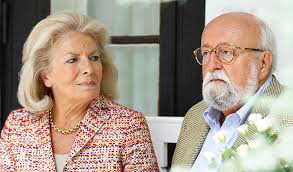
There is an excellent documentary about the composer, wherein we meet his lovely wife Elżbieta Penderecka (née Solecka), whom he married in 1965. They lived in the Kraków suburb of Wola Justowska…

…on a 70-acre estate where the composer had planted thousands of trees which he imported from around the world.
Penderecki was the only contemporary composer who truly fascinated me – both thru his works and his personality – and the only one whose music I return to frequently. He lived a long life, and his music will continue to touch people’s souls. Now may he sleep in peace.
~ Oberon
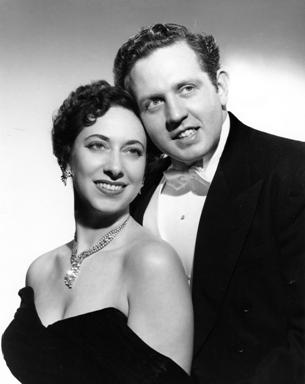
Mezzo-soprano Sandra Warfield and tenor James McCracken were husband and wife. McCracken of course had a huge international career, Verdi’s Otello being one of his finest roles. Ms. Warfield’s career was not so hi-profile, though substantial.
The couple were married in 1953. In 1957, feeling that The Met was not utilizing him to his full capabilities, McCracken headed to Europe where he and Ms. Warfield joined the Zurich Opera. In 1964, McCracken returned to The Met in triumph as Verdi’s Moor.
In 1966, the couple sang together as Samson and Dalila in a Met concert performance at Lewisohn Stadium. In 1968, they sang these roles together again in the Met’s New York City Parks series. On January 13th, 1972, Warfield and McCracken finally appeared together in principal roles on The Met stage in a performance of SAMSON ET DALILA that marked Ms. Warfield’s final Met appearance.
Sandra Warfield went on to a successful career in cabaret whilst her husband continued to be a major Met star until 1986, when he sang with the Company for the last time in a concert performance of AIDA in Central Park. Aprile Millo and Grace Bumbry were his co-stars that evening. Mr. McCracken passed away in 1988, and Ms. Warfield in 2009.
In 1983, having absented himself from the Met yet again for three years, McCracken sang at the gala performance celebrating the 100th birthday of The Met. Having been thrilled by two of the tenor’s late-career performances as The Moor at Hartford and Boston, I was so happy to have been there on that gala afternoon to witness the warm welcome he received when he walked onstage to sing Otello’s great monolog, with James Levine conducting. You can watch that performance here. Thereafter he sang about a dozen more performances with the Company, including the AIDA that marked Leontyne Price’s farewell to opera in 1984 – a performance that was televised.
I am not sure if Mr. McCracken ever sang Andrea Chenier onstage, but his recording of the Act I Improviso is powerful:
James McCracken – ANDREA CHENIER ~ Improviso
Ms. Warfield is heard here as Mozart’s Marcellina in the Act I duet with Roberta Peters as Susanna. And here are Warfield and McCracken together in the Judgement Scene duet from AIDA:
Sandra Warfield & James McCracken – AIDA scene
~ Oberon
~ Author: Oberon
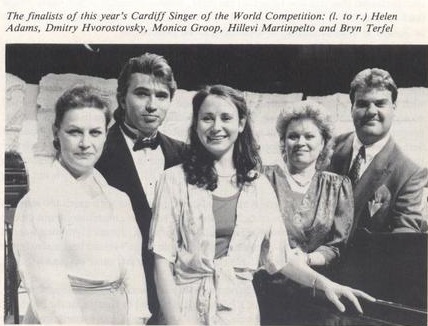
1989 was a banner year for the Cardiff Singer of the World Competition: the “Battle of the Baritones” put the competition on every opera lover’s map. Dmitri Hvorostovsky and Bryn Terfel vied for the top prize; in the end, Dima was named Singer of the Year and Sir Bryn captured the Lieder Prize. Both men went on to hugely successful international careers.
Of course, at the time, there was no internet to speak of. You could not instantly follow the competition from afar, and even news of it was slow to reach us from the other side of The Pond. But my wonderful friend Mollie Warren diligently taped much of the proceedings directly off the BBC; then she made copies of the cassettes to send to me. So within a couple of weeks, I was listening – in Hartford CT – to the sounds of Mssrs. Hvorostovsky and Terfel: I like to think I was one of the very first people in the Western Hemisphere to hear these voices.
The three other finalists in the 1989 competition were Finnish mezzo-soprano Monica Groop, Swedish soprano Hillevi Martinpelto, and the Australian soprano Helen Adams. I cannot seem to find much information regarding Helen Adams in the years following her appearance at Cardiff; she is heard here in “Depuis le jour” from LOUISE.

Above: Monica Groop
Monica Groop’s extensive international career in opera, concert, and song has included a memorable portrayal of Lucretia in Britten’s RAPE OF LUCRETIA in 2003 at New York City Opera; it marked the only time I saw this wonderful singer live onstage. Her other operatic roles have ranged from Melisande to Zerlina, and she has sung and recorded a great deal of Baroque music – in which she excels – as well as lieder of Schubert and Brahms, and the complete songs of Edvard Grieg.
Some samples of Ms. Groop’s artistry, singing in Italian, French, and German:
Monica Groop – Stà nell’Ircana ~ ALCINA
Monica Groop – D’amour l’ardente flamme ~ DAMNATION DE FAUST
Monica Groop sings Schubert’s Du bist die Ruh
Monica Groop at Cardiff, 1989:
Monica Groop – Cardiff 1989 – CLEMENZA~WERTHER
Hillevi Martinpelto went on from Cardiff to a very successful career, performing and recording with prominent orchestras and conductors.
Here she is singing Weber…
Hillevi Martinpelto – Ocean! Thou mighty monster ~ OBERON
…and in a true rarity:
Hillevi Martinpelto – from Karl-Magnus Fredriksson’s The Disguised God ~ Soprano & Chorus
Here is Hillevi Martinpelto at Cardiff, 1989:
Hillevi Martinpelto – FORZA aria – Cardiff 1989
And finally, the winners:

…Dima…
Dmitri Hvorostovsky – BALLO aria – Cardiff 1989
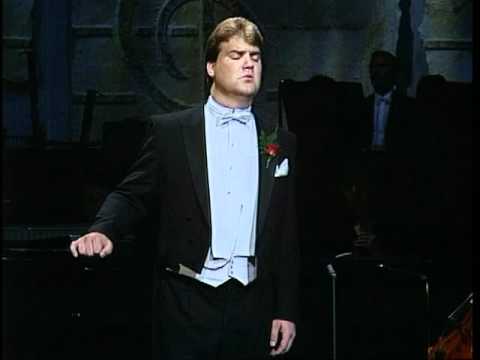
…and Bryn…my original cassette of Bryn from the competition would not play, but here he is, onstage, singing Schumann…
…and here’s a bit of Wagner, from a commercial recording:
Bryn Terfel – Song to the Evening Star – TANNHAUSER
~ Oberon
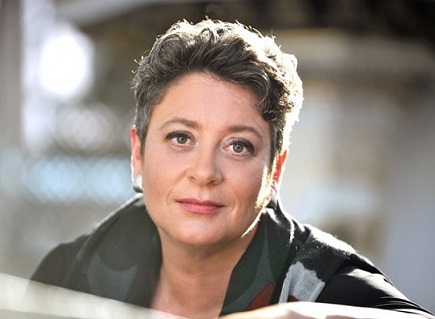
Above: contralto Gerhild Romberger
~ Author: Oberon
Monday February 24th, 2020 – The Budapest Festival Orchestra, conducted by Iván Fischer, offering Mahler’s 5th symphony, preceded by the Kindertotenlieder, sung by Gerhild Romberger, contralto, in her New York debut. The program was part of Lincoln Center’s Great Performers series.
Ms. Romberger – previously unknown to me – was revelatory. This was my third experience of hearing the Kindertotenlieder (Songs of the Dead Children) in live performance: previously, the grand Polish contralto Ewa Podles and the inimitable Russian baritone Dmitri Hvorostovsky had given enthralling interpretations of these evocative songs, each taking a rather operatic point of view. Ms. Romberger, more intimate and poetic in her approach, was deeply moving…and the voice fascinated me.
Handsomely coiffed, and clad in black, the contralto took up the opening song, “Nun will die Sonn’ so hell aufgeh’n” (Now Will the Sun Rise as Brightly) following its haunting introduction from the winds. Her sound is rich yet contained, projecting a sense of calm despite the bleakness of the knowledge that the sunrise can no longer bring comfort. The horn and harp add to the wistful atmosphere, and the singer’s dreamy softening of the upper notes at “…die sonne..” is indeed magical. Ambiguously, the music shifts between minor and major.
In “Nun seh’ich wohl, warum so dunkle Flammen” (Now I See Well Why Such Dark Flames) with its gorgeously expressive start, Ms. Romberger’s beauteous palette of soft colours was at play as she described the eyes of the children, and the premonition of their death. There is a sense of consolation in the orchestral writing, but it’s the desolate feelings that of loss permeates in the singer’s touching turns of phrase. Her hands, meanwhile, communicated her emotions in gracefully-shaped gestures.
“Wenn dein Mütterlein” (When Your Dear Mother) commences with oboe and bassoon, sounding rather doleful in a motif of intervals. Here Ms. Romberger’s gifts as a storyteller are to the fore, and her sense of gentle restraint in the upper reaches of the voice is endlessly evocative. The deep, rich sound of the Budapest’s basses sustaining the final note sent a chill thru me.
In “Oft denk’ ich, sie sind nur ausgegangen” (Often I Think They Have Only Gone Out). Mahler again allows the music to wander between major and minor, underscoring the illusion that the children have only gone out for a walk. With sweet lyricism in her upper range, the singer seeks to reassure herself – and us – that all is well. Her singing here is simply sublime. But at last comes acceptance that the children have gone to another place, wherein there is the hope of one day be reunited with their parents.
“In diesem Wetter, in diesem Braus” (In This Weather, in This Torrent) tells of the stormy weather on the day of the funeral: restless, aggressive music. In resignation, Ms. Romberger sings that the children have found rest, and her vocal control and the somber yet luminous expressiveness of her singing here reached me at the depths of my soul: so hauntingly and gently she sang as the harp sounded. A horn chorale seemed like a benediction.
Ms. Romberger was given very warm and sustained applause following her poignant performance: returning for a solo bow, the entire orchestra joined in a moving tribute to this remarkable artist. She and Maestro Fischer were called out yet again, and while I cannot imagine an encore following the Kindertotenlieder, we can surely hope that she and the Maestro will return to New York City soon, bringing us the Rückert–Lieder…or the Wesendonck. I can only imagine what that would be like!
During the interval, I remained under a sort of spell from this cherishable performance: I even thought of leaving, and taking my memories of it with me to some solitary place where I could continue to meditate on what I had heard.
Of his 5th symphony, Gustav Mahler famously said: “…a symphony must be like the world; it must embrace everything.” Mahler composed this sprawling work during the summers of 1901 and 1902, while on holiday from his job as director of the Vienna Court Opera. Prior to beginning his fifth symphony, Mahler had met the beauteous Alma Schindler, daughter of a famous landscape painter. The composer proposed to her in the Autumn of 1901, and the symphony seems to mirror Mahler’s journey from sorrow thru the dreamworld of the Adagietto to a triumphant state of happiness with his beloved.
The symphony’s brilliant opening trumpet fanfare, played with summoning clarity and force by Tamás Pálfalvi, gave notice that a sonically vivid performance lay ahead of us. As the first two movements of this very long symphony progressed, Maestro Fischer drew inspired – and inspiring – playing from the artists of the Budapest Festival Orchestra.
In the Scherzo, Horn soloist Zoltán Szöke came forward and was seated next to the podium. He played splendidly, sometimes raising the horn’s bell to project the music with sumptuous power. But I must admit that during this movement – with its endlessly repeated 6 note motif, played as a fugue – Mahler fatigue started to set in. It began to have the feeling of the music being too much of a good thing.
The classic Adagietto, sometimes considered Mahler’s “greatest hit”, features strings and harp. The conductor summoned luminous textures from the musicians, creating a depth of beauty in which we could – for a few minutes – forget the dark dangers of living in today’s uncertain world.
In the symphony’s concluding Rondo-Finale, the Maestro and his musicians swept the celebratory feeling forward, pausing only for a couple of rather gratuitous detours, and on to its epic conclusion. The audience’s response was tumultuous.
For all the 5th symphony’s marvels, it was – for me – the Kindertotenlieder that gave this evening its particular glow.
~ Oberon

Author: Ben Weaver
February 2020 – The Danish String Quartet continuing their Beethoven marathon at Chamber Music Society of Lincoln Center. Ben Weaver wrote about earlier concerts here, and he completes the story below:
“I suspect that the Danish String Quartet’s cycle of all 16 Beethoven String Quartets for Chamber Music Society of Lincoln Center in 2020 will long be remembered as one of this great organization’s finest moments. The raggedy long-time friends who make up the quartet (its two violinists and violist have been friends since childhood), with their casual wear, messy hair and reserved physical presence, may not at first glance strike one as deeply probing and philosophical musicians. But they are that, and more. The clean, beautiful lines they produce as part of the ensemble, with a full grasp of structure and context, could hardly be improved upon by another quartet. They truly are one of the finest chamber ensembles performing today.
The cycle’s final concert featured Beethoven’s final two quartets: String Quartets Nos. 15 & 16. No. 16 being notable for being the very last piece of music Beethoven ever composed. (The only other thing he is known to have written is the alternative final movement to Quartet No. 13, replacing the Große Fugue.)
With Quartet No. 15, Op. 131, composed in 1825-26, Beethoven created something unique in the canon: an extended, played-without-pause composition that is still divided into multiple (seven!) movements that are all connected to one another. The opening fugue morphs into a set of variations leading into a demented scherzo – so on and so forth. Almost as if recapping his life’s achievements and all the musical forms he has perfected, this may well be Beethoven’s version of “This is my life.” The Danish Quartet’s performance of this was ravishing, with stunningly sustained slow tempi over long periods, without ever losing focus or tension or structure. Violinists Frederik Øland and Rune Tonsgaard Sørensen, violist Asbjørn Nørgaard, and cellist Fredrik Schøyen Sjölin made time stop.
The last Quartet No. 16, Op. 135, composed in 1826, would become Beethoven’s last completed composition. How does a musical giant, who has shaken the world, say goodbye? With another outburst, a challenge to the world? Hardly. Like the final Piano Sonata No. 32 – and so unlike the last Symphony No. 9 – Beethoven’s last will and testament is actually a thing of lyricism and beauty, not defiance (ok, with an occasional outburst of crankiness, like the opening pages of the last movement where anger quickly dissipates.) In all, perhaps knowing that is health was failing and that he may not have the strength to complete another piece of music, Beethoven seems to reminisce about his younger self and the music that he composed as a student of Haydn and when Mozart had only just died.
The first movement opens with Viola leading a playful tune, like something Beethoven rescued from an early sketchbook: but with an old man’s wisdom tempering the enthusiasm. It’s like an echo of youth, playful but with a denser sound than a younger Beethoven would have employed, the viola and especially the cello better integrated into the ensemble instead of accompanying the violins.
The slow movement, Lento assai, tantalite e tranquillo, is one of those works of art shared with us by the gods. Rune Tonsgaard Sørensen on first violin in this performance (the two violinists alternated), as the more lyrical player, was the perfect musician to lead this magical piece. (I’d watched a performance of this movement on YouTube that was recorded in an airplane hangar. Someone wisely commented that even an airplane hangar could not contain everything this movement has to say.)
And then the final movement – Allegro – pulls in ideas from the previous ones and then turns them into dance. It is the perfect ending, like Verdi’s “Falstaff” (still to come) or Shakespeare’s “The Tempest” (long past): to finish laughing and free would be the greatest gift of all.
~ Ben Weaver
 Oberon's Glade