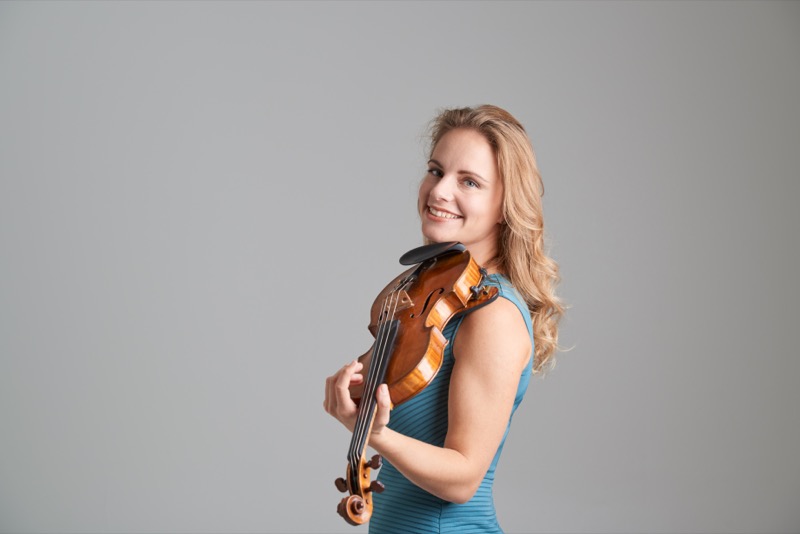
Wednesday November 20th, 2019 – Violinist Isabelle Faust and pianist Alexander Melnikov – long time musical partners – joined the celebrations of Beethoven’s 250th birthday as part of the Lincoln Center’s Great Performers series with an all-Beethoven recital at Alice Tully Hall. The 70-minute, no-intermission, program featured Beethoven’s last three violin sonatas.
Composed in 1801-02 and dedicated to Tsar Alexander I of Russia, the three sonatas of his Op. 30 were Beethoven’s final word on the genre, even though he was only 31 years old. (In total, he composed 8 violin sonatas.) At this stage Beethoven had not yet written his Eroica Symphony (that would come 2 years later), changing the trajectory of the symphony and his own musical development
Beethoven’s violin sonatas, like so much of his “early” music, look back on Mozart’s contributions to the genre, while at the same time developing new languages. Whereas Mozart’s violin sonatas were focused on the violin – with the piano as an accompaniment – Beethoven forced the piano into the spotlight, with a more prominent voice and bigger, more “symphonic” writing. In the sonata No. 6’s opening movement the violin seems to be playing catch-up with the piano in introducing the melodies. In the final movement, a theme and set of variations, the piano again dominates.
While the following two sonatas give the violin a much bigger role, as performed by Isabelle Faust and Alexander Melnikov, the piano’s dominance was clear throughout the evening. Ms. Faust’s playing, quiet and brittle at times, with an edge to the tone, required the listener to lean in. She rarely demanded attention for her instrument or her playing; she is certainly not a “showboat” performer. Mr. Melnikov, a more aggressive player by nature, was the dominant force on the stage almost by default. The relaxed tempos set by the duo made clear this was not heaven-storming Beethoven.
Sadly, as the evening progressed, the quiet playing by Faust, which I initially attributed to a “lean-in” personality, started to grow flat and dull. Whether drama or joy, one could hardly tell the difference. I almost got the sense that Faust was sight-reading the music, as if she’d hardly ever seen these notes before. (That’s clearly not the case: she and Melnikov recorded the complete sonatas for Harmonia Mundi some years ago and did so very well.) How unfortunate then that on this evening she was unable to gather enough spirit to help launch New York’s Beethoven year celebration.
Wednesday October 30th, 2019 – Philippe Jordan was on the podium at Geffen Hall this evening as The NewYork Philharmonic presented their program of Prokofiev, Mendelssohn, and Beethoven: an ideal mix, in my opinion. The comely and compelling violinist Julia Fischer was the guest soloist for Mendelssohn’s violin concerto, the orchestra’s stellar woodwind soloists were all present and accounted for, and the entire evening had a special glow about it.
Prokofiev’s Symphony No. 1, Classical, strikes me as a perfect piece of music. At a running time of just 15 minutes, the symphony is a compact delight, abounding in rhythmic variety and appealing themes. The opening Allegro con brio is in the traditional sonata form, but the composer keeps throwing us curve balls: witty bits crop up out of nowhere. Maestro Jordan and the Philharmonic artists seemed truly to enjoy playing this music, which, in the flashing leaps and zesty grace notes of the second theme made me smile to myself.
A gentle melody on high for the violins is the key feature of the Larghetto, with pizzicati, treading basses, and colourful bassoons all part of the composer’s scheme. The Gavotte makes me think of the composer’s ROMEO AND JULIET, while the ebullient finale sounded wonderfully clear and alive. Throughout, flautist Robert Langevin, clarinetists Anthony McGill and Pascual Martínez-Forteza, oboist Sherry Sylar, bassoonist Judith LeClair, and their woodwind-section colleagues charmed the ear with their polished playing; when Maestro Jordan asked them to stand for a bow, the audience responded warmly.
Violinist Julia Fischer then joined the orchestra for Mendelssohn’s Violin Concerto in E-minor. This was my first opportunity to hear Ms. Fischer playing live; she sounded marvelous and looked fetching is a deep grey gown shot thru with glimmering silver. There’s shining silver in her sleek tone as well.
The first movement’s marking of Allegro molto appassionato derives from the composer’s premonition of writing “…[A concerto] in E-minor running through my head, the beginning of which gives me no peace.” With splendid support from the orchestra, Ms. Fischer displayed her expressive gifts, lovely feeling for dynamics, and exquisite control of pianissimo. In the cadenza, her soft playing in the stratosphere was remarkable; this she followed with a rocking motif as the ensemble take up the theme. The music becomes very animated as the Allegro moves to its finish.
A sustained bassoon tone carries the music directly into the Andante wherein the glowing melody is given a tender, haunting quality as Ms. Fischer’s playing moves serenely from piano to pianissimo: simply breathtaking
Following a brief interlude, the violinist embarks on festoons of fiorature – played with sparkling surety – in the concerto’s concluding movement. Passages of Mendessohnian ‘faerie music’ are heard, and then Ms. Fischer revels in the rapid-bowing of the effervescent finale. With the final note of the concerto still hanging on the air, the audience unleashed a tumultuous applause, and everyone stood up to cheer. Ms. Fischer and Maestro Jordan are clearly simpatico, and their performance was thrilling. The crowd clearly wanted an encore, but none was forthcoming.
Above: Maestro Philippe Jordan
The concluding work, Beethoven’s 7th symphony, was magnificently shaped by the Maestro, who dips and bends into the music, eliciting splendid playing from the orchestra. This symphony has a dance-like sense of forward momentum upon which Mssr Jordan built his interpretation. His pacing – on the fast side – was so vital, and the textures of the music so lovingly layered, with the wind soloists again producing magical effects.
Swept along by the music, I put away my pen and indulged myself in forty minutes of pure selfish enjoyment. One small and intriguing motif in this symphony that always captures my imagination is a seeming “preview” of six-note passage from the Grail knights’ march in Wagner’s PARSIFAL music. Did Wagner openly borrow this from Beethoven, or is it a subconscious association? Either way, it played over and over in my mind during the train ride home.
This has so far been a particularly impressive and satisfying season for classical music here in Gotham, and tonight’s concert was yet another edifying experience.
Above: Wu Wei, tonight’s soloist at The New York Philharmonic
Author: Oberon
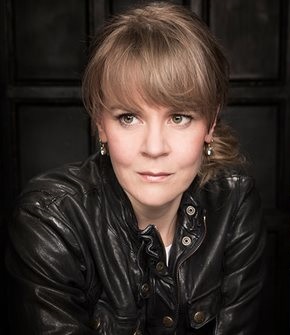
Tuesday October 22nd, 2019 – Unsuk Chin’s Šu, for Sheng and Orchestra, performed by Wu Wei, was the centerpiece of this evening’s New York Philharmonic concert at David Geffen Gall. Susanna Mälkki was on the podium for a program that also featured music by Haydn and Strauss. It turned out to be a memorable evening, continuing a string of inspiring performances that I have enjoyed in these first weeks of the classical music season.
Haydn’s Symphony No. 22, Philosopher, was the opening work. It’s a short – and very neat – symphony, which commences with an Adagio throughout which a steady, pacing pulse is maintained. The English horn is prominent, as are the horns (who excelled in the third movement). The concluding Presto had a lovely, bustling atmosphere. Ms. Mälkki’s finely-measured and elegant conducting drew excellent playing from the ensemble.
Wu Wei then took his place for Marie-Josée Kravis Prize-winner Unsuk Chin’s Šu. The composer stated that, for her, the sheng is associated with the “yearning for a distant sound…” Šu – and Wu Wei’s playing of it – is truly engaging.
What is a sheng? You may well ask (I certainly did). Above is an illustration, and here is an interesting article about this ancient Chinese reeded instrument. And what does the sheng sound like? Not similar to the oboe or bassoon – which was what I was expecting – but instead it reminds me very much of the musette, that enchanting little French bagpipe that was fashionable in French court circles in the 17th and 18th centuries.
Šu begins with whispered, other-worldly sounds from the solo instrument. A vast array of percussion instruments will be heard as the work progresses – shimmering bells, eerie gongs, powerful drumbeats – whilst Mr. Wu’s sheng sighs and shivers. He produces echo effects, bending high notes to vary the pitch, and sometimes sounding like a squeezebox.
The music seems to come to us from distant galaxies; images of frozen landscapes are evoked. The composer shows her mastery of texture and of rhythmic shifts. Violins stationed in the hall’s upper tier sing as if from from the heavens. Deep tuba rumblings give way to big, dense brass waves; the music becomes bouncy and then pounding.
As calm sets in, Mr. Wu plays a sort of cadenza: fast, rhythmic, ascending, A forward impetus then takes over: the music sways, and the player sways with it, shifting his weight as he reels off amazing passages.
The music subsides to a quiver; the orchestra produces a sustained, deep hum as the sheng is heard in ethereal whispers. Chimes sound, and this dreamworld fades into memory.
Both the audience and musicians onstage enthusiastically applauded Wu Wei for his phenomenal performance. As a second wave of cheering swept thru the house, Mr. Wu returned for a brilliant (and sometimes witty) encore that called for incredible virtuosity; both his playing and his physicality – including some stomping dance steps and interjected shouts – captivated the crowd, and he basked in a rock-star ovation at the end.
Above: tonight’s conductor Susanna Mälkki
Following the interval, Ms. Mälkki led a truly impressive performance of Richard Strauss’s Also Sprach Zarathustra. From its deep growl of a start rises the majestic, super-familiar theme that sets this blazing masterpiece on its way. The Philharmonic’s stellar bass section, joined by the organ, gave a rich depth to the music that sent chills thru me. Strauss has woven one appealing thread after another into this royal sonic tapestry; it’s a work in which there’s never a dull moment. Abounding in solo opportunities for individual instruments – clarinet, cello, trumpet, oboe, a trio of bassoons – the work further features a glorious tutti theme for celli and violins, and an enchanting Viennese waltz (led by the silken-tone of Sheryl Staples’ violin).
Glimmers of ARIADNE AUF NAXOS, DER ROSENKAVALIER, and DIE FRAU OHNE SCHATTEN flitted thru the air as this epic performance by The Philharmonic sailed gorgeously forward. The only blot on the evening came when a grand orchestral cutoff was ruined by a child muttering and a cellphone going off, spoiling the dramatic effect of a sudden silence.
Above: the Dover Quartet, photographed by Carlin Ma
Author: Oberon
Tuesday October 15th, 2019 – My first chance to hear the Dover Quartetlive, in a finely-devised program at Zankel Hall that offered quartets by Britten and Brahms, plus the Schumann piano quintet with Emanuel Ax at the Steinway.
Benjamin Britten’s String Quartet No. 1 in D-major was superbly rendered by the Dovers; their playing seemed to make an immediate and direct connection with the audience, who all evening were raptly attentive – and warmly appreciative.
The opening passage of the Andante sostenuto finds the violins and viola blending in an ethereal, high-lying motif that evokes seabirds crying above a deserted beach. There is a feeling – not of loneliness, but of being alone – that is wonderfully evocative. The music then turns more vigorous, the players digging in over a steady rhythm. The mood shifts back to the otherworldly again, followed by a rich-textured paragraph with viola and cello playing in unison. A buildup of tension calms to a high pianissimo, and a coda resolves into a misty softness.
In the Allegro con slancio, a soft pulsing underscores witty comments from each instrument; a sudden burst of joy in the music made me smile. A unison passage leads to a strutting dance; then, turning more subtle, the movement has a wry ending.
A feeling of tranquility sets on with the Andante calmo, which is lulling and pensive. Octaves sound, violinist Joel Link takes up an achingly beautiful theme, and Camden Shaw’s cello sings poignantly. The music turns hymn-like. Violins and viola take phrases over an insistent cello plucking. The music ascends to the heights, and Milena Pajaro van de Stadt’s viola makes a lovely impression, and then Mr. Link’s violin rises to a sweet concluding high tone.
In the last movement, Molto vivace, a witty theme is passed about, with plucking and strumming keeping things upbeat. The music’s driven and whimsical, with little shivers laced in. Banners of melody wave before us, and virtuosic bits lead on to a unison finish.
The musicians did not leave the stage following the Britten; after acknowledging the audience’s appreciative applause – and having to rise a second time, thanks to prolonged applause – they commenced immediately on the Brahms quartet.
Johannes Brahms’ Opus 67 – the String Quartet No. 3 in B-flat major – is one of those very pleasant works that does not always resonate for me. Tonight, from note one, the Dovers gave it a kind of freshness that made it seem new…like hearing it for the first time. And that’s saying a lot.
The individual players shone in this music. The opening movement, Vivace, pairs the second violinist (Bryan Lee) with violist Milena Pajaro van de Stadt in a friendly doubles match against Joel Link (violinoprimo) and cellist Camdem Shaw. They trade duetting passages in a way that makes the term vivace ring true. Elsewhere, a recurring trilling motif from Mr. Link was a further enticement.
In the Andante, Mr. Link makes the gorgeous theme sound better than ever with his expressive playing. Here again, each voice makes its mark. The music ranges from pensive to urgent rising to a lovely “Amen” at the finish.
The scherzo, here referred to (appropriately) as Agitato, opens with a surprisingly sad passage, but soon perks up. Mr. Link revels in his dynamic range, and Ms. Pajaro van de Stadt’s viola is very prominent, her tone having an Autumnal glow but with a trace of grit tantalizingly thrown in here and there. She even has a sort of cadenza, the better for us to savour her playing. This movement ends on a sustained chord with a lovely feel of “settling”.
The Dover’s take on the opus 67’s theme-and-variations finale made me admire them all the more. Brahms weaves in themes heard earlier, and the music is sometimes quite meditative. Enthusiastic applause and cheers greeted the musicians as they took their bows.
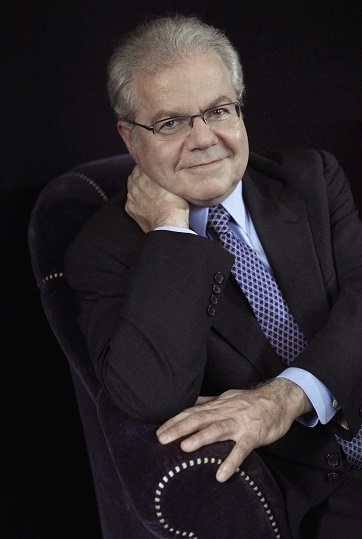
Following the interval, the inimitable Emanuel Ax (above, in a Lisa Marie Mazzuco photo) joined the Dover for Robert Schumann’s Piano Quintet in E-flat Major. This very familiar – and very marvelous – music seemed to flow like a limpid stream, the pianist setting the tone with his playing, which was both elegant and spirited.
The Allegro brillante sets out dramatically, the cello and viola exchange plush-toned phrases. At the keyboard, Mr. Ax ‘s intrinsic gifts of timing and dynamic control are cause for delight. The listener could luxuriate in the Mozartean glow of the music, with passing wisps of dark cloud dispelled in a grand finish.
The second movement, the dark clouds have lingered: it commences as a halting funeral march, and we feel the undertaker sneaking about. A sublime lyrical interlude follows, but then the lamenting march resumes. After being briefly invigorated, with the viola sounding forth and the piano in a rolling motif, the music resumes it funereal procession. Mr. Ax’s playing here is sublime.
The Scherzo, its agile scales and lively arpeggios contrasting with a lyric interlude and a brief downcast passage, finally turns brilliant, with the feel of a gypsy dance. Sparkling playing from Mr. Ax here continued in the Allegro ma non troppo, which opens with an accented theme from the piano. Schumann juxtaposes dance-like gaiety with cunning lulls, and a fugue brings this entrancing work to a close.
The audience responded to this stellar performance with a spontaneous standing ovation, laced with shouts of approval. The musicians were called out twice, and while we were all clearly in hopes of an encore, perhaps there’s nothing that could have followed that radiant Schumann.
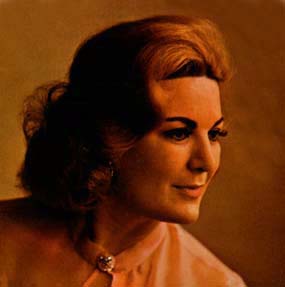
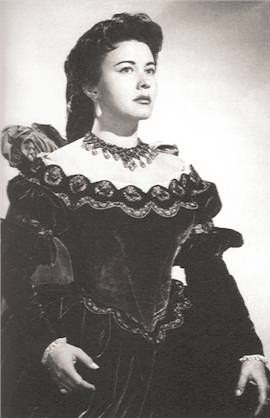
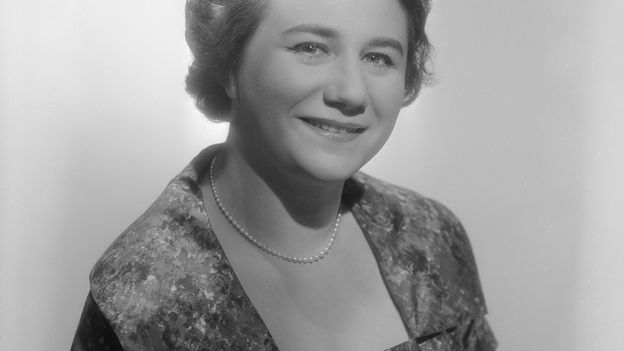
A year before her Met debut in the same role, Leonie Rysanek made her New York debut as Verdi’s Lady Macbeth in a concert performance with The Little Orchestra Society. Overall, she gave an exciting (if somewhat uneven) performance; she galvanized the audience with her thrilling singing of “La luce langue“.
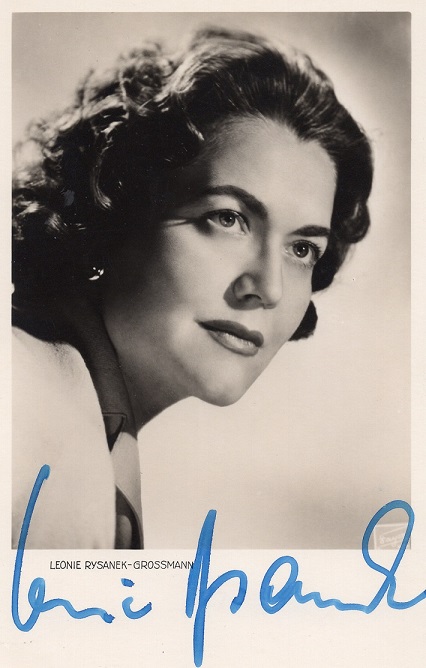
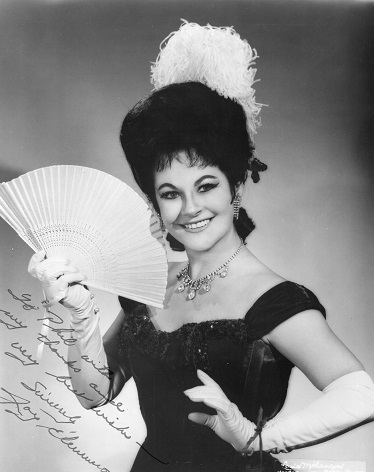
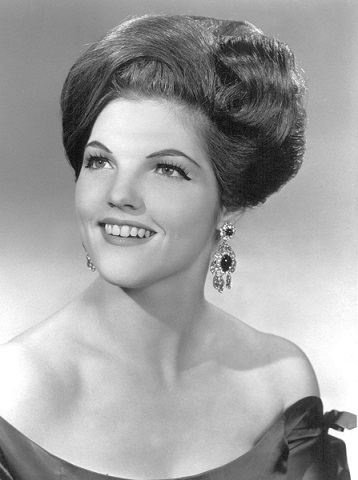
After hearing Leonie Rysanek’s voice for the first time on a Texaco/Metropolitan Opera broadcast of BALLOIN MASCHERA, I wrote to her and received the photo (at the top of this article) a few days later. She became one of the most potent forces in my enduring obsession with opera. I saw her many times at The Met, including her unforgettable 25th anniversary gala. She was my first Senta, Ariadne, Kaiserin, and Salome; her Met 25th anniversary gala in 1984 was one of the greatest thrills of my opera-going career.
(A long, 3-part story about the eight performances I attended at the Old Met back in the 1960s. I think a lot of young opera-goers these days don’t realize there was an Old Met!)
Note that the links to musical excerpts no longer work.
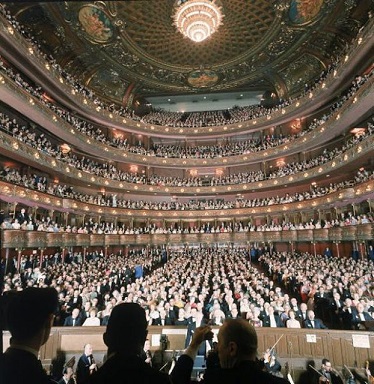
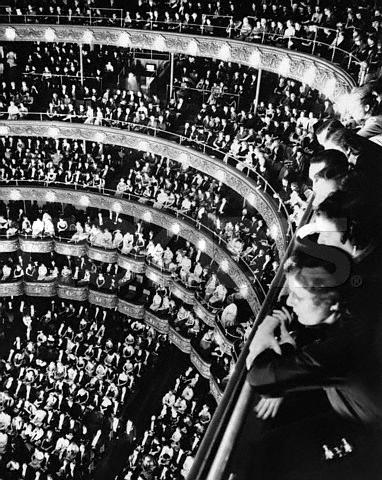
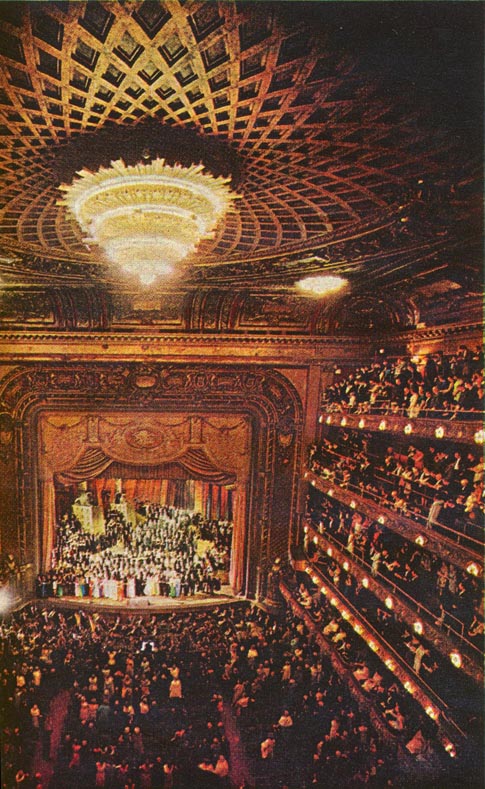
Above: The Old Met (1883-1966)
Author: Oberon
As a teen-aged opera-lover living in a tiny town six hours from New York City (by bus or train), I often felt very far-removed from my beloved art form. During those early years of my operatic obsession, I maintained a connection with The Met via the Texaco-Metropolitan Opera radio network, never missing a broadcast. For me, those broadcasts were far more meaningful than going to church.
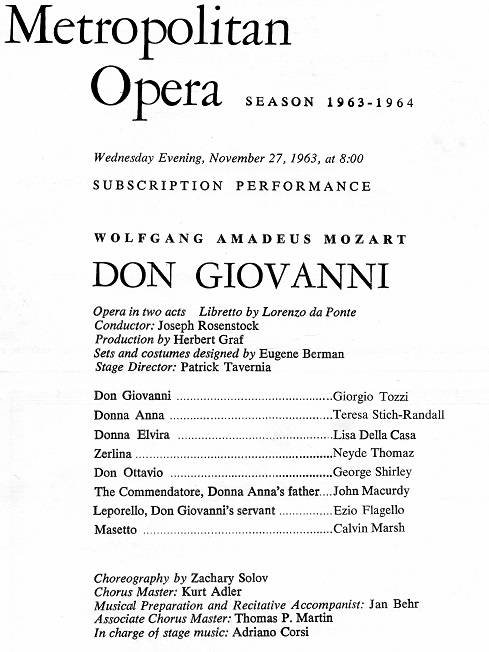
In the Autumn of 1963, my parents very kindly planned a trip to New York City which would include my first visit to the Met. I ordered the tickets by mail and was so excited when they arrived; I was going to go alone (!) to DON GIOVANNI, and my parents would come with me on the second night, to see FAUST.
By a twist of fate, our trip to New York followed by only a few days the assassination of John F Kennedy. We’d been following the whole story on TV, and my brother and I were watching “live” when Jack Ruby stepped out of a crowd and shot Lee Harvey Oswald. A pall was thus cast over what should have been my happy first visit to The Met. But once in the dilapidated but – to me – awe-inspiring hall, everything else faded to insignificance.
Knowing they’d be moving uptown to Lincoln Center, The Met was putting no money into maintaining the venerable House on 39th and Broadway. Paint was peeling, seat cushions torn, small bits of gilt-work and even lighting fixtures had been torn off the walls as souvenirs. Everything looked dusty and drab.
Where I was sitting, high up and on the side, the singularly uncomfortable seats allowed very little legroom. On the back of each seat, a small metal box was attached that contained cheap opera glasses; by depositing a quarter, you could use these during a performance. Many of these boxes had by now been torn off and smuggled out as mementos; those that remained were dented and disfigured by people prying them open to avoid the twenty-five cent fee. Hardly any of them still contained the small binoculars.
From my perch, I was particularly taken by my view of the proscenium, which was by now coated with dust and grime but somehow still beautiful. Amidst the decorative carved wreathes and furbelows were the plaques bearing the names of six great operatic composers: Gluck, Mozart, Beethoven, Wagner, Gounod, and Verdi. Puccini and Strauss had not yet made their mark in the opera world when those names were chosen.
The house lights dimmed, and my first Met performance commenced:
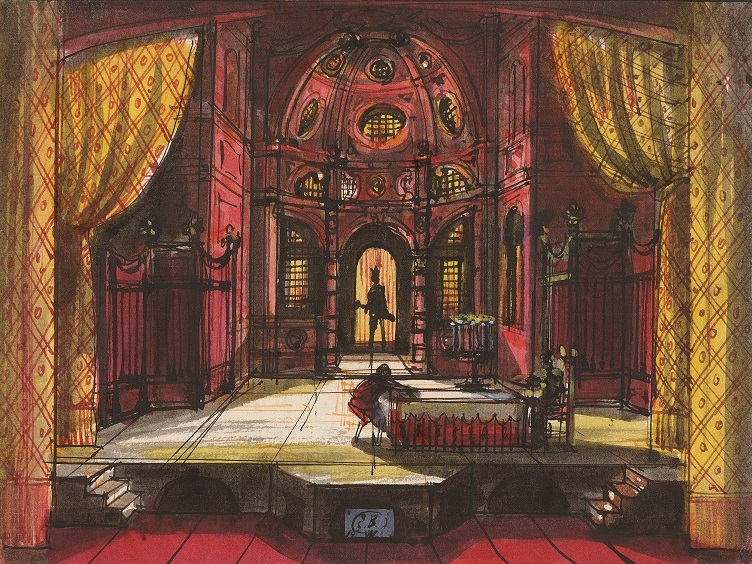
The DON GIOVANNI production was by designed by Eugene Berman (the Banquet Scene, above); I was duly impressed on seeing them in the House. The Berman sets traveled to Lincoln Center with the Company, and were utilized there until a Franco Zeffirelli production replaced them in 1990.
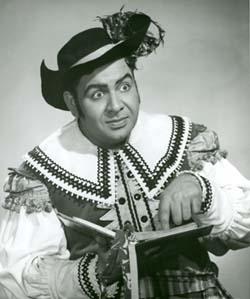
The very first voice I heard in the great Old House was that of basso Ezio Flagello (above), singing Leporello in DON GIOVANNI. Flagello had a wonderful voice; he sang more than 500 performances with The Met, including opening night of the New House, between 1957 and 1984.
Donna Anna and Donna Elvira were sung by two of the premiere Mozart sopranos of the day: Teresa Stich-Randall and Lisa Della Casa.
Teresa Stich-Randall was the only singer I mentioned in my very brief diary entry the morning after the performance. Years later, when I was living in Connecticut and Ms. Stich-Randall had returned there to care for her aging mother, we had a brief correspondence; but a planned meeting never materialized due to a big blizzard.
Lisa Della Casa was one of the most beautiful women ever to grace the operatic stages of the world. I saw her a second time as Donna Elvira at the New Met, during the first season there: she sounded wonderful and looked lovelier than ever.
Giorgio Tozzi was Don Giovanni; his was one of the first operatic voices I had become familiar with as he sang arias from NABUCCO and SIMON BOCCANEGRA on the first opera LP I ever owned. He was one of my favorite singers; I had heard him on so many broadcasts prior to this first “live” encounter. A few years later, he was my first Hans Sachs.
George Shirley sang Don Ottavio, his first appearance in the role. Mr. Shirley’s pliant lyric tenor made him a favorite with Met audiences; he chalked up some 275 performances with the Company in New York City and on tour between 1961 and 1972. His career has been ongoing: in 2018, he sang the Emperor Altoum in TURANDOT in a concert performance with the Detroit Symphony.
The very fine baritone Calvin Marsh (Masetto) and basso John Macurdy (The Commendatore) also sang on my first Met evening. Mr. Macurdy went on to give a thousand performances (!) with the Metropolitan Opera Company, and was my first-ever Narbal (TROYENS) and King Marke (TRISTAN UND ISOLDE).
And I was quite taken by the Brazilian soprano Neyde Thomaz, who sang prettily as Zerlina. Although four Zerlinas were the sum total of her Met career, she was a beloved singer in her native land. As of this writing, she is still with us, and has 9,000+ fans on Facebook.
I must admit that, at this point in my opera-loving career, conductors did not make a great impression on me. In truth, I did not know the operas well enough to form an opinion of how well they were conducted; that would change slowly over the ensuing years.
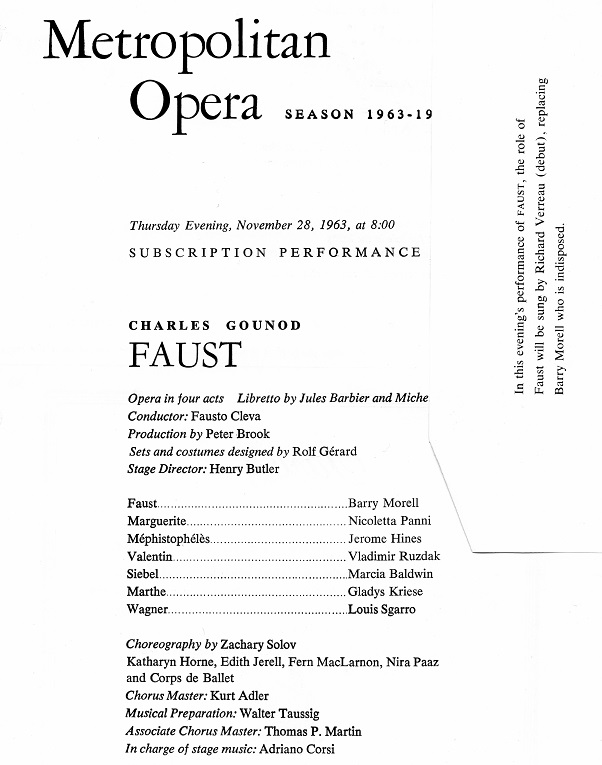
But I did recognize the names of my first two Met conductors from their broadcast performances: Joseph Rosenstock was on the podium for DON GIOVANNI, and the following night Fausto Cleva conducted FAUST:
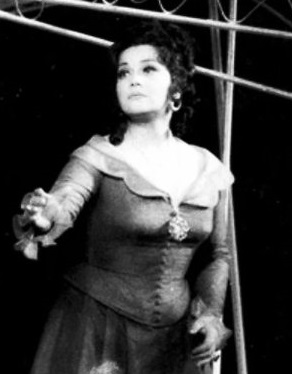
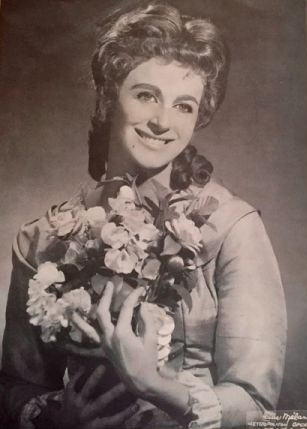
Like Neyde Thomaz in DON GIOVANNI, Nicoletta Panni (above) – my first Marguerite – had a four-performance Met career: two Mimis and two Marguerites. I loved her! In my diary, I singled her out for her lovely voice and her moving acting in the opera’s final scene. And I can still see her, clad all in white, kneeling to the applauding audience before the iconic gold curtain. It was at that moment that I realized that my dream had come true, and that I was now witnessing live the bows that been described so many times by Milton Cross on the Saturday broadcasts.
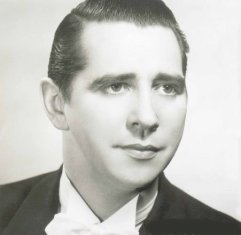
And I also very much liked the singing of Richard Verreau (above), making his debut on short notice as Faust, replacing Barry Morell. Morell was at that point the tenor I knew best, from his Met broadcasts and his performances at Cincinnati Summer Opera. Mr. Verreau’s singing was so stylish, his tone so appealing; I assumed he would continue to perform at The Met after such a fine debut. But after two MANONs and an evening of opera arias and duets at Lewisohn Stadium, he, like Mlles. Thomaz and Panni, did not sing with The Met again.
Jerome Hines was the evening’s Méphistophélès, and my diary mentions his acting but not his singing. If memory serves, Hines was going thru a bad patch vocally at this particular point in his career. He re-bounded and went on singing into his 80s.
As Valentin, Croatian baritone Vladimir Ruzdak impressed me: his voice was dark-timbered and powerful. His career at The Met comprised sixteen performances over a two-year stretch. He continued to perform often in Europe, and later directed opera and even did some composing.
Marcia Baldwin was my Siebel; I liked her aria a lot. Many years later, when I was working at Tower Records, Marcia came in with her longtime companion. My boss, Bryan, and I chatted them up. Great people! Thereafter, they would always come by whenever they were in town.
It was nice to see onstage – as Marthe and Wagner – Gladys Kriese and Louis Sgarro, two singers who I’d heard many times on the Met broadcasts. FAUST has a long ballet, which bored me to tears.
Writing about these two performances, it’s interesting that so many briefly flashing “Met comets” appeared on these back-to-back evenings. Even Ms. Stich-Randall, who had a huge career in Europe and made some important recordings, only sang 24 times at The Met, and in only two roles: Fiordiligi and Donna Anna. But while singers like Mlles. Panni and Thomaz and Msssr. Verreau and Ruzdak may be largely forgotten today, to me their voices really meant something.
~~~~~~~~~~~~~~~~~~~~~~~~~~~~~~~~~~~~~~~~~~~~~
~ The continuing story of my experiences attending performances at the Old Met as a very avid young opera-lover:
In January 1965, I was the proverbial small-town boy, sixteen years old; I took the train alone (for the first time) from Syracuse to Harrison NY. There, a man who had grown up in my hometown, and who had worked for my father at the drug store, was now teaching music at a high school. He knew that I’d become fascinated with opera, so he arranged with my parents that I should make the trip.
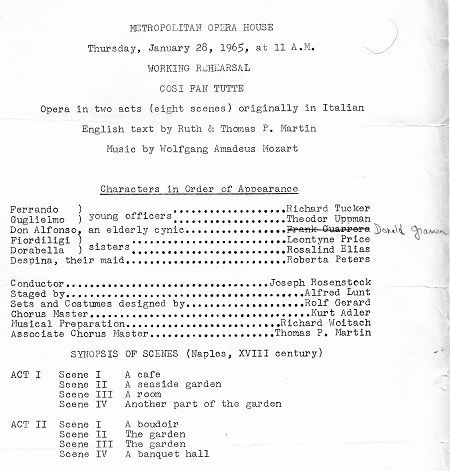
Being a Metropolitan Opera subscriber, he had passes to a dress rehearsal of The Met’s Alfred Lunt/Rolf Gerard English-language production of Mozart’s COSI FAN TUTTE. Following that, we would have dinner and then go to a performance of the Cecil Beaton production of TURANDOT in the evening.
The excursion marked the first time I traveled anywhere on my own, and the first time I slept in a bed with an adult male. Part of me wanted desperately to be seduced, but nothing happened in that department; I hardly slept though…the situation was so provocative.
On that Thursday morning, he made breakfast and then we drove into the City. The COSI dress rehearsal had quite a large audience. I can’t remember where we sat, nor why we didn’t go to the stage door afterwards.
The COSI revival had what amounted to an all-star (and all-American) cast. Aside from Donald Gramm, who was replacing Frank Guarrera as Don Alfonso, all these voices were familiar to me from the Texaco Saturday matinee radio broadcasts.
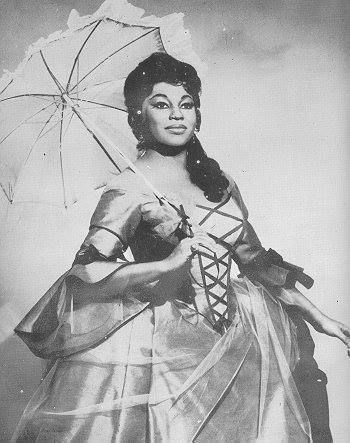
At that time, Leontyne Price (above, in her COSI costume) was already the toast of New York, although her fame would increase exponentially in the years ahead. Fiordiligi was one of three Mozart roles Ms. Price sang at The Met (Donna Anna, plus two Paminas in English being the others.) She sounded lustrous in Fiordiligi’s music, and sang the florid passages of the role smoothly. Her high notes had a lovely bloom.
Richard Tucker (above) was one of the greatest tenors in the history of The Met; this was the first of many Met performances by this most generous of singers that I greatly enjoyed. Like Leontyne Price, Tucker was not thought of as a Mozartean. But he sang beautifully, especially in the aria “Un aura amoroso” (I don’t recall the English words used). Tucker was also a very good comic actor. I can’t find any Mozart excerpts by Mr. Tucker (he also sang Tamino, and would have been a wonderful Idomeneo or Tito) but here’s something (very non-Mozartean) that shows off his English-language diction.
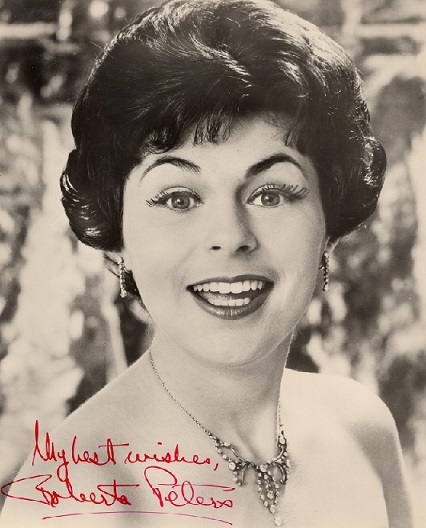
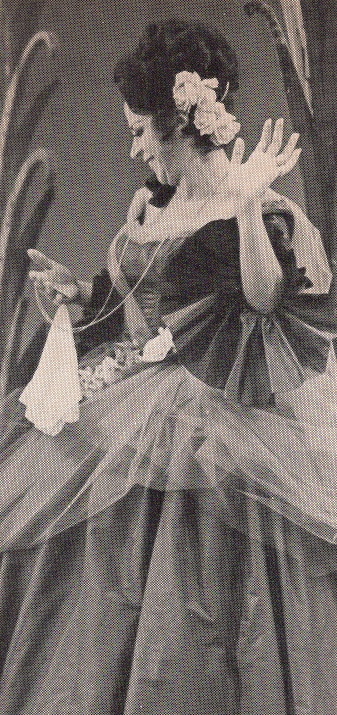
Roberta Peters (above) was a scintillating, well-loved coloratura, famous for her Gilda and Queen of the Night. As Despina, she was a lively actress, and added sparkle to the ensembles. Here’s she is in bel canto mode:
Rosalind Elias (above, as Dorabella) – she of the gorgeous face and figure – had a lush voice that was once described as “high-caloric”. She looked terrifically buxom in her costumes, was a brilliant actress, and sang superbly. Here’s a sampling of Roz’s Mozart singing:
Theodor Uppman (above), the popular young lyric baritone, was a beloved Papageno and Masetto at that time…and he had already sung Pelléas opposite Victoria de los Angeles. He sang stylishly as Guglielmo, and was a key player in the comedy.
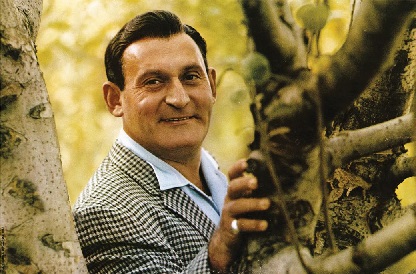
Donald Gramm (above) – then a rising American singer – became better-known over time for his song repertoire, though years later I did catch him onstage as Leporello (at both The Met and New York City Opera), and as Oroveso in NORMA in Boston (a performance wherein he interpolated an aria Wagner had composed for his character.) At this dress rehearsal, Gramm excelled as the crafty Don Alfonso, and his diction was especially clear.
We must have had dinner someplace nearby before going to the evening performance of TURANDOT; I can’t remember where. But I do remember that TURANDOT was far more exciting for me than COSI had been.
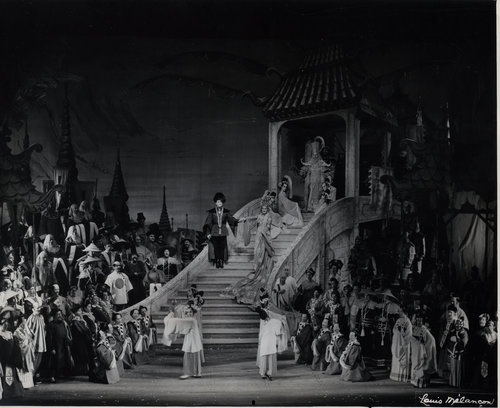
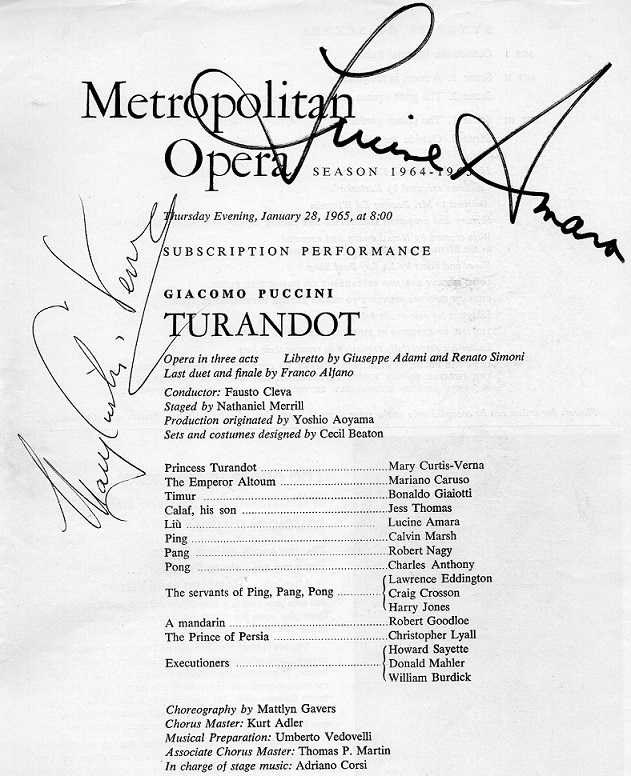
The Cecil Beaton production (Act II set, above) had brought Birgit Nilsson’s triumphantly-sung Turandot to New York City. Nilsson sang it at The Met, and then took it on tour. Mary Curtis-Verna was the first soprano to appear as Turandot in the production, other than Nilsson. As we sat waiting for the performance to begin, around me I heard people expressing the notion that Ms. Curtis-Verna and her tenor, Jess Thomas, were unlikely to come within hailing distance of the Nilsson/Corelli team. Of course, I had heard Birgit and Franco on two Saturday broadcasts of the opera; secretly, thrilling as they were, I was kind of glad to be hearing different singers in this music. Variety is the spice of operatic life, after all.
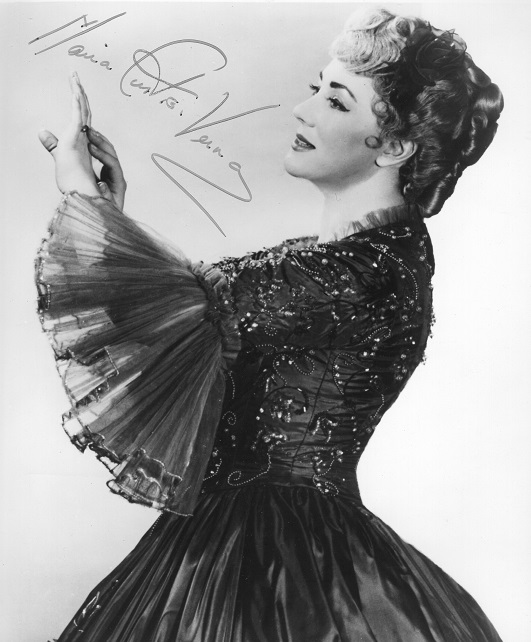
And how different, indeed! Instead of Nilsson’s silvery trumpet of a voice, in Ms. Curtis-Verna (above) we had a warm, very Italianate-sounding soprano of ample power, with a beautiful stage presence. What I remember most about her performance was the perfectly projected, sustained high B-flat with which she ended the evening.
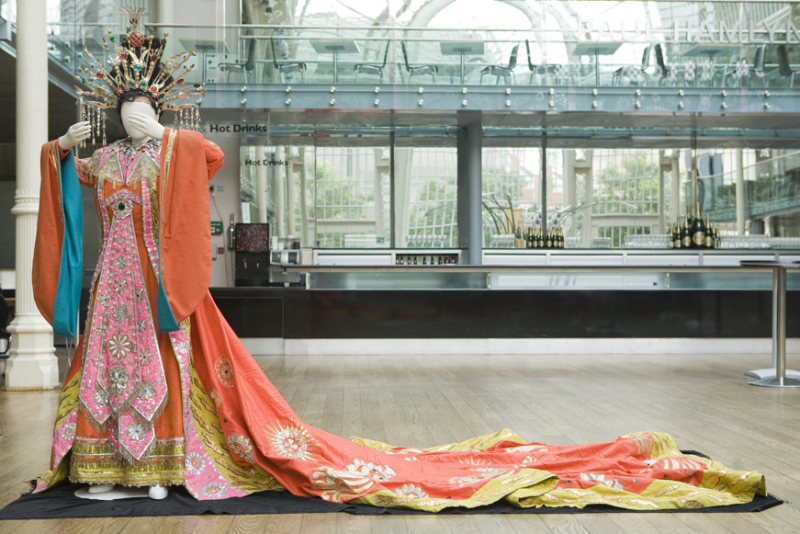
Above: the original Cecil Beaton costume for Turandot, now in the archives of the Royal Opera House, Covent Garden, where the production originated.
I quite naturally assumed that I would be hearing Mary Curtis-Verna at The New Met the following season, but – after singing the Triumphal Scene from AIDA at the closing night gala at the Old Met – she never appeared with the Company again.
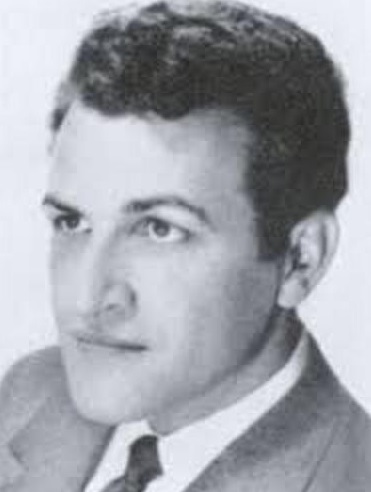
Jess Thomas (above) was the Calaf that night. He looked striking in the Unknown Prince’s black costume and fur hat. Though his was not at all an Italianate sound, Thomas had power and to spare; he made a strong impression both physically and vocally. In September of 1966, he was the tenor lead in the opening night performance at the New Met, as Julius Caesar in Samuel Barber’s ANTONY & CLEOPATRA.
Best-known for his Wagner roles, Jess Thomas would later be my first Tristan, Parsifal, and Siegfried.
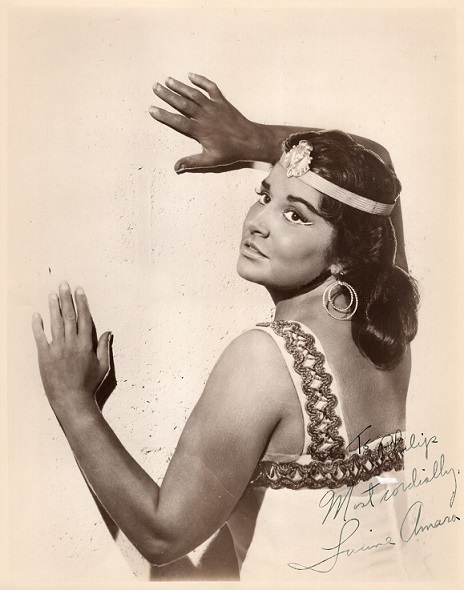
Lucine Amara (above, as Aida) stole the show vocally; her Liu was movingly sung, with some finely-spun pianissimi. Having heard her on the broadcasts, I thought she was an excellent singer – and I continued to think that, even after I discovered that her reputation was that of a ‘house singer’, devoid of vocal glamour. To me, her Nedda, Antonia in HOFFMANN, Donna Elvira, Mimi, Butterfly, Ellen Orford, and Aida were all perfectly pleasing, and whenever, in future seasons, I was at a performance where she stepped in for a more celebrated soprano, I didn’t mind in the least.
Making a tremendous impression as the blind King Timur was Bonaldo Giaiotti (above). Already, from having heard him on the Saturday broadcasts, he was among my favorite singers; and in fact, over the years, no other basso could dislodge Giaiotti from the pedestal I’d placed him on. It was a voice filled with humanity.
At this point in my opera-loving career, I had not yet become intrigued with the music Puccini assigned to the three ministers: Ping, Pang, and Pong. Their atmospheric scene prior to the Riddle Contest is now one of my favorite parts of the score. On this evening that scene was robustly sung by Calvin Marsh, Charles Anthony, and Robert Nagy. Robert Goodloe was a fine Mandarin, and the great Italian character tenor Mariano Caruso was the venerable Emperor Altoum.
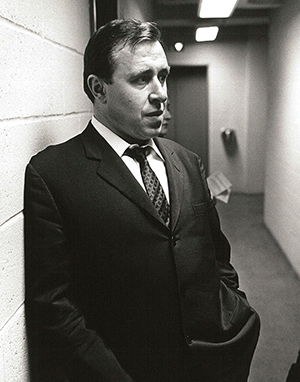
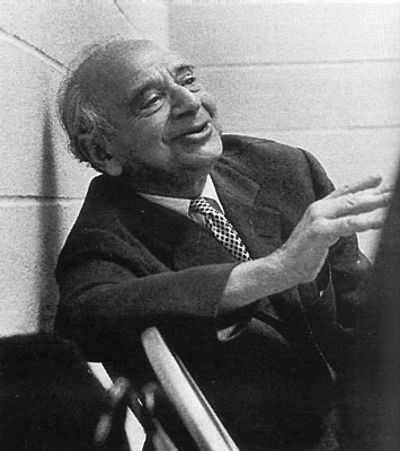
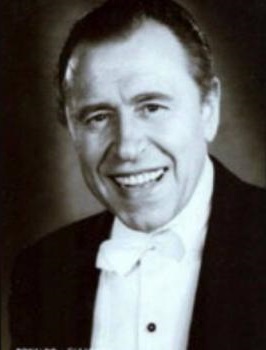
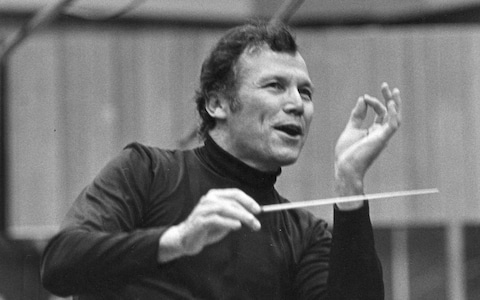
Fausto Cleva (above), the Met’s go-to conductor for the Italian repertoire, wielded the baton. He seemed pleased as punch at the curtain calls: a man small of frame, with a shock of white hair, he had an old-world elegance in his white tie and tails.
We went backstage, and stood in a long queue to meet the two sopranos; I realized that several men on that line were looking at me – not that I was anything special to look at, but youth in and of itself is a great asset in the gay world…as I came to discover.
Mary Curtis-Verna and Lucine Amara signed my program. I don’t know why we didn’t visit any of the male singers; maybe my host was thinking of the long drive home. Between the excitement of the opera and having this long-legged man next to me in bed, I did not sleep much. I was beginning to think longingly of what it would be like to give in to my desire; it was to be another eight years before I found out.
There was one more trip to the Old Met to come: in November of 1965 I attended four consecutive performances in the dilapidated – but undoubtedly still grand – old theater. For now, though, it was back to the little town…but at least I knew for sure where life would be taking me.
~~~~~~~~~~~~~~~~~~~~~~~~~~~~~~~~~~~~~~~~~~~~~
Above: at The Old Met, final scene of FAUST
~ In November, 1965, I saw my last performances at the Old Met. This was my first “long weekend” at the opera; such weekends became my routine over the next 30 years. In the late Summer of 1966, I would make first solo trip to New York City to join the box office line for the opening performances at the New Met, where I was to see hundreds of performances in the ensuing seasons. That saga started here, and continues to this day.
But in the Autumn of 1965, the Old Met was still The Met. For me, it was thrilling to see four performances in three days, and I wished that there were weekday matinees that I could have gone to: I wanted opera, all day, all the time. It hadn’t yet occurred to me that the productions had to be rehearsed.
My long weekend opened with the first Verdi opera I ever saw at The Met:
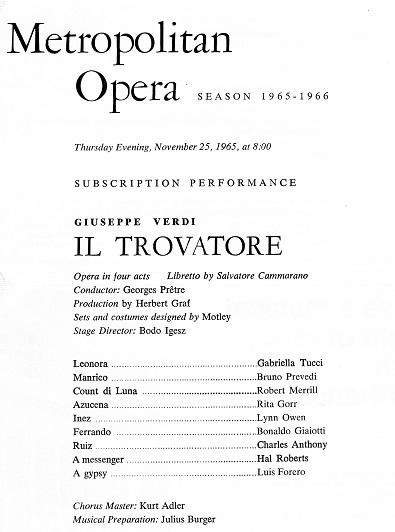
This was a thrilling experience, and I thought parts of the performance compared favourably with the old Milanov-Bjoerling RCA recording that I’d learned TROVATORE from.
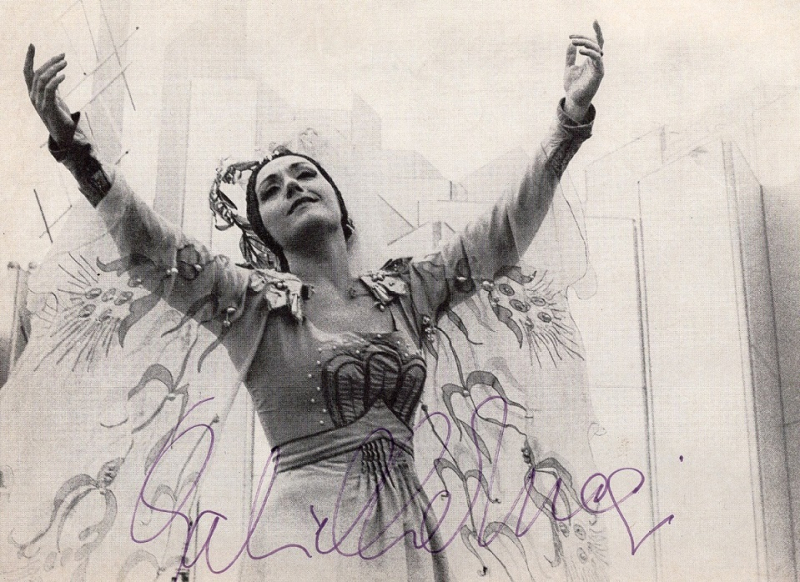
Gabriella Tucci (above) was, at that time, my favorite soprano; having heard her on many Texaco broadcasts – as Butterfly, Aida, Violetta, Desdemona, Alice Ford, and the FORZA Leonora – she set a standard for the way I thought these roles should (or could) be sung.
Tucci’s legato, and her persuasive way of spinning out the vocal line, made every phrase of her Leonora enjoyable. In her great fourth act aria, “D’amor sull’ali rosee“, Tucci reached an exalted interpretive level; she followed this with a dramatic rendering of the “Miserere“. In those years, the cabaletta “Tu vedrai cheamor” was never sung – in fact, I never even knew it existed until I heard Martina Arroyo sing it on a Met broadcast in the 1970s. Ms. Tucci capped her lovely performance with a magnificent, sustained pianissimo on her final “addio…” before the opera rushed to its close.
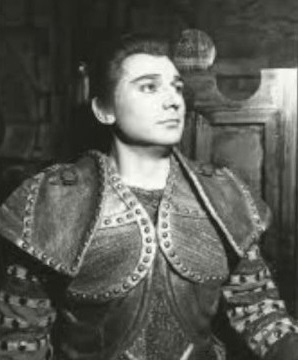
Bruno Prevedi (above) was a handsome man with a sturdy spinto sound. He sang 65 performances with the Met, in New York and on tour, over three-year span. He was Anna Moffo’s Alfredo in the Cecil Beaton TRAVIATA, and he was Don Carlo in Claudio Abbado’s Met debut performance. Although his sound was not particularly distinctive, I enjoyed everything I heard him sing during those years. When his Met career ended, Prevedi continued to sing extensively in Europe and South America until 1982, he passed away in 1988, aged 60.
In this performance as Manrico, his voice was house-filling, warm, and clear; he was well-applauded without raising the audience’s wild enthusiasm the way Corelli, Bergonzi, and Tucker did.
Rita Gorr (above) was a thrilling Azucena; her voice sounded huge in the House, and she was the dominating force of the evening. Gorr’s Met career, however, was not extensive; over a 4-year span, she sang 40 performances with the Company. During the first season at the New Met, she sang four performances as Amneris, and was thereafter never heard there again.
I lost track of her after that, but apparently vocal problems had cropped up. Her career continued in Europe, though in smaller roles. I therefore consider myself fortunate to have heard her in peak form in this TROVATORE.
Robert Merrill (above) was already a great favorite of mine from his many broadcasts and recordings. I was excited to be hearing him in the House, where he was a huge audience favorite, winning entrance applause and lots of bravos at his curtain calls.
Bonaldo Giaiotti (above) was an excellent Ferrando. He had already established himself as my primo basso and, as the years went by, I never had much cause to think of him as anything else. It’s still the bass sound I most love to hear.
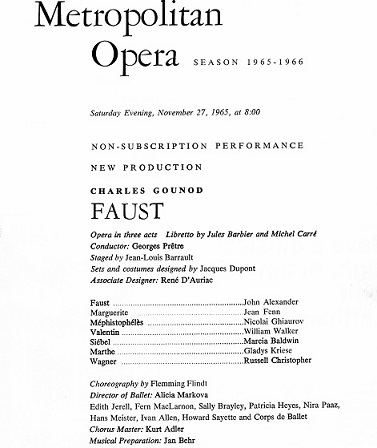
Georges Prêtre conducted this TROVATORE, wherein I sometimes thought he pushed the orchestra for volume at the expense of the singers. Two days later, he conducted FAUST, and it seemed perfect.
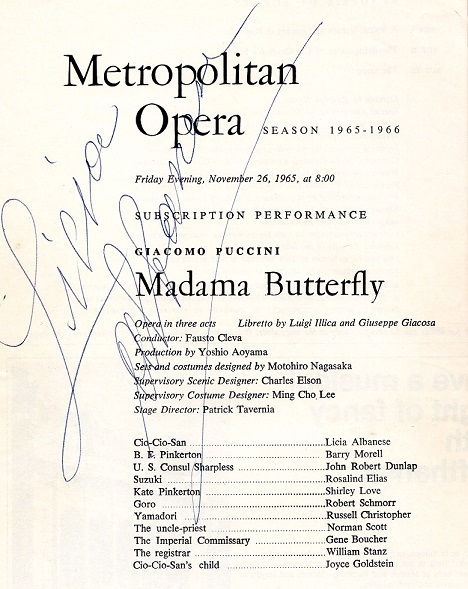
[Note: Joann Grillo replaced Rosalind Elias as Suzuki.]
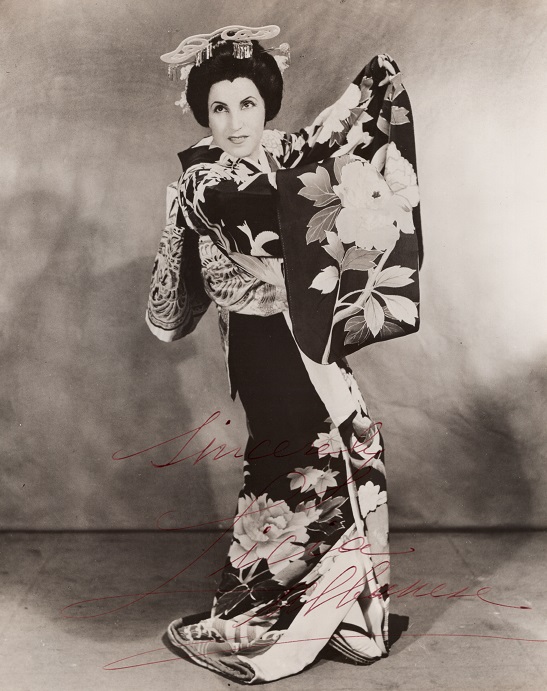
This performance of BUTTERFLY marked Licia Albanese’s last appearance in this role which was so closely associated with her. It was, in fact, her penultimate performance with the Company; in January 1966 she sang MANON LESCAUT as her farewell to the Met stage, and in July, she appeared with the Company as Mimi in a concert performance of LA BOHEME at the Newport Festival.
Of this last of the diva’s many Butterflies, I wrote: “The great Albanese in her greatest role…in fine voice, with good, strong top notes, she was especially good both in her singing and acting in Act II. A great artist, a famous portrayal! Met her, and got her autograph.”
At this point in time, Barry Morell was the tenor I had most frequently encountered in live performance: he had sung the Duke of Mantua, Alfredo Germont, and Massenet’s des Grieux at Cincinnati Summer Opera. Morell was a generous singer, with an easy Italianate style.
Joann Grillo (above), taking over from Rosalind Elias (who I had really been looking forward to hearing), sang well as Suzuki, and proved an attentive maid when she saw that the hem of Albanese’s costume had caught on a stage-floor nail: Ms. Grillo quickly moved to release it.
John Robert Dunlap sang only two roles at The Met: Sharpless in BUTTERFLY and Jim Larkens in FANCIULLADEL WEST. His final performance, as Larkens, was on April 11th, 1966: a student matinee which was the unannounced first-ever performance at the New Met at Lincoln Center. In what was described as a “sound test”, busloads of students were the first people to experience an opera in the new theatre. Mr. Dunlap seems to have faded from memory soon after this performance, even though he was Renata Scotto’s Sharpless at her Met debut.
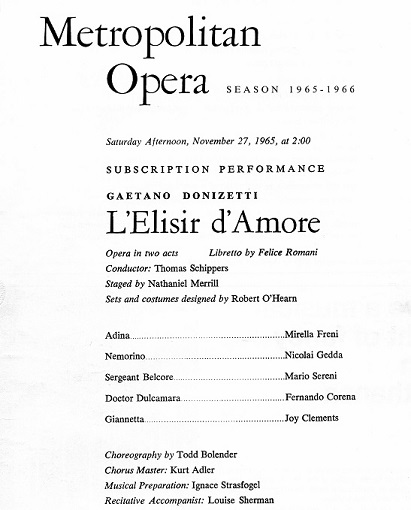
The Saturday matinee of ELISIR D’AMORE brought together the much-admired tenor Nicolai Gedda and the lovely young Italian soprano Mirella Freni, who had only recently made her Met debut as Mimi and who went on to become a beloved star with the Company.
Mr. Gedda was immensely popular, and during the opera’s single intermission the people near me were excited by the prospect of hearing his “Una furtiva lagrima” in Act II. Sure enough, it was superb.
Ms. Freni was a lyric rather than a coloratura Adina, and the wonderful freshness of her sound – as well as her graceful presence – charmed the audience.
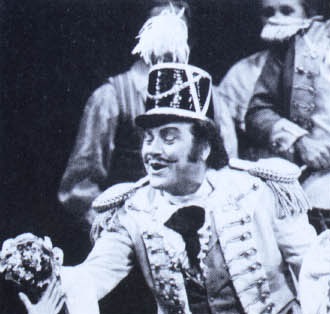
Mario Sereni (above), with a voice I always loved to hear, was the swaggering Belcore. Once the Company moved to Lincoln Center, I saw him frequently, admiring him especially as Carlo Gerard in ANDREACHENIER, Marcello in BOHEME, and as Tonio in PAGLIACCI.
And the inimitable Fernando Corena (above), king of patter, was Dulcamara. This was one of the leading roles Corena sang, but for me he came to be most dearly remembered as the Sacristan in TOSCA over the ensuing years.
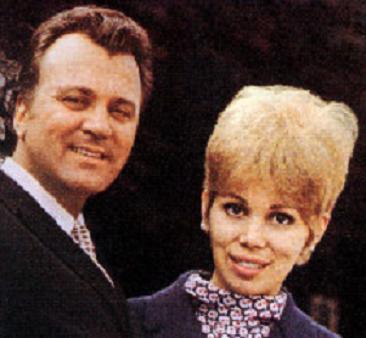
Joy Clements (above, as Adele in FLEDERMAUS) made a sparkling impression as Giannetta; in the coming years, I saw her many times both at The Met and at New York City Opera where she had the distinction of singing both Mozart’s Susanna (one of the best I ever encountered) and Carlisle Floyd’s Susannah. In 1969, Joy Clements sang a fine Violetta as a guest artist at Syracuse, New York; at that time, I thought of her as a soubrette, and so I was very pleased with the deeper impression she made in TRAVIATA. She later sent me the above photo.
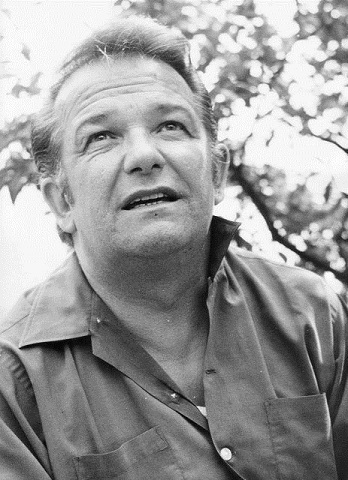
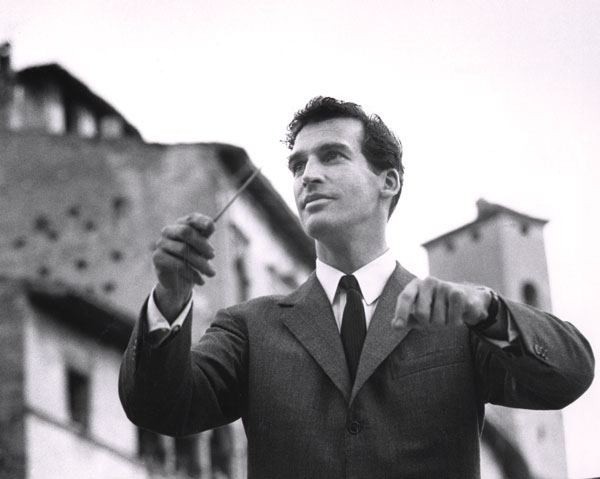
The ELISIR was conducted by the handsome, ill-fated Thomas Schippers (above). The matinee-idol maestro had made his Met debut in 1955, at the age of 25. He conducted nearly 350 performances at The Met (The Old and The New) and on tour, before being felled by lung cancer in 1977 at the age of 47.
Although I was still rather new to opera-going, I was already realizing that I much preferred tragic operas to comic ones. Over the ensuing years, I would gradually discard comedies from my ‘repertoire’; but ELISIR can still lure me in, if there’s a good cast
I can’t remember why I did not go to the stage door after the ELISIR; perhaps I met my parents for supper before heading back to the Old House – for the last time – where FAUST was presented in a very different production from the one I had seen two years earlier.
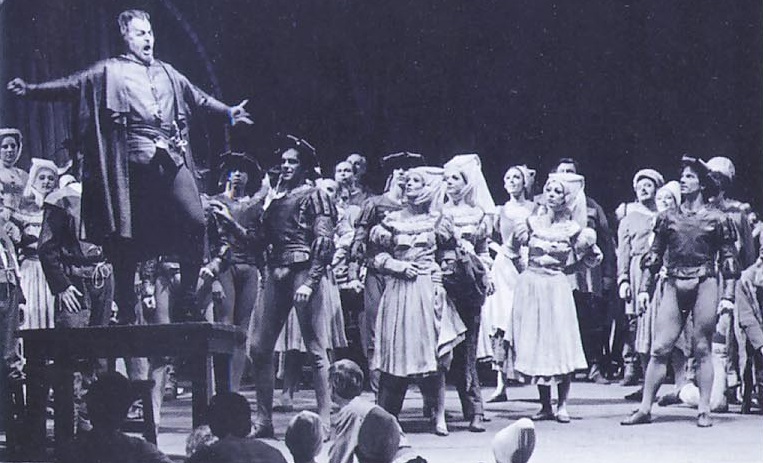
Above: a scene from FAUST in the Barrault staging
The main attraction onstage was the Méphistophélès of the charismatic Bulgarian basso Nicolai Ghiaurov (above), who had made his Met debut three weeks earlier as Philip II in DON CARLO. Ghiaurov’s splendid stage presence, aligned with his glamorous basso sound, was a thrill to experience.
Four very fine American singers took the other leading roles in FAUST:
John Alexander (above, as Anatol in VANESSA)
Alexander was a real gentleman-tenor. There was no showing off or grand-standing, just performance after performance of top-level singing in a wide variety of roles. He sang with The Met in New York City and on tour, from 1961 to 1987, chalking up 380 appearances in everything from Mozart’s IDOMENEO to Barber’s VANESSA.
For all the excellence of his work at The Met, it was John Alexander’s stunning performance as Bacchus in the New York City Opera’s 1974 production of Strauss’s ARIADNE AUF NAXOS that thrilled me the most; it was a performance that put this opera at the top of my “favorites” list, where it has stayed every since.
Jean Fenn (above) sang Marguerite with gleaming tone and well-projected high notes. Together with Alexander and Ghiaurov, she made the final trio the thrilling finish to the opera that it should be.
Although she never attained prima donna status, Ms. Fenn was engaging both to watch and to hear. At the New Met, I greatly enjoyed her Musetta, and she was my first-ever Eva in MEISTERSINGER. As of this writing, she is still with us.
There’s few recorded tracks of Jean Fenn; I did locate this BOHEME duet with Mario Lanza:
William Walker (Valentin) and Marcia Baldwin (Siebel) both had extensive careers at The Met, and in the ensuing years, I would encounter them many times onstage. In this FAUST – my final opera at the old Met – they were excellent.
William Walker (above) was a Met Auditions winner in 1962, and joined the Company immediately…and sang Papageno (in English) in his first Met season. Among his many roles were Kothner in MEISTERSINGER, the Herald in LOHENGRIN, both Schaunard and Marcello in BOHEME, Sharpless in BUTTERFLY, Enrico in LUCIADI LAMMERMOOR, and Prince Yeletsky in QUEEN OF SPADES. He sang regularly at The Met until 1978.
Marcia Baldwin (above) was the evening’s Siebel, as she had been when I first saw this opera two years earlier. She sang the aria most attractively. Little could I have guessed that I would meet her and come to know her in a different context many years later, when I was living in New York City and working at Tower Records. When she passed away in 2016, one of my few remaining connections to the Old Met was lost.
As the opera drew to its close with that exciting trio, I wasn’t really thinking “…this is the last time I will ever be here…”, because I was hoping to get back for more Old Met performances in the Spring of 1966. It didn’t happen. The next Met performance I saw was at Lincoln Center: Nilsson, Corelli, and Stratas in TURANDOT.
The life of an ardent opera-lover is full of ironies and coincidences: it hadn’t dawned on me until recently that the last opera I saw at the Old Met was the Gounod masterpiece that had opened the House in 1883.
To end this reminiscence, here’s the final trio of FAUST sung – as it was on that opening night in 1883 – in Italian. Of the three singers here, two (Pobbe and Poggi) had very limited Met careers, and the basso Raffaele Arie never sang there at all.
Friday July 26th, 2019 – An unusual and exciting program at Mostly Mozart this evening as violinist Pekka Kuusisto joined the Mostly Mozart Festival Orchestra under Andrew Manze’s baton. The program featured music of Bartók, plus Mr. Kuusisto’s setting of Vivaldi’s beloved Four Seasons into which folk music from Norway and Finland has been woven.
Béla Bartók’s Romanian Folk Dances, arranged for string orchestra by Arthur Willner, opened the evening on an upbeat note. Mr. Kuusisto and his sidekick, bassist Knut Erik Sundquist, participated as members of the ensemble, further spicing up the already lively music. What a treat to hear these pieces played live! They have an irresistible impulse, to which the two guest soloists introduced embellishments that gave an additional flair.
The six-dance suite commences with Jocul cu bâtă (“Stick Dance”), with an interesting ‘pulling’ rhythm. Then comes the jaunty Brâul (“Sash Dance”), followed by the Pe loc (“In One Spot”) into which Mr. Kuusisto injected a spaced-out, high violin passage. Buciumeana (“Dance from Bucsum”) was my favorite of the dances, being slowish and tinged with sadness. (Sample it is Emmanuel Pahud’s flute rendition here.)
Then came the lively Poarga Românească (“Romanian Polka”) after which Mssrs. Kuusisto and Sundquist lit into a fast and funky duet which morphed into the Mărunțel (“Fast Dance”); here the violinist exceeded the speed limit with his amazing technical facility as well as fancy foot-work – as much fun to watch as to hear. Sweeping on with the orchestra to a grand finale, the players were awarded a vociferous ovation from the crowd for their exhilarating performance.
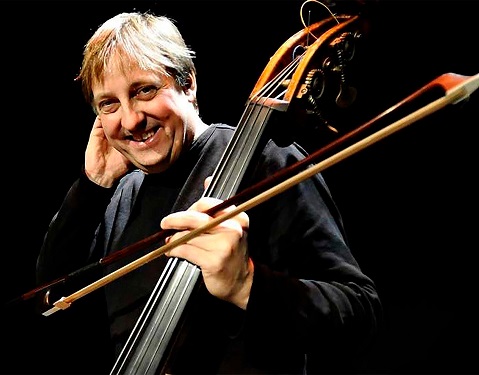
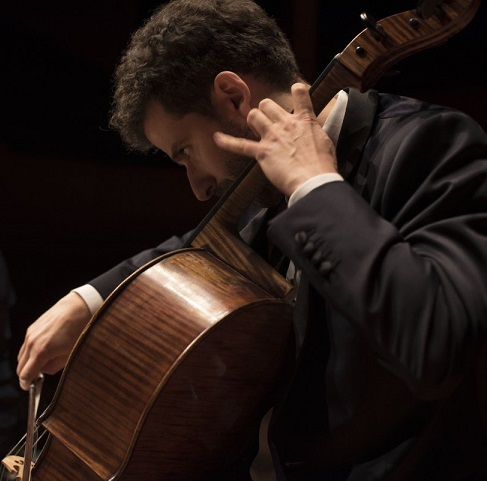
If Mr. Kuusisto was in the limelight all evening, bassist Knut Erik Sundquist (above) made a vivid impression in his own right. I imagine that. had he not been constrained by holding onto his bass, he would have joined in the dancing. His facial expressions were priceless.
Without intermission, the performance continued with the ultra-familiar Vivaldi Four Seasons, rendered – as if by time-warp – as a fusion of Baroque and contemporary modes, into which Mssrs. Kuusisto and Sundquist interpolated traditional music from Finland and Norway. If you’re going to fiddle around (!) with the classics, this is the way to do it.
The great lilting start of “Spring” was flowing along congenially when suddenly sounds like a swarm of birds were heard. Later, the violas sounded seasick, and later still the drone of a bagpipe was evoked. In “Summer”, the strings melted and drooped, the violin and a cello engaged in an off-pitch dialog, and the music sizzled or soured before turning briskly exciting. A decrescendo brought whispers and falterings; and an en masse turn of the page was truly amusing. A storm breaks, the finale carries on with more interruptions and some scraping motifs.
“Summer” was perhaps the highlight of the Seasons, and a program note mentioned the fact that this concerto is “…built of exclusively unpleasant conditions, (connecting) it with the ongoing climate debate.”
Kuusisto and Sundquist opened “Autumn” with a duet; the music sometimes took on an ‘outer space’ feeling. A snoring woman next to us rather spoilt the effect, but she woke up when Mr. Kuusisto started whistling. The tapping of bows on instruments and a ‘drunken’ passage kept us engaged.
Animated plucking – and a bit of humming from the orchestra members – were among the felicities of “Winter”; Mr. Kuusisto was by now in full “mad violinist” mode, his virtuosity simply mind-boggling.
An enormous standing ovation ensued, the audience clearly thrilled by what they had heard. Maestro Manze and the two soloists were called and re-called, to veritable tsunamis of applause.
Before the concert started, Maestro Manze spoke of what we were about to hear, and he asked that everyone in the audience “..stay to the end…”; I’ve never heard that kind of request at a concert. At any rate, a few people did head for the exits during The Four Seasons. But one woman, who was seated in the stage seats, attempted to leave and was sent back to her seat by an usher.
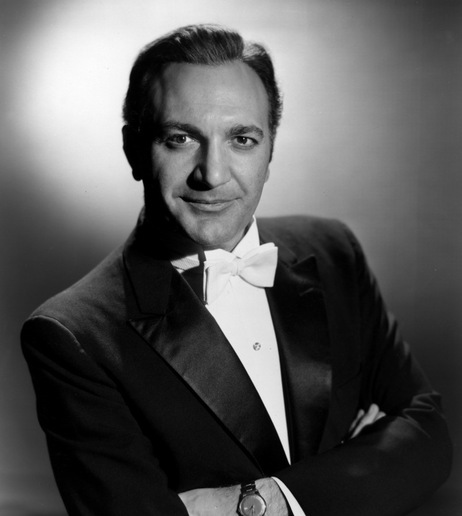
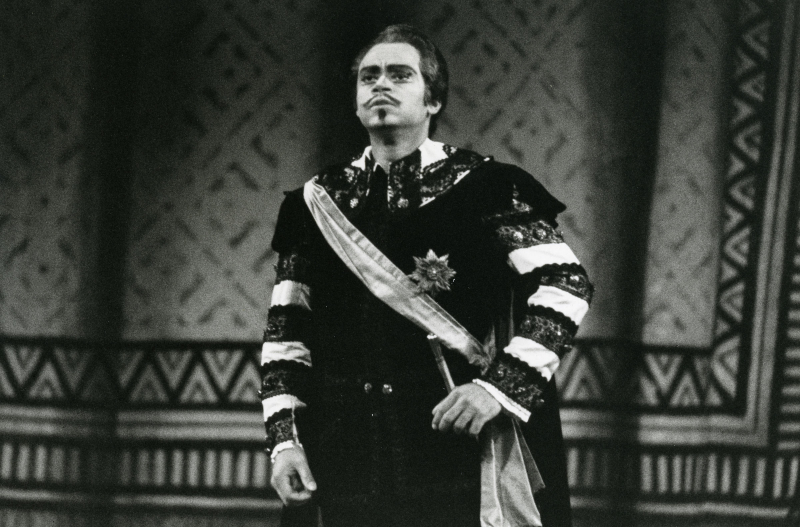
Swedish bass-baritone Bernhard Sönnerstedt studied with Karl Nygren-Kloster, and later at the Stockholm Academy of Music from 1935 to 1938 (with Joseph Hislop and Julia Claussens). After the war, he also worked with Giuseppe de Luca in Milan.
Sönnerstedt debuted the Royal Opera in Stockholm as Prince Gremin in Eugen Onegin. He went on to sing in both opera and recital throughout Scandinavia. Among his operatic roles were Leporello, Mozart’s Figaro, Mephistopheles in Faust, Escamillo, the four Villains in Hoffmann, and King Philip in Don Carlo.
In 1966, at the Stora Theater, Göteborg, Sönnerstedt appeared as Porgy in the Swedish premiere of Porgy and Bess.
As a recitalist and concert artist, Sönnerstedt toured the Scandinavian countries, England, Italy, France, and Switzerland, and had a high reputation as an interpreter of the works of J.S. Bach.
Bernhard Sönnerstedt was a producer of musical broadcasts at the Swedish Radio, and was later appointed managing director of the Stora Theatre, Göteborg. He passed away in 1971.
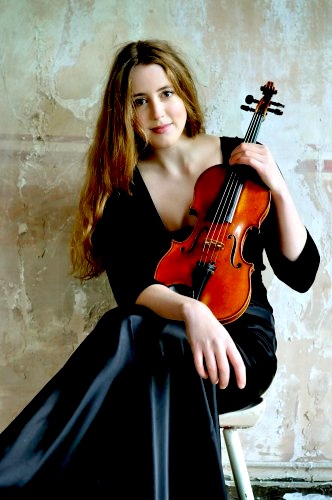
Above: violinist Vilda Frang/photo from EMI Classics
~ Author: Ben Weaver
Wednesday July 24th, 2019 – Beethoven’s two warhorses were on the program of the Mostly Mozart Festival tonight: the Violin Concerto and the Eroica Symphony, with Andrew Manze presiding over the proceedings.
For the Mostly Mozart Festival, the main auditorium of David Geffen Hall has been transformed into a night-club-like atmosphere (for a couple of years now), with the stage moved up and seating created on the sides and behind the orchestra. Amphitheater-like concert halls have been all the rage in Europe (and to a lesser extent in the US) since the Berlin Philharmonie was built; seemingly every new concert hall replicates that structure. (In the US, Walt Disney Hall, home of the LA Philharmonic, is built the same way). I’ve never been to one of these concert halls, so maybe the acoustics really are ideal 360° around the orchestra in these halls.
I am, however, not convinced that the arrangement being used for the Mostly Mozart concerts improves the sound for anyone inside David Geffen, where the acoustics have been notoriously bad since the theater’s construction in the 1960s and no amount of fiddling has changed that. (It seems that plans to gut the theater and rebuild with a superior interior are permanently shelved again. Apparently NYC and NY Philharmonic do not deserve a world-class concert hall…) Generally, when a large orchestra plays in David Geffen Hall, the sound in the orchestra section is fine, if a bit dense. However, the further up you go, the more the sound disappears. In the highest sections I find that the sound seems to be coming from across the plaza.
I bring up my issues with the acoustics of David Geffen Hall because in these Mostly Mozart Festival performances the size of the orchestra is cut drastically; Andrew Manze, a famed violinist and conductor specializing in early music and period instrument practices, has a unique take on the sound of the orchestra. Even tough the chamber-sized ensemble plays on modern instruments, Maestro Manze’s orchestral balance brought to mind a small period-instrument ensemble. This would have been wonderful if the hall’s acoustics were not mediocre to begin with and as I mentioned above, I’m not convinced the rearrangement of seating in the hall enhances the sound in any way.
It so happens that for Beethoven’s Violin Concerto the light sound of the orchestra was mostly very effective: that’s because Norwegian violinist Vilde Frang, making her MMF debut, delivered a truly unique performance. Beethoven’s demands on the violinist are intense; the concerto shocked the public upon its 1806 premiere. They were not prepared for a long and serious concerto like this: the revolutionary side of Beethoven was definitely part of this work. Ms. Frang, however, did the almost unthinkable: she played one of the most popular works of music in a way I’ve never heard anyone attempt: while abdicating nothing of Beethoven’s power, she delivered a gentle, dreamy performance. If most violinists compete with the orchestra for volume and heft, Frang and Manze joined forces to make the audience lean in: Frang’s frequent pianissimi – quieter than this concerto is used to – floated through the hall like gentle breezes. She never forced the instrument to fight or compete for attention, and Manze never forced the MMF Orchestra either. This was a perfect union of minds and musicians delivering a deeply felt and carefully thought out and fascinating performance. I hope Ms. Frang returns to NYC soon; she is a violinist to watch.
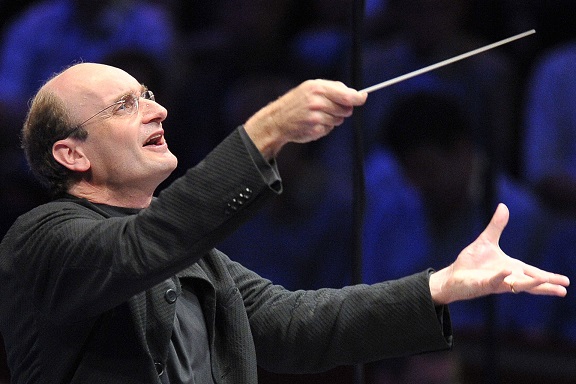
Above: conductor Andrew Manze
Things felt more familiar with the performance of Beethoven’s 3rd Symphony, the famed Eroica. The 1803 work changed the course of music and what a symphony was thought to be; there are now only 2 steps from Beethoven to, say, Mahler (No. 3 to No. 9 to everything that followed.) The opening chords of the Allegro con brio were bright and forceful. The movement unfolded with energy and verve. Marcia funebre was dark and brooding, but seemed closer in spirit to the earlier Violin Concerto than “Beethoven the revolutionary.” To me, the Scherzo is always the most difficult movement to pull off: it seems to not belong to this symphony. Its jollity and energy are closer to Beethoven’s previous two symphonies, not the granitic Eroica. I’m afraid tonight that feeling remained, though the movement was played well. And the final Allegro molto was a perfectly executed march from darkness to triumph.
Except…back to the cursed acoustics of the hall. What was missing was the sound surrounding you, going behind you and coming back to hit the back of your head. The fact that Maestro Manze was using greatly reduced forces isn’t the reason for that; I’ve heard soloists and chamber ensembles at Carnegie Hall deliver ear-shattering sounds. At David Geffen Hall and in MMF’s seating configuration, no matter how much they tried, the sound simply gets lost.
An orchestra like the NY Philharmonic can make the rafters shake through sheer will and size of the ensemble. It truly is a disgrace that a city like New York is incapable of building a hall for its home band and Festival. Maybe MMF should consider moving some of their performances to Carnegie Hall, which seems to be vacant during the summer. Tonight’s wonderful concert by Andrew Manze, Vilde Frang, and Mostly Mozart Festival Orchestra deserved to be heard.
Sunday July 14th, 2019 – The second of three concerts in Chamber Music Society of Lincoln Center‘s annual Summer Evenings series brought together a trio of esteemed CMS artists joined by The New York Philharmonic’s beloved principal clarinetist Anthony McGill. No French music on this Bastille Day program; Austria, Germany, and Russia were represented. The playing was superb.
Above: violinist Bella Hristova, photo by Lisa-Marie Mazzucco
With Mr. Pohjonen at the Steinway, Ms. Hristova opened the concert with Mozart’s Sonata in B-flat major for Violin and Piano, K. 454, which dates from 1784. Fittingly enough, this sonata was composed for a female violinist: Mozart wrote it for the Viennese debut of Regina Strinasacchi, and he himself was the pianist on that occasion. Female violinists were quite rare in those days. Signorina Strinasacchi had studied at the famous Ospedale della Pietà in Venice where Antonio Vivaldi had once served as music director. She was 21 years old at the time of her Vienna debut, and was said to be a dazzling violin virtuoso who had also trained as an opera singer.
Ms. Hristova, who in March of this year gave a dazzling recital at Merkin Hall, looked fetching in a dusty rose à la Grecque frock. After a courtly – almost regal – introduction, Ms. Hristova’s playing of the affecting first melody set the mood. She and Mr. Pohjonen traded melodic statements, making it clear from the start that they are ideal colleagues. The music gets lively, with little hesitations and subtleties woven in; abundant charm and sweet lyricism prevail.
A tender theme commences the Andante; the musicians take turns playing melody and rhythmic figurations. Ms. Hristova’s phrasing is so appealing here. The music turns a bit melancholy, with a sense of passion restrained. A sustained note from the violinist leads on to a sort of coda and a gentle finish.
The sonata’s concluding Allegretto is a lot of fun; violinist and pianist sometimes play in unison and sometimes harmonize. The pacing and dynamics offer pleasing contrasts along the way to a virtuosic finale.
Anthony McGill (above) then joined Nicholas Canellakis and Mr. Pohjonen for Johannes Brahms Trio in A-minor for Clarinet, Cello, and Piano, Op. 114. This was composed in 1891, after Brahms had heard the great clarinetist Richard Mühlfeld and was much taken with the sound of the instrument.
Mr. Canellakis has the trio’s opening statement – a rich melodic passage – and soon Mr. McGill’s clarinet makes its sublime entrance. From the Steinway, Mr. Pohjonen pulses up and the music takes off, calming for a cello solo in which Mr. Canellakis’s depth of tone makes a marvelous impression. Cello and clarinet bring incredible subtlety to a scale passage, and there’s a trace of gypsy lilt in the music. Following more scalework, the Allegro fades away.
At the start of the Andante, Mr McGill’s lambent tone is beautifully matched to Mr. Canellakis’s, producing a spellbinding blend: ‘phrasing is all’ here as the voices entwine. To their mix, Mr. Pohjonen adds his poetic playing. The Andantino grazioso begins like a serenade: the clarinet sings while the cello provides a plucked accompaniment. This lighthearted movement transforms itself into a waltz, which proceeds lyrically.
Mr. Canellakis’s cello digs into the final Allegro, with the piano urgent and the clarinet vibrant. The music is broad, with a folkish feel. Descending phrases are heard, and the trio finds a brisk ending.
Following the interval, Nick Canellakis (above) along with Ms. Hristova and Mr. Pohjonen, offered Anton Arensky’s Trio No. 1 in D-minor for Piano, Violin, and Cello, Op. 32. Whenever I hear Mr. Canellakis playing, I find myself thinking back to his magnificent performance of Leon Kirchner’s Music for Cello and Orchestra at Carnegie Hall in 2015.
Arensky (above) is something of a forgotten composer – unfairly, in my view. You can read about him, and hear some of his music, here. Listening to his music, you can see where Scriabin and Rachmaninoff profited from having been Arensky’s students.
Bella Hristova’s gorgeous violin solo plays over restless patterns from the Steinway; the cello then takes up the melody. Mr. Pohjonen relishes the con moto sweep of the virtuoso writing for piano. “This is fabulous music!”, I scrawled across my notes. The string players exchange bits of melody, the pianist deftly dispatches phrase after lovely phrase. A soft, sustained violin note ends the Allegro moderato.
The second movement is a sprightly Scherzo, with plucked strings and high trills from the piano: at times the instruments sound almost like toys. Mr. Pohjonen’s tone shimmers throughout. An engaging waltz gets quite grand, and, after some wry hesitations, the Scherzo‘s end is lighthearted.
A tender, reflective cello solo opens the Elegia; the music seems to recall happier times that have been left behind. Ms. Hristova’s violin climbs poignantly higher and higher, whilst Mr. Canellakis’s cello again sounds from the depths.
From a turbulent start, the cello and then the violin carry the melody of the concluding Allegro nontroppo: this music is very much à laRusse. As passion ebbs and flows thru the melodies, the shining piano and soft strings lend an ethereal air. The composer then crafts a lively finale for his trio.
Ms. Hristova and Mssrs. Canellakis and Pohjonen were greeted with great enthusiasm at the program’s end, and insistent applause brought them out for a second bow.











 Oberon's Glade