Category: Music

  • Joyous Mendelssohn @ Chamber Music Society

    16729309_10211418741411574_4800437195826780331_n

    In the days leading up to this evening’s concert at Chamber Music Society of Lincoln Center, it was announced that violinist Paul Huang was among the recipients of the 2017 Lincoln Center Awards.   

    Tuesday February 21st, 2017 – In the midst of their season celebrating Mendelssohn, Chamber Music Society of Lincoln Center offer two programs contrasting the joyous and the sorrowful. Today we reveled in the positive, sunny side of chamber music; on Sunday, February 26th, melancholy will prevail.

    The Variations in E-flat major, Op. 44, by Ludwig van Beethoven, is a series of fourteen variations on a theme written for piano, violin and cello. The theme is set forth, plain as day: the musicians play a series of arpeggios at a moderate pace. From thence, the variations proceed in a variety of rhythms, instrumentation, harmony, and embellishment. Orion Weiss (piano), Sean Lee (violin), and Paul Watkins (cello) played deftly, and I greatly enjoyed observing their musical camaraderie and silent communication with one another.

    The evening’s two pianists, Huw Watkins and Orion Weiss, gave us Mendelssohn’s Andante and Allegro brillant for Piano, Four Hands, Op. 92. And “brillant” aptly describes their performance, for they followed up the melodious Andante with a striking virtuoso display in the Allegro. Mr. Watkins took the lower octaves, and Mr. Weiss the upper, but they sometimes invaded each others domain. When things got fast and furious, each player had to lean out of the way to give the other access to the full keyboard in alternating solos. Thus their performance was as appealing to watch as to hear.
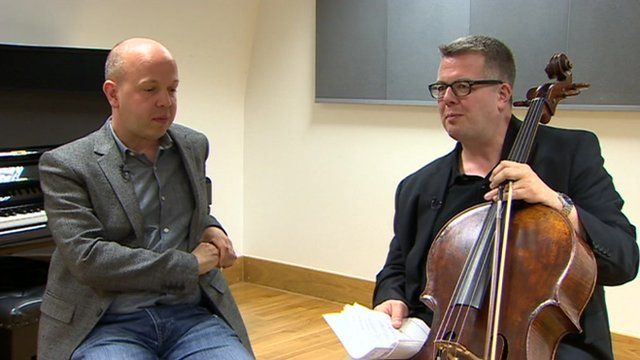
    _90769994_prom

    Above: British brothers Huw and Paul Watkins

    Cellist Paul Watkins was joined by his pianist/brother Huw Watkins in a magnificent rendering of Mendelssohn’s Sonata in D-major for Cello and Piano, Op. 58. Their performance was truly engrossing, with the cellist’s soul-reaching depth of tone and the pianist’s perfect blend of elegance and vitality combining for a spell-binding musical experience.

    In the D-major Sonata, Mendelssohn exults in the outer movements, giving the pianist a barrage of arpeggios with which to delight us while the cellist sings felicitous melodic passages.The sonata gets off to a fast start, with a lively pulse; both players bring mellifluous tone which they are able to maintain even in the most rapid phrases. Paul’s cello buzzes while Huw plays melody for a spell; then they seem to reverse roles. The word ‘amazing’ is so over-used these days, but that’s what I wrote as this fabulous Allegro assai vivace carried us along. The playing hones down to great subtlety before re-bounding and sweeping onward.

    The second movement starts with a sprightly piano tune, with the plucking cello commenting, and then humming low. A lovely cello theme leads onto a more boisterous, slightly gritty passage before recurring. This little scherzo ends with a gentle whisper.

    Rhapsodic phrases from the piano herald the Adagio, the heart of the matter. A poignant melody wells up from the cello, Paul Watkins’ glowing tone like a transfusion for the soul. Huw rhapsodizes again, then takes up his own melody over long-sustained tones from the cello. This Adagio seemed all too brief when played so nobly as it was this evening; the brothers then took only the briefest pause before attacking the opening of the final movement.

    In this Molto allegro e vivace, both players flourished in the coloratura passages and in the melodic exchanges that ensue. After a lull, a slithery scale motif from the cello made me think of the moment in Strauss’s ELEKTRA before the murder of Klytemnestra – a far-fetched association to be sure, but there it is. The music ebbs and flows on to the finish, the Watkins brothers rightly hailed with spirited applause for their remarkable performance.
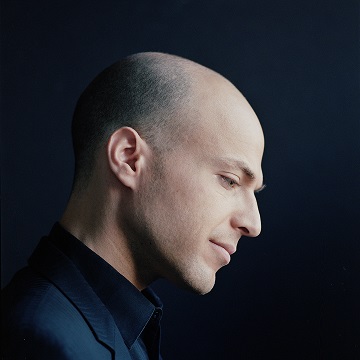
    Orion-WeissB09_credit-Jacob-Blickenstaff

    Mr. Weiss (above, in a Jacob Blickenstaff portrait) returned to the Steinway for Chopin’s Ballade in A-flat major for Piano, Op. 47, a piece long-familiar to me thru its appearance in the Jerome Robbins ballet The Concert. The pianist savoured the music, displaying a vast dynamic spectrum (blissful high pianissimi) and a keen appreciation for the shifting rhythmic patterns. When the music gets grand, Mr. Weiss’s playing is absolutely regal.  

    The Mendelssohn Quintet No. 2 in B-flat major for Two Violins, Two Violas, and Cello, Op. 87, drew together a most impressive string ensemble: Paul Huang and Sean Lee (violins), Paul Neubauer and Matthew Lipman (violas), and Paul Watkins (cello): their performance might be sub-titled ‘The Glory of Mendelssohn‘.

    The players plunged immediately into the music with a vibrant agitato rhythm, from which Paul Huang’s violin soars up to the heavens. Throughout the performance, Mr. Huang’s tone shone with an achingly beautiful polish, his profusion of technique and his uncanny ability to mix refinement and passion in perfect measure defined him an artist of exceptional gifts.

    This ensemble of wonderful musicians created a blend of particular cordiality, and each player took up their solo opportunities with stylish élan. Paul Neubauer’s playing was – as ever – aglow with poetic nuance; Matthew Lipman seconded him handsomely, displaying his trademark love of and commitment to the music, and Sean Lee’s suave phrasing is ever-pleasing to the ear. I found myself wishing that Mendelssohn had given the cello a bit more prominence, simply because I could not get enough of Paul Watkins’s playing.

    The quintet’s Adagio e lento found all the musicians at their most expressive, a reassurance in uncertain times; we so desperately need great music at this point in our lives when the future seems poised on the edge of a knife. With the dedication of such artists as we heard today, the light of hope continues to shine as a testament against the powers of darkness. 

    • Beethoven Variations in E-flat major for Piano, Violin, and Cello, Op. 44 (1804)
    • Mendelssohn Andante and Allegro brillant for Piano, Four Hands, Op. 92 (1841)
    • Mendelssohn Sonata in D major for Cello and Piano, Op. 58 (1843)
    • Chopin Ballade in A-flat major for Piano, Op. 47 (1841)
    • Mendelssohn Quintet No. 2 in B-flat major for Two Violins, Two Violas, and Cello, Op. 87 (1845)

  • YCA Presents Samuel Hasselhorn

    SamuelHasselhorn

    Wednesday February 15th, 2017 – Baritone Samuel Hasselhorn (above) presented by Young Concert Artists in recital at Merkin Hall. With Renate Rohlfing at the Steinway, the evening was a definitive success for both the tall singer and his lovely, expressive pianist. The imaginative program, which included both the familiar and the rare, was both beautifully sung and emotionally engaging.

    In my 50+ years of recital-going, baritones have invariably giving me lasting memories: Wolfgang Holzmair, Dmitri Hvorstovsky, the two Thomases (Allen and Hampson), Bo Skovhus, Matthias Goerne, Sanford Sylvan, Kurt Ollmann, Christopheren Nomura, Randall Scarlata, Keith Phares, John Michael Moore, David Won, Shenyang, Thomas Cannon – their voices echo in the mind and heart. Mr. Hasselhorn now joins that distinguished list.

    In their opening Schumann set, Mr. Hasselhorn and Ms. Rohlfing explored a wide range of moods: from the urgency of Tragödie I and the pensive resignation of Tragödie II, they progressed to the vivid narrative of Belsazar (Mr. Hasselhorn operatically powerful, with Ms. Rohlfing excelling), and the rather unusual Mein wagen rollet langsam. The effect of the defeat of Napoleon on two of his faithful foot-soldiers was marvelously depicted in song by Mr. Hasselhorn in Die beiden Grenadiere, with its sounding of the Marseillaise. Passionate desire fills Lehn’ deine Wang, and the contrasts of poetic and turbulent love were superbly expressed by baritone and pianist in Du bist wie eine Blume and Es leuchtet meine liebe, the latter ending with Ms. Rohlfing’s finely-played postlude.

    In charmingly accented and very clear English, Mr. Hasselhorn delighted us with Britten’s ironic Oliver Cromwell and The foggy, foggy dew. The singer’s exceptional control was manifested in his poignant rendering of O waly, waly with Ms. Rohlfing giving tender support. A long comic Britten narrative, The Crocodile, ended the evening’s first half.

    Addressing the audience before commencing the evening’s second half, Mr. Hasselhorn spoke of the woes of our planet today, thrown into further chaos by recent events. The plight of refugees worldwide, and the threats posed by war and terrorism to a hopeful humanity prompted the baritone to devise a set of works especially meaningful to him on a personal level; these he now offered to us with singing of real sincerity and depth of feeling.

    The juxtaposition of Hugo Wolf’s madly dramatic Die Feuerreiter (‘The Fireman’) and Franz Schubert’s haunting Litanei auf das Allerseelen (‘Litany for All-Saints’) was a masterstroke of programming beyond anything I’ve ever experienced in a recital. The fierceness and wild desperation of the Wolf was memorably contrasted with the sublime prayer for peace penned by Schubert. Mr. Hasselhorn and Ms. Rohlfing were simply thrilling: the pianist in a virtuoso rendering of the Wolf whilst the singer’s urgency in the narrative reached a feverish level. By contrast, the Schubert was heart-rending in its lyricism and spirituality. By taking only a brief pause between these two, our two artists cast a veritable spell over the house.

    Renate-Rohlfing

    Above: pianist Renate Rohlfing

    Three Poulenc songs, reflections on the Nazi occupation of Paris, showed the Hasselhorn/Rohlfing partnership at its most persuasive. The pre-dawn removal of (fictional) freedom-fighter André Platard in La disparu, a prayer to the Virgin in Priez pour pays (the pianist truly sublime here), and the return from the front of an exhausted sergeant in Le retour de sergent made a triptych – painted in the inimitable Poulenc style – which perfectly encapsulates a specific time and place. 

    The singer and pianist then sent chills thru me with the devastating emotional power of their performance of Schubert’s Erlkönig. Mr. Hasselhorn summoned up the three contrasting characters of the narrative with subtle rather than overly-theatrical variants of tone-colour – simply splendid singing! – and Ms. Rohlfing gave the piano’s role, with its contrast of relentlessness, desperation, and cruel seduction, full rein. A luminously intense performance.

    In the brief Wanderers Nachtlied II, poetry seeped gently into the air from Ms. Rohlfing’s keyboard, to be handsomely taken up by Mr. Hasselhorn like a benediction. Lingering on the heights of expressiveness, singer and pianist brought me to tears with the poignant song of Der blinde kind (‘The Blind Boy’), a youth who refuses to wallow in self-pity over his affliction. Mr. Hasselhorn’s gestures, stance, and expressive features portrayed the boy’s physical and emotional state movingly, evoking understanding rather than pity: such a touching song, superbly rendered.

    Schubert’s last song, Die taubenpost (‘The carrier-pigeon’), seems like a simple avowal of young love as the poet sends his trusty pigeon bearing messages to his beloved. The pigeon’s name Sehnsucht – that magical word for ‘longing’ – and he is the messenger of fidelity. For those of us who love from afar, the song takes on a sweet depth of meaning. True to all that has gone before, Mr. Hasselhorn and Ms. Rohlfing were perfect here. Their encore, the blessed An die musik (‘To Music’), served as a summarizing of this exceptional evening of song.

    I shall hope to hear Mr. Hasselhorn here in New York City again soon; how I should love to hear his voice in Schumann’s Dichterliebe! It also seems to me that there are many operatic roles in which he could shine at The Met. For this evening, I again express gratitude to Susan Wadsworth and Young Concert Artists for bringing us another in their series of exemplary recitals.

  • Brahms & Fauré @ Chamber Music Society

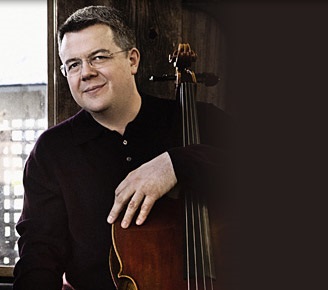
    Paul Watkins

    Above: cellist Paul Watkins

    Sunday January 29th, 2017 – Following an unsettling week, it was particularly reassuring to settle into the embracing space of Alice Tully Hall this evening and be serenaded by four estimable musicians in Chamber Music Society of Lincoln Center‘s program of works by Johannes Brahms and Gabriel Fauré. 

    In 1853, Robert Schumann and Johannes Brahms teamed up with Schumann’s student, Albert Dietrich, to write a “welcome home” sonata for violinist/composer Joseph Joachim, whose travels had kept him away from Düsseldorf for several weeks. The music was set around the notes F-A-E, which stood for Joachim’s personal motto, “Frei, aber einsam” (‘Free, but lonely’). Dietrich wrote the first movement, with Schumann taking on the second and fourth, leaving Brahms with the third.

    Joachim retained the sole copy of the score after performing it; he had the Brahms Scherzo published in 1906, after the composer’s death; the full sonata was not published until much later.

    The complete ‘FAE Sonata‘ is rarely heard these days, but the Brahms Scherzo has become a popular stand-alone work in the chamber music repertoire. It commences in a brisk, passionate mode which returns following an affettuoso interlude. Tonight, violinist Ani Kavafian and pianist Alessio Bax brought great energy to the opening paragraph, subsiding to a gently rhapsodic state in the calm of the central section before setting up a spirited drive to the finish.

    Violist Yura Lee and cellist Paul Watkins then joined Ms. Kavafian and Mr. Bax for the Fauré. A unison string theme opens the quartet, with the entrance of the piano filling out the sonic texture that will keep us enchanted for the next half-hour. Ms. Lee’s wonderfully sensitive playing – a hallmark of the evening – meshed lyrically with the sweetness of Ms. Kavafian’s violin, the quiet rapture of Mr. Watkins’ cello, and the elegant romance of Mr. Bax’s phrasing from the Steinway. The music veers briefly to the dramatic before subsiding into a cushioning warmth from viola and cello whilst the violin wafts on high.

    Plucking strings and a rolling theme from Mr. Bax open the second movement. Later, the piano comments ironically as the strings try to revive the first movement’s main theme in a rather off-kilter manner; the music slows, and then steals away.

    In the Adagio third movement, Yura Lee’s dreamy playing had a transportive quality; Fauré’s student Charles Koechlin has written that “…the viola would have to be invented for this Adagio if it did not already exist…”, and Ms. Lee’s playing underlined the truth of that notion. Moving forward, violin and piano achieve a lovely blend and the music begins to turn passionate; Fauré manages a balance of intensity and calm in this movement that is quite unique.

    A darker and somewhat turbulent mood is created at the start of the quartet’s concluding Allegro molto: Ms. Lee and Mr. Watkins sing a deep theme together before a more lilting quality begins to rise. Mr. Bax commences a dance, drawing the string players in with his rhythmic emphasis as the music builds and dances on to an exuberant end.

    Following the interval, the performance of the Brahms second quartet was somewhat compromised by the high-pitched sound of a faltering hearing-aid battery. After the quartet’s first movement, Ms. Kavafian asked the audience if they were hearing it too, and several people replied in the affirmative. The players took a moment to gather their concentration before proceeding. Annoying as such disruptive sounds are to the audience, it must be doubly difficult to play in such circumstances as the musicians are always listening for one another and the extraneous sound must be particularly jarring. They played on, admirably, and the noise seemed to subside as the performance evolved.

    It was in the Brahms quartet that Mr. Bax seized upon the prominence the composer assigned to the piano’s role and delighted us with truly gorgeous playing; my notes are full of little stars and exclamation marks, and scrawls of “Bax…Bax…Bax!”

    Rhythmic distinctiveness marks the first movement, the four players ever-alert to nuance as cello and violin each have a passage of stepping forward. And then, it’s in the Adagio that we get to the heart of the matter: commencing as a lullaby, the piano’s tranquil, song-like theme was an outstanding Bax passage. The string voices murmur deeply and the piano replies; passions ebb and flow, and the strings unite in a brief trio. Ms. Kavafian and Mr. Watkins play in unison, leading to the development of a big song from which the violinist eventually shimmers upward; a hushed coda aptly rounds out this Adagio dream.

    A simple song opens the Scherzo, which moves on thru various permutations. A transition to a more energetic passage leads to more animated playing, with a Hungarian lilt. This gypsy colouring extends into the quartet’s concluding Allegro, with Ms. Kavafian and Mr. Bax leading the way. The folksy dance motifs, however, are tempered by an unhurried feeling. The music becomes almost gentle at times, before a final build-up.

    We emerged into the cold chill of impending February, jolted back to the realities of life. Now – more than ever – we will seek solace in great music, art, poetry, and dance, looking to concert halls and museums as sanctuaries of reason and compassion.  

    • Brahms Scherzo, WoO 2, from “F-A-E” Sonata for Violin and Piano (1853)
    • Fauré Quartet No. 2 in G minor for Piano, Violin, Viola, and Cello, Op. 45 (1885-86)
    • Brahms Quartet No. 2 in A major for Piano, Violin, Viola, and Cello, Op. 26 (1861)
  • Brahms & Fauré @ Chamber Music Society

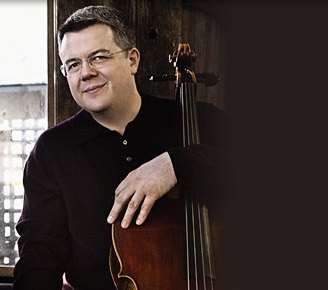
    Paul Watkins

    Above: cellist Paul Watkins

    Sunday January 29th, 2017 – Following an unsettling week, it was particularly reassuring to settle into the embracing space of Alice Tully Hall this evening and be serenaded by four estimable musicians in Chamber Music Society of Lincoln Center‘s program of works by Johannes Brahms and Gabriel Fauré. 

    In 1853, Robert Schumann and Johannes Brahms teamed up with Schumann’s student, Albert Dietrich, to write a “welcome home” sonata for violinist/composer Joseph Joachim, whose travels had kept him away from Düsseldorf for several weeks. The music was set around the notes F-A-E, which stood for Joachim’s personal motto, “Frei, aber einsam” (‘Free, but lonely’). Dietrich wrote the first movement, with Schumann taking on the second and fourth, leaving Brahms with the third.

    Joachim retained the sole copy of the score after performing it; he had the Brahms Scherzo published in 1906, after the composer’s death; the full sonata was not published until much later.

    The complete ‘FAE Sonata‘ is rarely heard these days, but the Brahms Scherzo has become a popular stand-alone work in the chamber music repertoire. It commences in a brisk, passionate mode which returns following an affettuoso interlude. Tonight, violinist Ani Kavafian and pianist Alessio Bax brought great energy to the opening paragraph, subsiding to a gently rhapsodic state in the calm of the central section before setting up a spirited drive to the finish.

    Violist Yura Lee and cellist Paul Watkins then joined Ms. Kavafian and Mr. Bax for the Fauré. A unison string theme opens the quartet, with the entrance of the piano filling out the sonic texture that will keep us enchanted for the next half-hour. Ms. Lee’s wonderfully sensitive playing – a hallmark of the evening – meshed lyrically with the sweetness of Ms. Kavafian’s violin, the quiet rapture of Mr. Watkins’ cello, and the elegant romance of Mr. Bax’s phrasing from the Steinway. The music veers briefly to the dramatic before subsiding into a cushioning warmth from viola and cello whilst the violin wafts on high.

    Plucking strings and a rolling theme from Mr. Bax open the second movement. Later, the piano comments ironically as the strings try to revive the first movement’s main theme in a rather off-kilter manner; the music slows, and then steals away.

    In the Adagio third movement, Yura Lee’s dreamy playing had a transportive quality; Fauré’s student Charles Koechlin has written that “…the viola would have to be invented for this Adagio if it did not already exist…”, and Ms. Lee’s playing underlined the truth of that notion. Moving forward, violin and piano achieve a lovely blend and the music begins to turn passionate; Fauré manages a balance of intensity and calm in this movement that is quite unique.

    A darker and somewhat turbulent mood is created at the start of the quartet’s concluding Allegro molto: Ms. Lee and Mr. Watkins sing a deep theme together before a more lilting quality begins to rise. Mr. Bax commences a dance, drawing the string players in with his rhythmic emphasis as the music builds and dances on to an exuberant end.

    Following the interval, the performance of the Brahms second quartet was somewhat compromised by the high-pitched sound of a faltering hearing-aid battery. After the quartet’s first movement, Ms. Kavafian asked the audience if they were hearing it too, and several people replied in the affirmative. The players took a moment to gather their concentration before proceeding. Annoying as such disruptive sounds are to the audience, it must be doubly difficult to play in such circumstances as the musicians are always listening for one another and the extraneous sound must be particularly jarring. They played on, admirably, and the noise seemed to subside as the performance evolved.

    It was in the Brahms quartet that Mr. Bax seized upon the prominence the composer assigned to the piano’s role and delighted us with truly gorgeous playing; my notes are full of little stars and exclamation marks, and scrawls of “Bax…Bax…Bax!”

    Rhythmic distinctiveness marks the first movement, the four players ever-alert to nuance as cello and violin each have a passage of stepping forward. And then, it’s in the Adagio that we get to the heart of the matter: commencing as a lullaby, the piano’s tranquil, song-like theme was an outstanding Bax passage. The string voices murmur deeply and the piano replies; passions ebb and flow, and the strings unite in a brief trio. Ms. Kavafian and Mr. Watkins play in unison, leading to the development of a big song from which the violinist eventually shimmers upward; a hushed coda aptly rounds out this Adagio dream.

    A simple song opens the Scherzo, which moves on thru various permutations. A transition to a more energetic passage leads to more animated playing, with a Hungarian lilt. This gypsy colouring extends into the quartet’s concluding Allegro, with Ms. Kavafian and Mr. Bax leading the way. The folksy dance motifs, however, are tempered by an unhurried feeling. The music becomes almost gentle at times, before a final build-up.

    We emerged into the cold chill of impending February, jolted back to the realities of life. Now – more than ever – we will seek solace in great music, art, poetry, and dance, looking to concert halls and museums as sanctuaries of reason and compassion.  

    • Brahms Scherzo, WoO 2, from “F-A-E” Sonata for Violin and Piano (1853)
    • Fauré Quartet No. 2 in G minor for Piano, Violin, Viola, and Cello, Op. 45 (1885-86)
    • Brahms Quartet No. 2 in A major for Piano, Violin, Viola, and Cello, Op. 26 (1861)

  • Barenboim @ Carnegie: Mozart & Bruckner

    217101-D_340-R

    Above: Daniel Barenboim and the Staatskapelle Berlin at Carnegie Hall; performance photo by Steve J Sherman

    Thursday January 19th, 2017 – The Staatskapalle Berlin in the first of a series of concerts at Carnegie Hall in which Daniel Barenboim appears both as piano soloist and conductor. Each program in the series pairs a Mozart concerto with a Bruckner symphony. Tonight’s was the only performance in the series that I was able to attend, and it proved most valuable as an opportunity to hear not only a great conductor/pianist and orchestra, but also a rare chance to experience Bruckner’s first symphony live.

    The evening marked, almost to the day, the 60th anniversary of Daniel Barenboim’s Carnegie Hall debut; on January 20, 1957, he was the piano soloist on a program conducted by Leopold Stokowski. Over the six decades since that momentous night, Maestro Barenboim has maintained his status as a premiere pianist, and has become one of the great conductors of our time.

    My personal memories of Barenboim as pianist and as conductor are especially meaningful to me: in November 2008, he and James Levine were the de luxe pianists for a performance of Brahms’ Liebeslieder Waltzes at Weill Hall; the singers were members of the Met Young Artists Program. It was a superbly intimate performance. Shortly after this Liebeslieder evening, Barenboim made his long-awaited debut on the podium at The Met in a splendid series of performances of TRISTAN UND ISOLDE: we went twice, returning for a repeat when Waltraud Meier flew in to rescue one performance and made a striking impression as Isolde

    217101-D_216-R

    Above: performance photo by Steve J Sherman

    This evening, Maestro Barenboim appeared first as piano soloist for the Mozart Piano Concerto No. 27 in B-flat Major. From the opening bars, my friend Dmitry and I were struck by how absolutely lovely the orchestra sounded in the Carnegie setting. After the interval, when the much larger contingent of players required by the Bruckner took the stage, the sonic effect remained particularly cordial. It’s a stellar orchestra, and within moments I was regretting that I hadn’t made arrangements to hear them in more concerts from this impressive series.

    In 1791, the final year of Mozart’s life, the composer was at a low point. Poor health (his own, and his wife’s) and financial worries bore down on him, and he felt the Viennese musical public had somewhat lost interest in him.  At the time he was composing his last piano concerto, #27, he wrote to his wife: “I can’t explain to you how I feel…there’s a kind of emptiness which just hurts me: a kind of longing that is never stilled…” His despair shows thru in the 27th concerto, although light still manages to pierce the clouds often enough. First performed on March 4, 1791, it marked Mozart’s last public appearance as a piano soloist.

    With a smallish ensemble – no trumpets, drums, or clarinets – this concerto feels intimate, even in the spaciousness of Carnegie Hall. This impression was sustained by the marvelous subtlety of Maestro Barenboim’s playing, particularly in the cadenzas, where he could fine the tone down to a silken whisper.

    In the melody-rich first movement, the orchestra cushioned the piano line to gorgeous effect, with the solo flute and bassoon displaying great finesse. The flautist continued to impress in the Larghetto which follows. Maestro Barenboim’s playing here was beautifully sustained and thoughtful, and an atmosphere of tranquility laced with gentle melancholy settled over the Hall. Barenboim’s exquisite tapering of the final phrase hung on the air, but an enormous, ill-timed sneeze from an audience member destroyed this magical moment.

    Pianist and orchestra bounced back from this unfortunate intrusion for a perfect rendering of the concerto’s concluding Allegro; Barenboim’s playing here had ample spirit and polish, and the musicians did him proud. This is a somewhat darker finale than Mozart’s usually wrote for his concerti, but it does feature the melody of a little song Mozart was working on: “Sehnsucht nach dem Frühling” (“Longing for Spring“). By late 1791, the composer was fighting for his life; he never saw another Spring, dying on December 5th and thus sadly depriving the world of three or four more decades-worth of magnificent music.

    217101-D_441

    Above: performance photo by Steve J Sherman

    Anton Bruckner’s 1st symphony languished in obscurity for over twenty years. Following a single performance in Linz, Austria, in 1868, it was not heard again until 1891 when it was given in a heavily revised version. Its Carnegie Hall premiere didn’t take place – incredibly enough – until 1985, and performances of it remain comparatively rare. After hearing tonight’s excellent performance, I feel its neglect is unjustified; in fact, I look forward to hearing it again…the sooner, the better.

    Maestro Barenboim’s fondness for this music was evident from start to finish, and the Staatskapelle Berlin gave it a performance by turns lush, subtle, and vigorous. How thrilling to hear (and watch) the orchestra’s eight double-basses playing in unison; and the timpanist was having a field day – I was mesmerized by him throughout the third and fourth movements.

    A march-like cadence sets the opening Allegro on its way; starting almost whimsically, this soon becomes more emphatic. A lull comes as the woodwinds gently introduce a free-flowing violin melody. Suddenly the trombones take control with a mighty fanfare. Distant thunder from the timpani, and the march motif resumes; the movement carries on with an ebb and flow of what feel like climaxes but which subside just short of peaking. Then, after a final rush, we come to an abrupt end. The players’ keen response to Barenboim’s often understated gestures spoke of the natural affinity the maestro and the musicians have established over the years.

    The orchestra’s playing of the Adagio was especially moving. This music builds cinematically to a glorious climax, then evaporates into the heavens in an inspired and inspiring coda. Maintaining a perfect balance between the layered voices, Barenboim again showed that this music is in his very blood.

    The lively Scherzo is particularly engaging: it has the feel of a tribal dance – by turns throbbing and evocative – reminding me a bit of the well-known Scherzo from the Dvořák 6th. The whirlwind subsides for a gentle interlude before the dance springs up again, stomping on to a quick stop.

    Only in the final movement did I feel Bruckner might have been losing his grip somewhat. The music here did not have a cohesive feeling; the structure felt somewhat lacking in tautness, with a couple of walkabouts stemming the flow of the piece. Nevertheless, it was played with utter commitment and a sense of triumph at the close.

    Aside from the sneeze, a late seating after the piano concerto’s first movement caused an unfortunate  break in my concentration. The spectacular performance of the Bruckner helped to set these distractions aside, with Maestro Barenboim and his orchestra basking in a grand ovation at the end of a wonderful evening of music-making.

  • Roberta Peters Has Passed Away

    Roberta-Peters-ConvertImage

    Roberta Peters has passed away at the age of 86. I first heard her voice on the Texaco broadcasts in the early 1960s, when I was in the earliest stages of my lifelong obsession with opera. She was also on the very first opera LP set I ever owned: an RCA aria collection which my parents had given me. Roberta appeared frequently on the Ed Sullivan Show during those years.

    I first saw Roberta live at the Old Met; she sang Despina in an English-language production of COSI FAN TUTTE, and her co-stars included Leontyne Price, Rosalind Elias, and Richard Tucker. After the New Met opened at Lincoln Center in 1966, I saw her as Gilda, the Queen of the Night, Oscar in BALLO IN MASCHERA, Adina (with Pavarotti), and Norina.

    My parents took me to Saratoga, where Eugene Ormandy conducted a concert FLEDERMAUS in which Roberta sang Adele opposite Hilde Gueden (Rosalinda) and Kitty Carlisle (Prince Orlofsky). While I was living in Houston briefly in 1973, Roberta gave a delightful recital there, singing everything from Donizetti to Debussy. I saw her onstage for the last time at the Met’s 100th Anniversary Gala in 1983; she sang in the sextet from LUCIA DI LAMMERMOOR.

    Her recordings of Gilda, the Queen of the Night, and Rosina remain favorites of mine, and – even with Sutherland, Scotto, and Sills being among my most memorable Lucias – I still really enjoy Roberta’s recording of the role, opposite Jan Peerce.

    Roberta Peters – Spargi d’amaro pianto – LUCIA DI LAMMERMOOR

  • Good Knights

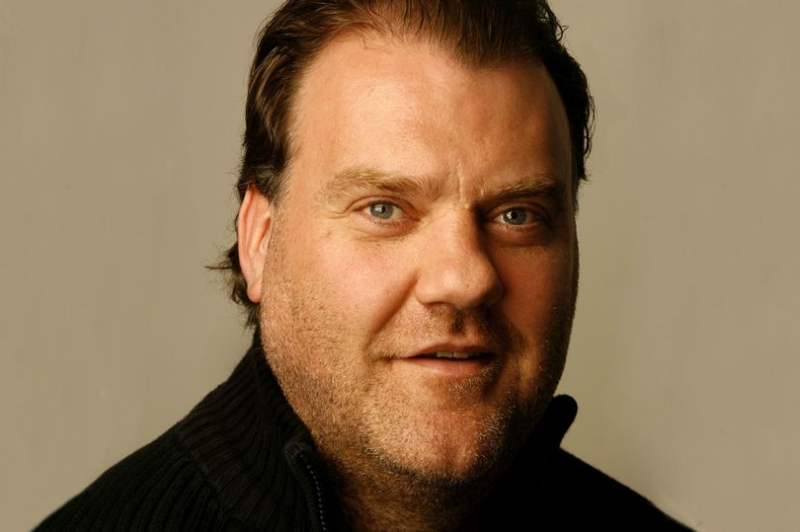
    Terfel

    Above: Sir Bryn Terfel

    Welsh bass-baritone Bryn Terfel’s knighthood was announced in the Queen’s New Year’s Honours List. Bryn had this to say about it: “A month ago, a letter was sent to my agent in Cardiff and I thought it was tickets to the rugby. I was absolutely speechless when I opened it – ashen-white, my heart-rate had tripled, my mouth was completely dry. What an accolade! I was given the CBE in 2003, The Queen’s Medal for Music in 2006 and now this is, without doubt, the icing on the cake. You have to step back and think how things have worked out for this farmer’s son from North Wales.”

    6a00d8341c4e3853ef00e54f82187d8834-800wi

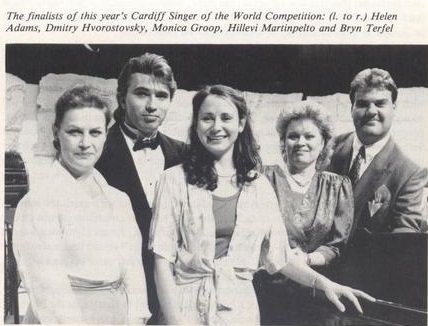
    Above: Bryn’s leap to fame came at the 1989 Cardiff Singer of the Year competition; it’s remembered as the “Battle of the Baritones” and ended with Dmitri Hvorostovsky being awarded the title Singer of the Year and Bryn taking the Lieder Prize. Within a week after the competition, my English friend Mollie sent me cassettes of the various competition rounds and the finals. In those days before the Internet became an instant way of sharing news and music from throughout the world, I liked to think of myself as the first person in the West to hear these two great voices. Since then, I have enjoyed both of them tremendously – both live and on disc – and am now hoping that Bryn will be asked to bring his newest role, Boris Godunov, to New York City. 

    Jeffrey-tate-6

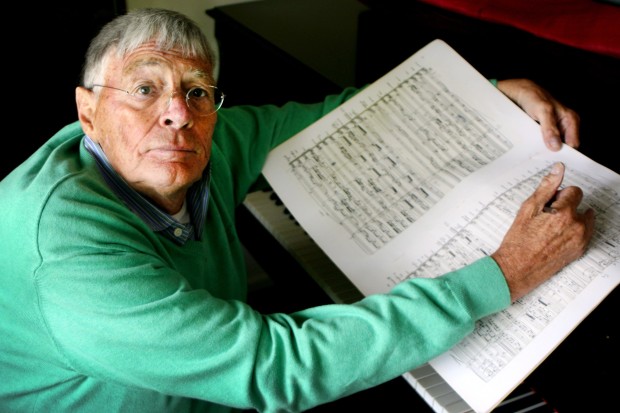
    Also knighted this New Year is the eminent conductor Jeffrey Tate (above). 

    Tate is currently chief conductor of the Hamburg Symphony Orchestra. He has endured a lifetime of dealing with spina bifida, and recently said: “The gay world is immensely hung up with physical perfection for some curious reason …therefore, being disabled in that world is harder”.

    One sweet memory I have of Maestro Tate’s conducting is this rendering of the Presentation of the Silver Rose from DER ROSENKAVALIER, sung at the Met’s 100th Anniversary Gala by Judith Blegen and Frederica von Stade. The video quality is murky, but the music glows: I know, because I was there.

    AndyMurray

    Everyone who knows me or reads my blog knows I am an avid tennis fan. It therefore pleases me immensely that we can now refer to the World #1 male tennis player as Sir Andy Murray (above). Murray has made great strides in raising the level of his game in recent seasons, and the honor caps off a year in which the Scotsman assumed the #1 ranking.

  • Teresa Stich-Randall

    T s-r

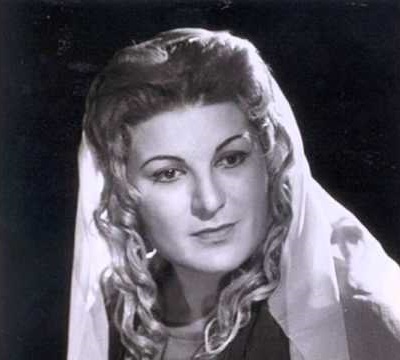
    Teresa Stich-Randall (above) sang Donna Anna in DON GIOVANNI in the first performance I ever attended at the Old Met, in 1963. It took place only a few days after the assassination of John F Kennedy, but the plans had been made, the hotel booked, and opera tickets paid for, so my parents decided we should go ahead and make the trip to New York City. On the evening following the DON GIOVANNI, we saw FAUST.  

    Teresa Stich-Randall was a native of New Hartford, Connecticut. She studied at Columbia University where, in 1947, she created the role of Gertrude Stein in THE MOTHER OF US ALL by Virgil Thomson.

    Arturo Toscanini ‘discovered’ Stich-Randall, calling her “the find of the century”. He engaged her for a series of performances with his NBC Symphony Orchestra, including the High Priestess in AIDA and Nannetta in FALSTAFF (1950), both of which remain available commercially. She also sang regularly for him in his last years, as a soprano soloist in many choral works.

    She went on to become a beloved star of the Vienna State Opera, where she performed regularly for two decades. In 1963 the Austrian government conferred on Stich-Randall the honorary title of Kammersängerin; she was the first American to be so honored. She was renowned for her Mozart interpretations.

    Today, Stich-Randall is perhaps best-known for her participation as Sophie in the classic 1959 recording of DER ROSENKAVALIER conducted by Herbert von Karajan and featuring Elisabeth Schwarzkopf and Christa Ludwig.

    It was from Stich-Randall’s LP on the Westminster label that I became familiar with the great Mozart soprano arias.

    Teresa Stich-Randall – Non mi dir ~ DON GIOVANNI

    There is a brief post-script to my Stich-Randall story. In 1980, she returned to Connecticut to care for her aging mother. One Sunday morning, I read in the Hartford Courant a small notice that Stich-Randall was giving a recital that afternoon at a church in New Hartford. It was impossible for me to get there, but I sent her a letter and was surprised to receive a charming reply from the soprano. After her mother passed away, Stich-Randall returned to Vienna where she died in 2007.

  • Met’s Holiday MAGIC FLUTE

    Zauberflote Marty Sohl

    Tuesday December 20th, 2016 – Julie Taymor’s inventive production of Mozart’s MAGIC FLUTE (above, in a Marty Sohl/Met Opera photo) is the Metropolitan Opera’s 2016 holiday season offering. In this pared-down version, sung in English, quite a bit of dialogue is cut, but – alas! – so are some of my favorite moments from the score. The overture is reduced to merely the opening chords; half of Tamino’s ‘portrait’ aria is sacrificed; and the loss of the enchanting “Bei Männern” duet and of the divine Chorus of the Priests are the unkindest cuts of all.

    The Taymor is the third Met production of FLUTE in my operatic career, following the dazzling Chagall and the vivid David Hockney. Ms. Taymor’s setting is a charmer, with a crew of black-clad deck-hands manipulating giant puppets, a huge pre-historic bird to carry the Three Genii aloft, and a bevy of colorful avian-ballerinas (led by Emery LeCrone) who are enchanted by Papageno’s bells. 

    Antony Walker led a finely-paced performance, where both the light-hearted and the profound aspects of the score were given due honor. The sound of Érik Gratton’s flute, playing from the pit, fell most graciously on the ear, especially in the Trial Scene.

    Brugger, Janai 2

    The Met put forth a very appealing cast this evening. Janai Brugger (above) as Pamina and Ben Bliss as Tamino sang so persuasively that the loss of half of Ben’s aria and of Janai’s duet with Papageno were to be all the more lamented. Mr. Bliss, who gave a lovely recital at Weill Hall earlier this season, was a tall and ardent Prince, his singing clear and stylish.

    Ms. Brugger’s Pamina was a revelation: her warm vibrato and delicious turns of phrase captivated me all evening. The voice is very ‘present’ in the big hall; her highest notes, often nuanced to a luminous piano, were exquisite. The great aria was a moving expression of feminine vulnerability wherein Pamina’s mistaken belief that Tamino no longer loves her was movingly conveyed. I’m very sorry now that I missed Ms. Brugger’s Liu at The Met; the role I most want to hear her in – soon – is Mimi in BOHEME.

    Headshot-watch02a

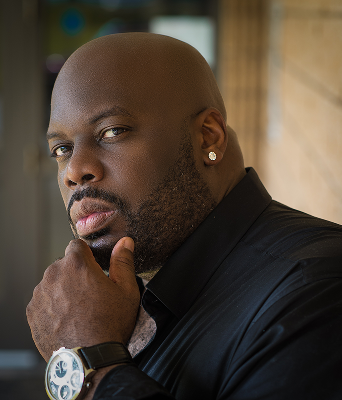
    Morris Robinson (above) was a majestic, vocally grand Sarastro. His voice spans the range with true command – the deep notes wonderfully resonant – and in matters of phrasing and diction he imbues the music with a rich sense of humanity. It’s always a great pleasure to hear Mr. Robinson at the Met, and tonight his performance was particularly impressive. 

    Christopher Maltman’s Papageno was a genuine joy, his singing robust and sprightly by turns, and his Brit accent adding an extra bit of charm. An agile actor, Mr. Maltman took the production’s pratfalls in stride. He made the birdcatcher a vivacious but never silly character, and we were all rooting for him to win his Papagena, played – with creaky quirkiness when old and blithe perkiness when young – by Dísella Lárusdóttir.

    As the Queen of the Night, Jessica Pratt was undaunted by this most difficult of debut roles. In two arias, touching on five high-Fs, the soprano is in a make-or-break situation; Ms. Pratt came thru with flying colours, bringing a striking sense of drama to her spoken instructions to Pamina (to commit murder) and with deft coloratura in the ensuing aria. In her final command: “Swear! Swear! Swear to avenge me!” Ms. Pratt latched onto a brilliantly sustained top note that rang splendidly into the hall.

    Shenyang played the all-too-brief role of The Speaker; his scene with Tamino outside the temple is actually my favorite part of the opera, wherein Tamino’s world is turned upside-down. Shenyang and Mr. Bliss were excellent here, and how I was wishing that the bass-baritone sang in New York far more frequently. 

    Robert Brubaker gave a brilliant performance as the duplicitous Monastatos, his singing strong and his diction clear. Making his exit after being repelled by Pamina, Mr. Brubaker casually tossed the line: “If I can’t have the daughter, I’ll try for the mother!” over his shoulder. I laughed out loud. 

    Wendy Bryn Harmer, Sarah Mesko (debut), and Maria Zifchak made a very fine trio of Ladies, vocally well-matched and carrying out all their stage business with aplomb. An especially impressive trio of Genii – Daniel Katzman, Misha Grossman, and Dylan Hansen Hamme – sang firmly and blended very well in music that is often delivered weakly and with unsure pitch. Good work, boys! Mark Schowalter and Scott Scully (Priests) and Noah Baetge and Rod Nelman (Guards) rounded out the evening’s cast.

    In the well-sold House were hundreds of children, and for the most part they were silent as mice. Of course the exception had to be sitting right next to us: she did some epic nose-blowing throughout the latter scenes of the evening. Step out to the hallway, dear!

    Then, on leaving the theatre, my friend Claudia and I were accosted by a deranged patron who was incensed and righteously offended that the opera had not been given complete and was not sung in German: somehow this became our fault. After a moment of being polite, I was overcome by his severe case of halitosis. He blustered on and on while we ignored him. Finally he rushed away, crashing into the revolving door. What a miserable bloke.

    But all’s well as ends better, as the hobbits say. We had a great time at the Met tonight.

  • Met’s Holiday MAGIC FLUTE

    Zauberflote Marty Sohl

    Tuesday December 20th, 2016 – Julie Taymor’s inventive production of Mozart’s MAGIC FLUTE (above, in a Marty Sohl/Met Opera photo) is the Metropolitan Opera’s 2016 holiday season offering. In this pared-down version, sung in English, quite a bit of dialogue is cut, but – alas! – so are some of my favorite moments from the score. The overture is reduced to merely the opening chords; half of Tamino’s ‘portrait’ aria is sacrificed; and the loss of the enchanting “Bei Männern” duet and of the divine Chorus of the Priests are the unkindest cuts of all.

    The Taymor is the third Met production of FLUTE in my operatic career, following the dazzling Chagall and the vivid David Hockney. Ms. Taymor’s setting is a charmer, with a crew of black-clad deck-hands manipulating giant puppets, a huge pre-historic bird to carry the Three Genii aloft, and a bevy of colorful avian-ballerinas (led by Emery LeCrone) who are enchanted by Papageno’s bells. 

    Antony Walker led a finely-paced performance, where both the light-hearted and the profound aspects of the score were given due honor. The sound of Érik Gratton’s flute, playing from the pit, fell most graciously on the ear, especially in the Trial Scene.

    Brugger, Janai 2

    The Met put forth a very appealing cast this evening. Janai Brugger (above) as Pamina and Ben Bliss as Tamino sang so persuasively that the loss of half of Ben’s aria and of Janai’s duet with Papageno were to be all the more lamented. Mr. Bliss, who gave a lovely recital at Weill Hall earlier this season, was a tall and ardent Prince, his singing clear and stylish.

    Ms. Brugger’s Pamina was a revelation: her warm vibrato and delicious turns of phrase captivated me all evening. The voice is very ‘present’ in the big hall; her highest notes, often nuanced to a luminous piano, were exquisite. The great aria was a moving expression of feminine vulnerability wherein Pamina’s mistaken belief that Tamino no longer loves her was movingly conveyed. I’m very sorry now that I missed Ms. Brugger’s Liu at The Met; the role I most want to hear her in – soon – is Mimi in BOHEME.

    Headshot-watch02a

    Morris Robinson (above) was a majestic, vocally grand Sarastro. His voice spans the range with true command – the deep notes wonderfully resonant – and in matters of phrasing and diction he imbues the music with a rich sense of humanity. It’s always a great pleasure to hear Mr. Robinson at the Met, and tonight his performance was particularly impressive. 

    Christopher Maltman’s Papageno was a genuine joy, his singing robust and sprightly by turns, and his Brit accent adding an extra bit of charm. An agile actor, Mr. Maltman took the production’s pratfalls in stride. He made the birdcatcher a vivacious but never silly character, and we were all rooting for him to win his Papagena, played – with creaky quirkiness when old and blithe perkiness when young – by Dísella Lárusdóttir.

    As the Queen of the Night, Jessica Pratt was undaunted by this most difficult of debut roles. In two arias, touching on five high-Fs, the soprano is in a make-or-break situation; Ms. Pratt came thru with flying colours, bringing a striking sense of drama to her spoken instructions to Pamina (to commit murder) and with deft coloratura in the ensuing aria. In her final command: “Swear! Swear! Swear to avenge me!” Ms. Pratt latched onto a brilliantly sustained top note that rang splendidly into the hall.

    Shenyang played the all-too-brief role of The Speaker; his scene with Tamino outside the temple is actually my favorite part of the opera, wherein Tamino’s world is turned upside-down. Shenyang and Mr. Bliss were excellent here, and how I was wishing that the bass-baritone sang in New York far more frequently. 

    Robert Brubaker gave a brilliant performance as the duplicitous Monastatos, his singing strong and his diction clear. Making his exit after being repelled by Pamina, Mr. Brubaker casually tossed the line: “If I can’t have the daughter, I’ll try for the mother!” over his shoulder. I laughed out loud. 

    Wendy Bryn Harmer, Sarah Mesko (debut), and Maria Zifchak made a very fine trio of Ladies, vocally well-matched and carrying out all their stage business with aplomb. An especially impressive trio of Genii – Daniel Katzman, Misha Grossman, and Dylan Hansen Hamme – sang firmly and blended very well in music that is often delivered weakly and with unsure pitch. Good work, boys! Mark Schowalter and Scott Scully (Priests) and Noah Baetge and Rod Nelman (Guards) rounded out the evening’s cast.

    In the well-sold House were hundreds of children, and for the most part they were silent as mice. Of course the exception had to be sitting right next to us: she did some epic nose-blowing throughout the latter scenes of the evening. Step out to the hallway, dear!

    Then, on leaving the theatre, my friend Claudia and I were accosted by a deranged patron who was incensed and righteously offended that the opera had not been given complete and was not sung in German: somehow this became our fault. After a moment of being polite, I was overcome by his severe case of halitosis. He blustered on and on while we ignored him. Finally he rushed away, crashing into the revolving door. What a miserable bloke.

    But all’s well as ends better, as the hobbits say. We had a great time at the Met tonight.