Category: Music

  • The Labèque Sisters|van Zweden|NY Philharmonic

    Labeque-01

    Above: Katia and Marielle Labèque

    Author: Oberon

    Saturday September 23rd, 2017 – The first thing we noticed upon taking our seats at The New York Philharmonic this evening was that the seating arrangement for the orchestra had changed: risers are now in use. Hopefully this is a permanent enhancement, as it is so pleasing to be able to actually see people like Judith LeClair, Robert Langevin, Anthony McGill, and Liang Wang while they are playing. 

    This week has marked the start of the Jaap van Zweden era at the Philharmonic, even though it’s not until next season that the appendage “Designate” will be dropped from the title “Music Director”.  The orchestra played superbly for the Maestro, and if the vociferous standing ovation that erupted the moment the Mahler 5th ended is any indication, the audience is embracing Mr. van Zweden in no uncertain terms.

    The New York premiere of Philip Glass’s Concerto for Two Pianos and Orchestra opened the program. The Labèque sisters, in fitted black trousers and be-spangled sweaters, were warmly greeted by the crowd; they have been top-rank musicians for a long time and they still look sensationally slender and attractive…and their playing retains its accustomed verve and grace.

    Glass calls for a huge orchestra for this most recent of his creations; no fewer than seven percussionists take part, along with vast troupes of string, wind, and brass players. The concerto is in three movements and sets out from a jazzy opening that develops into a feeling of a giant hurdy-gurdy playing as a kozmic merry-go-round swirls madly. Pulsing waves of sound, in dense textures, wash over us.  From this turbulence, a lovely misterioso motif for the pianos emerges, with a gong struck softly as an undertone.

    The pianists playing in their lower ranges open the second movement, with wooden clappers beating time. The trumpets and flutes join voices; at this point a cellphone went off in the audience but it merged into the musical texture. Rhythmic and textural variety sustain this central movement. The concerto concludes with a sort of adagio of somewhat darkish hues.

    The new concerto is appealing in its way, but I can’t say it’s particularly distinctive or memorable. The pianos do not take the prominence one might expect in a concerto setting, but rather they are simply one constant voice in the overall chorus of instruments, given a few solo/duo passages along the way. I was hoping for an encore from the Labèque sisters, or possibly an appearance by Philip Glass, but after a couple of bows, the intermission commenced.

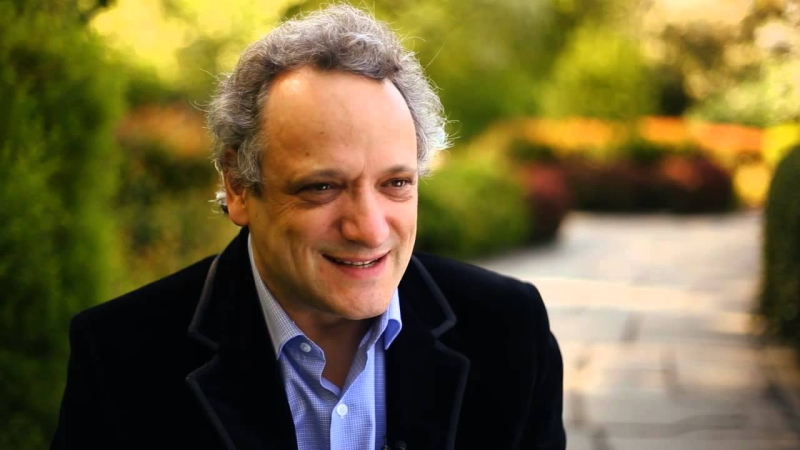
    Van-zweden-jaap-banner

    Above: Jaap van Zweden

    Mahler’s Fifth Symphony was composed during the summers of 1901 and 1902, during his annual holiday from his job as director of the Vienna Court Opera. It was in Vienna the winter prior to beginning his fifth symphony that Mahler had met Alma Schindler, the beautiful daughter of a famous landscape painter. Mahler proposed to her in the Autumn of 1901, and the symphony, with its journey from mourning thru the dreamworld of the Adagietto to happy triumph seems to mirror the composer’s state of mind with his new-found love.

    The symphony’s brilliant opening trumpet fanfare was excitingly introduced by Christopher Martin. As the first three movements of this very long symphony progressed, the Philharmonic players responded thrillingly to Maestro van Zweden’s intense, almost daemonic vision of the score. In the beloved Adagietto, for strings and harp, the conductor’s gentle pace and his summoning of luminous textures from the musicians created a depth of beauty in which we could – for a few minutes – forget the dark dangers of living in today’s uncertain world. In the grandeur of the symphony’s dazzling Rondo-Finale, the maestro and his musicians swept the celebratory feeling forward, pausing only for a couple of momentary roundabouts, and on to its epic conclusion. The audience went wild.

    ~ Oberon

  • @ The US Open Qualifiers ~ 2017

    L1870022

    Author: Oberon

    Tuesday August 22nd, 2017 – As many readers of this blog will know, starting in early March of this year, I developed severe hip arthritis – or maybe bursitis: the exact diagnosis remains unclear. I was literally homebound until, after six weeks of physical therapy, things began to improve…very slowly. Aside from the pain, I also suffered from a literal terror of going outdoors. This hindered my progress considerably. But by the end of May, I began setting goals to commence re-connecting with my world of music, dance, and…tennis.

    My improvement stalled more than once; but, encouraged by my physical therapist and by friends who had been thru similar interruptions in their lives (thank you especially, Ask LaCour and Lydia Johnson!), I stuck to my course and one by one achieved my goals. The final one was set for today: to attend the first session of the US Open Qualifying Tournament. This has been an annual event for me for several years and I was determined to be there, come Hell or high water.

    Just two weeks ago, the last level of recovery I had hoped for was attained: I was essentially 95% pain-free and weaned off the meds. But then, going to the US Open is not the same as going to a concert or a dance event: it’s an all-day experience that includes a very long subway ride from Inwood, lots of walking and standing about, and plenty of stair-climbing. Just as I was leaving my apartment to catch the train, I thought: “Should I pop some Aleve just to be safe?” Nope. Fuck it.

    I won’t complain at length about the many inconveniences and distractions of going to the Open; I guess you have to shut up and put up with things like tantrum-throwing toddlers (small children don’t belong at the Open, especially on blisteringly hot days); badged employees – there are hundreds of ’em – who seem to have nothing else to do but congregate courtside and gab with one another or on their walkie-talkies during play; and staff members barking at you for one reason or another. And it’s all become so terribly commercialized.

    But…on to the tennis:

    L1860857

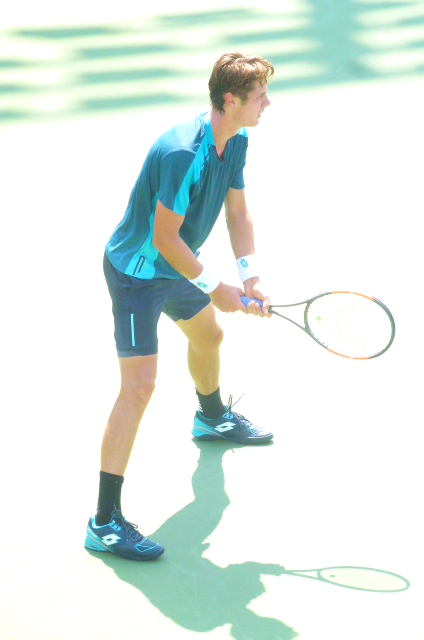
    Seventeen-year old Félix Auger-Aliassime (above) of Canada prevailed…
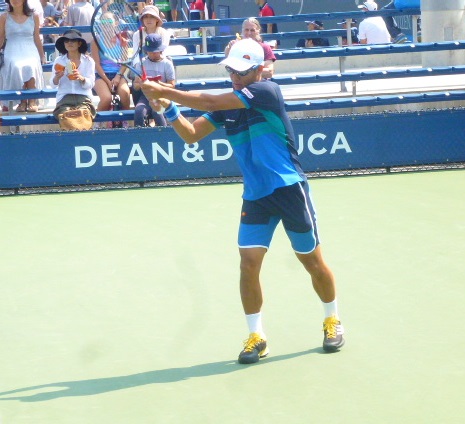
    L1860855

    …over Japan’s Hiroki Moriya (above). Hiroki’s a good player and he made some nice shots, but he didn’t have the replies for what Félix was sending him from the opposite end of the court.

    One court over, a huge throng had gathered to watch another Canadian teenager, Denis Shapovalov, who is building a reputation as a giant-killer. Today he defeated Denis Kudla; I had no energy to fight the crowds to get even a glimpse of the Battle of the Two Denises. Another bright young player on the ascent, Noah Rubin, succumbed to Germany’s Tobias Kamke in two sets; Rubin was treated for a shoulder or neck issue during the match, which undoubtedly affected his chances.
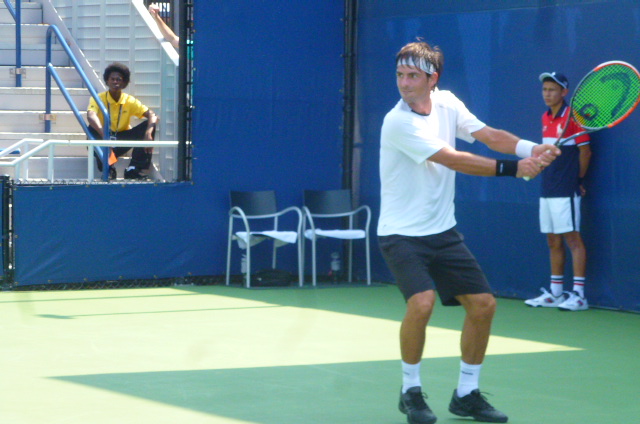
    L1860885

    I stopped by to watch part of a match between two gentlemen from Portugal: Gastao Elias (above) and Goncalo Oliveira. Each player took a set, and it seemed to me that Oliveira had gathered steam in the second and might outlast Elias in the third, but instead Goncalo seemed to wilt and Gastao claimed the win. One fun aside: Goncalo Oliveira has a unique service preparation: it’s something you really have to see.

    The only match I watched in its entirety today was between…
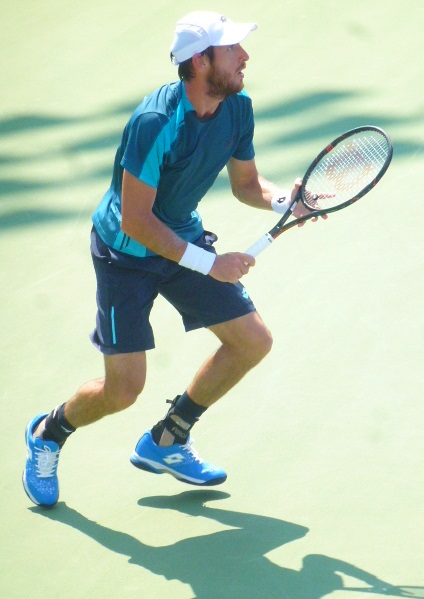
    L1860916

    …Argentina’s Leonard Mayer (above)…

    L1860939

    …and the Frenchman Maxime Janvier. Both men are tall, and both are big hitters: the Wilson balls took a real pummeling during their match. Mayer, seeded #1 in the Qualifying draw, made one exquisite drop-shot and had a bit of luck as one of his returns caught the tape and then dropped into Janvier’s end of the court. Despite his height, Mayer is an agile mover and was great fun to watch. It took just one break in each of the two sets for the Argentine to secure the victory.

    More images of Leonardo Mayer from today’s match:

    L1860924

    The serve…

    L1860921

    …on guard…

    L1860910

    …liftoff…

    L1860995

    …signing autographs…

    L1870003

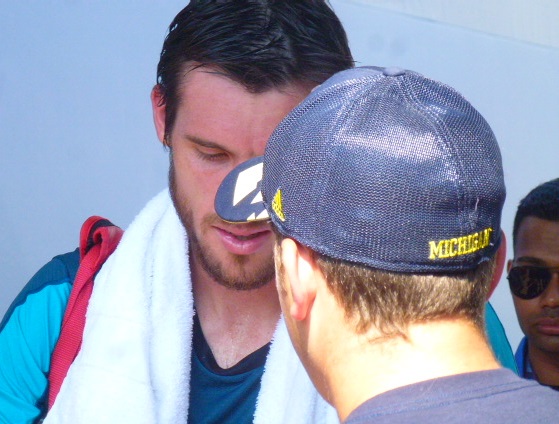
    Leonardo turned pensive as well-wishers surrounded him after his win.

    The predicted cloud-cover had dissipated into a haze and the sun was baking the courts. The match I had most wanted to see today, between Japan’s Go Soeda and India’s Yuki Bhambri, was scheduled for Court 10 but when I went to see if they’d started, the match preceding theirs was just getting underway.

    L1870027

    I went to watch Japan’s Tatsumo Ito (above) playing against the Frenchman Kenny de Schepper but it was during their first set that I began feeling ‘the burn’. Ito is often a slow starter, and de Schepper took the opening set. When I got home, I checked the website to find that Ito had turned things around and scored a win. 

    I swung by Court 10 again to see if the Soeda/Bhambri match was anywhere near ready to go but that was not the case. It would have been one of those matches that’s hard for me to watch, as I like both players; in fact, they are my only tennis-playing Facebook Friends. I later found that Go had prevailed in a 3-setter.

    On the women’s side, one name piqued my curiosity: Vera Zvonareva. In 2010, Zvonareva was a finalist both at Wimbledon and the US Open and reached a career-high ranking of #2. Injuries, marriage, and motherhood subsequently took her away from tennis. She is now making a comeback. I wish I had seen her play today; I didn’t notice her name in the listings until her match was over. Maybe I’ll catch her on Thursday, when I plan to go back to the Open.  

    So, In the end, my day turned out very well. The only pain involved was the sunburn I acquired, and that will fade in a day or two. 

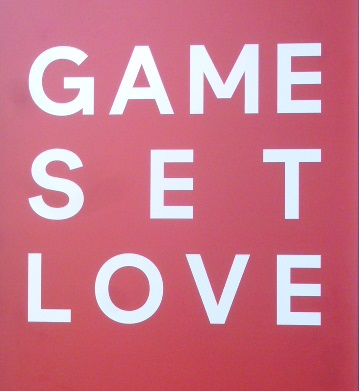
    Leaving the tennis center, I couldn’t resist photographing this poster which reminded me so much of my Brix:

    L1870048

    ~ Oberon

  • Vladimir Kastorsky

    65882

    Born in 1870, Vladimir Kastorsky entered the St. Petersburg Conservatory in 1893. A year later he was expelled for “voicelessness and incompetence”. But he persevered, and made his operatic debut at the Opera House of Pskov in 1894; he went on to a career of nearly 50 years.

    Kastorsky was a star of both the Mariinsky and Bolshoi Theatres. He sang all the great Russian basso roles as well as Mozart’s Count Almaviva and Leporello, Nilakantha in LAKME, and Wagner’s Wotan and Wolfram.

    In 1907-1908, Kastorsky participated in Sergei Diaghilev’s Russian seasons in Paris. He also was heard at La Scala, Prague, Berlin, Rome, Munich, London, Kiev, Odessa, and Tiflis. Later in life, he taught at Mariinsky Theatre, Leningrad’s Art Studio and at the Saint Petersburg Conservatory. Kastorsky continued to give recitals of Russian songs and German lieder into his old age. He died on July 2, 1948…one day before I was born.

    Vladimir Kastorsky – Pimen’s Monologue from BORIS GODUNOV

    Vladimir Kastorsky ~ Eugene Onegin – Prince Gremin’s Aria

  • Shaham|Langrée @ Mostly Mozart

    Gil-left-1

    Above: Violinist Gil Shaham

    ~ Author: Scoresby

    Friday August 18th, 2017 – After a month of recovering from an illness, I was happy to be able hear live music performed by the Mostly Mozart Festival Orchestra in David Geffen Hall led by its music director Louis Langrée with guest violinist Gil Shaham. A month is the longest I’ve gone without hearing live music in years, so it felt like the ultimate psychological panacea to attend. While I have regularly attended the chamber music performances, A Little Night Music, and contemporary music concerts, I hadn’t heard the Festival Orchestra since 2014.  I was glad to be able to attend the penultimate Festival Orchestra concert of the season.

    Louis-Langrée

    Above: Louis Langrée 

    The first piece on the program was the bubbly Prokofiev Symphony No. 1 in D major (“Classical”). The only other time I have heard this piece played live was, coincidentally, also the last time I heard the Festival Orchestra. This evening Mr. Langrée led a taut, lean performance. During the dance-like opening movement, the strings sounded bouncy and light. The low woodwinds provided a warm sheen, even in the most ominous undercurrents of the piece. Mr. Langrée’s sense of balance allowed the bassoon’s counterpoint to easily pop. While certainly an energetic account, none of the structural detailing was missed.

    During the Larghetto, the bassoons and clarinets took the spotlight, providing entertainment combined with artistry. For those who haven’t been to Mostly Mozart before, the stage of David Geffen is modified to allow riser seating in the back of the orchestra by moving up the stage to what would be the first few rows of the hall. This pushes the orchestra significantly closer to audience and creates a much more intimate environment.

    Mr. Langrée takes full advantage of this intimacy by using far quieter dynamics than could ever be used during the normal season’s setup – it feels as if the orchestra is thrust into the audience. The orchestral detailing in the second movement was superb through even the quietest of moments. While this makes the music sound more nuanced and detailed, it feels as if the noises from the crowd are too. Throughout the performance I heard many more pings of hearing aids, coughs, and wrappers of food than I hear during the regular season. However, I am happy to take that trade-off if it makes the music-making substantially more interesting as it did here. In the third and fourth movements, the orchestra kept its momentum and finished to a crowd that roared, obviously excited over the energy of the musicians.

    The second piece on the program was Mozart Symphony No. 25 G minor, K. 183 (one of few Mozart symphonies in the minor key). I’ve never been the biggest fan of the piece, but it was still a pleasure to hear it live in such an intimate space. While at times I felt the orchestra sounded a little muddy through the first movement, every time there was a canonic section Mr. Langrée confidently led transparent and thoughtful introductions for each instrument.

    These structured sections sounded just as buoyant as the Prokofiev. While a welcome change in dynamics, some of the rhythms and accents in the Andante felt over-accentuated to my ear.  Nonetheless, one could hear every instrument clearly singing its line. The trio of the third movement brought another warm passage with the bright woodwinds followed by an incisive final movement.

    After the intermission, the crowd seemed to be buzzing to hear the final piece on the program: the Tchaikovsky Violin Concerto in D major played by violinist Gil Shaham. I’ve never been a fan of this piece, but here it was played in a refreshing way that would make want to listen again. Mr. Shaham took an understated approach to the first movement (at least as much as is possible for a virtuosic warhorse), languishing in the phrasing of lines.

    Again, because of the setup of the lean orchestra and intimacy of the venue, there was no need to play loud. Thus he was able to bring a supple legato phrasing that never sounded harsh. After a measured performance of the cadenza by Mr. Shaham, the principal flautist Jasmine Choi gave one of the clearest and mellowest solos I’ve heard for that section of the piece. Mr. Shaham seemed more effective in the second movement, managing to illicit a rounder, ghostly tone during the introduction. The orchestra responded, with the clarinet’s extensive accompaniment matching the misty mood.

    Throughout the piece Mr. Shaham seemed to play for the musicians rather than for the audience – the whole experience seemed have more of a chamber music feel than that of a virtuosic concerto. The orchestral musicians and Mr. Langrée were smiling from start to finish and it was a joy to watch them exchange phrases with Mr. Shaham. While perhaps not the most technical or dazzling performance of this piece, witnessing and feeling that rare warmth between the artists is something that can only be experienced in a live performance.

    During the final movement, Mr. Shaham dispatched the technical sections with ease and the crowd gave him a roaring ovation. He played as an encore the third movement of the third E-major Bach Partita. While charming, to me the highlight of the concert was witnessing intimate collaborative music-making that is rare to see in an orchestra.

    ~ Scoresby

  • Gerstein|Langrée @ Mostly Mozart

    KirillGerstein045

    Author: Oberon

    Wednesday August 16th, 1017 – How doubly grateful I felt when I saw that Kirill Gerstein (above, in a Marco Borggreve portrait) would be playing the Schumann Piano Concerto at tonight’s Mostly Mozart concert; grateful first of all because I greatly admire Mr. Gerstein as an artist, and grateful yet again for the opportunity to finally hear this concerto played live. It seems that it is not programmed all that often these days.

    It’s rather unusual to find an extended solo piano work included on an orchestral program, but Mr. Gerstein’s rendering of Brahms’ Variations on a Theme by Robert Schumann was a wonderful prelude to his performance of the Schumann concerto…or rather, it would have been, had not audience distractions nearly ruined it. The pianist’s lyric warmth and a beautiful modulations of dynamic were truly congenial, but he had no sooner commenced to play than a loud thudding noise spoiled the music: someone among the stage audience had dropped something – something heavy.

    Mr. Gerstein soldiered on, but as the variations continued a plague of coughing swept thru Geffen Hall. Hardly a bar of music went by without a cough, snort, clearing of throat, or other upper-respiratory distraction. After a while it became comical; I gave up thinking I could derive any real enjoyment from Gerstein’s playing, and I have to congratulate him for maintaining his focus: there’s no way he could have been unaware of these annoyances. Before the piece was over, something else had been dropped, and a cellphone went off. As the pianist took his bows, my friend Dmitry and I rolled our eyes; but we were determined that our evening would not be spoilt.

    The Mostly Mozart Festival Orchestra players then took their seats, and Mr. Gerstein returned with Maestro Louis Langrée for the Schumann concerto. I became intrigued with this with this work years ago thru the film Madame Sousatzka, and have waited literally decades to hear it played live. I once asked a pianist/friend why it is not performed more often, and he replied: “It’s too easy.” It may be ‘easy’ to play, but it pleases audiences and was tonight given a top-notch performance by Gerstein, Langrée, and Company.

    The first movement opens with a dramatic outburst from the soloist, followed by a simple, expressive melody played by the woodwinds; this theme will re-appear in various guises in the first and last movements.  The second movement is referred to as an Intermezzo, and it is perhaps here that the real reason pianists choose other concertos over Schumann to display their artistry is to be found: without a real adagio or andante, expressive possibilities might be considered limited. For all that, Mr. Gerstein found much to be savoured here, and his playing was clear and shining. The final movement is full of vitality and sweeps us along in its dancing rhythms, with enjoyable references back to the concerto’s opening movement.

    The Mostly Mozart woodwind players relished their opportunities here: Jon Manasse’s dulcet clarinet was a sheer balm to the ear, and Dwight Parry is a remarkable oboist. Their highlights, and the beautiful flow of Gerstein’s playing of the piano part – which includes a passage of shimmering light over delicate accompaniment – were simply the outstanding moments in a superb performance.

    For an encore, Mr. Gerstein chose an arrangement of the Romanze: Andante non troppo, con grazia from Clara Schumann’s piano concerto, opus 7, composed when Fräulein Wieck was only 13 years old. Robert Schumann later devised a setting of the Romanze for piano and cello, with just a touch of timpani at the end. It was this musical love letter we heard tonight, ravishingly played by Mr. Gerstein and Mostly Mozart’s principal cellist Ilya Finkelshteyn. Markus Rhoten’s gentle sounding of the timpani had the magical effect of a heartbeat: the heartbeat of Clara’s love for her Robert. The overall effect of this encore was truly touching.

    Maxresdefault

    The evening concluded with Maestro Langrée (above) conducting the Brahms 1st Symphony. The composer declared that this symphony, from sketches to finishing touches, took 21 years – from 1855 to 1876 – to complete.

    Tonight’s performance was rich-textured and lovingly paced, giving its 40-minute span a Beethovian air. The inner movements were particularly pleasing: the tender Andante sostenuto and the charming Allegretto. Throughout, the Mostly Mozart wind soloists gave ample pleasure – Jasmine Choi’s flute playing is priceless in it’s clarity and sheen. The symphony swept by, an affirmation of faith in the enduring power of great music as the world around us darkens.

    ~ Oberon

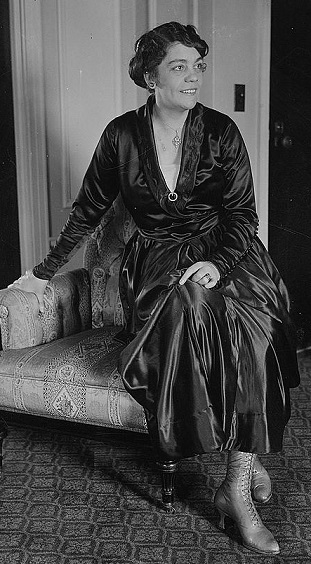
  • Julia Claussen

    Julia_Claussen

    Swedish mezzo-soprano Julia Claussen studied at the Royal Academies of Stockholm and Berlin, made her operatic debut in Stockholm in 1903, and sang at Paris, London, and Chicago.

    From her debut there as Dalila in 1917 until 1932, Julia Claussen was a mainstay at the Metropolitan Opera in New York City. She sang Azucena, Amneris, Ortrud, Fricka, Brangaene, Kundry, Venus, Marina in BORIS GODUNOV, Laura in LA GIOCONDA, and other roles for a total of nearly 175 performances at the Old House and on tour. She frequently participated in the opera and song concerts that were regular features of Met seasons at that time. 

    An interview with Julia Claussen here. She died at Stockholm in 1949.

    Julia Claussen – Schmerzen from Wagner’s Wesendonck Lieder

  • A Report from the Chelsea Music Festival

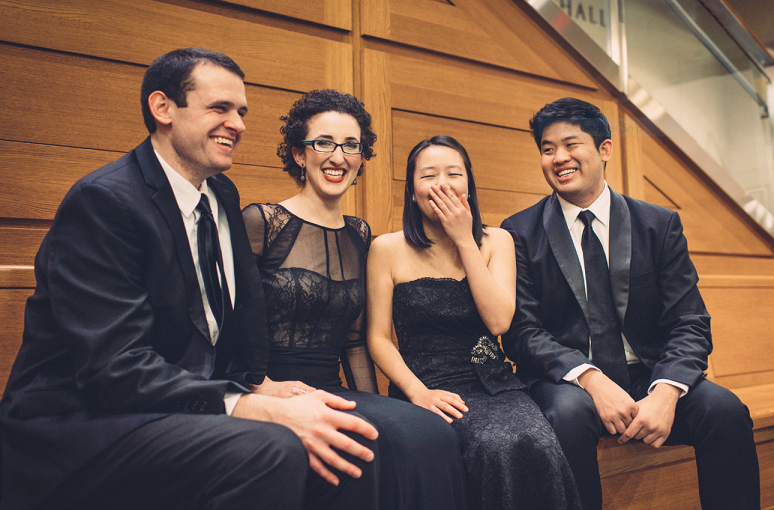
    Capture

    Above: the players of the Verona Quartet; photo credit ~ Joseph Ong/Brittany Florenz

    Author: Scoresby

    Friday June 16th, 2017 – On a hot sticky night, I went to the penultimate set of events for the Chelsea Music Festival. Hosted in St. Paul’s German Lutheran Church was a lecture by the neuroscientist Dr. Michael Shadlen and a performance by the Verona Quartet. For those who do not know, the Chelsea Music Festival is much more than the name would suggest. Rather than just a few concerts, it brings it together all of the different senses by having food, art, lectures, music and other events focused on one theme hosted in different venues in Chelsea in a whirlwind of eight days. For each of these various disciplines, the festival has a residency – thus no night is the same, and it is a true intellectually stimulating week.

    Unfortunately, due to illness, I only ended up attending the second to last evening. This year’s theme focuses on keeping time. Dr. Shadlen’s lecture was about how humans perceive and anticipate time. His accessible talk first discussed the idea that time grounds the mind. It seems to Dr. Shadlen, time and anticipation help breed consciousness.

    More interestingly, he then gave different demonstrations of sight experiments in chimps. Dr. Shadlen was able to show anticipation thru graphs (and audio) of the various neurons of a chimp reacting. Right before each anticipated event would happen, you could see a crescendo of neural activity until the event took place. The longer it was from the expected time, the more activity. As he put it, this is where “the neuroscience of cognition and aesthetics meet.” Because the brain is constantly anticipating and timing, music stimulates this part of the brain – constantly being thrown off by the various changes in what is anticipated. The implications of his lecture set up a classical performance perfectly.

    While all of the other performances during the week are curated by the festival, here the Verona Quartet (this year’s Ensemble-in-Residence) was playing a program of their own choosing. The opener of the program was Ravel String Quartet in F Major. This young Quartet sounded fantastic throughout the Ravel, the lower strings delivering a beautiful blend of dark colors. The Quartet took a rather tight structural approach, keeping the tension high through the entire first movement. In their hands the piece seemed unstable and nervous, constantly bursting with energy through each phrase. This led to a dramatic outbursts that felt restrained almost right away and I couldn’t help but smile after the lecture about anticipation. The purplish lighting on stage and humid venue made the air seem to be saturated with energy.

    During the pizzicato-ridden second movement, the players made a full use of Ravel’s sound effects. One of my favorite sections was the muted trio during the movement. The Quartet took on a much warmer tone, contrasting the more aggressive tone from earlier. I only wish they had slowed the trio section down a little more; it still felt as structured and nervous as the opening movement. They did a great job of building dynamic range transitioning back into the scherzo. During the third and fourth movements, the group seemed to change sound to thicker, rougher textures. While technically precise, instead of the smooth edges that some groups produce in this piece, the Veronas had a tense edgy sound. It would be great to hear this group play Janacek.

    Seb-460x300

    The other part of the first half was a world premiere by the Composer-in-Residence (and well-known composer) Sebastian Currier (above). His music had been played all week during the festival, and this commission was the capstone event of sorts. The new piece is part of a project of creating six etudes and six lullabies for six different string quartets, this set of two being the second entry of the project. In keeping with the festival theme, the piece is titled Etude: Interactions and Lullaby: Pulsing.

    Through the etude, the quartet plays a theme that seems to keep developing. It is a fast-paced piece that reminded me some of John Adams’s writing, though more tonally adventurous and colorful. As each player’s theme gets offset and displaced, the chords gradually became more dissonant. The music is skittering and spider-like, and the Verona Quartet played it with verve, managing to capture all of the intricate accents. Because of the driving sections in this piece, there is very little silence. At times it sounded like Mr. Currier was making use of a Shepard Tone as everything falls out of sync. Finally, the difficult etude opened up into a muted chorale of sorts that brings the piece to a close, really the restlessness finally settling.

    The lullaby to me felt like a ship that was rocking back and forth, with chords that slowly crescendo and decrescendo, each played by the whole quartet. This contrasted the etude well. As the piece evolves and moves forward, melodies start to emerge as instruments drop out of these larger chords to take on their own sound. Here Mr. Currier is employing a microtonal language so that each chord has completely different texture, timbre, and feeling. The piece builds to a beautiful E-flat chord that ends the piece, sounding much lighter than all the material preceding it. These pieces are great miniatures in the quartet repertoire, and I look forward to hearing the other five sets.

    The lengthy program concluded with the very difficult Beethoven String Quartet in C-sharp minor, Op. 131. This seven-movement piece, played with no breaks, is a great way to conclude a program about measuring time. The first movement opens with an extended fugue, played here with attention and clarity. Similar to in the Ravel, the Quartet seemed be intent on the structure of the piece, infusing it with energy. While it was effective, it felt at times that some of the more delicate sections of this movement were overlooked. Nonetheless, they brought out the counter-melodies clearly. During the second movement, the group had a more folksy sound. They did best in the energetic rhythmic sections. While well-played, the third and fourth movements seemed to lack the structure that they had brought elsewhere. The music here seemed more about the individual movement rather than moving the piece forward.

    Luckily, in the penultimate movement they seemed to regain their focus creating a beautifully sorrowful adagio; particularly lovely were the downward runs near the end of the movement. Throughout, they seemed to use a sweeping dynamic range that paved the way into the dramatic finale. During the last movement, the Quartet did a good job of bringing out the intense counterpoint while still managing to sound lyrical. Watching a quartet coordinate this is always a treat, and here the players seemed to be able to navigate the intricate voicing and virtuosity well, leading to an exciting conclusion. I look forward to hearing this young quartet in the future and seeing how their sound develops, they are certainly formidable performers.

    While an overwhelming evening in many ways I am so glad that the Chelsea Music Festival provides such a diverse and vibrant set of events. It really is a quintessential New York celebration of culture and I look forward to attending again next year.

    ~ Scoresby

  • CMS ~ Summer Evenings 2017 ~ Concert 3

    Efe

    Above: cellist Efe Baltacigil

    Author: Oberon

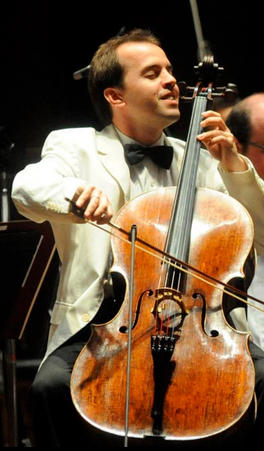
    Sunday July 16th, 2017 – All too soon, Chamber Music Society of Lincoln Center‘s Summer Evenings series for 2017 has come to an end. Over the course of the three concerts, we heard magnificent music, played to perfection. Each summer I find myself hoping that a fourth concert might be added to the series: the packed houses indicate how successful these summertime concerts are. But perhaps it’s just a question of timing, as so many musicians are making appearances at the various summer festivals. Also, the Society is about to commence a run of concerts at Saratoga Springs. So, we can feel grateful for what we have heard this summer, whilst looking forward to the 2017-2018 CMS season

    Anticipation ran high as Alice Tully Hall was again filled to the rafters with Gotham’s music-lovers, thirsting for the classics as the doldrums of the summer lazed along. A cordial greeting to Mr. Baltacigil and his colleagues…

    Keefe-erin

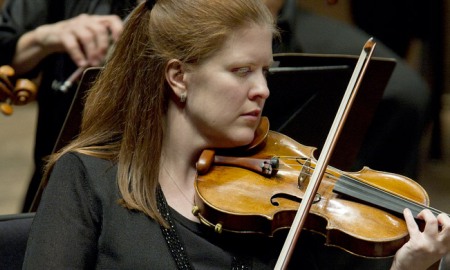
    …violinist Erin Keefe (above)…

    Fullsizephoto372849

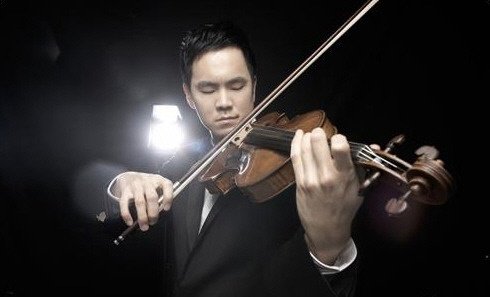
    …and violist Richard O’Neill (above), as they appeared onstage for the opening Beethoven.

    The D-major Trio opens serenely, but things soon become quite lively. It was quickly evident that our three musicians were well-matched, and as the shifting themes unfolded their playing was marked by a fine mixture of impetus and elegance.

    As is so often the case, it is in the second movement, marked Andante quasi allegretto, that we get to the heart of the matter. A nostalgic feeling pervades here, though the textures remain translucent. Mr. Baltacigil’s cello enhances the lyrical aspects of the music, and some gracious plucking maintains an active feeling so that things don’t turn dolorous. A beautiful viola passage receives loving attention from Mr. O’Neill, and Ms. Keefe’s relishing of the Andante‘s most subtle moments is a distinctive asset.

    Delicate playing in the Menuetto dances us along with courtly charm. Then, after a longish pause, the concluding Rondo is quite jolly, with the cello prominent, the viola harmonizing, and the three voices eventually in finely-timed exchanges. A passing lull into lyricism again brings subtle mastery from our expert trio before the piece reaches its happy ending.

    Kristin Lee

    A brilliant performance of the Prokofiev Violin sonata in D-major followed. While I have enjoyed the playing of Kristin Lee (above, in an Arthur Moeller potrait) on many CMS evenings in the past, I can’t recall having heard her in a sonata performance. Her Prokofiev was, in a word, spectacular. And, with their usual knack for matching up musicians of like quality, Michael Brown at the Steinway played with thrilling verve and clarity.

    Brown-Michael_credit_Jeanette_Beckman

    Above: Michael Brown, photographed by Jeanette Beckman

    Originally a flute sonata, this piece was re-worked by Prokofiev for violin as several violinists – notably David Oistrakh – took an interest in it. In the opening Moderato, the violin floats in a lyrical dream. An almost fanfare-like passage leads to some scurrying before resuming its more song-like aspect, with some piercing highs; a pensiveness evolves and a short coda concludes the movement.

    The ensuing Scherzo begins as a jig, with dance-like swirls from both violin and piano. A more tranquil interlude temporarily lulls us, but things again speed up to a big dance.

    The Andante features a soaring, romantic theme for the violin: Ms. Lee was at her most poetic here before passing the melody along to Mr. Brown, who takes it up at the piano. The music aches the heart until a quiet restlessness steals in; the violin goes high and sounds on the verge of spacing out.

    The Allegro con brio finale opens with a rollicking passage and then jogs along for a bit until Mr. Brown’s pianistic passion takes over. Things simmer down and become quite delicate; then a song wells up and a triumphant feeling builds. A increase in velocity carries the sonata to the finish line.

    Kristin Lee, a beauty in black, was so impressive in her technical command, with Mr. Brown an ideal colleague in both the passion and precision of his playing. As the duo embraced at the end of their superb performance, the audience lavished well-deserved cheers upon them.

    Yuralee1586color_608x265

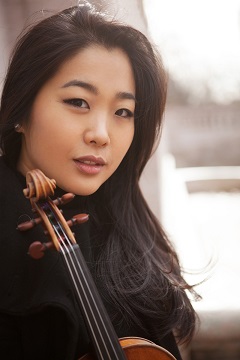
    Violist Yura Lee (above) joined the ensemble after the intermission for a richly rewarding performance of Antonin Dvorák’s String Quintet in E-flat major, Opus 97.

    “Spillville is an ideal place; I would like to spend the rest of my days there,” wrote the homesick Dvorák of the Iowa town where he had gone (in 1893) to mingle with the local Bohemian community. But while he was there, something else happened: a road-show of Native American entertainments and crafts came to Spillville for two weeks. Dvorák was intrigued by the rhythms and harmonies he heard in the group’s presentations and worked some of these elements into his E-flat major Quintet.

    One of the most delightful aspects of this work is in the composer’s assigning of equal prominence to the “1st” and “2nd” violins and violas; this division of labor gives everyone a chance to shine. And underlying the melodious marvels produced by his colleagues, Mr. Baltacigil’s honey-toned cello playing gave the ensemble a pleasing depth of feeling: for both rhythmically and melodically, Mr. Baltacigil is first class.

    Dvorák himself was a viola player, and it is to that instrument that the composer gives the quintet’s opening statement, played from the heart by Richard O’Neill. Chamber Music Society is like a paradise for lovers of the viola sound (count me in!) where one is likely on a given evening to hear the likes of Paul Neubauer, Matthew Lipman, or Pierre Lapointe. In tonight’s Dvorák, Yura Lee shared the viola spotlight with Mr. O’Neill: her rich, pliant tone is always so inviting. Likewise, on the violin side, Mlles. Keefe and Kristin Lee were each heard to advantage.

    In the quintet’s first movement, Ms. Keefe’s lambent tone was particularly enhancing. As ribbons of melody pass from player to player, we can savor the unique sound of each voice as well as their combined appeal when they sang in unison in a passage with an unusual drawling quality. The two violists were having a heyday, unwrapping each phrase the composer has given them and relishing it for us to enjoy.

    For the second Allegro movement, Mr. O’Neill again takes the lead. Ms. Keefe and Yura Lee trade passages and then, to the genial plucking of her colleagues, Yura takes up a gorgeous theme which explains why she wanted to be “1st”;  Ms. Keefe, playing high and sweet, makes the same case for being “1st” violin.

    The Larghetto offers a set of variations, shifting between major and minor. Here a sad melody is given out by the lower voices with a hymn-like quality. More magic from Yura Lee, and then Ms. Keefe plays a sinuous obbligato over the choir; the opposite effect is created when Mr. Baltacigil’s animated cello is overlain by the harmonizing violins and violas. The cellist then sings forth while the higher voices take a tremelo stance. Amazing delicacy is achieved in a plucked interlude, the audience breathlessly charmed by the effect. Following a dynamic outburst, calm is restored and Kristin Lee carries the Larghetto to a fade out.

    Erin Keefe leads a dance to start the Finale: Allegro giusto. Plucking again; then Kristin Lee, Mr. Baltacigil, and Yura Lee each have their say before a broad flow of melody ensues. Ms. Keefe takes up a ‘Native’ theme and then Yura Lee has a final viola gesture which leads to a rush to the finish: an exhilarating end to a great evening of music.

    ~ Oberon

  • From Cardiff ~ 2017: Excellent Massenet

    Kang_wang_profile

    At the fourth concert of the 2017 Cardiff Singer of the World Competition, exceptional performances of two arias from Massenet’s WERTHER were particularly gratifying. Tenor Kang Wang (above), who has sung an impressive Narraboth at The Met, delivered the poet’s lamenting Pourquoi Me Réveiller? with striking sincerity.

    Catriona-Morison

    Catriona Morison (above), from Scotland, moved me deeply with her sense of quiet desperation in Charlotte’s “Air des Lettres“. A superbly attractive woman, Ms. Morison’s voice and her emotional engagement in the character’s situation made her performance of this aria – which does not always work well out of context – as fine as any I can recall.

    UPDATE: Catriona Morison was co-winner – along with Mongolian baritone Ariunbaatar Ganbaatar – of the 2017 Cardiff Singer of the World Song Prize. Watch as Dame Kiri Te Kanawa presents the trophy here.

    Both Ms. Morison and and Kang Wang along are finalists in the competition for the Main Prize, as are Mr. Ganbaatar, England’s Louise Adler, and the American baritone Anthony Clark Evans.

    UPDATE #2: Hot off the press: Catriona Morison named Cardiff Singer of the World 2017!! Can I pick ’em or can I??

  • Calidore Quartet @ CMS

    Ps2Z7A8630-copy

    Above, the Calidore Quartet: Ryan Meehan, Estelle Choi, Jeremy Berry, and Jeffrey Myers

    Author: Scoresby

    Thursday May 18th, 2017 – The Calidore Quartet and violist Paul Neubauer in the first of two performances scheduled for this evening (the first at 6:30 PM, and the second one at 9:00 PM), marking the end of this season’s Rose Studio series at Chamber Music Society of Lincoln Center. The quartet consists of Jeffrey Myers and Ryan Meehan, violins, Jeremy Berry on viola, and cellist Estelle Choi. It was a short program of seventy minutes, without intermission, featuring two great works.

    First up was one of my favorite pieces in the genre: Ligeti’s 20-minute String Quartet No. 1 for Strings, “Métamorphoses nocturnes”. This piece is structured into different small character pieces, each propelling the theme posited in the first few notes forward. While it is a fantastic piece in its own right, it is stylistically quite different than the rest of Ligeti’s output, instead feeling like one of the Bártok quartets, if he had lived another ten years.

    Ligeti uses a variety of different effects through the piece and the quartet handled every challenge well. The music starts off with a dry mysterious introduction with various whole tone scales appearing and builds in a large crescendo to a rollicking theme that launches the piece forward into its other sections. The Calidore Quartet did a superb job of building from a whisper into a bang making the performance a thrill.

    Equally enjoyable was the way the quartet embraced all of the sound effects from string snaps to lightly played harmonics near the bridge. Multiple times I saw audience members craning their necks to see how the quartet was producing these otherworldly sounds. While some quartets emphasize the overlying structure, the Calidores focused individual characters of each section. This leads to larger dynamic and tempo contrasts. The languid night music sections became infused with color. My favorite part of the evening was during the section in which the first violin has a sustained trill while the rest of the quartet plays slow consonant chords – in the midst of so much else going on, this part felt like being elevated into a misty plain.

    Credit+Tristan+Cook

    Above: violist Paul Neubauer in a Tristan Cook photo

    The second piece on the program was Mozart’s Quintet in C major for Two Violins, Two Violas, and Cello, K. 515 with Paul Neubauer as the additional violist. I had never heard this piece and I found it quite intriguing. When I typically think of quintets, I picture one instrument that functions as a quasi-solo instrument. This piece is pure chamber music in that the distribution of voicing is more even.

    The tone of the strings here was warmer than in the Ligeti. Of particular note was the buttery round sound of Ms. Choi’s cello – she seems able to blend with every individual voice in the ensemble and supply a steady bedrock for the group to fall back on. The opening Allegro was delightful, they did an excellent job highlighting all of the inner textures that typically get brushed aside for melodic content.

    It was interesting to me that the players managed to have a smooth, legato tone throughout most of the work. Until the fourth movement where some particular sections require more articulation, it felt like one large lush body of sound (even during pizzicatos) without one harsh tone. One of the highlights was the third movement with its interruptions between Mr. Berry’s melody and Mr. Myers. They did a good job with the theatrics of cutting each other off, while still managing to match vibrato and style of playing. It was lovely to hear the difference in timbre between the violin and viola here.

    It is great being able to hear strings in a hall like this – it feels like being in someone’s living room in which you can hear every note. These players took advantage, really making every resonant note and dynamic shift count. While I enjoyed the performance, I would have preferred program order in reverse. It was hard for me as a listener to follow up an electrifying, colorful piece with something much more subdued and refined – even when it was as well played as it was here. Nonetheless, the members of the Calidore Quartet proved that they are well worth the acclaim and accolades that they have been receiving. It was a great way to end the last of the Rose Studio concerts for the season. 

    ~ Scoresby