Category: Music

  • @ My Met Score Desk for TOSCA

    E874b757ab6d27cdce90e262524cf12e

    ~ Author: Oberon

    Saturday January 27th, 2018 matinee – The Met have fortunately replaced their unsightly and theatrically tedious Luc Bondy production of TOSCA with a traditional setting of the “shabby little shocker”; it opened on New Year’s Eve with a cast and conductor that had undergone changes in the run up to the prima.

    Aside from the dramatic show curtain depicting the Archangel Michael with blood-red wings, I could not see anything of the sets and costumes from my score desk. In April, I’ll get a full-view when the ‘second cast’ takes over.

    Other than at performances of TURANDOT, this was the fullest house I have seen at The Met in the past few seasons. Apparently many in the audience found the MetTitles in Act I to be hilarious today, for there was much unbridled laughter.

    The orchestra sounded great, and I’ve always liked Emmanuel Villaume’s conducting both in the opera house and the concert hall. His TOSCA was on the grand scale, painted in broad strokes, with tempi that pressed forward; yet there were also the needed lyrical respites where orchestral detail could be savoured. Villaume also allowed his singers to cling to favorite notes, without losing the shape of the music. A volcanic eruption of orchestral sound as the ‘Scarpia Chords’ heralded the Baron’s entry was actually thrilling.

    Sonya Yoncheva has been singing her first career Toscas in the present run. My past experiences with her in the theater have been as a pleasant Mimi and a moderately attractive Desdemona. In both those roles, a rather generic timbre and a tendency to sing slightly above pitch rather frequently offset her physical appeal and pretty but unexceptional vocalism. Making a sudden leap (oops!) to Tosca seemed like an unwise move for her; but, since I’m not a fan, do I really care if she blows her voice out?

    Her Tosca was sung with unrelenting loudness; it’s a one-colour voice to begin with, and she seemed indifferent to the markings in the score, seldom if ever singing less than mezzo-forte. Being a shade sharp much of the time did not help matters. She’s pushing the lower range, and the top now tends to waver a bit. Overall there was a sense of forcing to fill the big hall.

    The “Vissi d’arte” was over-sung, without the pulling back at “Nell’ora del dolore…” that personalizes the aria. In terms of declamation, Ms. Yoncheva  melodramatically veered from ‘shrilling’ on “Tu non l’avrai stasera…giuro!” to shouting on “Sogghigno di demone!”  Overall, she often seemed fully-extended. Yet her big aria won her a big applause, and I feel she’ll be encouraged to make further forays into roles calling for a more dramatic sound than is hers by nature. I would guess in three or four years she will find herself in a similar situation vocally to the woman she replaced in these performances.

    Vittorio Grigolo’s Cavaradossi is likewise a step or two in vocal heft beyond the roles we’ve heard him sing to date. A generous singer, Grigolo pleases the crowd with his unfettered sound; he can zing out top notes that have a real spark but – unlike Ms. Yoncheva – he does on occasion throw in a piano note or turn a phrase more gently.

    In the past, Željko Lučić has sometimes annoyed me with his errant sense of pitch in the Verdi roles, but today as Scarpia that problem cropped up only in passing. Following the thundering chords that announce Scarpia’s arrival in the Church of Sant’Andrea della Valle, Mr. Lučić unleashed his own thunderbolt with “Un tal baccano in chiesa?!”, catapulting to a house-filling top note. He alone of the three principals seemed to be doing something with the the words, and his singing veered from ripe power to velvety insinuation. As Tosca fled the scene after their encounter, Mr. Lučić’s Scarpia laid the groundwork for his plot. In the ensuing Te Deum, baritone, chorus, and orchestra combined forces for genuinely exciting finale to the first act.

    Lučić continued to impress in Act II, despite the occasional flat note. Ferocious in his questioning of Cavaradossi, feigning cordiality as he drew Tosca to the bargaining table, brazenly expounding on his lechery in “Gia, mi dicon venal”, the Serbian baritone joined the ranks of my favoured Scarpias over the decades: Anselmo Colzani, Cornell MacNeil, Sherrill Milnes, Robert Hale, Frederick Burchinal, and Justino Diaz.

    It’s rare to hear a Sacristan who really sings: Patrick Carfizzi put the emphasis on the notes, and let the comedic aspects of the character take care of themselves. He sounded fantastic.

    I was planning to stay for the third act, but as so often happens at The Met, the endless intermission got on my nerves and so, after a while, I packed up and headed home.

    ~ Oberon

  • Gatti/Royal Concertgebouw: Wagner & Bruckner

    Daniele Gatti

    Above: conductor Daniele Gatti

    Author: Oberon

    Wednesday January 17th, 2018 – This long-awaited Carnegie Hall concert by the Royal Concertgebouw under the baton of Daniele Gatti paired two of my favorite composers – Wagner and Bruckner – and my expectations for the performance were very high indeed. Wagner-starved as my friend Dmitry and I have been in recent seasons, hearing the Prelude to Act III and Good Friday Spell from PARSIFAL was alone reason to anticipate this concert for months in advance. That Bruckner’s 9th Symphony would complete the program gave reason to feel this was destined to be a thrilling evening. Both works were played magnificently by this great orchestra, and Maestro Gatti again upheld our esteem for him as one of the greatest conductors of our time.

    But in practice – as opposed to in theory – I felt, as the evening progressed, that putting these two masterpieces on the same program didn’t work out nearly as well as I’d expected. About midway thru the Bruckner, I felt my interest waning. In attempting to reason it out, I came to this conclusion: Wagner is a great composer, and Bruckner is a very good one. This certainly does not mean that Bruckner’s music isn’t wonderful, and meaningful. But there’s a depth of feeling in Wagner’s writing that – for me – eludes Bruckner.   

    Wagner’s two ‘Grail’ operas – one about the father (PARSIFAL) and the other about the son (LOHENGRIN) – both contain music of other-worldly beauty. The composer wrote: “It is reserved for Art to save the spirit of religion.” [“Religion and Art” (1880)]. In these two operas, Wagner’s music expresses the inexpressible in ways that make non-believers like myself wonder if we’ve got it right…or not.

    Maestro Gatti’s gift for evoking mythic times and places (his Metropolitan Opera AIDAs in 2009 were fascinating in this regard) meant that the music from PARSIFAL performed tonight was truly transportive. As with his Met performances of the Wagner opera in 2013, Gatti’s pacing seemed ideal. The gorgeously integrated sound of the Concertgebouw, with its velvety-resonant basses, leads us to Monsalvat, where – with Parsifal’s return – the long Winter gives way to Spring. For a blessèd time, we are far from the dismal present, watching the flowers bloom is that legendary realm, as Kundry weeps. Poetry without words.  

    Bruckner’s unfinished 9th symphony impressed me deeply when I first heard it performed live in 2014, and I expected the same reaction tonight. For much of the first movement, I was thoroughly engaged and experiencing the tingles of appreciation that Bruckner’s music usually produces. I confess that I like the ‘purple’ parts of Bruckner’s music best, and perhaps my eventual zone-out began with the Scherzo.

    In the Adagio, I grew restless; the repetitions became tiresome. A few people got up and left, and others had fallen asleep. I continued to attempt to re-engage with the superb playing and Maestro Gatti’s interpretation, but honestly I could not wait for the symphony to end; and I made a mental note to skip an upcoming performance of it.

    The irony of tonight’s situation struck me as I was pondering the experience on the train going home. How is it that Wagner, a non-believer, is able to put us in touch with the divine whereas the pious Bruckner, a devout Catholic who dedicated the 9th symphony “To God”, seems only to be knocking on heaven’s door?

    Now, more than ever, I look forward to the upcoming PARSIFAL performances at The Met.

    ~ Oberon

  • Gatti/Royal Concertgebouw: Wagner & Bruckner

    Daniele Gatti

    Above: conductor Daniele Gatti

    Author: Oberon

    Wednesday January 17th, 2018 – This long-awaited Carnegie Hall concert by the Royal Concertgebouw under the baton of Daniele Gatti paired two of my favorite composers – Wagner and Bruckner – and my expectations for the performance were very high indeed. Wagner-starved as my friend Dmitry and I have been in recent seasons, hearing the Prelude to Act III and Good Friday Spell from PARSIFAL was alone reason to anticipate this concert for months in advance. That Bruckner’s 9th Symphony would complete the program gave reason to feel this was destined to be a thrilling evening. Both works were played magnificently by this great orchestra, and Maestro Gatti again upheld our esteem for him as one of the greatest conductors of our time.

    But in practice – as opposed to in theory – I felt, as the evening progressed, that putting these two masterpieces on the same program didn’t work out nearly as well as I’d expected. About midway thru the Bruckner, I felt my interest waning. In attempting to reason it out, I came to this conclusion: Wagner is a great composer, and Bruckner is a very good one. This certainly does not mean that Bruckner’s music isn’t wonderful, and meaningful. But there’s a depth of feeling in Wagner’s writing that – for me – eludes Bruckner.   

    Wagner’s two ‘Grail’ operas – one about the father (PARSIFAL) and the other about the son (LOHENGRIN) – both contain music of other-worldly beauty. The composer wrote: “It is reserved for Art to save the spirit of religion.” [“Religion and Art” (1880)]. In these two operas, Wagner’s music expresses the inexpressible in ways that make non-believers like myself wonder if we’ve got it right…or not.

    Maestro Gatti’s gift for evoking mythic times and places (his Metropolitan Opera AIDAs in 2009 were fascinating in this regard) meant that the music from PARSIFAL performed tonight was truly transportive. As with his Met performances of the Wagner opera in 2013, Gatti’s pacing seemed ideal. The gorgeously integrated sound of the Concertgebouw, with its velvety-resonant basses, leads us to Monsalvat, where – with Parsifal’s return – the long Winter gives way to Spring. For a blessèd time, we are far from the dismal present, watching the flowers bloom is that legendary realm, as Kundry weeps. Poetry without words.  

    Bruckner’s unfinished 9th symphony impressed me deeply when I first heard it performed live in 2014, and I expected the same reaction tonight. For much of the first movement, I was thoroughly engaged and experiencing the tingles of appreciation that Bruckner’s music usually produces. I confess that I like the ‘purple’ parts of Bruckner’s music best, and perhaps my eventual zone-out began with the Scherzo.

    In the Adagio, I grew restless; the repetitions became tiresome. A few people got up and left, and others had fallen asleep. I continued to attempt to re-engage with the superb playing and Maestro Gatti’s interpretation, but honestly I could not wait for the symphony to end; and I made a mental note to skip an upcoming performance of it.

    The irony of tonight’s situation struck me as I was pondering the experience on the train going home. How is it that Wagner, a non-believer, is able to put us in touch with the divine whereas the pious Bruckner, a devout Catholic who dedicated the 9th symphony “To God”, seems only to be knocking on heaven’s door?

    Now, more than ever, I look forward to the upcoming PARSIFAL performances at The Met.

    ~ Oberon

  • Mälkki/Skride @ NY Phil

    ~ Author: Scoresby

    Thursday January 11 2018 – Last night at the New York Philharmonic was an evening that I had been looking forward to for a long time. It was conducted by Susanna Mälkki and featured violinist Baiba Skride. I had never heard Ms. Mälkki conduct the New York Philharmonic before, but had heard her during her days as music director of Ensemble intercontemporain, her debut at the Chicago Symphony a few years ago, and most recently conducting L’Amour de Loin. She is one of those conductors that I don’t necessarily agree with stylistically, but she always has an interesting and unique interpretation that is worth hearing.

    The performance began with Baiba Skride performing the Tchaikovsky Violin Concerto in D major, Op. 35, which while a warhorse is also one of the most difficult concerti in the violin repertoire. Immediately from the orchestral introduction it was clear that Ms. Mälkki had prepared the orchestra well – all of the textures were transparent and grand. Ms. Skride for her part had a warm interpretation but that didn’t indulge in large romantic gestures. Instead, she played the piece as one might play Brahms. Each of the tuttis were more memorable though as I don’t think I’ve heard an orchestral accompaniment as vibrant or full of life for a piece like this. Ms. Mälkki followed Ms. Skride’s lead in taking out extravagant gestures usually found in the concerto. In the second tutti, the orchestra felt light, brisk, with the trumpets sounding grand above the violins. Ms. Mälkki produced an almost frantic tempo in the lead up to the cadenza. Ms. Skride was at her best in the fast skittering parts of the first movement, but seemed to have trouble with some of the technical sections of the piece.

    Capture

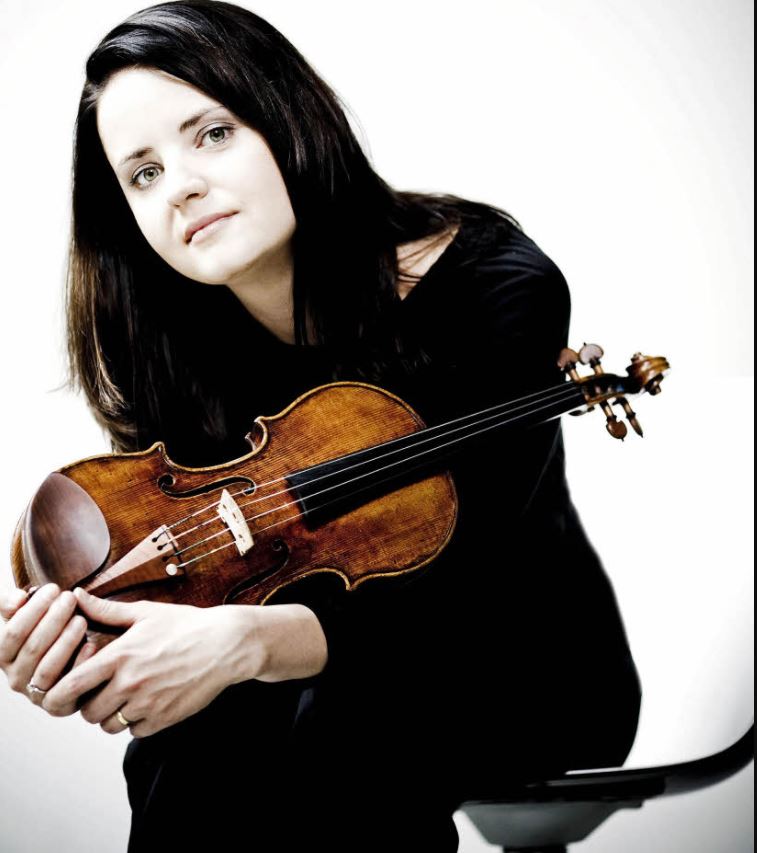
    Above: Violinist Baiba Skride; Photo Credit: Marco Borggreve

    The second movement was the best of the concerto, in part because there was more direct interplay between Ms. Skride and the orchestra. Principal clarinet Anthony McGill’s duet with Ms. Skride was crafted beautifully; each note sounding like velvet. Ms. Skride took the third movement at a blistering pace and seemed more in her element here. She got a folksy, scraggily sound out of the violin that made the music feel more dance like.

    After intermission Ms. Mälkki led the orchestra in the NY Premiere of an older piece of Esa-Pekka Salonen’s called Helix. While not the most exciting work by Salonen, this is an enjoyable overture-style piece that builds in momentum and dynamics until the very end. It begins with low gongs beating with high flutes coming in way above them. This extreme tonal range gives an almost primordial sound that one would hear in Ives. As with all Salonen pieces, this one relies on dance-like motifs mixed with a lot of orchestral coloring – thus it made sense to pair with the Debussy that would come later. Most impressive was that as the pieces gains momentum and becomes denser, Ms. Mälkki managed to create absolute clarity with the orchestra. Every instrument could be heard near the end, evening with banging percussion and wild dancing from all the instruments. Ms. Mälkki’s style of conducting reflects this precision: it is punctilious and clear; every beat is perfectly straight.

    Capture

    Above: Conductor Susanna Mälkki; Photo by: Simon Fowler

    The final piece on the program was Debussy’s La Mer. Ms. Mälkki had an unusual interpretation that I found to be thrilling and dull at the same time. On one hand, particularly in the first and last movements, I have never heard the piece played with so attention to orchestral coloring. The winds and the brasses sparkled, the strings gushed at times, and there were thrashes, yet also beautifully delicate moments. Through all three movements every part of the orchestral was ringing with sound and clear. There wasn’t a note out of place. That said, Ms. Mälkki seemed to eschew all sense of ambiguity and impressionism in her interpretation using the same precision as in the Salonen. This worked well in the second movement which has a lot of counterpoint and fast runs, but it made the mystery of the music disappear in the others. I can imagine that anyone that enjoys a more sensual Debussy would be bored by this interpretation, but it is hard to argue with the interpretation as a whole when the orchestra has that much color. Ms. Mälkki obviously has the respect of the orchestra; the players were playing the best I’ve heard them in the past few years and were giving it their all.  I look forward to hearing Ms. Mälkki’s return.

    ~ Scoresby

  • Evelyn Mandac

    Mandac

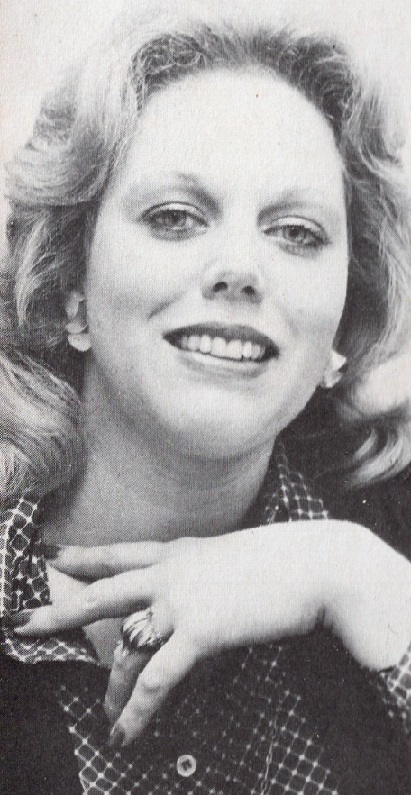
    Evelyn Mandac (above), a soprano from The Philippines, sang several performances as Lauretta in Gianni Schicchi plus a single Gretel at The Met in 1976.

    She appeared with San Francisco Opera as Susanna in Le nozze di Figaro, Despina in Cosi fan Tutte (with Frederica von Stade and Evelyn Lear), and as Ines in L’Africaine (with Shirley Verrett and Plácido Domingo). The Meyerbeer is preserved on the Gala label.

    Ms. Mandac sang in the American premieres of works by Henze, Berio, and Pasatieri, and she made a commercial recording of Orff’s Carmina Burana with The Boston Symphony, conducted by Seiji Ozawa.

    Evelyn Mandac – O mio babbino caro – GIANNI SCHICCHI – Met 1976

  • Nicholas di Virgilio: Two Fausts

    Nicholas_di_virgilio

    American tenor Nicholas di Virgilio (above) was a stalwart of the New York City Opera during the Company’s heady time in the late 1960s and early 1970s. Having moved from City Center to the New York State Theatre, and bolstered by the ‘overnight success’ of Beverly Sills, New York City Opera became a true  mecca for opera-lovers, providing serious competition for The Met next-door with a company of wonderful singing-actors and a more adventurous repertoire. I heard literally hundreds of really memorable performances there.

    In addition to his busy operatic career, Mr. di Virgilio was well-known as a concert artist. In 1963, he participated in a performance of Benjamin Britten’s WAR REQUIEM with the Boston Symphony at Tanglewood which has been preserved on DVD; Erich Leinsdorf conducts, and Phyllis Curtin and Tom Krause are the other vocal soloists.

    LeonardBernstein_SMK63152-1489517478-440x440

    Mr. di Virgilio is the tenor soloist in Leonard Bernstein’s 1964 recording of the Beethoven 9th, and the tenor also sang Mozart’s D-minor REQUIEM at a memorial service for President John F Kennedy in January of 1964, under Leinsdorf’s baton; the performance was televised. Composer Dominic Argento dedicated his Six Elizabethan Songs to Nicholas di Virgilio.

    In 1970, at New York City Opera, I chanced to hear Nicholas di Virgilio sing Faust in both the Gounod and Boito settings of the story of an aging philosopher who sells his soul to the devil. I was particularly amazed by his taking the high-C in “Salute demeure” in a lovely piano.

    Nicholas di Virgilio – FAUST aria – NYCO 3

    Nicholas di Virgilio – Da campi dai prati – MEFISTOFELE – NYCO 1970

    ~ Oberon

  • CMS Brandenburgs ~ 2017

    Bach

    Above: the Master of Music, Johann Sebastian Bach

    ~ Author: Oberon

    Tuesday December 19th, 2017 – Chamber Music Society of Lincoln Center‘s annual holiday-season performances of Bach’s immortal Brandenburg Concertos offer an antidote to NUTCRACKER and MESSIAH – not that there’s anything wrong with Tchaikovsky or Handel, to be sure. But the Brandenburgs speak to us without sentimentality or piety: pure music, pure joy.  

    This year marked my fifth CMS Brandenburgs, and as usual the Society have assembled a brilliant ensemble – from beloved Bach specialists to rising stars – to make the season merry and bright:

    Kenneth Weiss, HARPSICHORD • Kristin Lee, Cho-Liang Lin, Daniel Phillips, Danbi Um, VIOLIN • Mark Holloway, Yura Lee, Richard O’Neill, VIOLA • Efe Baltacigil, Nicholas Canellakis, Colin Carr, CELLO • Joseph Conyers, DOUBLE BASS • Robert Langevin, Carol Wincenc, FLUTE • Randall Ellis, James Austin Smith, Stephen Taylor, OBOE • Peter Kolkay, BASSOON • Julie Landsman, Jennifer Montone, HORN • Brandon Ridenour, TRUMPET

    Wu Han, co-Artistic Director of Chamber Music Society, welcomed the packed house with her customary enthusiasm and wit. Does any other Artistic Director on the Gotham scene evince such pride in the organization she heads, in the ‘product’ she dispenses (great music), and in the people – these super-musicians – who make each program so meaningful and enjoyable? The overflow crowd, filling the extra rows of seats installed specially for this program, attest to the fact that she and David Finckel are doing everything right.

    I’ve never before been in a theater when the classic yet ominous line “Is there a doctor in the house?”  comes over the loudspeakers. A gentleman quickly rose and went to see what he could do to help an individual in distress; hopefully it was all resolved to the good.

    Each year at the CMS Brandenburgs, the six concertos are played in a different order: tonight it was the fifth which opened the evening. From the New York Philharmonic, Robert Langevin brought his magic flute to the festivities. In music entwining flute and violin, Mr. Langevin and Cho-Liang Lin were exquisite in matters of subtle dynamics and pristine trills. Cordial playing from the string ‘choir’ – Daniel Phillips (violin), Yura Lee (viola), Colin Carr (cello), and Joseph Conyers (bass) – gave the concerto an appealing, warm resonance. In a dazzling cadenza near the end of this concerto’s opening Allegro, harpsichordist Kenneth Weiss thrilled me with his sparkling dexterity, made all the more alluring with hints of rubato. Although applause between movements is normally unwelcome, I couldn’t blame the audience for breaking in here to salute Mr. Weiss and his colleagues.

    The fifth concerto’s wistful Affetuoso was dreamily played by Mssers. Lin, Langevin, and Weiss. The deeper voices inaugurate the final Allegro, and here is the perfect opportunity to heap praise on the phenomenal Joseph Conyers, whose grand and glorious bass sound was a constant source of pleasure throughout the evening.

    Josephconyers

    Above: Joseph Conyers

    In concerto #6 (B-flat major), violins are absent. Instead, a formidable pair of violists – Yura Lee and Richard O’Neill – face a deluxe trio of cellists (Colin Carr, Efe Baltacigil, and Nicholas Canelakkis) across the music stands. The pulsing Allegro is highlighted by some high-speed coloratura from Mr. Carr; when his fellow cellists join in, watching their swift unison bow-work gave me a smile.

    In the sixth concerto’s Adagio – one of Bach’s most moving creations – commences with Richard O’Neill and Colin Carr (under-pinned by the Conyers bass) poignantly drawing us in. Yura Lee then takes up the theme, and for a few blessed moments, the music gives us a transfusion of hope. Colin Carr’s plush sound here gave a soul-reaching expressiveness. Sublime! But, without a pause, the closing Allegro sweeps us inexorably forward: Mr. Carr and the two violists make music that is fast and fun.

    Carol+Wincec+%281%29

    Above: Carol Wincenc

    The fourth Brandenburg commenced. Flautist Carol Wincenc’s name looms legendary in my pantheon; how wonderful to hear her playing live tonight for only the second time in my experience. Svelte and serene, Ms. Wincenc looked fetching in a ruffled black frock which drew admiring comments from the people sitting around us as she took her bows. Her flute sounds pure and sweet, and in Mr. Langevin she found a duetting partner of equal prestige. Their harmonizing was so elegant, abetted by Mr. Conyers’ amiable bass. Yet another voice is heard: violinist Kristin Lee’s tone mingled with the two flutes in a luminous blend, wondrous and subtle. A petite cadenza from Ms. Wincenc had a shimmering quality.

    For the 4th’s finale, I jotted “Speed Demon” next to Ms. Lee’s name: I vastly enjoyed watching her rapid bowing here: fabulous! The flautists were warbling divinely, and cellist Nick Canellakis contributed his customary polished playing: it felt like these musicians were setting the world to rights. A series of modulations carries the fourth concerto to its finish.

    Following the interval, the second Brandenburg found Danbi Um in the lead, with superb wind playing from Ms. Wincenc, James Austin Smith (oboe), Peter Kolkay (bassoon), and with trumpet virtuoso Brandon Ridenour soaring on high. Cellist Efe Baltacigil’s pacing motif set the stage for a delectable playing of the Andante in which Mlles. Um and Wincenc and Mr. Smith vied to see who could play the sweeter: a ravishing mix of timbres from these great artists. In the concluding Presto, trumpet and oboe matched wits to delight us even further.

    The third concerto, a particular favorite of mine, calls for three violins (Mr. Phillips, Ms. Um, and Kristin Lee), three violas (Richard O’Neill, Mark Holloway, and Yura Lee) and three cellos (Mssrs. Canellakis, Carr, and Baltacigil) whilst the intrepid Kenneth Weiss and Joseph Conyers continued to keep everything vivid. This concerto is unusual in that its Adagio movement consists only of a brief passage from Mr. Phillips’ violin: Bach immediately sends the players back into a swirling Allegro. This evening’s performance of the third showed yet again why the Brandenburgs are so cherished.

    First came last tonight, as the program concluded with the first Brandenburg (in F-major): the one that always reminds me of Handel. The ensemble here features two horns and a trio of oboes. With violinist  Daniel Phillips in charge, Jennifer Montone and Julie Landsman sounded velvety in their harmonized horn calls whilst Stephen Taylor, Randall Ellis, and James Austin Smith piped up to gratifying effect with their oboes, joined by Peter Kolkay on bassoon. Oboe, violin, bassoon, and bass sound the poignant Adagio, then the high horns ring out briskly in the Allegro. You think this concerto is over, but there’s a surprise fourth movement – it veers between Minuet and Polonaise – in which separate choirs of winds and strings summon up rhythms of the dance. This self-fulfilling ‘encore’ gave us a fine opportunity to enjoy Peter Kolkay’s lively bassoon playing.

    ~ Oberon

  • The Orchestra Now: Penderecki & Holst

    Falletta

    Above: conductor JoAnn Falletta, photo by Cheryl Gorski

    ~ Author: Ben Weaver

    Thursday December 14th, 2017 – TŌN (The Orchestra Now) consists of musicians from leading musical conservatoires around the globe, including Julliard, Curtis and Shanghai Conservatory. I’ve heard less impressive and less cohesive playing from big name orchestras. Under the baton of JoAnn Falletta, the concert was a thrilling evening of superb music-making. And filling the entire stage of Alice Tully Hall at Lincoln Center, one was overwhelmed by the sheer impact and presence of their sound. It rather reinforced my belief that David Geffen Hall truly does have dreadful acoustics. Granted, Alice Tully is a much smaller hall, but it’s not the volume alone that impresses. NY Philharmonic can be plenty loud too. It’s feeling the sound envelop you and pins you to your seat that can be truly breathtaking. This does not happen at David Geffen Hall.

    John Adams’ “Short Ride in a Fast Machine” is about five minutes of pure adrenaline. Its percussive opening sets the tone for a repeating loop of fanfares, shrieking woodwinds, and stabbing violins. Adams once described the piece: “You know how it is when someone asks you to ride in a terrific sports car, and then you wish you hadn’t?” Composed in his trademark post-minimalist style, the work constantly shifts, turns, and twists, and the young musicians played it without fear.

    Krzysztof Penderecki is one of the giants of contemporary classical music. His “Concerto Doppio”, completed in 2012, was originally written for violin and viola, but in this TŌN concert the version for violin and cello was performed instead, with soloists Dennis Kim and Roman Mekinulov, respectively.

    Penderecki intended the solo instruments to be adapted to whatever string instruments are needed for the concert, in the style of J.S. Bach perhaps, who allowed arrangements of a lot of his music for different instruments on as-needed basis. This concerto – proving that great music is still being written – begins unusually with an extended duet for the solo instruments. In fact, the entire concerto is something of a conversation between soloists and orchestra. The music alternates from the largely (or entirely) unaccompanied solo instruments back to the orchestra, and so on. The opening minutes had something of Arvo Pärt’s instrumental chanting, and throughout one could grasp influences from Bach and Shostakovich. The concerto’s end reminded me very much of the hushed conclusion of the first movement of Shostakovich’s Symphony No. 4.

    Falletta allowed the excellent soloists, Kim and Mekinulov, to play without conducting them. As so much of their music really is an unaccompanied duet, it allowed the musicians a great deal of flexibility and freedom.

    After the intermission, the orchestra played one of the most popular of all orchestral works: Holst’s “The Planets.” It is appropriate that the concert was given on the day the new Star Wars film, “The Last Jedi,” was released. Hearing the work once again I am struck by how much composer John Williams borrowed from Holst to write the legendary film scores.

    Again, to hear such a great and inventive orchestral work for a large orchestra in a hall like Alice Tully was very exciting. Holst’s endless stream of melodies and remarkable orchestration is a war-horse for a good reason and I do not tire of hearing it. The orchestra played it superbly, relishing every note.

    No doubt many of the musicians were playing it for the first time. I am reminded of a story – perhaps a myth – about Fritz Reiner rehearsing Wagner’s “Die Meistersinger” overture, and one musician kept making a mistake. When Reiner called him out, the musician said: “I am sorry, Maestro, I am playing this for the first time.” Reiner is said to have replied: “Oh, how I envy you.”

    It is not easy to make a work as familiar as “The Planets” sound fresh, but the wonderful young TŌN Orchestra, under JoAnn Falletta’s inspired leadership, not only made it sound fresh, they did it without any noticeable mistakes.

    ~ Ben Weaver

  • The Orchestra Now: Penderecki & Holst

    Falletta

    Above: conductor JoAnn Falletta, photo by Cheryl Gorski

    ~ Author: Ben Weaver

    Thursday December 14th, 2017 – TŌN (The Orchestra Now) consists of musicians from leading musical conservatoires around the globe, including Julliard, Curtis and Shanghai Conservatory. I’ve heard less impressive and less cohesive playing from big name orchestras. Under the baton of JoAnn Falletta, the concert was a thrilling evening of superb music-making. And filling the entire stage of Alice Tully Hall at Lincoln Center, one was overwhelmed by the sheer impact and presence of their sound. It rather reinforced my belief that David Geffen Hall truly does have dreadful acoustics. Granted, Alice Tully is a much smaller hall, but it’s not the volume alone that impresses. NY Philharmonic can be plenty loud too. It’s feeling the sound envelop you and pins you to your seat that can be truly breathtaking. This does not happen at David Geffen Hall.

    John Adams’ “Short Ride in a Fast Machine” is about five minutes of pure adrenaline. Its percussive opening sets the tone for a repeating loop of fanfares, shrieking woodwinds, and stabbing violins. Adams once described the piece: “You know how it is when someone asks you to ride in a terrific sports car, and then you wish you hadn’t?” Composed in his trademark post-minimalist style, the work constantly shifts, turns, and twists, and the young musicians played it without fear.

    Krzysztof Penderecki is one of the giants of contemporary classical music. His “Concerto Doppio”, completed in 2012, was originally written for violin and viola, but in this TŌN concert the version for violin and cello was performed instead, with soloists Dennis Kim and Roman Mekinulov, respectively.

    Penderecki intended the solo instruments to be adapted to whatever string instruments are needed for the concert, in the style of J.S. Bach perhaps, who allowed arrangements of a lot of his music for different instruments on as-needed basis. This concerto – proving that great music is still being written – begins unusually with an extended duet for the solo instruments. In fact, the entire concerto is something of a conversation between soloists and orchestra. The music alternates from the largely (or entirely) unaccompanied solo instruments back to the orchestra, and so on. The opening minutes had something of Arvo Pärt’s instrumental chanting, and throughout one could grasp influences from Bach and Shostakovich. The concerto’s end reminded me very much of the hushed conclusion of the first movement of Shostakovich’s Symphony No. 4.

    Falletta allowed the excellent soloists, Kim and Mekinulov, to play without conducting them. As so much of their music really is an unaccompanied duet, it allowed the musicians a great deal of flexibility and freedom.

    After the intermission, the orchestra played one of the most popular of all orchestral works: Holst’s “The Planets.” It is appropriate that the concert was given on the day the new Star Wars film, “The Last Jedi,” was released. Hearing the work once again I am struck by how much composer John Williams borrowed from Holst to write the legendary film scores.

    Again, to hear such a great and inventive orchestral work for a large orchestra in a hall like Alice Tully was very exciting. Holst’s endless stream of melodies and remarkable orchestration is a war-horse for a good reason and I do not tire of hearing it. The orchestra played it superbly, relishing every note.

    No doubt many of the musicians were playing it for the first time. I am reminded of a story – perhaps a myth – about Fritz Reiner rehearsing Wagner’s “Die Meistersinger” overture, and one musician kept making a mistake. When Reiner called him out, the musician said: “I am sorry, Maestro, I am playing this for the first time.” Reiner is said to have replied: “Oh, how I envy you.”

    It is not easy to make a work as familiar as “The Planets” sound fresh, but the wonderful young TŌN Orchestra, under JoAnn Falletta’s inspired leadership, not only made it sound fresh, they did it without any noticeable mistakes.

    ~ Ben Weaver

  • Janine Jansen and Friends @ Zankel

      Screen Shot 2017-12-19 at 12.47.01 PM

    Above: violinist Janine Jansen

    ~ Author: Scoresby

    Thursday December 7 2017 – This evening had one of the best chamber performances I’ve heard of the year in Carnegie Hall’s Zankel Hall. This commenced violinist Janine Jansen’s six performances as a part of Carnegie Hall’s Perspectives series; where artists of certain acclaim curate concerts in a given season. Ms. Jansen’s will include three chamber music performance (this being one of them), two orchestral performances, and a recital with Jean-Yves Thibaudet. This was the first time I had heard Ms. Jansen in recording or performance, so it was thrilling to hear such a well-programmed concert – though I had heard all the pieces on the program in concert before.

    The performance began with a performance of Bartok’s Contrasts for Violin, Clarinet, and Piano (this recording has Bartok playing along with Benny Goodman, who the piece was written for). Ms. Jansen was on violin, the esteemed Martin Fröst was on clarinet, and Lucas Debargue was on piano. In the first movement’s “recruiting dance”, Ms. Jansen and Mr. Fröst seemed to almost be dancing with each other on stage while playing. Mr. Fröst in particular captured all the jazzy timbres and fun improvisatory sounds – sounding free and loose. Mr. Debargue kept the stormy piano part quiet and atmospheric, never overwhelming the group.

    Capture

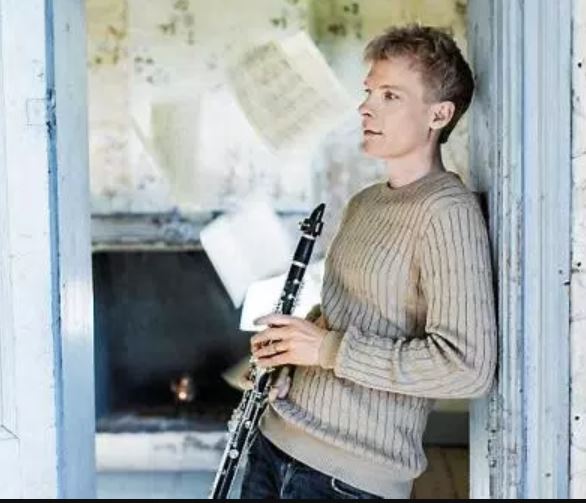
    Above: Clarinetist Martin Fröst, photo by Mats Bäcker

    Ms. Jansen provided a rough gritty sound with perfect technique. The second movement brought a different sound world, languid and mysterious. They took a looser approach, letting each line sing. Mr. Debargue captured the folksiness and jazzy rhythms well. The last movement was played with stunning speed and accuracy. While fun through all the various riffs, it sounded a little too rushed. Nonetheless, with big personalities like Ms. Jansen and Mr. Fröst, the fun parts of the piece were giving distinct timbres. Mr. Debargue’s relaxed downward scales sounded contrasted the rougher timbres of Ms. Jansen and Mr. Fröst.

    The second piece on the program was a bit of rarity. Ms. Jansen and Mr. Debargue returned to play Szymanowski’s Mythes for Violin and Piano, Op. 30. For those that don’t know, Szymanowski’s music has a few distinct periods, but his most famous middle period sounds almost like a more radical Debussy with motion. Mr. Debargue played the opening of La Fontaine d’Aréthuse with a delicate color palette and impressionistic quality without making the piano sound too blurry. Ms. Jansen embraced the almost crass strangeness of the violins opening line. For a piece that has this late Debussy sound, one has to embrace all the effects in both instruments for the music to work, and here one couldn’t ask for better interpreters. As the first movement went on to its passionate climax Ms. Jansen seemed to let loose in a way that was missing in the Bartok.

    Screen Shot 2017-12-19 at 12.49.33 PM

    Above: Pianist Lucas Debargue

    The whirr of sound and color was thrilling, followed by a ghostly harmonic sections. Mr. Debargue was equally enjoyable, changing textures every few phrases. I look forward to hearing Mr. Debargue’s newly released Syzmanowski/Schubert album. The third movement, Dyrads and Pan has the violin imitating Pan’s flute for a good portion of the pieces. Through trills, quarter tones, muted sections, natural harmonics and a host of other methods that Syzmanowski dictates Ms. Jansen made the music sound like much more than just a violin. 

    The last piece on the program was The Quartet for the End of Time by Oliver Messiaen. In addition to Mr. Debargue and Ms. Jansen, Martin Fröst returned for the difficult clarinet part and cellist Torleif Thedéen joined on the cello. This is the sort of music that can really only heard live as recordings can’t capture its both apocalyptic and meditative mood in the same way. It also requires utmost coordination between each musician. Of the dozen or so performances I’ve heard in the past three years this was perhaps the best. During the first of eight movements, Mr. Fröst began almost as if he was conducting. His tone small, but his style emphasizing the bird trills. Mr. Debargue made his way softly through the 29 chord cycle that makeup the piano part. The play between Ms. Jansen and Mr. Fröst was again evident here – each seeming to get energy from the other. Nonetheless, they kept the strange mood somber and the atmosphere stagnant. Almost as if one were to walk into a large space and hear some birds chirping and people talking, getting enveloped in it. 

    The second movement brought an entire different style of playing, here letting the apocalyptic element of the piece shine. Mr. Debargue had a rough, almost crass sound explodes out of the quiet atmosphere, announcing the end of time. Mr. Thedéen and Ms. Jansen’s languid duet after maintained the eerie quality of the first movement, meandering through seemingly without direction. To capture these contradictory elements of the music is impressive; the group sounds like it has played together for years and I look forward to hearing their recording of it released earlier this month. One of the more striking aspects of this performance is that all the performers seemed comfortable with Messiaen’s lengthy silences. 

    The third movement is for solo clarinet and the emotional center of the piece. It truly is one of my favorite moments in all of music, so to hear such an excellent clarinet player perform it was moving. Mr. Fröst’s performance was perhaps the quickest I’ve heard in terms of tempo, but it allowed him to make each phrase have more energy and breath. It also made each rest and silence all the more apparent. During the famous long sustained screeches that crescendo from silence to the maximum sound a clarinet can make (only a clarinet can start from complete silence that way), Mr. Fröst’s body seemed to quiver as he approached the maximum sound of his instrument, but that convulsing was perfect for the physicality of the music. During the more active sections in-between each shriek, Mr. Fröst’s fast tempo let the bird-like melodies shine. While all performances sound bird-like, Mr. Fröst’s light tone and nimble trills seemed particularly well suited. 

    The fourth movement is a light interlude and it felt like being sucked out of a trance after the severity of solo clarinet movement. Here, Ms. Jansen, Mr. Fröst, and Mr. Thedéen sounded joyful and played well together. During the passages in unison it felt like they fused into one large instrument. Mr. Thedéen’s low pizzicatos were a delight. Turning back to the meditative mood, the fifth movement is a stunning meandering melody on the cello with a simple piano accompaniment. Mr. Thedéen’s had a drier sound at first, but then settled into a more romantic style by the end. Mr. Debargue played is murmurs on the piano softly, without ever eclipsing the cello. 

    Screen Shot 2017-12-19 at 12.52.25 PM

    Above: Cellist Tortleif Thedéen, photo by Nikolaj Lund

    The sixth and seven movements had the best chamber music playing of the night; each member of the quartet seemed fully invested in the music. During the dark sixth which has an extended section with all the instruments playing in unison with the same dynamic markings, not one instrument seemed eclipse another, an incredibly difficult feat. They played up all of the accents and gave a quick, fierce account. After the long introduction, there is a section where the clarinet and piano pound out longer rhythms that eventually take over the piece. Mr. Fröst and Mr. Debargue played this with verve, making each punctuation sound final until another fast break with all the instruments in unison sputtering a drawn out phrase. This contrast made the movement even more dramatic than it typically is. This led into the dissonant seventh movement, where the group seemed to be both aggressive and colorful in their sound. They managed to make it sound darker and more stormy than I’ve heard before.

    The last movement is an extended passage for violin and piano, similar to the cello section. Here though, Ms. Jansen had a slow ringing sound. Mr. Debargue provided a sublime accompaniment. Again, it was easy to slip into a trance with the slow slide up both the violin and piano. After landing in the highest registers of both, Ms. Jansen sounded the last note – but kept her posture as if there was more. This held the audience from applause and everyone sat in the silence of eternity for a full minute before a hearty applause. I wish more musicians captured those sublime moments of quiet after a performance, it felt just as important as the music itself. I look forward to hearing her next performances apart of her Perspectives series on January 18 and January 21.