Category: Music

  • Beethoven & Bruckner @ The NY Phil

    JamesEhnes_Filter630x310

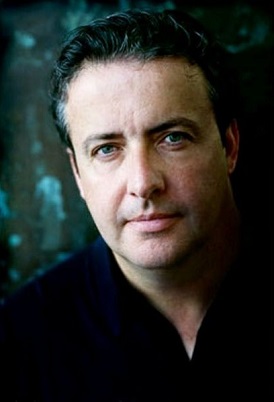
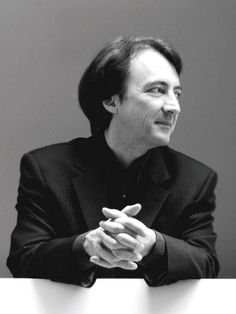
    Above: James Ehnes, violinist, performing with The New York Philharmonic tonight

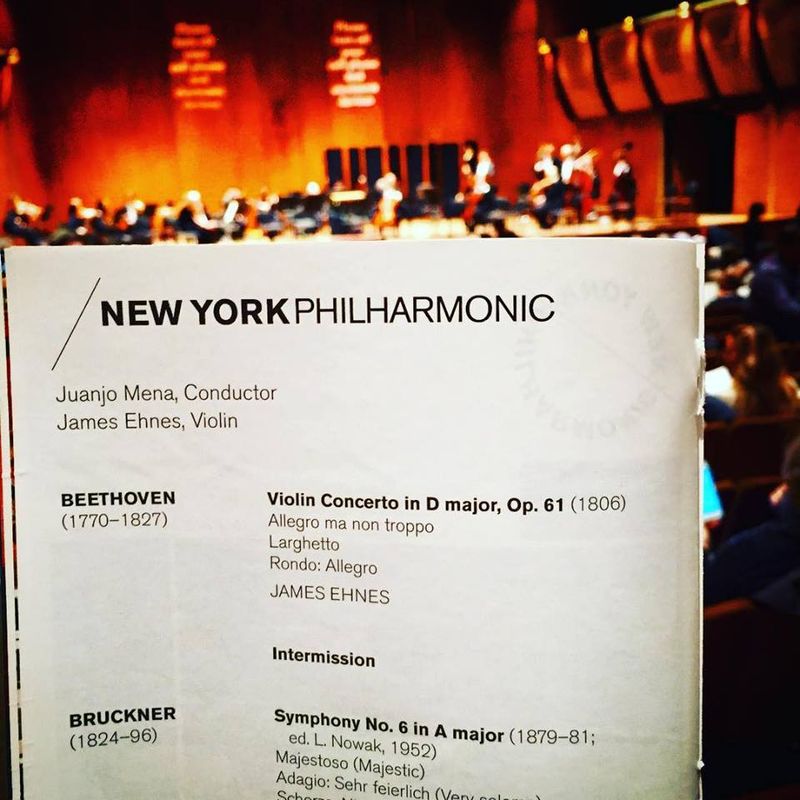
    Wednesday January 27th, 2016 – The New York Philharmonic playing masterworks by Beethoven and Bruckner under Juanjo Mena’s baton, with James Ehnes the featured soloist. 

    The Philharmonic’s been the talk of the town this week with the announcement of the appointment of Jaap van Zweden as the orchestra’s next music director; read more about the good news here.

    Tonight, Mr. Ehnes played the Beethoven violin concerto with silken tone and technical aplomb, evoking an atmosphere of hushed attentiveness in the hall and finishing to a prolonged ovation with a triple “curtain call” and with the artists of the Philharmonic joining in the applause. The tall violinist is as congenial to watch as to hear, and he and Maestro Mena formed an elegant musical affinity as the concerto progressed, sharing a warm embrace at the end.

    Beethoven’s violin concerto was written and first performed in 1806 and – after it’s premiere performance by Franz Clement, the 26-year-old principal violinist and conductor at the Theater an der Wien in Vienna – it took years for the concerto to catch on. That first performance must have been something of a nightmare: Beethoven completed the work just two days before the premiere, and the surviving autograph score is a mess of crossings-out, over-writings, and alternative ‘versions’. The soloist, having had no time to learn and rehearse the long and complex work, had to use the score for the premiere; for much of the time he was virtually sight-reading. One reviewer wrote: “Beethoven could put his undoubtedly great talents to better uses”.

    Prior to publishing the work, Beethoven modified and clarified it following the 1806 premiere. The concerto finally began to work its way into the standard repertoire after a highly-praised performance in London in 1844, conducted by Felix Mendelssohn and played by the 12-year-old prodigy Joseph Joachim. It comes down to us as one of the greatest works of the violin concerto genre.

    James Ehnes gave a lovingly detailed performance; a series of high trills in the opening movement were dazzlingly clear, and his dynamic control throughout was simply exquisite. Maestro Mena sculpted the opening passages of the central Larghetto to perfection, the violinist then joining in with playing of sweetly sustained lyricism. The ‘Kreisler’ cadenzas were spun off with serene virtuosity. At every moment – whether playing fast or slow – Mr. Ehnes maintained an enchanting sheen on his tone. Thus the audience’s grateful show of the enthusiasm at the end was eminently deserved.

    J Mena

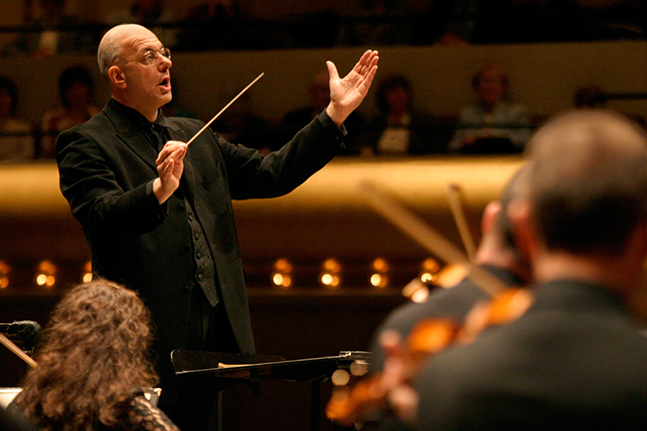
    Following the interval, Maestro Mena (above) and the Philharmonic musicians gave a thoroughly impressive performance of Bruckner’s 6th symphony. It’s always pleasing to have Sheryl Staples in the concertmaster’s chair, and to have Cynthia Phelps and Carter Brey leading their sections with such committed artistry. I often wish that the wind players could be seated on risers so we could better savour their individual performances: passages of wind chorale in the Bruckner were beautifully blended.

    The orchestra were at their finest in the compelling themes of the symphony’s Adagio. Both here and in the opening Majestoso, Maestro Mena was deeply involved in drawing forth the inner voices to give a full range of colour to each gorgeous passage. 

    In the third movement, a Scherzo, it seems to me that Bruckner’s imagination flags ever so slightly. The concluding movement – wonderfully played – felt over-long, almost as if the composer was unsure of how he wanted the piece to end. This ‘finale’ was not publicly performed until 1899, three years after Bruckner’s death; perhaps he would have tailored it more concisely if he’d been able to judge the effect in an actual concert performance. We’ll never know. Yet overall, the sonorous grandeur of the 6th makes a vivid impression.

    12573839_10153865541004761_6934836395217370131_n

    Pre-concert photo by my friend Dmitry.

  • Beethoven & Bruckner @ The NY Phil

    JamesEhnes_Filter630x310

    Above: James Ehnes, violinist, performing with The New York Philharmonic tonight

    Wednesday January 27th, 2016 – The New York Philharmonic playing masterworks by Beethoven and Bruckner under Juanjo Mena’s baton, with James Ehnes the featured soloist. 

    The Philharmonic’s been the talk of the town this week with the announcement of the appointment of Jaap van Zweden as the orchestra’s next music director; read more about the good news here.

    Tonight, Mr. Ehnes played the Beethoven violin concerto with silken tone and technical aplomb, evoking an atmosphere of hushed attentiveness in the hall and finishing to a prolonged ovation with a triple “curtain call” and with the artists of the Philharmonic joining in the applause. The tall violinist is as congenial to watch as to hear, and he and Maestro Mena formed an elegant musical affinity as the concerto progressed, sharing a warm embrace at the end.

    Beethoven’s violin concerto was written and first performed in 1806 and – after it’s premiere performance by Franz Clement, the 26-year-old principal violinist and conductor at the Theater an der Wien in Vienna – it took years for the concerto to catch on. That first performance must have been something of a nightmare: Beethoven completed the work just two days before the premiere, and the surviving autograph score is a mess of crossings-out, over-writings, and alternative ‘versions’. The soloist, having had no time to learn and rehearse the long and complex work, had to use the score for the premiere; for much of the time he was virtually sight-reading. One reviewer wrote: “Beethoven could put his undoubtedly great talents to better uses”.

    Prior to publishing the work, Beethoven modified and clarified it following the 1806 premiere. The concerto finally began to work its way into the standard repertoire after a highly-praised performance in London in 1844, conducted by Felix Mendelssohn and played by the 12-year-old prodigy Joseph Joachim. It comes down to us as one of the greatest works of the violin concerto genre.

    James Ehnes gave a lovingly detailed performance; a series of high trills in the opening movement were dazzlingly clear, and his dynamic control throughout was simply exquisite. Maestro Mena sculpted the opening passages of the central Larghetto to perfection, the violinist then joining in with playing of sweetly sustained lyricism. The ‘Kreisler’ cadenzas were spun off with serene virtuosity. At every moment – whether playing fast or slow – Mr. Ehnes maintained an enchanting sheen on his tone. Thus the audience’s grateful show of the enthusiasm at the end was eminently deserved.

    J Mena

    Following the interval, Maestro Mena (above) and the Philharmonic musicians gave a thoroughly impressive performance of Bruckner’s 6th symphony. It’s always pleasing to have Sheryl Staples in the concertmaster’s chair, and to have Cynthia Phelps and Carter Brey leading their sections with such committed artistry. I often wish that the wind players could be seated on risers so we could better savour their individual performances: passages of wind chorale in the Bruckner were beautifully blended.

    The orchestra were at their finest in the compelling themes of the symphony’s Adagio. Both here and in the opening Majestoso, Maestro Mena was deeply involved in drawing forth the inner voices to give a full range of colour to each gorgeous passage. 

    In the third movement, a Scherzo, it seems to me that Bruckner’s imagination flags ever so slightly. The concluding movement – wonderfully played – felt over-long, almost as if the composer was unsure of how he wanted the piece to end. This ‘finale’ was not publicly performed until 1899, three years after Bruckner’s death; perhaps he would have tailored it more concisely if he’d been able to judge the effect in an actual concert performance. We’ll never know. Yet overall, the sonorous grandeur of the 6th makes a vivid impression.

    12573839_10153865541004761_6934836395217370131_n

    Pre-concert photo by my friend Dmitry.

  • NY Philharmonic Taps Jaap van Zweden

    VAN-ZWEDEN-Jaap.323125854_std

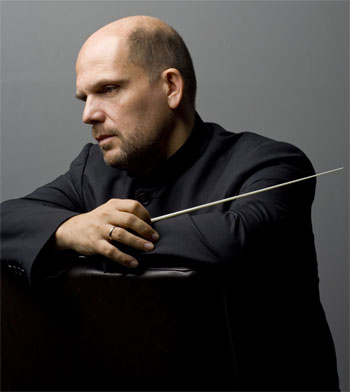
    The New York Philharmonic have just announced that Jaap van Zweden (above) will succeed Alan Gilbert as the orchestra’s music director. van Zweden’s 5-year contract commences with the 2018-2019 season; he will be music director designate for the 2017-2018 season.

    Maestro van Zweden was my personal choice for the position. The NY Philharmonic concerts that I have attended in recent seasons when he was on the podium have been particularly gratifying; and the musicians seem to respond to him both on an artistic and a human level.

    Here’s my article about a wonderful NY Philharmonic concert van Zweden led earlier this season; at the end of it, I expressed my thoughts about him taking over the music director’s post. I am really happy that it’s come to pass, and I look forward to many more concerts under his baton.

  • Lorri Lail

    Lail-Lorri-02[1948]

    The Norwegian mezzo-soprano, Lorri Lail (née Laurie Lyle) was born in Oslo of Scottish descent. She made her debut as a concert singer around 1935. Her operatic roles included Ulrica in Verdi’s UN BALLO IN MASCHERA and Bianca in Britten’s THE RAPE OF LUCRETIA, but she is mainly remembered as a recitalist and oratorio singer.

    Lorri Lail – Sibelius song ~ Den första kyssen

    Lorri Lail made several North American concert tours with great success (the first in 1948). Her church concerts in Sweden, Norway and Finland were widely admired. From around 1950 to 1968 she lived in England, touring Europe and America as well as making recordings. Lail was considered an expert interpreter of the works of J S Bach. In 1968 she moved to Sweden, where she died in 1978.

    In 1953, Lorri Lail’s wonderful recording of Mahler’s Kindertotelieder was released on the Urania label. It has been copied from LP and can be heard on YouTube here.

  • Russian Jewish Composers @ ASO

    Leon-Botstein

    Thursday December 17th, 2015 – Tonight at Carnegie Hall, Leon Botstein (above) was on the podium for a program of music written by Russian Jewish composers between 1874 and 1921. Performed by the American Symphony Orchestra, the concert featured two U.S. premieres and one New York premiere, as well as Anton Rubinstein’s 2nd cello concerto with soloist István Várdai.

    Aleksandr Krein’s The Rose and The Cross (‘Symphonic Fragments after Aleksandr Blok’) was composed between 1917-1920, making it the newest work on tonight’s program. Blok was a great Symbolist poet and his mystical drama The Rose and The Cross went thru more than 200 rehearsals at the Moscow Art Theater but was never performed in public. The composer Krein was inspired by Blok’s writing and composed this suite to honor the poet. Tonight’s performance marked the suite’s New York premiere.

    The music, which shows traces of harmonic advancement over the other three – older – works played this evening, opens with a somber, rather creepy atmosphere. Later it will take on an almost cinematic feeling, with effects such as trumpet fanfares and shades of exotica from the harp. A songful melody becomes a recurring theme, and the suite rises to a triumphant conclusion depicting the “boundless energy of the heart that sings.” 

    Várdai István nagyfelbontású fotó

    The Hungarian cellist István Várdai (above) then took the stage for the evening’s one (somewhat) familiar work: the second cello concerto of Anton Rubinstein. The oldest and most conservative piece on tonight’s bill, it marks the pianist-composer as a pioneer, since he was the first major Russian composer to work in the concerto genre (Tchaikovsky’s violin concerto still lay four years in the future). Rubinstein draws upon a very ‘Russian’ sense of melody; the concerto is a vastly pleasing work, and one which places great demands on the soloist.

    Mr. Várdai, tall and youthful-looking, is an extraordinarily gifted musician and seemed to win the hearts of the Carnegie Hall audience this evening within moments of starting to play. His timbre has a lovely, deep-violet colour and his technique is refined in both agility and dynamic control. From his opening soulful song, the cellist moved thru a scampering passage and on to a strikingly brisk downhill scale that ended on a delicious trill. A second theme plumbs the most pungent depths before turning into a rapid dance.

    The concerto’s movements flow into one another, with a wind chorale signaling the start of the Andante; Mr. Várdai embarks on an optimistic melody but the composer cannot resist a desire to let the music dance. After a mini-cadenza, a jogging Allegro carries us along. The orchestral texture lightens, with cello filigree, then lapses into an interlude and grows quiet. Things slow down beautifully for another injection of melody and the cellist then serves up a more sustained cadenza before a final surge to the end.

    Mr. Várdai’s superb performance elicited a very enthusiastic response from the audience; I very much hope to have further opportunities to experience his artistry.

    Following the interval, Mikhail Gnesin’s From Shelley (‘Symphonic Fragment after Percy Bysshe Shelley’s Prometheus Unbound‘) had its U.S. premiere. Written between 1906 and 1908 this short (8 minutes) work was composed while Gnesin was studying with Rimsky-Korsakov. Its brevity precludes any real development of ideas, yet there is a fine sense of the theme blossoming, and some very nice writing for the horns and harp. The ending is, in a word, beautiful. 

    The U.S. premiere of Maximilian Steinberg’s first symphony raised the question: why did it take nearly one hundred and ten years for this symphony to reach us? It’s as exciting and finely-crafted as many other well-known symphonies; the composer appears to have drawn inspiration from such symphonists as Beethoven and Schumann, eschewing the Russian-nationalist influence of his teacher Rimsky-Korsakov. 

    Steinberg’s 1st has an animated, congenial opening with the immediate establishing of a rich theme that that put me in mind of – of all things – Humperdinck’s HANSEL UND GRETEL (“Der Wind! Der Wind!”); this theme will re-sound throughout the symphony. This is big, pleasing music with a variety of rhythmic patterns. The timpani lend a stately quality.

    In an exuberant Allegro vivace, the composer lightens things to a scherzo quality, later taking on a waltzy air. This second movement ends with Mendelssohnian charm.

    After a darkish start, the Andante features a clarinet theme which develops into a tutti passage. In a gentle acceleration, horns and oboe play a part, and then in a richer build-up the horns grow passionate. Horn and clarinet voices entwine; oboe and flute pipe up. The music becomes cinematic in sweep before receding to solo clarinet.

    “Der Wind! Der Wind!” is again evoked by horns and trumpets as the finale commences. The oboe speaks out, then the horns launch a fugue. As the Allegro moderato continues on, the music meanders somewhat, as though Steinberg was unsure how best to end the piece: but end it does – strongly. 

    Kudos to Maestro Botstein for assembling a rewarding program of relative rarities, for including the Rubinstein cello concerto (and Mr. Várdai’s excellent playing of it), and for bringing the Steinberg symphony to these shores.

    This evening’s repertory – click on each composer’s name for biographical information:

    Aleksandr Krein – The Rose and the Cross (N.Y. Premiere)
    Anton Rubinstein– Cello Concerto No. 2
    Mikhail GnesinFrom Shelley (U.S. Premiere)
    Maximilian Steinberg– Symphony No. 1 (U.S. Premiere)

  • Chamber Music Society: Nights in Vienna

    043015-GK

    Sunday November 22nd, 2015 – Pianist Gilbert Kalish (above) and a septet of his top-notch colleagues met on the stage of Alice Tully Hall this evening for a programme of works by three composers whose lives were linked to the city of Vienna. On a day when we are still trying to comprehend the recent terror attacks in Paris – and also remembering the death of John F Kennedy on this date 52 years ago – Chamber Music Society of Lincoln Center‘s offered music that was by turns heartening and thought-provoking, and all of it impeccably played.

    When New York’s great musical organizations – Chamber Music Society, the NY Phil, Carnegie Hall, The Met, Young Concert Artists – announce their upcoming seasons each year, I love to pore over the listings, searching for certain works or artists and putting the dates immediately on my calendar. Thus for many weeks I’ve been looking forward to today’s Chamber Music Society concert as an opportunity to experience first-hand Arnold Schoenberg’s Kammersymphonie; I discovered this piece years ago – it was actually my introduction to Schoenberg – and have always wanted to hear it played live. Today’s performance of the Webern arrangement was incredibly vivid.

    But, to start at the beginning, this musical celebration of Vienna opened with music of Haydn: the E-minor piano trio. Gilbert Kalish, who played in all three works this evening, is at that marvelous point in his career where his playing retains youthful vitality while his artistry – developed over a long career – is at its peak. His playing was marked by effortless technique, an assured rightness of style in each of the three contrasting works, and an Olde World feeling of grace without theatricality.

    Seeming taller and slimmer than the last time I saw him, violinist Nicolas Dautricourt strode onstage and for a moment I mistook him for ABT’s Marcelo Gomes. Mr. Dautricourt is a particular favorite of mine, both to watch and to hear; his stage presence is paradoxically relaxed and intense, and his playing is beautifully nuanced with especial attention to dynamic gradations. Cellist Torleif Thedéen was an ideal colleague for M. Dautricourt today: their rapport was inspiring to watch, aligning the harmonies and relishing the melodic opportunities Haydn has given them. Their affection and respect for Mr. Kalish was clearly evident both here and – later – in the concluding Brahms.

    Schoenberg’s Chamber Symphony spans a single movement, though the composer has identified five distinct sub-divisions: Sonata (Allegro), Scherzo, Development, Adagio, and Recapitulation and Finale. Originally written for ten wind and five string players, the composer asked his student Anton Webern to re-cast the piece for a smaller ensemble, the better to take it out on tour. The result: twenty-two minutes of sheer musical brilliance.

    The Kammersymphonie tonight was given a captivating performance: the quintet of musicians played with such richness of tone, such stimulating sense of colour, and such depth of feeling that one had the impression of a much larger ensemble playing. Gilbert Kalish’s sent waves of plush sound from the Steinway, giving the music an undercurrent of Late-Romantic lyricism; this same feeling was embraced by violinist Kristin Lee who seized upon the composer’s every melodic gesture with her pearly tone. Whenever the music turned more prickly, both Kalish and Lee were up for the adventure.

    Tara Helen O’Connor, one of the Society’s elite, sent her flute roulades wafting brightly overall whilst the gorgeous (no other word suffices) tone of Nicholas Canellakis’s cello seems always to achieve a direct hot-wire to the heart-strings.

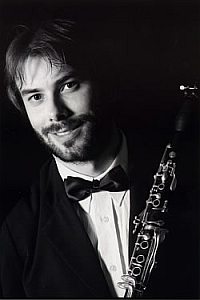
    TommasoLonquich_bio2

    New to me this evening was clarinetist Tomasso Lonquich (above) who made a spectacular impression both with his sumptuous tone and the passion of his playing. Whether at full cry or honing the sound down to a thread, Mr. Lonquich displayed his mastery at every moment; meanwhile his deep commitment to the music sometimes nearly drew him out of his chair as he polished off Schoenberg’s demanding phrases with compelling sincerity. 

    This staggeringly opulent ensemble drew a din of applause from the Alice Tully audience; as they took a second bow, my companion Adi – who had professed indifference to Schoenberg’s music before the concert began – found his opinion of the composer transformed. That’s what a great performance can accomplish.

    As so often at Chamber Music Society’s concert, I found myself at the interval wondering how this level of music-making could possibly be sustained into the second half. Needless to say, as violist Paul Neubauer joined Mssrs. Kalish, Dautricourt and Thedéen for the Brahms Third Piano Quartet, any thoughts of a letdown were immediately dismissed.

    Nearly twenty years were to pass between the time Brahms began working on this quartet (in 1855, at the time of his friend Robert Schumann’s last illness, when Brahms was torn between sorrow for his friend and desperate love for his friend’s wife, Clara) and its publication. His romantic inclinations toward Frau Schumann seem to perfume the music, especially in the third movement.

    Tonight, Mr. Kalish’s opening octave set the tone for a performance of beautifully blended voices and outstanding solo passages (Mr. Neubauer’s expressiveness so congenial) which achieved a level of  surpassing excellence in the Andante. Here Mr. Thedéen’s opening solo was poignantly set forth, with Mssrs. Dautricourt and Neubauer joining in turn: ravishing…a deep delight. The Andante ends magically, and then Nicolas Dautricourt launched the finale with a finely-turned solo. The audience’s enthusiasm at the end called the players back twice.

    There was an odd sensation at times tonight that someone was humming along with the music. At first I thought it might have been some acoustical oddity, but Adi noticed it as well.

    Prior to the start of the concert, co-artistic Director Wu Han announced the death of the venerable violinist on teacher Joseph Silverstein. This first movement from the Barber violin concerto shows Silverstein’s poetic qualities and persuasive tone to perfection.

    The Repertory:

    The Participating Artists:


  • More Rachmaninoff @ The NY Phil

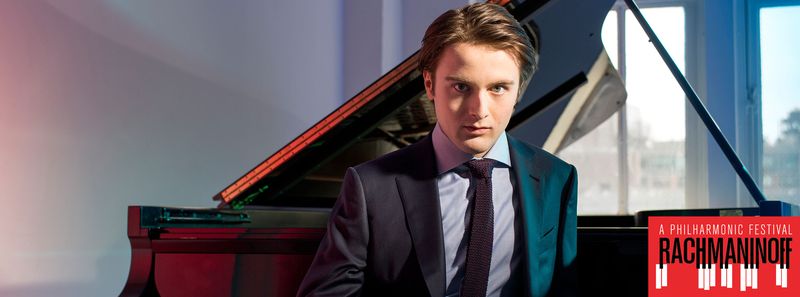
    Daniil-trifonov-4-rach-logo-w

    Saturday November 21st, 2015 – The New York Philharmonic‘s Rachmaninoff Festival continued tonight, bringing together pianist Daniil Trifonov (above) and conductor Neeme Järvi for the composer’s 4th piano concerto. The evening opened with Arkady Leytush’s orchestration of Rachmaninoff’s Russian Song, Op. 11, No. 3 and ended with Maestro Järvi and the orchestra on peak form for the Rachmaninoff 1st symphony. Incredibly, the symphony was having its NY Philharmonic premiere performances in this series of concerts.

    The Russian Song is a deep, soulful song; lasting all of five minutes, it was a beautifully-played prelude for the concerto which followed. The basic theme goes thru moody rhythmic and harmonic shifts, with the sound of chimes and hammered bells giving a liturgical feeling. Just as we are getting immersed in these sounds, the piece is over. 

    Daniil Trifonov scored another hit with the Philharmonic audience in this, his second program in the orchestra’s Rachmaninoff series. The piano concerto No. 4 took Rachmaninoff nearly two years to complete and the result was unusually long as concertos go. At its premiere in 1927 – with the composer at the keyboard and Leopold Stokowski conducting the Philadelphia Orchestra – the critics bashed the piece and the composer set about editing it; it has come down to us in a relatively compact form of 25 minutes duration.

    Mr. Trifonov filled these minutes with luxuriant playing. From its sweeping start thru the pensive opening of the ensuing Largo, the third movement’s vivid cadenza, and on to the uninterrupted and varied demands the composer makes on the pianist in the final Allegro Vivace, Trifonov displayed an ideal blend of lyricism and the virtuosity. Finishing in triumph, the pianist basked in a prolonged standing ovation, and responded to the audience’s cheers with a briskly delicate rendering of the ‘Silver’ Fairy’s variation from SLEEPING BEAUTY. A magical moment.

    N jarvi

    Neeme Järvi (above)

    For all the felicities of Trifonov’s playing, I have to say that the piano concerto #4 didn’t really seize my imagination as a musical experience; but the Symphony No.1 absolutely did.

    This symphony was composed in 1895, and its 1897 premiere, conducted by an allegedly drunk Alexander Glazunov, was nothing less than a disaster and sent Rachmaninoff into a deep depression. The work was withdrawn, the score – in a two-piano draft – languishing in the archives of the Glinka Museum in Moscow. It wasn’t until after the composer’s death that the orchestra parts were found in the archives of the Leningrad Conservatory. The symphony was reconstructed in full and given a ‘second premiere’ in Moscow in 1945, where it was at last accorded a warm welcome. It now recognized as a exemplar of the Rachmaninoff style.

    The only mystery is why it has taken so long for the Philharmonic to present it, for these performances mark the orchestra’s first of this work. It was an unalloyed pleasure to encounter this symphony live, and thanks to Maestro Järvi and the artists of this great orchestra, the performance was truly engrossing.

    A veritable treasure chest of melodic and rhythmic delights, the 1st symphony provides numerous opportunities for the principal players to ‘sing’: Anthony McGill (clarinet), Liang Wang (oboe), and Robert Langevin (flute) all outstandingly clear and true, and tonight’s concertmaster Michelle Kim in a lovely violin solo. A grand passage for massed horns and violins was especially gratifying for me, a one-time horn player.

    I gave up trying to take notes (*) midway thru the symphony: I simply wanted to take it all in and savor the live experience. I’ll search the symphony out on YouTube and delve into it more deeply next week, but I do want to mention the particular inventiveness of the concluding Allegro con fuoco which starts with military drum rolls and eventually develops into a true Rachmaninoff ‘big melody’. Liang Wang’s dulcet oboe sounds yet again, then some wonderful rhythmic patterns develop. Things build, and then – out of the blue – there’s a tremendous, walloping bang on the gong: the sound is allowed to evaporate into thin air as the other musicians sit silently. Then they take up a last melodic passage, building to a big finale.

    My hope is that this symphony will soon be programmed for additional Philharmonic performances…hopefully under Maestro Järvi’s baton.

    * (The main reason I stopped taking notes was the distraction of a cellphone ringing in our immediate vicinity; a minor annoyance during the concerto, it became a full-blown nuisance during the symphony.  The ushers came twice to attempt to isolate the source without disrupting the music, but the irritant continued. For a few moments I lost the thread of my concentration, and then I decided just to surrender to the music for the rest of the evening.)

  • Britten & Mozart @ The NY Phil

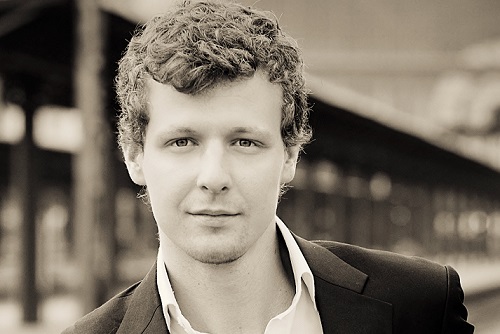
    Inon barnatan

    Above: pianist Inon Barnatan

    Friday October 30th, 2015 matinee – Still recovering from the flu that forced me to miss some scheduled events, I went to The Philharmonic this afternoon knowing I might not make it thru the entire program. But I was very keen to hear Britten’s Sinfonia da Requiema work that is rarely doneand to hear pianist Inon Barnatan – the Philharmonic’s artist-in-association this season – playing Mozart’s Piano Concerto No. 23. At intermission I would decide about staying on for the Beethoven 5th.

    Last season conductor Jaap van Zweden impressed in a pair of NY Philharmonic concerts that included a magnificent Shostakovich 8th. This afternoon’s performance resoundingly re-affirmed all the positive elements in the conductor’s realm of thought and expression. He is business-like and devoid of theatricality, favoring instead a deeply probing approach to the music. Yet this is not detached, by-the-book music-making, for his interpretations seem flooded with emotion.

    The Britten Sinfonia da Requiem was written in 1940 while the composer and his partner Peter Pears were living in Brooklyn. Having left England as a conscientious objector, Britten accepted a commission (from the Japanese, ironically) and set about creating a work – drawing on Latin texts from the Mass for the Dead – that would commemorate the deaths of his parents and also serve as a pacifist’s response to the horrors of war.

    The Sinfonia is a magnificent piece, and I wish it would be performed more often so that music-lovers could become better acquainted with it. The work calls for a huge orchestra, including massed phalanxes of violins, violas, cellos, and double basses as well as a large brass contingent and doubled winds, with alto sax, bass clarinet, two harps, and piano adding unexpected hues to the sonic palette. 

    For the opening Lacrymosa, an initial boom! gives way to brooding; the violas lament and there is an unsettling heartbeat motif. Rampant horns herald a series of ominous chords and doom-ladened drumstrokes. In the Dies Irae which follows, the flutes and horns stutter; the strings take up a brisk, galloping figuration. The heraldic trumpets and the magnificent horns ring forth, and the saxophone brings in an unusual colour. The music becomes almost zany before dwindling to nothing as the work evolves into the final Requiem Aeternum. Harp and winds intone a gentle hymn, taken up by the pensive horns. Bassoon and bass clarinet lead us to an uplifting violin theme, tinged with sadness. The music builds to a huge hymn-like passage and then suddenly reverts to softness: plucked strings over sustained clarinet tones that simply fade into thin air. 

    The performance was utterly mesmerizing: absolutely gorgeous playing from everyone and all crafted into a splendid whole by Maestro van Zweden. For a passing moment I wondered how it might have been had Britten used a chorus in his Sinfonia, but then I realized he was right in keeping the words unspoken and letting the instruments sing.

    The Hall’s wonderfully efficient stagehands then reconfigured the seating and rolled the Steinway into place. Watching and waiting, I felt the contentment of being connected to great music played by great musicians: a feeling that deepened in the ensuing Mozart. 

    For Mr. Barnatan is nothing less than a wizard of the keyboard, and in this performance of the Piano Concerto No. 23, allied with Maestro van Zweden and cushioned by the genial Philharmonic strings and winds, was indeed magical. The pianist’s control over a vast dynamic range and the sheer fluency of his technique made an excellent impression from the moment he began to play. Mr. Barnatan chose to play the cadenza as Mozart set it in the score; it’s rather brief – as cadenzas go – but very appealing.

    The pianist now drew us deeper and deeper into the music with the poetic delicacy of his playing of the Adagio. His solo passages were luminous, and there was lovely support from the wind soloists. A spellbinding sense of dolorous quietude was summoned forth, and a passage of very simple piano statements over plucked strings was most effective.

    Then Inon launched a barrage of coloratura to introduce the Allegro assai. Here his playing became ever more magical as he wove a spell of soft enchantment: the finesse of swirl after swirl of delicate notes played at high speed. Called back twice to warm applause, the pianist had clearly cast a spell over the Hall, and I cannot wait to hear him again…could we have the Schumann perhaps?? 

    By now there was no question of leaving – sore throat be damned! and I hadn’t coughed once – and so I was treated to a Beethoven 5th far more beneficial than any medicine. 

    The Beethoven symphonies don’t always send me, but the 5th truly did today, for Maestro van Zweden and the Philharmonic artists simply soared thru it, with a real sense of the music blooming. I gave up taking notes;  aside from the scrawl “…deep resonance of sound!!…” my program page is simply covered with names and exclamation point: “Liang Wang!”…”Langevin!”…”LeClair!”…”McGill”…”the trumpets!”…”Carter Brey!”…and “Philip Myers!!!” 

    As the plush and regal themes of the third movement sailed forth, I felt yet again the thrill of being connected to music on such an elemental and immediate level. A quote from Robert Schumann in the Playbill so well captured what I experienced today listening to the Beethoven (well, to the entire program, really!) today: “This symphony invariably wields its power over people of every age like those great phenomena of nature that fill us with fear and admiration at all times, no matter how frequently we may experience them.”  

    Jaap-van-Zweden-c-Marco-Borggreve-XL

    Above: Jaap van Zweden in a Marco Borrgreve portrait

    A final word about Jaap van Zweden: in the three concerts he’s conducted here that I have experienced, he has shown a mastery of a variety of musical styles and a real affinity for making the familiar seem fresh. After the Beethoven 5th today, the audience gave him an especially appreciative ovation, laced with bravos. Coming out for a second curtain call, the Maestro signaled for the players to stand, but they all shook their heads and left him with a solo bow…and then they joined in the applause, tapping their bows and stamping their feet. It was a lovely moment. In their search for a new Music Director, The Philharmonic may have found their man.   

  • Britten & Mozart @ The NY Phil

    Inon barnatan

    Above: pianist Inon Barnatan

    Friday October 30th, 2015 matinee – Still recovering from the flu that forced me to miss some scheduled events, I went to The Philharmonic this afternoon knowing I might not make it thru the entire program. But I was very keen to hear Britten’s Sinfonia da Requiema work that is rarely doneand to hear pianist Inon Barnatan – the Philharmonic’s artist-in-association this season – playing Mozart’s Piano Concerto No. 23. At intermission I would decide about staying on for the Beethoven 5th.

    Last season conductor Jaap van Zweden impressed in a pair of NY Philharmonic concerts that included a magnificent Shostakovich 8th. This afternoon’s performance resoundingly re-affirmed all the positive elements in the conductor’s realm of thought and expression. He is business-like and devoid of theatricality, favoring instead a deeply probing approach to the music. Yet this is not detached, by-the-book music-making, for his interpretations seem flooded with emotion.

    The Britten Sinfonia da Requiem was written in 1940 while the composer and his partner Peter Pears were living in Brooklyn. Having left England as a conscientious objector, Britten accepted a commission (from the Japanese, ironically) and set about creating a work – drawing on Latin texts from the Mass for the Dead – that would commemorate the deaths of his parents and also serve as a pacifist’s response to the horrors of war.

    The Sinfonia is a magnificent piece, and I wish it would be performed more often so that music-lovers could become better acquainted with it. The work calls for a huge orchestra, including massed phalanxes of violins, violas, cellos, and double basses as well as a large brass contingent and doubled winds, with alto sax, bass clarinet, two harps, and piano adding unexpected hues to the sonic palette. 

    For the opening Lacrymosa, an initial boom! gives way to brooding; the violas lament and there is an unsettling heartbeat motif. Rampant horns herald a series of ominous chords and doom-ladened drumstrokes. In the Dies Irae which follows, the flutes and horns stutter; the strings take up a brisk, galloping figuration. The heraldic trumpets and the magnificent horns ring forth, and the saxophone brings in an unusual colour. The music becomes almost zany before dwindling to nothing as the work evolves into the final Requiem Aeternum. Harp and winds intone a gentle hymn, taken up by the pensive horns. Bassoon and bass clarinet lead us to an uplifting violin theme, tinged with sadness. The music builds to a huge hymn-like passage and then suddenly reverts to softness: plucked strings over sustained clarinet tones that simply fade into thin air. 

    The performance was utterly mesmerizing: absolutely gorgeous playing from everyone and all crafted into a splendid whole by Maestro van Zweden. For a passing moment I wondered how it might have been had Britten used a chorus in his Sinfonia, but then I realized he was right in keeping the words unspoken and letting the instruments sing.

    The Hall’s wonderfully efficient stagehands then reconfigured the seating and rolled the Steinway into place. Watching and waiting, I felt the contentment of being connected to great music played by great musicians: a feeling that deepened in the ensuing Mozart. 

    For Mr. Barnatan is nothing less than a wizard of the keyboard, and in this performance of the Piano Concerto No. 23, allied with Maestro van Zweden and cushioned by the genial Philharmonic strings and winds, was indeed magical. The pianist’s control over a vast dynamic range and the sheer fluency of his technique made an excellent impression from the moment he began to play. Mr. Barnatan chose to play the cadenza as Mozart set it in the score; it’s rather brief – as cadenzas go – but very appealing.

    The pianist now drew us deeper and deeper into the music with the poetic delicacy of his playing of the Adagio. His solo passages were luminous, and there was lovely support from the wind soloists. A spellbinding sense of dolorous quietude was summoned forth, and a passage of very simple piano statements over plucked strings was most effective.

    Then Inon launched a barrage of coloratura to introduce the Allegro assai. Here his playing became ever more magical as he wove a spell of soft enchantment: the finesse of swirl after swirl of delicate notes played at high speed. Called back twice to warm applause, the pianist had clearly cast a spell over the Hall, and I cannot wait to hear him again…could we have the Schumann perhaps?? 

    By now there was no question of leaving – sore throat be damned! and I hadn’t coughed once – and so I was treated to a Beethoven 5th far more beneficial than any medicine. 

    The Beethoven symphonies don’t always send me, but the 5th truly did today, for Maestro van Zweden and the Philharmonic artists simply soared thru it, with a real sense of the music blooming. I gave up taking notes;  aside from the scrawl “…deep resonance of sound!!…” my program page is simply covered with names and exclamation point: “Liang Wang!”…”Langevin!”…”LeClair!”…”McGill”…”the trumpets!”…”Carter Brey!”…and “Philip Myers!!!” 

    As the plush and regal themes of the third movement sailed forth, I felt yet again the thrill of being connected to music on such an elemental and immediate level. A quote from Robert Schumann in the Playbill so well captured what I experienced today listening to the Beethoven (well, to the entire program, really!) today: “This symphony invariably wields its power over people of every age like those great phenomena of nature that fill us with fear and admiration at all times, no matter how frequently we may experience them.”  

    Jaap-van-Zweden-c-Marco-Borggreve-XL

    Above: Jaap van Zweden in a Marco Borrgreve portrait

    A final word about Jaap van Zweden: in the three concerts he’s conducted here that I have experienced, he has shown a mastery of a variety of musical styles and a real affinity for making the familiar seem fresh. After the Beethoven 5th today, the audience gave him an especially appreciative ovation, laced with bravos. Coming out for a second curtain call, the Maestro signaled for the players to stand, but they all shook their heads and left him with a solo bow…and then they joined in the applause, tapping their bows and stamping their feet. It was a lovely moment. In their search for a new Music Director, The Philharmonic may have found their man.   

  • Prevailing Winds @ Chamber Music Society

    Romie

    Above: clarinetist Romie de Guise-Langlois 

    Sunday October 25th, 2015 – Kudos, yet again, to the folks at Chamber Music Society of Lincoln Center for putting together this imaginative program for which some of the outstanding wind players of the day gathered together to form a first-rate ensemble. The genial pianist Jean-Efflam Bavouzet brought his own magic to three of the four works presented.

    During the week leading up to this concert, some wonderful news came from the Society – I am sharing this directly from their press release: “Chamber Music Society of Lincoln Center has announced a $4 million unrestricted gift, the largest in its history, from long-time patron and devoted chamber music lover Jane Kitselman, who passed away on March 18, 2015, at the age of 87.  The formal announcement was made at a reception following the October 20th Chamber Music Society concert at Alice Tully Hall, which was performed in her memory.  Ms. Kitselman, a cellist, was especially fond of string quartet literature, and CMS is dedicating its forthcoming performances of the Beethoven String Quartet Cycle to her.  In addition, there will be an annual concert dedicated to Jane Kitselman, to be performed in perpetuity.”

    I couldn’t help but feel that this news, which people around us were discussing prior to the start of this evening’s concert, set the atmosphere in Tully Hall at an even higher degree of anticipation that usual.

    Ligeti’s Six Bagatelles, as performed this evening, are transcriptions by the composer from twelve piano bagatelles; these pieces are very short, lasting two to three minutes each. In the first bagatelle, Allegro con spirito, a playful, percolating rhythm charmingly peters out. The second bagatelle commences with a sad chorale which evolves with a variety textures and harmonies and ends on an ironic “beep”. In the third, Allegro grazioso, the flute sings over bubbling clarinet and bassoon and there’s a gorgeous horn passage. Bagatelle number four is an exuberant Presto ruvidi, vividly dance-like. The following Adagio, dedicated to the memory of Bela Bartok, begins as a somber dirge but is then enlivened when the flute speaks up; a repeated two note theme underlines an exchange of trills between flute and clarinet, and the piece ends on a benedictive chord. The last bagatelle, marked Allegro vivace, has a quirky start and then pulses along as the horn goes high and the piccolo pipes up. Things turn rather frenetic but in the end, a muted horn solo provides an unexpected finish. In these six Ligeti gems, we have met our five wind soloists and they have displayed their outstanding gifts of technique and artistry; they were called back for a bow.

    The least-known composer on the program today was surely Albéric Magnard; his life story ended tragically in 1914 when he stood his ground against the invading Germans and perished when they set fire to his house in Baron, France.

    In a program note, pianist Jean-Efflam Bavouzet spoke lovingly of the evening’s Magnard work: “I hope you will leave the concert with lasting memories of having discovered the captivating music of a hitherto lesser-known composer.” My hope, having heard this revelatory quintet, is that the Society will pursue and present other works from the Magnard catalog, which is sadly limited – by his tragic death – to only thirty compositions.

    Bavouzet

    Above: Jean-Efflam Bavouzet

    Knowing nought of Magnard’s music, I was thoroughly captivated this evening by his D-minor quintet for which the terrific pianist Jean-Efflam Bavouzet joined Mlles. O’Connor and de Guise-Langlois, Stephen Taylor, and Peter Kolkay. The music is intrinsically “French”, loaded with marvelous melodies, and Mr. Bavouzet proved the ideal maître of the keyboard to lead us on this magical journey.

    After an opening piano solo, the wind instruments trade themes over a rippling keyboard motif. Individual voices tantalize, such as in a plaintive passage for Mr. Taylor’s oboe and some delicious trills from Ms. O’Connor’s flute. An unexpected fugue is an intriguing highlight.

    In the ensuing slow movement, marked Tendre, Romie de Guise-Langlois stole my heart yet again with her deeply expressive playing of a poignant melody entwined in M. Bavouzet’s poetic piano sounds. This theme becomes passionate and then pensive; I found myself with tears running down my face from the sheer beauty of Romie’s playing. M. Bavouzet draws us on, though, with a solo passage which continues to ripple under a serene chorale from the winds. 

    Ms. O’Connor’s flute takes on a waltz-like air as she opens the third movement in tandem with M. Bavouzet; the pianist has another vivacious solo before the wind voices enter, evoking Springtime cheer. Mr. Taylor’s oboe seized upon an oddly Mid-Eastern-sounding theme, playing with great control. 

    By now I was thoroughly engrossed in this Magnard work, only to discover fresh vistas in the final movement, charmingly marked Joyeux. A jaunty oboe solo leads off, the other voices passing the idea around. Peter Kolkay’s amiable sustaining of single tones had an ironic quality, and Ms. O’Connor’s flute wafts over us. A mini-fugue is a fleeting delight, and a two-note theme somehow develops into a march. In a mellowing out, Mr. Kolkay’s bassoon glows in a superb passage with M. Bavouzet. The pianist then takes a dynamic lead thru a few small detours before all join in a final tutti melody. 

    Have I rambled on too long, sometimes shifting from past to present tense? It’s because, in remembering, I am still there. Does that make any sense? 

    Following the interval, the only work on the program somewhat familiar to me: the Rimsky-Korsakov B-flat major quintet. This piece was composed in 1876 for a chamber music competition held by the Russian Music Society, but its premiere was spoilt by some indifferent playing. Fortunately, the piece survived this fiasco, for it is – like the Magnard – a thorough delight.

    Following a speedy start, the bassoon draws us in. All the wind voices have their say, including a lovely dialogue between flute and bassoon. There’s a rush to the finish, and then the astoundingly plush sound of Radovan Vlatković’s horn intones a serene theme over M. Bavouzet’s piano.

    (I must pause here to say, as a frustrated high-school horn player, that Mr. Vlatković’s tone quality has the ideal Autumnal richness that always eluded me; his gorgeous playing here – all evening, in fact – made me envious. I even scrawled “I am jealous!” next to his name in my playbill.)

    But – moving on with the Rimsky-Korsakov – clarinet and flute trade dreamy phrases before the piano introduces a new theme, echoed by the ensemble. And then Mr.Vlatković chimed in again – spectacular sound – before the bassoon and clarinet meshed voices leading to a mellow end.

    The final Rondo: allegretto starts with a joy-filled skipping rhythm; there is bassoon irony as the voices swirl about before returning to the theme. Romie de Guise-Langlois brought forth a redolent, deeply ‘Russian’ theme which was passed to the horn. A sparkling flute cadenza and another clarinet passage carry the players to a final sprint. 

    Poulenc’s Sextet for Piano and Winds is a different kind of treasure: including elements of jazz, ragtime, pop songs of the interbellum era, high wit, and gentle sarcasm, there are also stretches of pure lyricism (a bassoon theme, for one) along the way. The players had a grand time of it, and the final Prestissimo felt like a transfusion, an antidote to the world-weariness that’s been creeping up on me of late. Great music, played as it was tonight, does one a world of good.  

    The Repertory:

    The Participating Artists: