Category: Music

  • Verdi REQUIEM at St John the Divine

    164572_1653439729885_6792945_n

    Thursday March 26th, 2015 – Oratorio Society of New York presenting the Verdi REQUIEM at the Cathedral of St John the Divine. This was my second experience of this magnificent work in a sacred setting: many years ago I attended a performance of it in the Chapel at Trinity College, Hartford CT. On that evening, an organ and a small ensemble of instrumentalists played in lieu of a full orchestra, but the work still made a vivid impression. Tonight we had the admirable young musicians of the Manhattan School of Music Orchestra (and their symphonic chorus) joining the Oratorio Society for a full-force rendering of Verdi’s ‘sacred opera’.

    A huge audience – an overflow crowd, actually – filled the cathedral and (except for one cellphone beeping at a particularly inopportune moment) they listened in reverential silence. It was overall a very fine performance of the REQUIEM but sonically it was problematic in that the reverberant echoing throughout the huge space often turned the music into a blur. Much of the music’s definition was lost, and much detail from the inner orchestral voices vanished in the clouds of echo. There was the illusion of notes being played twice, and the music sometimes seemed to be fighting itself.

    Kent Tritle conducted, and a strong quartet of soloists took part:

    Jennifer Check, soprano
    Sara Murphy, mezzo-soprano
    Alex Richardson, tenor
    Matthew Boehler, bass

    These four singers often seemed to me to be swamped by the sound of the orchestra and chorus flowing over them in both directions. How they managed to pick up their cues, I will never know. Nevertheless, there were many savorable vocal passages. Mr. Boehler, who made a fine impression recently in IOLANTA at The Met, projected the text with vivid dynamic detail, and Mr. Richardson sang musically and with passion.

    Sara Murphy, whose opulent mezzo made a marvelous impact when she sang Ligeti and Schnittke with the American Symphony Orchestra earlier this season, was very impressive tonight both for beauty of tone and clarity of projection. So much music I want to hear her sing! 

    11111962_913591532037896_5248156677226624389_n

    Jennifer Check (above, photo by Brian Hatton), who stepped in to the soprano part rather late in the day, sounded lovely. Her voice has power but also a silvery lyrical quality, and in the Offertorio she produced a spine-tingling sustained piano E-natural (which modulates magically to an E-flat…one of the most felicitous moments in this glorious work). For the great final ‘aria’, Requiem aeternam, Ms. Check closed her score and gave an intense, very personal performance of this prayerful solo; using her right hand in gently expressive gestures, she seemed to send forth a benediction of peace and tranquility.

  • Score Desk for DONNA DEL LAGO

    Loch_Katrine

    Above: Loch Katrine, Scotland – the setting of LA DONNA DEL LAGO

    Saturday February 28th, 2015 matinee – This performance of Rossini’s LA DONNA DEL LAGO was a late addition to my opera plans for the season. The Rossini repertory no longer interests me much, but I thought it might be good to experience one of his operas again in-house, and I’ve always liked Juan Diego Florez, so…why not?

    Back in 1982, I heard Rossini’s LA DONNA DEL LAGO in a concert performance at Carnegie Hall; the principal roles were taken by Frederica von Stade, Marilyn Horne, Rockwell Blake, and Dano Raffanti. It was quite a night. Then in 2007, the New York City Opera staged it with a cast that included fine performances by mezzo-soprano Laura Vlasak Nolen, and tenors Barry Banks and Robert McPherson.

    After taking some cuts in the prelude, conductor Michele Mariotti rushed the opening chorus with some resulting disunity. Someone tried to start entrance applause for Joyce DiDonato, but it didn’t catch on; it might have been the same person who tried to get some applause going after her opening aria, but he ended up with three solo hand-claps.

    It seemed to me today that Elena (the opera’s eponymous heroine and triple love-interest) suits Ms. DiDonato much better than Donizetti’s Maria Stuarda did. She did some genuinely lovely singing – with persuasive coloratura – along the way; a slight flutter in her timbre at low-to-mid volume sometimes intrudes on complete enjoyment of her singing. But overall this is a fine role for her. 

    Juan Diego Florez sang with his usual fluency and expressiveness, tossing off added high notes and blending beautifully with Ms. DiDonato. Fleeting traces of sharpness in the tenor’s singing didn’t detract from the overall handsomeness of his vocalism, I should have stayed to hear the luminous aria “O fiamma soave” in Act II, but I didn’t.

    I can recall the favorable impression Daniela Barcellona made singing Maddalena in RIGOLETTO at a special all-Verdi concert performance which The Met offered on September 22, 2001, as a benefit for the families of 9/11 first responders. She subsequently sang Bellini’s Adalgisa twice at The Met (also in 2001), and has since had an extensive career in Europe. Her return to The Met as Rossini’s Malcolm Groeme was a main factor in my decision to go to today’s matinee, but alas her voice now shows a widening vibrato – and a quick look at her bio shows the telltale reasons: Amneris and Santuzza are not roles one would think of for her type of voice, and once ventured it is not easy to switch back to bel canto. She had some beautiful low notes today, and managed the coloratura quite well. But sustained notes revealed an unsteady quality.

    John Osborn (Rodrigo di Dhu) pricked up our ears and perked up the performance with his powerful forays to the top register and the overall conviction of his singing. It is not the most ingratiating tenor sound you will hear, but he knows what to do with it in this demanding music, Oren Gradus, though not a bel canto specialist, did what he could with the role of Duglas D’Angus.

    Musically, the opera moves in fits and starts. A ravishing melody or brilliant passages of fiorature will be followed by rum-ti-tum filler. Rossini’s idea of introducing a solo harp into the Act I finale stirs our interest, but the vocal melody that follows in pedestrian. This is followed by a jog-trot stretta to end the act.

    It it hadn’t been for the looming Gelb intermission, I would most likely have stayed on to hear that Florez cavatina in Act II. The house was reasonably full and very attentive, but I did notice several fellow-defectors after the first act.

    Metropolitan Opera House
    February 28, 2015 Matinee

    LA DONNA DEL LAGO
    Gioachino Rossini

    Elena...................Joyce DiDonato
    Giacomo V/Uberto........Juan Diego Flórez
    Malcolm Groeme..........Daniela Barcellona
    Rodrigo Di Dhu..........John Osborn
    Duglas..................Oren Gradus
    Albina..................Olga Makarina
    Serano..................Eduardo Valdes
    Bertram.................Gregory Schmidt

    Conductor...............Michele Mariotti
  • ASO: Max von Schillings’ MONA LISA

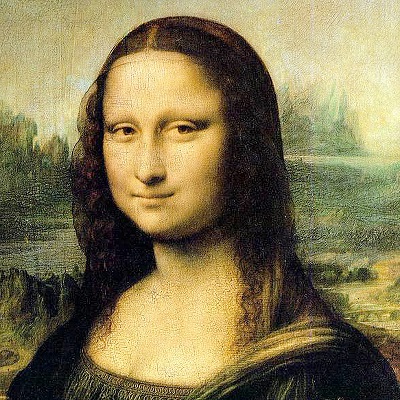
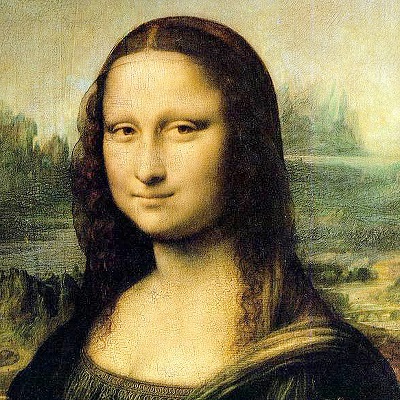
    Mona_Lisa

    Friday February 20th, 2015 – An opportunity to hear a forgotten opera, Max von Schillings’ MONA LISA, came about thanks to conductor Leon Botstein and the American Symphony Orchestra. Bringing us operatic rarities is one of Maestro Botstein’s specialties, and tonight MONA LISA proved a wonderful discovery.

    The opera was vastly popular in its day; in the fifteen years following its 1915 premiere, it was performed more than 1,200 times, including in St. Petersburg and at New York’s Metropolitan Opera. The composer’s embrace of Nazism has since cast him as an unsavory individual and, upon his death in 1933, he and his music were essentially forgotten.

    von Schillings was considered a neo-Wagnerian, but in MONA LISA we experience a link with Italian verismo; both in its Renaissance setting and its musical style, I was most often put in mind of Zandonai’s FRANCESCA DA RIMINI. The influence of Strauss and Zemlinsky may also be felt. von Schillings successfully blends a variety of stylistic elements into music that evokes the Age of da Vinci from a Germanic viewpoint. 

    The story is a Mona Lisa fantasy and revolves around her jealous husband, Francesco del Giocondo, and her former lover, Giovanni de Salviati who arrives at the del Giocondo palazzo on an errand from the pope: to purchase a rare pearl. Mona Lisa and Giovanni had once been lovers, and the flame is re-kindled.

    The pearl is kept in a small, air-tight chamber. After arranging the purchase, Giovanni covertly persuades Mona Lisa that they should run away together when he comes to collect the pearl. Her husband notices the mysterious smile on his wife’s face – a smile she has never shone on him in their years of marriage –  and suspects Giovanni as a rival. To avoid being caught, Giovanni hides in the pearl-chamber, which Francesco then locks. Mona Lisa knows that Giovanni will suffocate, but she keeps her cool and the next morning she tells her husband says she will wear the pearl. When Francesco enters the chamber to fetch the jewel for her, she slams the door shut behind him and locks it.

    The opera is set during carnival season which gives rise to some passages of courtly entertainment. And, subtly, the libretto refers to Madama Borgia as being Mona Lisa’s friend. Thus the notion of dispatching an unwanted husband would come naturally to Mona Lisa.

    The score abounds with melody and the opera is impressively orchestrated, bringing in harp, celeste, mandolin and organ…even castanets are heard at one point. The ASO‘s concertmaster Erica Kiesewetter seized several opportunities to bring forth beautiful solo violin passages.

    The opera was well-cast with singers intent on characterizing their music. In the title-role, soprano Petra Maria Schnitzer, despite a less-than-comfortable upper register, blended lyricism with passionate declamation. As Francesco, the charismatic Michael Anthony McGee, delighted in the vocal art of insinuation, his genial vocal veneer covering a soul of brooding jealousy and duplicity. In a performance of intense power and commitment, tenor Paul McNamara scored a great success as he met the Wagnerian demands of the role of Giovanni; his vocalism made a strong impact in the Hall.

    A quintet of courtiers, led by tenor Robert Chafin as Arrigo Oldofredi, provided ongoing commentary in Act I, with bursts of song woven into the tapestry. John Easterlin, Justin Hopkins, Christopher Burchett, and Michael Scarcelle kept their scenes lively with characterful singing and good dramatic interaction. An appealing trio of young women gave a vocal counter-balance to the men’s ensemble: Lucy Fitz Gibbon and Katherine Maysek sang attractively, and Ilana Davidson had a lovely vocal vignette, portraying Venus in a carnival pageant. The Bard Festival Chorale had rather less to do than one might have wished, but they did it well indeed.

    THE CAST

    Foreigner/Francesco del Giocondo: Michael Anthony McGee, bass-baritone
    Woman/Mona Fiordalisa: Petra Maria Schnitzer, soprano
    Lay Brother/Giovanni de Salviati: Paul McNamara, tenor
    Pietro Tumoni: Justin Hopkins, bass-baritone
    Arrigo Oldofredi: Robert Chafin, tenor
    Alessio Beneventi: John Easterlin, tenor
    Sandro da Luzzano: Christopher Burchett, baritone
    Masolino Pedruzzi: Michael Scarcelle, bass-baritone
    Mona Ginevra: Ilana Davidson, soprano
    Dianora: Lucy Fitz Gibbon, soprano
    Piccarda: Katherine Maysek, mezzo-soprano

    Bard Festival Chorale (James Bagwell, director)

    Conductor: Leon Botstein

  • ASO: Max von Schillings’ MONA LISA

    Mona_Lisa

    Friday February 20th, 2015 – An opportunity to hear a forgotten opera, Max von Schillings’ MONA LISA, came about thanks to conductor Leon Botstein and the American Symphony Orchestra. Bringing us operatic rarities is one of Maestro Botstein’s specialties, and tonight MONA LISA proved a wonderful discovery.

    The opera was vastly popular in its day; in the fifteen years following its 1915 premiere, it was performed more than 1,200 times, including in St. Petersburg and at New York’s Metropolitan Opera. The composer’s embrace of Nazism has since cast him as an unsavory individual and, upon his death in 1933, he and his music were essentially forgotten.

    von Schillings was considered a neo-Wagnerian, but in MONA LISA we experience a link with Italian verismo; both in its Renaissance setting and its musical style, I was most often put in mind of Zandonai’s FRANCESCA DA RIMINI. The influence of Strauss and Zemlinsky may also be felt. von Schillings successfully blends a variety of stylistic elements into music that evokes the Age of da Vinci from a Germanic viewpoint. 

    The story is a Mona Lisa fantasy and revolves around her jealous husband, Francesco del Giocondo, and her former lover, Giovanni de Salviati who arrives at the del Giocondo palazzo on an errand from the pope: to purchase a rare pearl. Mona Lisa and Giovanni had once been lovers, and the flame is re-kindled.

    The pearl is kept in a small, air-tight chamber. After arranging the purchase, Giovanni covertly persuades Mona Lisa that they should run away together when he comes to collect the pearl. Her husband notices the mysterious smile on his wife’s face – a smile she has never shone on him in their years of marriage –  and suspects Giovanni as a rival. To avoid being caught, Giovanni hides in the pearl-chamber, which Francesco then locks. Mona Lisa knows that Giovanni will suffocate, but she keeps her cool and the next morning she tells her husband says she will wear the pearl. When Francesco enters the chamber to fetch the jewel for her, she slams the door shut behind him and locks it.

    The opera is set during carnival season which gives rise to some passages of courtly entertainment. And, subtly, the libretto refers to Madama Borgia as being Mona Lisa’s friend. Thus the notion of dispatching an unwanted husband would come naturally to Mona Lisa.

    The score abounds with melody and the opera is impressively orchestrated, bringing in harp, celeste, mandolin and organ…even castanets are heard at one point. The ASO‘s concertmaster Erica Kiesewetter seized several opportunities to bring forth beautiful solo violin passages.

    The opera was well-cast with singers intent on characterizing their music. In the title-role, soprano Petra Maria Schnitzer, despite a less-than-comfortable upper register, blended lyricism with passionate declamation. As Francesco, the charismatic Michael Anthony McGee, delighted in the vocal art of insinuation, his genial vocal veneer covering a soul of brooding jealousy and duplicity. In a performance of intense power and commitment, tenor Paul McNamara scored a great success as he met the Wagnerian demands of the role of Giovanni; his vocalism made a strong impact in the Hall.

    A quintet of courtiers, led by tenor Robert Chafin as Arrigo Oldofredi, provided ongoing commentary in Act I, with bursts of song woven into the tapestry. John Easterlin, Justin Hopkins, Christopher Burchett, and Michael Scarcelle kept their scenes lively with characterful singing and good dramatic interaction. An appealing trio of young women gave a vocal counter-balance to the men’s ensemble: Lucy Fitz Gibbon and Katherine Maysek sang attractively, and Ilana Davidson had a lovely vocal vignette, portraying Venus in a carnival pageant. The Bard Festival Chorale had rather less to do than one might have wished, but they did it well indeed.

    THE CAST

    Foreigner/Francesco del Giocondo: Michael Anthony McGee, bass-baritone
    Woman/Mona Fiordalisa: Petra Maria Schnitzer, soprano
    Lay Brother/Giovanni de Salviati: Paul McNamara, tenor
    Pietro Tumoni: Justin Hopkins, bass-baritone
    Arrigo Oldofredi: Robert Chafin, tenor
    Alessio Beneventi: John Easterlin, tenor
    Sandro da Luzzano: Christopher Burchett, baritone
    Masolino Pedruzzi: Michael Scarcelle, bass-baritone
    Mona Ginevra: Ilana Davidson, soprano
    Dianora: Lucy Fitz Gibbon, soprano
    Piccarda: Katherine Maysek, mezzo-soprano

    Bard Festival Chorale (James Bagwell, director)

    Conductor: Leon Botstein

  • Vengerov/Long Yu @ The NY Philharmonic

    Vengerov-5

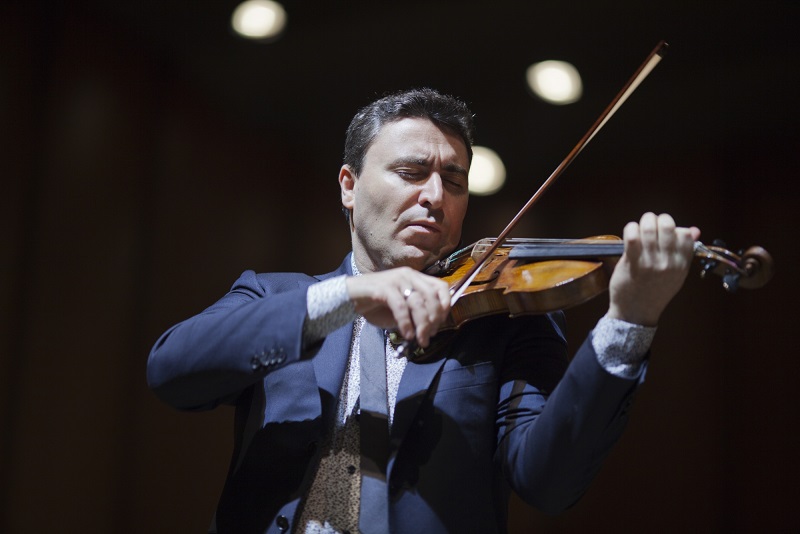
    Above: violinist Maxim Vengerov

    Friday January 23rd, 2015 – A “Russian Night” at The New York Philharmomic, with Maxim Vengerov as soloist for the Tchaikovsky violin concerto, followed by the Shostakovich 5th symphony. Long Yu was on the podium for what proved to be one of the outstanding concerts in an already-outstanding NY Phil season.

    The Tchaikovsky violin concerto makes extreme demands on the soloist. Tchaikovsky wrote it for (and originally dedicated it to) Leopold Auer, who declared it unplayable; though eventually Auer mastered it, the premiere went to Adolf Brodsky. Since then, it has become a repertory staple, in part because players want to show their mastery of it and in part because it is such a melodically entrancing piece.

    Of the concerto’s 1881 premiere in Vienna, the critic Eduard Hanslick wrote that “…the violin was not played but beaten black and blue”. Mr. Vengerov’s playing was not violent, but in the intense passages where the notes fly off the strings at the speed of light one could imagine how the piece must have both astounded and baffled both musicians and audiences as the concerto began making its way into the international repertoire.

    Vengerov, in the violin’s first statements, showed an Old World warmth of timbre and a seductive sense of legato, while the orchestra brought a rich density of sound to their familar themes. As the technical fireworks loom up, the violinist dazzled with his accuracy and speed; in the cadenza there were a couple of wiry notes at the top of the register but these were swept aside by a masterful, uncannily sustained trill. Sailing forward, Vengerov continued to move us with his poignant expressiveness in the lyrical passages whilst evoking our smiling admiration for his brilliant dexterity in the blazes of fiorature.  As he finished in a blaze of glory, the audience erupted in shouts of rejoicing and a full standing ovation ensued. After bowing repeatedly, Vengerov gave us an encore: a Bach adagio that showed his heartfelt artistry to perfection.

    Longyu

    Following the interval, Long Yu (above) led a grand and deeply satisfying of the Shostakovich 5th. This symphony marked the composer’s efforts to mollify the Soviet government following Joseph Stalin’s scathing denunciation his opera Lady Macbeth of Mtsensk District in 1936. Overnight Shostakovich had  become a persona non grata. He knew that his next symphony, the 5th, would be crucial if he was to continue his career. Although the 5th did indeed win a resounding success and salvage his reputation with the Soviet, he continued to fall in and out of favor with the government for years to come.

    This is a symphony overflowing with marvelous thematic material. Conductor Long Yu painted a magificent sound canvas, drawing all the rich and varied voices of this incredible orchestra into a cohesive and beautifully-shaped whole. Shostakovich’s orchestration is highly imaginative and constantly allures the ear with such vivid interjections as piano, harps, and xylophone. As the vast array of string players sail thru some really marvelous passages, whether plucked (in the witty Scherzo) or richly bowed, the composer provides the horns and trumpets with triumphal opportunities – resoundingly seized tonight – and there are splendid gems for solo winds: flute (Robert Langevin), clarinet (Anthony McGill), Liang Wang (oboe) and Kim Laskowski (bassoon). The outstanding playing of our acting concertmaster Sheryl Staples was rightly recognized by Long Yu as he presented her in a solo bow, greeted with ‘bravas‘ from the crowd. Everyone in the hall had swept to their feet after the final chord echoed, hailing the orchestra, the conductor, and the resounding genius of Shostakovich.

    A splendid night of music-making then, with the promise of much more to come in this Philharmonic season.

  • New York String Orchestra @ Carnegie Hall

    Augustin-hadelich-1

    Above: violinist Augustin Hadelich

    Sunday December 28th, 2014 matinee – An matinee concert by the New York String Orchestra at Carnegie Hall brought us the scores of two favorite ballets: Tchaikovsky’s Serenade for Strings (the setting of Balanchine’s beloved classic) and the Barber violin concerto (one of Peter Martins’ finest creations). In addition, Beethoven’s Pastoral symphony (#6) rounded out the afternoon.

    A huge crowd filled the venerable hall, perhaps drawn as much by attractive ticket pricing as by the inviting programming. Although betraying a lack of sophistication by applauding between movements – and even during one movement of the Serenade – they were on the whole very attentive and appreciative, and there were lots of young people present, a hopeful sign that live classical music still has the power to inspire in an age of I-phones and ‘clouds’. We could have done without the baby, though.

    Jaime Laredo took the podium, mustering a lush and soul-lifting sound from his young musicians in the Tchaikovsky. I sometimes wonder if people who’ve never seen Balanchine’s ballet get the same spine-tingling raptures on hearing this score played in a concert hall. For ballet-goers, this is music indelibly linked to movement: to toe shoes and ice-blue tulle; so much so that, even though we know full well the order of the last two movements will be reversed, it’s still a bit of a jolt when it happens. The musicians (so many Asian players – always a treat!) simply reveled in the rich textures and broad melodies with which the composer both seduces and inspires us. It was a – indeed, an inspiring – performance, loaded with sonic ravishments.

    Augustin Hadelich then appeared, slender and dapper, and together with Maestro Laredo and the orchestra (enhanced by winds, piano, and timpani) gave a marvelous reading of the Barber concerto. Mr. Hadelich has an extraordinary gift for lyricism, his tone remaining blessedly sweet in the highest register whilst meanwhile showing an almost viola-like resonance in the lower range. Sweeping thru the poignant themes that the composer has lavished on the work, the violinist seemed to be reaching the hearts of the listeners; and in the insanely swift and dancing coloratura of the final presto, he was indeed impressive. 

    Barber gives shining moments to some of the orchestral voices as well, most notably the oboe solo heard early in the second movement, played lovingly today by Emily Beare. Horn, flutes, clarinet and bassoon each have their say, and I love the way the piano is woven into the tapestry, Amalia Rinehart making a fine impression at the keyboard. I also greatly enjoyed the female timpanist, Yibing Wang.

    Mr. Hadelich was rightly given a warm ovation and he very much deserved the Paganini encore which was granted, though I think I would have preferred to carry my deep enjoyment of the Barber right into the interval.

    Beethoven’s Pastoral is a very nice symphony: the music is overwhelmingly lovely and cordial, and even the momentary storm (which passes as swiftly as Rossini’s witty thunderbolts in Barbiere di Siviglia) can’t detract from the sheer serenity of the music. Well-played by the young musicians, I found the symphony too lulling and too long to sustain interest over its 40-minute duration. But the first half of the concert was entirely satsfying.

  • Janis Martin Has Passed Away

    6a00d8341c4e3853ef01bb079c2285970d

    Above: Claudio Abbado and soprano Janis Martin prior to a performance of Schoenberg’s ERWARTUNG at La Scala, 1980

    Following yesterday’s news of the death of Irene Dalis, more sad tidings in the opera world today with the passing of Janis Martin, the American mezzo-turned-soprano, a singer who loomed large in my opera-going career. A Met Auditions winner in 1962 (she sang Dalila’s “Mon coeur s’ouvre a ta voix” at the Winners’ Concert), Martin sang nearly 150 performances at the Metropolitan Opera, commencing in 1962 as Flora Bervoix in TRAVIATA. As a young opera-lover, I heard her many times on the Texaco broadcasts. She eventually progressed to “medium-sized” roles: Siebel, Nicklausse, Lola in CAVALLERIA RUSTICANA. Martin left The Met in 1965 and built a career abroad, moving into soprano territory. She returned to The Met and from 1974 thru 1977; during these seasons, she was my first in-house Kundry, Marie in WOZZECK, and Sieglinde. Another hiatus, and then she was back at Lincoln Center from 1988-1992, singing the Witch in HANSEL & GRETEL, the Dyer’s Wife in FRAU OHNE SCHATTEN, Senta, the Foreign Princess in RUSALKA, and two performances of TOSCA.

    In the past couple of months, I’ve taken a renewed interest in Janis Martin’s singing, after first hearing her as Gutrune in a recording of a tremendous GOTTERDAMMERUNG from Bayreuth 1975. This prompted me to pursue her further, acquiring her Senta in a 1972 Vienna HOLLANDER. Waiting in my pile of “to-listen-to” CDs is her WALKURE Fricka, from Bayreuth 1968. I also searched out my old cassettes of her Met broadcast as the Dyer’s Wife (she sings tirelessly, and with great vocal thrust and considerable beauty of tone) and I purchased her commercial recording of ERWARTUNG with Pierre Boulez conducting, which is very impressive.

    Janis Martin sings two songs from Hindemith’s Drei Gesänge op.9 here. The songs are “Meine Nächte sind heiser zerschrien” (text by Ernst Wilhelm Lotz), and “Weltende” (text by Else Lasker-Schüler).

  • LADY MACBETH OF MTSENSK @ The Met

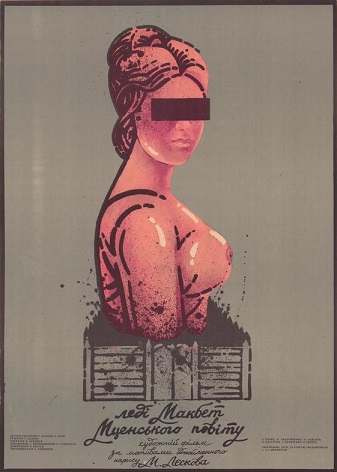
    Lady-macbeth-of-mtsensk-district-movie-poster-1989-1020340180

    Saturday November 29th, 2014 matinee –  My friend Dmitry and I both really like Shostakovich’s LADY MACBETH OF MTSENSK; I remember being bowled over by Catherine Malfitano’s portrayal of Katerina Ismailova back in 2000. The chance to see this season’s revival caused us to weigh the pros and cons: basically we were not sure of what to expect from Eva-Maria Westbroek – who plays Katerina this season – having not been especially thrilled with what we’d seen her do to date: a solid but un-illuminating Sieglinde and a seriously miscast Francesca da Rimini. But in the end Shostakovich won out, and we were rewarded with one of the greatest Met experiences in the past decade.

    As Katerina this afternoon, Ms. Westbroek sounded rather wobbly and edgy at first, but as the performance progressed the voice became steadier (though never truly steady) and her control of it was increasingly impressive. It’s a generous voice, and in addition to some rich spinto outpourings she was able to hone the voice down to a whisper at times. As an actress, she surely threw herself unsparingly into the role, winning a roar from the crowd as she took her curtain calls.

    Brandon Jovanovich was the passionate, randy, and ultimately heartless Sergei. His voice is Met-sized, warm and vigorous. Tall and handsome of physique, he tackled the physical requirements of the production with gusto, including being hoisted aloft whilst humping the cook (Holli Harrison is a spirited yet hapless portrayal). Mr. Jovanovich sings the Verdi REQUIEM with the New York Philharmonic in January: something to look forward to even more eagerly after his big success today.

    As the cuckolded Zinovy, tenor Raymomd Very gave a strong vocal performance; dramatically he seemed to be thoroughly under his father’s thumb and unable to comprehend the needs and desires of his slowly-smouldering wife.

    In LADY MACBETH Shostakovich provides a number of finely-crafted roles which today were seized upon by a wonderful coterie of singing actors/actresses. In particular, we had a veritable parade of bassos who plumbed the vocal depths so beloved in Russian music whilst constructing their characters with juicy, scene-grabbing theatrics. In a pair of towering characterizations, Anatoli Kotscherga as Boris and Vladimir Ognovenko (the Police Sergeant) gave object lessons in the art of operatic performing. Mr. Kortsherga was the oily, lazy, hypocritical father figure to a T; his singing had delightful tinges of liquor and sleaze, his tone ample and with a dark vibrance. Mr. Ognovenko, who for over two decades has given us great portrayals at The Met, was in thunderous voice and threw himself into the staging with great gusto. His was a major triumph today. More basso brilliance from Mikhail Kolelishvili (the ample-voiced, dancing priest), Dmitry Belosselskiy (with his deep lamenting sound in the final ‘hymn’ of the doomed prisoners); and Ricardo Lugo (making his mark as a Prison Guard).

    Back in August 1982 I saw a breathtaking Beni Montresor-designed production of Cavalli’s L’ORMINDO given by Chamber Opera Theatre of New York. The two male leads were tenor Ronald Naldi and (then-) baritone Allan Glassman. Both went on to appear in many Met productions. Mr. Glassman made the transition to tenor and has sung both character and leading roles at The Met, including Herod in SALOME and Bégearss in GHOSTS OF VERSAILLES. Today he was cast as the Shabby Peasant, the man who discovers the dead body of Zinovy, setting up the arrest of Katerina and Sergei. Mr. Glassman’s singing was stentorian and superbly characterized, his stage portrayal at once manic and furtive. His scene was a highlight of the afternoon.

    Oksana Volkova, an outstanding Olga in ONEGIN last season, was rich-toned as Sonyetka – how gross that she and Katerina drowned in a vat of dumped human waste! – and Kelly Cae Hogan’s clear, pointed soprano rang out nicely in her few phrases as a Convict. Tyler Duncan (Millhand) and John McVeigh (Teacher) stood out among the supporting cast.

    Safe_image.php

    The hero of the afternoon was conductor James Conlon (above). With both the Met orchestra and chorus on absolute peak form, Conlon shaped the spectacular Shostakovch score with extraordinary commitment, summoning forth the vast colour-range of the music and evoking stellar playing in the featured instrumental solo passages that crop up quite frequently. Conlon gave his singers ideal support, and it was his musical vision that made the performance the thrilling event that it was. After the final chord, the Maestro remained in the pit, shaking hands with many of the players.  

    The Graham Vick production is one of The Met’s finest, making very inventive use of the stage area (especially the trap doors!) and with countless touches to lure the eye: the disco ball in particular casts brilliant shards of light into the auditorium. Elements of the Orthodox faith are incorporated (the over-the-top grieving widows clambering up a towering pile of garbage to plant crosses whilst flagellating themselves or beating their breasts); then there are the comic-opera police force, the roistering peasants, the shirtess hunks who work for Boris. It’s a vulgar, boozy, ironic and  – in the end – moving production. This afternoon’s large audience seemed mesmerized throughout, and there were very few defections at intermission. The ovation at the end was hearty (though more was really deserved) and the orchestra players remained in the pit to be hailed lustily along with James Conlon during the bows. After the final curtain fell, there were loud sounds of celebration from the stage as the cast, chorus, and crew shared in the mutual admiration of their work at the end of a successful run.

    Note: The performance started about 15 minutes late due to some lighting malfunction in the pit.

    Metropolitan Opera House
    November 29, 2014 (matinee)

    LADY MACBETH OF MTSENSK
    Dmitri Shostakovich

    Katerina Ismailova......Eva-Maria Westbroek
    Sergei..................Brandon Jovanovich
    Zinovy..................Raymond Very
    Boris...................Anatoli Kotscherga
    Aksinya.................Holli Harrison
    Millhand................Tyler Duncan
    Coachman................Dustin Lucas
    Peasant.................Allan Glassman
    Steward.................Rod Nelman
    Porter..................Brandon Cedel
    First Foreman...........Kurt Phinney
    Second Foreman..........Daniel Clark Smith
    Third Foreman...........David Lowe
    Priest..................Mikhail Kolelishvili
    Chief of Police.........Vladimir Ognovenko
    Policeman...............Earle Patriarco
    Teacher.................John McVeigh
    Old Convict.............Dmitry Belosselskiy
    Sentry..................Ricardo Lugo
    Sonyetka................Oksana Volkova
    Convict.................Kelly Cae Hogan
    Prison Officer..........Paul Corona

    Conductor...............James Conlon

  • Hilary Hahn/Jaap van Zweden @ The NY Phil

    E0022344_23154243

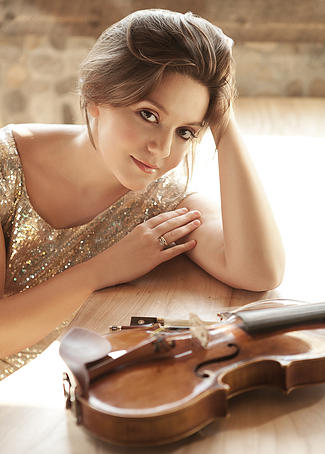
    Above: violinist Hilary Hahn

    Wednesday November 26th, 2014 – After experiencing conductor Jaap van Zweden’s performance of the Shostakovich 8th with The New York Philharmonic last week, I was very glad of the chance to attend a second concert under his baton. In addition, the evening provided my first opportunity to hear Hilary Hahn live.

    The evening opened with a genuine rarity: Johan Wagenaar’s Cyrano de Bergerac Overture which was inspired by Edmund Rostand’s play of the same name. The play premiered in 1897, the concert overture dates from 1905. The overture commences with a bold statement, then waxes poetical, romantic or swashbuckling by turns. It’s a melody-rich piece; though sometimes compared to the works of Richard Strauss, there’s no hint in the Wagenaar of the absonance that tends to crop up in some of Strauss’s works.

    Ms. Hahn then appeared for the Korngold violin concerto. Most widely known as a composer of film scores, Erich Wolfgang Korngold arrived in Hollywood in the 1930s, already an established classical composer. Themes from his movie scores found their way into his concert works; for the violin concerto, Korngold drew upon his music for the films Another Dawn, Juárez, Anthony Adverse, and The Prince and the Pauper. Jascha Heifetz premiered the concerto in 1947.

    Ms. Hahn looked fetching in a silvery-steely strapless gown; slender and elegant, she is as lovely to watch as to hear. In the concerto’s opening movement, much of it set in the violin’s high register, Ms. Hahn displayed a truly shimmering quality of timbre. In the second movement, Romance, she caught the quality of sehnsucht that the rapturous themes evoke; and in the quirky, devilish technical demands of the final Allegro assia vivace, she really went to town, dazzling us with her virtuosity.

    Ms. Hahn and Maestro van Zweden were greeted with sustained applause after the concerto; coming out for a second solo bow, the comely violinist took up her bow for a Bach encore. Tonight’s Playbill states that Hilary Hahn has not appeared with the NY Phil for a decade; she should immediately be signed for future appearances: she’s a treasurable player and we should have every possible opportunity to experience her artistry.

    Following the interval, Jaap van Zweden unfurled the Beethoven 7th for us. This symphony is just about perfect: neither too short nor too long, and especially appealing in its rhythmic variety. The symphony’s first movement opens slowly (marked ‘sostenuto‘…’sustained’) and then turns animated. The famiiar allegretto that follows – one of Beethoven’s most widely-appreciated passages – has a stately sway to it. The lively dance of the ensuing Presto propels us irresistibly to the finale with its exhilarating feeling of joyous abandon. The music sailed on with Maestro van Zweden, the  musicians, and Beethoven carrying the audience along on buoyant waves of sound. Richard Wagner called this symphony “the apotheosis of the dance itself…” and the audience responded with vigorous enthusiasm to the almost breathless pace which the conductor imposed in this uninhibited finale.

  • Mozart & Shostakovich @ The NY Phil

    Jaap

    Above: conductor Jaap van Zweden

    Saturday evening November 22nd, 2014 – Venturing out after my off-again-on-again cold caused me to miss some events earlier in the week, I found tonight’s finely-contrasted programme at the New York Philharmonic both soothing (the elegant, melodious Mozart) and grandly stimulating (the epic Shostakovich). It was all played to perfection, under the baton of Jaap van Zweden.

    Mozart wrote his Sinfonia Concertante for violin and viola sometime in 1779; the work is cast in three movements in the traditional fast/slow/fast concerto style, the soloists backed by a neat ensemble of two oboes, two horns, and strings. Although one of the composer’s most popular works, this was my first chance to exprience it live.

    1415-1120b

    Above: Sheryl Staples, Cynthia Phelps

    To play this Mozart masterwork, NY Philharmonic principals Sheryl Staples (violin) and Cynthia Phelps (viola) stepped forward, much to the delight of the orchestra’s many fans. The two women struck up a lovely rapport, trading themes with silken assurance and harmonizing gracefully. Maestro van Zweden propelled the ensemble forces with stately finesse; he did not seem pleased that applause rose up after the first movement (which also happened, more annoyingly, during the Shostakovich). In the quiet radiance of the second movement, the Andante, Ms. Staples intones the opening melody which Ms. Phelps then takes up with an alto resonance. Throughout the work, the two women and the Maestro showed spot-on dynamic control and a mutual sense of phrasing that gave this listener great pleasure.

    The stage setting was then re-configured to accommodate the large forces called upon by Dmitry Shostakovich for his 8th symphony, written in 1943. The composer was ever falling in and out of favor with Communist authorities; his 8th was basically proscribed as having no artistic value. This ban lasted nearly a decade, after which the symphony began to find its way. Along with Shostakovich’s other symphonies, the 8th now stands at the center of the symphonic repertoire.

    Tonight’s large audience at Avery Fisher Hall were clearly enthralled to experience to piece which, in the course of its sprawling hour-long duration, veers from the bleak to the savagely intense to a darkly luminous introspection.

    The half-hour opening movement is a masterful tone poem in itself; embarking on a slow build-up, it leads to fiendish outcries by the horns, massive percussive waves which evaporate only to recoil and strike again, and a marvelous, plaintive cor anglais solo. The second movement, an ironic dance with a piping flute, is followed by a second scherzo-like movement, a militaristc polka with a massive unison theme. The Largo transports us to a shadowed realm; the solo horn emerges, then flute, then clarinet; the winds take on a flutter-vibe, the clarinet returns. In the concluding movement, bassoon, flute, and cellos sing forth in succession; big, brassy waves of calamity strike, then the deep brass voices hum as the bass clarinet brings further riches. Solo violin, cello, and bassoon take turns, returning to a satiny violin passage. The massive forces are now quietened to a shimmer as the cello and double bass gently persuade us that rest, if not peace, may finally come.

    Maestro van Zweden wrought this wondrous music into a sonic mural in which the horrors of war and deprivation, the Devil dancing with Fate, and the human spirit’s will to survive are painted in rich colours. The many solo voices to which Shostakovich gave such expressive opportunities displayed yet again the unfailing grace and musical stature of the Philharmonic artists.

    Jaap van Zweden continues his work with the Philharmonic in the week ahead with a programme that features the Beethoven 7th along with Hilary Hahn playing the Korngold violin concerto. Details here. As we left the Hall tonight with the audience was heaping cheers on the conductor, I of course was thinking how much I’d like to hear him conduct some Wagner.