Category: Opera

  • My First RING Cycle: WALKURE

    Jones-Gwyneth-04

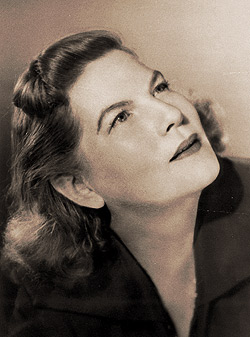
    Above: Dame Gwyneth Jones

    A week-long RING Cycle invariably involves RHEINGOLD on Monday night followed immediately by WALKURE on Tuesday. This places heavy demands on the gentleman singing Wotan; he has a lot of singing to do on Monday and even more (much more) on Tuesday. Fricka also appears in both operas, but her role in RHEINGOLD – though major – is not especially demanding, and in WALKURE she has only one scene: quite a strenuous one vocally, but once it’s over she is finished for the night. Fortunately the Wotan in my first Cycle, Hans Sotin, managed the back-to-back operas superbly. And Helga Dernesch’s Fricka was a thrilling interpretation.

    WALKURE brings four new characters to the drama: Brunnhilde, Sieglinde, Siegmund and Hunding. With Dame Gwyneth Jones’s first appearance as Brunnhilde in Act II, this RING Cycle – already off to such an impressive start – soared into the stratosphere.

    Here’s my diary entry from the second night of the Cycle:

    WALKURE – excellent despite some audience distractions. Levine and the orchestra do wonders with this score. The cast was really fabulous, though I had mixed feelings about the Siegmund of Robert Schunk. He looked well, sang and phrased in a musicianly manner; he had the right feel for the role and – for the most part – more than enough volume. He tended, however, to sing just a shade flat much of the time. Too bad…he tried hard and he did have his moments.

    Everyone else was on peak form. Matti Salminen gave a tremendous Hunding, rolling out the tone with tremendous force and simply smacking of evil…really menacing sound and thoroughly convincing as an actor: his long, deadly stare at Siegmund after man-handling his wife was such a provocation (Siegmund, weaponless at this point, is in no posotion to respond). Salminen continues my great line of Hundings – Rundgren, Haugland, Moll, Macurdy – and he’s such a fascinating artist.

    Gessendorf_Portrait

    We have a wonderful new Wagnerian soprano in Mechthild Gessendorf (above) who, if this performance is any indication of her abilities, is a fine addition to the operatic gallery. Her bright, almost girlish tone has a clear middle range with top notes that can be clean-attacked or slightly scooped-up to: they are exciting!  Oddly, she reminds me a bit of Mara Zampieri though I can’t put my finger on why! She gave a glorious Sieglinde, full of feminine warmth and real emotional commitment; I look forward to her Kaiserin and Senta.

    Helga Dernesch’s Fricka proved spellbinding, sung with great authority and vocal power; the slight peril in the upper range was overcome by force and she simply did a magnificent job. The drama of her plea was put across with an awesome balance of of security and desperation: really engrossing. And she looked gorgeous…a splendid assumption of the role.

    Hans Sotin’s Wotan was given with great vocal command and heartrending dramatic sureness. He was in excellent voice, giving a truly impressive monolog and ending Act II with a furious “Geh!” to Hunding who crashed to the ground at the god’s irate command. Singing gloriously, Sotin came thru with much moving and beautfully modulated vocalism in the third act, and he triumphantly sustained the top notes of his final phrase to majestc effect…bravississimo!!!!

    It was a great pleasure to see Dame Gwyneth Jones on the Met stage again: still unsure of how she would sound, she nevertheless is an arresting physical presence. But as soon as she began to sing, it was clear we were in for a thrilling Brunnhilde: her great personal and vocal radiance set its stamp on the entire evening. She is a very different Brunnhilde from Behrens, more feminine and less complicated. She offered a spectacular battle cry, sustaining the clear-attack high-C and thereafter she simply went at it vocally all evening, with powerful and moving singing in the ‘Todesverkundigung where she well portrayed Brunnhilde’s increasing embarrassment at the deceitful way Wotan has treated Siegmund. Jones’s third act was wonderful in every regard, with a movingly intoned “War es so schmählich” and increasing desperation as she begs Wotan to spare her degradation. Her final plea – to surround her slumbering place with magic fire – literally tore at the heart. The sheer size of Dame Gwyneth’s voice is such a treat at The Met, and her occassional wooziness and a couple of oddly pronounced words (“Siegfried” in her Act III address to Sieglinde somehow became “Augfried”) were just trifles compared to the great flood of warm, emotional power she generates. Simply great!! And she looks marvelous…great legs! So, a really remarkable evening with huge ovations for all and a particular hurricane of applause for Dame Gwyneth. A grand night!!!”

    Metropolitan Opera House
    May 2, 1989

    DIE WALKÜRE
    Wagner

    Brünnhilde..............Gwyneth Jones
    Siegmund................Robert Schunk
    Sieglinde...............Mechthild Gessendorf
    Wotan...................Hans Sotin
    Fricka..................Helga Dernesch
    Hunding.................Matti Salminen
    Gerhilde................Pyramid Sellers
    Grimgerde...............Wendy Hillhouse
    Helmwige................Marita Napier
    Ortlinde................Adriana La Ganke
    Rossweisse..............Judith Christin
    Schwertleite............Sondra Kelly
    Siegrune................Diane Kesling
    Waltraute...............Joyce Castle

    Conductor...............James Levine

  • Carlo Bergonzi Has Passed Away

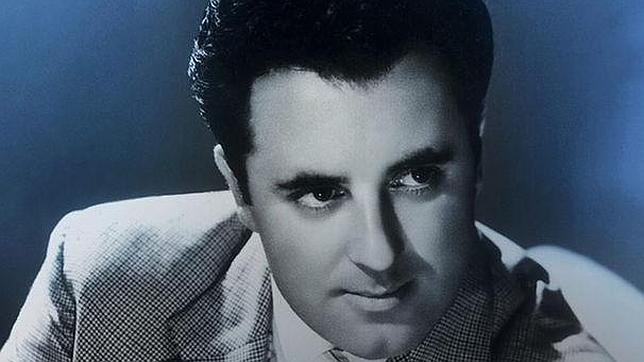
    Carlo-Bergonzi--644x362

    My all-time favorite tenor and one of the last surviving titans of the ‘last golden age’ of opera has passed away: Carlo Bergonzi.

    Bergonzi sang over 320 performances at The Met, debuting in AIDA in 1956 opposite the also-debuting Antonietta Stella. He sang his final Met performance in 1988 in LUCIA DI LAMMERMOOR. Over the years, Bergonzi – who started his operatic career as a baritone – gradually lost the ease and surety of his upper register, but stylistically he remained a paragon throughout his long career.

    When I started listening to opera at the age of 11, I had no idea of how long a singing career could last or how a voice would age. The first singers I fell in love with – Milanov, Tebaldi, Jan Peerce, Robert Merrill, Giorgio Tozzi : it seemed to me they were eternal, that they had always been singing and would always continue to sing, and that they would always sound exactly the same as they did on the first recordings I acquired. Imagine my despair when I discovered early on that two of my first idols, Jussi Bjorling and Leonard Warren, were already dead! 

    I last saw Bergonzi onstage in 1988 as Rodolfo in LUISA MILLER, one of his last Met performances. People were raving about the staying power of this 64-year-old primo tenore but to me the voice was sadly pallid. The style, however, was wonderfully intact: the generosity of line, the feeling for the language, the skillful mastery of dynamics. Despite his admirable ability to cope with the music technically, I was disheartened and left midway thru the evening. Twelve years later, I was living in New York City when Bergonzi announced he would sing Verdi’s Otello in a concert performance at Carnegie Hall. My friends, knowing of my great love for the tenor, assumed I would be there but I feared it would be an unhappy evening…and it was: beset by vocal problems, he was forced to withdraw after Act II.

    No, I would rather remember the great years, though in fact he was already well along in his career when I first heard him live in a concert performance of Catalani’s LA WALLY at Carnegie Hall in 1968. Appearing opposite Renata Tebaldi, Bergonzi managed to steal the show: he brought down the house after Hagenbach’s Act IV aria.

    At The Met I heard his superb Radames, once with Lucine Amara and once with Martina Arroyo. It was with Arroyo that he triumphed as Verdi’s ERNANI in a stellar performance that also featured Sherrill Milnes and Ruggero Raimondi. He was a generous-toned and poetic Andrea Chenier in a performance where Renata Tebaldi struggled vocally, only to cast off all reserve in the final duet where she and Bergonzi thrilled us with their passionate outpouring of sound. And the tenor managed to convey the youthful vigor and tenderness of Alfredo Germont opposite the moving Violetta of Jeannette Pilou.

    Listening to a matinee broadcast of TOSCA in 1975, I was dismayed to hear Bergonzi struggling with the top notes and fighting a losing battle, though he sang on to the end. He took a year and a half off (at least from the Met) returning in November 1976 as Radames opposite Rita Hunter. After a somewhat cautious but still impressively handled “Celeste Aida” Bergonzi went on to give a spectacular performance with some of the most generous singing I ever heard.

    And such generosity won him great acclaim in 1979 when he returned to a signature role, Riccardo in BALLO IN MASCHERA. His phenomenally sustained top notes, sometimes attained thru sheer will-power, and his matchless phrasing drew enormous ovations on both evenings that I attended: one performance with Teresa Zylis-Gara and another with Carol Neblett. In 1982 Bergonzi was still on impressive form in FORZA DEL DESTINO, and in 1985 he scored a grand success in a concert performance of Verdi’s GIOVANNA D’ARCO opposite Margaret Price and Sherrill Milnes. In every one of these performances, whatever slight misgivings one might have, his ever-persuasive style carried the day.

    But there was a final small chapter in my Bergonzi story: eight years after the MILLER that I walked out on, he appeared at James Levine’s 25th Met Anniversary gala, singing the aria from LUISA MILLER and the trio from I LOMBARDI. Massive demonstrations of love rained down on him and people raved about his longevity but for me, despite admiring his courage, he was a shadow of his glorious self. 

    But, I have lots of recordings (both commercial and live) to keep my favorite tenor’s voice ever in my ear. His early Decca aria recital has never – in my opinion – been matched by any other tenor’s, though some have come very close. Both his commercial BALLO recordings are superb. His Duke in RIGOLETTO (opposite Scotto and Fisher-Dieskau) is a fine document of Verdi tenor singing. In TROVATORE, PAGLIACCI, BOHEME and DON CARLO, he is The King. I deeply love his BUTTERFLY with Tebaldi, his TOSCA with a voice-in-peril Callas (she still has some magical moments though); and his lovely TRAVIATA with Montserrat Caballe. And I am particularly fond of Bergonzi’s splendid performance as Edgardo in the RCA LUCIA with Anna Moffo.   

    Carlo Bergonzi sings Tosti’s ‘Ideale’ here.

    Hail and farewell, Maestro. If there’s a heaven, you can teach the angels how to sing.

  • My First RING Cycle: RHEINGOLD

    Rheingold0304.08

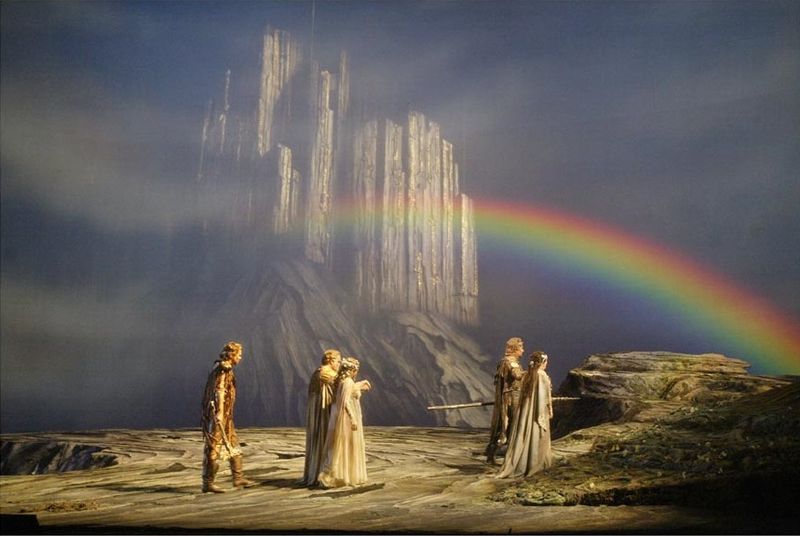
    Above: A scene from DAS RHEINGOLD, in the Met’s classic Otto Schenk production; photo by Ken Howard

    A quarter-century has passed since I first experienced a complete performance of Wagner’s RING DES NIBELUNGEN as the composer intended it to be seen: over the course of a single week. In fact, though I had seen all the RING operas previously and would see them many times again since, this 1989 Cycle has been the only time to date that I attended a “RING Week”.

    I was living in Hartford, Connecticut at that point in time, frequently spending long weekends in NYC to attend opera and ballet performances. My friend Paul Reid and I had decided to attended a Met RING Cycle at the end of the 1988-1989 season. There would be a Saturday matinee Cycle plus two week-long Cycles; we were determined to do a RING Week. So when the casting came out, we quickly decided on the ‘second cast’: we had seen the Hildegard Behrens/James Morris combination in previous performances of the individual operas and they were slated for the first weekly Cycle (as well as the Saturday matinee broadcast Cycle). The second weekly Cycle boasted not only a different Brunnhilde (Eva Marton) and Wotan (Hans Sotin) but ‘new’ and different casting of several prominent roles: William Johns (Siegfried), Franz Mazura (Alberich), Helga Dernesch (Fricka/Waltraute), Mechthild Gessendorf (Sieglinde), and Gweneth Bean (Erda). James Levine of course was conducting every Cycle.

    We ordered our tickets, and then a cast change was announced: Eva Marton had withdrawn and would be replaced by Deborah Polaski. This gave us pause, since at the time neither of us were admirers of Ms. Polaski. We fretted a bit, but it was too late to switch to another Cycle (they had all sold out very quickly). Then came another announcement: Ms. Polaski had withdrawn and the Brunnhilde would now be Dame Gwyneth Jones. We were not thrilled with this announcement either, since Dame Gwyneth had at that time something of a reputation for wobbling vocally. It wasn’t until she appeared onstage for Act II of WALKURE that our concerns were allayed: she was magnificent in every regard.

    In the days leading up to our Cycle, anticipation built and built. Concerns about leaving my young lover Kenny on his own for a week were swept aside as the idea of seeing the RING in toto was about to become reality. Paul and I had booked (separate) rooms at the Colonial House on West 22nd. I had stayed there several times in recent seasons: a very comfortable and affordable gay guest house. I was leading a promiscuous life then (despite being in a relationship) and the wonderful thing about the Colonial House was: it was hook-up heaven. There was no need to go to a bar or club: there were always men who were ready, willing and able staying at the House. The roof deck, which offered nude sun-bathing, was especially conducive to socializing.

    May 1st finally arrived; Paul and I checked in at the Colonial and geared up for our big operatic adventure.

    Here’s what I wrote about the RHEINGOLD in my diary:

    “I am finally seeing the complete RING Cycle in the course of a single week which fulfills a long-held operatic desire. The opening RHEINGOLD was a wonderful evening and set forth high expectations for the evenings to come. Levine’s skillful conducting and the excellent playing of the Met orchestra were a major factor in this magnificent Wagnerian evening. The production is visually engrossing, especially the opening scene in the murky depths of the Rhine. Casting was strong all down the line, with a very fine trio of Rhinemaidens (Diane Kesling stood out, and Kaaren Erickson and Meredith Parsons were both very good…though I did feel they gave a bit too much vibrato at times).

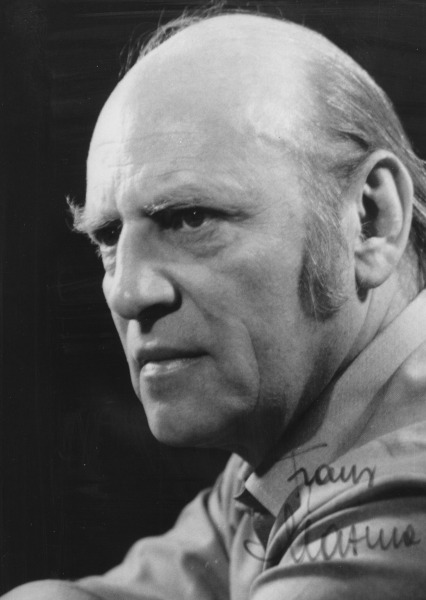
    Franz_Mazura

    Franz Mazura (above) as Alberich arrived on the scene and seized our imagination with his huge, thrustingly creepy voice, full of darkest intent. He was a fabulous Alberich, tireless in his vocal and dramatic commitment. Could this bizarre creature be more powerfully portrayed? Mazura’s generous artistry assured his huge success in the role: he made the character seem so real.

    Sotin_hans200x304

    Above: the Lord of This RING: Hans Sotin. He was in top form for a really impressive Wotan, immediately showing his vocal authority in his opening conversation with Fricka. His voice – large and steady and even from top notes down to the depths – created a real sense of majesty. [Sotin, as it turns out, sang his final Met Wotans in these performances].

    Dernesch_Isolde1Sa72PG

    Helga Dernesch (above): her fascinating voice and truly intense emotional involvement brought Fricka to life – incredibly powerful, with her deep lower voice and somewhat insecure top which curiously adds to her appeal.

    Her siblings were Gary Bachlund as Froh, revealing an embryonic heldentenor of some warmth; James Courtney as a sturdy Donner; and Mari-Anne Häggander, who made a great deal out of Freia’s brief role with her vulnerable appearance and full, clear lyric soprano.

    The giants were especially good: John Macurdy’s voice (Fasolt) sounded huge, and Matti Salminen (Fafner) let his oily tones roll out with great dramatic force – super!  Horst Hiestermann was a vivid Mime, but I found Graham Clark’s Loge did a bit too much prancing physically; and I guess I prefer more heldentenorish sound in the role, though Clark surely did sing musically and with clarity and good carrying power. Gweneth Bean’s large, rich voice created a really glorious impression as Erda – she just poured the tone out!

    At the end, a very enthusiastic reception for everyone – especially Bean, Dernesch, and Levine. Very exciting inaugural night of my RING! There were many moments when chills passed thru me: a sensation that is not often experienced at the opera these days. Mazura in particular thrilled me in this way with his theft of the gold and again as he placed his curse on the Ring. So exciting!”

    Metropolitan Opera House
    May 1, 1989

    DAS RHEINGOLD

    Wotan...................Hans Sotin
    Fricka..................Helga Dernesch
    Alberich................Franz Mazura
    Loge....................Graham Clark
    Erda....................Gweneth Bean
    Fasolt..................John Macurdy
    Fafner..................Matti Salminen
    Freia...................Mari-Anne Häggander
    Froh....................Gary Bachlund
    Donner..................James Courtney
    Mime....................Horst Hiestermann
    Woglinde................Kaaren Erickson
    Wellgunde...............Diane Kesling
    Flosshilde..............Meredith Parsons

    Conductor...............James Levine

  • At Home With Wagner V

    Richard Wagner

    These days I hardly listen to anything but Wagner at home, and invariably it’s one of the RING Cycle operas. Thanks to my friend Dmitry I have a stack of CDs as yet un-listened-to. Today I’ve set out on a 1963 Bayreuth WALKURE, led with distinction by Rudolf Kempe, which starts with a truly urgent rendering of the ‘chase’ music that serves as the opera’s prelude. Although the sound quality is erratic, with some over-load and distortion, it’s certainly more than tolerable.

    Jutta_Mayfarth_Gutrune

    Pictured above, soprano Jutta Meyfarth – yet another ‘forgotten’ voice – may not have an ideally warm or expansive voice for Sieglinde’s music: her timbre is a bit hard. But she has a great way with words and she constantly is alert to the dramatic nuances of the music and words. I listened to the last scene of Act I, starting with Meyfarth’s whispered “Schläfst du Gast?”, several times, liking her more and more with each hearing. 

    Anita_iso

    The Finnish soprano Anita Välkki (above) tosses off one of the most brilliant renderings of “Ho-Jo-To-Ho!” that I ever heard. This under-rated soprano, her career overshadowed by the more famous Nilsson, Rysanek, Bjoner and Lindholm, has a bright and at times girlish vocal quality. In the Todesverkündigung” – the great scene in which Brunnhilde announces to Siegmund his imminent death – Välkki shows clarity of expression and considerable beauty of tone.
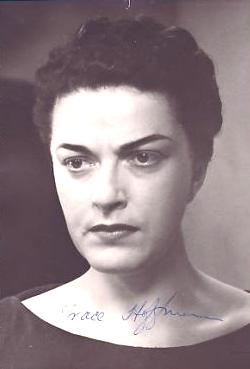
    Hoffman-Grace-08

    Mezzo-soprano Grace Hoffman (above) rounds out a strong trio of female leads in this WALKURE.  Her wide-ranging voice, her intense sense of Fricka’s wronged dignity, and her verbal and dynamic alertness make a capital effect.

    Hans Hotter was in his mid-fifties at the time of this performance, and he had been singing Wotan for a quarter-century. If vocally he is a bit less fresh than in the 1953 Keilberth/Bayreuth performance, he is remarkably authoritative and relishes both the powerful and subtle moments of this great role.  

    Hans Hotter was vehemently anti-Hitler and when he was queried during the de-Nazification interviews following the end of the war as to why Hitler would have kept his recordings in his private collection, Hotter replied that the Pope had some of them, too.

    Gottlob Frick again fills me with admiration here, singing Hunding. A somewhat less-than-stellar Siegmund – Fritz Uhl – still has his moments, but though I don’t pretend to speak German, some of his diction seemed rather odd.

    The third act is strong, with Meyfarth convincing in Sieglinde’s distress and Välkki doing some warm, espressive singing from “War es so schmälich…” to her final plea with her father to ring the Valkyrie Rock with fire. Hotter is Wotan – yet again – with the power of his wrath slowly subsiding into the tenderness of a father bidding farewell to his beloved child. Perhaps no other singer has such an innate quality of heartbreak in the voice.

    ~~~~~~~~~~~~~~~~~~~~~~~~~~~~~~~~~~~~~~~~~~~~~~~~~~~~~~~~~~~~~~~~~~~~~~~~~~~~~~~~~~~~~~~~~~~~~~~~~

    KONIECZNY_web Lang_Petra

    Above:
    Tomasz Konieczny and Petra Lang

    The Polish bass-baritone Tomasz Konieczny made a magnificent vocal impression when he sang Jochanaan in Strauss’s SALOME in a concert performance by the Vienna State Opera at Carnegie Hall in March 2014. Konieczny is the Wotan in the recently released WALKURE on the Penta Tone label, part of a complete RING Cycle conducted by Marek Janowski and recorded in a series of live concert performances in Berlin starting in 2012.

    Very curious to hear Konieczny’s voice again, but not wanting to delve into the full WALKURE until I’d first had a chance to hear the RHEINGOLD, I listened to the final scene of the WALKURE as a free-standing excerpt. The bass-baritone sings powerfully and is a vibrant, dramatic presence especially as he takes his errant daughter Brunnhilde to task for having disobeyed his direct orders. Konieczny is quite splendid while letting off steam, though the poetry of the later scene where his bids farewell to Brunnhilde and puts her to sleep on the Valkyrie Rock is not quite yet in the singer’s expressive realm. He will doubtless attain that depth of understanding and an ability to communicate it as he sings the role in coming years. Marek Janowski’s conducting is alert and vivid, and Petra Lang – who has given some striking performances as a mezzo-soprano – now sings Brunnhilde. And if she does not seem destined to achieve the exalted echelon occupied by such great Wangeriennes as Nilsson, Behrens and Dame Gwyneth, Lang nonetheless makes a wonderful impression is her moving rendering of “War es so schmählich…” and is perfectly satisfying in the rest of the act.

    **********************************************************************************************************************************

    I acquired the first two acts of a Stockholm WALKURE from 1975 mainly to hear Barbro Ericson’s Fricka and to have a sampling of another voice that had eluded me til now: soprano  Siv Wennberg. Rudolf Kempe’s conducting again seems ideal. 

    Kempe has this music in his blood and gives yet another great reading of the score. Ms. Ericson, one errant top note aside, is a passionate and exciting Fricka. Neither Ms. Wennberg nor her Siegmund, Helge Brilioth, are likely to displace other favorite interpreters of these roles in the Völsungen sweepstakes, but both are very good story-tellers. Thru dynamic and verbal shadings, the soprano gives us quite an intriguing “Der Männer Sippe“, and – earlier – the tenor does likewise as he tells the story of how he came to be under Hunding’s roof. Mr. Brilioth will later have some pitch issues, and his cries of “Wälse!’ Wälse!’” suffer from very bad audio overload. Ms. Wennberg holds steady throughout the first two acts.

    As Brunnhilde, Berit Lindholm lauches a pert, eager “Ho-Jo-To-Ho“, and she makes a good impression in the Todesverkundigung: the very heart of the opera. David Ward, whose Wotan I so thoroughly enjoyed in the 1965 Covent Garden performance conducted by Solti, is understandably a bit less fresh vocally here in Stockholm ten years on, but he is still very impressive and expressive in his long monolog (so well-supportedby Kempe) and he gives a violently dismissive “Geh!” as he dispatches Hunding to his fate at the very end of Act II.

    R_Cederlof_Hunding

    The most surprising aspect of this performance is a superbly sung Hunding from basso Rolf Cederlöf (above). This is a voice I’d never heard before, and even as a name he was unknown to me. It’s a beautiful, deep, voluminous sound, and from his entrance the vocal ‘temperature’ of the first act rises: he seems to inspire Wennberg and Brilioth in their narratives…and in turn they are all inspired by Kempe.

    ~~~~~~~~~~~~~~~~~~~~~~~~~~~~~~~~~~~~~~~~~~~~~~~~~~~~~~~~~~~~~~~~~~~~~~~~~~~~~~~~~~~~~~~~~~~

    Bampton-glam-701475

    Continuing in WALKURE mode, I recently took from the library the 1947 discs of Toscanini rehearsing the first act of the opera for a concert perfomance. This issue is a favorite among collectors as it gives an aural portrait of the fiery conductor at work. The Sieglinde is Rose Bampton (above) and I was very much taken with her interpretation. Wanting to hear more of Bampton, I turned to a 1944 Met broadcast of WALKURE conducted by George Szell. This seventy-year-old performance begins with a breathlessly-paced prelude depicting Siegmund’s rush thru the forest; Szell brings the first act full circle with an equally speedy burst of energy in the postlude as brother and sister rush off to their unknown fate. 

    Lauritz Melchior, that tireless Wagner-machine, is Siegmund. The paragon of heldentenors, Melchior sang over 500 performances at The Met alone; his career there lasted nearly a quarter-century (debut in 1926). Like Toscanini – who keeps admonishing the orchestra players “piano! piano!” during the rehearsal – Szell draws out some remarkably intimate passages from both musicians and singers in Act I. Melchior is able to sing some beautifully supported piano passages, and also to cut loose with sustained powerhouse cries of “Wälse! Wälse!“. Alexander Kipnis growls darkly as an authoritative Hunding.

    Ms. Bampton’s singing sets her firmly alongside my favorite Sieglinde of all time: Johanna Meier. Bampton shares with Ms. Meier a deeply feminine sensibility as well as a feeling of great dignity, despite the hardships she has endured: married off against her will, and ill-treated by her abusive husband. Bampton’s wonderfully vivid diction, her ability to move the voice from subtle inflection to generous outpouring in the twinkling of an eye, and the overall appeal of her sound make for a winning combination in this role.

    One added sonic element is the subtle use of a wind machine during the prelude; and it cunningly is heard again when the doors to Hunding’s hut blow open just before the “Winterstürme”.

    K-Szell-w-manuscript-LR1

    I found myself being drawn deeper and deeper into this performance as Act II unfolded. Szell (above) seems, perhaps more than any other conductor I’ve experienced in the opera, to summon forth the various leitfmotifs and weave them ideally into the sonic tapestry. Thus the introduction to Act II presents the brass heralding the impending presence of Wotan and Brunnhilde whilst the strings yearningly deliver the theme of Sieglinde’s “Du bist der Lenz” (in a minor key) forecasting the theme of the entire act: the fate of the Völsung and his sister/bride; later, as Wotan and Fricka heatedly debate the issue, Szell brilliantly manages to support both sides of their argument thru orchestral underlining.
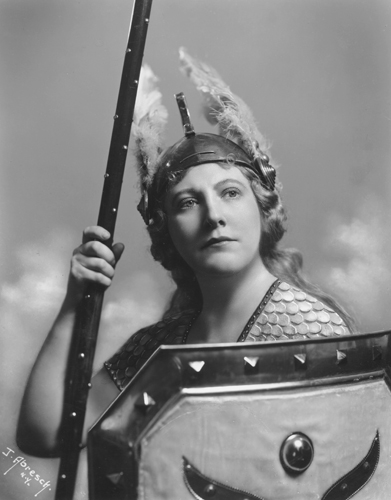
    07 Traubel in Walkure 1941

    Helen Traubel’s Brunnhilde (above) rings true with rich, warm tone: a lone clapper greets her appearance – a few other audience members gingerly join in (applause during a Wagner opera is pretty much frowned upon) – and she has a fine success with “Ho-Jo-To-Ho” despite a hint of shortness at the top of the range. The sound of her voice at times reminds me, curiously, of Eleanor Steber’s.

    Herbert Janssen’s Wotan is of the baritonal rather than basso persuasion: some of the roles lower notes are a bit of stretch for him. But he’s so completely at home in the role both verbally and vocally that it doesn’t matter. It’s not one of those grandiose Wagnerian voices, but has instead a dimension of the humanity that will eventually be the god’s undoing. Wotan’s monolog has some internal cuts, but Janssen sings it impressively and Traubel’s interjections are beautifully rendered.

    Thorborgfricka

    Kerstin Thorborg’s imperial Fricka (above) is vocally opulent, and she deals from strength in her confrontation with Wotan, thoroughly dismantling his every argument as their scene progresses; a wonderfully sung Wagnerian exchange by two seasoned interpreters. Melchior and Bampton arrive at the mountain pass, fleeing from Hunding. Their scene is vividly urgent and again Szell and his orchestra continually project the dramatic situation; Melchior’s Siegmund is finally able to calm his desparate sister-bride, setting the stage for the heart of the opera: the ‘Todesverkündigung’ (the Annunciation of Death).

    The Todesverkündigung is my favorite scene of WALKURE and my initial reaction on listening to the scene in this performance was of a slight letdown from all that had gone before. Szell and his orchestra did not seem to evoke the dreamlike quality needed (and there are a few bad notes among the brass players) and Melchior’s singing seemed factual and lacking in reverence to the demi-goddess who has appeared before him. I played the scene again a few hours later and found it far more impressive, especially as Traubel is so tonally secure and noble-sounding – at least until her cold façade begins to crumble in the face of Siegmund’s queries and his growing bitterness towards the deception he has been dealt. When the warrior tells Brunnhilde that he carries an invincible sword – Nothung – the Valkyrie replies: “He who bestowed it sends thee now death: for the spell he now takes from the sword!” her warning ricochets back at her when Siegmund cries: “This sword, given by a false man to a true one…!” The atmosphere is palpable, the scene as heart-breakingly beautiful as ever.

    The end of the second act in this performance is somewhat undermined by the voices of Hunding, Brunnhilde and Wotan being too far off-mike to make the needed impact.

    The third act opens with an exciting Ride of the Valkyries and an emotional rendering of the scene where Brunnhilde tells Sieglinde that Siegmund’s death was not in vain: she presents the unhappy widow with the pieces of the shattered Nothung and declares that Sieglinde, miraculously pregnant after only meeting her husband one day earlier, will give birth to the greatest of heroes: Siegfried. Mmes. Traubel and Bampton are very dramatically involved here, and both sing very well. 

    Traubel remains steady and impressive throughout the final scene with Herbert Janssen; the baritone’s voice has a steady beat to the tone – a kind of slow tremelo – that gives his singing of the opera’s heart-rending farewell of Wotan to his favorite daughter a wonderfully human dimension.
    Harshaw

    Among  the Valkyries, the name Margaret Harshaw (above) stands out. She is Schwertleite here, as she was on many a Met evening over the years. In 1949 she moved on to Fricka and in 1954 she took on Sieglinde for the first time. And later in 1954 she assumed the role of Brunnhilde. It was in this last-named role that Harshaw sang in a Met WALKURE for the last time, in 1962. She took over the opera’s title-role that night in place of an ailing Birgit Nilsson. It was quite a night, as this descriptive review attests:

    Soprano Birgit Nilsson, scheduled to sing the role of Brünnhilde, had to bow out the evening before the performance. General Manager Rudolf Bing gave the role to soprano Margaret Harshaw, who was to have sung Sieglinde; into the Sieglinde role went soprano Gladys Kuchta. One of the Valkyries, mezzo Gladys Kriese, was ill with tracheitis: her part went to mezzo Ethel Greene, regularly a member of the chorus.
    Somehow, the opera got started on time. But in Act II, just when baritone Otto Edelmann seemed to be booming along comfortably in the role of Wotan, his voice began to fail. Edelmann withdrew at the end of Act II. He was replaced by baritone Randolph Symonette, who lasted on stage for only four minutes. 'It seemed to me like four hours,' said shaken conductor Erich Leinsdorf, later. It was apparent to Leinsdorf that Symonette 'could not get any music out of his throat.' When Symonette finally croaked out the line 'Aus meinem Angesicht bist du verbannt'('From my presence you are banished'), Leinsdorf ordered the curtain rung down.

    Conductor Leinsdorf started again after a jump of ten pages in the score to cut out some of the more tortuous vocal passages, and baritone Edelmann came on again as Wotan, in brighter voice after his rest. Happily, they all made it to the final curtain.

    "I felt like the pilot who decides on a crash landing," said Leinsdorf. "We made it without the plane going up in flames."

  • Dress Rehearsal of SWAN LAKE @ ABT

    ABT_Swan_Lake_14_event

    Monday June 23, 2014 – I had a wonderful time at the dress rehearsal of ABT’s SWAN LAKE this afternoon, as the guest of my friend Monica Wellington. We had a very nice view of both the stage and the orchestra from a Grand Tier box.

    I’ve been to many opera dress rehearsals at The Met over the years, but this was my first time for a ballet. The dancers did not always dance full-out – just as the singers in an opera sometimes mark at a dress rehearsal. Partial costuming, lack of full stage make-up, headwear worn or not…all this made for a very ‘personal’ experience (one girl in the corps wore her eyeglasses throughout).

    James Whiteside was an excellent Prince Siegfried in Act I, and then we had a different pair of principals in each of the following acts: the exquisite Hee Seo dancing with Roberto Bolle in the first lakeside scene, then the lush and imperial Veronika Part with Cory Stearns in the Black Swan act, and finally Paloma Herrera (my lovely Giselle from last week) with Mr. Whiteside in the final act. Misty Copeland, Isabella Boylston, and Luis Ribagorda danced the pas de trois, and the soon-to-depart Jared Matthews danced Rothbart’s set-piece in the Black Swan act.

    At the end of the ballet, it was decided to rehearse part of the Maypole dance from Act I again, so we had the delightful experience of watching the girls, costumed as white swans, folk-dancing.

    The orchestra brought a special glow to the score, playing at performance-level all afternoon. I was especially impressed – and moved – by the woodwinds in the final act: the two oboists were ideally matched in phrasing, harmony and incredible breath-control, as were the bassoonists. Later the melody passes to clarinet, then flute, then piccolo. I very much enjoyed watching the musicians – all dressed in summer casuals – and I quietly applauded their artistry throughout the ballet.

    At the end, we stayed on as all the dancers – many of them now in street clothes – returned to the stage for notes. Cory Stearns practiced some very elegant multiple pirouettes stage left. 

  • Herrera/Stearns/Part GISELLE @ ABT

    Paloma-herrera

    Friday June 20, 2014 – With Paloma Herrera’s announced retirement in mind, I wanted to re-visit her in the role of Giselle. ABT graciously provided me with a press seat (next to the lovely Mary Cargill) and despite this being my umpteenth viewing of this production of GISELLE, I truly enjoyed the entire evening.

    ABT could surely use a new production of GISELLE: the current one uses sets created for the film Dancers in 1987 and while it is perfectly serviceable, a fresh rendering would surely be a boon for frequent ballet-goers. The orchestra sounded especially plush tonight under David LaMarche’s baton, and it was refreshing to be at The Met for something that didn’t include a 35-to-40-minute intermission (the intermissions at Gelb’s opera performances are interminable and a real drain on the dramatic impetus of the operas).

    ABT‘s corps of Wilis danced with their usual expertise, though the two waves of applause as the hopping ballerinas cross paths are now more obligatory than a sign of genuine admiration: applause here rather dampens the atmosphere. Still, there’s no denying it’s an impressive moment. Tonight we had stellar casting in the roles of Myrna and Zulma – Misty Copeland and Yuriko Kajiya respectively – and a spectacularly danced, dramatically vivid Myrthe from the imperial Veronika Part.

    Earlier, in Act I, Luciana Paris and Luis Ribagorda danced a spirited Peasant pas de deux, with Luis especially fine in his second solo. Kelly Boyd, as Berthe, was very clear in her mime as she warned her daughter of the perils of dancing too much: a warning Giselles have ignored for decades.

    I was excited to see Sascha Radetsky listed as Hilarion – Sascha too is about to retire – but a pre-curtain announcement advised us Thomas Forster would be doing the role instead. Thomas was excellent – a Hilarion taller than the evening’s Albrecht made for an interesting conflict. Of course for me, I’m always on Hilarion’s side in all of this: Albrecht is a liar and a cheat who simply shrugs off his deceitful behavior when he’s cornered. Nothing really to admire here: he’s only redeemed by Giselle’s steadfast love.    

    I had only seen Ms. Herrera’s Giselle once before, in 2009, on a night when Roberto Bolle danced his first ABT Albrecht. That performance was a veritable Bolle Fan Fest and Paloma’s Giselle, though impressively danced, got somewhat swept away by the enthusiam her partner generated among the fans. So tonight the focus was rightly on the ballerina, and in my view she turned in a beautiful performance in every regard.

    Paloma’s sensitive musicality and her lush technique were very much to be savoured tonight; her Act I solo with super-confident hops on pointe and softly sweeping attitude turns drew cheers from the audience; later, her Mad Scene was marked by moments of stillness where Giselle’s mind seemed to be collapsing inwardly upon itself, her dreams destroyed in the debris of love’s betrayal.

    In the second act, Ms. Herrera and Cory Stearns formed a visually appealing partnership, his elegance of line and fleet-footed vistuosity counter-poised by the ballerina’s poetic lyricism and the inner strength she summons to keep her beloved alive. The poignant last farewell, the presentation of the single blossom that signifies forgiveness and redemption, was beautifully rendered by these two artists.

  • Gotham Chamber Opera: THE RAVEN

    64f8384177b1bc6ce6103c6e19507a29d202a740

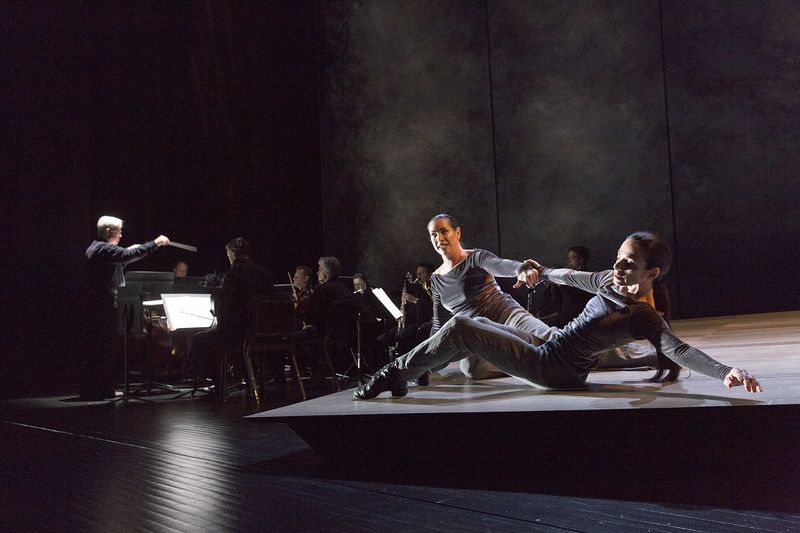
    Friday May 30th, 2014 – Gotham Chamber Opera presenting the U.S. premiere performances of The Raven, a monodrama by Toshio Hosokawa, based on Edgar Allen Poe’s immortal narrative poem. Mezzo-soprano Fredrika Brillembourg and prima ballerina Alessandra Ferri take the leading roles with the chamber ensemble under Neal Goren’s baton; Luca Veggetti staged and choreographed the opera.  As a prelude, André Caplet’s rarely heard Conte fantastique: Le Masque de la Mort rouge, inspired by another Poe work – The Mask of the Red Death – was performed by a quintet featuring harpist Sivan Magen.

    The evening was engrossing both musically and visually; from the moment we entered the theater we were drawn to the stage by the shadow cast by Mr. Magen’s harp. The players made ravishing sounds in the eerily colourful Caplet score, the harpist’s pianissimo melismas delicately pricking the ear. The composer, in this conte fantastique, limns the tale of Prince Prospero who – with several guests – walls himself up in his castle to escape the plague. But Death finds him anyway. At one point Mr. Magen knocked on the wooden frame of his harp, a sinister effect.

    Luca Veggetti had the excellent notion of creating a musical bridge between the Caplet and the Hosokawa by having the clarinetist play a sustained tone soon after the opening work ended. Other players took up the sound, an improvised entr’acte that prevented the audience lapsing into idle chatter as the stage was set for the opera.

    The Raven takes place on a raked platform, imaginatively lit by Clifton Taylor. The mezzo-soprano sings/speaks the entire Poe narrative poem whilst the dancer moves about the space – is she is the Raven or the lost Lenore? – sometimes physically entwining herself with the singer. 

    Toshio Hosokawa’s score creates a sonic tapestry which sets the singer’s incantation in high relief. Winds and strings mingle voices with piano and percussion, evoking the eerie nocturnal visitation of the raven. The chill of an evening breeze sweeping thru a graveyard, the darkling shimmer of moonlight on a marble tomb, the icy shudder of tree roots shifting in the frost-covered ground: these illusions are musically expressed, deepening the mystery of the theatrical experience. 

    Fredrika Brillembourg offered a triple tour de force in her performance: she has mastered both lengthy and repetitive the texts of the poet and the sung-speech called for by the composer, and also the physicality of the director’s staging in which the singer becomes an active counterpoise to the dancer. In the beginning, Ms. Brillembourg’s speech had an exaggerated, measured slowness of expression; her narration later became more urgent. Her clarity of diction almost made the super-titles superfluous. In bursts of song, the mezzo revealed a vast range and a fine dynamic mastery: her vocal performance was engrossing at every moment. Ms. Brillembourg entered fully into the physical demands of the production, singing powerfully from improbable positions…

    RTRH4C1132 copy

    …and even at one point balancing Ms. Ferri on her up-turned feet, as in the childhood game of Flying Angels. [above photo by Richard Termine]

    At the end of this marvelous portrayal, Ms. Brillembourg was rightfully cheered by the large audience who had experienced her riveting performance in a state of pin-drop silence.

    Ms. Ferri was equally compelling, her slightest gesture or tilt of the head having a poetic quality that the greatest artists instinctively possess. I found my eyes constantly lured by her, even when she was merely standing still. Her silent presence spoke with the same authority as her singing colleague’s, and together they made the strongest possible statement on behalf of the composer and the poet.

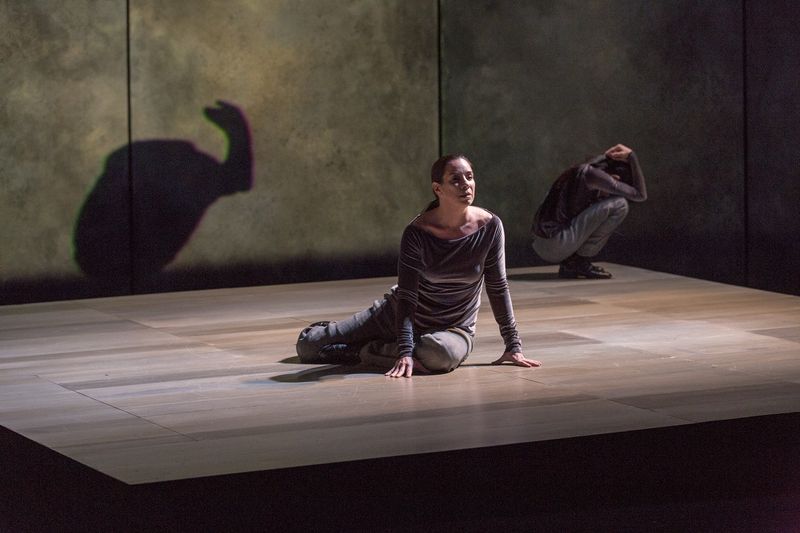
    RTRH4C0374 copy

    In an uncanny moment, while Ms. Ferri is kneeling at the far corner of the platform (above) her shadow suddenly rises and moves across the backdrop as if drawn by the sound of the music being played stage right. This theatrical trompe l’oeil literally gave me the chills, especially as it was so subtly done.

    More images from The Raven, thanks to photographer Richard Termine:

    RTRH4C0287 copy

    RTRH4C0867 copy

    Nothing but praise then for everyone involved in this excellent production: another feather in Gotham Chamber Opera’s cap as they continue to play a vital role in the City’s cultural realm.

  • Viktoria Tereshkina in ABT’s BAYADERE

    Tereshkina

    Thursday May 29th, 2014 – This red-letter date had finally arrived: the guest appearance of ballerina Viktoria Tereshkina (above) in ABT‘s production of LA BAYADERE. I fell in love with Tereshkina when I saw her dancing Balanchine’s BALLET IMPERIAL with the Kirov at City Center in 2008. Vladimir Shklyarov was this evening’s Solor while ABT‘s beautiful Isabella Boylston portrayed Gamzatti.

    ABT‘s BAYADERE is old-fashioned looking, but that’s fine…it’s an old-fashioned ballet. The Lanchberry arrangement of Ludwig Minkus’s melodious score often takes on a cheapish, ‘music hall’ feeling, yet nothing can destroy the perfection of the Kingdom of the Shades, in which the ABT corps danced so well tonight; they very much deserved the sustained applause they received after their entrée.

    There was lots of excellent dancing to be seen all evening, starting with Aaron Scott’s energetic and commanding Head Fakir: very clever of him to slip the antidote to the High Brahmin just before Nikiya finds an asp at her bosom. One distracting element of attending ballet performances at The Met is the noise the toe-shoes make on the opera house’s stage. Somehow the lovely Stella Abrera overcame this problem in her Shade solo, lyrically and silently danced; her sister Shades were Skylar Brandt (very impressive as she crossed the stage in a series of arabesque hops on pointe) and Melanie Hamrick, always a pleasure to watch.

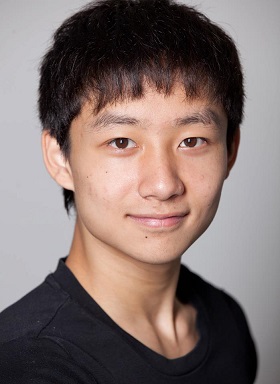
    Zhiyao-zhang

    Zhiyao Zhang (above) stepped out from the corps to dance the demanding solo of the Bronze Idol and did a very neat and precise job of it; he is a young dancer to keep an eye on.

    6a00d8341c4e3853ef017d3d08210a970c-800wi

    Casting about for a photo of Isabella Boylston, I recalled the day Jade Young and I watched Bella (above) rehearsing with Pontus Lidberg for MORPHOSES.  She was on particularly radiant form tonight as Gamzatti, a more complex character than she at first seems. Though vengeful, she is merely acting as her position dictates: a princess can’t be trumped by a mere temple dancer. Gamzatti accepts and embraces her arranged marriage; it’s Solor who has thrown a monkey wrench into things by failing to observe the accepted etiquette and giving his heart elsewhere. Thus for all her spitefulness in Act I, Gamzatti does engage our sympathies when her wedding ceremony crumbles before her very eyes in the ballet’s final scene: Isabella was particularly lovely in the solo here, expressing a bride’s hope and quiet joy, shadowed by the knowledge that her husband’s heart is elsewhere. Earlier, at the betrothal fete, she showed her technical command with some elegant and very grand dancing. The audience loved her.

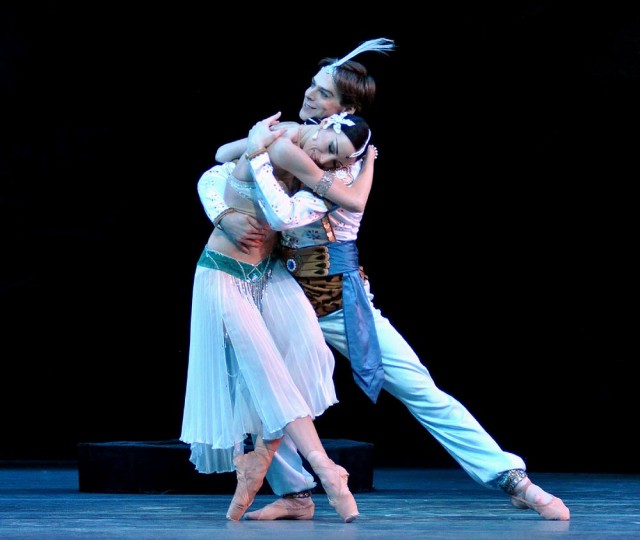
    Jr_bayadere_tereshkina_shklyarov_014_1000.sized

    Above: Tereshkina and Shklyarov in the Mariinsky production of BAYADERE; photo by John Ross.

    Vladimir Shklyarov completely won the Met audience’s collective heart tonight; enthusiastic applause greeted his solo passages and his partnering of Ms. Tereshkina was simply exquisite. Shklyarov’s dancing was marked by big virtuosity, his jumps sublimely floated and grandly elevated, his turns rapid and sure. His portrayal was marked by great tenderness for Nikiya and the despair of helplessly watching his beloved expire, forced by decorum to turn his back on her anguish. Remorse and guilt, and then the elation of finding Nikiya again among the Shades, were finely depicted by the danseur; by the time he stands before the Brahmin to be married, Solor is nearly mad, haunted by visions of his love.

    Ms. Tereshkina was everything one can hope for in a Nikiya; her dancing – all rooted in a stupendously strong technique – was refined, spiritual, and deeply musical. Forming a particularly resonant relationship with her partner, the ballerina reveled in the tenderness and ecstacy of their mutual love. In the solo danced before the betrothed Gamzatti and Solor, Tereshkina’s lithe and fluid body revealed the temple dancer’s sense of both duty and humiliation in a finely nuanced performance. In the Kingdom of the Shades, the ballerina attained a remarkable level of technique and artistry, re-affirming the great admiration I had felt when I first saw her dancing with the Kirov. She made a stunning spirit in the final scene as she drove the bridal couple asunder.

    When the final curtain fell on Nikiya and Solor ascending the stairway to heaven, the audience commenced an appreciative ovation that lasted longer than anything I’ve heard at the opera or the ballet in recent seasons. Tereshkina and Shklyarov bowed together several times, and even after the house lights were up and the gold curtain definitively closed, they were called out yet again. The audience clearly wanted solo bows, but the two stars remained resolutely a couple throughout the ovation.

    One especially lovely moment during the bows: Tereshkina came to the very edge of the stage and gave a deep curtsey to the musicians in the pit, thanking them with a sweeping gesture.

    I must remember in future not to spend the extra money for a balcony seat at ABT; there’s a massive invasion of the Balcony level from Family Circle: people who have paid less but want more clambering over me, marking seats with jackets and scarves, inquiring ‘Is that seat taken?’  The Met’s depleted ushering staff aren’t able to police the area, so this practice is virtually unimpeded. I myself retreated to the near-empty Family Circle once these eager, pushy people descended. I mean, if you are half-a-block from the stage, a few more yards either way hardly matters. But then, even during Shades, people continue playing musical chairs, much to the disadvantage of the performance. Had it been anyone other than Tereshkina, I probably would have left.

  • At NYC Ballet: Jonathan Stafford’s Farewell

    FY11 J.Stafford 10081JS_019

    Above: Jonathan Stafford, photo by Henry Leutwyler

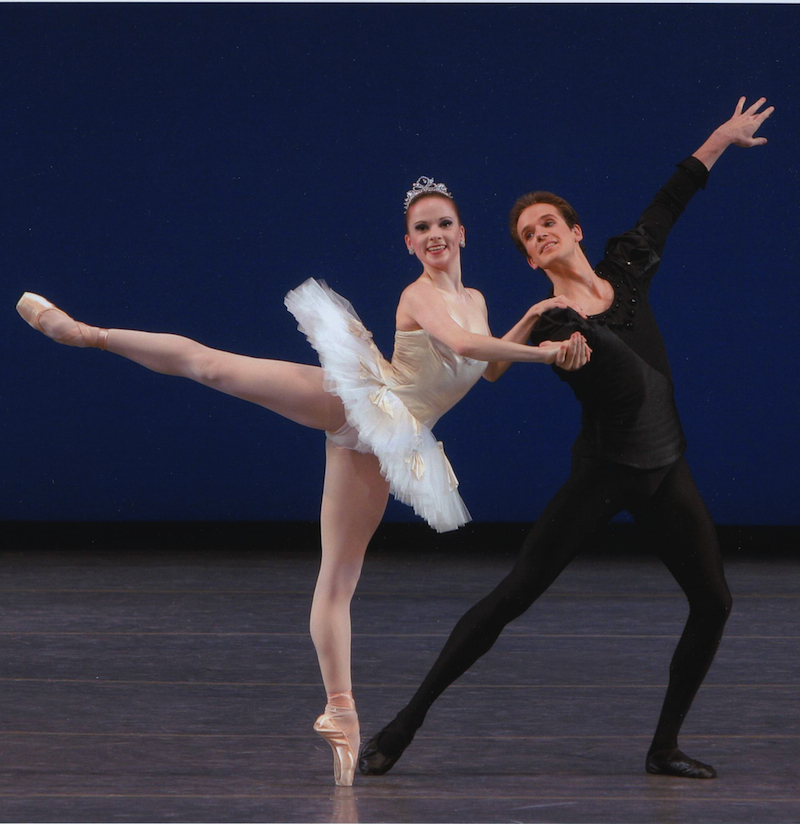
    Sunday May 25th, 2014 matinee – Jonathan Stafford’s farewell performance at New York City Ballet turned out to be not only a royal send-off for this all-American prince, but one of the finest performances that I’ve seen the Company give in recent seasons. Everyone – musicians and dancers alike – were really on their game and the affectionate tributes at the final curtain showed the sincere esteem and friendship in which his dancing colleagues hold Jonathan. It was a very emotional but also a truly happy farewell: the fact that Jon’s not going anywhere – he stays on with us as ballet master and also continues to teach at SAB – reassures us that we’ll continue to see him around Lincoln Center from time to time. It also would not surprise me if he pops up onstage again in an acting role some day.

    When I think of Jon Stafford’s dancing, two images immediately come to mind: his beautiful air turns – in several diifferent ballets – where he could effortlessly change from left turn to right in the blink of an eye; and a truly mirthful moment in the first-season performances of Ratmansky’s CONCERTO DSCH where Jon stood in place, simply jumping up and down endlessly, keeping a straight face the whole time. These two elements – technical finesse plus an ability to transform the simplest of movements into something vivid – have always made Jon’s performances so highly enjoyable to watch.

    6a00d8341c4e3853ef0120a7fc6fe3970b

    And then there’s the partnering: Jon is a prince of a partner (above, in CORTEGE HONGROIS with Maria Kowroski in a Paul Kolnik photo). At the end of this afternoon’s performance, the principal ballerinas and then the female soloists all came out to present Jon with bouquets; their hugs seemed particularly sincere because over the years he’s helped them all to look their best onstage.

    Symphony-in-C-AStaffordJStafford

    Siblings: Jon and his sister, NYCB principal ballerina Abi Stafford, in Balanchine’s SYMPHONY IN C, photo by Paul Kolnik. Jon and Abi danced together in EMERALDS this afternoon.

    2013_01_16_01_35_1742_09_ballet

    A special memory: Jon’s performances in Balanchine’s setting of Tchaikovsky Piano Concerto #2 during the 2008 season moved me to tears in the ballet’s second movement. I saw it several times that year, when Jon danced with Ashley Bouder (Paul Kolnik photos, above and below).

    Pk_tschaikovsky_piano_concerto_2_jonathan_stafford_ashley_bouder_ppd_1000

    Today Ashley danced the ‘other’ girl in EMERALDS and gave a remarkable performance. 

    10261998_10154135166880529_3211500853438514229_n

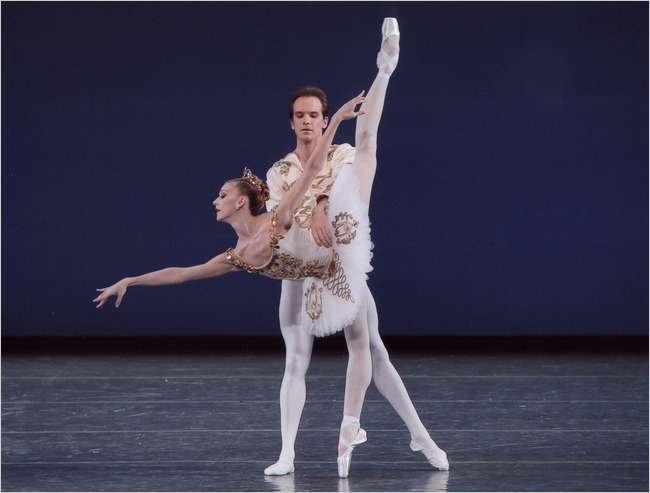
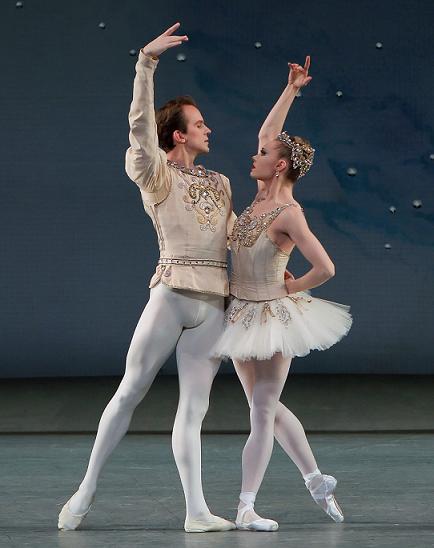
    Above and below: Jon in DIAMONDS with Sara Mearns

    C29896-8_MearJstafDiam

    Sara danced this role with Jon this afternoon, celebrating a grand finale to his NYCB career in high style.

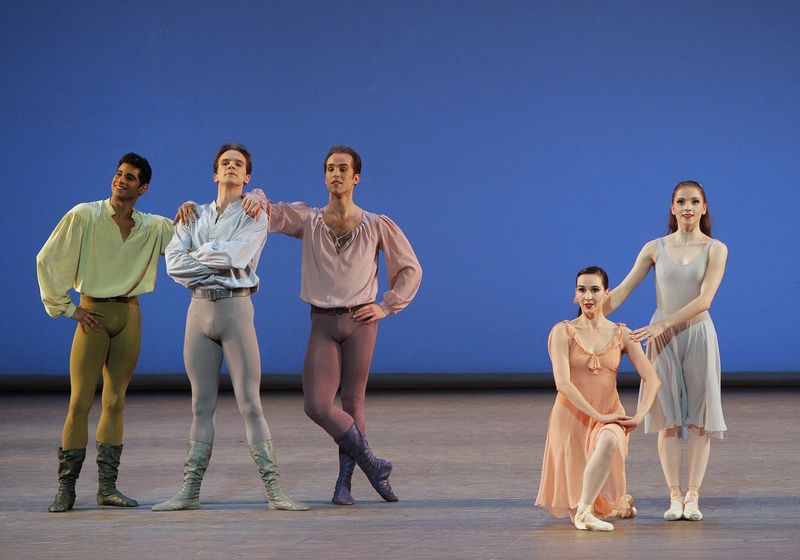
    Of course, ‘retirement’ performances always summon up a vast array of memories of the dancer being celebrated. Of the many evenings I have watched Jon Stafford onstage, I especially recall his perfect characterizations of several “Prince” roles: in FIREBIRD, in SLEEPING BEAUTY and in SWAN LAKE. From Balanchine, we enjoyed his LIEBESLIEDER, WESTERN SYMPHONY and NUTCRACKER cavalier, and from Robbins his IN THE NIGHT and DANCES AT A GATHERING (where he played “catch-the-ballerina” so memorably). Jon also made his mark in such diverse contemporary ballets as RUSSIAN SEASONS, VESPRO, LUCE NASCOSTA, OLTREMARE, and RIVER OF LIGHT; in the last-named Peter Martins ballet, Jon pulled off some thrilling one-armed lifts of Erica Pereira. His height and noble bearing made an outstanding impression as the venearble Father in PRODIGAL SON.

    Aside from dancing, Jon showed his organizational skills when he put together the 2008 Dancers’ Choice event, a performance I recall clearly to this day.

    6a00d8341c4e3853ef01310f1e4f4c970c

    Above: Jon with colleagues Amar Ramasar, Jared Angle, Jenifer Ringer and Abi Stafford in Robbins’ DANCES AT A GATHERING, a Paul Kolnik photo. Amar partnered Ashley Bouder in EMERALDS this afternoon and together they launched the afternoon with their elegant and truly inspired dancing.

    And so, now to the details of today’s performance. Guest conductor Koen Kessels was on the podium and as always the under-sung musicians of the NYCB orchestra played beautifully, especially in the Faure which was so moving today.

    Sometimes at a farewell, the actual performance is eclipsed by the event. Ashley Bouder and Amar Ramasar assured us immediately on curtain-rise that we were in for a super-JEWELS: save the confetti and flowers for later, we’re going to do some serious dancing! What a poetic atmosphere these two dancers created immediately, summoning up a quiet yet somehow electrifying bond between two charismatic personalities. Amar’s courtliness and Ashley’s lyric wistfulness played beautifully off one another. Complete enchantment.

    The iconic and perfumed solos which Balanchine created for the two principal ballerinas in EMERALDS were so expressively danced today by Ms. Bouder and Abi Stafford. And the gracious pas de trois was danced with lovely, refined virtuosity by Erica Pereira, Ashley Laracey, and Antonio Carmena.

    And then at last Jonathan appeared: the music here is too delicate to allow for applause for his entrance, but a murmur of excitement passed thru the House. Ever the dedicated cavalier, Jon devoted all his poetic energy to presenting his ballerina as if she were a precious jewel. Abi’s dancing, so light-filled and polished, had a calm radiance that ideally embodied the music. Together they were perfect.

    As EMERALDS moves towards its conclusion, the dancers walk slowly about the stage as the women begin to exit. In a beautiful moment, as Jon passed in front of Ashley Bouder, a subtle smile illuminated her face – a beautiful, personal homage from one dancer to another. 

    A sizzling performance of RUBIES followed: Sterling Hyltin was absolutely stunning in her virtuosity, toying with the music whilst reeling off pirouettes at improbable speed and creating a character at once elegant, provocative, and playful. She met her match in Andrew Veyette who, fresh from a triumphant guest appearance in THEME AND VARIATIONS at ABT, cut loose with some vibrantly jazzy moves to Stravinsky today. The imperial Teresa Reichlen danced a signature role in today’s RUBIES, wowing the audience with her extension and dazzling sexiness. At the close of the passage where she’s manipulated by four men into uncanny poses, Tess plunges into a deep Arabesque Pencée, eye-to-eye with Giovanni Villalobos; she holds his gaze with remarkable intensity: does she want to kiss him or kill him?  Huge applause today for the RUBIES principals and corps.

    And finally, DIAMONDS: Jon and Sara Mearns have created a special magic with their partnership in this ballet and the obvious shared joy of dancing beautifully together to beautiful music was tinged today by the knowledge that this would be the last time. Looking a bit forlorn at first, Sara was soon swept along by the gorgeous Tchaikovsky themes and the ardent support of her prince: her smile became luminous, her dancing grand and glorious.

    DIAMONDS was somewhat truncated today; eliminating the Scherzo meant that the demi-soliste women had less chance to dazzle us, but in the opening movement Gwyneth Muller and Gretchen Smith gave us some excellent dancing, their contrasting personalities drawing us in to the music.

    And so, inevitably, the stage is filled with dancers in white and gold, the opera glasses momentarily zeroing in on the individual dancers of the corps de ballet who make this Company what it is, with Sara and Jonathan at the helm of Balanchine’s jewel-encrusted masterpiece.

    What an extraordinary send-off for Jon: the respect and affection of his colleagues was shown in innumerable ways during the long ovation, streamers shooting down and bouquets being flung to the stage. The afternoon ended with Jon standing by a massive heap of flowers while the Company applauded him with sincere admiration.

    Jon kept us waiting a long time at the stage door (I think secretly he just wanted to sneak out after everyone had left!); Wei met me there after his work day and we were especially happy to catch up with Faye Arthurs, and to greet so many of the dancers we admire so deeply. I’m sure they were all exhausted and just wanting to have supper, or a beer, and rest their weary bones. But they all took the time to chat us up, reflect on their association with Jon, discuss the highlights of their season, and tell us their summer plans. They are such incredible, dedicated, passionate, and amusing people and I’m so grateful to all of them, both for their dancing and just for being themselves.

    At last Jon appeared and with a lovely mix of elation and exhaustion he thanked the intrepid fans who had stayed on to greet him. I mainly wanted to wish him a happy golf game!

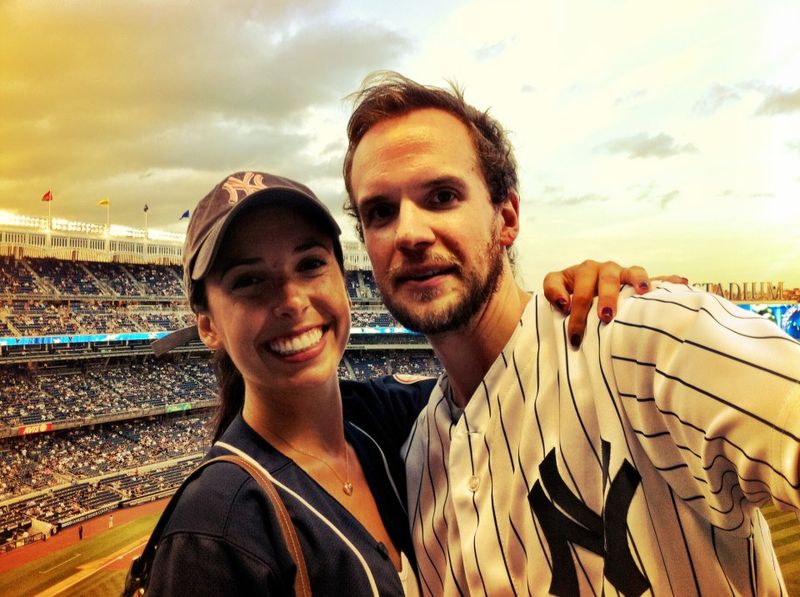
    On a personal note, Jon has his wedding to look forward to: in August he’ll be marrying New York City Ballet soloist Brittany Pollack. And here they are, at a Yankees game:

    253817_3683865459771_1041692134_n

    Best wishes, Brittany & Jon!

    703e0a8c201913cc7ebab0c7bcc60267

    And one more image of Jon, dressed by Valentino (above)…a class act if ever there was one. I’m sure to be seeing Jonathan around the Plaza in the months ahead, so there’s no real need to say ‘farewell’.

  • Score Desk for ARABELLA

    Glass_of_water_350

    Thursday April 24th, 2014 – Of Richard Strauss’s three well-known romantic-style masterpieces, ARABELLA is probably the most difficult to love. ROSENKAVALIER has its marvelous progession of waltzes to lilt the listener along, and CAPRICCIO boasts its gorgeous Moonlight Music and the Countess Madeleine’s radiant final scene. In ARABELLA the memorable music seems to come in fits and starts, and although the final scene is really appealing, it doesn’t quite match the sweep of either of the other two operas’ closing passages. 

    In ROSENKAVALIER there’s the double-feature of love (the May-September affair of Octavian and the Marschallin followed by the thrill of new, impetuous love discovered by Octavian and Sophie); in CAPRICCIO, the Countess’s choice between her two lovers is symbolic of the operatic dilemma of ‘which is of greater import in an opera: the words or the music?’  For Arabella and Mandryka, it’s love at first sight and it comes along just when the Waldner family most needs it to happen. The misunderstanding between the newly-pledged couple is quickly resolved and they can go forward without impediment. It’s a neat little plot but somehow it fails to touch the heart the way ROSENKAVALIER does; and ARABELLA‘s musical denouement doesn’t quite thrill us like CAPRICCIO‘s does.

    Despite these thoughts about ARABELLA‘s appeal, I was keen to experience the opera live again and it was a good performance overall, thanks largely to Philippe Auguin’s excellence on the podium. The orchestra of course played remarkably well and – unlike the three most recent conductors whose Met performances I have attended (Mssers. Armiliato, Noseda and Mariotti), Auguin knows how to scale the score’s dynamics so his singers are always audible and never seem pressured to over-sing.

    Though perhaps lacking the last bit of vocal glamour that makes for a truly memorable Arabella (Della Casa, Te Kanawa and Fleming each had it…and how!), Erin Wall sang the title-role quite beautifully: the voice is clear with a nice sheen to it. Her performance was slightly compromised in Act I by having to sing the opera’s most beloved passage – the duet for Arabella and Zdenka – with Juliane Banse who is simply not up to the role of Zdenka/Zdenko at this point in her career. But in her narrative to end the first act, Wall was really lovely and expressive, and she was equally impressive in Act II where the passionate duet for the just-met Arabella and Mandryka was the evening’s vocal high point. Later, as Arabella bids farewell to each of her suitors in turn, Wall made the most of each phrase. 

    Michael Volle, who I first heard on a tape from his appearance at Cardiff Singer of the World in 1993, has arrived at The Met. His voice is Met-sized and unimpeded throughout the range, and it’s got a nice, rather gritty edge to it when needed. His Mandryka was impressive, and hopefully he’ll be back in other repertory.

    Ms. Banse, who we heard earlier this season in the Mahler 4th at Carnegie Hall, has lovely instincts but she now sounds too mature and quavery for such a youthful assignment as Zdenka. Her vibrato rather spoiled the Act I duet with Arabella tonight and overall she just seemed mis-cast. Banse made some very fine recordings earlier in her career; this belated Met debut seemed a miscalculation by both the singer and the House. When the originally-scheduled Genia Kühmeier withdrew from this revival, The Met could have seized the opportunity to give the role to one of their blooming lyric-coloraturas – maybe Lisette Oropesa, Erin Morley, or Ashley Emerson: any of them would have been more vocally apt than Ms. Banse. They didn’t know the role? Callas learned Elvira in PURITANI in seven days, whilst singing Brunnhilde in WALKURE in the same time-frame. Surely any of these young Met girls – helped by The Met’s musical staff – could have whipped up a delectable Zdenka in even less time. Oh well, water over the dam…or under the bridge.

    The rest of the cast did well, notably Garrett Sorenson (Matteo) and Brian Jagde (Elemer); Martin Winkler was a loud Waldner. Audrey Luna successfully negotiated the high-flying roulades of the Fiakermilli, winning the audience’s acclaim. I was recalling my favorite Fiakermilli, Rita Shane, who sang it at La Scala in 1970, conducted by Wolfgang Sawallisch. I received a copy of it on reel-to-reel and incredibly, Ms. Shane had been permitted to interpolate a final high-D to end ARABELLA‘s second act (Fiakermilli’s coloratura normally just dwindles to nought). That’s the kind of thing you don’t hear every day.

    Although there were many empty seats this evening at The Met, ARABELLA – not usually a major box office draw – was better-attended than some recent performances. It was already 10:00 PM when the second intermission started and I had to weigh the idea of staying to the end or of getting home by midnight. Though I would like to have heard Ms. Wall in the opera’s final scene, the idea of another extended and droopy intermission turned me off. As I was leaving, it seemed several other audience members had the same idea.

    Metropolitan Opera House
    April 24, 2014

    ARABELLA
    Richard Strauss

    Arabella................Erin Wall
    Mandryka................Michael Volle
    Zdenka..................Juliane Banse
    Matteo..................Garrett Sorenson
    Adelaide................Catherine Wyn-Rogers
    Count Waldner...........Martin Winkler
    Fortuneteller...........Victoria Livengood
    Count Elemer............Brian Jagde
    Count Dominik.......... Alexey Lavrov
    Count Lamoral...........Keith Miller
    Fiakermilli.............Audrey Luna
    Welko...................Mark Persing
    Djura...................Jeffrey Mosher
    Jankel..................Timothy Breese Miller
    Waiter..................Mark Schowalter
    Card Player.............Scott Dispensa
    Card Player.............Seth Malkin
    Card Player.............Earle Patriarco

    Conductor...............Philippe Auguin