Category: Opera

  • BUTTERFLY @ The Met: First of Three

    Butterfly0607.12

    Above: dancer Hsin-Ping Chang in the Met’s production of MADAMA BUTTERFLY; photo by Ken Howard

    Monday January 20th, 2014 – Three sopranos are slated to sing Butterfly at The Met this season and I’ll be in the House for one performance by each; although I like the current BUTTERFLY production very much, as a matter of practicality I’ll be at a score desk for all three performances.

    Pierre Vallet, an assistant conductor at The Met, took over the baton tonight as the scheduled Philippe Auguin seems still to be indisposed. Vallet has worked at The Met for several seasons; tonight was only his second appearance on the podium (in 2011 he led a FAUST during which mezzo-soprano Wendy White suffered a serious onstage injury). He got BUTTERFLY off to a brisk start tonight with a nimble prelude, and although there were some moments when pit and singers were not precisely coordinated, overall he shaped a very appealing performance.

    Vocal honors tonight went to Bryan Hymel, the tenor who was a Met Auditions winner in 2000 and who returned to the House in triumph last season, replacing Marcelo Giordani in the arduous role of Aeneas in Berlioz LES TROYENS. Considering the difficulty, complexity and duration of many of the roles in Bryan’s current repertory, Pinkerton must seem like something of a ‘vacation role’ (that’s how Birgit Nilsson referred to Turandot). He sang with clear lyric thrust, with easy and sustained top notes zooming out into the House. The voice is fragrant and passionate; I had looked forward very much to hearing him in the aria and trio of the opera’s final act but in the event I didn’t end up staying that long.   

    Tonight’s Butterfly, the South African soprano Amanda Echalaz, revealed a vibrant and somewhat metallic timbre; her voice – which I would describe as ‘big lyric’ – projects well, but tonight much of the time she tended to sing sharp. This offset any pleasure I might have derived from her singing. By the end of the first act I’d decided that I’d heard enough, and I headed home after the love duet. The soprano’s bio indicates that BALLO and SALOME are in her rep; I’m wondering if she’ll wear herself out prematurely.

    Tony Stevenson was an outstanding Goro: clear and musical in his presentation, he sang the role more as a lyric than a ‘character’ tenor. The pleasing singing of Elizabeth DeShong as Suzuki was another possible reason to stay beyond the first intermission but there was no guarantee that Ms. Echalaz would overcome her sharpness, and the rest of the opera is a long haul if the Cio-Cio-San is off the mark. Scott Hendricks’  Sharpless was reasonable enough and Ryan Speedo Green was a strong Bonze.

    All the elements were here for a good BUTTERFLY except the essential one: a vocally inspiring heroine. In the coming weeks Kristine Opolais and Hui He will be taking on Butterfly at The Met and hopefully one or both of them will sustain my interest to the end of the opera. 

    Metropolitan Opera House
    January 20, 2014

    MADAMA BUTTERFLY
    Giacomo Puccini

    Cio-Cio-San.............Amanda Echalaz
    Pinkerton...............Bryan Hymel
    Suzuki..................Elizabeth DeShong
    Sharpless...............Scott Hendricks
    Goro....................Tony Stevenson
    Bonze...................Ryan Speedo Green
    Yamadori................Alexey Lavrov
    Kate Pinkerton..........Maya Lahyani
    Commissioner............Paul Corona
    Yakuside................Craig Montgomery
    Mother..................Belinda Oswald
    Aunt....................Jean Braham
    Cousin..................Patricia Steiner
    Registrar...............Juhwan Lee
    Dancer..................Hsin Ping Chang
    Dancer..................James Graber

    Conductor...............Pierre Vallet

  • Franziska Martienssen-Lohmann

    C8b84d7be6

    In an on-line quest for something totally unrelated, I came upon this photo of Franziska Martienssen-Lohmann; something about her face intrigued me and I began to search for information about her.  

    Watch a brief video about this lieder singer who became a notable – though now largely forgotten – voice teacher; as prelude, another video links Mme. Martienssen-Lohmann to the great soprano Elisabeth Grummer.

    Mme. Martienssen-Lohmann wrote five books on various aspects of singing; aside from Elisabeth Grummer, other singers who worked with Martiessen-Lohmann included Maria Stader, Ingrid Bjoner, Jutta Vulpius and Judith Beckmann.

  • Wotan’s Farewell: John Wegner

    Wegner

    After listening to John Wegner’s very impressive performance as Alberich in the State Opera of South Australia’s recording of DAS RHEINGOLD, I was thinking he’d probably be an equally good Wotan. And sure enough, I found this highly enjoyable version of the final scene of DIE WALKURE with Mr. Wegner (photo above) as the king of the gods and conducted by Gunther Neubold.

  • RHEINGOLD from Australia

    Das Rheingold

    The State Opera of South Australia mounted Australia’s first home-grown production of Wagner’s RING Cycle in 2004; conducted by Asher Fisch and directed by Elke Neidhardt (who recently passed away), the production – which made international operatic headlines – was recorded live and issued on CD in excellent sound.

    I’d already heard and enjoyed Act I of the production’s WALKURE and was equally impressed by the RHEINGOLD. Mr. Fisch, leading the Adelaide Symphony, has an sense of pacing the work that seems at once propulsive and spacious, and he revels in revealing layers of the orchestration that make the opera seem fresh. The playing is rich and there’s a fine sense of grandeur and sonic depth.

    The cast for the most part is very fine, and the Alberich – John Wegner – is simply superb. This bass-baritone, with a 25-year career in the opera world, knows the ins-and-outs of this treacherous role and sings it with power and passion.

    John Bröcheler – who I heard as Don Giovanni and Nabucco at New York City Opera in the 1980s – is a somewhat blustery Wotan; his singing is not always beautiful but it’s surely characterful…a god drunk on his own power. Excellent giants (Andrew Collis and David Hibbard) and Mime (Richard Greager), and a vocally alluring Erda (Liane Keegan). Christopher Doig (who passed away in 2011) steers a middle ground between lyric and dramatic-character tenor as Loge. The Rhinemaidens are well-blended and along with Mr. Wegner they make the opera’s opening scene vivid, finely abetted by the conductor.  

    WAGNER Das Rheingold Asher Fisch, conductor; John Bröcheler (Wotan); John Wegner (Alberich); Christopher Doig (Loge); Richard Greager (Mime); Andrew Collis (Fasolt); David Hibbard (Fafner); Elizabeth Campbell (Fricka); Kate Ladner (Freia); Liane Keegan (Erda); Timothy DuFore (Donner); Andrew Brunsdon (Froh); Natalie Jones (Woglinde); Donna-Maree Dunlop (Wellgunde); Zan McKendree-Wright (Flosshilde)

  • In The Beginning

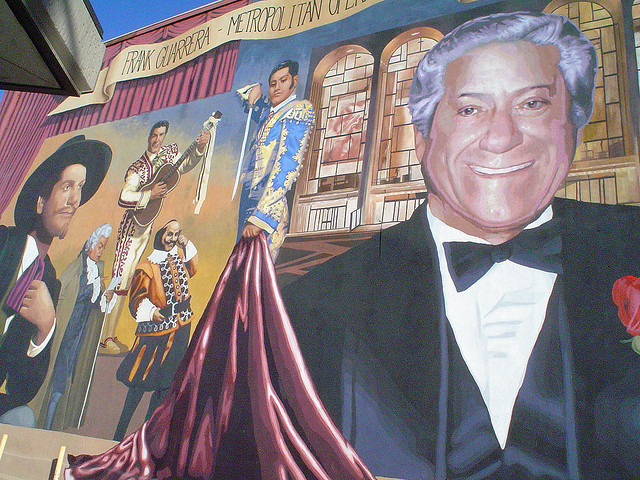
    Guarrera mural

    Above: a huge mural in Philadelphia honors that city’s native son, baritone Frank Guarrera, who sang Rigoletto in the first opera performance I ever attended.

    People have often asked me about my earliest operatic experiences and how I became engrossed in this ‘exotic and irrational’ art form. Although it all began for me in 1959 when I chanced to see Renata Tebaldi performing excerpts from MADAMA BUTTERFLY on The Bell Telephone Hour, it was actually attending a performance in the theater three years later that got me hooked. And to this day nothing – not recordings, radio broadcasts, televised performances, HD theatercasts – can compare with being in an opera house and experiencing opera in its natural habitat.

    I was a very unhappy boy, growing up in that small town and feeling totally out-of-sync with the people who lived there, and especially alienated from my peers. I had been stricken with rheumatic fever at age five, and was in a hospital bed (at home) for several weeks; I actually had to learn to walk again, and I sometimes think this had a profound effect on my development. On re-entering school, I was thououghly lacking in self-confidence, lonely and reclusive; and by the time I was ten I began to realize just how different I was from the other boys my age. 

    Watching that Tebaldi telecast was such a revelation. From the brief narration I had only the vaguest grasp of what BUTTERFLY was about; but the effect of this large, handsome woman wearing a kimono and singing in a foreign language bowled me over. I knew instinctively that life changed for me during that half-hour. But once smitten, where could I turn?

    My poor parents, how difficult it must have been for them having this weird child on their hands! My brother was a handful in his own way, though a typical late-1950s teenger: a James Dean-type who smoked, carried a switchblade, and sometimes brushed up against the local sheriff. My sister was popular, very involved in school activities, an all-American girl. But there was no instruction manual – especially in that neck of the woods – for raising an eccentric, introverted, feminine boy like me.

    Going with the flow as best they could, my parents gave me a two-LP album of Verdi and Puccini arias sung by great RCA recording artists like Milanov, Albanese, Peerce, Bjoerling, Merrill, Warren and Tozzi. I wore it out in no time. Then I discovered the Texaco Metropolitan Opera Saturday radio broadcasts (Sutherland’s 1961 LUCIA was my first) and things moved to another level. No one was allowed to disturb me during those afternoons, and I had a big old reel-to-reel deck and used a microphone to tape the operas off the air. I played the tapes over and over: that’s how I learned the repertory. I subscribed to OPERA NEWS and sent fan mail to singers I heard on the airwaves. I still have the letters and signed photos they sent me.

    So it only remained to actually attend an opera performance. Every summer at the end of June, my father would close the drug store he owned for two weeks and take us on a car trip. We went to Maine, Boston, Washington DC, Niagara Falls. My mother hated those trips: she loved sleeping in her own bed and usually found fault with the motels where we stayed. But it was my dad’s annual opportunity to get away from it all, and so – being a good wife – she obliged.

    I had found out about the Cincinnati Summer Opera festival, held at the local zoo. As my father was casting about for a place to go in July 1962, I put forth the idea of attending an opera. He thought the venue might be interesting, and that we could combine the trip with an excursion to the horse farms of Kentucky. Opera tickets were ordered by mail, and at last we were off: on July 7th, 1962, in a production of painted flats and very traditional costumes and staging, RIGOLETTO unfolded before me.

    The names and voices of the announced principals were familiar to me from hearing them on the Met broadcasts: Laurel Hurley, Barry Morell, and Frank Guarrera. A news item in the local paper had momentarily burst my bubble: Ms. Hurley was ill and would be replaced as Gilda by Nadja Witkowska. But by the time the conductor, Carlo Moresco, struck up the prelude, nothing else mattered: I was at the opera!

    I remember that Ms. Witkowska produced exciting high notes, that Mr. Morell’s voice was clear and warm, with a trace of a sob here and there; and that Mr. Guarrera sang strongly and really moved me with his “Pieta, signori!” sung prone on the stage, his face an inch or two off the floor. Irwin Densen, a basso who had a very long career and who I would see many times in years to come, was Sparafucile. And a devilish-looking tenor in a black beard and wearing black tights and tunic gave me – sub-consciously – a sexual frisson when he apeared as Borsa. That was Andrea Velis, a prominent Met comprimario. Another Met stalwart, Gene Boucher, was Count Ceprano.
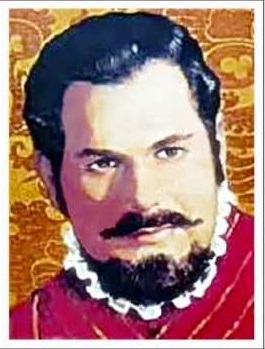
    B morell

    Barry Morell (above) sang the Duke of Mantua

    After the performance I went backstage to meet the singers; oddly, I did not ask for autographs. I’ll never forget when Frank Guarrera came out to greet the fans: he had received a negative review for his prima performance, two nights earlier, from a woman named Eleanor Bell writing for the local newspaper. The crowd burst into applause and bravos when he emerged from the dressing room and as he began to sign autographs, he shouted triumphantly: “To hell with Eleanor Bell!”

    I think my parents actually had a good time: they took me back to the Zoo Opera for the next two summer vacations. We saw Licia Albanese singing her 100th Violetta (with Morell and Guarrera) and we saw Adriana Maliponte as Massenet’s Manon (with Morell and Guarrera) along with a TROVATORE starring Martina Arroyo and Irene Dalis. And my parents also took me to the Old Met, where I saw the Eugene Berman DON GIOVANNI – the first of eight performances I saw at the Old House – just days after John F. Kennedy had been assassinated.

    Finally, in late summer 1966, I was allowed to make my first solo trip to New York City to be on the first ticket line for the New Met. After that, there was no stopping me.

  • The Opera Lenz

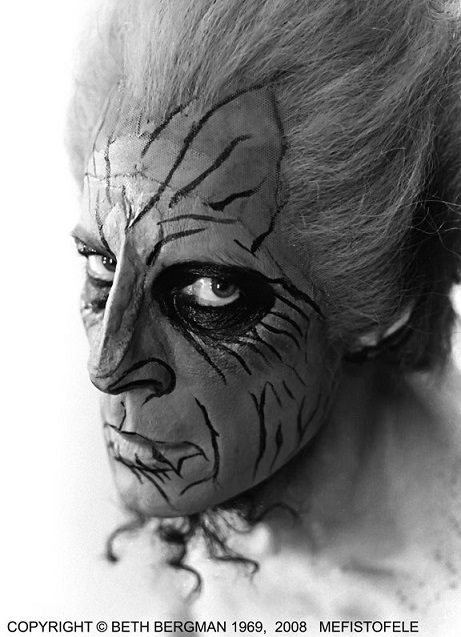
    MefistoA14EM

    Above: the great basso Norman Treigle as Mefistofele in the Boito opera at New York City Opera 1969; photo copyright Beth Bergman.

    I have just discovered Ms. Bergman’s blog, The Opera Lenz, which features images from her years working at New York City Opera, the Metropolitan Opera, and music venues in our City.

    The photos bring back so many memories: I even found pictures of Nadja Witkowska – the soprano who sang in the very first opera performance I ever saw (RIGOLETTO at the Cincinnati Zoo in 1962!) – when she attended a NYCO reunion in 2012. And there’s a lovely tribute to Claramae Turner (Toscanini’s Ulrica) who passed away in 2013. And so much more…both photos and recollections.

    Beth Bergman’s other site, The Beth Lenz, features many incredible images from nature.

  • Score Desk for TOSCA @ The Met

    Tosca_(1899)

    Friday December 20, 2013 – Having greatly enjoyed the Portuguese soprano Elisabete Matos in her two previous roles at The Met (Minnie in FANCIULLA DEL WEST and Abigaille in NABUCCO) I was very much looking forward to her single scheduled Met performance of the current season. But since the Bondy production of TOSCA is such an eyesore, I opted for a score desk tonight as Matos sang her second Puccini role at The Met. {Rumor has it the Bondy production will soon be seen for the last time here in New York City; however, we cannot be sure of getting something better in their place.}

    A great many empty seats in the House was not a good sign; and the audience tended to laugh freely at the MetTitles making me think there were a lot of newbies present. But Marco Armiliato, on the podium for an opera that suits him to a T, gave an extroverted, blood-and-thunder reading of the score. The first act especially was genuinely exciting in every regard.

    Two bassos with enormous voices set the tone for the performance: Richard Bernstein was a capital Angelotti and John Del Carlo a stentorian Sacristan. Marcello Giordani, that most unpredictable of tenors, served notice in “Recondita armonia” that he was really in voice tonight. The aria was generously sung, with clear and expressive phrasing, a thrillingly sustained foray to the climactic B-flat, and a fine diminuendo to a very long piano on the last note.

    Ms. Matos and her tenor then gave a vididly declaimed version of the lovers’ banter and they were really exciting in the sustained passages of the ensuing love duet. George Gagnidze’s Scarpia added more decibels to the evening, and his dramatic inflections were spot on. Ms. Matos lost points with me only on the phrase “Tu non l’avrai stasera…giuro!” where she shrilled on the final word: I like to hear this done in chest voice (or sung ‘from the crotch’ as we used to say of Tebaldi). Mr. Gagnidze and the Met chorus brought the act to a thunderous conclusion with the Te Deum.

    Then, as so often happens at The Met these days, a long intermission seemed to drain the energy from the evening; and I have never heard such banging, thudding and shouting from behind the curtain as the stagehands struck the set.

    Act II found the principals and conductor doing their utmost to restore the dramatic tension siphoned away by the long interval. Mr. Giordani produced an amazingly sustained “Vittoria!” and Mr. Gagnidze was thoroughly impressive in every regard. Ms. Matos struck off steely but not always stable high notes and made a strong dramatic impact with Tosca’s iconic lines: “Assassino! Voglio vederlo!”, “Quanto?…il prezzo?”, “Ah…piuttosto giu m’avento!” and “E morto…or gli perdono!”: these were all delivered with the intensity of a seasoned verismo diva. Her rendering of the great aria “Vissi d’arte” was persuasive in its vulnerability and the prolonged top B-flat at the climax was exciting though she could not sustain the following descending phrase of A-flat and G…and the conductor did nothing to aid her.

    Faced with another extended intermission, I left after the Act II curtain. I would like to have heard Giordani’s “E lucevan…” and the big duet and the opera’s flaming finale, but the thought of another lull diminished my enthusiasm.

    Metropolitan Opera House
    December 20, 2013

    TOSCA
    Giacomo Puccini

    Tosca...................Elisabete Matos
    Cavaradossi.............Marcello Giordani
    Scarpia.................George Gagnidze
    Sacristan...............John Del Carlo
    Spoletta................Eduardo Valdes
    Angelotti...............Richard Bernstein
    Sciarrone...............Jeffrey Wells
    Shepherd................Thatcher Pitkoff
    Jailer..................David Crawford

    Conductor...............Marco Armiliato

  • New Chamber Ballet: Baecher and Magloire

    1426491_541344345952393_316149436_n

    Saturday November 23, 2013 – New Chamber Ballet‘s 2013-2014 season continued this evening with a program featuring a Miro Magloire premiere and a revised version of a Constantine Baecher ballet. As always at New Chamber Ballet, live music was an essential component of the performance: pianist Melody Fader and violinist Doori Na were in their element, particularly in the very demanding (commissioned) score by Michel Galante for Miro’s new ballet.

    In Miro’s “A Present” which opened the evening, three women (Elizabeth Brown, Holly Curran, and Amber Neff) go to great lengths to have and to hold onto a necklace which has been sent them by an unknown admirer. A note is enclosed with the gift, but we never learn who it is from or what it says. After some under-handed pilfering and a frantic chase, the bauble is destroyed and the note torn to shreds. Doori Na played a suite of melodies from Tchaikovsky’s Nutcracker, arranged for solo violin, while the three girls fought for possession of the mysterious gift.

    Another conflict ballet comes in the form of Miro’s “Sister, My Sister” wherein dancer Amber Neff is annoyed – to the point of becoming homicidal – by her sister, soprano Charlotte Mundy. The Morton Feldman score calls for Ms. Mundy to vocalize on single, sustained notes. This gets under her sister’s skin. Melody Fader and Doori Na (unseen) played the angular Feldman score as the two women battled it out.

    “Stay With Me”, the new Magloire/Galante collaboration, is perhaps Miro’s finest achievement to date. There are narrative undercurrents but no specific scenario is suggested: the ballet is essentially two duets – the first for Holly Curran and Traci Finch and the second danced by Ms. Curran with Sarah Atkins. The girls wear simple tights and halter tops. In the first duet, Holly and Traci dance an entwined mirror-image adagio; Traci at one point executes a wonderfully fluid backbend. Sarah Atkins silently observes the end of the Traci/Holly duet and then she takes Traci’s place – as the latter walks away – and continues the dance with Holly. The choreography presents a stylized language of intimacy, and the mystery of who these women are and what they mean to one another remains unsolved as the ballet ends.

    IMG_20131117_220510_edited

    Above: dancers Holly Curran and Traci Finch in a rehearsal image by Amber Neff

    The Galante score for “Stay With Me” is fascinating and it challenges the two musicians in terms of both technique and stamina. The piece opens with both piano and violin playing in the highest range. Doori’s violin slithers up and down rapid chromatic scales or lingers for measure after measure on a single pinging tone, while Melody at one point produces a series of sweeping downhill glissandi covering the full keyboard; elsewhere the piano writing favors ethereal high shimmers. Kudos to these two musicians for their spell-binding performance. “Stay With Me” is a ballet I will want to see and hear again soon.

    Constantine Baecher’s “Allow You To Look At Me” was originally a sort of joint-biography of Mr. Baecher and dancer Elizabeth Brown and their long-time association. In tonight’s revision, now titled “Allow You To Look At Me Again” that intensely personal element has been discarded in favor of a more generalized narrative about what it means to perform and to expose oneself to public scrutiny. Narrator Jonathan Parks-Ramage now reads the biographies of each of the three participants – Ms. Brown, Holly Curran and Mr. Baecher – rather than the former poetic story of Constantine and Elizabeth’s mutual admiration. At the piano, Melody Fader plays familiar melodies which underline the personal facets of each dancer’s self-view. The solo for Elizabeth Brown, danced to Debussy’s ever-poignant Clair de Lune, was the evocative apex of the ballet and a lovely portrait of this dictinctive dancer. The work, though now less personal, remains powerful.


  • Celebrating Britten @ The NY Philharmonic

    2926592313

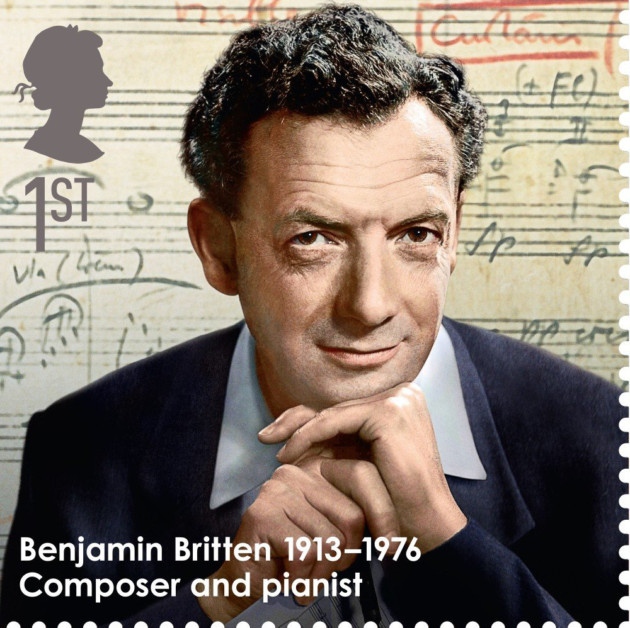
    Thursday November 21, 2013 – The New York Philharmonic‘s celebration of the 100th anniversary of the birth of Benjamin Britten was a lovely fête which brought forth the composer’s familiar Serenade for Tenor, Horn and Strings and the less-frequently-performed Spring Symphony.

    The performance took on added drama when the scheduled tenor was forced to withdraw for health reasons literally on the eve of the concert. This caused the Philharmonic to launch a desparate search for tenors who could 1) sing this demanding music and 2) were available on such short notice. Things turned out very well indeed, with a disarmingly attractive performance of the Serenade by Michael Slattery and a thoroughly impressive rendering of the Spring Symphony by Dominic Armstrong who, as Maestro Alan Gilbert told us, had never so much as looked at the score til the morning of the performance.

    The richly emotional Serenade for Tenor, Horn and Strings opens and closes with solo passages for horn which are played without use of the valves that stabilize pitch. The instrument is difficult enough to play as it is – I know: I played horn in high school – but Britten throws in this extra complication to render the sound with a ‘hunting horn’ ambiance. Thus the Philharmonic’s formidable principal horn, Philip Myers, appeared onstage with two horns – one for the Prologue and Epilogue, and the second ‘normal’ horn for the remaining movements of the work.

    Britten sets the Serenade’s poems, which span five centuries of English verse, in the upper range of the tenor voice; this gives the music an air of rather eerie innocence, yet the singer must also show great maturity in terms of both technique and sensitivity to the texts. The vocal movements are: “Pastoral” (with text by Charles Cotton), a hymn to sunset which sounds like a lilting lullabye; “Nocturne” (to words by Alfred, Lord Tennyson), where the horn calls echo as evening falls over the land; William Blake’s “Elegy”, which addresses a dying rose and is tinged with plaintive melancholy. In the Serenade‘s most unsettling passage, to an anonymous 15th-century text, the “Dirge” is a fugue of relentless, creeping madness evoking the fires of Hell which will ‘burn thee to the bare bone…and Christ receive thy soul’ (this song haunts me for days everafter whenever I hear it). In sharp contrast, Ben Jonson’s “Hymn” is light-hearted and upbeat, bringing the singer’s task to an ‘excellently bright’ conclusion. As the voice falls silent, the offstage horn closes the Serenade on a benedictive note.

    M slattery

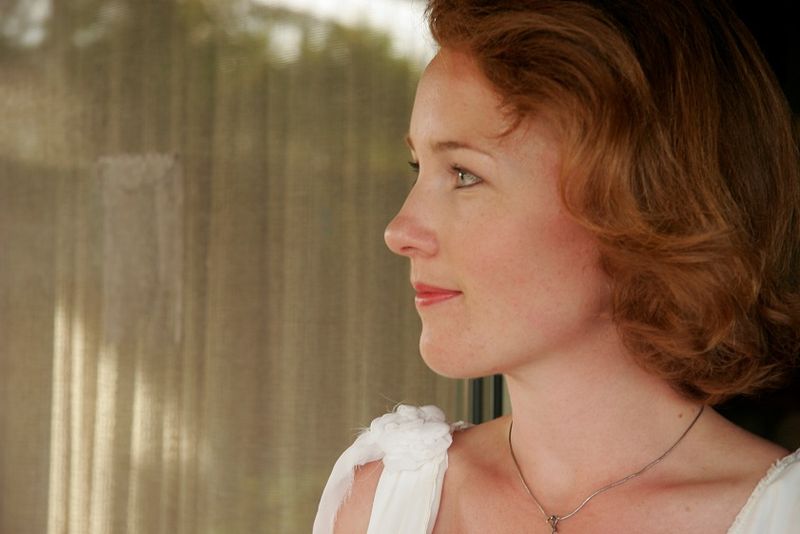
    I had heard tenor Michael Slattery (above) often during his time at Juilliard, and was pleased to be present at his impromptu Philharmonic debut tonight. Slender and boyish in his elegant tux, Michael took the high tessitura in stride, with many felicitous passages of vocal color and inflection: his diction was clear and touchingly expressive. Philip Myers played with gleaming, burnished tone and exceptional power in the phrases that serve as a counter-poise to the voice. Maestro Gilbert drew evocative playing from the string ensemble, and the entire performance had a nocturnal incandescence that was truly pleasing. Michael Slattery reacted with disarming sincerity to the audience’s warm applause, being called out with Mr. Myers and the conductor for extra bows.

    The Spring Symphony was commissioned by the Koussevitzky Music Foundation and is dedicated to Serge Koussevitzky and the Boston Symphony Orchestra though it was actually premiered at the Conncertgebouw in Amsterdam during July 1949 before its American premiere the following month at Tanglewood by Koussevitzky and the BSO. Britten calls for a huge orchestra, adult and children’s choruses, and three vocal soloists. The score is dazzling in its range of instrumental colours and textures, and the texts include both hymns of praise to the coming of Spring and some charming moments of levity in depicting day-to-day happenings. This work is quintessentially British: the poems invoke English pastoral imagery and the deftly ‘sudden’ ending – “And now, my friends, I cease” – is punctuated by a  plump C-major chord.

    Maestro Gilbert marshalled his forces for a thoroughly impressive and enjoyable performance: a special “hurrah” for the Brooklyn Youth Chorus who are called upon to both sing and whistle. The ‘save the day’ performance by tenor Dominic Armstrong revealed an attractive voice with mastery of dynamics and colours as well as of textual incisiveness that belied his unfamiliarity with the work. The slender and very pretty soprano Kate Royal has a feather-light lyric soprano and sang charmingly while the distinctive voice of Sasha Cooke – heard only two days earlier at Chamber Music Society – stood out for glowing tone and poetic resonance.

    This was my first time experiencing the Spring Symphony – I’d never even heard it on a recording – and it was a very good idea of Maetro Gilbert’s to choose it as a birthday salutation for the composer, for it is not often performed.

    I must register one tiny complaint – nothing to do with the music or the musicians – but I do wish that plastic water bottles could be banned from the concert stages. In the ‘old days’ small tables were set next to the soloists’ chairs with glasses of water which the singers could sip decorously between numbers. Now we have a distracting ritual of bending over, uncapping the bottle and gulping away like basketball players on the bench. The ‘old way’ of hydrating is much more elegant, and far less conspicuous.

  • Martha Graham’s ‘Hérodiade’

    Miki herodiade

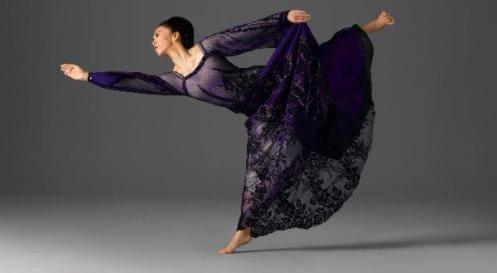
    Above: Miki Orihara in Graham’s Hérodiade

    Wednesday November 20, 2013 – Two of today’s foremost interpreters of the works of Martha Graham – Miki Orihara and Katherine Crockett – appeared tonight in a studio showing of the great choreographer’s 1944 work Hérodiade. As a splendid prelude, Ms. Crockett also danced Spectre-1914. It was an evening that resonated for me in so many different ways.

    Martha Graham Dance Company‘s artistic director Janet Eilber welcomed an overflow crowd to this second of three presentations of this programme. The Company’s spacious studio/theater on the eleventh floor of the Westbeth complex had been hung with black drapes, and after Ms. Eilber’s brief remarks, the majestic Katherine Crockett appeared to dance Spectre-1914, the opening solo from Martha Graham’s Chronicle.

    6a00d8341c4e3853ef0168eb764f31970c-800wi

    Above: Katherine Crockett, photographed by Matt Murphy

    Chronicle, dating from 1936, is Graham’s powerful statement on the devastation and futility of war; it is a great masterwork for female ensemble and it opens with a magnificent solo in which the dancer manipulates a voluminous skirt lined in red fabric to evoke both the bloodshed and the flames of war.

    Spectre-1914 had all but passed from memory until 1994 when it was researched and reconstructed by Terese Capucilli and Carol Fried, using film clips and still photos by Barbara Morgan. May Terpsichore bless these women for their efforts, for Spectre-1914 is as powerful a dancework as may be found, and it was danced tonight with marvelous amplitude and a deep sense of consecration by the marvelous Katherine Crockett. The audience beheld the dance in an awed state of pin-drop silence.

    Noguchi herodiade set

    Above: the Isamu Noguchi set pieces for Martha Graham’s Hérodiade

    After the Noguchi setting had been swiftly installed in the space, we watched a full performance of Graham’s ballet Hérodiade. Set to music by Paul Hindemith and commissioned by Elizabeth Sprague Coolidge for the Library of Congress, the ballet was originally called Mirror Before Me, and was first seen on October 30, 1944, at the Elizabeth Sprague Coolidge Auditorium, Library of Congress, Washington, D.C. Writing of that performance for the New York Times (November 1, 1944), critic John Martin said: “Miss Graham has created a powerful study of a woman awaiting a ‘mysterious destiny’ of which she has no knowledge…into it she has poured a somber tension that is relentless and altogether gripping. The music is rich and dark in color and the action on the stage meets it magnificently on its own terms.”

    That music, scored for chamber orchestra, was written by Paul Hindemith, a composer perhaps best-loved in the dance world for his superb Four Temperaments, choreographed by Balanchine.

    When I received the announcement that Hérodiade would be performed this evening, I suppose my natural reaction as an opera-lover was that it would be a dance about the Biblical princess Herodias and her daughter Salome and their conspiracy to have the prophet John the Baptist executed. But that is not the case: there are no allusions to either the Strauss or Massenet operas, nor to the Bible, nor to Oscar Wilde who penned the famous play Salome – Salome does not figure in the Graham work at all.

    Martha Graham had been interested in the poem Hérodiade by Stephane Mallarmé and in creating her ballet, the choreographer eschewed a specific narrative and instead turned to an abstraction of the character. Herodias is never named; she is simply referred to as ‘A Woman’. In Graham’s description, we see “a glimpse into the mirror of one’s being,” and she refers to this Woman as ‘doom-eager’, going forth with resolve to embrace her destiny.

    The Hindemith score is in eleven short movements, and we watch with intense interest as the radiant Miki Orihara, as the Woman in a deep violet gown, and the more austere Ms. Cockett, her Attendant in simple grey, move about the space. The choreography is restless and urgent, the Woman clearly obsessed with whatever fate awaits her while the Attendant seeks to comfort or forestall her mistress. The two dancers were simply engrossing to behold: Miki often in rapid, complex combinations moving swiftly about the stage while Katherine deployed her uncanny extension with mind-boggling expressiveness.

    In the end, Miki steps out of her rich gown and is revealed in virginal white; the Attendant withdraws and the Woman, taking up a black veil, contemplates her destiny. Mysterious, and all the more powerful for the unanswered questions it raises, Hérodiade is breath-taking.