Category: Opera

  • The Virtuoso Clarinetist @ CMS

    David_shifrin

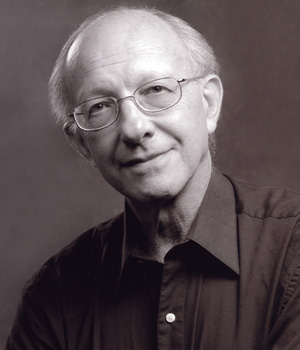
    Above: clarinet virtuoso David Shifrin

    Tuesday November 19th, 2013 – A delightful programme of music celebrating the clarinet was featured at Chamber Music Society of Lincoln Center. The Society gathered a distinctive ensemble of artists tonight, among them one of my favorite singers, mezzo-soprano Sasha Cooke. This week I have the pleasure of experiencing Sasha’s artistry twice, for she follows up tonight’s chamber evening with performances of Britten’s Spring Symphony with the New York Philharmonic. 

    The Society’s Wu Han greeted us with irrepressible, energetic charm; she explained that she had left the evening’s programming up to Mr. Shifrin and then turned the stage over to the musicians. A packed house seemed eager to hear everything that was offered: again, CMS is the place to be for serious music-lovers.

    The evening commenced with an unusual Mozart adagio for two clarinets and three basset horns (K. 411) which the composer purportedly arranged as a sort of entree for the members of the Masonic lodge which he had joined in 1784. The piece is brief, with organ-like sonorities.   

    Sasha_Cooke_-_profile_-_credit_Rikki_Cooke

    Above: Sasha Cooke, photo by Rikki Cooke 

    In the splendid aria “Parto, parto…” from Mozart’s penultimate opera, LA CLEMENZA DI TITO, Sasha Cooke’s timbre seems to have taken on an added richness since I last heard her. The singer’s expressive qualities were, as ever, to the fore, and the power and beauty of her interpretation made me long to hear her at The Met again where lesser artists hold forth in roles that would suit Ms. Cooke to perfection. Be that as it may, her singing of the aria tonight, graced by Mr. Shifrin’s polished roulades, was a thoroughly engrossing musico-dramatic experience.  The Opus One Piano Quartet’s first-rate playing of this chamber arrangement was an ideal compliment to the singer and clarinetist. 

    Leaping forward from the 18th century to the 21st, Sasha Cooke displayed her versatility in the New York premiere performance of Lowell Liebermann‘s Four Seasons. In setting poems by Edna St. Vincent Millay, the composer seems to me to have crafted a contemporary masterpiece: his highly evocative, coloristic writing summons visions of the changing seasons with spine-tingling textures. There are several remarkable passages – the transition from Spring to Summer was especially marvelous – and the composer set The Death of Autumn twice, with the singer’s poetic response to the text varying in mood between the two. A chilly misterioso motif depicts swirls of snowflakes at the singer intones the beautiful ‘What lips my lips have kissed’ and the work closes with the poignant recollection of lost love: ‘But you were something more than young and sweet and fair – and the long year remenbers you’.

    Sasha Cooke, with her gift for communicating not just words but emotions, gave a sublime performance of this fascinating new work; Mr. Shifrin and the musicians of Opus One – Anne-Marie McDermott, Ida Kavafian, Steven Tenenbom and Peter Wiley – produced a glowing soundscape in which the voice was heard in all its affecting radiance.

    Following the intermission, Stravinsky’s Berceuses du chat were performed by Ms. Cooke and three clarinetists: Mr. Shifrin, Romie De Guise-Langlois, and Ashley William Smith. These wryly charming  lullabies were sung with soulful ‘Russian’ tone by the delightful Sasha.

    The evening’s second New York premiere, Christopher TheofanidisQuasi una fantasia is dedicated to Mr. Shifrin and was performed by him and fellow-clarinetist Chad Burrow, with the Opus One Quartet. Facing one another, the two clarinets engage in a musical conversation and sometimes blend in duet; the ensemble provide commentary and pulsing rhythmic motifs. 

    Sasha Cooke’s lovely rendering of four contrasting Mendelssohn lieder – accompanied by Ms. McDermott – was followed by the composer’s melodious Concertpiece No. #1 which was lovingly played by Mr. Shifrin with Mlles. De Guise-Langlois (on Basset horn) and McDermott at the Steinway.

    A rarity, Ponchielli’s Il Convegno (The Meeting), which featured Mr. Shifrin and Miss De Guise-Langlois in a gentle virtuoso dialogue backed by the ensemble, ended the evening. All was well – and beautifully played, of course – though I did feel that the Mendelssohn and Ponchielli were too similar in mood to be played back-to-back. I think interjecting the Stravinsky songs after the Mendelssohn Concertpiece might have set the two ensemble pieces in higher relief. 

    The Program:

    • Mozart Adagio in B-flat major for Two Clarinets and Three Basset Horns, K. 411 (1782)
    • Mozart “Parto! Ma tu ben mio” from La clemenza di Tito, K. 621 for Mezzo-Soprano, Clarinet, and Piano Quartet (1791)
    • Liebermann Four Seasons for Mezzo-Soprano, Clarinet, and Piano Quartet (2013) (New York Premiere)
    • Stravinsky Berceuses du chat (Cat’s Cradle Songs) for Voice and Three Clarinets (1915)
    • Theofanidis Quasi Una Fantasia for Two Clarinets and String Quartet (2013) (New York Premiere)
    • Mendelssohn Concertpiece No. 1 in F minor for Clarinet, Basset Horn, and Piano, Op. 113 (1832)
    • Mendelssohn Selected Songs for Mezzo-Soprano and Piano
    • Ponchielli Il Convegno (The Meeting), Divertimento for Two Clarinets and Strings (1868)

    The Artists:

  • Score Desk for NORMA @ The Met

    Mistletoe

    “Il sacro vischio a mietere Norma verrà?”

    Monday October 28th, 2012 – Angela Meade is one of the most talked-about sopranos in New York City these days. Having not – to date – been really impressed by the performances of her’s that I have seen, I was still curious to hear (though not to see) her Norma, so a score desk was the place for me tonight.

    In a Met ERNANI, I felt Meade’s voice un-sorted and a bit shy of the needed power (she had no help from the conductor in that regard); in Rossini’s MOISE ER PHARAON at Carnegie Hall she sang quite beautifully. As Leonora in a Met TROVATORE, the soprano had some lovely turns of phrase and vocal effects, but was dramatically nil, especially when she got down on the floor in the duet with di Luna and floundered around, provoking titters from those around me. Her Bellini Beatrice di Tenda at Carnegie was mostly attractively sung – though somewhat tremulous of tone and a bit under-powered in places – but a breach of stage etiquette near the end of the first half dissolved any atmosphere that had been created, and we headed for the exit as soon as the act ended, while a woman seated behind us hauled out her cellphone to tell someone: “This Angela Meade is sensational, she’s so much better than Joan Sutherland!”

    So we come to Norma, a daunting role under any circumstances; having just seen Sondra Radvanovsky give a very impressive performance of the role, I approached this evening with mixed expectations, hoping Ms. Meade would come thru with flying colours. 

    Meade commenced with an authoritative rendering of Norma’s opening recitative “Sediziose voci…”; the voice was ample, and her pacing and use of words marked a fine start to this arduous role. But in the “Casta diva” the innate flutter in Meade’s tone began to intrude on my enjoyment of her singing. This is simply the nature of her voice, not really a technical flaw, and you are either going to like it or not. For me, it became increasingly irritating as the first act of the opera progressed.

    Aside from some smudgy fiorature here and there, Meade had all the notes well in hand. Her use of pianissimo in the high register is so frequent that it’s predictable, however attractive the effect might be. In the scene and duet with Adalgisa, Meade had many lovely passages but the flutter (there is no other word for it) in her voice undid any pleasure I was deriving from the evening. As the act surged towards its conclusion, the cognoscenti were expecting a high-D from the soprano; when it didn’t materilaize, at least one famous fan showed his disappointment by gesticulating wildly. I could almost hear him saying ‘Phooey!’

    Jamie Barton’s been in the news lately as winner of both the opera and lieder prizes at this year’s Cardiff Singer of the World competition. It’s a fine instrument, clear and warm and even, though as yet not a truly individual sound; one might be tempted to say it’s a baby-Horne voice. She sang very well and was clearly the audience favorite tonight; we’ll see how she develops in terms of distinctiveness. I sense a bit of tension in her upper register but otherwise the instrument seems very well-placed. The news that she’s going to sing Fricka feels a bit premature (RHEINGOLD, fine; WALKURE, probably not a great idea at this point) but hopefully she’ll stay on a steady course: it should be a long and interesting career.

    Aleksandrs Antonenko seemed in better voice than in the earlier performance I saw (with Radvanovsky) and he tackled and sustained the written high-C in his aria, not prettily but emphatically. James Morris was a bit below his current best form but still held up his corner of the vocal quartet well enough. The orchestra and chorus seemed to thrive under Maestro Frizza, who was very supportive of his principal singers.

    I left at intermission, knowing now that there’s no real need for me to attend future Angela Meade performances, unless she just happens to be singing on a night I am going. She has plenty of admirers to sustain her, come what may.   

    Metropolitan Opera
    October 28, 2013

    NORMA
    Vincenzo Bellini

    Norma...................Angela Meade
    Pollione................Aleksandrs Antonenko
    Adalgisa................Jamie Barton
    Oroveso.................James Morris
    Flavio..................Eduardo Valdes
    Clotilde................Siân Davies

    Conductor...............Riccardo Frizza
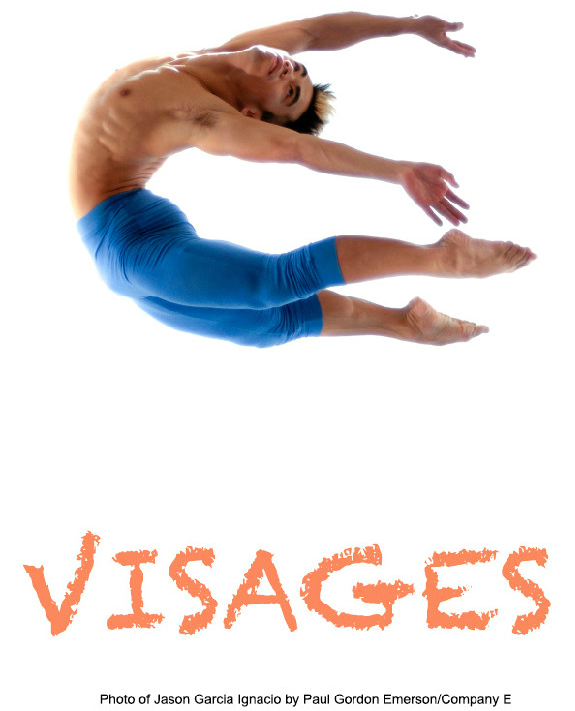
  • BalaSole: VISAGES

    15e2018e5ce2bdce869516f22d3dddb1_goeb_qqsw

    Thursday October 24th, 2013 – Roberto Villanueva’s BalaSole Dance Company presenting VISAGES, a programme of solo danceworks, mostly self-choreographed, which was given at Ailey Citigroup Theater. Roberto provides a rare opportunity for dancers to perform solo works in professionally-staged productions before sizeable audiences of dance-lovers. His ever-changing roster of dancers is marked by diversity of race, body-type, age, style and individual expression.

    L1270409

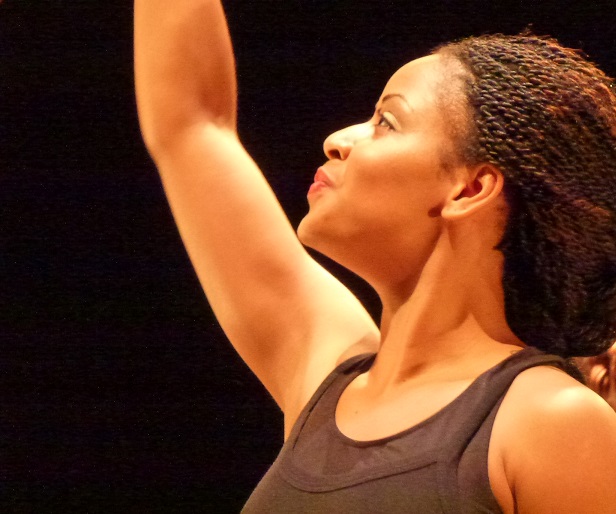
    Christa Hines (above) performed the opening solo entitled Falling Together, Falling Apart which was choreographed by Teal Darkenwald. Wearing a soft white belted tunic and heavy black boots, the dancer began in silence, moving haltingly about the space and periodically collapsing to the floor. The plaintive voice of Mimerose Beaubron seeps into our senses as the dancer continues her struggle against unseen forces. Ms. Hines, with an appealing quality between vulnerability and hope, signaled the start of a programme which was especially strong in its musical offerings.

    L1270525

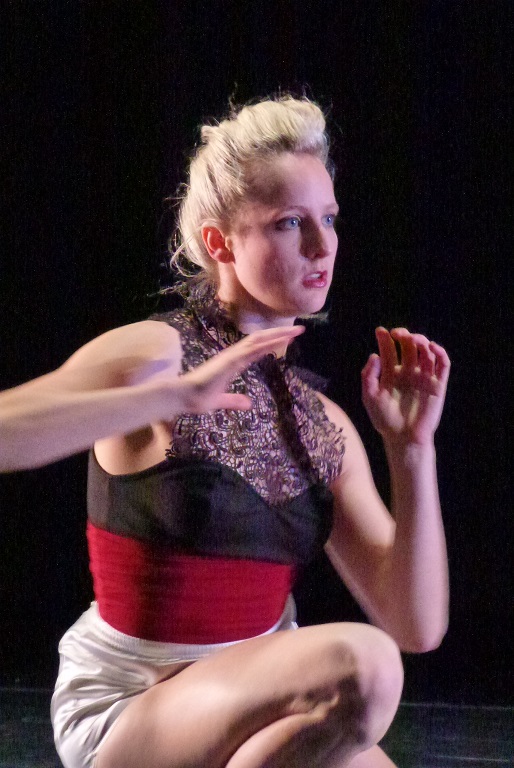
    Janina Clark performed the solo Sining (Art) to the delicate sounds of the koto. In a black tunic with a ruby-red sash, the dancer moved gracefully across the space, evoking images of a young geisha dancing alone in her own private world.

    L1270535

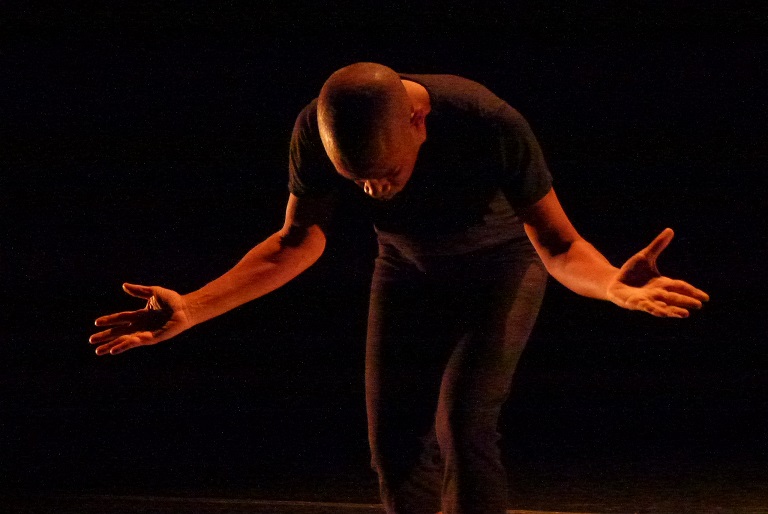
    Steven Brown’s solo Revealed was set to a haunting rendition (in Italian) of Nadir’s aria from Bizet’s The Pearl Fishers sung by the late tenor Salvatore Licitra. I had never heard this particular version before, and it was quite moving. Mr. Brown’s performance – he remained stationary throughout, communicating with his expressive arm and hands – had a reverential and introspective quality, and he sustained the mood beautifully. 

    L1270833

    Ursula Verduzco, the tall and stately ballerina, let her hair down for the solo Nothing To Hide, danced to the contemporary lyricism of Yann Tiersen. Eminently at home on the stage, and using the space with expressive assurance, the dancer’s sense of urgency moves inevitably to a silent scream. This solo was a cohesive blend of music, movement and personal commitment. 

    L1270403

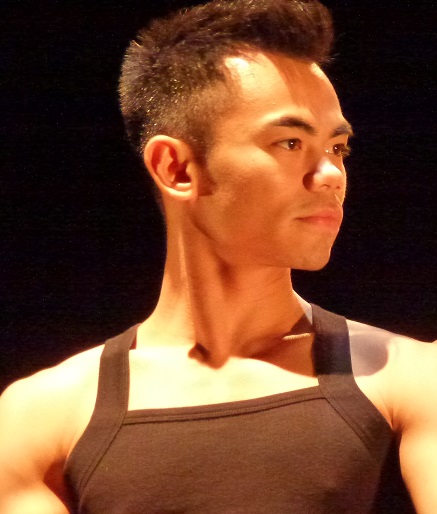
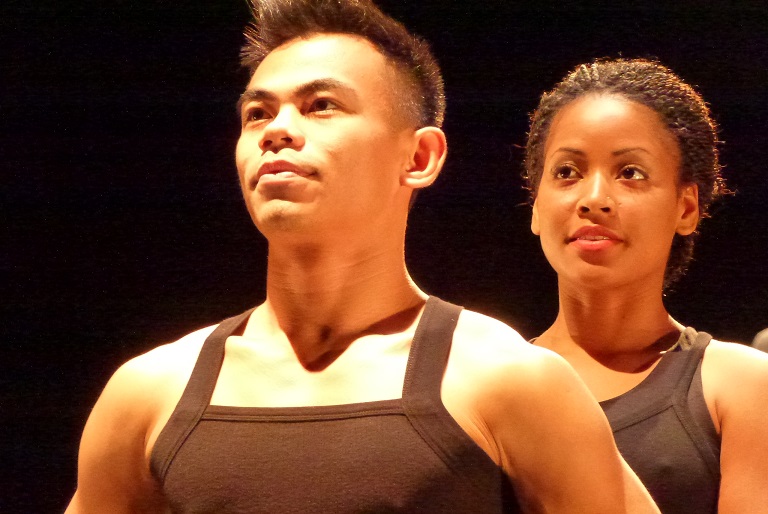
    Jason Garcia Ignacio, a compact and muscular dancer from the Philippines, used harpsichord music by Louis Couperin to excellent advantage for his handsomely-danced solo My Brother’s Keeper. Jason’s supple body, finely lit to delineate his sculpted torso, showed compelling flexiblity in some deep backbends (that’s Jason in the costume-photo at the top of this article).

    L1270673

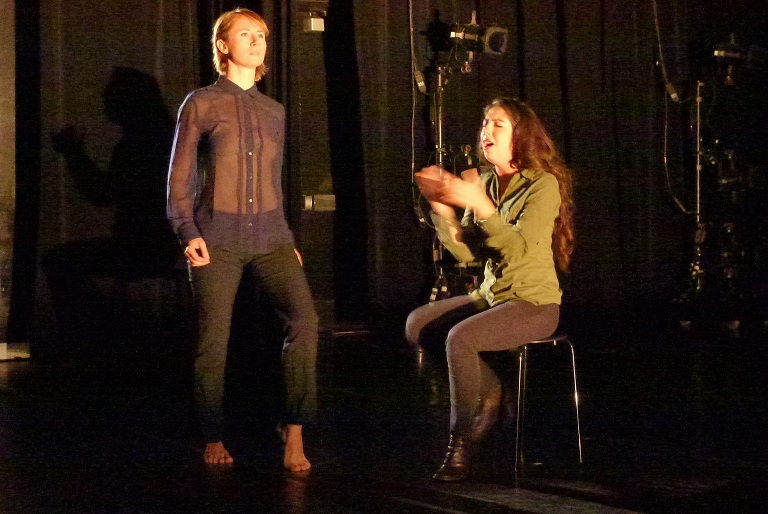
    The evening’s most unusual work, Go To The Limits Of Your Longing, was created and performed by Anna Brown Massey (above).

    L1270617

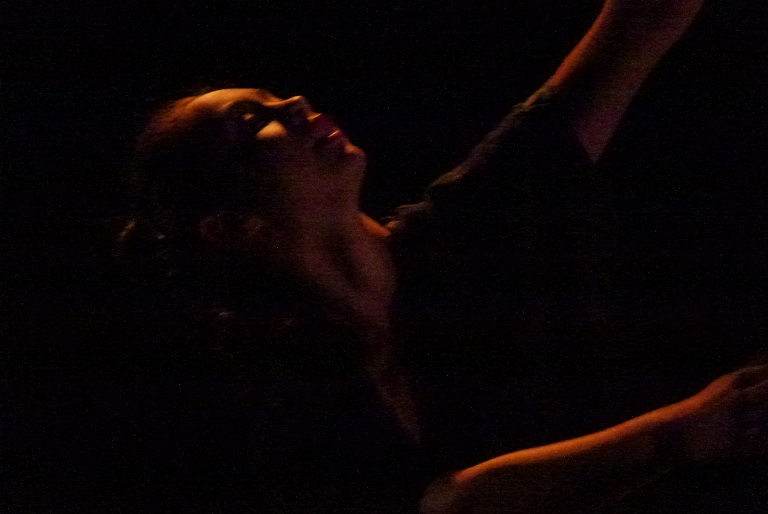
    Ms. Massey’s solo opens with vocalist Julia Patinella seated onstage, clapping a rhythmic phrase. As dancer enters (above photo), Ms. Patinella bursts into song: her is voice rich, earthy and powerful. The dancer takes a seat across the stage and her entire solo is performed from this seated position, with Ms. Massey using her arms, hands, shoulders and neck to convey an interior monolog. The voice of Ms. Patinella filled the hall with passionate clarity.

    L1270684

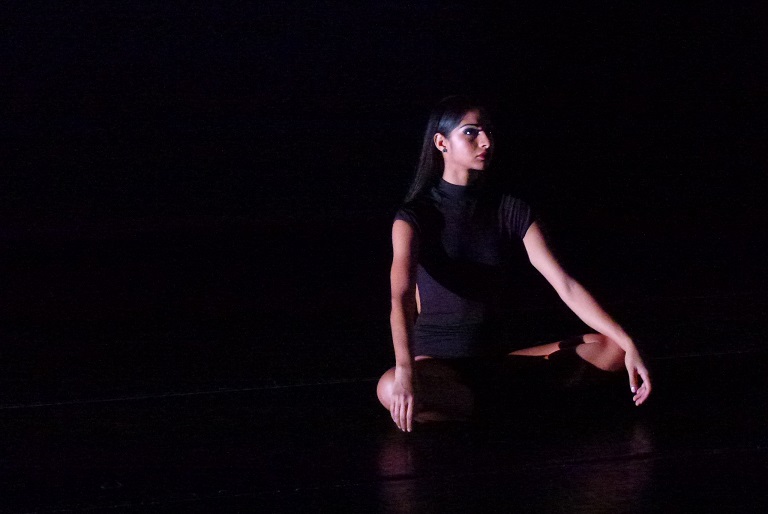
    Looking striking with her long hair and vivid make-up, dancer Katherine Alvarado showed a strong dramatic flair in her solo Distancia; the music, by Max Richter, seems Glassian at first but then evolves into expansive, full-blown lyricism. Ms. Alvarado, in a backless black outfit, used her entire body as a communicative vessel.

    L1270757

    A strong house beat set Delphina Parentiv (above) in restless motion for her solo Body Rebellion. A vivid gestural language and space-covering combinations marked the dancer’s high-energy performance which drew an enthusiastic reaction from the audience.

    L1270794

    Roberto Villanueva’ s solo Seconds Remain The Same showed this magnetic dancer’s presence and his flexibility of physique as he moved across the stage in a contemplative state, seemingly lured by some far-off vision. Eventually the dancer is seen in silhouette as he retreats from us into the distance.

    L1270432

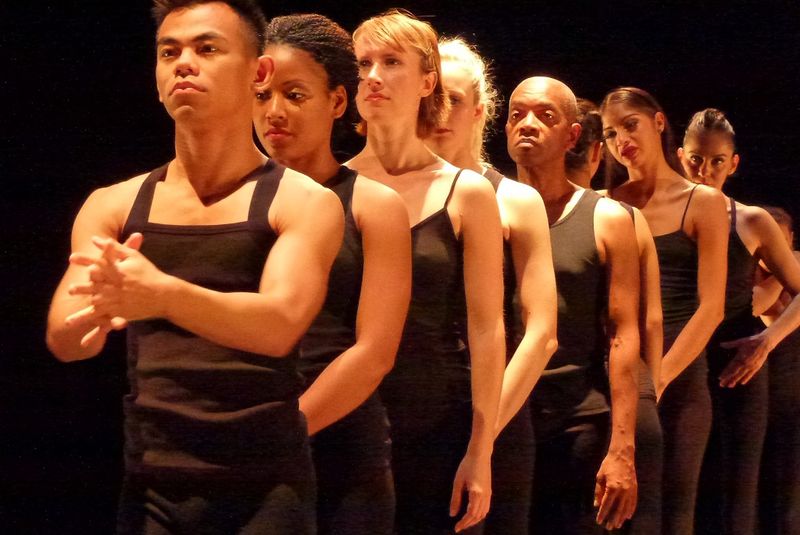
    The BalaSole tradition of opening and closing their programmes with ensemble works created in a brief rehearsal period was particularly rewarding tonight as the dancers introduced themselves (and bade us good-night) to the music of Franz Joseph Haydn, marked by celebratory getures and a series of pas de trois in which individual personalities emerged. The evening’s performers were joined by emerging artist Ashley Peters who – it seemed to me – deserved a solo shot. Maybe in the next BalaSole show? 

    I apologize for the darkness and lack of focus in some of these photos from the dress rehearsal: I am still trying to capture motion, but I have a long way to go…

    L1270402

    …though I can do well enough when dancers stand still (Jason and Christa, above).

  • Great Piano Quartets @ Chamber Music Society

    Gilbertkalish_large

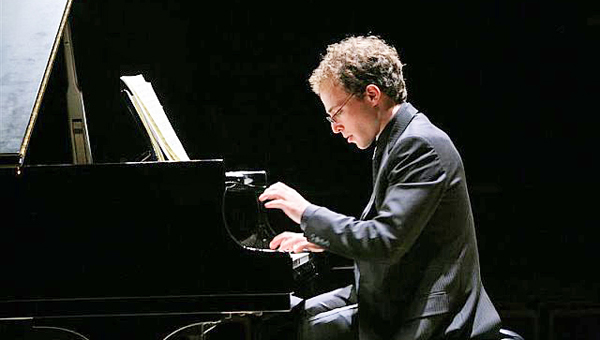
    Above: pianist Gilbert Kalish of the Chamber Music Society of Lincoln Center

    Tuesday October 22nd, 2013 – Piano quartets from three centuries were on the bill today at this Chamber Music Society of Lincoln Center performance. As I walked down the corridor to enter the auditorium at Alice Tully Hall, I experienced the odd sensation of being in church; these CMS concerts are not only completely satisfying musically, but they are so spiritually uplifting in their ability to carry us out of the everyday world to something more pure and elevated. 

    I had an incredible seat, second row center, looking up at the musicians at close range. The lines of communication – between player and player, and between musicians and audience – were so direct and intimate; I don’t exaggerate when I say it was a transportive experience.

    O weiss

    Above: pianist Orion Weiss

    Mozart first: the ill-fated genius composed two piano quartets, a relatively rare genre during the Viennese
    Classical period. The E-flat major quartet K. 493 is the second of these, and dates from 1786. It is thought to be the piece that Mozart himself played at Count Joseph Thun’s palace when the composer journeyed to Prague in 1787 to witness the overwhelming success there of his opera LE NOZZE DI FIGARO. This quartet is considered among the peaks of Mozart’s chamber music, and it certainly seemed so today in a performance of remarkable musical clarity and emotional immediacy.

    Orion Weiss was at the Steinway, with Nicolas Dautricourt (violin), Paul Neubauer (viola) and Keith Robinson (cello) center-stage. Their playing was impeccable, and I so deeply enjoyed watching the communication between them: a silent language of the eyes and a tilt of the head. Mr. Neubauer, as expressive of face as in his musicianship, seemed the conduit linking the four players emotionally. The music flowed freely as melody and embellishment passed from one player to another. An atmosphere of quiet intensity filled the hall, the audience breathing in the sustaining beauty of Mozart’s perfection.

    A complete change of mood as we were transported forward to 1931 and the intoxicating rhythms and alluring turns of phrase of the Spanish composer Joaquin Turina’s A-minor quartet, opus 67. Here the players were out to seduce the ear, led by Yura Lee (violin) with Messrs. Neubauer, Robinson and Weiss.

    Turina composed this piano quartet in 1931; its flavour of
    Spanish folk music, with gypsy and Andalusian nuances, is characteristic of the composer’s work, which was influenced by his predecessors Manuel de Falla and Isaac Albeniz. Veering effortlessly from the fiery rhythms to the more sustained song-like motifs, Ms. Lee and her colleagues reveled in sensuous glow of the music; Mr. Weiss fulfilled the demanding piano writing with élan, and again I greatly enjoyed the the silent sense of conspiracy among the players as they wound their way thru the subtle turns of the music.

    Yura Lee switched gracefully from violin to viola for the evening’s concluding work, the Brahms Quartet #2, Opus 26. For this long (50 minutes) and demanding work, keyboard master Gilbert Kalish was at the Steinway, Nicolas Dautricourt returned with his violin, and the superb Mr. Robinson polished off his evening perfectly – the only player involved in all three works tonight. 

    Johannes Brahms himself played the piano part at this work’s premiere in 1863; Robert Schumann had already hailed Brahms as Beethoven’s heir apparent, and the piano quartet was one of the works that propelled the composer into his position as one of the immortal Three Bs – Bach, Beethoven and Brahms – in the pantheon of classical music.

    Tonight this masterpiece unfolded in all its glory. In a touching tribute in the playbill, Mr. Dautricourt spoke of being mentored by Mr. Kalish at Ravinia in 2002 when the Frenchman had first arrived in the United States. It must have been a great experience for them to perform together this evening.

    Mr. Dautricourt’s playing is so passionate and expressive; I found myself drawn to this tall and charismatic musician, who is apparently equally at home in both jazz and the classics. Mr. Kalish’s playing was resonant and sublime, with Ms. Lee and Mr. Robinson yet again as pleasing to watch as to hear. The cumulative effect of their performance drew a sustained applause from the attentive and dedicated audience of music-lovers.

    The anticipation I felt going into the concert was amply rewarded: I had expected the best that music can offer, but – intangibly – it was even better than that.

    The participating artists tonight were:

  • Premiere Performance: Intermezzo Dance Company

    1097997_490777371014252_1699397711_n

    Friday October 18th, 2013 – Since I was involved in the early planning stages of these first performances by Craig Salstein’s Intermezzo Dance Company. I can’t really write about their premiere performance tonight at the 92nd Street Y with any sense of detachment – not that we should ever be detached from dance. But of course I loved the music – the Verdi string quartet and a fantasia on themes from his opera A MASKED BALL (all played live by the Wyrick Quartet) – and the choreographers and dancers all came thru with flying colours. And the audience was simply loaded with dance-world celebrities. 

    With three sold-out performances, Intermezzo‘s off to a fine start, and I know Craig has some exciting future plans – which can’t, as yet, be announced.

    Hopefully I’ll soon have some production photos to share.

  • Dual-ing Pianos @ Juilliard’s Paul Hall

    Steinway_piano

    Thursday September 26th, 2013 – Students and faculty members from Juilliard’s Collaborative Piano Department joined forces in a really enjoyable concert at Paul Hall tonight. The Department’s pianists had decided that, in addition to playing for singers and instrumentalists, they wanted to work together on music written for two pianos or piano four-hands. They gave their first programme last season and tonight theye were back for Round Two.

    Paul Hall is a special place for me. Having attended a few concerts there on my visits from Hartford many years ago, I started going frequently once I had moved the NYC in 1998. It was at Paul Hall that I first heard my remarkable contralto-friend Makiko Narumi as well as many other Juiliard singers who have gone on to successful careers. Following Makiko’s untimely death in 2002, I found it difficult to sit in Paul Hall, for all the memories the place stirred up. I mostly stopped attending performances there, and it wasn’t until May 2012 that I felt comfortable in the space again: a superb all-Britten programme evening with tenor Spencer Lang and pianist Dan Kurland seemed – in an odd way – a benediction to my friendship with Makiko; she would not have wanted me mourning her ten years after the fact.

    It was in fact Dan Kurland who told me about tonight’s Dual-ing Pianos programme. I’ve never seen such a big crowd in Paul Hall before; I sat in my customary seat – third row on the aisle – and thoroughly enjoyed every moment of this excellent presentation.

    Music spanning two centuries – from Mozart to Lutoslawski – was performed. After brief opening remarks from the head of the Collaborative Piano Department, Jonathan Feldman, the music commenced and rolled onward for 75 minutes without interruption; seven pieces were performed, nicely placed on the programme to emphasize the contrasting styles of the composers. The audience were attentive and appreciative, and the sound coming from the two Steinways was rich and evocative.

    Aaron Copland’s EL SALON MEXICO in a two-piano arrangement was played by Kristen Doering and Art Williford. Bright fanfares evolve into a swaying dancelike passage; a big rhythmic section melts into a gentle romanza which leads to another animated section. The fanfares return, and there is a motif of almost childish naïveté before the boisterous conclusion. This arrangement – and indeed every piece on the programme – would make an excellent dancework.
    Mozart’s Fugue for Two Pianos in C minor was performed by Margo Garrett and Jonathan Feldman, both of the Juilliard Faculty. Evoking  Bach, the work was wonderfully pleasing to experience in this intimate setting. I was very curious about Ms. Garrett’s score, which had an charming binder and in which the music seemed to appear in columns rather than full pages. 

    Darius Milhaud’s Scaramouche suite received a colourful performance by Juliana Han and Jung A Bang. The opening movement, Vif, has an almost music-hall quality; the second, Modéré, begins with a ‘classic’ feel which gives way to a rather wistful melody. In the concluding Brazileira – a full-tilt Latin dance number – the two girls played with enormous vitality.

    Robert Schumann’s Andante and Variations brought forth pianists Luis Ortiz and Miles Fellenberg, playing beautifully. The variations flow like the unwinding of a silken ribbon of melody, with the shifting rhythms and colours playing on our emotions; the final dreamy passage was particularly lovely.

    In Witold Lutoslawski’s Paganini Variations, the familiar strand of melody was marvelously corrupted by the 20th-century Polish composer, giving the music an off-kilter and nightmarish quality. Pianists Siyi Fang and Ari Livne did a brilliant job with this darkly luminous piece.

    Brian Zeger is a pianist I have long admired; tonight he and Bretton Brown played the evening’s only work for piano-hands – and the last work Franz Schubert composed in that genre: the Rondo in A major, D 951. Their playing had great clarity and purity of expression and was a highlight of the programe.

    The evening came to a conclusion with four pianists playing CARMEN Fantasy, arranged by Mack Wilberg. Dan Kurland and Raymond Wong were at one Steinway, Jung A Band and Zsolt Balogh at the other. This wild and wonderful piece draws on familiar themes from Georges Bizet’s opera: the Toreodor Song, the Habanera, the Act II prelude, and Carmen’s ‘Chanson Boheme’. Relentlessly paced and filled with cunning dissonances, this could be the soundtrack for a Hollywood horror film (Micaela’s Nightmare?). It brought the concert to a rousing conclusion, and had me humming the ‘Chanson Boheme’ all the way home on the A train.

  • James Levine’s Return to The Met

    J LEVINE

    Tuesday September 24th, 2013 – James Levine’s return to the podium of the Metropolitan Opera House was the main reason I attended the season’s prima of Mozart’s COSI FAN TUTTE. The maestro last conducted at The Met on May 14, 2011 (WALKURE) and in months that followed numerous rumors circulated as to his health troubles and his posisble return to conducting. One usually reliable source indicated it was unlikely we’d ever see him in The Met pit again.

    But then the the outlook began to brighten: Levine was spotted riding his motorized wheelchair thru Central Park. And then came the best news: on May 19th, 2013, Levine led The Met Orchestra in a concert at Carnegie Hall. Tonight he was back in The House where I first heard him conduct at his debut (and exciting but uneven TOSCA in June 1971) and where I have experienced dozens of his performances over the ensuing decades.

    About a week prior to tonight’s performance, I heard that COSI was not selling well at the box office. When I relayed this information to a friend, she said: “Well, COSI is not a popular opera.” But I beg to differ: I think it’s always been well-attended in the past; but the current cast – aside from Matthew Polenzani – is not filled with particularly luminous names. In the past when singers like Steber, Stich-Randall, Leontyne Price, Dame Kiri, Carol Vaness, or Renee Fleming headed the cast, audiences were substantial and enthusiastic.

    Although this evening’s performance was a red-letter date in the recent history of The Met (thanks to Levine’s presence), as a performance of COSI FAN TUTTE it was not particularly memorable. In general, the men in the cast tended to outshine the women.

    An announcement was made as the houselights dimmed: Matthew Polenzani was suffering from a cold, but would sing anyway and asked our indulgence. There were only passing signs of indisposition in Matthew’s singing, and his technique and artistry carried him thru the great aria “Un’aura amorosa” with success: it was the vocal highlight of the evening. Rodion Pogossov was a characterful Guglielmo and Maurizio Muraro a fine Don Alfonso in the Italian buffo tradition.

    Susanna Phillips kicked off her big Met season (she is to be Rosalinda in the new FLEDERMAUS and Musetta in BOHEME in the coming months) singing the notoriously difficult role of Fiordiligi with a warm timbre and an even range, meeting the technical challenges of “Come scoglio” successfully. Without effort, she dominated the duets with her smaller-voiced sister, sung by Isabel Leonard. Danielle de Niese was Despina: her voice does not really fall pleasantly on the ear, but her vocal characterization was flavorful.

    The House – full in the upper tier but spottier lower down – gave Levine a big ovation when he materialized in the pit, though as Dmitry pointed out, if he’d been conducting for a ‘Wagner audience’, the reception would have been like a tsunami. Levine’s handling of the score and the playing of his musicians was everything one expected and desired. It’s wonderful to have him back, though curiously the two men next to me – who seemed like seasoned opera-goers – kept referring to him as “James Le-VEEN”.

    I would have liked to have heard Phillips and Polenzani in their Act II arias and their big duet, but faced with a Gelb-intermission and the less stimulating singing of the other cast members, we headed out, missing the chance to join in what I am sure was a big celebration for the Maestro at the end.

    Conductor: James Levine

    Fiordiligi: Susanna Phillips

    Dorabella: Isabel Leonard

    Despina: Danielle de Niese

    Ferrando: Matthew Polenzani

    Gugliemo: Rodion Pogossov

    Don Alfonso: Maurizio Muraro

  • Bouder/Veyette SWAN LAKE @ NYCB

    C31750-6_Swan_BouderVeye (2)

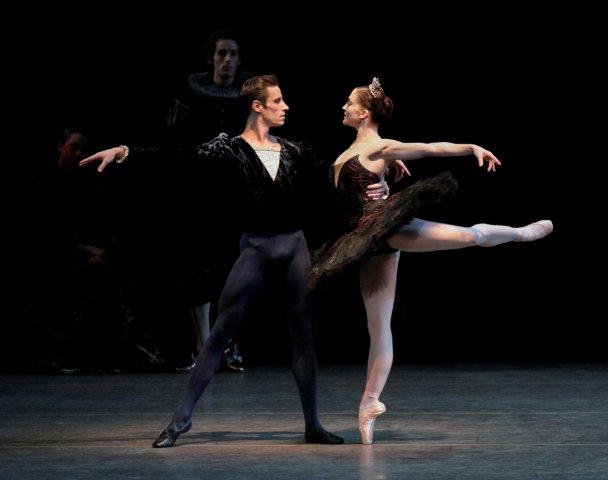
    Above: New York City Ballet principal artists Andrew Veyette and Ashley Bouder in SWAN LAKE; photo by Paul Kolnik

    Saturday evening September 21, 2013 – When New York City Ballet announced Peter Martins’ SWAN LAKE for their Autumn 2013 season I was hoping we’d have a 2-week run with some new Swan Queens; but instead there were only six performances (all, seemingly, sold out) and the dual role of Odette/Odile remained the property of three of the Company’s top interpreters: Sara Mearns, Teresa Reichlen, and Ashley Bouder.

    Tonight was an opportunity to re-visit the Bouder traversal of this very demanding dual role. In this video, Ashley speaks of her constant work in the studio, endeavoring to bring her interpretation of Odette up to the level of her Odile. Tonight she seemed to have reached – and even surpassed – her goal.

    A key element in making tonight’s performance so enjoyable was the lack of audience distractions, which so plagued the first half of the previous evening’s SWAN LAKE. Tonight we were seated amongst well-behaved folks who seemed keenly focussed on the stage throughout the performance; even the annoying late-seating was far enough away from us to be tuned out. It makes an enormous difference in one’s appreciation of the performance when there’s nothing to infringe on the powers of concentration.

    And so from the very first notes of the prelude to the final heart-rending departure of the doomed Odette, the evening was among the most enjoyable I have spent at NYCB in recent seasons.

    Clothilde Otranto paced the music beautifully: full-speed ahead when the drama called for propulsion; tenderness and a sense of lingering when love – or the loss of it – was the theme. The powerful ending of this SWAN LAKE – from both a visual and emotional standpoint – hits home every time, and Peter Martins’ remarkable vision of the ballet’s final moments tends to make me forgive some of his lapses in other productions.

    For people like me who simply adore the NYCB dancers, this ballet affords one of the most satisfying ways of savoring so many favorites all at once: from well-established principals to the newest apprentices, SWAN LAKE is a chance to revel in the enormous variety of faces, forms and personalities who make up this phenomenal Company. And so from curtain-up to curtain calls we are immersed in NYCB on a personal level.

    The sixteen corps dancers and the flock of small children who appear in the Prince’s Act I birthday festivities have plenty to dance, and they danced up a storm. As the opera glasses wander about the scene, you can pause anywhere and watch someone like Likolani Brown or David Prottas exuding their talents – both in terms of technique and stage-craft. This is not an anonymous bunch of automatons going thru the motions, but lively individual personalities doing what they love.

    Troy Schumacher gave a dazzling virtuoso display as the Jester – a demanding role in which the character, in this production, never overstays his welcome. Antonio Carmena as Benno danced with generous spirit and space-filling bravura: his jumps and turns clear and vivid. He shared the pas de trois with two of our recently-promoted soloists: Ashley Laracey and Lauren King, both dancing with sweet assurance. Marika Anderson’s Queen was excellent: her distinctive features reacting to the dramatic situation, her height and bearing setting her apart from her subjects.

    Andrew Veyette’s Siegfried was both impressively danced and instinctively well-acted; his portrayal of the lonely boy facing a destiny that doesn’t suit him was remarkably resonant. It’s no wonder that in his magical encounter with equally unhappy Odette he seems to have found his soulmate. That his love for her is her eventual undoing is the basis of the tragedy; his unwitting duplicity, concocted by Rothbart, leaves the bereft Prince on the brink of suicide at the end of the ballet. Andrew moved thru the events of the prince’s coming-of-age – his discomfort at having to choose a bride, his joy when his beloved suddenly appears in the ballroom, his desperation when Rothbart’s ploy is revealed – with a sense of natural nobility mixed with hapless naïveté; his final collapse in a state of deepest despair was so moving. All evening Andrew’s dancing – his lithe and effortless virtuosity – was aligned to his masculine grace and skillful partnering, making for a portrayal that was thoroughly satisfying in every way,

    Ashley Bouder’s technical sorcery and her sense of theatrical vitality have always made her Odile an exciting event. Not only is she undaunted by the role’s virtuoso demands, she simply revels in them – and she even adds her own flourishes. The character – sly, enticing, peerlessly confident – has always been a triumphant Bouder realization. Meanwhile, Odette – despite Ashley’s impeccable dancing – has seemed to just slightly elude the ballerina in terms of poetry and expressive nuance. Tonight she seemed to have moved deeper into Odette’s soul and found the needed resonance there: this seems to have come about both thru hard work and thru the natural virtue of the ballerina’s maturing into womanhood. Her Odette tonight was moving, passionate, tragic. Her performance of the iconic dual role is now a complete work of art, though I feel with certainty that she’s not one to rest on her laurels: I suspect the next time we see Ms. Bouder in this ballet she will have taken things to yet another level. But for now: a triumph.      

    As I remarked earlier, the evening was a feast for devotees of the Company: the Four Cygnets were especially well-matched and accomplished tonight: Sara Adams, Alexa Maxwell, Sarah Villwock and Kristen Segin were among the finest teams I’ve ever seen in this tricky piece.

    Presenting themselves as candidates for marriage to the Prince, six ballerinas dance a lovely set-piece in which each steps forward in turn to make her mark: Faye Arthurs, Likolani Brown, Meagan Mann, Jenelle Manzi, Mary Elizabeth Sell and Lydia Wellington all looked lovely in this piece, one of my favorite passages in the production. Faye, of the lyrical extension, was also seen as the Vision of Odette.

    Megan LeCrone looked superb in the pas de quatre, with Ana Sophia Scheller and Erica Pereira completing the trio of dark-haired beauties, and the amiable partnering and handsome virtuosity of Gonzalo Garcia making me wish he’d been cast as Siegfried this season (could we not have a Scheller/Garcia SWAN LAKE next time around?) 

    Georgina Pazcoguin gave off incredible star-power in the Hungarian dance, and the handsome and rather rare Craig Hall matched her for intensity and charisma. Janie Taylor’s intoxicating presence lured my opera glasses in the Russian dance, with Ask LaCour looming over her, part predator and part slave. In the Spanish quartet, Gretchen Smith and Gwyneth Muller imbued their steps wth a flamenco flourish, their yellow fans a decorative asset; Andrew Scordato and Taylor Stanley looked dashingly sexy. Allen Peiffer, always a handsome Neapolitan lad, now has a new village lass to charm: Kristen Segin was excellent and she and Allen are a delightful match-up.

    As the Black Swan pas de deux unfolded, brilliantly danced by Bouder and Veyette, a tall newcomer to the stage, Silas Farley, showed an already keen flair for stagecraft with his manipulative, faux-courtly Rothbart.

    And so we come to the end: at the lakeside where they had met, Odette and Siegfried are now torn asunder. The power of their love has vanquished Rothbart, but his curse endures. Odette vanishes amidst the swans, and Siegfried collapses in remorseful despair.

    ODETTE/ODILE: Bouder; SIEGFRIED: Veyette; VON ROTBART: Farley; QUEEN: Anderson; JESTER: Schumacher; BENNO: Carmena; PAS DE TROIS: Laracey, King; PAS DE QUATRE: LeCrone, Scheller, Pereira, Garcia; HUNGARIAN: Pazcoguin, Hall; RUSSIAN: Taylor, laCour; SPANISH: Smith, Stanley, Muller, Scordato; NEAPOLITAN: Segin, Peiffer; PRINCESSES: Manzi, Mann, Sell, Brown, Wellington, Arthurs

  • Reichlen/T Angle SWAN LAKE @ NYCB

    6a00d8341c4e3853ef014e5f6b6b16970c-800wi

    Above: New York City Ballet principal artists Tyler Angle and Teresa Reichlen in SWAN LAKE; photo by Paul Kolnik

    Friday September 20, 2013 – I’m an admirer of the New York City Ballet‘s Peter Martins production of SWAN LAKE, even though the first time I saw it (with Kyra Nichols in her only performance of it) I found it a great eyesore. I had vowed never to see it again but of course, this Company is my Company and how could I let anything deter me from seeing such Swan Queens as Miranda Weese, Wendy Whelan, Jenifer Ringer, Maria Kowroski, Jennie Somogyi and Sara Mearns? I soon made peace with the sets and costumes (basically by simply tuning them out), and on second seeing realized that there is no more potent ending for this ballet than that which Peter has crafted.

    Non-stop dancing and just enough mime propel the ballet forward. The familiar set-pieces are there, and Peter brings especial vitality to the villager’s dance in the opening scene and (truly lovely) the would-be-brides set piece which just precedes the arrival of Odile.

    This evening’s performance had its ups and downs. There was a bit of ragged playing from the pit here and there, and it seemed to me that Daniel Capps’ tempo for the White Swan pas de deux was just a bit too fast for Teresa Reichlen and Tyler Angle to make the maximum poetic effect. But much of the first lakeside scene was nullified for me by audience distractions (whispering mother and child behind me; a woman munching on cashews from a plastic cup; someone texting). I retreated to the 5th Ring for the second half of the evening and was far better able to concentrate there.

    The opening scene, where Siegfried’s friends from the village have come to celebrate his birthday with a party of the castle terrace (they’d never be allowed inside the royal residence per se) is one long dance-a-thon and the sixteen corps dancers were a pleasure to observe thru my opera glasses: corps-watching heaven. But apparently many in the audience had never seen chidren onstage so there was a lot of ooohing and aaaahing when the small fry appear (they danced very nicely).

    BallHarrison

    Harrison Ball (above, headshot by Paul Kolnik) scored a hit as the Jester; he was one of several dancers making role-debuts tonight. Lithe and agile, Harrison moved thru the virtuoso demands of the choreography with flair. Later, at the ‘official’ birthday party of his master, I very much liked Harrison’s facial acting throughout the Black Swan pas de deux: he seemed to be the only person at court to sense that something was amiss with this Odile woman and her sinister escort.

    Amanda Hankes, a natural aristocrat, made a youthful Queen. Taylor Stanley’s handsome Benno (debut) was another feather in this dancer’s cap; watching the vivacious Lauren Lovette in the pas de trois was a treat, and I liked the touch of rubato Ashly Isaacs brought to this attractive set piece.

    As the partiers went romping off, leaving the Prince, Benno and the Jester frozen in a gesture of farewell, the stage was set for the drama to begin. At this moment, NYCB decided it was time for a round of late seating, so we had the patter of feet, the urgent whispers, the bright glare of flashlights. The mood of the ballet was successfully broken.

    Teresa Reichlen’s opening jeté seemed to proclaim that the ballet could now move into the realm of poetry, but it was at this point that the distractions all around me commenced. Restive audience members are the bane of ballet-going: if you prefer to chat with your daughter, eat, or text, why did you come to the theatre?

    So despite being aware of Tess’s lovely attitude poses and deep back bends, and of Tyler’s pale and urgently tender personification of the Prince, much of this scene went for nought. I couldn’t wait to escape; I even thought of simply going home, but it seemed so unfair – this triumph of indifference – and there were dancers coming up in the second half that I really wanted to see.

    Tess was at her grandest as Odile, wonderfully predatory as she manipulates the hapless Tyler. Coached by the ultra-tall and sinister Ask LaCour as Rothbart, Tess used the role’s faux-Odette motifs with canny skill: a mistress of deceit. Her solo was gorgeously danced and she whipped off a blazing set of fouettés, followed by the sustained balances up the diagonal. Tyler’s solo was a beautiful paragraph of polished bravura. The pledge…the shock of  betrayal…the desperate rush to the lake…

    The final scene, built on the prince’s hopeless notion the damage could be repaired, was movingly played by Tess and Tyler. Odette knows her chance has been lost; when the Prince again raises his hand in pledge, she pulls his arm down and wraps it around her torso. This will be their last moment together. But now Rothbart must be defeated: in the brilliant coup de foudre the couple make a last stand for love and Rothbart is destroyed. But the curse has not been broken. In those last heart-rending moments, Siegfried tries in vain to forestall Odette’s transformation. But she vanishes among the ranks of the swans, leaving him to contemplate his failure. In this final parting, Tess and Tyler personified the despair of shattered hope.

    Back-tracking to the ballroom, there was lots of fine dancing – commencing with Harrison Ball’s playful number with three small jesters. The prospective brides arrive: in pastel frocks, the girls weave solo passages into a very charming ensemble: Sara Adams, Likolani Brown, Megan Johnson, Jenelle Manzi, mary Elizabeth Sell and Lara Tong each took the opportunity to shine. But despite this bevy of beautiful choices, the Prince demurs.

    The pas de quatre, a virtuosic set-piece, brought forth Savannah Lowery, Rebecca Krohn and Ashley Laracey each looking lovely and with accomplished dancing. But something was amiss: Chase Finlay, after squiring the girls thru the opening segment, did not perform his variation. And in the coda, Chase seemed to be marking. If Chase had sustained an injury, let’s hope it’s quickly remedied. I was left wondering how the conductor knew to skip the male variation music. 

    In the swirling Hungarian number, Gretchen Smith threw a dash of paprika into her role-debut dancing; Justin Peck was her rather somber and very impressive beau: now that Justin is taking the choreographic world by storm, we sometimes forget what a great presence he has as a dancer. Jennie Somogyi and Adrian Danchig-Waring (another newcomer to his role) were daringly provocative and physically fearless in the steamy Russian dance. New senoritas in Spanish – Meagan Mann and Lydia Wellington – vied for our attention with their footwork and their yellow fans; Daniel Applebaum and Zachary Catazaro (debut) were the dashing toreros, In a particularly appealing match up, Lauren Lovette and Devin Alberda (his debut) were the Neapolitan dancers, displaying Lauren’s piquant charm and a touch of devilry from Devin.

    The House was full to the rafters, and Tess, Tyler and Harrison were strongly cheered. Ask’s curtain call, drawing the villain’s booing, recalled Albert Evans in the same role: a glacial staredown, and a swirl of the cape. I ran into Albert during the intermission, handsome as ever.      

    ODETTE/ODILE: Reichlen; SIEGFRIED: T. Angle; VON ROTBART: la Cour; QUEEN: *Hankes; JESTER: *Ball; BENNO: *Stanley; PAS DE TROIS: *Lovette, Isaacs; PAS DE QUATRE: Laracey, Lowery, Krohn, Finlay; HUNGARIAN: *Smith, J. Peck; RUSSIAN: Somogyi, *Danchig-Waring; SPANISH: *Wellington, Applebaum, *Mann,*Catazaro; NEAPOLITAN: Lovette, *Alberda; PRINCESSES: Manzi, Sell, Johnson, Brown, Adams, Tong

  • Rehearsal: Intermezzo Dance Company

    L1210303

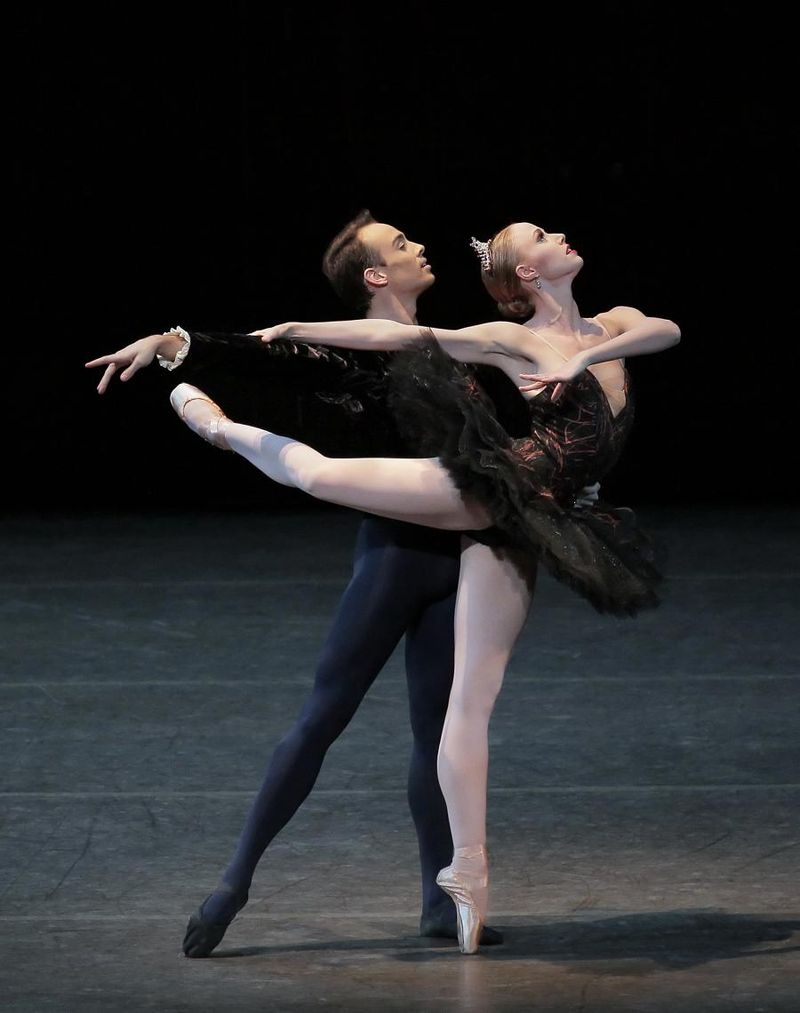
    Above: Shoshana Rosenfield and Kurt Froman rehearsing for Intermezzo Dance Company; click on the image to enlarge.

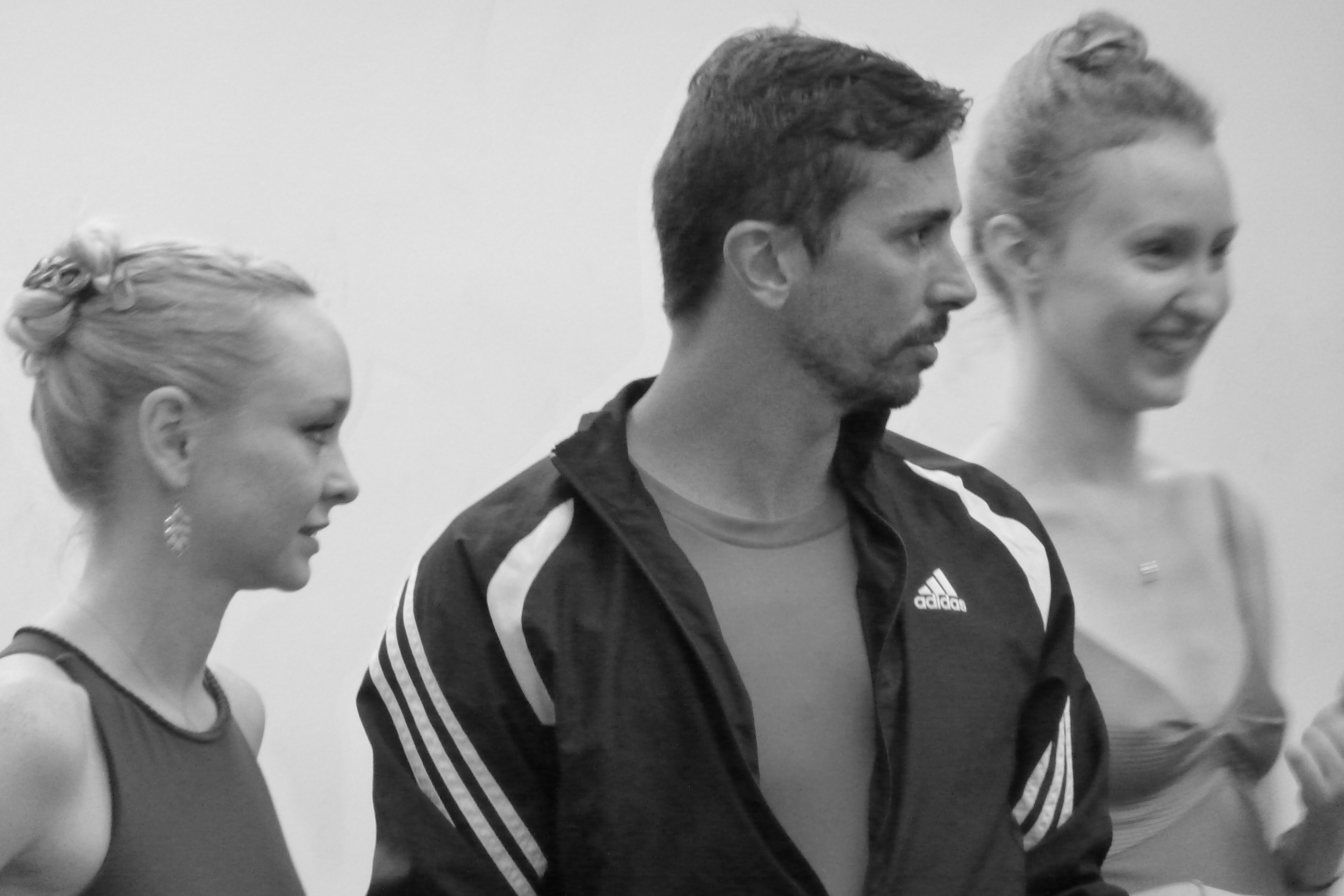
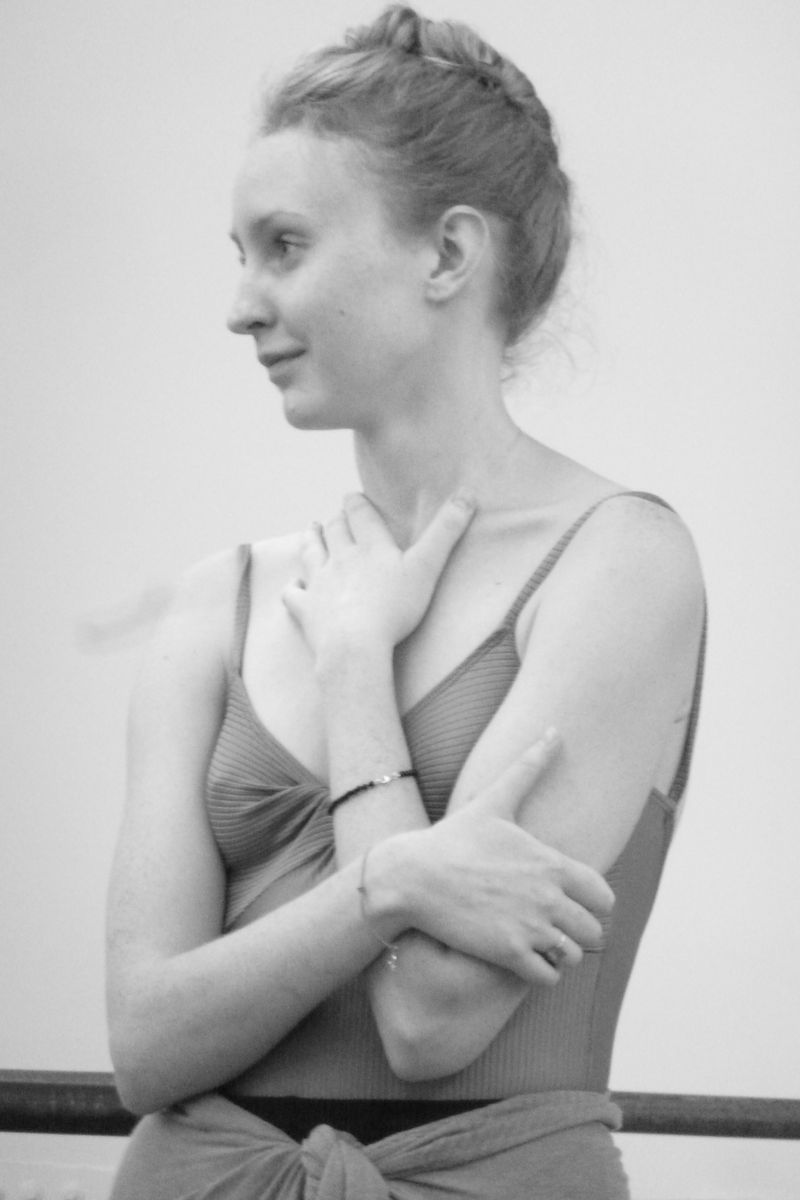
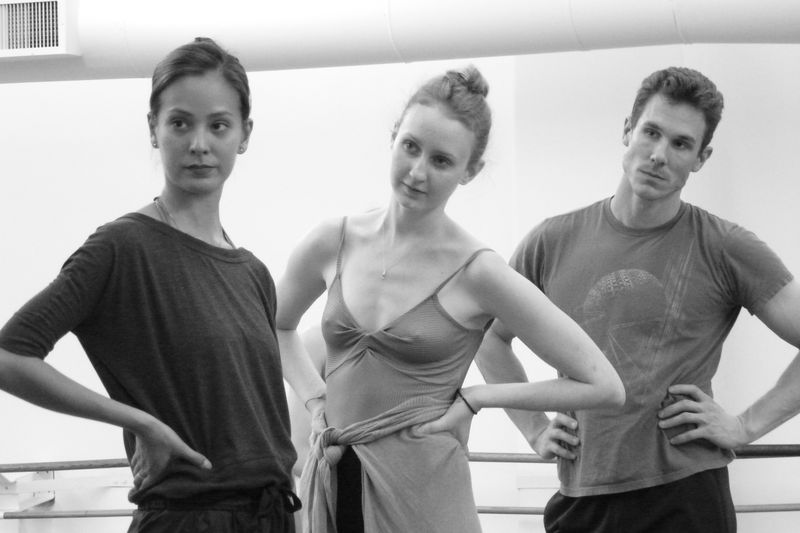
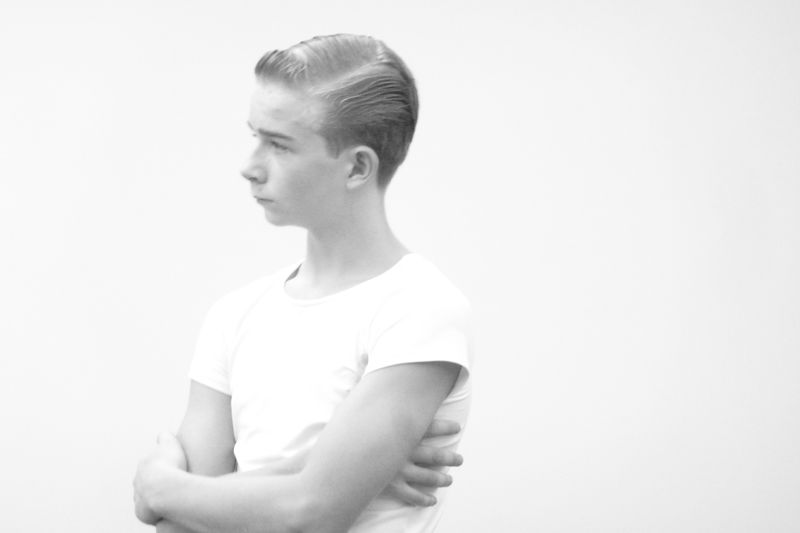
    Thursday August 29th, 2013 – Craig Salstein, founder of Intermezzo Dance Company, invited me to a Company rehearsal today at the ABT Studios. Choreographers Lisa de Ribere and Gemma Bond were working on the 2nd and 4th movements – respectively – of the Verdi string quartet which will be shown at Intermezzo‘s premiere performances in October.

    Intermezzo Dance Company will debut at the 92nd Street Y with a programme celebrating the 200th anniversary of the birth of the great Italian opera composer Giueseppe Verdi. Craig Salstein, a serious opera-lover, will honor the Maestro with a setting of the composer’s string quartet as well as a fantasia of melodies from the dramatic opera UN BALLO IN MASCHERA (A Masked Ball), specially arranged for these performances. Four choreographers – Marcelo Gomes, Lisa de Ribere, Adam Hendrickson and Gemma Bond – will each set a movement of the quartet, while BALLO will be choreographed by Raymond Lukens. Tickets for the performances are on sale now: click here to order.

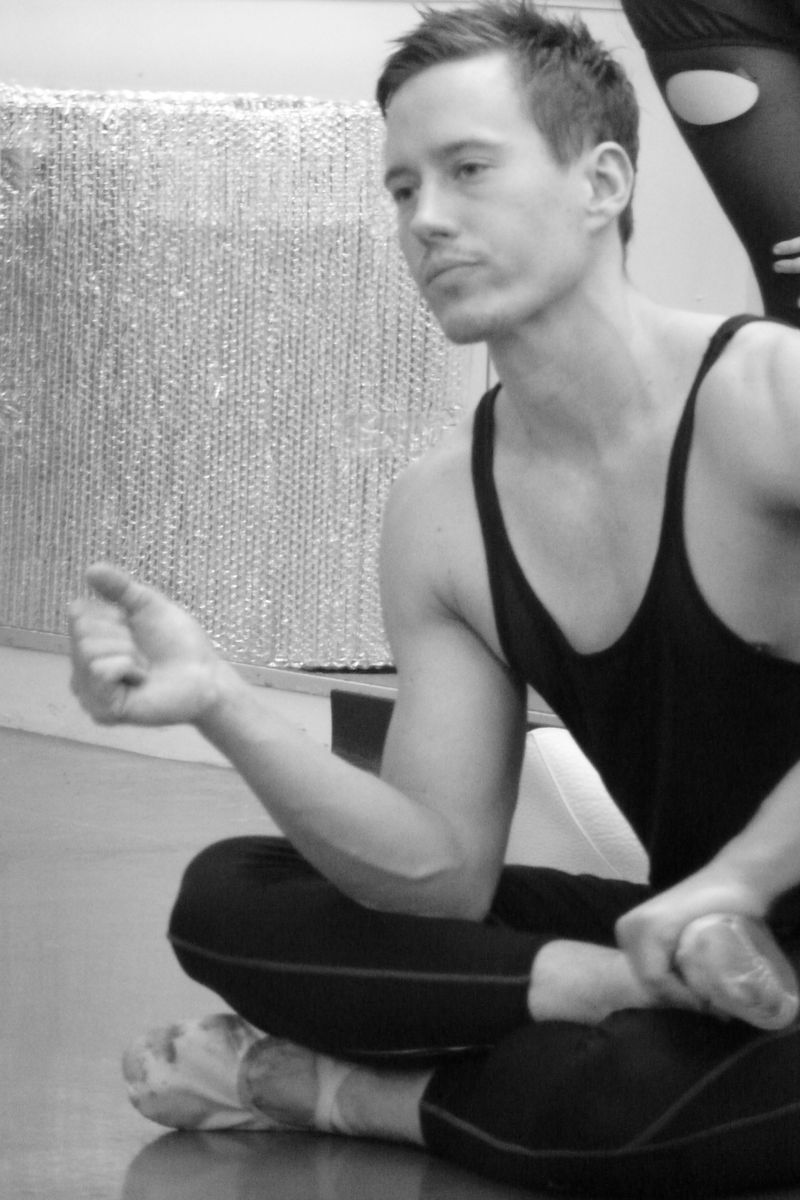
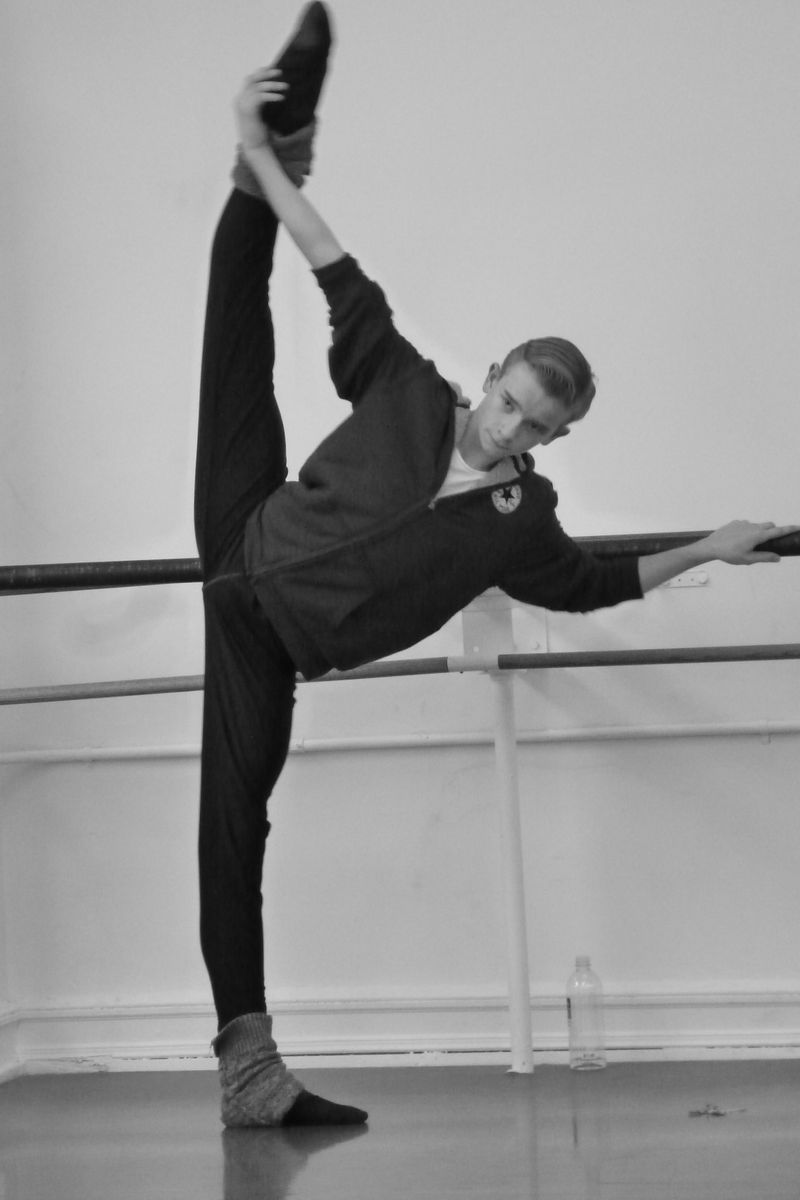
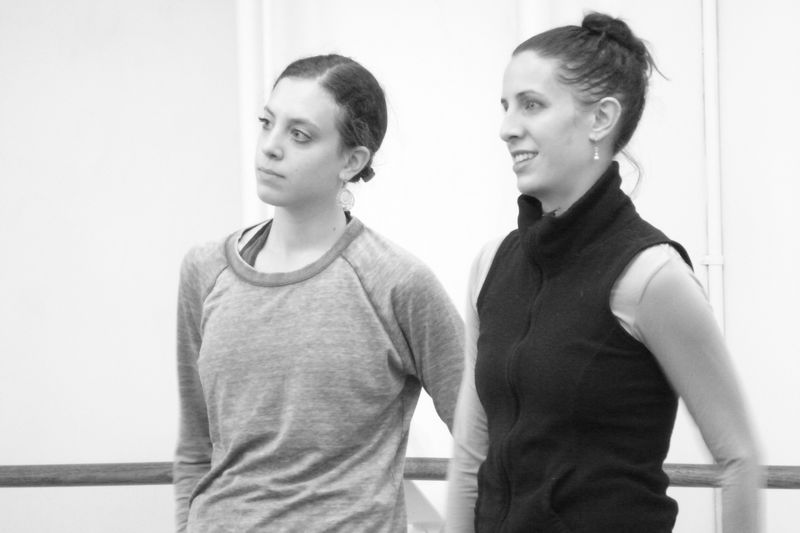
    Craig has put together a handsome roster of dancers, including established favorites and some exciting newcomers. It was great to see everyone today, and if they were for the most part moving too fast for my camera to capture, I do have a few images to share:

    L1210254

    Kurt Froman

    L1210257

    Aran Bell warming up

    L1210390

    Shoshana Rosenfield and Nancy Richer

    L1210433

    Nadezhda Vostrikov, Carlos Lopez and Kaitlyn Gilliland

    L1210453

    Nancy Richer, Rina Barrantes

    L1210465

    Kaitlyn Gilliland, Stephen Hanna and Nadia Vostrikov getting notes from Gemma Bond

    L1210312

    Kaitlyn!

    L1210444

    Carlos and Nadia

    L1210486

    Striking a melodramatic pose: Carlos Lopez

    L1210467

    Rina, Kaitlyn and Stephen

    L1210427

    Aran Bell

    L1210503

    Carlos and Nadia, one of my few actual dance shots that turned out

    L1210276

    Kaitlyn Gilliland and Sarah James

    L1210436

    Nancy Richer, Gemma Bond

    L1210447

    Carlos Lopez. I met Carlos this past Spring when he danced with Lydia Johnson Dance.

    Another of the Intermezzo choreographers, Adam Hendickson, is creating the 3rd movement of the string quartet as a pas de deux for Kaitlyn Gilliland and Stephen Hanna. I’m hoping to watch a rehearsal of this part of the programme soon.

    Meanwhile, a short film featuring all the Intermezzo dancers moving to music from Verdi’s NABUCCO is in the works.