Category: Opera

  • Score Desk for ARABELLA

    Glass_of_water_350

    Thursday April 24th, 2014 – Of Richard Strauss’s three well-known romantic-style masterpieces, ARABELLA is probably the most difficult to love. ROSENKAVALIER has its marvelous progession of waltzes to lilt the listener along, and CAPRICCIO boasts its gorgeous Moonlight Music and the Countess Madeleine’s radiant final scene. In ARABELLA the memorable music seems to come in fits and starts, and although the final scene is really appealing, it doesn’t quite match the sweep of either of the other two operas’ closing passages. 

    In ROSENKAVALIER there’s the double-feature of love (the May-September affair of Octavian and the Marschallin followed by the thrill of new, impetuous love discovered by Octavian and Sophie); in CAPRICCIO, the Countess’s choice between her two lovers is symbolic of the operatic dilemma of ‘which is of greater import in an opera: the words or the music?’  For Arabella and Mandryka, it’s love at first sight and it comes along just when the Waldner family most needs it to happen. The misunderstanding between the newly-pledged couple is quickly resolved and they can go forward without impediment. It’s a neat little plot but somehow it fails to touch the heart the way ROSENKAVALIER does; and ARABELLA‘s musical denouement doesn’t quite thrill us like CAPRICCIO‘s does.

    Despite these thoughts about ARABELLA‘s appeal, I was keen to experience the opera live again and it was a good performance overall, thanks largely to Philippe Auguin’s excellence on the podium. The orchestra of course played remarkably well and – unlike the three most recent conductors whose Met performances I have attended (Mssers. Armiliato, Noseda and Mariotti), Auguin knows how to scale the score’s dynamics so his singers are always audible and never seem pressured to over-sing.

    Though perhaps lacking the last bit of vocal glamour that makes for a truly memorable Arabella (Della Casa, Te Kanawa and Fleming each had it…and how!), Erin Wall sang the title-role quite beautifully: the voice is clear with a nice sheen to it. Her performance was slightly compromised in Act I by having to sing the opera’s most beloved passage – the duet for Arabella and Zdenka – with Juliane Banse who is simply not up to the role of Zdenka/Zdenko at this point in her career. But in her narrative to end the first act, Wall was really lovely and expressive, and she was equally impressive in Act II where the passionate duet for the just-met Arabella and Mandryka was the evening’s vocal high point. Later, as Arabella bids farewell to each of her suitors in turn, Wall made the most of each phrase. 

    Michael Volle, who I first heard on a tape from his appearance at Cardiff Singer of the World in 1993, has arrived at The Met. His voice is Met-sized and unimpeded throughout the range, and it’s got a nice, rather gritty edge to it when needed. His Mandryka was impressive, and hopefully he’ll be back in other repertory.

    Ms. Banse, who we heard earlier this season in the Mahler 4th at Carnegie Hall, has lovely instincts but she now sounds too mature and quavery for such a youthful assignment as Zdenka. Her vibrato rather spoiled the Act I duet with Arabella tonight and overall she just seemed mis-cast. Banse made some very fine recordings earlier in her career; this belated Met debut seemed a miscalculation by both the singer and the House. When the originally-scheduled Genia Kühmeier withdrew from this revival, The Met could have seized the opportunity to give the role to one of their blooming lyric-coloraturas – maybe Lisette Oropesa, Erin Morley, or Ashley Emerson: any of them would have been more vocally apt than Ms. Banse. They didn’t know the role? Callas learned Elvira in PURITANI in seven days, whilst singing Brunnhilde in WALKURE in the same time-frame. Surely any of these young Met girls – helped by The Met’s musical staff – could have whipped up a delectable Zdenka in even less time. Oh well, water over the dam…or under the bridge.

    The rest of the cast did well, notably Garrett Sorenson (Matteo) and Brian Jagde (Elemer); Martin Winkler was a loud Waldner. Audrey Luna successfully negotiated the high-flying roulades of the Fiakermilli, winning the audience’s acclaim. I was recalling my favorite Fiakermilli, Rita Shane, who sang it at La Scala in 1970, conducted by Wolfgang Sawallisch. I received a copy of it on reel-to-reel and incredibly, Ms. Shane had been permitted to interpolate a final high-D to end ARABELLA‘s second act (Fiakermilli’s coloratura normally just dwindles to nought). That’s the kind of thing you don’t hear every day.

    Although there were many empty seats this evening at The Met, ARABELLA – not usually a major box office draw – was better-attended than some recent performances. It was already 10:00 PM when the second intermission started and I had to weigh the idea of staying to the end or of getting home by midnight. Though I would like to have heard Ms. Wall in the opera’s final scene, the idea of another extended and droopy intermission turned me off. As I was leaving, it seemed several other audience members had the same idea.

    Metropolitan Opera House
    April 24, 2014

    ARABELLA
    Richard Strauss

    Arabella................Erin Wall
    Mandryka................Michael Volle
    Zdenka..................Juliane Banse
    Matteo..................Garrett Sorenson
    Adelaide................Catherine Wyn-Rogers
    Count Waldner...........Martin Winkler
    Fortuneteller...........Victoria Livengood
    Count Elemer............Brian Jagde
    Count Dominik.......... Alexey Lavrov
    Count Lamoral...........Keith Miller
    Fiakermilli.............Audrey Luna
    Welko...................Mark Persing
    Djura...................Jeffrey Mosher
    Jankel..................Timothy Breese Miller
    Waiter..................Mark Schowalter
    Card Player.............Scott Dispensa
    Card Player.............Seth Malkin
    Card Player.............Earle Patriarco

    Conductor...............Philippe Auguin

  • Score Desk for I PURITANI

    Lawrencebrownlee

    Above: tenor Lawrence Brownlee

    Tuesday April 22nd, 2014 – This performance of Bellini’s I PURITANI at The Met marked one of the few evenings this season that I have stayed til the end of the opera. It was to hear Lawrence Brownlee in the Act III love duet and Arturo’s aria “Credeasi, misera” that I endured two intermissions – the first over-extended, the second reasonable – and a less-than-memorable Mad Scene from soprano Olga Peretyatko and a mixed-bag rendering of the great baritone-basso duet “Suoni la tromba”. It was Mr. Brownlee – along with the basso Michele Pertusi – who made the evening worthwhile vocally. 

    There were the usual rather alarming number of empty seats at The Met tonight, and the audience had thinned out even further by Act III. The evening started with an announcement that Mariusz Kwiecien was ill and would be replaced as Riccardo by Maksim Aniskin. Mr. Aniskin has a pleasant enough voice but had some passing flat notes in his Act I aria and his coloratura was a bit labored. His verse of “Suoni la tromba” was on the flat side, but he rose to his best work in the duet’s cabaletta. Overall he seemed out of his depth here: he should probably be singing Marcello, Sharpless, and Guglielmo. Still, I don’t regret not hearing Mr. Kwiecien tonight, after experiencing his vocally drab Onegin earlier this season.

    Mr. Pertusi has a real sense of bel canto and his singing all evening was beautifully molded and expressive, most especially in the gentle aria “Cinta di fiori” and later in his flowing passage “Se tra il bujo un fantasma vedrai” in the big duet. Conductor Michele Mariotti did his baritone and basso no favors, his orchestra slugging away at “Suoni la tromba” as if it was NABUCCO.

    The conductor in fact did his wife, Ms. Peretyatko, no favors either, often pushing her at the climaxes where her thinned-out high notes carried no impact in the House. The soprano’s voice is tremulous and despite good musical instincts the sound is simply not particularly attractive, and the voice is a size too small for this iconic role in a big space like The Met. Her coloratura was reasonable, and she did produce some striking piano singing along the way, notably the very sustained high B-flat at the end of her offstage solo with harp in Act III. But the high notes at the end of her duet with Giorgio and to climax “Son vergin vezzosa” were pretty much covered by the orchestra. Her Mad Scene was lacking in vocal colour; there’s nothing really distinctive about her timbre, and her interjection of laughter was lame. The cabaletta “Vien diletto” was reasonably effective but again the conductor over-played his hand while the soprano sustained a rather wan high E-flat. A couple of guys in Family Circle shouted desperate ‘bravas’ after the Mad Scene, but the applause was not prolonged. The warmth of Mr. Brownlee’s voice gave the soprano a nice cushion in the love duet though they really didn’t need to hold the final high-C as if waiting for the cows to come home. The opera concluded with “O sento, o mio bell’angelo”, the ‘lost’ cabaletta discovered by Richard Bonynge, and again Ms. Peretyatko’s thinned out concluding note was covered by the orchestra. (The cabaletta isn’t even in the score; was it ever authenticated?).

    Before lavishing praise on Mr. Brownlee, I must mention Elizabeth Bishop’s excellent performance in the thankless role of Enrichetta. The mezzo made the very most of her brief role, with a real sense of dramatic urgency in her vocalism. Brava!

    Mr. Brownlee’s opening “A te, o cara” was as finely sung as any rendering of this aria I’ve ever heard; it was in fact right up there with my personal favorite: Alfredo Kraus singing it in Chicago in 1969. Mr. Brownlee’s singing was golden, gorgeous and ardent, with a spectacularly sustained high-C-sharp in the second verse. After the second verse, the soprano joins in and the lovers exchange tender declarations of affection. In Chicago, Mr. Kraus had the advantage of the beautifully expressive lyricism of Margherita Rinaldi to further heighten the impact of his singing. Ms. Peretyatko tonight was nowhere near as lovely, but Mr. Brownlee had triumphed anyway.

    Arturo vanishes and is not seen or heard from in Act II; he reappears, having saved Enrichetta from execution, to find himself declared a traitor and his girl-friend transformed into a mad woman. After jolting Elvira back to the reality of their love with his honeyed “Vieni fra queste braccia” and a vibrant, prolonged foray to a top-D, Mr. Brownlee launced the arduous “Credeasi misera” in which he successfully negotiated the treacherous, written high-F: of course this note sounds very un-natural and I generally feel it’s just as well not to include it, but I admired Mr. Brownlee all the more for taking the risk. In the end, it was his vocalism that lifted this PURITANI out of the ordinary and made staying til the end worthwhile.

    Listening to Ms. Peretyatko in Act I, I was reminded of an evening in 1991 when Marina Bolgan was singing a dutiful, rather pallid Elvira. Then suddenly before Act II there was an announcement: the soprano had withdrawn and Martile Rowland would make her Met debut in Act II. The audience was so thrilled by Ms. Rowland’s large-scale singing and her zany assault on the climactic E-flat of “Vien, diletto” that a huge ovation erupted the moment she let go of the note. I was kind of hoping something like that would happen tonight.

    Metropolitan Opera House                                                                         April 22, 2014   

    I PURITANI
    Vincenzo Bellini

    Elvira..................Olga Peretyatko
    Arturo..................Lawrence Brownlee
    Riccardo................Maksim Anishkin
    Giorgio.................Michele Pertusi
    Enrichetta..............Elizabeth Bishop
    Gualtiero...............David Crawford
    Bruno...................Eduardo Valdes

    Conductor...............Michele Mariotti

  • First Encounter: ARIADNE AUF NAXOS

    Ariadne6263.07
    Above: Leonie Rysanek, the Met’s first Ariadne

    As the 150th anniversary of the birth (on June 11th, 1864) of Richard Strauss draws near, I was recalling the first time I heard what was to become my favorite opera – the composer’s ARIADNE AUF NAXOS. This opera had come rather late to The Met: some fifty years after its world premiere, The Met presented ARIANDE with the following cast:

    Metropolitan Opera House
    December 29, 1962
    Metropolitan Opera Premiere

    ARIADNE AUF NAXOS
    R. Strauss

    Ariadne.................Leonie Rysanek
    Bacchus.................Jess Thomas
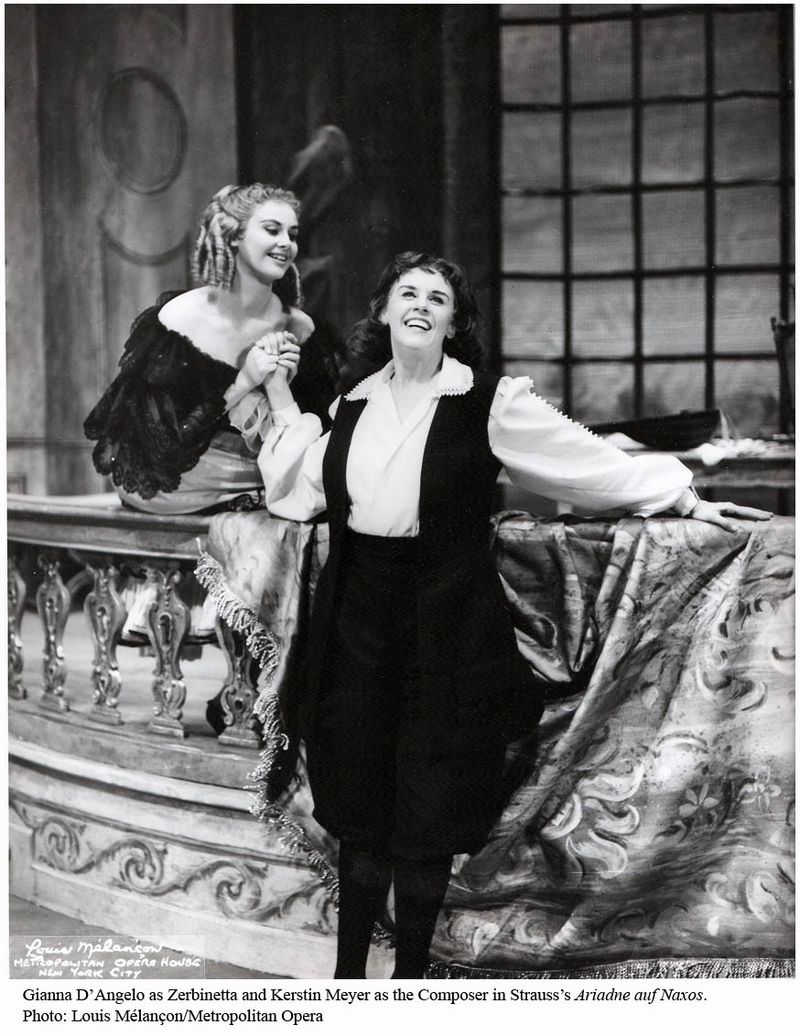
    Zerbinetta..............Gianna D'Angelo
    Composer................Kerstin Meyer
    Music Master............Walter Cassel
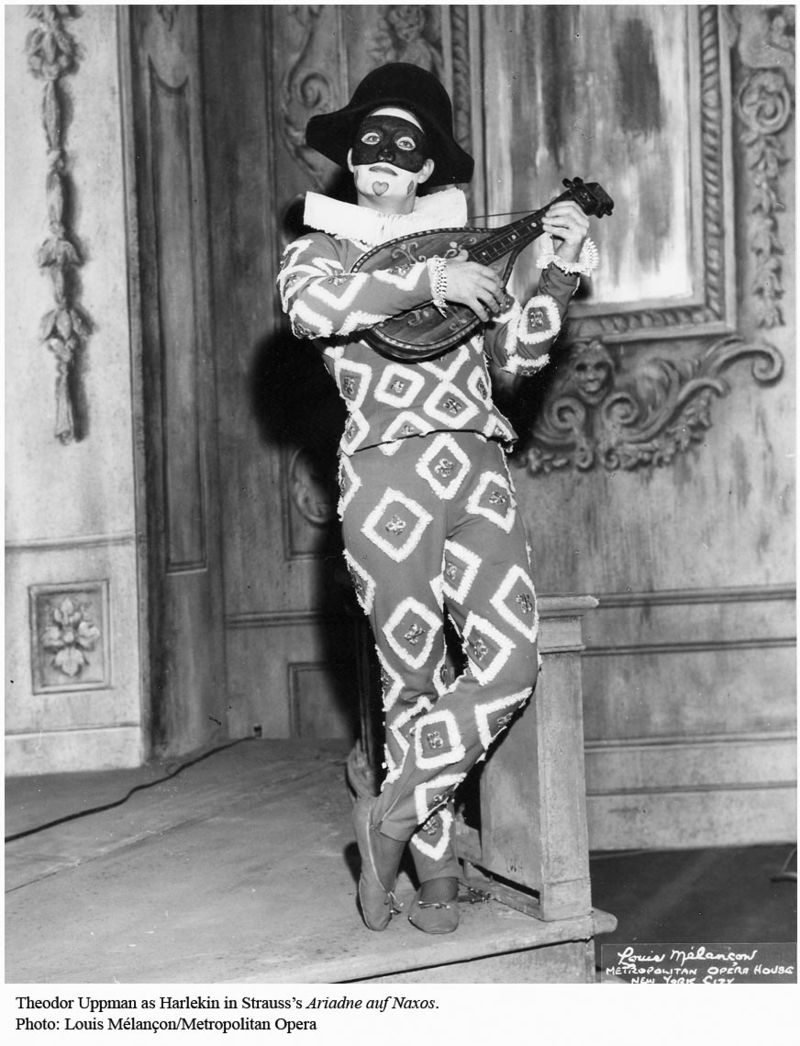
    Harlekin................Theodor Uppman
    Scaramuccio.............Andrea Velis
    Truffaldin..............Ezio Flagello
    Brighella...............Charles Anthony
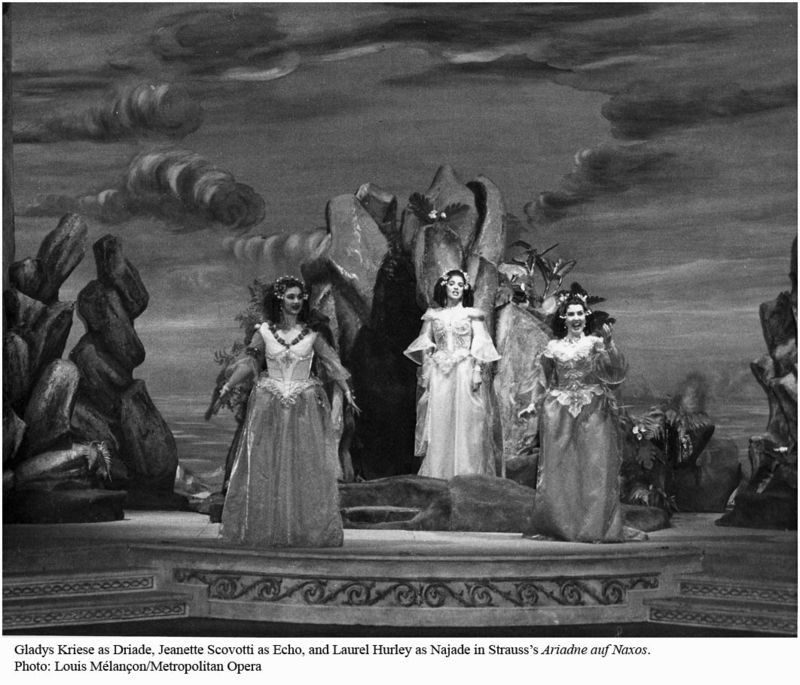
    Najade..................Laurel Hurley
    Dryade..................Gladys Kriese
    Echo....................Jeanette Scovotti
    Major-domo..............Morley Meredith
    Officer.................Robert Nagy
    Dancing Master..........Paul Franke
    Wigmaker................Roald Reitan
    Lackey..................Gerhard Pechner

    Conductor...............Karl Böhm

    The opera, with it’s almost chamber-music orchestration (only about 35 players are called for) was thought by some people to be too intimate for such a large house as The Met. But the production, revived several times over the ensuing years, continued to win new devotees to the incredible Strauss score. On March 12th, 1988 the Met production was telecast live to Europe; I was there – with Kenny and Jan – enjoying a superb cast led by Jessye Norman, Kathleen Battle, Tatiana Troyanos, and James King, with James Levine on the podium. In 1993 The Met unveiled a new and delightful production by Elijah Moshinsky with its ‘realistic’ prologue and fantasy-setting for the opera.  

    But, back to 1962: The Met’s house photographer at the time, Louis Melançon, routinely photographed each Met production as well as taking ‘portraits’ of the principal artists in costume. His photos graced Opera News for years, and I have several that were sent to me – autographed – by individual singers. Here are some of Mr. Melançon’s pictures from the Met’s premiere of ARIADNE AUF NAXOS:

    Ariadne6263.04

    Ariadne6263.24

    Ariadne6263.10

    Ariadne6263.22

    On February 2nd, 1963, Wagner’s FLIEGENDE HOLLANDER was scheduled for a Texaco/Metropolitan Opera matinee radio broadcast. Of course I was tuned in: this was my second season of Met radio broadcasts and I was thoroughly primed for my first experience of hearing HOLLANDER, with Opera News opened to the cast page and the household warned against any intrusions on my listening. Thus I was shocked when the friendly voice of Milton Cross delivered the alarming news: the opera was being changed!

    It seemed that tenor Sandor Konya, scheduled to sing Erik in HOLLANDER, was ill and so were his cover and other tenors who were in town who knew the role. It was decided to put on ARIANDE instead, since Leonie Rysanek – scheduled for Senta in the Wagner – was ready and raring to go. (ARIADNE had been scheduled for broadcast later in the season, with Lisa Della Casa the announced Ariadne; the change of opera on February 2nd thus deprived Della Casa of her chance to broadcast the role). The cast for the ‘substitution’ broadcast was the same as for the Met premiere, with the exception of Roberta Peters, replacing Gianna D’Angelo as Zerbinetta.

    Without any preparation for this ‘new’ opera, I listened and – to an extent – enjoyed ARIADNE though to be honest I was not a huge Strauss fan at that point in my operatic career. It wasn’t until 1970 that I actually saw the Met’s ARIADNE: from a front-row orchestra seat directly behind Karl Bohm’s left shoulder, I was transported by a splendid cast led by Leonie Rysanek, Reri Grist, Evelyn Lear, and James King. My love affair with ARIADNE became even more earnest a few seasons later with the New York City Opera’s beloved English/German production starring Carol Neblett/Johanna Meier, Patricia Wise, Maralin Niska, and John Alexander. But that’s a whole other story.

  • At Home With Wagner IV

    Richard+Wagner+02

    Note: this article has been written over the course of several months

    Four recordings of live performances of Wagner’s LOHENGRIN have come my way, courtesy of my friend Dmitry. Despite being rather busier during this Summer of 2013 than I’d anticipated, I found time on these hot afternoons to start listening to these performances, an act at a time. Invariably I’ll listen to the same act two or three times, so as not to miss anything.

    LOHENGRIN might be considered Wagner’s most beautiful opera; from the ethereal opening bars of the prelude, it weaves a spell of mystery, romance, and deceit all under-scored by the Dark Arts. Marvelous stretches of melodic splendor – Elsa’s Song to the Breezes (“Euch luften“), the bridal procession to the cathedral, Lohengrin’s tragically tender “In fernam land” – mix with ‘greatest hits’  like the über-familiar Wedding March and the thrilling Act III prelude. Three prolonged duets are the setting for major dramatic developments in the narrative: Ortrud and the banished Telramund outside the city walls; Elsa meeting with and being beguiled by Ortrud; and Elsa and Lohengrin on their bridal night where the hapless girl asks the fatal question. King Henry has his orotund prayer “Mein Herr und Gott!” whilst Ortrud calls upon the forsaken pagan gods in her great invocation “Entweihte Götter!” The conflict between darkness and light is manifested in the great confrontation between Ortrud and Elsa on the cathedral steps, the violins churning away feverishly as the two voices vie for the upper hand; Ortrud has the last word.

    So it’s an opera that is easy to listen to repeatedly; and the more you listen, the more you hear…yes, even after 50+ years of getting drunk on Wagner, I still discover new things in his operas.  

    Jess+Thomas

    Jess Thomas (above) is the Lohengrin on two of these recordings, the first from Munich 1964 and the second from Vienna 1965. I listened to the Munich first, conducted by Joseph Keilberth, and found it a strong, extroverted performance. None of the principal singers go in for much subtlety, instead flexing their Wagnerian vocal muscles in generous style.

    Keilberth’s conducting has sweep and intensity, though perhaps lacking a bit of the dreamlike quality that can illuminate the more spiritual passages of the opera. This accords well with the singing, since neither Jess Thomas nor his Elsa, Ingrid Bjoner, use much dynamic contrast (though when they do it works wonders). Both have big, generous voices and they are on fine form for this performance.

    Jess Thomas was my first Calaf (at the Old Met), Siegfried, Tristan and Parsifal. He was a mainstay at The Met in the helden roles from 1962 to 1982, returning in 1983 to sing part of Act I of WALKURE with Jessye Norman for the Met’s 100th birthday gala. His is not the most gorgeous sound imaginable but his power and security are amply in evidence in this Munich performance.

    Cox Bjoner

    Above photo: Ingrid Bjoner in GOTTERDAMMERUNG, with tenor Jean Cox

    I’ve always liked Ingrid Bjoner; her rather metallic sound and steely top served her well in a long Wagnerian career. I only saw her onstage onceas Turandot, a memorable performance both from a vocal and dramatic standpoint. In this Munich LOHENGRIN, Bjoner sails thru the music with exciting vocal security. If only rarely does she engage in the floating piani that many sopranos like to display in this music (the end of Bjoner’s ‘Euch luften’ is ravishing!), hers is an impressive reading of the music.

    In a thrilling performance, Hans Günther Nöcker turns the sometimes-overshadowed role of Telramund into a star part. His narration of the shame and degradation he feels at having been bested in the duel and then exiled is a powerful opening for the opera’s second act.
    0099925413729_600

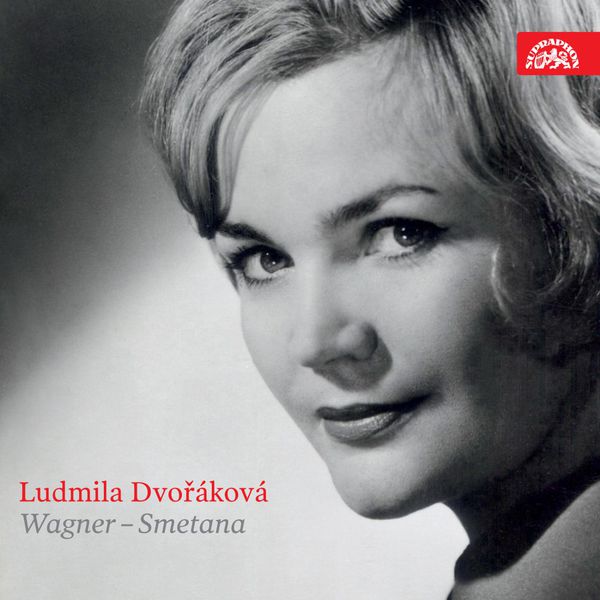
    Ludmila Dvorakova’s large, somewhat unwieldy voice has ample thrusting power for Ortrud’s great invocation in Act II, though she tends to leave off clear enunciation of the text in favor of simply pouring out the sound. Dvorakova (above) – who sang Isolde, Leonore and Ortrud at the Met in the 1960s – was known for her magnetic stage presence.

    Gottlob Frick is a powerful Henry, but there’s a question as to whether it’s Josef Metternich or Gerd Neinstedt as the Herald in this performance – whoever it is, he is not having his happiest night vocally.

    ~~~~~~~~~~~~~~~~~~~~~~~~~~~~~~~~~~~~~~~~~~~~~~~~~~~~~~~~~~~~~~~~~~~~~~~~~~~~~~~~~~~~~~~~~~~~~~~~

    Geddanc

    When in 1966 tenor Nicolai Gedda was announced for performances of Lohengrin in Stockholm, there was some hand-wringing among the fans. Gedda was known for his stylish lyricism and easy top in the bel canto and French repertoire; he had tackled such high-flying roles as Arturo in PURITANI and Raoul in HUGUENOTS with striking command. By venturing into Wagner, Gedda was thought to be putting his instrument at risk. But he sang Lohengrin on his own terms, with true-tenor (rather than baritonal) timbre, producing one beautiful phrase after another. The recording, which I owned on reel-to-reel at the time it was first available, is a valuable document since Gedda never again sang the role, nor any other Wagnerian role, onstage.

    Gedda in fact is one of the most pleasing Lohengrins to hear; as in another mythic/heroic role he tackled only once – Aeneas in TROYENS – the tenor’s clarity of both tone and diction – and his complete ease when the vocal line goes upward – mark his performances in these operas as ideal, even though they both quickly fell out of his active repertory.

    Gedda was my first Nemorino (at the Old Met) and I saw him many times over the ensuing years (as Don Jose, Don Ottavio, Elvino, Edgardo, Faust and  Lensky), always impressive in his artistry and vocal security. Far from ruining his voice, the Lohengrin simply served as a vocal adventure for the tenor; he went on singing for another 20 years after portraying the mysterious knight. His Met career spanned 25 years and nearly 375 performances, including singing the final trio from FAUST at the very last performance at the Old Met.

    Aside from Gedda, this Stockholm LOHENGRIN is very enjoyable in many ways though not quite reaching the mystical heights that some performances of this opera have attained. Conductor Silvio Varviso has a fine sense of pacing and if the orchestral playing is not world-class, a lyrical atmosphere develops nicely right from the start.

    Aase N-L

    I’m particularly taken with the performances by the two female leads: the Norwegian soprano Aase Nordmo Løvberg (above) makes a distinctive impression as Elsa; her voice, rather Mozartean in heft and feeling, has clear lyrical power and expresses the character’s vulnerability well. The soprano appeared at The Met 1959-60 as Elsa, Eva, Sieglinde and Leonore; she passed away earlier this year, one of those ‘forgotten’ voices still held dear by a diminishing group of aficianados who listen to older recordings.
    Ericson

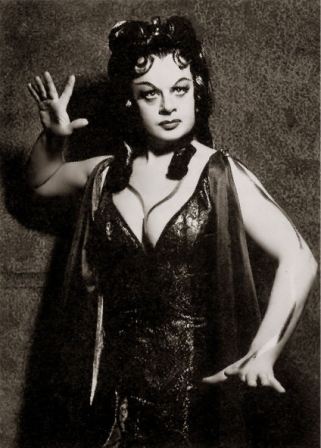
    As Ortrud, Barbro Ericson (above) gives a blazing performance. Like Nordmo Løvberg, Ericson did sing at The Met (1967-68): she was Siegrune in the ‘Karajan’ WALKURE performances, and stepped in once as Fricka; she returned a decade later to sing Herodias in SALOME with Grace Bumbry as her daughter. Ericson was a fearless singer with a rich chest voice and some stunningly easy top notes.

    As King Henry, Aage Haugland’s sturdy and humane bass sound is a big asset in the Stockholm LOHENGRIN; Rolf Jupither is a solid Telramund and Ingvar Wixell – who went on to be a major Verdi baritone (he was a wonderful Boccanegra at the Met in 1973-74) – already shows vocal distinction as the Herald.

    in the third act, this performance is particularly gratifying, for Ms. Nordmo Løvberg and Mr. Gedda sing one of the most lyrical and polished versions of the Bridal Chamber duet that I’ve ever heard. And the tenor is absolutely splendid in the long narrative “In fernem land” and his tender farewell address to his wife; with poetic expression tinged in sadness, he presents Elsa with the horn, sword and ring that are meant for her lost brother, Gottfried. Gedda’s anguished “Leb wohl!” to his distraught bride is like an arrow to the heart. This document of Gedda’s performance, capped by his magnificent vocalism in the opera’s final twenty minutes, can be considered a treasured rarity in the annals of great Wagner singing.

    ~~~~~~~~~~~~~~~~~~~~~~~~~~~~~~~~~~~~~~~~~~~~~~~~~~~~~~~~~~~~~~~~~~~~~~~~~~~~~~~~~~~~~~~~~~~~~~~~

    Rene-maison

    Above: tenor René Maison

    As Summer 2013 ended and the performance season started up, I had less time to devote to listening at home; and so it wasn’t until the dark, chilled days of February 2014 that I took up a rarity:  1936 LOHENGRIN from Buenos Aires which features René Maison, Germaine Hoerner, Marjorie Lawrence, Fred Destal, Alexander Kipnis, and Fritz Krenn, with Fritz Busch on the podium. Of the singers, Hoerner, Destal, and Krenn were names I’d never even heard of prior to settling down with this recording.
    Gorrhoernersenta

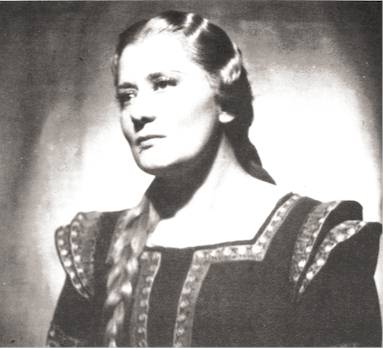
    Germaine Hoerner was born in Strasbourg in 1905, made her debut at L’Opera de Paris in 1929 and sang such roles as Elsa, Gutrune, Senta (photo above), Aida, Desdemona, the Marschallin, and Beethoven’s Leonore during her career which lasted thirty years. How strange that I’d never encountered her voice before.

    Fred Destal began his career as a choirboy in Liegnitz and sang professionally at the Deutsches Theater in Brünn, before joining the Deutsches Opernhaus (later the Städtisches Oper) in Berlin. In 1933 he left Germany for the Zurich Opera. He sang at the Vienna State Opera from 1936–1938, and emigrated to the United States in 1938. He made many guest appearances in Europe and frequently performed at the Colón in Buenos Aires where he essayed several Wagnerian roles as well as singing in operas by Mozart and Strauss, and in operetta.

    Fritz Krenn debuted in 1917, singing with the Vienna State Opera from 1920-1925 and the State Opera, Berlin, from 1927 til 1943. He became celebrated for his Baron Ochs, singing the role over 400 times including seven performances at The Met in 1950. He died in 1963.

    The three other leading artists in this 1936 Buenos Aires LOHENGRIN all had major careers – Marjorie Lawrence’s unfortunately much altered by the onset of polio in 1941. Though her legs were paralyzed, she returned to the stage in 1943, singing performances of Venus and Isolde at The Met from a seated position; but the wife of a Metropolitan Opera board member was put off by the sight of the disabled soprano onstage and her Met career ended. Lawrence’s life was the subject of a 1955 film, Interrupted Melody.

    The sound quality on this 1936 performance – needless to say – is very uneven; yet not enough so to deter the adventuruous listener. Passages where the volume fades come and go, and these sometimes occur at exactly the “wrong” moment. But there’s enough acceptable sonic accessability to have a pretty good idea of what the performance was like.

    Fritz Busch conducts and, though the orchestra playing (and the recording of it) leave something to be desired, the conductor establishes the dramatic atmosphere right from the start of the celestial prelude – a prelude which draws unexpected and sustained applause from the audience.

    Alexander Kipnis sounds somewhat unsettled in this performance as King Henry: his career had already lasted 20 years and The Met was still in his future. He may have suffered from the recording techniques employed or simply have been having an off-night. Here are no serious flaws in his singing, but surely he’s not as his best. Germaine Hoerner has a brightish voice with a slight flutter that gives her singing an almost girlish attractiveness and a vulnerable appeal – quite nice for this role. There are some vague pitch issues but she does make an impression right from her opening line. René Maison sings expressively as Lohengrin, with a good feel for the other-worldly yet heroic quality the music calls for; he shows impressive dynamic control from the start. Fritz Krenn begins rather anonymously as the Herald but gains ground as Act I progresses. Fred Destal’s Telramund is dramatically vivid in the opening act – his greatest moments lie ahead – and Ms. Lawrence makes only the briefest vocal appearance in Act I. 

    Despite the lack of immediacy in the sound quality, Busch opens Act II with a good sense of impending doom; in the duet for Ortrud and Telramund, Lawrence and Destal are appropriately gloomy. Later Ms. Lawrence is ever-so-slighly taxed by some of Ortrud’s highest notes but she’s very exciting at “Zurück, Elsa!” and the whole of their confrontation is well done. Destal’s attempt to incite the knights is another good passage, and Fritz Krenn’s singing as the Herald is more vivid than in Act I. Busch takes the wedding procession music rather faster than we often hear it, and the chorus sound a bit daunted at this point. What sets this second act on a higher plane is the singing of Hoerner and Maison: the soprano’s voice, now at full sail, is full of lyrical grace; her pitch is now steady and the voice takes on a silvery gleam in the upper range. Maison’s tenderness towards Elsa is lovingly expressed, and Ms. Hoerner responds to his reassurance with a finely-turned rendering of the marvelous passage “Mein Retter, der mir Heil gebracht! Mein Held, in dem ich muss vergehn, hoch über alles Zweifels Macht soll meine Liebe stehn.” (“My deliverer, who brought me salvation! My knight, in whom I must melt away! High above the force of all doubt shall my love stand.”)

    After a brisk prelude, Act III begins with the chorus of the bridal party approaching; the antique sound quality gives the voices a ghostly air, and as they recede I was struck by the fact that it’s unlikely anyone who was at this performance is still alive today, and struck yet again that it has come to us from across a three-quarter-century span of time.

    Ms. Hoerner and Mr. Maison achieve poetic vocal distinction in the Bridal Chamber duet; the tenor’s gentle ardor is movingly expressed with some lovely soft nuances and the soprano sounds girlishly enraptured; of course, their joy is short-lived as Elsa’s gnawing curiosity overwhelms her. As the opera moves to its inexorable end, Mr. Maison sings ‘In fernem land’ so movingly. Ms. Hoerner reacts to the imminent departure of her knight with frantic despair; but Ms. Lawrence is not comfortable in Ortrud’s final vengeful utterances: she sounds taxed and rather desperate. Mr. Maison then delivers the most extraordinary singing of the entire performance: at ‘Mein lieber schwan’ he pares down the voice to a mystic thread of tone, coloured with an amazing sense of weeping. I’ve never heard anything like it; it literally gave me the chills.

    ~~~~~~~~~~~~~~~~~~~~~~~~~~~~~~~~~~~~~~~~~~~~~~~~~~~~~~~~~~~~~~~~~~~~~~~~~~~~~~~~~~~~~~~~~~~~~~~

    0

    Then back to Jess Thomas for the Vienna 1965 performance. The tenor is perhaps a shade less commanding vocally than in the Munich/Keilberth performance, but impressive nevertheless.

    For the Vienna ’65, Karl Bohm is on the podium, giving a refined delicacy to the prelude and showing a near-ideal sense of pacing and of the architecture of the work. Bohm underscores a sense of impending doom when – initially – no champion answers the calls to defend Elsa’s honor.

    C Watson

    Claire Watson, the American soprano who never sang at The Met but was a beloved star at Munich for several years, sings Elsa with a nice aristocratic feel. The voice is clear and steady, with just a slight touch of remoteness that suits the character.

    Walter Berry (Telramund) and Eberhard Waechter (the Herald), two of Vienna’s most beloved baritones at this point in time, are very fine in Act I; Martti Talvela’s sing as King Henry is at once powerful and humane. Talvela’s voice has a trace of a sob, and there are passing moments of off-pitch singing here and there but overall he is impressive.

     And then we come to Act II…

    Christa

    Above: Christa Ludwig

    From the moment of curtain-rise, the second act of this LOHENGRIN is simply thrilling. Not only is the singing of the principals at a very high level throughout, but the dramatic atmosphere that is generated raises the temperature to the boiling point very early on in the act and sustains it til the final omnious re-sounding of the Ortrud motif as Elsa and Lohengrin enter the cathedral.

    It’s the divine Christa Ludwig and her then-husband Walter Berry who set this act on its magnificent trajectory. Outside the city walls, Mr. Berry, as Telramund, having been defeated in single combat by Elsa’s mysterious knight in shining armor, prepares to face his fate in exile: “Arise, companion of my shame!” he tells his wife. But Ortrud, as if in a trance, cannot comprehend their banishment. In his monolog of defeat, Telramund blames his wife for his predicament, ending his tirade with “Mein Ehr hab ich verloren!” (“I have lost my honor!”) Having sung this whole passage thrillingly, Mr. Berry dissolves in anguished sobbing. I’ve never heard this passage so powerfully delivered.

    In the ensuing dialogue, as Ortrud tells Telramund how his fate can be reversed, both singers are incredibly alive to ever nuance of the music and text. In a searing moment, Telramund/Berry states that his defeat was an act of God; to this, Ortrud/Ludwig replies with a blistering, sustained “Gott????!!!!!” and then emits a ghastly laugh. Mr. Berry’s rejoinder marks another high point for the baritone; indeed both he and Ms. Ludwig continue throughout this scene to match one another in intensity and vocal splendour. Singing in doom-ladened unison, they conjure up a vision of revenge in “Der Rache Werk…”

    Then Elsa appears on the high castle balcony: Miss Watson in fine lyric form for the Song to the Breezes. But Ortrud calls to her from out of the darkness and after a bit of servile groveling on Ortrud’s part, Elsa agrees to come down and speak with her wounded nemesis. Ms. Ludwig then lauches her hair-raising invocation of the ancient gods:

    “Ye gods profaned! Help me now in my endeavor!
    Punish the ignominy that you have suffered here!
    Strengthen me in the service of your holy cause!
    Destroy the vile delusions of those who deny you!
    Wotan! I call on you, O god of strength!
    Freia! Hear me, O exalted one!
    Bless my deceit and hypocrisy,
    that I may be successful in my revenge!”

    This brilliant passage, delivered with stunning amplitude and soaring top notes by the inimitable Christa Ludwig, literally stops the show. The audience bursts into frantic appplause, a mid-act rarity in Wagner performances, and Maestro Bohm must wait several seconds to continue. 

    In their ensuing duet, Christa Ludwig uses the subtle finesse of a great lieder singer to worm her way into Elsa’s trust. Both Ludwig and Ms. Watson sing superbly here, with a perfect blend as their voices entwine. Elsa’s overwhelming goodness seems to have converted Ortrud: the orchestral melody of forgiveness and sisterhood – my favorite moment in the opera – signals false hope. In a devastating passage as Elsa draws Ortrud into the castle, Telramund emerges from the shadows and again Mr. Berry is pure magnificence in his closing statement: 

    “Thus misfortune enters that house!
    Fulfil, O wife, what your cunning mind has devised;
    I feel powerless to stop your work!
    The misfortune began with my defeat,
    now shall she fall who brought me to it!
    Only one thing do I see before me, urging me on:
    that he who robbed me of my honour shall die!”

    As the scene ended I was literally stunned. It took me a couple of days before I could go on with the recording; I just wanted to savour what I’d heard. It’s such a great feeling to experience the pure exaltation of a genuinely exciting operatic performance – a feeling that is quite rare in this day and age – and know that the emotions are still there, waiting to rise to the surface.

    But when I did take up the recording again, there were still more thrills in the second act: for one thing, Mr. Wachter as the Herald is on top form, and Mr. Berry continues his exciting performance as he tries to shore up support from some disgruntled comrades. The bridal procession commences, and Dr. Bohm begins the steady build-up to the fiery confrontation beween Elsa and Ortrud. As their vocal duel is engaged, the steadfast and true Ms. Watson sails confidently thru her phrases, bolstered by the populace. Cresting to a splendidly sustained top note, Elsa seems to be the victor but it’s Ortrud who has the final word: Christa Ludwig delivering a vocal knockout punch with dazzling self-assurance.

    So: what a lot I have written about this second act! It’s truly one of the most fascinating listening experiences in my long operatic career. The opera goes on, of course, and the final act is perfectly pleasing in every regard. Claire Watson and Jess Thomas manifest their lyrical selves in the Bridal Chamber duet while the slow rise of panic is well under-lined by Dr. Bohm. Martti Talvela sings superbly in the opera’s final scene by the river bank, and Mr. Thomas has plenty in reserve for ‘In fernem land’, showing expert vocal control. Christa Ludwig is at her full and imperious best in Ortrud’s final vocal victory lap…but then she’s undone when Lohengrin magically produces Gottfried: Ms. Ludwig emits a devastating moan.

    So, nearly nine months after I started writing this article, I’ve run out of LOHENGRINs to write about…at least for the moment.
  • Max Bruch’s MOSES @ Carnegie Hall

    Moses

    Thursday March 27th, 2014 – The American Symphony Orchestra and The Collegiate Chorale joined forces for a presentation of Max Bruch’s 1895 oratorio MOSES at Carnegie Hall tonight.

    Oratorios – basically operas without sets, costumes and with little or no dramatic inter-action between participants – became extremely popular in early 17th-century Italy; opera-lovers embraced the genre because of the Catholic Church’s prohibition of spectacles during Lent. Oratorio reached its apex during the time of Handel. In the late 19th century, Bruch was one of a handful of composers to continue working in this field and though it now seems a bit passé, oratorio remained viable throughout the 20th century, with works by such diverse composers as Stravinsky, Honegger, Penderecki, Golijov, and Sir Paul McCartney coming to fruition. In the 21st century, to date, Einhorn and Satoh have written oratorios.

    Bruch’s MOSES seems in part to have been written – with the encouragement of Johannes Brahms – as a rallying cry against the flood-tide of Wagnerism. Although Wagner had been dead for twelve years (and thus the music of the future was already in the past) when MOSES had its premiere (in 1895), music was already veering off in exciting new directions. To put Bruch’s work in a bit of context, Mahler’s 2nd symphony also premiered in 1895, and Claude Debussy had already written L‘après-midi dun faune (1894) and was at work on PELLEAS ET MELISANDE.

    That oratorio still appeals to audiences today was testified by the large, attentive and enthusiastic crowd at Carnegie Hall tonight. Bruch’s ‘conservative’ music shone beautifully in a finely-paced performance led by Leon Botstein. The American Symphony Orchestra and Collegiate Chorale lovingly embraced the work, and the three vocal soloists seized on the many opportunities for expressive singing which Bruch provided for them.

    Bruch draws upon four chronological events from the life of Moses to form the four parts of the oratorio. In the first, Moses is seen as the spiritual leader of his people receiving the Ten Commandments (which are nowadays considered the Ten Suggestions) on Mount Sinai. The second part revolves around the worship of the golden calf by Aaron, with the angry Moses lashing out at his brother and his renegade people.

    Following an intermission, we have the particularly impressive ‘Return of the Scouts from Canaan’ where the chorus and the male soloists did some truly impressive work. In the final part, commencing with a long funereal address by the Angel of the Lord, we witness the death of Moses who, having brought his people to the Promised Land, gives a final blessing to his followers; the oratorio ends with a choral lament.

    There are three soloists: Moses (bass-baritone), Aaron (tenor), and the Angel of the Lord (soprano). The libretto (in German, natürlich) is a mixture of paraphrase from the Old Testament and quotations from the Psalms. The chorus, in the role of the people of Israel, hold forth in much the same style developed in Mendelssohn’s great oratorio ELIJAH. The organ plays a prominent role, both as a solo instrument for recitatives or woven into the orchestral tapestry. The overall effect is rich, soul-stirring, and falls ever-so-pleasantly on the ear.

    Sidney Outlaw as Moses sang with dignity and increasing emotional power as the evening progressed; his baritone voice was able to successfully encompass the music which spans a wide range, including some resonant low notes. As the Angel of the Lord, soprano Tamara Wilson’s strong, vibrant soprano proved also capable of some shining piano notes in the upper range. She was especially moving in the solo which opens the oratorio’s final movement where she tells Moses of his impending death. Ms. Wilson’s performance made me think she might be a wonderful Ariadne in the Strauss opera.

    Tenor Kirk Dougherty made a particularly appealing vocal impression as Aaron; his voice is clear, warm and steady, filling the hall with expressive lyricism. He is able to generate considerable power without forcing and to develop a nice ping to the tone as the music rises higher. His big aria (“I go to the gates of Hell”) in the oratorio’s third part was the vocal highlight of the evening; as the text turns to pleading with Moses for forgiveness, Mr. Dougherty found a wonderful melancholy colour in his tonal palette, making me think what a very fine Lenski he might be. The aria even has a little ‘cabaletta‘ which the tenor dispatched with élan.

    Overall this was a very impressive evening: an opportunity to experience a rare work from out of the pages of musical history and to find its heart still beating and its drama still meaningful. In one ironic touch, despite the alleged ‘antidote-to-Wagner’ intent of the composer, I unmistakably heard a glimmer of a theme from – of all things – the Venusberg music from TANNHAUSERtwice. This little ambiguity somehow gave me a secret smile.

  • ANDREA CHENIER @ The Met

    Andre-chenier

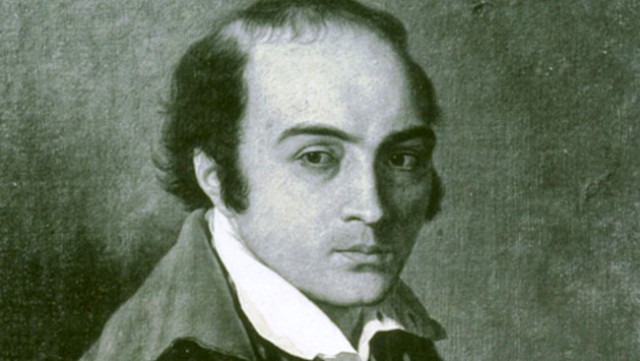
    Above: the poet André Chénier

    Monday March 24th, 2014 – Seeing the vast numbers of empty seats at The Met’s season premiere of ANDREA CHENIER tonight was disheartening. In my view, The Met has been in saturation mode since Gelb took over; there is just too much Met opera available in movie theaters and via Sirius, costing little or nothing to experience.

    Add to this the incredible operatic treasures to be found on YouTube these days – hundreds of complete operas from all over the globe and thousands of samples of great singers from all eras since the dawn of recording – to say nothing of CDs and DVDs, and it’s no wonder people are content to avoid paying Met prices and making an effort to get to the opera house.

    But of course getting your opera via a cinema or the Internet or other reproduction removes the key element of what makes live opera so thrilling: the sound of unamplified voices being projected into the vast, darkened space of the opera house. Once you compromise that, opera’s magic is diluted. Yes, it’s lovely for people who live in East Nowhere to be able to go to an HD performance, but it’s nothing like being in the opera house. 

    And the once-sacred twenty Saturday matinee radio broadcasts per season have been expanded to three or four times that many performances available thru Sirius all week, every season, many of them available free via live-stream. The old Texaco broadcasts – back in the heyday of Sutherland, Nilsson, Corelli and Tucker – would make people want to go to The Met; those broadcasts hooked thousands of people on opera for life. By their very rarity they were an enticement. Now, with so many broadcasts,  often featuring less-than-fabulous singing, the lure to actually go to The Met is less powerful.

    But, to the matter at hand: tonight’s CHENIER featured basically lyric voices – those of Patricia Racette and Marcelo Alvarez – in the main roles. Thus one would need a very considerate conductor to assure a successful performance; Gianandrea Noseda seemed to heedlessly swamp the two singers at the climaxes, forcing them to force. Mr. Alvarez emerged from this more successfully than his soprano colleague.

    In fact it was because of Ms. Racette that I nearly wrote off seeing CHENIER this season. She used to be one of my favorite sopranos: her Emmeline, Ellen Orford, Mimi and Violetta were all spectacular, and I liked her first foray into heavier territory – Elisabetta in DON CARLO – very much. Then she just seemed to go off, singing everything everywhere. The voice took on a wobbly quality, the vibrato becoming over-prominent and flatness creeping in. But when I heard her in a concert performance of Dallapiccola’s IL PRIGIONIERO in June 2013, I was quite taken with her way of handling verismo-style parlando so I thought she might be good in much of Maddalena’s music. And she was, up to a point.

    Racette’s first act tonight was lovely, she sounded youthful and vibrant. But then as the role progresses, spinto power is needed and when Racette turns to pressuring her voice, things go sour. Her ‘Eravate Possente!’ in Act II was finely rendered, and Mr. Alvarez replied with a honeyed ‘Ora soave’; but as the duet surged to its climax, Racette sounded strident above F and the duet’s final note was painful. Striving for vocal drama in Act III, Racette tried to beef up her chest voice. In the opening narrative of ‘La mamma morta’ she was really pushing things; as the line went higher, she sounded stressed and the climactic high-note was pretty painful. In the opera’s great concluding duet, both Racette and Alvarez were tested by the orchestra’s enthusiastic volume (where is Joseph Colaneri when we need him?). Racette’s tone was spreading as she pushed on, ending the opera on a desperate, flattish top B. Why she wanted to sing this role at this point in her career is a puzzlement; she simply put more wear and tear on an already weary voice.

    No one expected ringing top notes a la Corelli or Tucker from Mr. Alvarez, but the Argentine tenor would surely have had a better time of it with a more simpatico conductor. Alvarez’s voice is clear and warm, and he introduced many poetic effects into the music, magically at ‘O giovinetta bella’ in the Improviso,  at ‘Tu sarai poeta’ and ‘Io non ho amato ancor’ and throughout the ‘Ora soave’ duet in Act II. His farewell to life, ‘Come un bel di di maggio’ in the final scene, was the tenor’s finest work of the evening. Overall, it was a thoughtful, passionate traversal of the role, un-aided by his conductor.

    Zeljko Lucic as Gerard had nothing to fear from the waves of sound rising from the pit: the louder the orchestra played, the louder Lucic sang. It’s such a big, bold, authentic sound and I always want to love him, but enjoyment of his singing is compromised by his tendency to go flat. Thus it was an uneven and often maddening experience to hear him in this role that basically suits him very well. After some pitch straying in ‘Nemico della patria’, Lucic rose to a marvelous climax to the aria, and his narrative which follows where he tells Maddalena of his secret passion for her was superb. He won the evening’s loudest cheers at curtain call. If only…

    Of the many smaller roles in this opera, Margaret Lattimore stood out for her strong and melodious vocalism as the Countess de Coigny: expressive singing and a juicy chest voice. Tony Stevenson really sang L’Incredibile, and John Moore (Fleville), Dennis Petersen (Abbe), Jennifer Johnson Cano (Bersi), Robert Pomakov (Mathieu) and Dwayne Croft (Roucher) all fared well. Veterans James Courtney and Jeffrey Wells presided at the Tribunal wth chilling effect. In her Met debut, Olesya Petrova opened her Act III scene – so touching – with a sustained and beautifully tapered final note of the line ‘Son la vecchia Madelon’ and later she took a very fine soft top-G, as marked dolce in the score, at ‘Puo combattere e morire’. She deserved a round of applause – and bravas – but didn’t get it.

    CHENIER is a short opera, dragged long by two extended intermissions that drained the life out of it. In an odd moment, the applause after Act III had totally stopped and people were heading out when the bow lights came on and the singers trooped out for obligatory bows. It was just a little embarrassing. 

    Metropolitan Opera House
    March 24, 2014

    ANDREA CHÉNIER
    Umberto Giordano

    Andrea Chénier..........Marcelo Álvarez
    Maddalena...............Patricia Racette
    Carlo Gérard............Zeljko Lucic
    Bersi...................Jennifer Johnson Cano
    Countess di Coigny......Margaret Lattimore
    Abbé....................Dennis Petersen
    Fléville................John Moore
    L'Incredibile...........Tony Stevenson
    Roucher.................Dwayne Croft
    Mathieu.................Robert Pomakov
    Madelon.................Olesya Petrova [Debut]
    Dumas...................James Courtney
    Fouquier Tinville.......Jeffrey Wells
    Schmidt.................David Crawford
    Major-domo..............Kyle Pfortmiller

    Conductor...............Gianandrea Noseda

    375px-Plaque_André_Chénier,_Cimetière_de_Picpus,_Paris_12

    Above: a plaque at the Cimetière de Picpus honors the poet André Chénier

  • PRINCE IGOR @ The Met

    PrinceIgor-copy-2

    Above: Ildar Abdrazakov as Prince Igor at The Met

    Monday February 24th, 2014 – I fell in love with Borodin’s PRINCE IGOR back in the late 1960s when I saw several performances of it in an English-language production at New York City Opera. The staging was traditional and featured unforgettable performances by my beloved Maralin Niska (Yaroslavna) and that great singing-actor William Chapman (doubling as Khan Konchak and Prince Galitsky); much of the music became imbedded in my operatic memory, and the famed Polovtsian Dances were staged as a warriors-and-maidens extravaganza, led by the great Edward Villella who was on-loan from New York City Ballet.

    The City Opera’s production used painted drops and built set-pieces to evoke the locales, with era-appropriate costumes. It spoke to us directly of the time and place that Borodin’s music conveys. The Metropolitan Opera’s new production of PRINCE IGOR is more generalized; the women of Putivi are seen in 1940-ish dresses and coats even though the action supposedly takes place in the year 1185. 

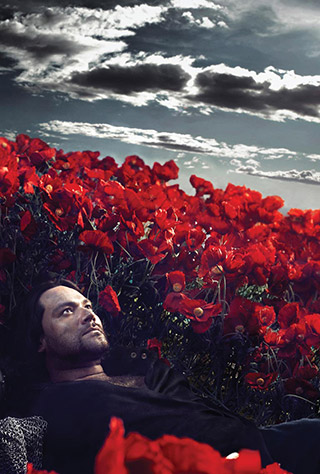
    The evening overall was a rather mixed affair: musically sound and with some interesting visual elements (the field of poppies) it does not really end up making a strong dramatic statement; this may be due in part to the episodic character of the opera itself. In this updated setting we don’t get much of a feel for exoticism. Khan Konchak for example is not seen as an Asiatic warlord with a scimitar but rather as a rather anonymous military type in a toxic-yellow uniform.

    The opening scene takes place not in a public square in Igor’s capital but rather in a great hall where the Prince’s troops assemble in preparation for going to war. This is fine, but it rather short-circuits the effect of the solar eclipse that is taken as a bad omen by the populace. Despite this warning, Prince Igor leads his troops out to fight the Khan; he is defeated and captured.

    Black-and-white films of the Prince and of his soldiers are shown during interludes; these are rather superfluous though it’s nice to see two men in a gentle embrace as they await the coming battle. The field of poppies is really very attractive and the ballet – with the dancers is gauzy cream-coloured costumes – is sensuous and flowing rather than militant and grand. I loved spotting several of my dancer-friends: Loni Landon, Michael Wright, Anthony Bocconi, Kentaro Kikuchi, Matt Van, and Bradley Shelver.

    In this production, the three scenes of Act II all take place in the same spacious great hall as the prologue; nevertheless, there are longish pauses between scenes.

    The first intermission stretched out unduly and the far-from-full house seemed bored waiting for the opera to resume. There were very short rounds of applause after the arias, which were for the most part attractively sung. A huge double explosion as the Act II curtain fell with Putivi under attack almost made me jump out of my seat.

    Gianandrea Noseda conducted with the right sense of grandeur, but also with a nice feeling for the more reflective moments. Perhaps what was missing was a Scheherazade/mystique in the Polovtsian scene. Noseda sometimes tended to overwhelm his singers; and the very open sets did not help to project the voices into the hall. The orchestra and chorus were on optimum form.

    In the title-role, Ildar Abdrazakov sang beautifully, especially in his great aria of anguish over his defeat and of his longing for his beloved Yaroslavna far away. The role, often sung by baritones, seemed to work well for Abdrazakov even though his voice is more basso-oriented. Read about Mr. Abdrazakov’s recently-issued CD of Russian arias Power Players, here. Igor’s lament is a highlight of this excellent disc.

    Stefan Kocan and Mikhail Petrenko appeared as Khan Konchak and Prince Galitsky respectively and both sang well though neither seemed as prolific of volume as I have sometimes heard them. Sergei Semishkur’s handsome tenor voice and long-floated head-tone at the end of his serenade made his Vladimir a great asset to the evening musically, though he was rather wooden onstage. The veteran basso Vladimir Ognovenko was a characterful Skula, with Andrey Popov as his sidekick Yeroshka.

    Oksana Dyka’s stunning high-C as she bade farewell to Igor in the prologue sailed impressively into the house; but later, in her Act I aria, the voice seemed unsteady and lacking in the dynamic control that made Maralin Niska’s rendering so memorable. Niska always took a flaming, sustained top note at the end of the great scene with the boyars where the palace is attacked. Dyka wisely didn’t try for it. The sultry timbre of Anita Rachvelishvili made a lush impression in the contralto-based music of Konchakovna, and it was very nice to see Barbara Dever onstage again in the brief role of Yaroslavna’s nurse: I still recall her vivid Amneris and Ulrica from several seasons ago.

    Deonarine_Kiri_046_ret4 2

    A particularly pleasing interlude came in the aria with female chorus of the Polovtsian Maiden which opens the scene at Khan Konchak’s camp. Singing from the pit, the soprano Kiri Deonarine (above) showed a voice of limpid clarity which fell so sweetly on the ear that one could have gone on listening to many more verses than Borodin provided. It was a definite vocal highlight of the evening, and also showed Mr. Noseda – and the Met’s harpist – at their senstive best.

    Metropolitan Opera House
    February 24, 2014

    PRINCE IGOR
    Alexander Borodin

    Prince Igor.............Ildar Abdrazakov
    Yaroslavna..............Oksana Dyka
    Vladimir................Sergey Semishkur
    Prince Galitzky.........Mikhail Petrenko
    Khan Konchak............Stefan Kocán
    Konchakovna.............Anita Rachvelishvili
    Skula...................Vladimir Ognovenko
    Yeroshka................Andrey Popov
    Ovlur...................Mikhail Vekua
    Nurse...................Barbara Dever
    Maiden..................Kiri Deonarine

    Conductor...............GIanandrea Noseda

  • WARSAW SERENADE @ Merkin Hall

    Dina-_Kuznetsova

    Above: soprano Dina Kuznetsova

    Tuesday February 18, 2014 – An evening of Polish songs, presented by New York Festival of Song at Merkin Hall, offered an opportunity to hear music I’d never heard before. Michael Barrett and Steven Blier were at the Steinways as tenor Joseph Kaiser opened the evening with “Nakaz niech ozywcze slonko” from Stanislaw Moniuszko’s Verbum Nobile; to a march-like rhythm, Mr. Kaiser poured forth his rich-lyric tone with some strikingly sustained high notes. Soprano Dina Kuznetsova made her first appearance of the evening singing Edward Pallasz’s “Kiszewska” (a ‘lament of the mother of mankind’); intimate and mysterious at first, this song takes on a quality of deep sadness for which the singer employed a smouldering vibrato.

    Four songs by Grazyna Bacewicz represented a wide spectrum of vocal and expressive colours: Ms. Kuznetsova in three of the songs ranged from reflective to chattery, at one point doing some agitated humming as she expressed the numbing horror of having a severe headache. Mr. Kaiser’s rendering of “Oto jest noc”, a song to the moon, was powerfully delivered with some passages of vocalise and a big climactic phrase.

    JosephKaiser-682x1024

    Above: tenor Joseph Kaiser

    Each singer represented a song by Mieczyslaw Karlowicz: the tenor in the touchingly melodic “Mów do mnie jeszcze” (‘Keep speaking to me…’) with its rising passion so marvelously captured by the singer; and then the soprano in the composer’s very first published song “Zasmuconej” (‘To a grieving maiden…’) with its simple, poetic melody showing Ms. Kuznetsova’s communicative gifts with distinction.

    Mieczyslaw Weinberg’s Seven Yiddish Songs were composed in 1943 to texts by the great Yiddish writer, I. L. Peretz. Weinberg, whose life was lived under the dark clouds of anti-Semitism (his entire family destroyed in a concentration camp with the composer having fled to Russia in 1939), is only now experiencing a renaissance with his 1968 opera THE PASSENGER having been recently performed at Bregenz and Houston and due to be seen in New York City this Summer. This evening’s performance of the Seven Yiddish Songs, Opus 13, was my first live encounter with Weinberg’s music.

    The cycle commences with a child-like “la-la-la-la” duet and proceeds with solos for each singer; another duet takes the form of a playful dialogue. Things take a darker turn as Mr. Kaiser sings of an orphaned boy writing a letter to his dead mama; in the closing song “Schluss” the piano punctuates Ms. Kuznetsova’s musings. Both singers excelled in these expressive miniatures.

    Two more Moniuszko songs: a flowingly melodic ‘Evening Song’ with an Italianate feel from the tenor, and a ripplingly-accompanied, minor-key ‘Spinning Song’ delivered with charm by Ms. Kuznetsova.

    Mr. Blier spoke of Karol Szymanowski’s homosexuality and how it coloured much of the composer’s work. In four songs, the two singers alternated – first the soprano in a quiet, sensuous mood and then Mr. Kaiser singing with increasing passion in a Sicilian-flavored ‘”Zuleikha” (sung in German). Ms. Kuznetsova employs her coloristic gifts in one of the Songs of the Infatuated Muezzin, a cycle inspired by Szymanowski’s visit to North Africa. In ‘Neigh, my horse’ from The Kurpian Songs Mr. Kaiser tells of a rider, en route to his beloved, being distracted by another beauty he meets on the journey; the tenor’s voice rose ringingly to a clarion climax which faded as he sent his riderless horse on to reassure his waiting sweetheart.

    The evening ended with an operatically-styled ‘Piper’s Song’ by Ignacy Jan Paderewski where the two voices blended very attractively as the duet moved to its shimmering conclusion.

    Despite a bit too much talking – and an un-cooperative microphone – and some distracting comings and goings, the evening was an enjoyable encounter with rarely-heard music and the pleasing experience of hearing Ms. Kuznetsova and Mr. Kaiser lift their voices in expresive song.


  • Bride of the Wind

    Th

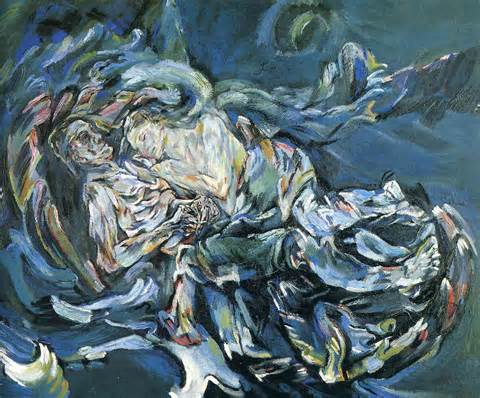
    Above: Oskar Kokoschka’s painting Bride of the Wind

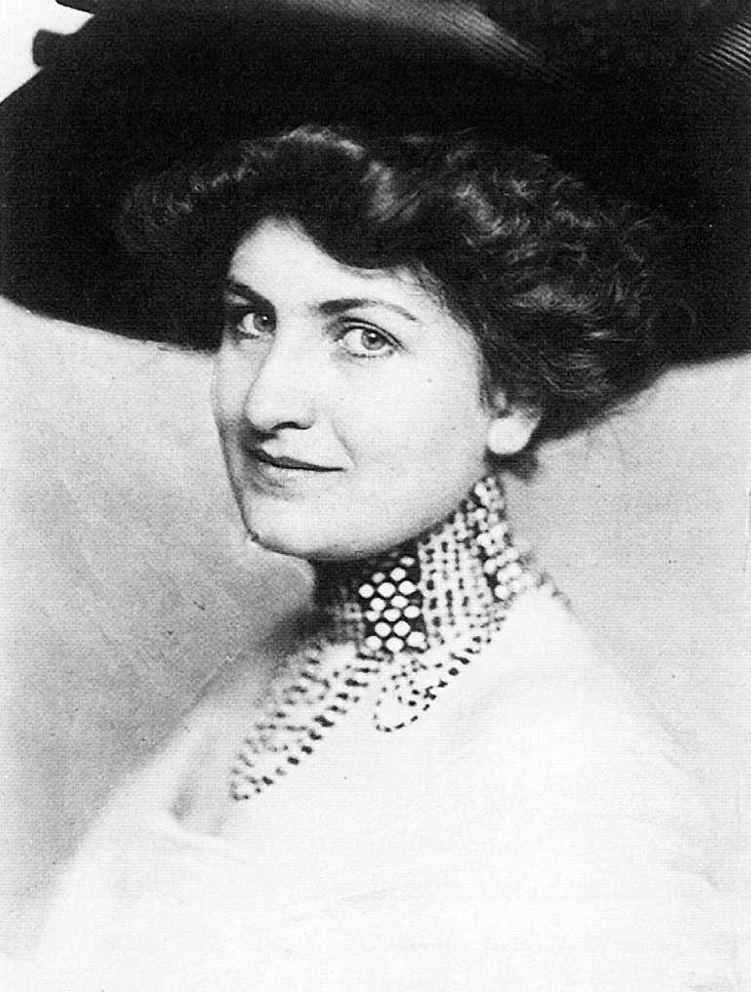
    BRIDE OF THE WIND is a 2001 film by Academy Award-nominated director Bruce Beresford which brings to the screen the story of Alma (Schindler) Mahler-Werfel. Alma (played by Sarah Wynter) was one of the most renowned young beauties in turn-of-the-century Vienna, pursued by some of the most famous men in the city, including the artist Gustav Klimt (played by August Schmolzer). She finds herself drawn to the enigmatic composer/conductor Gustav Mahler (Jonathan Pryce) and they marry after she has agreed to his demand that she give up her own aspirations as a composer. Alma hid her compositions away and devoted herself to the self-centered genius Mahler; their’s was a loveless marriage, producing two children but leaving Alma bereft of affection.

    When their oldest daughter dies, Alma’s health breaks down. She goes to a sanitarium in the countryside to recover, and there she meets another patient, the young architect Walter Gropius (Simon Verhoeven). He is kind and attentive, and they begin an affair. Alma’s marriage to Mahler survives the composer’s discovery of her infidelity. When Mahler succumbs to heart disease, Alma marries Gropius, but their marriage lasts only a few years. Alma has been drawn to another man, the artist Oskar Kokoschka (Vincent Perez). Kokoschka is a bold, impetuous lover; his affair with Alma yields a renowned painting of her, nestled next to Kokoschka’s in repose, called Bride of the Wind. Alma becomes pregnant with Oskar’s child, but decides not to carry the baby to term.

    Alma returns to Gropius for a time, and Kokoschka sells the painting for enough money to buy a commission in the army. He is reported killed in action during World War I. Finally, after leaving Gropius – who has become prudish and possessive – Alma meets the author Franz Werfel (played by Gregor Seberg) whom she marries. In an odd twist,  Kokoschka returns, having miraculously recovered from his wounds; despite finding Alma now married to Werfel, Oskar still loves her and he creates a life-sized doll of her which takes everywhere with him.

    Meanwhile, Alma has at last found peace and fulfillment with Werfel; he discovers her long-hidden musical manuscripts and encourages her to to resume composing. The film ends with a scene from a 1925 recital at which soprano Frances Alda (played by Renee Fleming) performed Alma Mahler-Werfel’s songs for the first time in public.

    I’d quite forgotten how beautiful this film is: the cinematography seems to perfectly capture the architectural detail, art works and fashion of the era, and there are some evocative lighting effects: the simple motif of the sun shining thru a sheer window curtain moved me in a curious way. The opening scene, as Alma enters the shadowy foyer of a great mansion where a party is in progress, is stunning: what seems like a black-and-white shot suddenly delights the eye as she removes her black cloak to reveal a ruby-red gown; moving on to the ballroom, colour seeps into the entire scene.

    One scene after another – Klimt’s studio, the tiny cabin by a lake where Mahler composed, the idyllic sanitarium – lures us into this rich, luminous world; and of course the soundtrack, drawing upon works of both Gustav and Alma Mahler, is a major factor in the film’s romantic allure.

    968full-bride-of-the-wind-screenshot

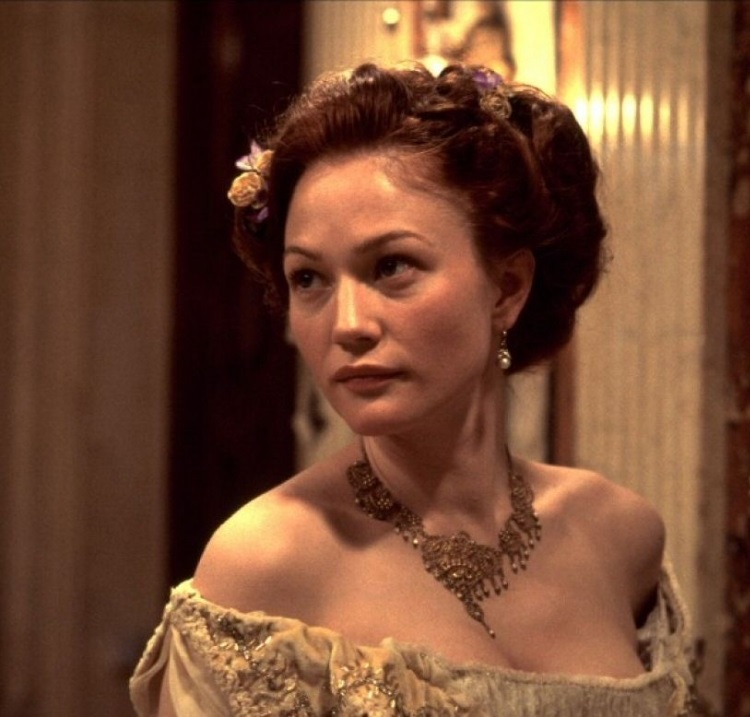
    Sarah Wynter as Alma (above) displays the character’s intelligence, grace and attractiveness which inspired masculine fervor and tenderness; her rather aristocratic exterior conceals a deep passion and a desire for intimacy. Wynter shines in every scene, a symbol of an elegant age. At certain angles, Jonathan Pryce looks uncannily like Mahler; a polished actor, Pryce seems to simply become the great composer. Mssers. Verhoeven and Perez are heart-throbs, each in his own way. All the character roles are finely played, and the whole film carries us back in time – to an era when I think I might previously have lived, such is my sense of déjà vu.

    Mahler-Werfel,_Alma_289

    Above: Alma Mahler-Werfel.

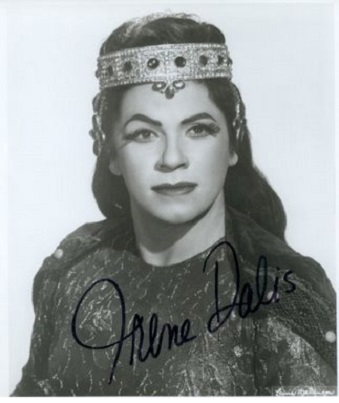
  • Irene Dalis as Kundry

    Dalis-719053

    Irene Dalis, a particular favorite of mine in my formative first decade of opera-going, made only one commercially-released recording during her distinguished career – and even this derived from a live performance: PARSIFAL from the 1962 Bayreuth Festival. She seems never to have found her way into a recording studio (though there is supposedly a set of CARMEN highlights recorded by her in German…which I can’t seem to locate); some of her Met broadcasts have now been issued on the Sony label.

    The Philips-label release of the Bayreuth ’62 PARSIFAL is a highly-regarded recording; the ‘Bayreuth Sound’ has been well-captured and the performance under Hans Knappertsbusch is overall very impressive. However, I’ve never felt that this particular performance of Kundry was representative of Irene Dalis’s finest work. So I was happy to receive from Dmitry a copy of Act II from the following year’s (1963) Bayreuth Festival which is now available at Opera Depot.

    To my ears, Irene seems far more herself vocally in this ’63 Kundry than she did the previous Summer. She sings a great deal of the role piano, beautifully supported by Knappertsbusch. This gives her interpretation a mysterious sense of intimacy; after the kiss (marvelously underscored by Kna and the orchestra) the tide begins to turn against Kundry. Irene’s colorful voicing of the character’s desperation and – later – fury makes for an exciting dramatic build-up in the final minutes of the Act. Traces of tension in some of her upper notes are evident, but her intense focus on Kundry’s psychological conflict propels the singer thru any thorny moments with success. Throughout, Knappertsbusch’s pacing is spot-on: ever forward-moving but not shirking either the sensual or spiritual aspects of the music. Wolfgang Windgassen is on fine form here, bringing firm lyricism and then steely power to the music of Parsifal’s emotional evolution. Gustav Neidlinger, Solti’s Alberich in the famous London/Decca RING, is a commandingly malevolent Klingsor.