Category: Opera

  • Halcyon @ The Di Menna Center

    L1180776

    Above: pianist Ta-Wei Yu of the ensemble Halcyon

    Monday August 26th, 2013 – Halcyon gave an evening of piano trios at the Di Menna Center, a high-ceilinged yet intimate space on the lower level of the Baryshnikov Arts Center building. The hall proved very felicitous for musical clarity, and an attentive and appreciative audience maintained a deep silence between the movements of each trio, rewarding the musicians with enthusiastic applause at the end of the evening.

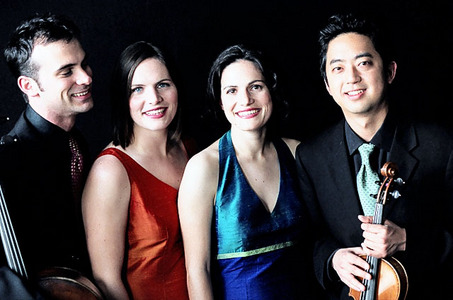
    Opening with the Arensky piano trio No.1 in D minor, the players immediately established themselves as technically accomplished and vividly communicative musicians. The opening movement glows with Tchaikovksian beauty of melody, suffused with shades of quiet longing. Violinist Hilary Castle, in a gorgeous ruby-red gown, brought a feeling of poignant lyricism to the opening theme, with pianist Ta-Wei Yu matching her in a sense of rhythmic flow. Cellist Luke Krafka’s velvety sound – a consistent pleasure all evening – seemed very much at home in this music which veers from feelings of melancholy to hope. The playful second movement materailizes as an ‘Arensky waltz’; this gives way to the poetic Elegia-Adagio where the playing of the three musicians was passionate and inspired. In the concluding movement, earlier themes re-appear as the piece builds to a dramatic conclusion.   

    The second work, Haydn’s piano trio No.39 (“Gypsy”) in G major dates from 1795, during the composer’s time in London, and contains some of his most innovative
    keyboard writing. The work also features solo passages
    for the violin; if the cello is less prominent here, it does provide beautiful textures. Ta-Wei Yu’s nimble playing was very much to the fore here, with felicitous nuances of dynamic and colour. The three musicians attained a high level of expressiveness in the finely-moulded second movement: really impressive music-making. It’s the trio’s final ‘Hungarian’ rondo movement that has led to dubbing this piece the ‘Gypsy’ trio: here Ms. Castle went to town with her flourishes à la zingarese whilst the two gentlemen kept pace in a breath-taking rush to the finish. The musicians played with infectious joy.

    I have a special place in my heart for the two Mendelssohn piano trios: they are my favorite chamber works and in fact it was a chance hearing of the first trio on the radio lo! these many decades ago that made me realize there’s other music beyond opera that is rewarding to hear. This evening, Halcyon played the Mendelssohn piano trio No.2 in C minor as their final offering and it was a wonderfully personal experience for me to hear it played live. The three players showed a lovely affinity for the work’s almost painfully beautiful melodies. The performance left me deeply satisfied and feeling at peace with the world.

  • Jessica Lang Dance @ The Joyce

    6a00d8341c4e3853ef016761100c9b970b-800wi

    Above: dancers Clifton Brown and Kana Kimura of Jessica Lang Dance; photo by Kokyat

    Friday August 16th, 2013 – The Joyce’s Ballet V6.0 festival draws to a close with performances by Jessica Lang Dance making their Joyce debut with in a visually rich and musically inspired programme. Jessica Lang’s
    choreography has been on my A-list since I saw her Astor Piazzolla ballet Oblivion danced by the ABT Studio Company a few years ago. Jessica comes to The Joyce fresh from her operatic-directing debut at Glimmerglass (Pergolesi’s STABAT MATER) and a sold-out run for her Company at Jacob’s Pillow. Tonight’s performance at The Joyce was also a sell-out.

    The evening commenced on a high note and soared onward from there. To music of Antonio Vivaldi, Jessica’s 2010 A Solo in Nine Parts seemed to immediately captivate the audience. Her excellent company of dancers came on, all clad in summer-white, and danced their hearts out in this ballet which drew to mind Paul Taylor’s most joyous works.

    Performed against a sea-green back-panel, Jessica’s choreography looked clean and clear. and she has ideally visualized the Vivaldi score. Woven thru the ensemble passages are solos for each of the nine dancers. The central slow movement is a pas de quatre for Julie Fiorenza, Laura Mead, Kirk Henning and Milan Misko. Each dancer in the ensemble made his or her mark: Sarah Haarmann, Claudia MacPherson, Kana Kimura, Todd Burnsed, and Clifton Brown. Clifton in particular danced superbly in three of the four works shown tonight; he’s one of the most fluent and charismatic dancers of our time.

    Clifton Brown’s partnership with Kana Kimura, a striking dancer with a mystical presence, was the highlight of the second work, i.n.k. In this ballet which fuses music, dance and film to hypnotic effect, Kana and Clifton perform a remarkable adagio which ends with a thrilling slow backbend from Kana, supported in Clifton’s arms. The audience seemd to hold their collective breath as the dancers executed this unusual passage with complete control.

    i.n.k. overall is enthralling. The black-clad ensemble move before a glaring white back-panel, sometimes dancing with their shadows. Meanwhile drops or waves of dark ink splash across the screen. The crystalline score by Jakub Ciupinski, the costuming of Elena Comendador, Nicole Pearce’s lighting, and the captivating film elements (KUSHO by Shinichi Maruyama, edited by Tetsushi Wakasugi) all combine to make this poetic dancework a 21st century jewel: imaginative and beautifully executed.

    The evening’s second half kicked off excitingly with Aria, a quartet set to Zenobia’s tragic/frantic aria “Son contenta di morire” from Handel’s RADAMISTO. In this world premiere performance, three boys (Todd Burnsed, Kirk Henning and Milan Misko) in grey tights and bright red shirts sail thru the strongly musical choreography with the delicious Laura Mead the object of their attention. Laura, in a flame-red frock and dancing on pointe, gave a vivid and impetuous performance. Mr. Burnsed is her primary partner, though she often seems to want to evade contact altogether. My only slight concern here was that the singer on the chosen recording sometimes seemed slightly below pitch.

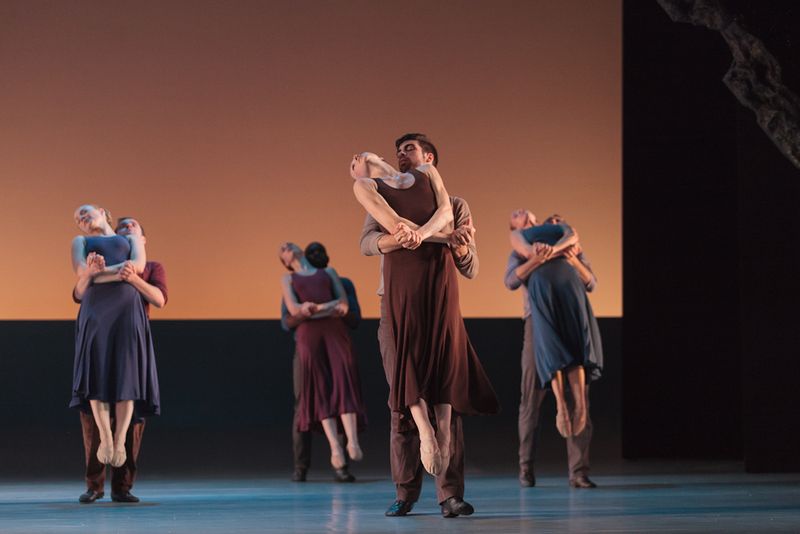
    Pianist Taka Kigawa took the keyboard to play Schumann live for the evening’s concluding work, From Foreign Lands and People; Taka’s playing was refined and beautifully supportive of the dancing. Like everything else on the programme tonight, this ballet was visually impressive. The midnight-blue-clad dancers move on, over, and under glossy black architectural pieces which they skillfully manipulate and re-arrange throughout the ballet. Pools of white light enhance the shifting landscape as the dancers clamber onto, slide down, and even partner the oblong boxes. The mood of the piece veers from playful to poetic, dictated by Taka’s playing.

    Milan Misko, a long-limbed dancer I have seen performing with TAKE Dance and the Lubovitch company, seems to have found an ideal dance-home in Jessica Lang’s style.  And Clifton Brown’s dancing – all evening – was a marvel: his solo in the concluding work was astonishing in its clarity and expressiveness. If Mlles. Mead and Kimura stood out among the other dancers by virtue of their featured roles, the entire ensemble deserve bouquets for their impressive performances in this vastly pleasing evening of dance.
  • At Home With Wagner III

    Wagner

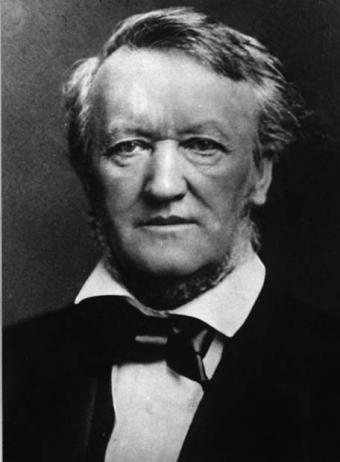
    Above: Richard Wagner

    Having taken a break from listening to Wagner at home while I was wrapped up with attending the RING operas at The Met, I picked up where I’d left off in playing CDs that my friend Dmitry has graciously made for me. These live recordings all come from a valuable source, Opera Depot, and this latest round of Wagnerian adventures kicks off with a 1966 performance of FLIEGENDE HOLLANDER from Covent Garden.

    HOLLANDER was not the first Wagner opera I ever experienced in the theatre, but my first encounter with it (in 1968) was a memorable event with Leonie Rysanek (singing despite a high fever) magnificent as Senta, and Walter Cassel, James King and Giorgio Tozzi as the male principals.

    Jones

    Above: Dame Gwyneth Jones

    For this 1966 performance from London, Sir Georg Solti is on the podium, stirring up a vivid performance that comes across excitingly in this recording which is in pretty good broadcast sound, with the voices prominent.

    David Ward is a bass-oriented Dutchman and his singing is moving in its passion and despair, fierce in anger and with a touching human quality in the more reflective passages. He and his Senta, Dame Gwyneth Jones, manage the strenuous demands of their long duet very well: both the tessitura and the emotional weight of this duet test the greatest of singers and if there are slight signs of effort here and there in this recording, the overall effect is powerful.

    Dame Gwyneth, just two years after her break-through performance at The Garden in TROVATORE casts out the powerful top notes before her final sacrificial leap thrillingly; earlier, in the Ballad she is engrossing in her use of piano singing and creates a haunting picture of the obsessed girl. The soprano’s well-known tendency to approach notes with a rather woozy attack before stabilizing the tone is sometimes in evidence; I find it endearing.

    The great basso Gottlob Frick is a wonderful Daland, and tenor Vilem Pribyl holds up well in the demanding role of Erik; his third act aria – which recalls Bellini in its melodic flow – is passionately sung. Elizabeth Bainbridge and Kenneth MacDonald give sturdy performances as Mary and the Steersman.

    ~~~~~~~~~~~~~~~~~~~~~~~~~~~~~~~~~~~~~~~~~~~~~~~~~~~~~~~~~~~~~~~~~~~~~~~~~~~~~~~~~~~~~~~~~~~~

    1024px-Horst_Stein

    A WALKURE Act I from Bayreuth 1971 finds conductor Horst Stein (above) giving a great sense of urgency to the opening ‘chase’ music. Helge Brilioth, probably better known for his Tristan and Siegfried, sounds a bit rough-hewn at first as Siegmund but summons up some poetry later in the act. Dame Gwyneth Jones as Sieglinde shows both contemplative lyricism and the power of a future Brunnhilde; her singing is emotional without breaking the musical frame. Karl Ridderbusch is a darkly voluminous Hunding; despite a few moments of sharpness here and there, he makes a strong impression.

    ~~~~~~~~~~~~~~~~~~~~~~~~~~~~~~~~~~~~~~~~~~~~~~~~~~~~~~~~~~~~~~~~~~~~~~~~~~~~~~~~~~~~~~~~~“

    540752_10151474196683142_112317311_n

    The Swedish singer Berit Lindholm (above) was one of a group of sopranos – Rita Hunter, Ingrid Bjoner, Caterina Ligendza and Dame Gwyneth Jones were some of the others – who increasingly tackled the great Wagnerian roles as Birgit Nilsson’s career wound down. In 1976 Lindholm sang Brunnhilde in a performance of GOTTERDAMMERUNG at Covent Garden conducted by Sir Colin Davis, and she does quite well by the role, bringing a more feminine and vulnerable quality to her interpretation than Nilsson did. Lindholm reaches a fine peak as Act I moves toward its inexorable climax with the meeting between Brunnhilde and Waltraute, followed by the false Gunther’s rape of the ring.

    Interestingly, though both the recording and the Covent Garden website list Yvonne Minton as Waltraute in this performance, there is some question that she might have been replaced last-minute by Gillian Knight; in fact, some listings for this recording on other releases do show Knight singing Waltraute. A delicious mystery, since whichever mezzo it is is impressive indeed. (I’ve left an inquiry on the Opera Depot listing, perhaps someone can shed further light…)

    Jean Cox certainly has an authentic Wagnerian voice though at times in Act I his singing falls a shade below pitch. The wonderful basso Bengt Rundgren sounds fine as Hagen in Act I, and his half-siblings are Siegmund Nimsgern – later a Bayreuth Wotan – as Gunther, and Hanna Lisowska as Gutrune, a role she repeated at the Met when the ‘Levine’ Cycle was filmed for posterity.

    As an admirer of the Norn scene, I’m very pleased with the three women who sing this fantastic music here: Patricia Payne, Elizabeth Connell and Pauline Tinsley. Ms. Payne is steady and sure of voice and what a delight to hear a future Isolde (Ms. Connell) and Kundry (Ms. Tinsley) in these roles; Ms. Tinsley dips impressively into her chest voice at one point, an unusual and exciting effect.

    Sir Colin Davis builds the great span of the prologue/Act I persuasively; a few minor orchestral blips here and there are barely worth mentioning. Once Waltraute arrives at Brunnhilde’s Rock the conductor attains a heightened level of dramatic intensity and the act ends excitingly.

    Act II opens with the mysterious conversation between Alberich and his slumbering son, Hagen. Zoltán Kelemen, who was Karajan’s Alberich when the conductor inaugurated his RING Cycle at The Met (a project from which the maestro withdrew after the first two operas) makes a fine effect, and Mr. Rundgren maintains his sturdily sung Hagen throughout this act. Jean Cox is very authoritative as he declaims his oath on Hagen’s spear; any misgivings about him from Act I are swept away here. Berit Lindholm may lack the trumpeting, fearlessly sustained high notes of the more famous Nilsson, but her Brunnhilde is exciting in its own right, with her anguished cries of ‘Verrat! Verrat!’ (“Betrayed!”) a particularly strong moment.   

    Whether she is the Waltraute or not, Gillian Knight is definitely one of the Rhinemaidens, joined in melodious harmonies by Valerie Masterson and Eiddwen Harrhy for the opening scene of Act III. There’s some vividly silly giggling from this trio, and Ms. Masterson in particular sounds lovely – an augury of her eventual status as a fabulous Cleopatra.

    Mr. Cox has impressive reserves to carry him thru Siegfried’s taxing narrative – he’s at his best here – and if Ms. Lindholm’s voice doesn’t totally dominate the Immolation Scene, she’s very persuasive in the more reflective passages of Brunnhilde’s great concluding aria. Sir Colin Davis had built the opera steadily and with a sure sense of the music’s architecture; he saves a brilliant stroke for the end of the opera when he does not take the ‘traditional’ pause before the reprise of the ‘redemption thru love’ theme but instead sails forth into it with impetuous fervor.

    There were times while listening to this performance when I wondered if this was a broadcast performance or was recorded in-house. The voices do not always have the prominence we associate with broadcast sound, but perhaps the micorphones were oddly placed. At any rate, GOTTERDAMMERUNG has again made its mark as the culmination of the great drama of The RING.

  • Pergolesi’s STABAT MATER at Glimmerglass

    JamieKraus_StabatMaterFinal_548

    Above photo by Jamie Kraus

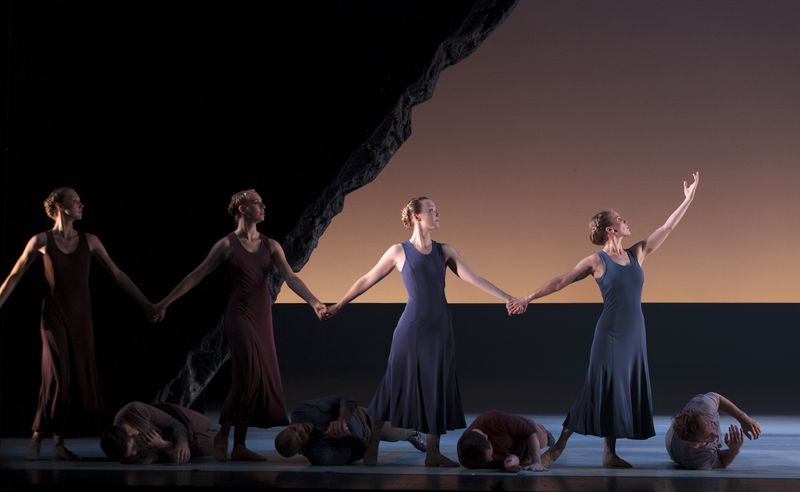
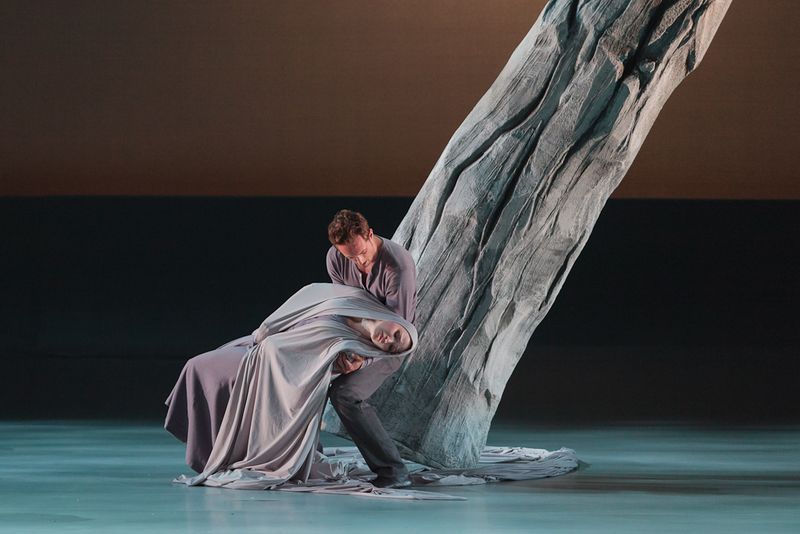
    Images from the Glimmerglass Festival production of Pergolesi’s STABAT MATER; part of a double bill (with David Lang’s little match girl passion), the Pergolesi was staged by choreographer Jessica Lang.

    The following photos are by Karli Cadel:

    KarliCadel-Stabat-5627

    Above: Sarah Parnicky and Danny Lindgren

    KarliCadel-StabatGeneral-9739

    Ensemble

    KarliCadel-StabatStageOrch-7397

    Above: Andrea Beasom and Danny Lindgren

    Click on each image to enlarge.

    Glimmerglass Festival‘s Artistic & General Director Francesca
    Zambello said: “Dance is a rich part of the operatic tradition, and I’m always
    interested in finding new ways to incorporate contemporary dance into
    our season at Glimmerglass. The way Jessica
    has integrated dance into this piece expresses Pergolesi’s timeless
    narrative in a truly modern vernacular. She has helped us provide a much
    richer Festival experience by bringing this beautiful, emotive
    choreography to our stage.”

    Jessica Lang Dance will be at The Joyce August 16th and 17th, 2013. Information here.

  • A Memorable Concert From Tanglewood

    Vickers

    Above: tenor Jon Vickers

    It seems everything is on YouTube these days; I was especially glad to come upon this concert which I was fortunate enough to have attended. The performance of Act I of Wagner’s DIE WALKURE took place at Tanglewood in 1979; Jessye Norman was Sieglinde, Jon Vickers sang Siegmund and Gwynne Howell was Hunding. Seiji Ozawa conducted the Boston Symphony Orchestra. It seems to have been the only time that Norman and Vickers sang this music together.

    The concert has held its prominent place in my memory mainly because of Jon Vickers’ singing as Siegmund. While listening to the YouTube recording, I decided to dig out my opera diary write-up of the concert and see if the impressions I registered in the diary the morning after the concert held true upon listening to it again, almost 35 years later.

    Of course any broadcast in going to create a very different sonic impression from when you are sitting in the concert space, and that’s especially true in a vast setting such as Tanglewood.

    My diary entry reflects my admiration for Ozawa’s conducting and for Gwynne Howell’s singing as Hunding, and that holds true on listening to the recording. Jon Vickers is as sensational as I remember him being.

    At the time of the concert, my Sieglinde was Leonie Rysanek. I thought she was the only one and so I had compared the impact of Jessye Norman’s performance to Leonie’s and found it wanting. This was my first time experiencing Jessye live and depite so many admirable aspects in her singing, I did not think she was as thrilling in the role as Leonie was. Of course, they are totally different types of singers and listening to Jessye on the recording there is just so much to enjoy. At the time, I praised her lower register especially, and her dynamics and her persuasive way with the text; but I found her a bit too restrained and lady-like overall, and also noted that her top register did not really bloom (the top was Leonie’s glory at the time). And to me it seems on the recording a couple of Jessye’s highest notes are just a hair’s breadth below pitch.

    Norman went on to become a great favorite of mine, though I always thought she was really a mezzo-soprano. (By far the grandest singing I ever heard from her came in a concert performance of Act II of SAMSON ET DALILA at Carnegie Hall in 1983 where I thought to myself… ‘this is Jessye!’)

    Listening now to the Tanglewood recording makes me think more highly of Norman’s performance; of course over the ensuing years I have enjoyed many types of Sieglindes since those incredible Rysanek-evenings. My perspective has broadened and Norman’s interpretation seems pretty grand to me now.

    Vickers bowled me over at Tanglewood and he does so again on the recording. In his white sport coat  he reminded me of “…a wrestler dressed for the prom.” Siegmund’s music was “…offered with unstinting vocal generosity (as well as unbelievable subtlety!). Vickers, with that rough-beautiful timbre, gave his all. His command and artistry were dazzling. The great moments – the whole Sword monolog with its unearthly cries of ‘Wälse! Wälse!’;…his gorgeous ‘Winterstürme’; the enthralling build-up to pulling out the sword; his impassioned presentation of Notung to Sieglinde, and his stentorian final lines – were just the pinnacles of a truly magnificent performance.”

    “As Ozawa and the orchestra crashed thru the heart-stopping pages and drove the act to its glorious conclusion, the whole audience leapt up with a massive shout. The soloists and conductor were called out many times, to frantic ovations…”

    So nice to have this souvenir of a wonderful memory.

  • Concert at El Museo de el Barrio

    Schumann

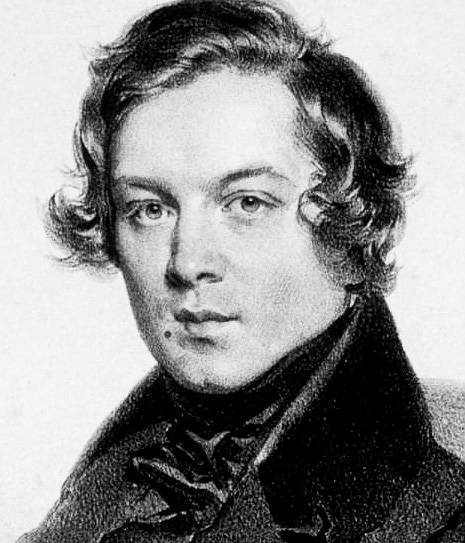
    Above: the composer Robert Schumann

    Saturday June 22nd, 2013 – The Hudson Valley Singers presented a concert entitled HYMN OF LOVE at the Museo de el Barrio this evening. I walked across Central Park North under a beautiful summer sky and met my friend Monica there. The theatre space at the Museo is charming, with its fairy tale murals; it was a full house, or nearly so. 

    One doesn’t expect to hear a piano concerto or an orchestral suite at a choral concert, and the program stretched to two and a quarter hours, what with all the rearranging of the stage to suit the configurations of musicians and singers for each piece. During the longish intermission, Monica and I caught up on ballet gossip.

    Piano Concerto #1 by Carl Maria von Weber opened the evening. Weber has never been high on my list of opera composers: a performance of FREISCHUTZ that I attended decades ago at NYC Opera was a crashing bore, and despite the splendid “Ozean!” aria I have never been able to listen to the whole of OBERON. But beyond opera, his enchanting ‘Invitation to the Dance’ makes a perfect setting for the Fokine ballet SPECTRE DE LA ROSE. And so it was an interesting opportunity to hear the composer’s piano concerto tonight. Eugene Sirotkine both played very well and conducted from the keyboard. The New York Metamorphoses Orchestra is a fine ensemble of young players, notably their flautist and oboist. The concerto might make a first-rate classical ballet, in the right choreographic hands.

    The chorus, with vocal soloists, then took to the stage for two pieces by Roobert Schumann: Adventlied and Requiem fữr Mignon. These two works deal with aspects of parenthood, the first being in anticipation of the birth of a new baby and the second a sad reflecton on the death of a beloved child. The large chorus, a lovely generational mix, sang with fervent lyricism. The music for the trio of women in the Requiem (Eleni Colenos, Liana Brooke Guberman and Alexandra Lushtak) brought to mind the trio of nymphs in Strauss’ ARIADNE AUF NAXOS. Robert Garner was the baritone soloist in both Schumann works, joined in the Adventlied by Mlles. Brooke Guberman and Kushtak along with the appealing tenor sound of David Guzman.

    In a delightful interlude, The Elm City Girls Choir brought us folksongs from America, Russia, Bulgaria and Africa.  Their fresh young voices blended well in surprisingly confident harmonies as they swayed and clapped to the varying rhythms of each song.


    Carl_nielsen_1892_xl

    Above: the composer Carl Nielsen

    From Aladdin Suite by Carl Nielsen – a tuneful colorful compilation of vignetttes composed as incidental music for a play – we heard  an Oriental
    March, a Dance of the Morning Clouds. a delicate Chinese Dance, and the concluding Blackamoor’s Dance. The players of the New York Metamorphoses Orchestra, under Mr. Sirotkkine’s baton, seized on the music’s coloristic opportunities, each instrument having its expressive voice. Seated in the audience, the chorus took up some humming passages, adding to the sonic palette.

    Hymnus Amoris (the title which inspired the programme) by Carl Nielsen, is a large-scale work which the composer crafted as a paean to love after taking his honeymoon. All of the evening’s choral participants took part, along with soloists Ms. Calenos, Mssrs. Guzman and Garner, and bass Emmanuel Mendez-Chumaceiro. The music is celebratory and ecstatic, and voices and instruments joined in a fervent ‘hymn of love’ with Mr. Sirotkine at the helm.

  • Haydn, Rouse & Gilbert’s Wagner

    Ax

    Above: pianist Emanuel Ax, soloist with the New York Philharmonic this evening

    Friday June 21st, 2013 – The New York Philharmonic‘s current Artist-in-Residence, Emanuel Ax, and Composer-in-Residence, Christopher Rouse, were both featured in the first half of this evening’s programme at Avery Fisher Hall.  After the intermission, the orchestra’s Music Director Alan Gilbert led a performance of his own RING JOURNEY: music drawn from Richard Wagner’s epic RING Cycle. 

    In the Playbill, Maestro Gilbert answers the “…terrible question: who is you favorite composer?” with the name ‘Haydn’. His admiration was evident in the joyous clarity of his shaping of the composer’s Piano Concerto No. 11 in D Major. Emanuel Ax’s playing had a youthful gleam, turning the melodic lines with elegance and the cadenzas with polished perfection, his trills lovingly defined. Pianist, players and conductor meshed their artistry in pure music-making that was deeply satisfying to experience.

    I first heard the music of Christopher Rouse from a Yo-Yo Ma recording of the composer’s Cello Concerto. At the New York City Ballet, Peter Martins has created two ballets to Rouse works: the 2002 INFERNAL MACHINE (seen earlier this year) and the 2006 FRIANDISES.

    In its New York première performances,
    Rouse’s Symphony No. 3 is a tribute to the Prokofiev 2nd symphony, the “symphony of iron and steel” (Prokofiev’s words). The orchestral forces are huge and the opening statements are a cacophonous but lucid fanfare, thunderous and epic. Later, in the more lyrical passages of the work, the composer finds unusual veins of beauty: a passage involving oboe and harp made me think of FIREBIRD. Throughout, the dense sound textures were vividly expressed by the orchestra’s super-human players, and Maestro Gilbert shaped the whole into a persuasive, and gigantic, statement.

    Alan Gilbert’s RING JOURNEY takes its inspiration from Erich Leinsdorf’s earlier arrangement of the Cycle’s immortal themes. RING fanatics (Mr. Gilbert is one, by his own description) draw their life blood from this music, and the standing ovation that greeted the conductor at the end of the evening seemed to me to indicate that people want to hear more of Gilbert’s Wagner.

    Alan Gilbert’s RING JOURNEY, which he rightly describes as a ‘suite’ rather than a ‘fantasy’, commences with the ‘Ride of the Valkyries’ and continues chronologically thru excerpts from WALKURE, SIEGFRIED and GOTTERDAMMERUNG. Gilbert shows a sure and steady hand at maintaining the flow of the music; some of the passages he chose to include are ‘transitional’ in the operatic sense, but they are gorgeous transitions and by exploring them here Gilbert steers clear of a ‘greatest hits’ feeling.

    The overall span of the piece was quite glorious, and the playing was simply superb: a special ‘bravo‘ to Philip Myers who stepped offstage to play Siegfried’s horn call with splendid warmth and amplitude.

    In view of such grandeur and musicality it seems selfish to ask for more; but I’d hoped to hear the Rhinemaidens’ trios, the Entry of the Gods into Valhalla, the Winterstürme theme, the Sword motif, and most especially Brunnhilde’s poignant “Ewig war ich”  – the core melody of the SIEGFRIED Idyll. The answer, dear Maestro Gilbert, is that you must program more of the RING in the next few seasons, especially in view of the fact that The Met can’t deliver it anytime soon.

    Hearing this music so spectacularly played and watching Mr. Gilbert’s loving sculpting of it from the podium, I couldn’t help but wish for voices. As the conductor built the introducton to the GOTTERDAMMERUNG prologue duet with breath-taking clarity and passion, I desperately wanted Christine Goerke or Lise Lindstrom to burst thru the door and launch into Zu neuen Taten!

  • Castle

    Img5128595_n

    Would someone kindly buy Moritzburg Castle for me? It was built near Dresden by Duke Moritz of Saxony in the 1540s. I would like to live here with several of my friends, each of whom will be provided his/her own room. We’ll have dance studios created in those two small, square buildings on either side of the main driveway where my choreographe/friends can create.

    There’s a Baroque chapel on the premises where we’ll have choral and chamber concerts, and if there isn’t a theatre in or near the castle, we’ll have one created so we can present dance, opera and annual performances of CYMBELINE.  Artists, photographers, poets and film-makers can come there to do their work in peace. There will be a big library and an even bigger kitchen, where my friend Janusz will be in charge of the daily menu. And I’ll finally learn how to play the violin and to play tennis. 

  • Mozart’s Last Aria

    Nannerl

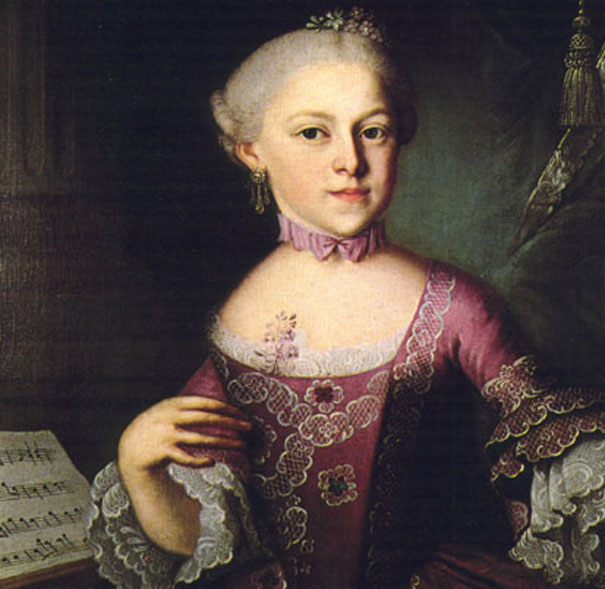
    Above: Maria Anna (Nannerl) Mozart 

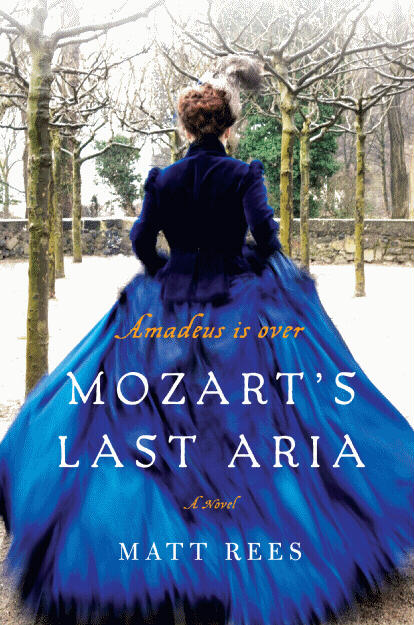
    After recently watching the film Mozart’s Sister, my curiosity was piqued about Mozart’s older sister Nannerl, herself a talented musician forever in the shadow of her genius-brother. Matt Rees’s novel MOZART’S LAST ARIA popped up on my radar, and I grabbed a copy from Amazon; admittedly the book’s attractive cover was an added incentive:

    Mozarts Last Aria.US

    Nannerl, four-and-a-half years older than Wolfgang, was considered a musician of equal talent to her brother. As their father carted them all over Europe, playing for royalty, Wolfgang began to eclipse his sister in notoriety.

    Both children began to compose, Wolfgang openly and Nannerl furtively. Wolfgang admired and encouraged his older sister’s work. At a
    concert, when Wolfgang announced that the piece he had just played was
    written by his sister, their father Leopold was furious. He ordered Nannerl never to
    compose music again because in the 18th century, women did not become
    composers.

    Thereafter, Leopold focused all his attentions on Wolfgang, leaving Nannerl at home, taking only her brother on tour, and forcing her to give piano lessons to wealthy students to finance Wolfgang’s travels. Nannerl became depressed, and in the years that followed the close relationship of brother and sister faded, especially once Wolfgang had married Constanze.

    In 1784, Nannerl had married the magistrate Johann Baptist Franz von Berchtold zu Sonnenburg; they lived in St. Gilgen and she did not see Wolfgang again. In the novel, which begins with Nannerl, having received a letter from Constanze informing her of Wolfgang’s death, leaving St. Gilgen for Vienna in an effort to learn the facts surrounding Wolfgang’s untimely demise.

    Of course, there have always been rumours that Mozart was poisoned – namely by the rival composer Antonio Salieri. There is no verifiable evidence of this, but the myth has persisted anyway.

    Constanze’s letter to Nannerl hints at foul play. This induces Nannerl’s trip to Vienna where she runs up against a wall of silence and deception. Attempting to ascertain who might have had cause to desire her brother’s death – the jealous husband of one of his amours?  a
    sinister creditor?  a rival composer? or those involved in the secret and banned acttvities of the Masons? – Nannerl finds her own life endangered.

    At a soiree where Nannerl dresses as her brother and plays one of his compositions for an elite assemblage, the culprit is unmasked. But many questions remain, and as Nannerl slowly sorts things out, a complex web of duplicity and political intrigue is revealed.

    In reality, Nannerl did not travel to Vienna following her brother’s death. But in using her as the axis of his novel, the author has crafted a finely-paced murder mystery into which real personages from the time – including Emanuel Schikaneder, librettist of Mozart’s “Masonic” opera THE MAGIC FLUTE – are introduced. The novel would seem well-suited to a cinematic treatment: a beautiful period piece with a host of brilliant character roles and a built-in soundtrack of some of the greatest music ever written.

  • Somogyi’s Back! @ NYC Ballet

    6a00d8341c4e3853ef0153941ab8d8970b-800wi

    Above: NYCB‘s Jennie Somogyi in a Henry Leutwyler portrait

    Tuesday May 21st, 2013 – Principal dancer Jennie Somogyi has returned to New York City Ballet after being sidelined with an injury for several months. Tonight was my first chance to see her since her return and she gave a super-charged performance in Ulysses Dove’s RED ANGELS. NYCB cognoscenti scatttered throughout the house gave her a hearty cheer when she stepped out for her bows. It’s wonderful to have her back.

    The house was fairly full tonight – including about half of the Fourth Ring – though I know there were people outside who really wanted to come in but who could not afford the available tickets. I’m going far less often myself, because it’s just out of comfortable reach financially.

    Guest conductor Leif Bjaland opened and closed the evening conducting two great scores: Tchaikovsky’s Serenade for Strings and Stravinsky’s Firebird. In the Tchaikovsky, he gave a somewhat more spacious feeling to the music than we’ve heard here in recent seasons: the fast passages were lively but not frantic, and he was adept at bringing out the inner voices that intertwine in the serenade’s melodic arcs.

    Curtain-rise for SERENADE still puts a lump in my throat; despite a couple of tiny faux pas tonight the ballet was beautifully danced, and of course it’s a corps watcher’s paradise. The recent promotion of some of the Company’s loveliest ballerinas to soloist means that we’ll see these girls less frequently onstage; but tonight three of them – Ashley Laracey, Lauren King and Georgina Pazcoguin – retained their familiar places in this Balanchine masterpiece.  The entire ballet was a feast for my opera glasses as one appealing vision after another moved across the stage in their swirling pale plue tulle.

    Sara Mearns danced with silken beauty, handsomely partnered by Jonathan Stafford. Ashley Bouder’s marvelous sense of the music allows her to sail on the score’s melodic ebb and flow, pausing here and rushing forward impetuously there; her peerless technique and expressive face invest the role with many felicitous details. Rebecca Krohn gave a radiant performance, her lyricism at full-flight and so attractive to behold. It seems to me that both Ashley and Rebecca would be ideal in the ‘waltz girl’ role, and I’m hoping they’ll each have the opportunity soon. Adrian Danchig-Waring made a striking impression both in physique and face; his deep immersion in the ballet’s unspoken drama was spell-binding.

    So exciting to see RED ANGELS again; it’s a favorite ballet of my friend Arlene Cooper, and I was glad to spot her from above this evening. Mary Rowell has played every performance of this ballet that I have ever experienced and she’s phenomenal, turning her electric violin into both a percussive and melodic vessel. In sleek physique-defining red body tights, the four dancers appear in introductory solos, then in duets, second solos, and a brief coda for all.

    Amar Ramasar gave a magnificent, stellar performance of expansive and space-filling dance wedded to undeniable sex appeal. Jared Angle has followed in the footsteps of Peter Boal as the Company’s most poetic male dancer; in this case it’s poetry with an edge and Jared reads it with power and clarity. Teresa Reichlen’s long-limbed amplitude and cool allure are perfect here, dancing with sharp attack and soaring extension. Ms. Somogyi, her body in Olympian condition, was intense and keenly aware of the sensual energy that pulses thru the Einhorn score. Throughout, the four dancers communicate in a rich gestural dialect. Mark Stanley’s lighting is a major factor. The audience whooped it up for these exciting dancers and their vivid one-woman rock band.

    Clothilde Otranto took up the baton for a definitive change of pace with the Tchaikovsky Pas de Deux. Andrew Veyette stepped in for Joaquin de Luz and won continuous rounds of applause for his swift and scintillating turns and leaps while the charm and delicacy of Megan Fairchild’s dancing exuded lyric grace, reaching an apex in a set of delicious fouette turns in the coda. The audience loved them, and rightly so.

    Maria Kowroski’s imperial Firebird was the perfect finale for this parade of super-dancers. The elegant ballerina shaped the elusive avian creature into a poetic statement, creating a compelling reverie in the haunting Berceuse. Earlier, her fluttery evasions and eventual taming were finely wrought in gesture and expression and – needless to say – her long legs are an exceptional asset. I love Jon Stafford in this ballet (he replaced Ask LaCour tonight) for his sense of wonderment and almost naive heroism. He and Savannah Lowery as the captive princess gave a charming account of their courtship, surrounded by a bevy of maidens consisting of some of my favorite ballerinas. The girls – I know – take this scene with a tongue-in-cheek quality. For me it’s quite beautiful, as is the Stravinsky score – his finest in my view, and wonderfully played tonight under Mr. Bjaland’s baton.

    SERENADE: Mearns, Bouder, Krohn, J. Stafford, Danchig-Waring [Guest Conductor: Bjaland]
    RED ANGELS: Reichlen, Ramasar, Somogyi, J. Angle  [Solo Violin: Rowell]
    TSCHAIKOVSKY PAS DE DEUX: M. Fairchild, Veyette   [Conductor: Otranto]
    FIREBIRD: Kowroski, J. Stafford, Lowery, Catazaro [Guest Conductor: Bjaland]