Category: Reviews

  • Defiant Requiem

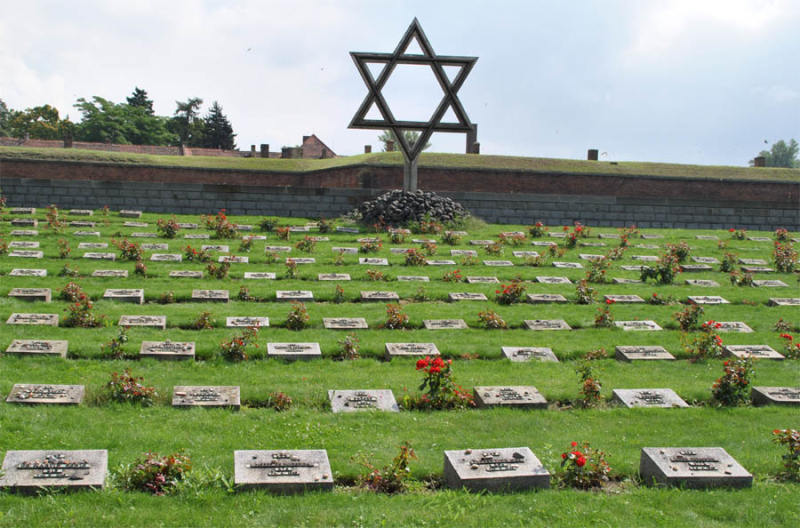
    Theresienstadt_KZ_Camp_2010_08

    Author: Oberon

    I’ve finally had an opportunity to watch the film DEFIANT REQUIEM, the story of performances of the Verdi MESSA DA REQUIEM that took place at Terezín during the darkest days of the Holocaust. I expected to be moved – deeply – but the effects of watching the film were truly profound.

    The ghetto at Terezín occupied an old fortress, ironically built in the shape of a six-pointed star. By 1943 it housed 60,000 Jews, roughly ten times the number the space might be reasonably thought to accommodate. There was little food, and no hope. Trains left Terezín on a regular schedule, carrying prisoners to their ultimate doom at Auschwitz.

    In the dire living conditions of Terezín, one man had a vision: composer and conductor Rafael Schächter drew together a chorus from the many the singers who lived in the ghetto. Late at night, these musicians gathered around an old, abandoned upright piano which Schächter had discovered to learn Verdi’s MESSA DA REQUIEM. Schächter led more than a dozen performances of the REQUIEM over time at Terezín, but for each presentation, new choristers had to be found and trained to replaced those who had vanished into the cattle cars heading East.

    In the Spring of 1944, the inmates of Terezín were suddenly assigned to new work details; their job: to spruce up the camp and make it look like a normal, thriving town. Fresh clothes were distributed, and suddenly food became more abundant. The reason for all this became evident when the SS brought in film crews, along with representatives from the International Red Cross, to show that the Jews were were being well-treated. The ruse worked.

    As part of this deception, Rafael Schächter was ordered to gather his chorus together and give a performance of the REQUIEM for the visitors. This time, the singers privately relished the Mass’s prophesy of the Die Irae (‘Day of Wrath’) – the coming of Judgement Day – hurling the Latin words into the unsuspecting faces of their captors. And these lines from the Liber Scriptus stand yet as a warning to all oppressors:

    “A written book will be brought forth,
    which contains everything
    for which the world will be judged.

    Therefore when the Judge takes His seat,
    whatever is hidden will be revealed:
    nothing shall remain un-avenged.”

    The date of the Red Cross visit to Terezín – June 23rd,1944 – apparently marked the last time the REQUIEM was sung in the ghetto. Soon after, the transports to Auschwitz were resumed, and Rafael Schächter and most of his chorus went to meet their fate.

    Some seventy years later, conductor Murry Sidlin paid tribute to Rafael Schächter and honored all the lives lost or damaged during the Holocaust by leading a performance of the Verdi REQUIEM at Terezín. Since then, the DEFIANT REQUIEM has been performed worldwide more that 40 times.

    The DVD tells the sad tale of Terezín, and of Raphael Schächter’s development of the defiant REQUIEM against all odds. It also features excepts from the Sidlin “revival” and interviews with some of the few survivors who sang in Schächters’ choir.

    Edgar-kitchenphoto-1486580368

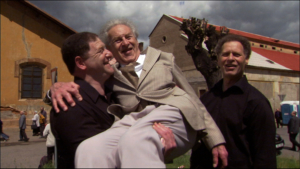
    One of the many stories we hear is that of Edgar Krasa (above, as a young man), a cook and welder who was Schächter’s bunk-mate in the ghetto. Krasa sang in all sixteen REQUIEM performances that Schächter led at Terezín; he was later shipped to Auschwitz and, in January 1945, miraculously escaped while on a death march. Krasa met and married his wife Hana in 1949; though they had both been at Terezín at the same time, they had never met while there. Edgar Krasa died in 2017.

    Krasas-300x200

    Edgar and Hana Krasa (Matthew Lutch photo, above) were guests of honor at Murry Sidlin’s Terezín performance of the REQUIEM

    Krasas_screengrab-300x169

    …and both of their sons (above, with Edgar) sang in the chorus.

    For me, the most touching moments in the film come when Murry Sidlin summons his chorus to the very subterranean chamber where Raphael Schächter held his secret rehearsals. Packed into the small space, the singers – many of them very young – sing the Requiem Aeternam. They sing thru their tears.
  • Alice Cucini

    Alice_Cucini_1903_Sess

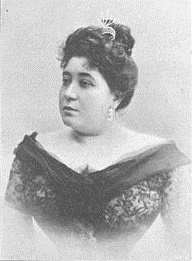
    Alice Cucini (1870-1949), Italian contralto, was among the first generation of singers to be recorded. Debuting in 1891, she had a busy and successful career throughout Italy, and became very popular in South America where she toured frequently between 1901 and 1910. She also journeyed to St. Petersburg in 1898 for a series of performances there.

    Cucini passed away in 1949 at Verdi’s Casa di Riposo in Milan.

    In this truncated, Italian-language recording of Dalila’s famous aria, the slight catch in Cucini’s voice as she manipulates the chest voice is endearing to my ear.

    Alice Cucini – SAMSON & DALILA aria – abridged – in Italian

  • Matti Salminen as Hagen

    Gotterdammerung.0304.05

    On October 21st, 1988, basso Matti Salminen (in a Marty Sohl photo, above) enjoyed a huge personal triumph with his magnificent portrayal of Hagen at the Metropolitan Opera’s premiere performance of the Otto Schenk production of GOTTERDAMMERUNG, with James Levine on the podium. I was there, and it was one of the great nights in my opera-going career.

    This excerpt comes from the 1993 broadcast of the Wagner masterwork:

    Matti Salminen as Hagen – Met 1993

  • A Report from the Chelsea Music Festival

    Capture

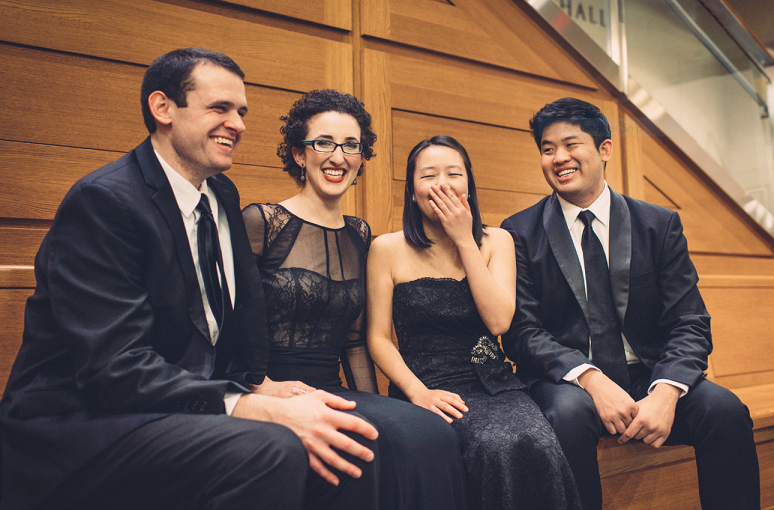
    Above: the players of the Verona Quartet; photo credit ~ Joseph Ong/Brittany Florenz

    Author: Scoresby

    Friday June 16th, 2017 – On a hot sticky night, I went to the penultimate set of events for the Chelsea Music Festival. Hosted in St. Paul’s German Lutheran Church was a lecture by the neuroscientist Dr. Michael Shadlen and a performance by the Verona Quartet. For those who do not know, the Chelsea Music Festival is much more than the name would suggest. Rather than just a few concerts, it brings it together all of the different senses by having food, art, lectures, music and other events focused on one theme hosted in different venues in Chelsea in a whirlwind of eight days. For each of these various disciplines, the festival has a residency – thus no night is the same, and it is a true intellectually stimulating week.

    Unfortunately, due to illness, I only ended up attending the second to last evening. This year’s theme focuses on keeping time. Dr. Shadlen’s lecture was about how humans perceive and anticipate time. His accessible talk first discussed the idea that time grounds the mind. It seems to Dr. Shadlen, time and anticipation help breed consciousness.

    More interestingly, he then gave different demonstrations of sight experiments in chimps. Dr. Shadlen was able to show anticipation thru graphs (and audio) of the various neurons of a chimp reacting. Right before each anticipated event would happen, you could see a crescendo of neural activity until the event took place. The longer it was from the expected time, the more activity. As he put it, this is where “the neuroscience of cognition and aesthetics meet.” Because the brain is constantly anticipating and timing, music stimulates this part of the brain – constantly being thrown off by the various changes in what is anticipated. The implications of his lecture set up a classical performance perfectly.

    While all of the other performances during the week are curated by the festival, here the Verona Quartet (this year’s Ensemble-in-Residence) was playing a program of their own choosing. The opener of the program was Ravel String Quartet in F Major. This young Quartet sounded fantastic throughout the Ravel, the lower strings delivering a beautiful blend of dark colors. The Quartet took a rather tight structural approach, keeping the tension high through the entire first movement. In their hands the piece seemed unstable and nervous, constantly bursting with energy through each phrase. This led to a dramatic outbursts that felt restrained almost right away and I couldn’t help but smile after the lecture about anticipation. The purplish lighting on stage and humid venue made the air seem to be saturated with energy.

    During the pizzicato-ridden second movement, the players made a full use of Ravel’s sound effects. One of my favorite sections was the muted trio during the movement. The Quartet took on a much warmer tone, contrasting the more aggressive tone from earlier. I only wish they had slowed the trio section down a little more; it still felt as structured and nervous as the opening movement. They did a great job of building dynamic range transitioning back into the scherzo. During the third and fourth movements, the group seemed to change sound to thicker, rougher textures. While technically precise, instead of the smooth edges that some groups produce in this piece, the Veronas had a tense edgy sound. It would be great to hear this group play Janacek.

    Seb-460x300

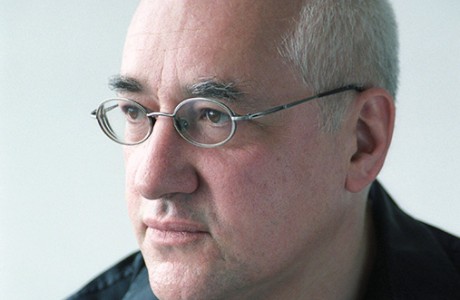
    The other part of the first half was a world premiere by the Composer-in-Residence (and well-known composer) Sebastian Currier (above). His music had been played all week during the festival, and this commission was the capstone event of sorts. The new piece is part of a project of creating six etudes and six lullabies for six different string quartets, this set of two being the second entry of the project. In keeping with the festival theme, the piece is titled Etude: Interactions and Lullaby: Pulsing.

    Through the etude, the quartet plays a theme that seems to keep developing. It is a fast-paced piece that reminded me some of John Adams’s writing, though more tonally adventurous and colorful. As each player’s theme gets offset and displaced, the chords gradually became more dissonant. The music is skittering and spider-like, and the Verona Quartet played it with verve, managing to capture all of the intricate accents. Because of the driving sections in this piece, there is very little silence. At times it sounded like Mr. Currier was making use of a Shepard Tone as everything falls out of sync. Finally, the difficult etude opened up into a muted chorale of sorts that brings the piece to a close, really the restlessness finally settling.

    The lullaby to me felt like a ship that was rocking back and forth, with chords that slowly crescendo and decrescendo, each played by the whole quartet. This contrasted the etude well. As the piece evolves and moves forward, melodies start to emerge as instruments drop out of these larger chords to take on their own sound. Here Mr. Currier is employing a microtonal language so that each chord has completely different texture, timbre, and feeling. The piece builds to a beautiful E-flat chord that ends the piece, sounding much lighter than all the material preceding it. These pieces are great miniatures in the quartet repertoire, and I look forward to hearing the other five sets.

    The lengthy program concluded with the very difficult Beethoven String Quartet in C-sharp minor, Op. 131. This seven-movement piece, played with no breaks, is a great way to conclude a program about measuring time. The first movement opens with an extended fugue, played here with attention and clarity. Similar to in the Ravel, the Quartet seemed be intent on the structure of the piece, infusing it with energy. While it was effective, it felt at times that some of the more delicate sections of this movement were overlooked. Nonetheless, they brought out the counter-melodies clearly. During the second movement, the group had a more folksy sound. They did best in the energetic rhythmic sections. While well-played, the third and fourth movements seemed to lack the structure that they had brought elsewhere. The music here seemed more about the individual movement rather than moving the piece forward.

    Luckily, in the penultimate movement they seemed to regain their focus creating a beautifully sorrowful adagio; particularly lovely were the downward runs near the end of the movement. Throughout, they seemed to use a sweeping dynamic range that paved the way into the dramatic finale. During the last movement, the Quartet did a good job of bringing out the intense counterpoint while still managing to sound lyrical. Watching a quartet coordinate this is always a treat, and here the players seemed to be able to navigate the intricate voicing and virtuosity well, leading to an exciting conclusion. I look forward to hearing this young quartet in the future and seeing how their sound develops, they are certainly formidable performers.

    While an overwhelming evening in many ways I am so glad that the Chelsea Music Festival provides such a diverse and vibrant set of events. It really is a quintessential New York celebration of culture and I look forward to attending again next year.

    ~ Scoresby

  • Barbara Conrad Has Passed Away

    B Conrad

    Mezzo-soprano Barbara Conrad has passed away; famously the center of a racist imbroglio during her college days at the University of Texas, Ms. Conrad went on to a long and distinguished career. 

    In 1957, when she was 19 years old, Barbara Conrad was chosen to play Dido, the queen of Carthage, opposite a white student as her lover in a production of Henry Purcell’s DIDO & AENEAS. The interracial pairing stirred up a major controversy: Ms. Conrad drew death threats from white students, who harassed her with phone calls. The case reached the Texas legislature, which threatened to withdraw funding from the university if she was not replaced in the production. When university officials caved in to the legislature’s demands, Ms. Conrad was publicly gracious, but on a personal level she was devastated.

    Harry Belafonte offered to pay the young singer’s tuition at any school of her choice if she desired to transfer, but she stuck things out in Austin. Belafonte later arranged for Ms. Conrad to fly to New York City for auditions; the trip’s expenses were underwritten by Eleanor Roosevelt.

    Putting the past behind her, Conrad emerged as a distinctive singer and stage personality; she sang at both the New York City Opera and at The Met, where I saw her as Maddalena in RIGOLETTO and Preziosilla in FORZA DEL DESTINO. She was also heard at The Met as Annina in ROSENKAVALIER, Hecuba in LES TROYENS, and as Maria in the Met’s premiere performances of PORGY AND BESS.

    Ms. Conrad appeared with major opera companies and orchestras, and worked with such conductors as  Maazel, Bernstein, and Levine. She went on to teach at the Manhattan School of Music, where she co-founded the Wagner Theater Program.

    Amazingly enough, I got to hear Barbara Conrad yet again: in 2008, she sang Fricka in the Wagner Theater Program’s semi-staged WALKURE. She was “…vivid, larger-than-life…her frustration and anger grandly portrayed. Despite some tension on the uppermost notes, Conrad’s intense, chesty sound and authoritative command of the stage elicited applause as she made her exit…”

    Incredibly, part of this WALKURE performance is to be found on YouTube. It will give you an idea of Ms. Conrad’s vibrant performance as the queen of the gods.

    There was a post-script to the story: a few days after the WALKURE, Barbara Conrad came to Tower Records where I was working. I struck up a conversation with her, using her Fricka as an entrée. She was beyond gracious, and so tickled that I recalled seeing her as Preziosilla; I remarked that not only had she made a smouldering physical impression, but that she was the one Preziosilla in my experience who really made something of the music.

    Barbara Conrad is the subject of a documentary, WHEN I RISE.

    Here’s a sampling of Ms. Conrad’s singing, from her repertoire of spirituals:

    Barbara Conrad sings ‘Deep River’

    May she rest in peace.

  • William Stone

    William Stone

    William Stone is an American baritone who gave some very impressive performances at New York City Opera in the 1980s and 90s, most notably as Germont in TRAVIATA, Zurga in PECHEURS DES PERLES, and Count Almaviva in NOZZE DI FIGARO. He also sang at The Met from 1998-2003, and extensively throughout North America as well as at such premiere European theatres as the Monnaie, La Scala, Opéra National de Paris, and at the Wexford Festival.

    Among the baritone’s many recordings is an especially impressive performance of William Walton’s BELSHAZZAR’S FEAST.

    William Stone – Hai già vinta la causa! ~ NOZZE DI FIGARO

  • Calidore Quartet @ CMS

    Ps2Z7A8630-copy

    Above, the Calidore Quartet: Ryan Meehan, Estelle Choi, Jeremy Berry, and Jeffrey Myers

    Author: Scoresby

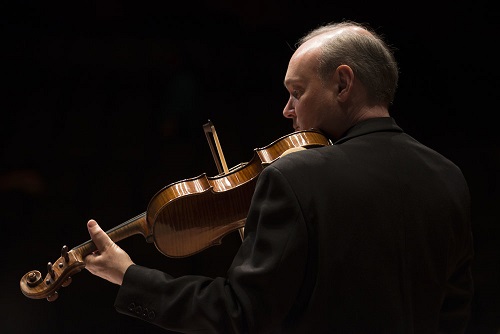
    Thursday May 18th, 2017 – The Calidore Quartet and violist Paul Neubauer in the first of two performances scheduled for this evening (the first at 6:30 PM, and the second one at 9:00 PM), marking the end of this season’s Rose Studio series at Chamber Music Society of Lincoln Center. The quartet consists of Jeffrey Myers and Ryan Meehan, violins, Jeremy Berry on viola, and cellist Estelle Choi. It was a short program of seventy minutes, without intermission, featuring two great works.

    First up was one of my favorite pieces in the genre: Ligeti’s 20-minute String Quartet No. 1 for Strings, “Métamorphoses nocturnes”. This piece is structured into different small character pieces, each propelling the theme posited in the first few notes forward. While it is a fantastic piece in its own right, it is stylistically quite different than the rest of Ligeti’s output, instead feeling like one of the Bártok quartets, if he had lived another ten years.

    Ligeti uses a variety of different effects through the piece and the quartet handled every challenge well. The music starts off with a dry mysterious introduction with various whole tone scales appearing and builds in a large crescendo to a rollicking theme that launches the piece forward into its other sections. The Calidore Quartet did a superb job of building from a whisper into a bang making the performance a thrill.

    Equally enjoyable was the way the quartet embraced all of the sound effects from string snaps to lightly played harmonics near the bridge. Multiple times I saw audience members craning their necks to see how the quartet was producing these otherworldly sounds. While some quartets emphasize the overlying structure, the Calidores focused individual characters of each section. This leads to larger dynamic and tempo contrasts. The languid night music sections became infused with color. My favorite part of the evening was during the section in which the first violin has a sustained trill while the rest of the quartet plays slow consonant chords – in the midst of so much else going on, this part felt like being elevated into a misty plain.

    Credit+Tristan+Cook

    Above: violist Paul Neubauer in a Tristan Cook photo

    The second piece on the program was Mozart’s Quintet in C major for Two Violins, Two Violas, and Cello, K. 515 with Paul Neubauer as the additional violist. I had never heard this piece and I found it quite intriguing. When I typically think of quintets, I picture one instrument that functions as a quasi-solo instrument. This piece is pure chamber music in that the distribution of voicing is more even.

    The tone of the strings here was warmer than in the Ligeti. Of particular note was the buttery round sound of Ms. Choi’s cello – she seems able to blend with every individual voice in the ensemble and supply a steady bedrock for the group to fall back on. The opening Allegro was delightful, they did an excellent job highlighting all of the inner textures that typically get brushed aside for melodic content.

    It was interesting to me that the players managed to have a smooth, legato tone throughout most of the work. Until the fourth movement where some particular sections require more articulation, it felt like one large lush body of sound (even during pizzicatos) without one harsh tone. One of the highlights was the third movement with its interruptions between Mr. Berry’s melody and Mr. Myers. They did a good job with the theatrics of cutting each other off, while still managing to match vibrato and style of playing. It was lovely to hear the difference in timbre between the violin and viola here.

    It is great being able to hear strings in a hall like this – it feels like being in someone’s living room in which you can hear every note. These players took advantage, really making every resonant note and dynamic shift count. While I enjoyed the performance, I would have preferred program order in reverse. It was hard for me as a listener to follow up an electrifying, colorful piece with something much more subdued and refined – even when it was as well played as it was here. Nonetheless, the members of the Calidore Quartet proved that they are well worth the acclaim and accolades that they have been receiving. It was a great way to end the last of the Rose Studio concerts for the season. 

    ~ Scoresby

  • Alexander Sitkovetsky/Wu Qian @ CMS

    2171-sitkovetsky

    Above: Wu Qian and Alexander Sitkovetsky

    Author: Scoresby

    Thursday May 11th, 2017 – I had the experience of going to Chamber Music Society of Lincoln Center’s wonderfully intimate Rose Studio for a duo performance – from a married couple no less: violinist Alexander Sitkovetsky  and pianist Wu Qian. I am always a fan of performances in the Rose Studio as you feel enveloped in the music – there is no bad seat in a hall this small. I have only ever heard solo piano performance and all string chamber music in here, so it was interesting to see how the space is different with a mixed ensemble.

    The program was well-balanced, with each half starting with one shorter piece followed by one full-length sonata. It commenced with Korchánski’s arrangement of Manuel De Falla’s Suite populaire espagñole for Violin and Piano. While I have heard the entirety of the piece once in performance, violinists tend to only play the jaunty last movement as an encore piece. It was a pleasure to hear it in full here.

    Mr. Sitkovetsky’s playing was clean and clear. He seemed to use extra bow pressure to make the lines come out very smoothly, adding a sweeping vibrato in the more romantic lines. Mr. Sitkovetsky was at his best during the pulsing dance sections. As a whole, their take was slower than I am used to, which allowed Ms. Qian to do an excellent job bringing out the impressionistic elements of the piano part. Particularly noteworthy was her silky tone in the second movement and percussive pulses in the fourth movement, both reminding me of de Falla’s Nights in the Gardens of Spain (which composed within a year of the Suite).

    he first half of the program ended with Schumann’s Sonata in D minor for Violin and Piano, Op. 121. While I hadn’t heard it live before this program, I have never had much of an affinity for this piece. I typically find it too busy-sounding, with the first movement quite repetitive. Nonetheless, the duo did a fine job with the piece making many of the lines more clear than they typically are. They took a structured approach, allowing one to hear a coherent flow of ideas through the piece (which is not always the case). Mr. Sitkovetsky managed to get a more muscly sound than earlier, most noticeable in the last movement. Ms. Qian handled the technical demands and quirky off-beats well.

    The second half of the program began with Alfred Schnittke’s Suite in the Old Style for Violin and Piano. Schnittke’s pieces typically have a conglomerate sound, mixing a modernist idiom with other styles. Here Schnittke composed the piece in a completely Baroque style (with the exception of one note). Mr. Sitkovetsky had a sweet and playful tone. He and Ms. Qian seemed in complete sync as they wove their way through the various movements. I loved the way they played the third movement, a minuet that sounds more like a lullaby. Here the dance pulse of the minuet was clear. They managed to conjure up a beautiful sense of yearning for another time: it was nostalgia in the best way possible.

    This led straight into the difficult fugue which they played with a bouncy, light tone, and sheer virtuosity. They managed to highlight all of the voicing well, with great coordination between them – the violin almost felt like an extension of the piano. In the final movement “Pantomime“, they took a slow, methodical approach that emphasized the humor. This made the dissonant climax after the child-like introduction hysterical – a few audience members let out quiet chuckles. The piece ends with an amusing incomplete scale into silence.

    The program concluded with Grieg’s Sonata No. 3 in C minor for Violin and Piano, Op. 45. This was once a favorite of the violin repertoire, but has decreased in popularity over the years. I’ve always been a fan and found this reading invigorating. The passionate and edgy melody of the first movement fit Mr. Sitkovetsky’s full sound well. Ms. Qian provided sparkling playing with Lisztian waterfall-like arpeggios mixed with dark coloring. The start of second movement is a sugary and sentimental, reminiscent of a Trenet song if the violin were a vocalist. It is a nice escapist melody. 

    In the final movement, Mr. Sitkovetsky and Ms. Qian brought out all of the folksy dance-like rhythms. It is always a good sign when everyone in the audience seems to be tapping their feet or bobbing their head. The back and forth between the instruments was lovely, as was watching their shadows move on the back of the hall. They brought Grieg’s colors to life, making every phrase ring. To hear such lush music in a small space was a treat.

    ~ Scoresby

  • Yvonne Naef

    Yvonne Naef

    Yvonne Naef sang wonderful performances as Fricka and Waltraute at The Met 2004 to 2009; she also sang Amneris there, which I inexplicably missed. How I would love to hear her here in New York City again.

    Ms. Naef is an impressive Sieglinde on Simone Young’s recording of DIE WALKURE, with Stuart Skelton as Siegmund:

    Yvonne Naef – DIE WALKURE ~ Der Manner Sippe – Simone Young cond

    And here’s Yvonne Naef in a more intimate setting:

    Yvonne Naef ~ Als ihr geliebter schied – Zemlinsky

  • Nadine Denize as Geneviève

    16283512

    Currently enjoying my re-discovery of mezzo-soprano Nadine Denize, I was recalling the only time I saw her onstage: as Geneviève in Debussy’s PELLÉAS ET MÉLISANDE at The Met in October 2000.

    This was my diary entry, written the morning after the performance:

    “The Met’s PELLÉAS was a tremendous evening, the gorgeous score played with great clarity and haunting beauty by The Met orchestra. This is one of James Levine’s best operas, and he wove the marvelous sound-tapestry with superb control. The production is exceptionally atmospheric: the slow, timeless world of Allemonde is ever in shadow; unanswered questions hang over the hyper-civilized, stifling palace like a brooding cloud.

    In an outstanding cast, Dwayne Croft as Pelléas gave an outstanding performance: the warmth of his darkish sound seeped into the music, producing long stretches of incredible vocal beauty. Susanne Mentzer was not an innocent Mélisande but a young woman whose experiences have left her dazed and shell-shocked…an engrossing interpretation, exquisitely sung…so full of lyricism and vulnerability.

    It was thrilling to see José van Dam on the Met stage again. He is one of our greatest singers, and his Golaud is perfection in its sheer naturalness of vocalism and austere, haunted presence. In the unaccompanied plea to his wife for forgiveness in the opera’s final scene, the house was held enraptured as van Dam sustained a gossamer pianissimo welling up from the depths of his soul.

    As Geneviève, Nadine Denize’s wine-coloured contralto and splendid diction made her ‘letter scene’ a vocal highlight of the evening. Her dignified presence in the opera’s final scene was so moving. Sheer vocal magnificence made Robert Lloyd’s Arkel the anchor of the evening musically, his moving portrayal of the old king culminating in his wistful acceptance of Mélisande’s death and his silent departure from the bed-chamber.

    Alfred Walker sang well as the Physician, and James Danner did a fine job as Yniold. The singing all evening flowed over the orchestra with speech-like ease and natural, un-theatrical simplicity. A great evening!

    Nadine Denize – Pelléas et Mélisande ~ Voici ce qu’il écrit à son frère Pelléas