Category: Uncategorized

  • In The Garden of Beasts

    30001737-p

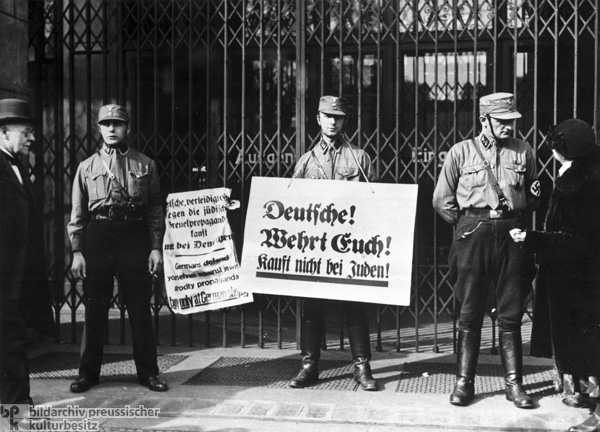
    Erik Larson’s thought-provoking non-fiction work IN THE GARDEN OF BEASTS reads like a novel. It tells the story of William E Dodd, appointed by President Franklin D Roosevelt as the American ambassador to Berlin in 1933 – at the time when Hitler was consolidating his powers and the Nazi menace was just beginning to get its stranglehold on Germany. Above, the enforced boycotting of Jewish businesses – here the famous Tietz Department Store in Berlin – was an early portent of things to come.

    One of the main problems facing an American ambassador in Germany at the time was the need to get the German government to start paying back $1.2 billion in loans that the US had extended to them. That’s one of the reasons that some of Roosevelt’s choices for the job had turned it down.

    Roosevelt reportedly joked: “It would serve Hitler right if I sent a Jew to Berlin.” The pro-Jewish FDR presidency was sometimes referred to as ‘the Rosenberg administration’. Anti-Semitism was widespread in the USA at the time, though rarely publicly expressed. 40% of the population felt that the Jews “had too much power in the USA” while 20% actually wanted them driven out of the country. The majority of Americans were against raising immigration quotas to accommodate Jews fleeing the signs of impending danger in Europe. 95% of Americans were also opposed to any US involvement in another foreign war.

    William Dodd had no diplomatic experience; he was a scholar writing a four-volume book about the Old South when the President – having ticked preferred names off his list – offered Dodd the Berlin post. Dodd had lived and studied in Leipzig and it was thought that his German-language skills would be a plus. Dodd reluctantly accepted Roosevelt’s urgent plea and he embarked for Germany on July 5, 1933 with his wife and his two grown children.

    Arriving in Berlin, Dodd and his family installed themselves in rather modest quarters eschewing the more grandiose life style favored by most emissaries to Berlin. They found the city charming, and on the surface saw no signs of the rumored violence and thuggery of the rising Nazi movement.

    DSC02111

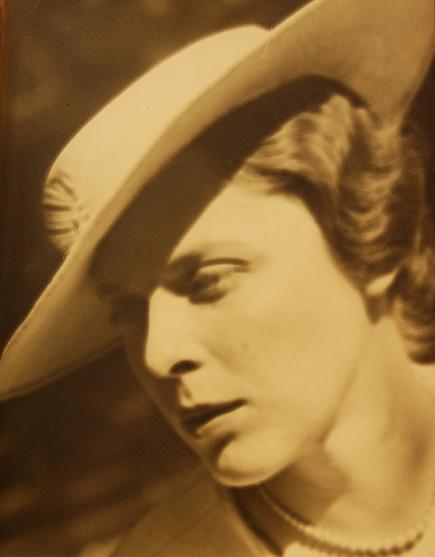
    Martha, Dodd’s daughter (above), was something of a beauty. Her circle of friends in the US included Thornton Wilder and Carl Sandburg; she continued to correspond with them from Berlin. She entered enthusiastically into the city’s social whirl and was soon meeting and even dating prominent Nazis; she had an on-going affair with Rudolf Diels, head of the Gestapo.

    But one day, on an holiday excursion to Nuremberg, Martha and her friends observed the upsetting humiliation of a young woman, Anna Rath, being dragged nearly naked and head-shaven, thru the streets by a gang of brown-shirted SA troopers. Around her neck was hung a sign: “I wanted to marry a Jew!”

    As an increasing number of such incidents developed, some involving even Americans who were either Jewish or mistaken for Jews, Dodd found himself slowly becoming disillusioned. There were beatings, arrests, people removed into “protective custody” in the dead of night. The rights, privileges and property of Jews were being systematically taken away. If Dodd lodged formal protests, they were met with apologies and promises from government officials that the culprits would be punished. But the downward spiral continued.

    Martha meanwhile became more aware of the machinations and graspings for power among the Nazi leaders when her lover Diels was briefly exiled over a conflict with Heinrich Himmler. One prominent Nazi went so far as to suggest that Martha would be “the perfect woman for Hitler” but then went on to say that the Fuhrer was “an absolute neuter, not a man…” 

    It was finally the Night of Long Knives in July 1934 that made Dodd realize there was no stopping the Nazi behemoth. The US government was as unhappy with Dodd’s work in Berlin as he was in being so far from his beloved farm in Virginia and his languishing writing project. Twice Dodd had returned to his farm for sabbaticals; as 1937 came to a close it was mutually agreed between him and Roosevelt that the ambassadorship was ill-suited to Dodd. He suddenly ‘retired’, vanishing from the Berlin scene with little fanfare.

    Upon hearing of Dodd’s departure, a Nazi official chided “the retiring ambassador’s habitual lack of comprehension of the new Germany.”

    In 1938, Dodd summarized his view of the Germany he had experienced as being of a time and place where “all the people who might oppose the regime have been absolutely silenced. The central idea behind it is to make the rising generation worship their chief and get ready to ‘save civilization’ from the Jews, from Communism and from democracy — thus preparing the way for a Nazified world where all freedom of the individual, of education, and of the churches is to be totally suppressed.”

    Dodd died in 1940 having finished only one volume of his book, Old South.

  • Ocean’s Kingdom

    Banner_half

    Tuesday September 27, 2011 – When I first read that New York City Ballet were going to stage a work “composed”* by Sir Paul McCartney, the notion seemed so yesterday. The famous former Beatle, who created many beloved pop songs decades ago, has never been considered a serious force in the contemporary classic music genre. Alex Ross nails it in this review of the CD of this latest McCartney score.

    Who needs another story ballet in this day and age? Boy meets girl…again? (How about boy meets boy?)  I suppose it can still work: Christopher Wheeldon’s ESTANCIA had a fresh telling of the boy/girl story but it was far more succinctly told – and with better sets and costumes and far better music – than in  OCEAN’S KINGDOM.

    Peter Martins is frequently maligned as being a second-rate choreographer; working in the house that Balanchine built, it’s unlikely that any current choreographer could succeed to the mantle of Mr B without coming in for heavy criticism. Myself, I like a lot of Peter’s ballets and I never dismiss them out of hand. However, a key element in the success of a Martins ballet is always the music that he chooses. His best works (in my estimation) – MORGEN, BURLESKE, OCTET, TALA GAISMA, HALLELUJAH JUNCTION, FRIANDISES, FEARFUL SYMMETRIES, BARBER VIOLIN CONCERTO, JEU DE CARTES, MIRAGE, LES GENTILHOMMES, CHICHESTER PSALMS – all have one thing in common: they are set to great or at least very interesting music. I’m always happy to see these works being programmed at NYCB.

    So here’s the lethal combination that sinks OCEAN’S KINGDOM: too much middling music is applied to a banal plot which leaves the choreographer with the stick end of the lollipop. The score starts off quite beautifully, actually. But it soon becomes evident that there is way too much music that is repetitive or goes nowhere. Each of the ballet’s four scenes is about 5 minutes too long. This requires the choreographer to make too much ‘filler’ dancing and stage business. Gorgeous as Sara Mearns and Robert Fairchild are, we get tired of their long, swoony duets because they go on and on. OK, we know they love each other…how much embrace/lift/swoon do we need to see? But what else can you do to ‘their’ music?  I feel certain Peter would have wanted to avoid asking Sir Paul to make cuts, so he’s strapped with the task of creating movement to faceless, ambling music. No wonder his choreography for this piece is coming in for so much criticism. 

    The contrived plot hinges on the character Scala (superb dancing and acting from Georgina Pazcoguin) who betrays her mistress, allowing the princess to be kidnapped. Since we don’t really know Scala’s motivation, we are puzzled; then just as inexplicably, Scala turns remorseful and tries to undo what she’s done. What choreographer could makes sense out of this, especially with such vapid music to work with?  

    Then there are the costumes, by Sir Paul’s daughter Stella. They are, in a word, ugly. And extremely unflattering to the dancers. The lighting is quite good, especially the beams of light that create Princess Honorata’s prison cell. The rising of the moon is pretty nice.  

    Tonight, it seemed a very long and winding road to get to the end of Ocean’s Kingdom. If I fell for any aspect of the ballet, it was the dancing. But the dancers – some of the greatest movers on Earth – needed far more help from composer and choreographer than they received. But: let it be…they did their best under the circumstances.

    As the 50-minute ballet crawled to a close I felt like a fool for having devoted my time to watching it. My basic reaction to Ocean’s Kingdom was: I don’t want to see it again. The bottom line is – as I have so often said – you cannot make a really good dancework to mediocre music. While the house seemed nearly full there was no enthusiasm to speak of; the dancers took one set of bows to dutiful applause. A lone voice yelled bravas for Sara and Gina. And Amar Ramasar was an audience favorite, understandably. After the show, I wanted to buy Amar, Christian Tworzyanski, Daniel Ulbricht, Megan LeCrone, Craig Hall, Savannah Lowery and Emily Kikta each a beer for them to cry in. Then there were Anthony Huxley, Allen Peiffer and David Prottas as the Drunken Lords (“drunk as lords”…get it?)…what a waste of three handsome, talented guys.  

    Most reviews of the piece have seemed to state that the music is OK or better than OK and that the choreography is uninspired. I would say: the music is as uninspired as the scenario and thus, so is the ballet. I really do not think any choreographer could craft something truly impressive to this score; it might make decent background music for a documentary film about the sinking of the Achille Lauro or some such nautical disaster.

    More could be said but, what’s the point? The reviews (example) have been ho-hum at best, negative at worst. What annoys me more than anything else about OCEAN’S KINGDOM is all the time and effort the dancers had to put into getting this ballet onstage. NYCB have now had two high-profile flops in a row: SEVEN DEADLY SINS and OCEAN’S KINGDOM. No matter how many tickets were sold to these ballets, or how much money the respective galas raised, artistically there were lacklustre in everything but the dancing. Perhaps it’s time to stop trying to haul in the pop/rock crowd or the Broadway audience (largely tourist trade anyway) and concentrate on what NYC Ballet are famous for: neo-classical ballet.

    * I use the word “composed” generously; like many pop music writers, McCartney reportedly cannot read or write music in the sense of a Stravinsky or a Brahms. The Playbill shows that Sir Paul had the help of both an arranger (John Wilson) and an orchestrator (Andrew Cottee); in those circumstances anyone with a sense of rhythm and melody could be deemed a composer. Elgar and Britten must be shaking their heads, somewhere in Heaven.

  • Matt Murphy’s DISPLACED

    _MG_0763-2 DISPLACED is a dancer-portrait series being created by photographer Matthew Murphy. Above: Matt’s image of one of the participating dancers, New York City Ballet‘s Wendy Whelan, a great favorite of both Matthew and myself. (I have an especially fond memory of the day Matt came with me to photograph Wendy teaching class at MMAC.) 

    IMG_0453

    David Hallberg, danseur supreme and very much in the news of late, is another of Matt’s subjects in this series.

    I asked Matt to tell us a bit about this project:

    “Over the past few years I’ve been looking for a way to merge my two passions: dance and photography. As a former ballet dancer, this specialized art has always been something I loved to capture on camera, but I’ve never done a long-term project combining my two worlds…until now.  

    Displaced was born out of the idea that I wanted to do a portrait series of dancers that didn’t focus on athleticism and virtuosity, which has been showcased by so many photographers in the past; I wanted to photograph dancers without the dancing and look at their existence removed from performance. This series gives me a chance to highlight some of the greatest artists in New York City.

    I’ve been fortunate to collaborate on this project with dancers like David Hallberg, Michelle Dorrance, Keith Roberts, Ashley Bouder, Michael Trusnovec, Wendy Whelan, Gary Chryst and many others.  Over the next month I’ll be working with even more dancers to complete the project, which will be shown at Dance New Amsterdam from November 5th through December 10th.” 

    Matt is presently raising money via Kickstarter to fund the Dance New Amsterdam exhibit. You can make a donation to the project here.

    Update: Although Matt has already reached his Kickstarter goal, you can continute to donate. And I hope you will!

  • TAKE Dance Summer Intensive 2011

    Copy of j1

    Saturday August 20, 2011 – Kokyat and I dropped in at City Center studios this afternoon where TAKE Dance were wrapping up their 2011 Summer Intensive with a showcase performance for friends and fans of the Company. Above: student ensemble in Jill Echo’s latest creation, photo by Kokyat.

    Copy of BN1

    Above: Kaitlin Accetta, one of thirty-three young dancers who participated in the Intensive program; all of them performed at the showcase today. Three groups of eleven dancers each danced the fast-paced and demanding Breaking News segment from Take’s recent evening-length work SALARYMAN. The Company’s assistant director Jill Echo and dancer Kile Hotchkiss each presented excerpts from works-in-progress.

    The dancers kept up with the extraordinary demands of Breaking News, each cast winning strong applause for their energy and commitment. Jill and Kile divided the students (Lynda Senisi of the Company stepping into Jill’s piece to even things out) for the works they were creating.

    Copy of k5

    Music from The Glitch Mob sets the scene for the Kile Hotchkiss piece (above) which explores the state of lucid dreaming. I’ve been reading about this phenomenon since seeing Ja’ Malik’s work on the same subject. Interestingly, lucid dreams can often follow periods of intense physical activity which is perhaps why dancers are fascinated with the concept.

    Copy of j3

    Jill Echo’s work, which opens with a slow ‘awakening’ motif (above), is set to music by Damian Eckstein. It’s good to see both Jill and Kile working with large groups, developing structural patterns  and responding clearly to the music. I hope they will each continue to develop the works shown today.

    More of Kokyat’s images from today’s presentation:

    Copy of BN4

    Angel Rodriguez, Alison Kimmel

    Copy of BN6

    Breaking News ensemble

    Copy of BN9

    Breaking News

    Copy of BN11

    Yuki Fukui (center) in Breaking News

    Copy of BN13

    Emily McDaniel

    Copy of BN14

    Brynt Beitman, Emily McDaniel

    Copy of BN15

    Emily & Brynt

    Copy of m2

    Tyler DuBoys

    Copy of m3
    All together at the end of the presentation

    So nice to see the TAKE Dancers again: Jill, Kile, Kristin Arnold, Gina Ianni, Nana Tsuda Misko and Milan Misko, John Eirich, Lynda Senisi and of course The Man himself: Take – who stayed behind the video camera the whole time.

    Upcoming on TAKE Dance‘s New York City calendar is a second collaboration with PULSE, with performances at the Cunningham Studio December 15th thru 17th. More details will be forthcoming,

  • In the Studio with Laura Ward

    Copy of 1(7)

    Saturday July 23, 2011 – Choreographer Laura Ward (Kokyat’s portrait, above) is creating a new work for the FringeNYC Festival 2011. Entitled THE DREAMING, the work could be viewed as a sequel to Laura’s Echoes and Dreams, with which it shares certain motifs. Echoes and Dreams was presented by her Company (Octavia Cup) in May 2010 at The Secret Theater.

    Copy of 29

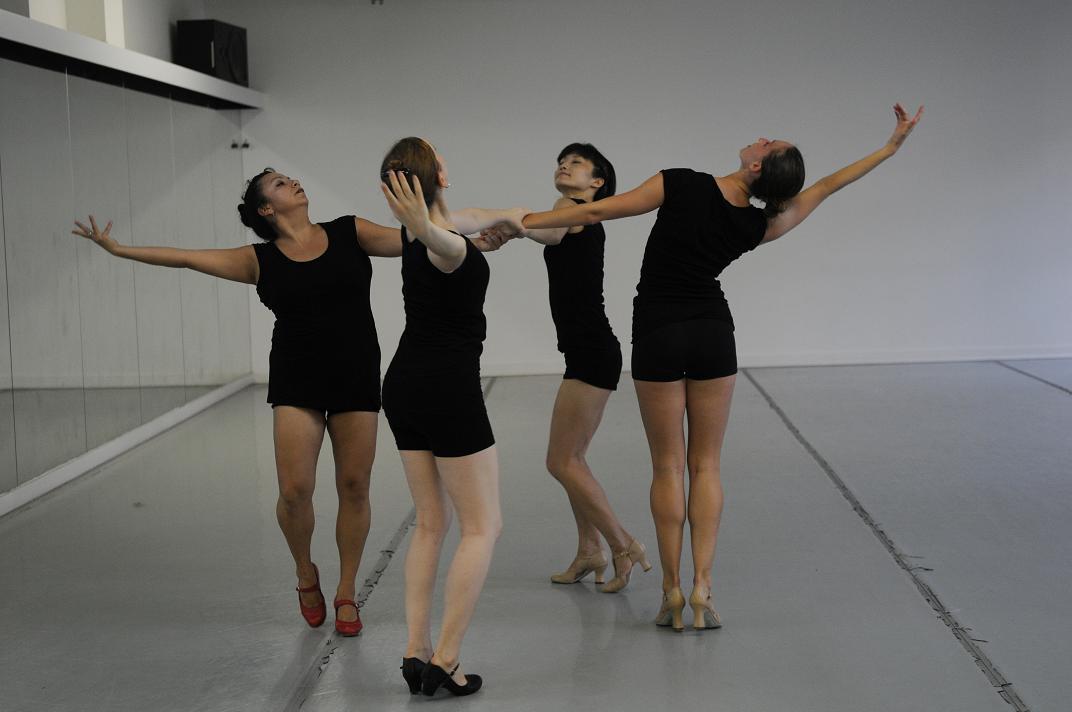
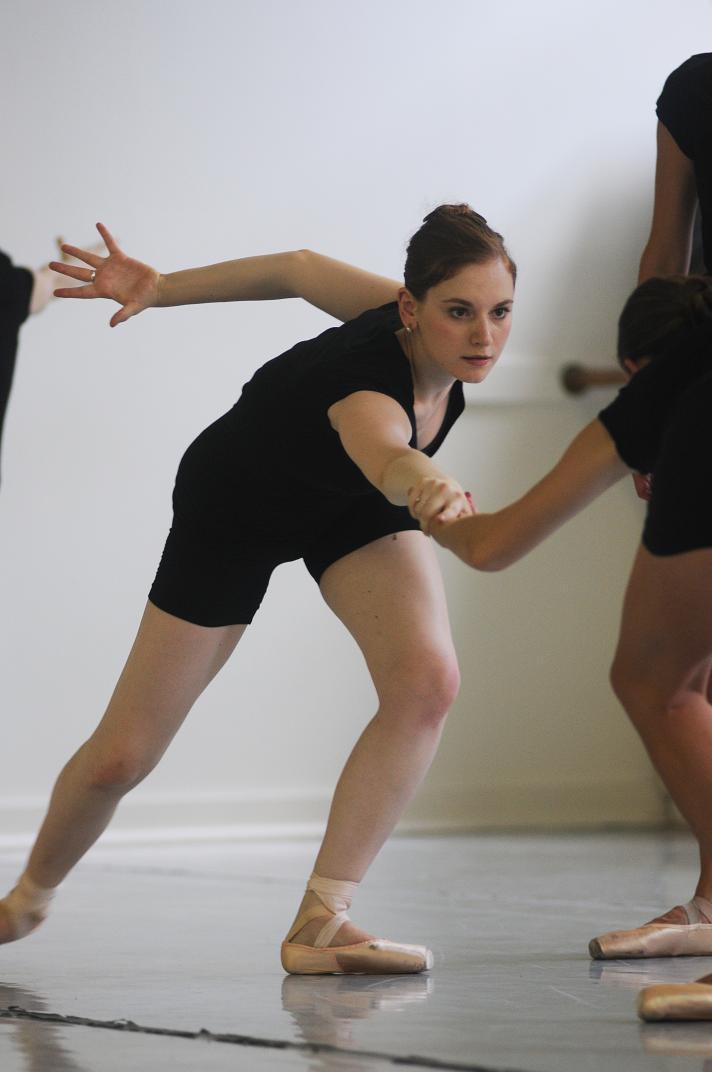
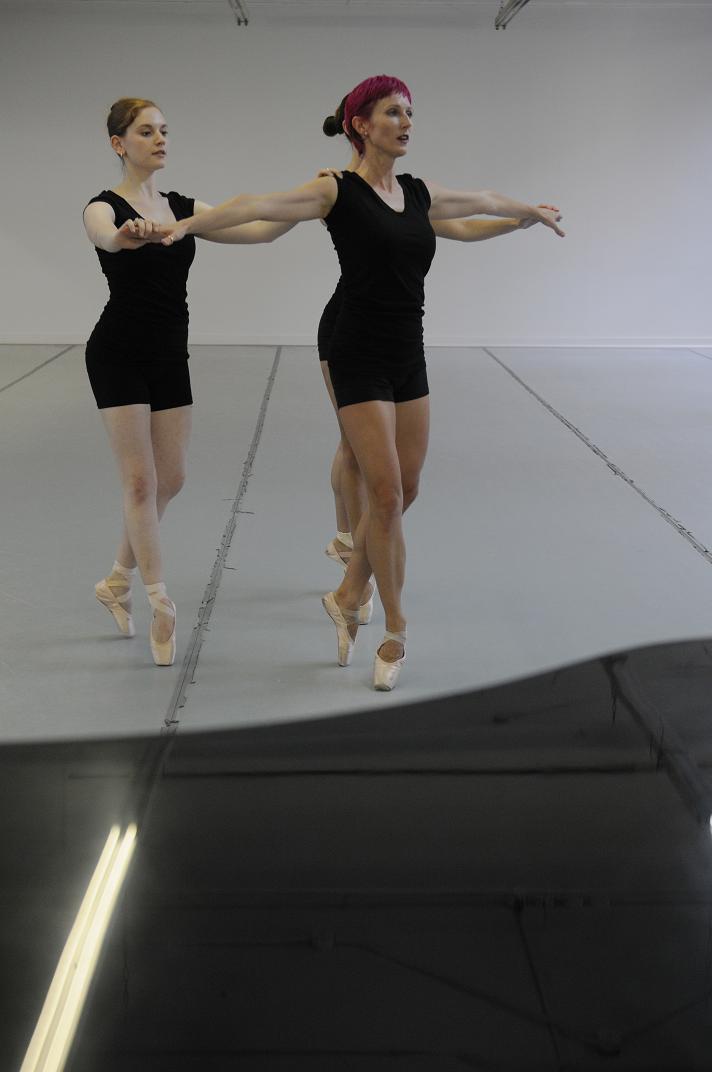
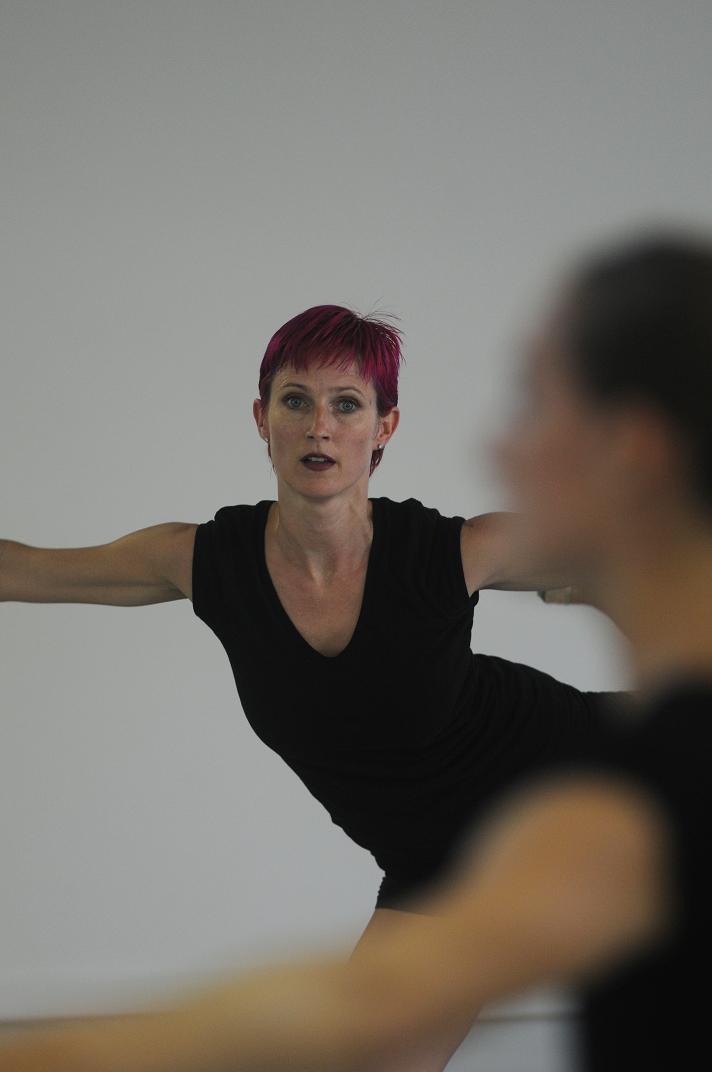
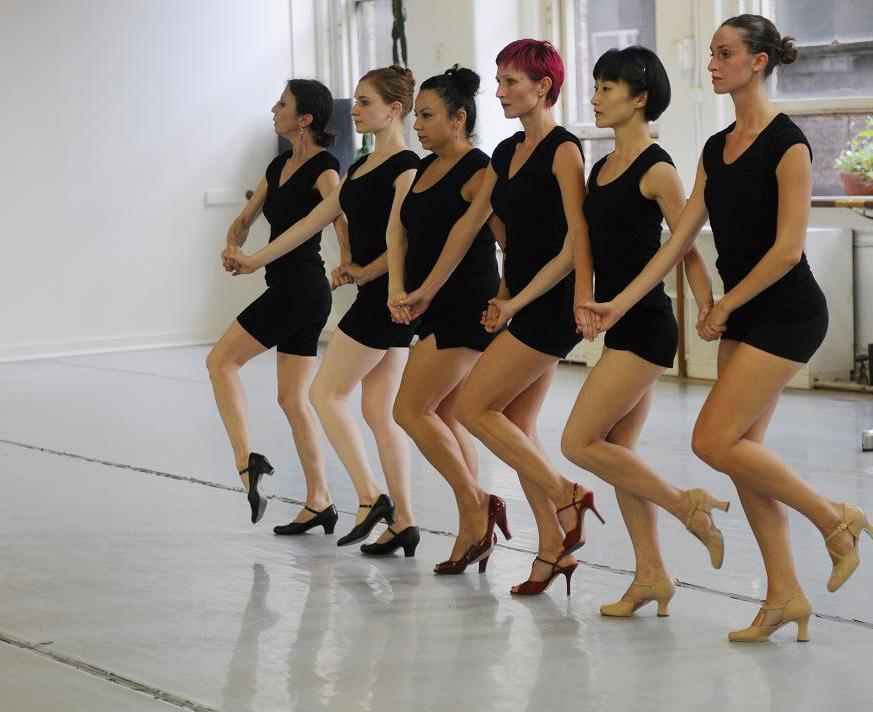
    Kokyat and I dropped in at the wonderful Gibney Dance Center this afternoon to see what Laura has been working on. It was a swelteringly hot day but the studio was surprisingly comfortable. The dancers (all women) were just about to do a complete run-thru of the piece which, with typically subtle Laura Ward wit, runs the gamut from toe shoes to hooker heels. 

    Copy of 15

    Michel Ayello’s score allows for a range of moods from pensive, sisterly partnering to high-kicking chorus line. As in any dream, the fragments of various strands of memory entwine and evolve without rhyme or reason – the girls change swiftly from pointe to pumps – but the overall impression is cohesive.

    Copy of 4

    We knew some of the dancers from previous performances and it was nice seeing them again. Jen Barrer-Gall (above), who we’ve met thru her work with Columbia Ballet Collaborative and with choreographer Emery LeCrone at PS-1.

    Copy of 7

    Jen, Laura, Cassie Roberts, Natalia Wodnicka

    Copy of 9

    Copy of 10

    Copy of 17

    Copy of 18

    Cindy Bernier, Jen Barrer-Gall, Georgina Aragon, Laura Ward, Nana Hitomi, Cassie Roberts

    Copy of 20

    Copy of 21

    Copy of 34

    Jann Barrer-Gall

    Copy of 24

    Nana Hitomi

    All photos by Kokyat.

    Performance Information:

    The Dreaming
    Laura Ward/Octavia Cup Dance Theatre
    Writer: Sheila Ward and Octavia Cup, Music by Michel Ayello
    Choreographer: Laura Ward
    High heels and pointe shoes cloud stomp through the subconscious borderlands between waking and sleeping in The Dreaming, an expressionistic trip on a mare of the night.   
    www.octaviacup.org   
    VENUE #12: 4th Street Theatre Share/Bookmark
    Sat 13 @ 5:45  Thu 18 @ 8:15  Fri 19 @ 10  Sun 21 @ 8:30  Mon 22 @ 3:15  Wed 24 @ 2 

  • Echo

    L1020092

    Jaume Plensa’s ECHO is currently on display at Madison Square Park. The giant sculpture strikes me as a contemporary take on the ancient stoneworks on Easter Island. Read about the artist here.

  • In the Studio with 360° Dance Company

    Copy of 18

    Saturday May 28, 2011 – After watching Roman Baca’s HOMECOMING aboard the USS Intrepid, Kokyat and I went over to the DANY Studios where dancers from 360° Dance Company were in rehearsal for their upcoming performances at Dance Theater Workshop. The Company will present five works including a New York premiere entitled What was Still Is choreographed by Martin Lofsnes. Choreographers from Mexico, Norway and Italy will be represented. The performances are June 2nd – 4th. Information here.

    New York is a city filled with beautiful dancers and today we had the pleasure of meeting two of them, Martin Lofsnes and Danelle Morgan, for the first time. Martin Lofnes has danced with the Martha Graham Company from 1993 to 2006 dancing principal roles in the Graham classics; he has also worked with Pearl Lang, Matthew Bourne and Maurice Bejart, and he serves on the faculty of The Ailey School.

    Copy of 1

    Martin spoke to me briefly about choreographer Jane Dudley and then launched immediately into a solo created by Ms. Dudley in 1934 entitled Time is Money. Set to a spoken text, the solo looks as fresh and meaningful as if it were just choreographed this morning. Martin’s spacious and fluid style seizes the imagination at once.

    Copy of 2

    Martin Lofsnes rehearsing Jane Dudley’s Time Is Money.

    Copy of 7

    In the duet Que Color Tiene El Amor (What Is The Colour of Love?), choreographed by Ricardo Flores, the strikingly attractive Danelle Morgan was a splendid match for Martin in terms of vivid lyricism and dramatic nuance. I’ve seen an awful lot of wonderful dancers at close range in their studios these past couple of years but Martin and Danelle really had something to say to me today. Their dancing continually gave me those little rushes of emotion that make my quest of pursuing the city’s best movers and shapers so rewarding.

    Copy of 9

    Copy of 13

    Copy of 14

    Copy of 16

    Copy of 17

    Copy of 19

    The programme for 360° Dance Company’s performances at Dance Theater Workshop further includes a second work by Jane Dudley: Cante Flamenco, and Alessandra Prosperi’s Satsang. The new Lofsnes work, What Was Still Is, is set for six dancers to a score compiled from Middle Eastern, Mexican, Spanish and American works.

    Rehearsal photos by Kokyat.

  • DIE WALKURE at The Met

    P1210469

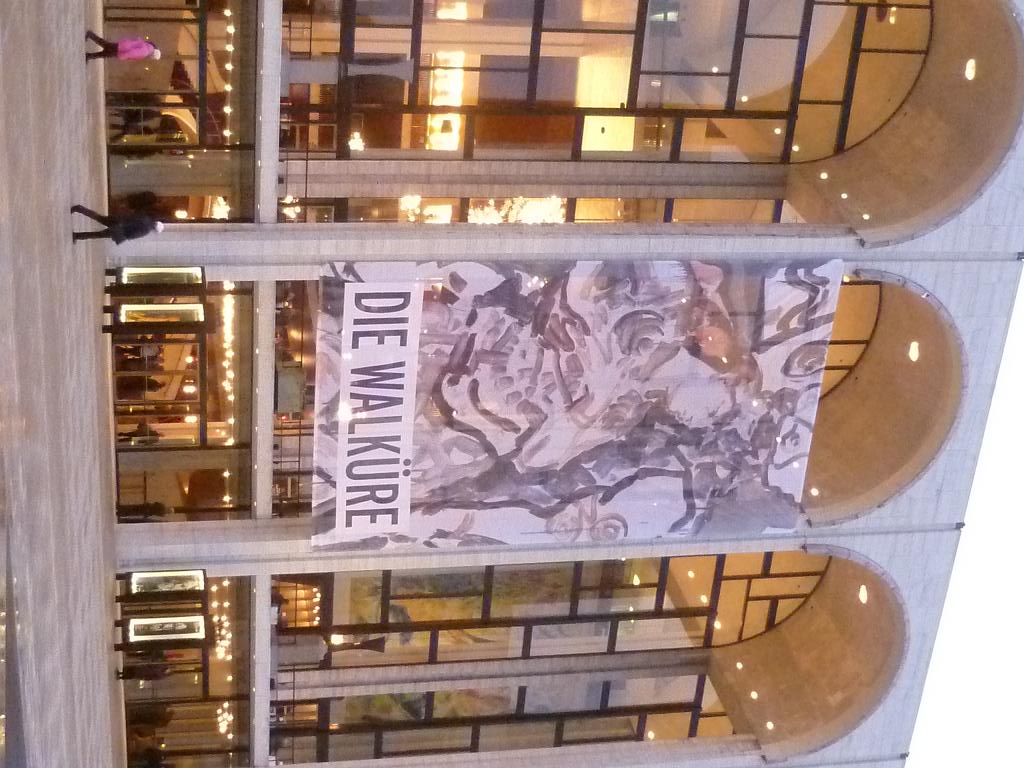
    Monday April 25, 2011 – I went to The Met box office the day after tickets for the 2010-2011 season went on sale and tried to get seats for the new productions of RHEINGOLD and WALKURE. The man at the ticket window informed me that all the RHEINGOLDs were already sold-out; I was lucky to get tickets for a WALKURE, and by the time I got back home and went on line The Met website showed all the WALKUREs had sold out also. Fortunately my friend Lisette was able to get me a ticket for the RHEINGOLD dress rehearsal (in which she was singing Woglinde); actually I was really lucky because right after she’d picked up her pair of seats for the dress The Met decided to close the rehearsal because the production was experiencing technical difficulties. So only a very limited number of people were in the House. 

    The chance to see a new production of the RING Cycle here in New York City comes but rarely and ticket demand was high; despite not liking the RHEINGOLD much and wishing some of the roles in WALKURE could be re-cast, I was really excited about seeing this second RING installment: WALKURE is one of my top-five operatic scores and it’s the Wagner opera I’ve seen most often.

    Reports from the premiere of WALKURE indicated that the stage machine was functioning far more smoothly than it had for the Autumn RHEINGOLDs. Musically, the news that James Levine was able to conduct after health concerns forced him to renounce several recent engagements was a major plus. A mid-opera cast change – Margaret Jane Wray stepping in for debuting Eva-Maria Westbroek as Sieglinde after Act I – and a slip-and-fall from the Brunnhilde (Deborah Voigt) were among the first night news items.   

    Metropolitan Opera House
    April 25, 2011
    New production

    DIE WALKÜRE
    Wagner

    Brünnhilde..............Deborah Voigt
    Siegmund................Jonas Kaufmann
    Sieglinde...............Eva-Maria Westbroek
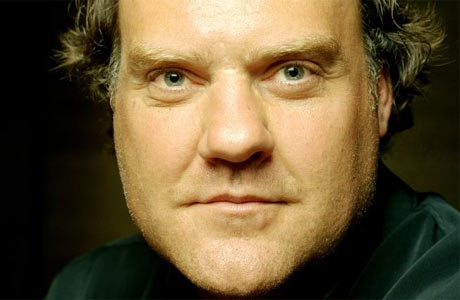
    Wotan...................Bryn Terfel
    Fricka..................Stephanie Blythe
    Hunding.................Hans-Peter König
    Gerhilde................Kelly Cae Hogan
    Grimgerde...............Mary Ann McCormick
    Helmwige................Molly Fillmore
    Ortlinde................Wendy Bryn Harmer
    Rossweisse..............Lindsay Ammann
    Schwertleite............Mary Phillips
    Siegrune................Eve Gigliotti
    Waltraute...............Marjorie Elinor Dix

    Conductor...............James Levine

    I must say right off I was glad that James Levine was on the podium tonight, especially in view of the likely alternative. Maestro Levine has been dealing with major health issues in recent weeks, forcing him to miss some Met performances and to give up his position at the Boston Symphony. He was back at The Met for a tremendous WOZZECK earlier this month and he and his orchestra seemed in fine fettle tonight. The great score was laid out with grandeur, passion and tenderness and the individual players shone whenever solo moments cropped up. Levine unleashed voluminous waves of sound at times and let the singers fend for themselves; elsewhere, as in the opening minutes of the Todesverkundigung, the maestro had everything under solemn, finger-tip control.

    Now that we’re half-way thru this RING I must say, the enterprise seems a colossal waste of money. The reported outlay of $20 million for the production plus the small-change invoice of another half-mil to reinforce the stage floor to bear the weight of The Machine seems the height of theatrical vanity. The RING is basically a series of dialogues; there’s very little ‘action’ really. As a setting, you basically need to create something that is pleasing to the eye without intruding on the drama and hopefully come up with a bit of excitement in those well-spaced-out moments when a visual coup is desired.

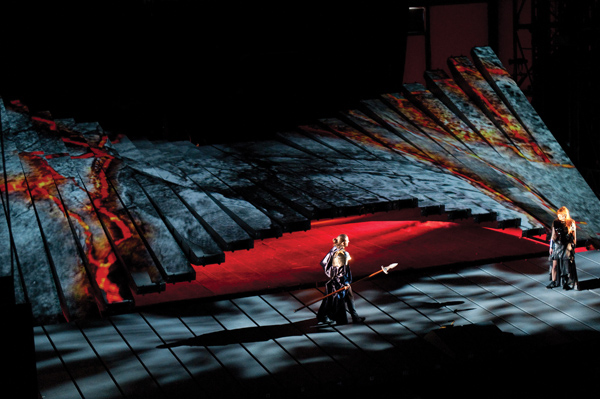
    Flywires, mechanicals and the occasional stagehand are visible from time to time in the Lepage setting, preventing an illusion of magic. The planks rise and fall and fan out to modestly interesting effect, but placing the action on a bare Wieland Wagner disc would have been equally convincing and cost a hell of a lot less.

    The basic setting of grey planks is both innocuous and dull. Absolutely nothing happens on the back panel in terms of lighting, film or other effects: it’s deep blue throughout most of Act I of WALKURE (with snowflakes falling) until the moment when Siegmund annouces the arrival of Springtime when it turns…green! How thrilling! I could have provided that idea for a coup de theatre for 99 cents.  

    The singers are left to their own devices (M. Lepage ‘doesn’t do character work’ reportedly) and so we have Siegmund collapsing on the dinner table when he first barges in, and Sieglinde producing various dishes and utensils from her kitchen cabinets conveniently installed under the lower of the two panels. When she fixes the sleeping-potion for her husband, she decides an extra dose of herbs will do the trick. (Why didn’t she simply poison him? That would have spared her and Siegmund a world of troubles.)  The pulling of Nothung from the tree is a non-event though one can imagine Sieglinde thinking “My, what a big weapon you have!” as she fondles her brother’s blade. 

    RingIdealmetwalkhdl29110

    Act II has lava flowing just under the surface of the rocky terrain as Wotan greets Brunnhilde. Fricka appears in a ram-drawn sedan chair and seems tethered to it. During Wotan’s monolog, a plastic ‘eye’ appears on which are projected dim shadows that have no relationship to anything. Brunnhilde is intrigued by this but it disappears as inexplicably as it appeared. It looks really cheap, by the way.

    The appearance of Brunnhilde to summon Siegmund to Valhalla should seem like a dream, with the Valkyrie hovering in the mist above the ill-fated lovers. Instead Brunnhilde simply walks on from stage right and gives out her unhappy tidings. The fight scene is badly botched: Brunnhilde and Wotan appear too ‘humanly’ on the scene, and Hunding’s spear-thrust is so lame and contrived that I laughed aloud. Hunding’s death-fall is replaced by his swoon into the arms of his henchmen (who have watched the fight with their decorative lanterns: a not unpleasing effect). The sudden fall of a black curtain negates Wotan’s rage. 

    The Ride of the Valkyries has been staged elsewhere on flight-wires, on a carousel, as a bungee-cord and trampoline fest, or with Earth-bound warrior maidens dragging the naked bodies of fallen warriors hither and yon around the set. Mssr. Lepage places each of the eight sisters on a separate plank of The Machine and they ride ’em like bucking broncos. This ludicrous idea trivialized the scene and was simply one of the stupidest things I’ve ever seen on any stage. Luckily the girls sang lustily. Then they slid down to the surface where they picked among the bones and skulls of a few dead men strewn on the abandoned battlefield.

    As Brunnhilde told Sieglinde to escape into the forest with her unborn child, I signaled to Dmitry that it was time for us to escape also. I suppose it would have been amusing to see Brunnhilde roasting upside- down during the Magic Fire Music, but I’d had enough.
    Bryn-Terfel-2

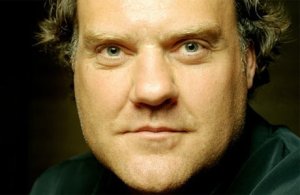
    Of the singers, Bryn Terfel’s Wotan took top honors. After years of having a basso-oriented Wotan (James Morris) it was a pleasing change to have a higher-lying sound in this music (no disrespect to Morris, he was superb in the role in his prime years). Bryn was in fine voice and made the monolog an absorbing stretch of singing, with beautfully modulated phrasing and a dynamic range from whsper to thunderbolt. He did what he could physically on the silly set. I would love to have heard him sing the final scene but I didn’t think I could endure any more of Deborah Voigt’s unpleasant vocalism.

    The other capital singing of the evening came from Hans-Peter Konig as Hunding; with his authentic Wagner-basso sound, Konig scored every single vocal moment to rich effect. If he looked more like a genial Santa Claus than a mean-spirited thug, that was not his fault.

    Eva-Marie Westbroek was neither here nor there as Sieglinde; the voice has a vibrato – a not altogether unpleasant one – and there were many attractive phrases. But there’s no individuality of timbre and the top does not bloom and billow in a way to make the character’s music as thrilling as it should be. The soprano seemed vocally tired in Act III but since she has apparently been ill, we should give her the benefit of the doubt.

    Good looks and convincing movement were plusses for Jonas Kaufmann who sang well as Siegmund (where did he get that Mithril shirt though?) but his vocalism for the most part was all of one colour. It’s a lyrical sound – though darkish – and he has enough volume to be heard at all times but the memories of Vickers, King and Domingo – and even of the younger Peter Hoffmann – in this music set a high standard to which Kaufmann seemed only a handsome but overall merely serviceable contender.

    As Fricka, Stephanie Blythe, generous of voice and of derriere, tried to do more with text and shading than she had in the same role in RHEINGOLD but her mostly loud complaints and her frumpy figure made Wotan’s wanderings understandable. He must have wondered if she was worth losing an eye over, perhaps thinking Freia with her tasty apples might have been a better choice for a wife.

    Deborah Voigt’s Ho-Jo-To-Ho was some of the worst singing I’ve ever heard at The Met. Terfel goosed her with his spear, perhaps to create an excuse for her screechy top notes, some of which were flatter than pancakes. Through most of the evening Voigt wore a smug little smile on her face; she’s never been much of an actress but now she just coasts along – do the job, collect paycheck, repeat. 

    However, at the start of the Todesverkundigung – singing in mid-register at medium volume – Voigt reminded us of the beauty and warmth her voice once possessed and of the promise that she once held of being a top-flight Isolde and Brunnhilde, a promise dashed by her absurd genuflecting at the altar of The Black Dress. As the scene progressed, she had to start applying more volume and venturing high, and the annoying metallic shrillness reappeared.  But in those few minutes Voigt and Jonas Kaufmann made some beautiful music together, wonderfully abetted by Levine and the orchestra.

    The Valkyries sang so well – notably Molly Fillmore and Wendy Bryn Harmer – that one regretted the foolish staging of their Ride all the more.

    Although the performance was sold out, an increasing number of empty seats appeared with each intermission. It’s usual for a few people to drift away during Wagner nights but if the production was all it’s cracked up to be, you’d think people would be riveted to the stage. I suppose we will be stuck with this RING for the rest of my lifetime and probably beyond. How amazing that they can find this kind of money to throw away.

    View a page of production photos here.
  • Mother of the Bride

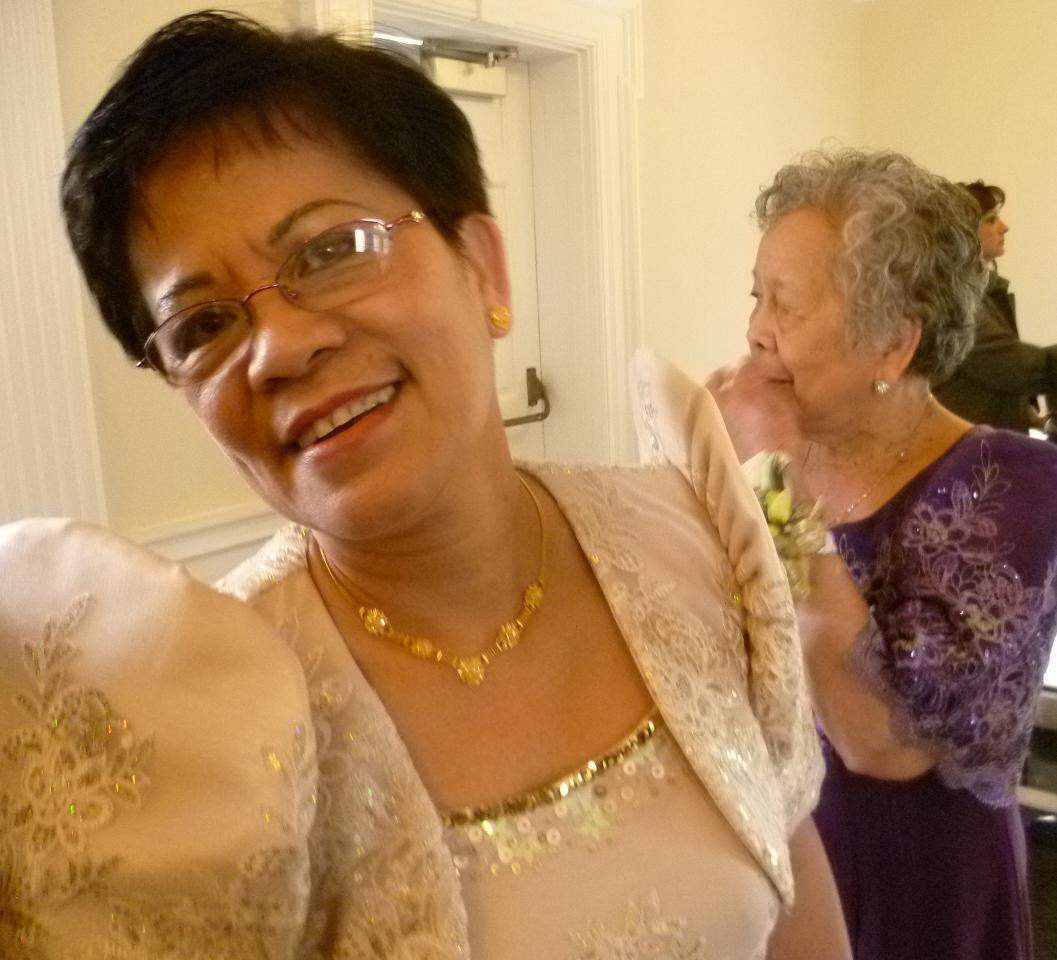
    P1220182

    My dear friend Resurreccion Purisima Sacdalan, known to everyone as Rose, with her mother Hermingilda Purisima at the wedding of Rose’s daughter Michelle (my god-daughter) in Simsbury, CT on April 23rd.

    P1220184

    At the multi-cultural ceremony (the groom Abrar is Muslim and Michelle’s family are Catholic), Rose shows off her henna tattoo.

    P1220189

    Rose and her husband Lorenzo. Rose and I struck up a great friendship from the day she began working with me at the (now defunct) Covenant Insurance Company in Hartford, Connecticut. She had petitioned to bring Lorenzo here from the Philippines and the process dragged on; finally a letter from senator Chris Dodd helped seal the deal. I threw a party for Lorenzo when he arrived in the USA and every single person from my office showed up.

    P1220196

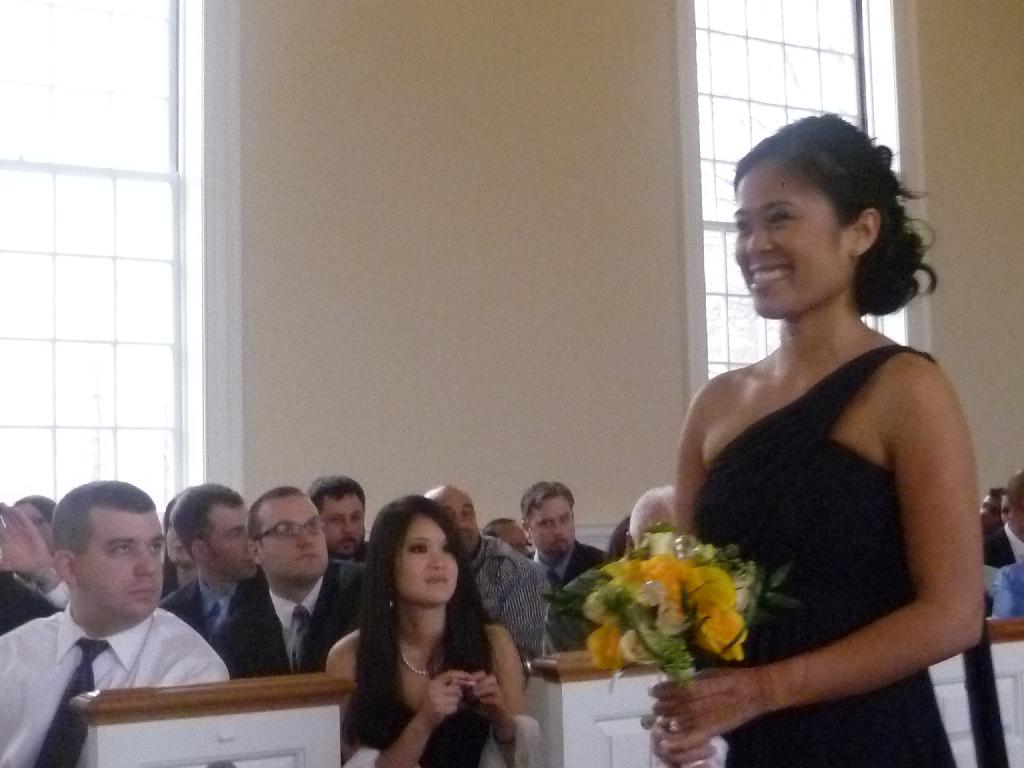
    Would you believe I didn’t get a single photo of the bride and groom from this wedding?  But here (above) is the bride’s twin sister, Melissa, as matron-of-honor.

    P1220179

    The ceremony was held at the chapel of the Ethel Walker School in Simsbury, Connecticut. After a reading from the Koran, there was a lovely ritual in which a veil was placed over the bridal couple; and later the mothers of the bride and groom each lit a candle from which the couple jointly lit a single candle symbolizing the unity of their two families.The groom’s mother, a strikingly attractive woman in a traditional Indian gown, performed a ceremonial blessing. Then the actual vows were read by a Justice of the Peace.

    The ceremony began with an orchestral setting of the old Cat Stevens ‘hymn’ MORNING HAS BROKEN; later music of Pachelbel and Chopin was performed. 

    P1220217

    We adjourned to The Farmington Club where food from both the Indian and Filipino cultures was served buffet-style…

    P1220212

    …before the cake was cut.

    P1220214

    Two of my former co-workers from the insurance company, Emily Friend and Chita Taylor. I worked with these young ladies for years and we had so much fun together despite all basically hating the job of handling insurance claims.

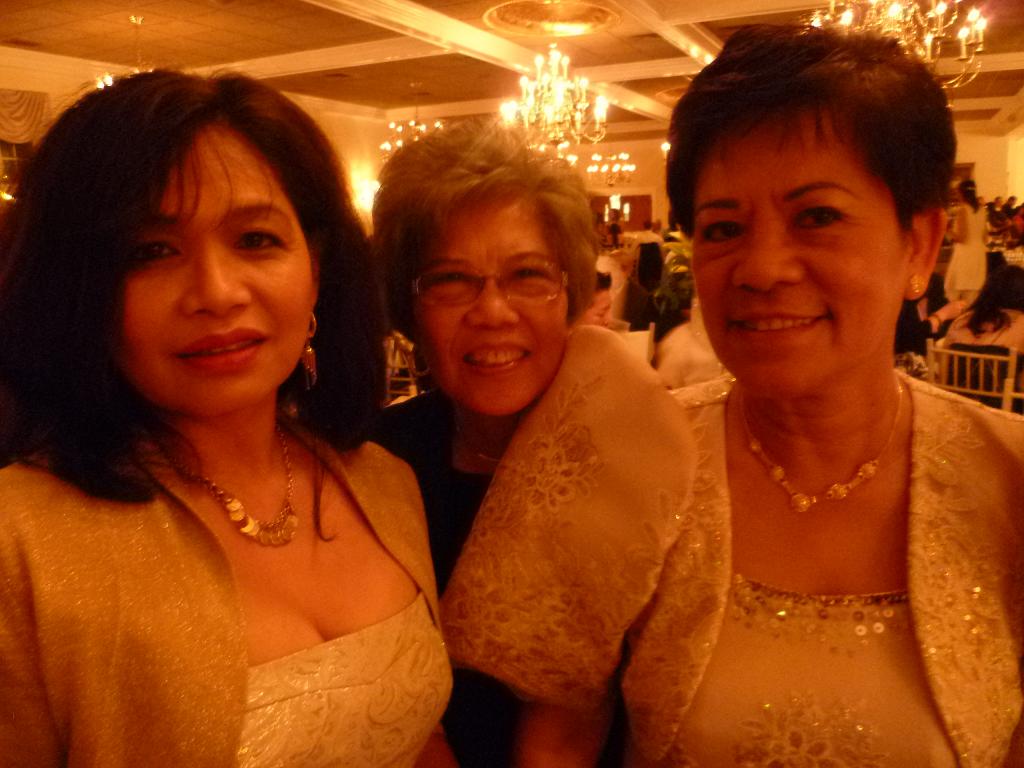
    P1220209

    Chita and Rose with someone I don’t know in the middle.

    It wasn’t until we were leaving that I finally got to embrace my god-daughter – whom I hadn’t seen for nearly twenty years – and to meet her husband Abrar. Someone snapped a ‘god-parents’ photo; I hope Rose remembers to send me a copy! 

    It rained heavily during most of the day of the ceremony; that’s supposed to mean good luck for the wedded couple.

    P1220218

    The next morning the sun started breaking thru, the temperature rose and the world seemed to blossom. This seemed like an excellent omen for a happy marriage.

  • New Chamber Ballet: Gallery

    Sculpture Garden_MG_2869_edited_2

    Photographer Kristin Lodoen Linder provides a beautiful set of images from New Chamber Ballet’s recent performances at City Center Studio. Read about the April 1st showing here. Above: Victoria North and Alexandre Blacker in SCULPTURE GARDEN.
    Table_MG_2472_edited_2

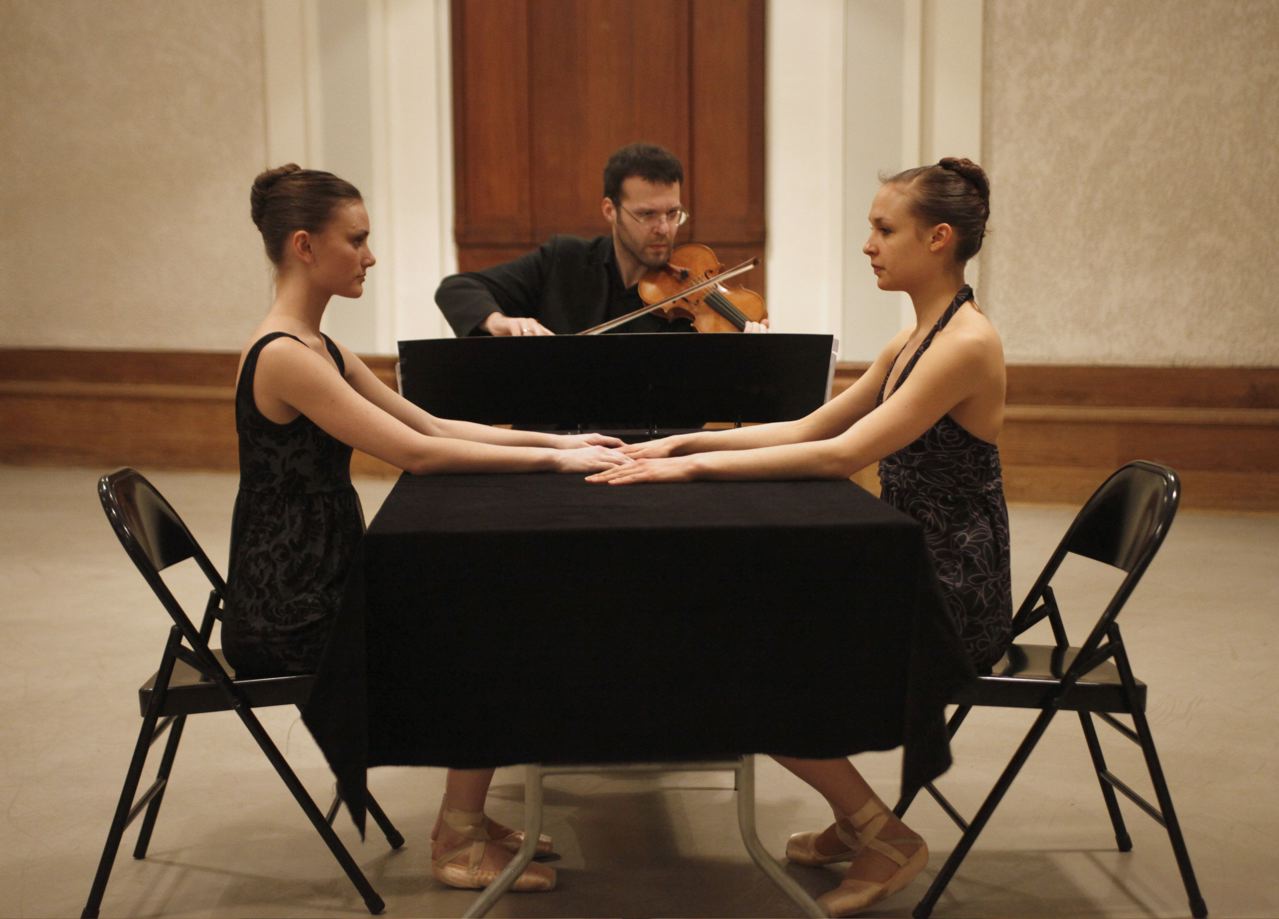
    Maddie Deavenport, violinist Erik Carlson and Katie Gibson in TABLE.

    Table_MG_2626_edited_2

    Katie Gibson in a solo from TABLE.

    Night Music_MG_2371_edited_2

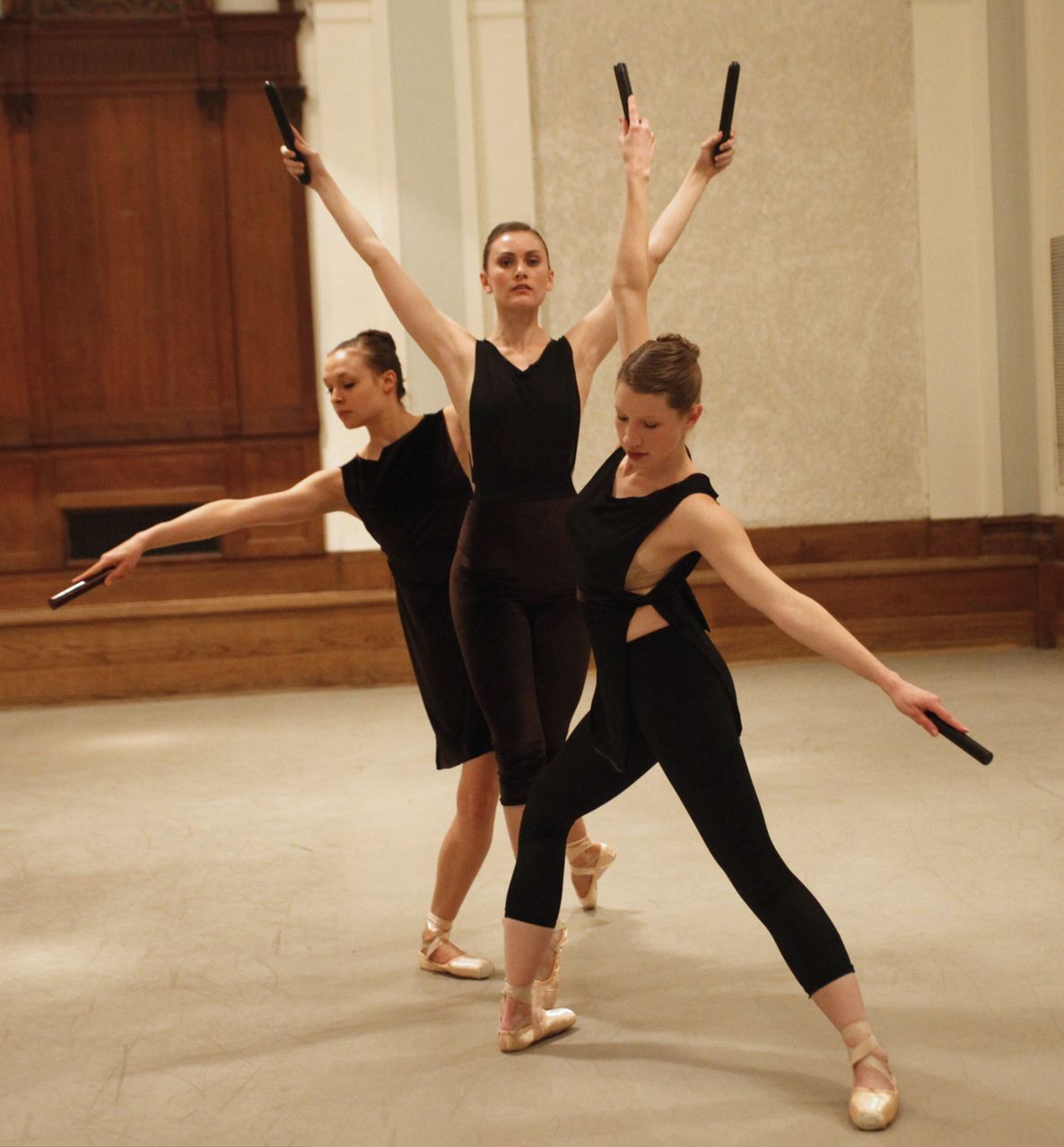
    Lauren Toole and Katie Gibson in NIGHT MUSIC.

    Night Music_MG_2416_edited_2

    Katie Gibson, Maddie Deavenport and Lauren Toole in NIGHT MUSIC.

    Sketches_MG_3369_edited_2

    Lauren Toole in SKETCHES OF A WOMAN REMEMBERING.

    Sketches_MG_3304_edited_2

    Alexandra Blacker in SKETCHES OF A WOMAN REMEMBERING.

    Sketches_MG_3083_edited_2

    Victoria North in SKETCHES OF A WOMAN REMEMBERING.

    All photos by Kristin Lodoen Linder.

    New Chamber Ballet‘s next performances will be June 24th and 25th, 2011 at City Center Studio when works by Miro Magloire and Emery LeCrone will be performed.