Blog

  • At Home With Wagner VII

    Picwagner2

    As Summer began to transition into Autumn, I found myself with less time for my favorite solitary pastime: listening to recordings of live performances of the operas of Richard Wagner. But I spent a long time with a 1975 Bayreuth GOTTERDAMMERUNG, re-playing certain scenes repeatedly. It’s one of the most exciting performances of that opera I’ve ever heard.

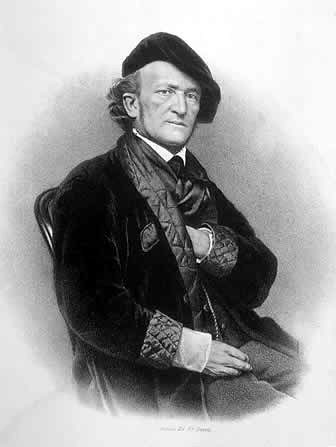
    Horst stein

    The overall majesty of this GOTTERDAMMERUNG owes a great deal to the masterful conducting of Horst Stein (above). Under his remarkable leadership, the performance drew me in from the opening chord. Not only is the great span of the work honored in all its epic magnificence, but time and again Maestro Stein illuminated what I thought were familiar passages with fresh nuances of colour or dynamic.

    Hoeffgen-portrait70

    As the First Norn, Marga Höffgen’s voice wells up from the mysterious glow of the prelude. Höffgen (pictured above) is authoritative and she sent a shiver up my spine with the line “Die nacht weicht…” (“The night wanes…”) sung with such a prophetically gloomy resonance. Wendy Fine as the Third Norn has a strong sense of urgency in her singing, and Anna Reynolds as the Second Norn is simply superb: in voice, diction and expression she brings a thrilling dimension to this music. 

    Horst Stein’s spacious reading of the Dawn Music has a triumphant ring, heralding the only truly happy scene in the entire opera. Catarina Ligendza and Jean Cox as Brunnhilde and Siegfried are splendidly matched, she showing a full-bodied sense of lyricism whilst the tenor’s strong, sustained singing will be a boon to the entire performance. Stein builds the rapture of their duet exctingly, a big vocal outpouring worthy of the passions they express…passions soon doomed to betray them.
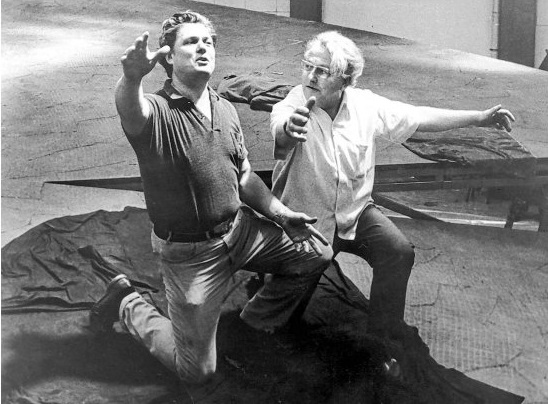
    Cox-wolfgangwagner

    Above: Jean Cox rehearsing at Bayreuth with Wolfgang Wagner

    A wonderful rocking feeling pervades Stein’s reading of the Rhne Journey; we feel like we’re in Siegfried’s boat, along for the joyride. The threesome we meet at the Gibichung Hall are as strong a trio as one could hope for: power and pride of voice from Franz Mazura (Gunther), rich lyricism from Janis Martin (Gutrune), and the start of a masterful performance of Hagen from Karl Ridderbusch.
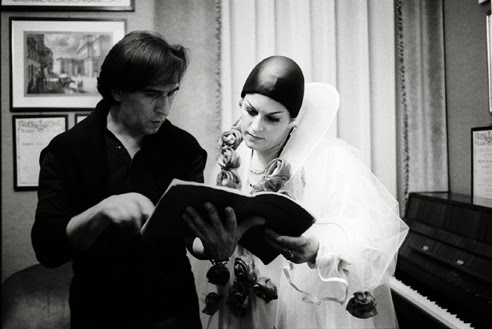
    Claudio Abbado Janis Martin Erwartung 1980

    Ms. Martin (above, with Claudio Abbado) started out singing smallish roles at The Met, eventually having a major career as a Wagnerian soprano. She was my first Sieglinde, Kundry, and Marie in WOZZECK, and she really makes her mark here as Gutrune. She, Mazura, and Ridderbusch share a strong sense of verbal detailing, keeping the dramatic situation in sizzling high-profile; Cox and Mazura are very powerful in the Blood Brotherhood scene; they sail off to the Valkyrie Rock, leaving Ridderbusch to deliver a simply magnificent rendering of Hagen’s Watch, thrillingly abetted by Maestro Stein.
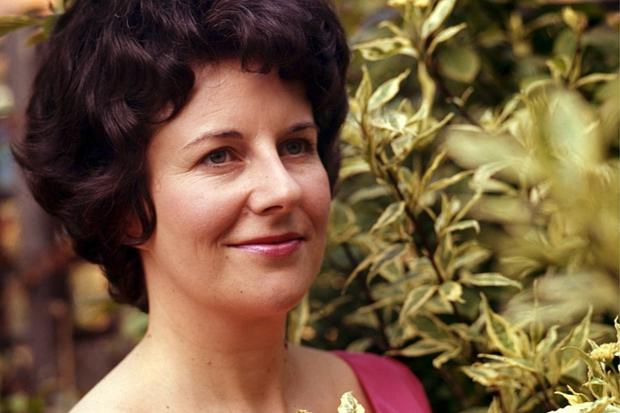
    Anna reynolds

    Above: Anna Reynolds

    The scene is now set for some truly remarkable singing in the confrontation between Brunnhilde and her sister Waltraute, played by Anna Reynolds. Ms. Reynolds is a great favorite of mine; she was my first RHEINGOLD Fricka (conducted by Herbert von Karajan at a Metropolitan Opera matinee…his only Met broadcast), and a few seasons later I had the good fortune to also experience her WALKURE Fricka. All of the things I love about Reynolds’ singing are in ample evidence in this GOTTERDAMMERUNG: her timbre is truly beautiful, her registers even; she is dynamically alert and verbally keen, a very subtle colourist with a sense of majestic authority, later overcome by despair as Brunnhilde refuses to part woth the Ring. The argument between Reynolds and Ligendza is masterfully developed by Maestro Stein, Ligendza standing her ground with firm-voiced dignity. Reynolds concludes the scene on a splendid top A-natural and rushes away.

    As the flames surrounding her abode leap up. Ligendza brings great lyric joy to her anticipated reunion with Siegfried; her despair at his betrayal and her realization of his deceit are finely delineated by Stein and his orchestra; the conflict and Siegfried’s brutal seizing of the Ring are excitingly realized by the singers and conductor.

    Neidlinger-Gustav-02[Saul-881]

    Above: Gustav Neidlinger, a fabulous Alberich

    Maestro Stein commences the second act with a throbbingly sinister prelude which leads to the appearance of Alberich (Gustav Neidlinger), manifesting himself in a dream to his son Hagen. This is one of my favorite scenes in the RING Cycle, and Neidlinger and Ridderbusch give it a tremendous impact, their singing and verbal nuances meshing to great expressive effect. Neidlinger (famed for his portrayal Alberich on the classic Georg Solti commercial RING) so vividly captures the restless insistence of the dwarf, desperate of regain the ring and depending on Hagen to achieve it. Throughout the scene, the two singers receive superb support from Stein.

    Janis Martin makes the absolute most of every line Wagner gives to Gutrune, and then Karl Ridderbusch unleashes a tremendous “Hoi ho!”, grandly summoning his vassals to celebrate the arrival of Gunther’s bride. The chorus’s excitement seems genuine as they sing “Gross gluck und Heil!”; of course, the festive throng soon fall into epic puzzlement as the downcast Brunnhilde appears, escorted by Gunther. Mazura’s potent singing and rugged sense of nobility will make his downfall all the more tragic. The chorus, amazed by Brunnhilde’s stupor, whisper “Was ist ehr?” (“What ails her?”); the answer comes soon enough.

    Catarina Ligendza shows very slight traces of vocal fatigue in this strenuous act, but scarecly enough to be a demerit to the overall impact of her portrayal. Even when somewhat taxed, she plunges bravely onward. The swearing of the oaths – potently underscored by Stein – finds the soprano a bit stressed here and there, and Mr. Cox fudges the brief high-C. But none of this really detracts from the overall thrill of the performance. As Siegfried and Gutrune leave to prepare for the ceremony, Ligendza is back on fine form in expressing Brunnhilde’s uncomprehending woe and then her unbridled fury. Mazura limns Gunther’s shame with disturbing intensity and when Brunnhilde heaps insults in him, he is filled with self-loathing. Ligendza, Mazura, and Ridderbusch then join in the final trio which bristles with dramatic fire, fanned marvelously by Maestro Stein and the orchestra.

    The excellence continues with Act III: Horst Stein’s scene-painting is colourful and detailed, and I love his trio of Rhinemaidens: they blend very well, and you can hear each voice distinctly in the harmonies. Elisabeth Volkmann (Woglinde) sings so prettily, and Inger Paustian (Wellgunde) makes a fine impression as she spies the ring on Siegfried’s finger.
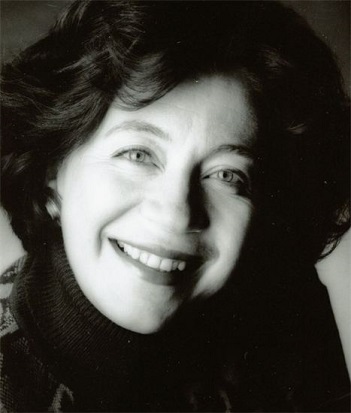
    Sylvia anderson

    I’m particularly happy to have this souvenir of Sylvia Anderson (above), a singer I heard at New York City Opera in the 1970s as Octavian and as Giovanna Seymour in ANNA BOLENA. As Flosshilde, she gives a lovely mellow depth to the Rhinemaidens’ trios; it’s really nice hearing her voice again.

    Unlike some Siegfrieds, Jean Cox has plenty of voice left to spend going into Act III. He really sings: no barking or hoarseness. Calling out to the hunting party from which he has wandered, Cox produces a walloping long high-C, a note most Siegfriends can’t even hit at this point in a long evening; it’s not beautiful, but it’s such a heroic touch.  

    In the ensuing scene, building up to the murder of Siegfried, Ridderbush is simply superb and Mazura remarkably vivid in lines that some baritones throw away. Siegfried’s narrative has a real lilt to it, and Cox is first-rate: yest abother distinctive passage from this imperturbable performer. The orchestral playing continues to shine, movingly supporting the tenor as he regains his senses after Hagen’s spear-thrust has laid him low. This leads to a grand and glorious rendering of the Funeral March by Stein and his tireless players.

    Back at the Gibichung Hall, Janis Martin is again very impressive as she awaits the return of the men. The ensuing scene, with her horror at Siegfried’s demise, Hagen’s crude cruelty, and Gunther’s shame and remorse, is filled with tremendous tension: brilliant work from Martin, Mazura and Ridderbusch, ideally underscored by the valiant Maestro.   

    Ligendza

    And now it’s left to Catarina Ligendza (above) to bring this mighty performance to a close with the Immolation Scene. She summons up impressive reserves for this big sing, and although traces of strain are detectable here and there, the overall sweep of the music and the fine support she gets from Stein send her sailing forward. In the great benedictive phrase “Ruhe…ruhe du Gott!” Ligendza is splendid. She then greets Grane with a fabulous top B-flat and finishes very strongly indeed. Maestro Stein brings his masterful interpretation of this epic work to a close with stunning aural vistas of fire, flood, and redemption.

    ~~~~~~~~~~~~~~~~~~~~~~~~~~~~~~~~~~~~~~~~~~~~~~~~~~~~~~~~~~~~~~~~~~~~~~~~~~~~~~~~~~~~~~~~~~~

    11162-2front_large

    A performance of DER FLIEGENDE HOLLANDER from Vienna 1972 piqued my curiosity, mainly because of the presence of Cornell MacNeil in the title-role. MacNeil first sang the Dutchman in a series of performamces at the Met in 1968, conducted by Berislav Klobucar. His Sentas were Leonie Rysanek, Regine Crespin, and Ludmila Dvorakova. At the time my opera-going friends and I hoped that this would mark the first of many forays into the German repertoire for the voiceful baritone: we imagined him as Kurwenal, Telramund, Wolfram, Amfortas, Hans Sachs, the Wotans, Barak, Orestes, and Jochanaan. But aside from performances as the Dutchman in Seattle in 1972 and then in Vienna in the same year, MacNeil never again sang a German role to my knowledge.

    MacNeil’s a most impressive Dutchman on this Vienna issue; if his monolog lacks the palpable sense of mystery and poetic longing that the greatest interpreters bring to this music, his power is ample and his sense of vocal commitment unerring. He is well-matched in Act I by the Daland of Manfred Schenk who sings strongly; the two men’s long duet here always strikes me as Wagner at his most Verdian; their singing of it is grand yet human. Adolf Dallapozza is a clear-voiced Steersman and the chorus respond heartily to conductor Otmar Suitner’s rollicking tempo for their casting-off chorus which ends the act.

    Suitner sets Act II deftly in motion with the whirring of the spinning wheels; the choral voices seem girlish.
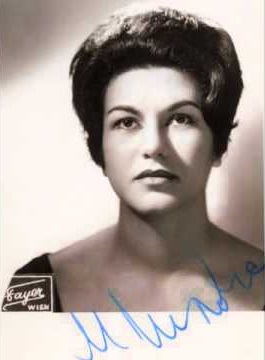
    Lilowa

    In a marvelous bit of casting, Margarita Lilowa (above) is a full-voiced, warm-toned Mary. She brings vocal appeal to a role that is often assigned to ‘character’ singers or aging Wagneriennes.

    JANIS-MARTIN

    Janis Martin (above), an American mezzo-turned-soprano, loomed large in my opera-going career. A Met Auditions winner in 1962 (she sang Dalila’s “Mon coeur s’ouvre a ta voix” at the Winners’ Concert), Martin sang nearly 150 performances at the Metropolitan Opera, commencing in 1962 as Flora Bervoix in TRAVIATA. As a young opera-lover, I heard her many times on the Texaco broadcasts. She eventually moved on to “medium-sized” roles: Siebel, Nicklausse, Lola in CAVALLERIA RUSTICANA. She left The Met in 1965 and built a career abroad, moving into soprano territory. She returned to The Met and from 1974 thru 1977; in thse seasons, she was my first in-house Kundry, Marie in WOZZECK, and Sieglinde. Another hiatus, and then she was back at Lincoln Center from 1988-1992, singing the Witch in HANSEL & GRETEL, the Dyer’s Wife in FRAU OHNE SCHATTEN, Senta, the Foreign Princess in RUSALKA, and two performances of TOSCA. An interesiting footnote from her second Met TOSCA:

    Because of an injury sustained at her previous performance of Tosca on 10/20/93, Janis Martin did not leap from the battlement at the end of the opera but committed suicide by stabbing herself with the knife she had retained after killing Scarpia in Act II."  

    Janis Martin sang a single WALKURE Brunnhilde at the Met in 1997, her final performance there. Elsewhere during her career she sang Ariadne, Isolde, and Ortrud.

    On this Vienna HOLLANDER, Ms. Martin is thoroughly impressive. She is able to produce a clear, soft lyricism in the more refective passages of Senta’s Ballad and then cut loose with authoritative intensity at the climax.

    Like Janis Martin, tenor William Cochran first came to notice as a Met Auditions winner in 1968. At the Winners’ Concert he and co-winner Jessye Norman sang the “Wintersturme” and “Du bist der lenz” from Act I of WALKURE. After singing several performances of Vogelgesang in MEISTERSINGER at The Met in 1968, Cochran went off to build his career and reputation, returning in 1984-1985 for two performances of Bacchus in ARIADNE AUF NAXOS (including a broadcast). You can hear him here in the final scene of Act I of WALKURE with Eileen Farrell. On this Vienna HOLLANDER he’s Erik, the most bel canto of the major Wagnerian tenor roles. He sings clearly and has a feel for the Italianate flow of this two arias. 

    The scene where Erik describes his nightmare to Senta and she becomes increasingly intense in her reactions – since his nightmare signals her dream come true – is finely played by Cochran and Ms. Martin. And suddenly the object of her obsession appears before her. Mr. Schenk sings his jovial, folkish aria very well – he has no idea where all this is leading. And then Ms. Martin and Mr. MacNeil embark on their  great duet, a very taxing piece for both in terms of breath-support, a tessitura that lies high, and the need for expressiveness throughout. MacNeil has a couple off-pitch moments and the soprano is just a trifle tense (but still sucessful) on her highest notes. With Mr. Schenk they drive the trio forward, Ms. Marrtin setting the pace with her high-strung pledge of eternal devotion. There’s no break now leading into the final scene of the opera.

    The boisterous chorus and booted dance-steps of Daland’s crew and their call to the Dutchman’s crew to join them are met with eerie silence at first; later when the ghostly sailors begin their hellish chant, the opposing forces mingle violently. Mr. Cochran’s sturdy singing of Erik’s plea cannot dissuade Senta and after hearing Mr. MacNeil’s farewell – laced with heartbreak – and his revelation of his true identity, Ms. Martin sails clearly thru Senta’s high-lying pledge of eternal faithfulness. Maestro Suitner curiously omits the redemption theme from the opera’s closing moments.

    ~~~~~~~~~~~~~~~~~~~~~~~~~~~~~~~~~~~~~~~~~~~~~~~~~~~~~~~~~~~~~~~~~~~~~~~~~~~~~~~~~~~~~~~~~~~

    11189-1back_large

    Sheer curiosity prompted me to order this disc of excerpts from DIE WALKURE. From the details provided, this peformance seems to have been a broadcast from the Royal Albert Hall of a concert version of the opera, with the orchestra of the Royal Opera House under the baton of Sir Georg Solti. The excerpts are rather oddly chosen: an excellent rendering of Siegmund’s Sword monolog from Act I finds tenor Ernst Kozub at his considerable best. The appetite is whetted for a continuation of the scene, but instead we jump to the final few minutes of Act I, with Claire Watson an urgent Sieglinde and Mr. Kozub ever-impressive.

    Then suddenly we are in Act III, with Ms. Watson being first consoled and then inflamed by the sturdy Brunnhilde of Anita Välkki. Especially fine here are the mezzos and altos among the Valkyries as they warn Brunnhilde that her plan to aid Sieglinde’s escape may falter: Maureen Guy, Monica Sinclair, and Elizabeth Bainbridge are simply super.
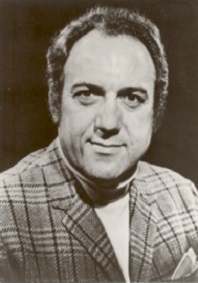
    13359305

    The main reason to acquire this disc was to hear Forbes Robinson (above), a Covent Garden stalwart and noted Handelian, as Wotan. Back in the 1960s and 70s when I subscribed to the British magazine OPERA, Robinson’s name was everywhere. I was very curious to hear what sort of Wotan he might have been, and the answer – based on this sampling – is: marvelous! His voice is ample, rich, and warm, and he comes storming on in Act III to chastise his beloved daughter. Once the Valkyries have departed, Miss Välkki and Mr. Robinson give a truly moving performance of the opera’s great final scene, abetted with grandeur by Maestro Solti. If the soprano strays from pitch once or twice, her lovely take on Brunnhilde’s mixture of vulnerability and plucky courage is very finely expressed. The basso’s is surely one of the steadiest and most vocally pleasing Wotans I’ve ever heard, making me wish that the second act, with the god’s great monolog, had also been preserved. Robinson’s performance here amounts to a revelation, actually.

    ~~~~~~~~~~~~~~~~~~~~~~~~~~~~~~~~~~~~~~~~~~~~~~~~~~~~~~~~~~~~~~~~~~~~~~~~~~~~~~~~~~~~~~~~~~~ 
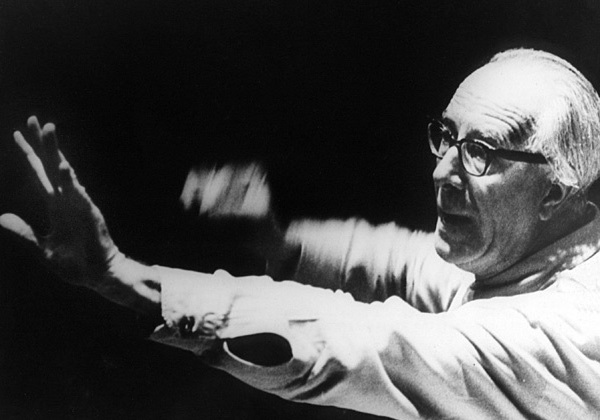
    Aktuelles_Eugen_Jochum

    Above: conductor Eugen Jochum

    And now that Autumn is slipping into Winter, I set out to select a complete live performance of TRISTAN UND ISOLDE from the several on offer at Opera Depot. I wanted to delve deeper into this opera, which over the years has somehow managed to elude my thorough devotion; my plan was to choose a recording that would hopefully inspire me, and study the score while listening.

    After much weighing of pros and cons (it actually took me a couple weeks to make a final choice) I narrowed the list down to three recordings; then the Depot offered one of their 50%-off sales and I made my purchase: the performance is from the Bayreuth Festival 1953, conducted by Eugen Jochum. Within moments of putting the on the first disc, I knew I’d made a perfect choice. It’s a first-class performance in every regard, and the sound quality is very fine indeed.

    Maestro Jochum is the great underlying force of this performance. From the opening measures of the prelude, with their pregnant pauses, Jochum steers a monumental course thru this score. The first voice we hear is that of a young sailor, singing from high in the rigging. The tenor is Eugene Tobin, who recently passed away. He does a beautiful job with this plaintive song: a song with a sting in its tail that rouses Isolde from her state of depressed lethargy. And we are off!
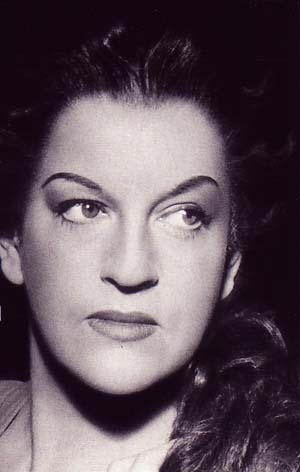
    Astrid_varnay

    Astrid Varnay (above) is for me a very uneven singer. Aside from her recording of ELEKTRA on the Koch label, I don’t have any of her commercial recordings; but I have started to appreciate her more on these Opera Depot releases. I mulled over whether she was the Isolde I wanted to have, and indeed for the first few moments when she starts to sing, I thought that the ‘matronly’ quality I sometimes hear in her singing would be a detriment. But soon she is warmed up and she goes on to give a thrilling performance in every regard. Her lower and mid-range are on exceptional form, and the top notes trumpet out. Her dynamic control is impressive as is her shading of the text.

    Malaniuk

    Ira Malaniuk (above) makes a superb impression as Brangaene, musically and textually detailed and urgently expressive. Her singing throughout Act I is compelling, and she brings a caressive softness to some passages, drawing us in. 

    Vinay-tristan

    Ramon Vinay (above) is both powerfully masculine and poetic as Tristan. As his faithful friend Kurwenal, Gustav Neidlinger barks a bit as he chides Brangaene; later he will reveal his depth of musicality and a gruff tenderness of tragic stature.

    We’ve now met the main characters for Act I: Malaniuk returns from her unsuccessful errand to Tristan, and Varnay, at first subtle and then passionate, prepares to unfold her Narrative. Here the soprano is marvelous, the text vividly coloured and the singing rich and secure. Especially gorgeous is her rendering of “Er sah mir in die Augen…” as she describes the troubling glance of the wounded Tantris. Then onwards to a spear-like top B and a blazing, overwhelming curse. 

    Malaniuk responds with excelling lyricism and a nice, steady top G: the interchanges between her and Varnay tingle with both vocal inspiration and verbal acuity as they discuss the various potions: here Malaniuk’s singing senses the mystery and peril. It’s all thoroughly absorbing.

    Varnay is imperious, grandiose as she bids Kurwenal obey his future queen and send Tristan to her at once. She then gives her orders to Brangaene, describing the potions with great intensity; their conversation again bristles with foreboding, and Varnay’s low-A at “Todestrank!” is another marvel. Maestro Jochum now draws forth the ominous build-up to the encounter between Isolde and Tristan. 

    This scene, which begins with a formal exchange, is perfectly underscored by Jochum’s orchestra: the buildup of tension and passion is spine-tingling, and how cunningly Varnay expresses her reasons for not having killed Tristan. As the drinking of the potion looms – with a loud interjection from the sailors – Varnay’s vocal sorcery and Vinay’s moving sense of nobility are captivating. They drink; their doom is sealed: a flood of tenderness followed by the desperate confusion of the ship’s landing and the lovers torn asunder.

    As the acronical second act opens, Malaniuk’s continued perfection and Varnay’s successful lightening of the voice as they discuss Melot keep tension high. Then Brangaene/Malaniuk seeks desperately to dissuade her mistress from extinguishing the torch.  Jochum’s thrilling impulsiveness as the lovers finally meet – with Varnay striking some big top-Cs – slowly settles down, and the conductor and his players steep the interlude in a misty perfume. In the love duet, the singers become poets; their urgency waxes and wanes, tenderness and rapture build and then evaporate. Malaniuk’s voice floats her warning over Jochum’s dreamy orchestra. A heroic outpouring from Varnay and Vinay…and then fate intervenes.

    Weber-Ludwig-02

    Ludwig Weber (above) with his huge, inky voice – full of heartbreak – is very impressive as King Marke, with a flood of painful tenderness as his narrative ends. As Tristan invites Isolde to join him in the realm of darkness, Jochum and Vinay blend is a redolent expressiveness. Then Tristan surrenders himself to Melot’s blade and in a flash, the tragedy is fulfilled.

    In his doom-ladened rendering of the opening chords of Act III, Jochum again strikes at the soul. The cor anglais solo is gorgeously played. Gerhard Stolze – well-known for his Loge and Herod – shows off his lyrical aspect as the Shepherd. Gustav Neidlinger’s Kurwenal assumes epic vocal proportions here, deeply moving and drenched with humanity. And Neidlinger’s great joy as Tristan awakens is truly touching.

    As madness creeps in and overtakes Tristan, Ramon Vinay veers with aching intensity from wild abandoned to fevered calm. Following a stentorian outburst, Tristan collapses; yet again Neidlinger moves us in expressing his fear that his master has died. Vinay intones a gentle “Wie, se selig”. Then the rising ecstacy as Tristan senses the approach of Isolde’s ship. The shepherd pipes up! Incredible optimism and joy: Kurwenal urges Tristan to live. But in vain: with a single rough-tender “Isolde!”, Tristan expires.

    The first hints of the Liebestod are heard in the orchestra. As the steersman, a young Theo Adam (later to become an excellent Wotan and Hans Sachs), warns of the approach of another ship. Jochum now marvelously underscores Kurwenal/Neidlnger’s magnificent death. Ludwig Weber and Ira Malaniuk have their final expressions, all awash with futile despair. And then Jochum and Varnay unite for an overwhelming Liebestod.

    These recordings are available from Opera Depot.
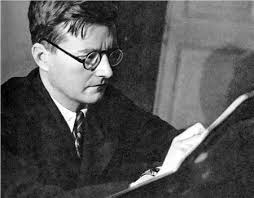
  • Shostakovich Reflected @ Chamber Music Society

    Images of D S

    Above: Dmitry Shostakovich

    Sunday November 23rd, 2014 – We seem currently to be in the midst of an impromptu Shostakovich Festival at the halls of Lincoln Center. Last night, the New York Philharmonic gave an epic performance of the composer’s 8th symphony under the baton of Jaap van Zweden. This afternoon, Chamber Music Society of Lincoln Center offered a very satisfying programme entitled Shostakovich Reflected, with works by Sibelius and Debussy mixed with a Shostakovch song cycle and his Trio #2. At the Metropolitan Opera, the composer’s LADY MACBETH OF MTSENSK is holding forth, conducted by James Conlon (I’ll see it on November 29th). In February, New York City Ballet will jump in with a revival of Christopher Wheeldon’s ballet, MERCURIAL MANOUVRES, set to the Shostakovich piano concerto #1. The Philharmonic meanwhile will offer two more Shostakovich symphones later in their season: the 5th (conducted by Long Yu, from January 22nd-24th, 2015) and the 10th (Alan Gilbert conducting; from April 8th-11th, 2015).

    At Alice Tully Hall today, Chamber Music Society‘s Shostakovich Reflected programme again left me searching for adjectives (superlatives, really) to describe the level of music-making by the participating artists: musicians who are rapidly becoming icons for me much as the great opera singers were back in my early days of opera-going in the 1960s and 1970s.

    The Sibelius Trio in G minor opened the programme today; this brief, single-movement work has a rather dark-hued, wintry feel. The music evokes a sense of longing but also of resignation. It’s unknown why Sibelius never enlarged upon this work beyond the opening movement, though he apparently made sketches, they were never developed. Yura Lee (violin), Mark Holloway (viola), and Jakob Koranyi gave a deeply-felt performance, establishing the mood so convincingly that one wanted it to go on. 

    Soprano Dina Kuznetsova then appeared for Shostakovich’s Seven Romances on Poems of Alexander Blok, with Gilbert Kalish at the Steinway, Yura Lee, and Mr. Koranyi. The soprano’s voice at first seemed overwhelming in the hall, but soon the proper balance was found and she and the musicians worked in a fine state of rapport, the vocal line now well-controlled with some very expressive dynamics. Mr. Kalish played with his customary mixture of finesse and passion, and both Ms. Lee and Mr. Koranyi displayed their intrinsic mastery of their instruments in songs where the accompanying voices take a prominent place. The audience reacted with great enthusiasm to this set, calling the artists back three times. 

    It’s always nice to find links to the ballet on programmes of symphonic or chamber music; this afternoon my friend Monica Wellington and I were especially pleased to hear Claude Debussy’s Six épigraphes antiques for Piano, Four Hands, which we both love in its danced incarnation at New York City Ballet: ANTIQUE EPIGRAPHS, a Jerome Robbins masterpiece with an all-female cast. Gilbert Kalish and Soyean Kate Lee shared keyboard, with much hand-crossing. Their refined playing evoked Nature and the rites and rituals of a long-lost tribe. 
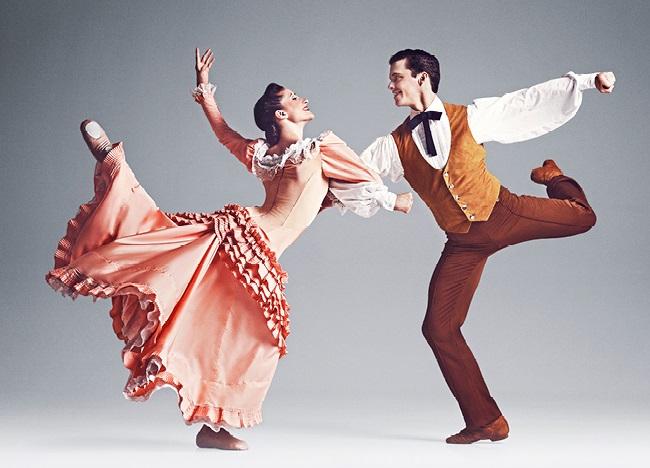
    The concert concluded with a thrilling performance of Shostakovich’s Trio No. 2 in E minor, composed fifty years after the opening Sibelius trio. This work opens with solo cello playing in the highest register; here Mr. Koranyi displayed incredible control. Violin and piano (the two Ms. Lees) join in a fugue; the underlying feeling is one of pensive melancholy, the playing from all three artists nothing less than ravishing. New themes rise up, and the music flows with much interchange of the three voices.

    The brisk and rather jagged scherzo that follows seems alternately joyous and frantic: a lively dancelike theme cascades along, played with marvelous virtuosity by our trio tonight. The piano ripples thru scale passages or emphatic rhythmic motifs; the violin and cello alternately pluck and sing.

    Yura Lee’s poignant introduction of the third movement’s lamenting theme set the tone for this Largo, with its heart of darkness. The voices melded in music which seemed to summon up the despairing tread of a funeral procession, the misty veil shot thru with glimpses of burnished light. 

    The finale sweeps aside this heavy sense of grief, yet proceeds under a threat of returning gloom. The pianist sets the music marching, and there’s more dance-rhythms as well; wit and humor are not forbidden, but are delivered with irony. The song-like theme of the first movement is recalled, setting up a continuum of memory even as the work plunges forward.

    I can’t say enough in praise of the three musicians who wrought this superb performance. And the  audience clearly shared my sense of deep appreciation: at the end, everyone stood up and cheered as the players were summoned back for repeated bows.

    The Program:

    The Artists:


  • Mozart & Shostakovich @ The NY Phil

    Jaap

    Above: conductor Jaap van Zweden

    Saturday evening November 22nd, 2014 – Venturing out after my off-again-on-again cold caused me to miss some events earlier in the week, I found tonight’s finely-contrasted programme at the New York Philharmonic both soothing (the elegant, melodious Mozart) and grandly stimulating (the epic Shostakovich). It was all played to perfection, under the baton of Jaap van Zweden.

    Mozart wrote his Sinfonia Concertante for violin and viola sometime in 1779; the work is cast in three movements in the traditional fast/slow/fast concerto style, the soloists backed by a neat ensemble of two oboes, two horns, and strings. Although one of the composer’s most popular works, this was my first chance to exprience it live.

    1415-1120b

    Above: Sheryl Staples, Cynthia Phelps

    To play this Mozart masterwork, NY Philharmonic principals Sheryl Staples (violin) and Cynthia Phelps (viola) stepped forward, much to the delight of the orchestra’s many fans. The two women struck up a lovely rapport, trading themes with silken assurance and harmonizing gracefully. Maestro van Zweden propelled the ensemble forces with stately finesse; he did not seem pleased that applause rose up after the first movement (which also happened, more annoyingly, during the Shostakovich). In the quiet radiance of the second movement, the Andante, Ms. Staples intones the opening melody which Ms. Phelps then takes up with an alto resonance. Throughout the work, the two women and the Maestro showed spot-on dynamic control and a mutual sense of phrasing that gave this listener great pleasure.

    The stage setting was then re-configured to accommodate the large forces called upon by Dmitry Shostakovich for his 8th symphony, written in 1943. The composer was ever falling in and out of favor with Communist authorities; his 8th was basically proscribed as having no artistic value. This ban lasted nearly a decade, after which the symphony began to find its way. Along with Shostakovich’s other symphonies, the 8th now stands at the center of the symphonic repertoire.

    Tonight’s large audience at Avery Fisher Hall were clearly enthralled to experience to piece which, in the course of its sprawling hour-long duration, veers from the bleak to the savagely intense to a darkly luminous introspection.

    The half-hour opening movement is a masterful tone poem in itself; embarking on a slow build-up, it leads to fiendish outcries by the horns, massive percussive waves which evaporate only to recoil and strike again, and a marvelous, plaintive cor anglais solo. The second movement, an ironic dance with a piping flute, is followed by a second scherzo-like movement, a militaristc polka with a massive unison theme. The Largo transports us to a shadowed realm; the solo horn emerges, then flute, then clarinet; the winds take on a flutter-vibe, the clarinet returns. In the concluding movement, bassoon, flute, and cellos sing forth in succession; big, brassy waves of calamity strike, then the deep brass voices hum as the bass clarinet brings further riches. Solo violin, cello, and bassoon take turns, returning to a satiny violin passage. The massive forces are now quietened to a shimmer as the cello and double bass gently persuade us that rest, if not peace, may finally come.

    Maestro van Zweden wrought this wondrous music into a sonic mural in which the horrors of war and deprivation, the Devil dancing with Fate, and the human spirit’s will to survive are painted in rich colours. The many solo voices to which Shostakovich gave such expressive opportunities displayed yet again the unfailing grace and musical stature of the Philharmonic artists.

    Jaap van Zweden continues his work with the Philharmonic in the week ahead with a programme that features the Beethoven 7th along with Hilary Hahn playing the Korngold violin concerto. Details here. As we left the Hall tonight with the audience was heaping cheers on the conductor, I of course was thinking how much I’d like to hear him conduct some Wagner.

  • At Jennifer Muller’s Studio

    L1510781

    Above: from Jennifer Muller’s MISERERE NOBIS, with dancer Shiho Tanaka in the left-foreground

    Thursday November 20th, 2014 – Celebrating the remarkable milestone of a 40th anniversary, Jennifer Muller/The Works invited friends of the Company to a studio showing tonight. Excerpts from five Jennifer Muller danceworks – plus a complete showing of her most recent creation, MISERERE NOBIS – were performed by The Works’ distinctive, dynamic dancers.

    L1510656

    Above: dancer Michael Tomlinson warming up

    The dances shown tonight ranged in date-of-creation from 2005 (ISLAND) to Jennifer’s current and wonderfully-contrasted successes MISERERE NOBIS and WHEW!  As with all the finest choreographers over time, she has delved deeply into the vast catalog of music: tonight alone we heard Allegri, Mozart, and Barber in tandem with such contemporary composers as Julia Kent, Peter Muller, and Marty Beller. One moment we are in church and the next we are being jazzed; this musical variety keeps everything at The Works fresh and vivid.

    In the intimate studio space, we the viewers come as close to dance as we are likely to get. The dancers of Jennifer’s company know this room so well that they are able to dance full-out without concern for spatial limitations. Big lifts, often a motif in Jennifer’s choreography, are often accomplished with just centimeters of head-room; but the dancers all seem to have a sixth sense of just how far they can take things.

    The programme was so well-devised, with Jennifer’s illuminating commentary between works just enough to give us insight without becoming too chatty. The dancing was vivid and personal. 

    L1510747

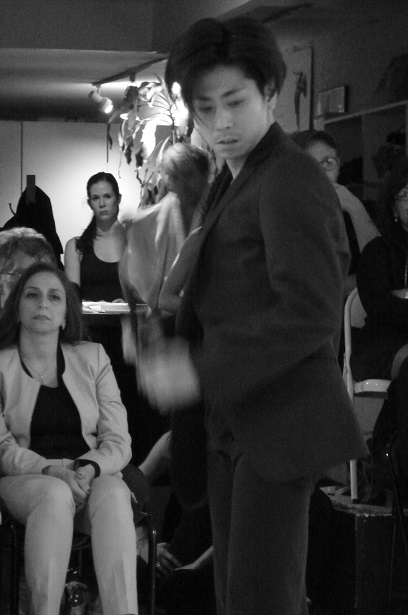
    I attempted to take some photos but most of the movement was too swift for me to capture. Gen Hashimoto (above) was briefly almost still in his beautifully-executed solo from ARIA, performed to the poignant “Dalla sua pace” from Mozart’s DON GIOVANNI.

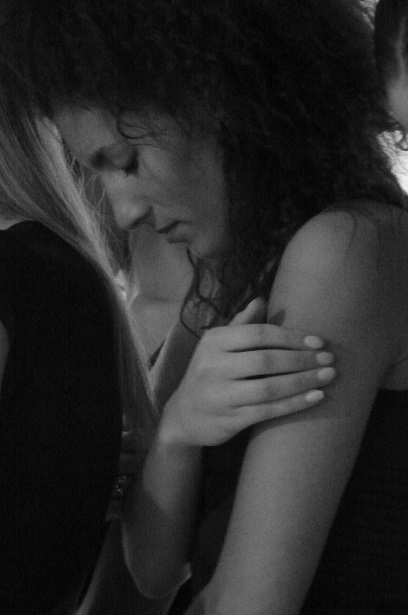
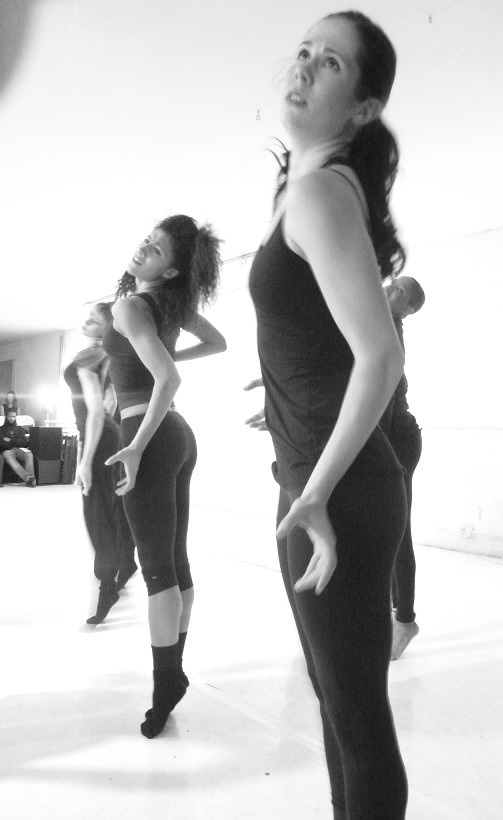
    Otherwise, my only successful images came from MISERERE NOBIS which happens to be a particular favorite of mine from among Jennifer’s works. Here are a few photos from this all-female ensemble work:

    L1510770

    L1510773

    Elise King

    L1510787

    L1510796

    L1510802

  • Preview: Ballet Hispanico’s CARMEN.maquia

    NIR_6757

    Above: Ballet Hispanico‘s Chris Bloom and Kimberly van Woesik in rehearsal for CARMEN.maquia  Photo: Nir Arieli

    Normally I don’t do previews of upcoming dance productions unless I’m planning to see them in performance. Ballet Hispanico‘s premiere presentation of Gustavo Ramirez Sansano’s CARMEN.maquia happens to fall on a night when I have tickets for the New York Philharmonic. But because I admire the Hispanico dancers so much (and their director, Eduardo Vilaro, is such a wonderful guy) I jumped at the chance to see a rehearsal today. I was so impressed with the work – for so many different reasons – that I have to send out the word: this is a must-see dancework. Ticket information for the November 22nd performance at the Apollo Theater here

    Luckily, photographer Nir Arieli was available to meet me and document the rehearsal today, which – as it turned out – was the first ‘costume-run-thru’ of the full work. I’m so grateful to publicist Michelle Tabnick for arranging things and to Ballet Hispanico‘s rehearsal director Michelle Manzanales for welcoming us to the studio.

    As a long-time opera-goer (yes, I even went to the Old Met!) Bizet’s CARMEN has been in my blood for over half-a-century, starting with my first experience of hearing the great Rise Stevens singing the ‘Habanera’ on an old LP my parents owned. I know all the music intimately…and 99% of the words, which I found myself singing along today.

    I don’t want to give away any secrets, but Mr. Sansano takes a non-literal stance towards the opera’s score for his new ballet, and he even incorporates music from other Bizet works. One interpolation in particular was truly daring, but I’m not going to spoil the surprise. In terms of relating to the story as told in the Bizet opera, we have dancers representing Carmen, Don Jose, Escamillo, and Micaela as well as smugglers, cigarette girls, and soldiers. But the choreographer makes some stunning re-assignments of music normally associated with one scene in the opera to a different situation in his ballet. For example…no, wait…you’ll have to go and find out for yourself!

    In fact, I should not really say anything more lest I say too much. But I will mention that the black-and-white costumes are inspired by Picasso’s drawings, and that the personifications of the main characters by the marvelous Hispanico dancers transcend steps, acting, and music to create living, breathing men and women who wear their passions proudly. The work is provocative in so many different ways, from the aforementioned musical placements to the characterizations of the major players (they don’t always fit our stereotyped ideas), and even a bit of nudity.

    So, rather than let too many cats out of the proverbial bag at this pre-premiere stage, I’ll share with you some of Nir Arieli’s rehearsal images. I had a terrible time deciding which ones to include, because I wanted to post them all. 

    NIR_5132

    Kimberly van Woesik (Carmen)

    NIR_6211

    Kimberly van Woesik and Chris Bloom (Don Jose)

    NIR_6024

    Mario Ismael Espinoza (Escamillo)

    NIR_5369

    Min-Tzu Li (Micaela) and Chris Bloom

    NIR_6612

    Min-Tzu Li and Chris Bloom 

    NIR_4851

    Melissa Fernandez

    NIR_4887

    Jessica Alejandra Wyatt

    NIR_5721

    Jamal Rashann Callender

    NIR_5762

    Joshua Winzeler, Johan Rivera Mendez, and Lauren Alzamora

    NIR_5020

    Christopher Hernandez and Marcos Rodriguez

    NIR_6271

    Martina Calcagno

    NIR_6668

    Johan Rivera Mendez and Marcos Rodriguez

    NIR_6334

    The ensemble

    NIR_6596

    Min-Tzu Li and Chris Bloom

    The following images are from a duet for Carmen and her toreador: Kimberly van Woesik and Mario Ismael Espinoza:

    NIR_6042

    NIR_6068

    NIR_6074

    NIR_6084

    All photography by Nir Arieli.

  • Dvořák/Schubert/Chausson @ CMS

    Ani-kavafian.jpg.pagespeed.ce.EDRXV6ZGFP

    Above: violinist Ani Kavafian, celebrating an important anniversary at CMS this season

    Sunday November 16th, 2014 – A concert both musically and emotionally rewarding at Alice Tully Hall today as Chamber Music Society of Lincoln Center presented works by three composers. In her welcoming speech, the Society’s co-Artistic Director Wu Han announced that the scheduled violist, Lawrence Power, would be unable to appear due to illness; in his stead, Matthew Lipman – slated to join CMS 2 next season – stepped in, making an immediate and very favourable impression in the concert’s opening work.

    The old letter in my book“, the first of four songs from Antonin Dvořák’s Cypresses which commenced the programme, gives the melody to the viola, and Mr. Lipman’s playing showed both winningly mellow tone and warmth of expression. In the company of seasoned chamber artists, he seemed entirely at home. The prominent violin passages in “Death reigns in many a human breast” and “You ask why my songs”  were played suavely by Ani Kavafian, celebrating her 35th season with Chamber Music Society. In “When your sweet glances on me fall“, Areta Zhulla (violin 2) and Gary Hoffman (cello) added their luxuriant voices to those of Ms. Kavafian and Mr. Lipman in a resonant meshing of timbres.

    172982_750

    Mr. Lipman (above) returned with Mlles. Zhulla and Kavafian, cellist Nicholas Canellakis, and double-bassist David Grossman for a poetic rendering of Dvořák’s Nocturne in B-major. Here Ms. Zhulla spun out a silken thread of lullabye whilst Mr. Grossman’s double-bass gently indicated the music’s heartbeat. In a rich blend of inner voices, Ms. Kavafian and Mssrs. Lipman and Canellakis sustained the atmosphere of reverie with their dreamy lyricism.

    F3f9ab_fad926d58fd0409da7bbd12fbd6428ab.jpg_srz_p_325_454_75_22_0.50_1.20_0.00_jpg_srz

    Above: Areta Zhulla

    While Schubert’s ‘Trout‘ quintet was undoubtedly a major draw for music-lovers today, it was a soul-stirring performance of Ernest Chausson’s Trio in G-minor that most truly moved me. Chausson’s music with its deep-lilac perfume always gets under my skin, and this trio is particularly affecting in its melodic allure and its build-up to rhapsodic climaxes.

    Th

    Keyboard magician Inon Barnatan (above) cast a spell over the hall right from the start, with the misterioso opening of the trio elegantly intoned. As the work progresses, Ms. Zhulla and Mr. Canellakis sustained the feeling of rapture, their impassioned playing expanding the impression of yearning and melancholy in the third movement. Together they crafted an intensely rich sound, giving the illusion of a larger ensemble. Their heartfelt playing, and Mr. Barnatan’s evocatively nuanced piano line, really drew me in.

    8917fb601b89466fecca47f46bfa9edc.wix_mp_1024

    Above: Nicholas Canellakis

    As the Chausson surges forward in the waltz-like final movement, romantic tides rise up and we feel an expectation that things may end on an upbeat note; yet instead the composer takes a plunging chromatic descent into the darkish realm of the trio’s somber opening. The audience, having been held in the thrall of the three superb musicians, erupted in a gale of applause, recalling the players for an extra bow.

    For the programme’s finale, the Schubert “Trout“, Ms. Kavafian took the lead; Mr. Barnatan really went to town here, showing sparkling virtuosity. Matthew Lipman, Gary Hoffman, and David Grossman defined the music’s inspiring textures with a genial sense of community. The Theme and Variations section, based on that enduringly popular Schubert song “Die forelle” was especially gratifying, and the sold-out house seemed thoroughly engaged by this famiiar and ever-welcome masterpiece.

    The Repertory:

    The Artists:

  • Eryc Taylor Dance: New Choreography

    10488074_10152831497854666_2393990510578167467_n

    Saturday November 15th, 2014 – Eryc Taylor Dance, Inc. presented an evening of danceworks by the three recipients of the 2014 ETD New Choreography Grants: Daniel Holt, Ana C. Sosa, and Eryn Renee Young. The performance took place at the Martha Graham Dance Center on Bethune Street.

    Glancing out the window of the big Graham studio/theater while waiting for the performance to begin – the Empire State Building looking all silvery and shining – I was thinking of all the wonderful hours I have spent there in the past few years. In his opening remarks, Eryc Taylor expressed a similar affinity for the space where he worked with Merce Cunningham for five years.

    And then the dancing began.

    Eryn Renee Young’s Symphonie Miroir opened this concert of three well-contrasted works. To percolating music by Bela Bartok, the work commences with the girls (on pointe) in a diagonal; the music – plucked and skittery – sets off the dancers in contemporary stylings of classic ballet vocabulary. Isaac Owens, the group’s lone male, dances a dynamic pas de trois with Jasmine Chiu and Jacline Henrichs. A musical ‘explosion’ ignites the finale, a pas de sept which features pose-striking and breaking down the group into sub-units, with brief solo passages assuring that all the dancers have their chance to shine. Building a pulsing finale, there’s a sudden unexpected lull as the music turns a bit spacey; then a push onward to the finish. Ms. Young’s choreography showed a fine sense of exploring space and a knack for visual polyphony. And she gets extra roses and champagne for choosing Bartok.

    Ana Sosa danced in her own work, The Logical Road to Insanity, with a quartet of fellow dancers who  all seemed so young. Ms. Sosa chose some interesting vocal music, from Fleet Foxes and Cocorosie, which included ear-tweaking harmonies. The quintet of dancers work in-sync, with occassional passages of solo work, notably a somewhat B-boyish moment for Cesar Brodermann. Ms. Sosa’s accomplished use of floor work and of a gently ironic tip-toeing motif underscored the signs of impending mental collapse among the dancers; at one point the music goes totally looney, and the choreographer’s fleeting self-solo showed her on the brink of madness. It was all done well, and performed with commitment by the youthful cast, right down to the silent ending.

    Daniel Holt, that charismatic Dirty dancer, brought out a trio of girls to dance with him in Bermuda. They all wore black shorts, bright-coloured cartoonish tank tops, and black socks. Things start casually, almost slow-mo, and then a grinding beat develops. Spastic synchronized movement with breakout solos and detached walkabouts underscore the complex approach-avoidance relationships of the foursome, all laid out with raw physicality. They collapse, but rise again for the work’s most haunting passage – an entangled quartet set to Owain Phyfe’s recording of ‘La prima vez: a highlight of the evening.

    Pressing onward to a dark, dense beat, there are stylized clusters, escapes, and outright antagonism. Then the music suddenly takes on a celestial quality, with a deep bass underglow, as the dancers – in spastic gestures – attempt to communicate. But this dissolves in the end, and one of the girls gives Daniel the finger…which he kisses.

    ‘La prima vez’ translation:

    “The first time I saw your eyes
    I fell in love with you.
    I loved you from that moment
    And until the grave, I will love you.
    Come close to me, my dear one,
    You have saved me.
    Discover me and tell me/open yourself and tell me
    Your life’s secrets.”

  • Joshua Bell & The NY Philharmonic

    Joshua-bell_s345x230

    Thursday November 13, 2014 – Violinist Joshua Bell (above) plays the Glazunov violin concerto in a series of five concerts with The New York Philharmonic. Case Scaglione takes the podium for these performances, which also features Debussy’s Afternnoon of a Faun and Prokofiev’s symphony #5.

    My friend Monica and I attended the second evening of the programme; since we are both passionate ballet enthusiasts, we very much enjoyed experiencing the Debussy in a concert setting; we have often seen the Jerome Robbins setting of the work at New York City Ballet, and recently Boston Ballet brought their ‘original’ version to Lincoln Center.

    One of the composer’s most famous works, Claude Debussy’s Prélude à l’après-midi d’un faune referred to in this evening’s Playbill by its English title – premiered in 1894. The work is considered a turning point in the history of music: Pierre Boulez once said he considers the score to be ‘the beginning of modern music’. Tonight the Philharmonic gave a beautifully shaped rendering of this sensuous piece, which commences with the languid flute theme. Individual voices emerged dreamily from the overall soundscape and Debussy’s alluring colour scheme was indeed seductive. Neither Monica nor I could recall having previously heard the gentle chime of a triangle near the end of the piece; it seemed very prominent tonight. Case Scaglione rightly summoned the Philharmonic’s principal flautist, Robert Langevin, for a solo bow during the warm applause that greeted this opening work.

    Composer Alexander Glazunov (1865-1936) managed to endure ten years in Russia following the Bolshevik Revolution; he fled to Paris in 1928. His compositions from that point on are considered less impressive than his earlier works which include the richly melodic score for the ballet RAYMONDA, a suite from which was recently featured in ABT’s Autumn season at Lincoln Center.

    The violin concerto, Glazunov’s most frequently-performed work, was composed it in 1904. It is dedicated to, and was premiered by, the great Hungarian violinist Leopold Auer, the teacher of Heifetz, Milstein, and Elman, among others. Glazunov casts this concerto in an unbroken arc, with the three vari-paced movements subtly linked. A virtuosic cadenza carries us to the exuberant finale in which the soloist dazzles against a tapestry of orchestrated fireworks.

    Joshua Bell, taller than I had imagined and retaining a youthful energy of demeanor in his mid-40s, displayed the warmth of tone and the clear shimmer of upper-range diminuendo that are hallmarks of his playing. I was a bit surprised to note that he was using a score, but he handled it with casual assurance. Creating a fine rapport with conductor and musicians, Joshua drew the succession of themes in the opening movement into long, impeccably turned phrases; in the almost frantic pacing of the final allegro, he seized upon the sparkling coloratura passagework with thrilling dexterity. The crowd called him out for a well-deserved solo bow.

    After the interval, the Prokofiev: he wrote his fifth symphony during the summer of 1944, while staying at a dacha in the countryside outside Moscow. Having stored up his musical ideas over time, he wrote with speed and surety. The symphony was first performed in Moscow in January 1945 with the composer conducting.

    The first movement is dense of texture and thick with themes: there are five distinct tunes to be discerned, and the composer integrates them with skill. The movement closes on a grandiose note; I must say I wasn’t totally enamoured of this opening andante; it seemed a bit turgid and over-extended. But thereafter, the Prokofiev I have come to love was very much in evidence. The second movement in particular is a great delight with its relentless forward motion decorated by interjections of wit and melodic irony. The tempo gradually accelerates, almost to the point of veering out of control.

    The adagio conjures up the blend of unhappy romance and wistful tenderness we associate with the composer’s ROMEO AND JULIET, with a turbulent central passage. Then on to the final Allegro giocoso, where we again find Prokofiev at his most inventive, opening with an echo of the first theme of the first movement, and then a passage for the clarinet – Prokofiev at his most magical – superbly voiced by principal Anthony McGill. The symphony plunges forward to its conclusion, re-affirming the composer’s fixed positon in my constellation of favorite composers.

  • Celebrating 70 Years of APPALACHIAN SPRING

    Masha lloyd hibbard nash photo

    Above: Mariya Dashkina Maddux and Lloyd Mayor in Martha Graham’s APPALACHIAN SPRING; photo by Hibbard Nash

    Thursday October 30th, 2014 – Friends of the Martha Graham Dance Company gathered this evening at the Company’s home space on Bethune Street to celebrate the 70th birthday of the great American dance classic, APPALACHIAN SPRING. The event, Appalachian Spring Up Close and Personal – a complete performance of APPALACHIAN SPRING in costume and with the classic Noguchi set pieces – came on the exact 70th anniversary of its premiere, October 30, 1944.

    This once-in-a-lifetime event also featured film clips and projected photographs from the premiere, and a spoken introduction with quotes from Martha Graham’s correspondence with Aaron Copland at the time of the ballet’s creation. Mariya Dashkina Maddux headed the cast in Graham’s role of The Bride. She was joined by Lloyd Mayor, Natasha Diamond-Walker, Lloyd Knight, Xiaochuan Xie, Ying Xin, Charlotte Landreau, and Lauren Newman. This was my first opportunity to see Masha, Natasha, and Lloyd Mayor in these roles; Lloyd Knight repeated the role of the Preacher in which he was wonderfully cast during the Company’s City Center season earlier this year.

    This brief film features some of the dancers who have performed the principal roles in this ballet over the years.

    Janet Eilber, the artistic director of the Martha Graham Dance Company, is always such a wonderful hostess at Company events. Her speaking voice falls pleasingly on the ear and the information she imparts is always meaningful and illuminating to the dance we are about to see. This evening, Janet’s voice faltered tearfully as she spoke the names of the immortal dancers who first performed APPALACHIAN SPRING seventy years ago: Martha Graham, Erick Hawkins, May O’Donnell, and Merce Cunningham. 

    And then APPALACHIAN SPRING unfolded before us in all its heartfelt glory, the dancing taking place just a few feet away from us. The timeless simplicity of the Noguchi setting tells us immediately where we are; and for tonight we seemed in fact to be very much a part of the action, like observant guests at the wedding.

    Mariya Dashkina Maddux gave a powerfully poetic interpretation of the role of The Bride, her eyes shining and filled with hope, her body fluently expressive. Lloyd Mayor’s Husbandman danced with a spacious energy that could fill the Great Plains. In both the expansive and the intimate moments of this role, Lloyd’s handsome presence was captivating. Together Masha and Lloyd brought all the hopes of youth and forward-looking courage to their portrayals of this iconic couple.

    Natasha Diamond-Walker, lithe and elegant of posture and surpassingly fair of face, danced vividly as the Pioneering Woman. The strength of her dancing matches the character’s strength of virtue, yet Natasha was also deeply feminine in her portrayal and in her womanly rapport with Masha’s young Bride. Lloyd Knight’s Preacher was a powerful force in his stillness and a dynamic force when he danced. His vivid delineation of the steps underscored the great demands Graham puts on her dancers: technique and theatrical nuance must mesh in perfect balance. These demands extend to the quartet of Followers –   Xiaochuan Xie, Ying Xin, Charlotte Landreau, and Lauren Newman – who have a great deal of tricky dancing to do, though we tend to view them more for their decorative loveliness.

    The performance overall marked one of the most engrossing and meaningful dance experiences in my long ‘career’, in part because of the intimacy of the setting, and also because of the sense of dance as a resonating continuum that draws us ever back into the past whilst time and the universe sail inevitably forward. Evenings like this serve as illuminated markers on our journey.

    In a beautiful gesture at the end of the performance, the Lloyds (Mayor and Knight) presented bouquets to Janet Eilber and to Denise Vale, the Company’s senior artistic associate. Both Janet and Denise have danced the Pioneering Woman in APPALACHIAN SPRING, and thus the sense of lineage in the realm of Graham was graciously underscored.

  • BalletCollective @ The Skirball

    Troy Schumacher, by Matthew Murphy

    Above: Troy Schumacher, photo by Matthew Murphy

    Wednesday October 29th, 2014 – The dancing tonight as Troy Schumacher’s BalletCollective opened at The Skirball was fantastic. Drawing from the roster of his resident Company, New York City Ballet, Troy presented an ensemble of dancers with spectacular technical and communicative gifts.

    The program opened with the impulse wants company (premiered in 2013), set to a score by Ellis Ludwig-Leone, and drawing inspiration from a poem by Cynthia Zarin. The music was played live (as in fact was the entire programme) the contemporary ensemble Hotel Elefant

    BALLET_COLLECTIVE, Claire Kretzschmar, by Matthew Murphy

    Above: Claire Kretzschmar, photo by Matt Murphy

    Long-limbed and with an innate sense of the dramatic, Claire Kretzschmar launched the evening in a solo passage. This distinctive NYCB ballerina really made her mark tonight, Troy’s choreography showing her off to fine effect in both the opening and closing works. (Meet Claire in this video, in which the Collective’s Taylor Stanley also appears.) She is soon joined by Ashley Laracey, Lauren King, Meagan Mann, David Prottas, Taylor Stanley, and Troy Schumacher. This dynamic group  highlighted Troy’s inventive choreography with propulsive energy mixed in with moments of pensive repose. A spectacular solo by Taylor Stanley left me feeling awestruck. 

    BC, Blackbirds, Ashley Laracey, Troy Schumacher, by Matthew Murphy

    Above: Ashley Laracey and Troy Schumacher, photo by Matt Murphy

    Following the interval, the premiere of a new duet, dear and blackbirds, was danced by Ashley Laracey and Troy Schumacher to music by Ellis Ludwig-Leone; again, a poem by Cynthia Zarin was the frame of reference. Troy had not originally planned to dance in the performance this evening, but he stepped in on short notce after a colleague sustained an injury. This pas de deux had a Jerome Robbins flavour, the couple exploring the possibilities of mutual interest, alternately hesitant and impetuous. Romantic partnering with touches of playfulness give way to the two dancers trading short phrases. Ashley Laracey displayed the lovely qualities of lyricism that have kept her shining in my dance firmament since I first saw her onstage.

    BC, ATWS, Taylor Stanley, by Matthew Murphy

    Above: Taylor Stanley, photo by Matt Murphy

    In all that we see, the addition of wind players to the strings and piano gave the sonic landscape a fresh vista. Meagan Mann, Lauren King, Claire Kretzschmar, David Prottas and Taylor Stanley all danced exceptionally well. Claire again made superb use of the space and she has a restless angularity that draws the eye. There’s a very nice duet for Lauren and Taylor, and Meagan at one point enters in a tip-toeing motif, adding a sense of mystery. David and Taylor came face to face in a dramatic moment: I thought they might punch each other…or kiss. 

    In an evening so well-danced and featuring choreography which reaches for new combinations in a familiar vocabulary, a lack of contrast in the musical settings was a minor drawback. The composer of all three works has definite skill and his music is appealing, yet a whole evening of it doesn’t quite hold up. The musicians of Hotel Elefant were excellent and warmly acknowledged by the audience.

    The Skirball stage was stripped back to the bare back wall and wings, giving the ballets an industrial look. The lighting design produced some striking moments, but at times the dancers were too heavily shadowed. The costuming had an every-day feeling in the first two works; a credit to artist David Salle for painting the clothes for all that we see piqued my curiosity but from where I was sitting I couldn’t get a feel for his work. The big projections that were a key element in the Collective’s inaugural presentations weren’t part of the current presentation, but the dancers and the dance successfully held the stage in this rather stripped-down setting. The evening drew a real New York dance crowd, laced with celebrities and keen in their attentive focus.

    All photography by the marvelous Matthew Murphy.