Blog

  • Benedetti/Jurowski @ The NY Phil

    Vladimir_Jurowski

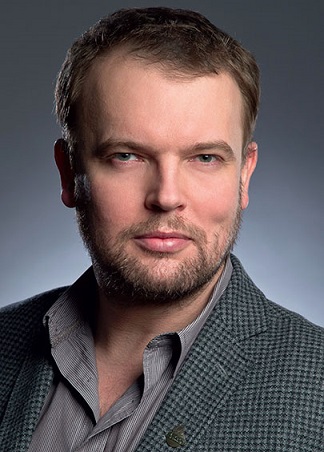
    Wednesday May 21, 2014 – Vladimir Jurowski (above, in a Matthias Creutziger photo), who led a series of very impressive performances of Strauss’ DIE FRAU OHNE SCHATTEN at The Met earlier this season, was on the podium at Avery Fisher Hall tonight for his New York Philharmonic debut. The programme featured works by Szymanowski and Prokofiev. In the days just prior to tonight’s concert it was announced that the scheduled violin soloist, Janine Jansen, was indisposed and would be replaced by Nicola Benedetti.

    Arts_ents_benedetti__33199b

    Ms. Benedetti (above) hails from Scotland, of an Italian family. She trained at the Yehudi Menuhin School in Surrey and she maintains a full calendar of orchestra, chamber music, and recital engagements worldwide. A Decca recording artists, Ms. Benedetti takes an active role in music education and outreach. Tall and strikingly attractive, she was welcomed warmly by the NY Phil audience tonight following her excellent playing of the Szymanowski violin concerto #1. This was her Philharmonic subscription debut.

    Karol Szymanowski wrote this concerto #1 in 1916. In the course of his musical career, this Ukraine-born but definitively Polish composer progressed from a Late Romantic style of writing thru an embrace of Impressionism (and a flirtation with atonality) to a later period when folk/national music became a strong influence.

    Szymanowski’s violin concerto #1, often referred to as the “first modern violin concerto”  leaves aside the customary three-movement concerto structure and instead unfolds as a tone poem with the violin ever-prominent. Tonight’s performance was entrancing from start to finish, Ms. Benedetti showing great control in the sustained upper-range motifs that permeate the violin part: here she was able – at need – to draw the tone down to a silken whisper. The composer further calls for some jagged, buzzing effects as well as flights of lyricism from the soloist; a long cadenza requires total technical mastery. Ms. Benedetti delivered all of this with thoroughly poised musicality. Meanwhile the orchestra, under Maestro Jurowski’s baton, paints in a brilliant range of colours, periodically breaking into big melodic themes that have an almost Hollywood feel. Both the piece and tonight’s performance of it were thrilling to experience, and Ms. Benedetti truly merited her solo bow and the enthusiastic acclaim of both the audience and the artists of the Philharmonic.

    Following the intermission during which my friend Monica and I were enjoyably chatted up by a young reporter from the Times of London, Maestro Jurowski led a one-hour suite of selections from Prokofiev’s ballet CINDERELLA. This is a ballet I’ve never seen in live performance, though the music’s familiarity comes as no surprise. Tonight’s sonic tapestry of excerpts allowed us to easily follow the narrative, and the Philharmonic musicians gave full glory to the rhapsodic waltzes while individual players took advantage of the ballet’s numerous colorful, characterful solo vignettes. The marvelous, ominous tick-tock leading up to the stroke of midnight and the ensuing mad dash were all terrific fun. The score, full of romance, humour, and irony – and the charming introduction of maracas – provided a superb debut vehicle for Maestro Jurowski. Let’s hope he’ll be back at Avery Fisher Hall soon. And Ms. Benedetti as well.

  • Balanchine’s “Davidsbündlertänze” @ NYCB

    C37708-3_Davidsb_LaraceySuozzi

    Above: Ashley Laracey and Sean Suozzi in Robert Schumann’s Davidsbündlertänze, photo by Paul Kolnik

    Tuesday May 20, 2014 – Created in 1980, George Balanchine’s setting of Robert Schumann’s Davidsbündlertänze was one of the choreographer’s last works. It’s a unique ballet, deeply moving in its depiction of the composer Robert Schumann’s descent into madness. 

    During the winter of 1854, Schumann’s developing insanity took a dramatic turn: he began hearing “angelic” voices which evolved into the bestial cries of wild animals. One February morning he walked to a bridge over the Rhine and threw himself in; he was rescued by fishermen. Schumann himself asked to be institutionalized, to prevent his becoming a burden on his wife, Clara. He was placed in a sanatorium. His doctors prevented Clara from seeing him for more than two years, until days before his death.

    The Rouben Ter-Arutunian setting for this ballet, which has an antique look, surrounds the dancing area with gauzy curtains. The backdrop shows a body of water – perhaps alluding to Schumann’s attempt to drown hmself – and a far-shining cathedral hovering in the sky, the source perhaps of the “angelic” voices summoning the composer. At one point, mysterious figues all in black and holding large quill pens appear: these represent the Philistines, whose admonishing writings were poised to oppose art or innovation in the arts and against who the Davidsbündler (the League of Davidthe composer’s imaginary society of artists) took a firm stance.

    The ballet, danced by four couples, seems to depict various phases of the relationship between Schumann and Clara; it may also hint as certain aspects of Balanchine’s many romances. In Suzanne Farrell’s book, Holding Onto The Air, the great ballerina says that Balanchine never told her what Davidsbündlertänze was “about” during the course of the ballet’s creation. It wasn’t until later that she made the connection to Schumann’s own life.

    Suzanne Farrell came very much to mind tonight in the ballet’s opening duet, for Rebecca Krohn reminded me more than ever of Farrell, who was of course Balanchine’s longtime muse. Partnered by the dashing Zachary Catazaro, Rebecca’s sweeping lyricism and the communicative range of her expressions and gestures kept me riveted to her throughout the ballet. This was Farrell’s role (the girl in blue) at the ballet’s premiere and – like Suzanne – Rebecca may eventually take on the “Clara” role (the woman in white). Tonight her dancing was spell-binding.

    C37699-15_Davidsb_Krohn

    Above: Rebecca Krohn in Robert Schumann’s Davidsbündlertänze, photo by Paul Kolnik

    This evening’s entire cast in fact were new to this ballet, having all debuted in it together the previous week. Continuing to make a vibrant effect in each new assignment, Ashley Laracey was at her most delightful here…impetuous, charming, and dancing so very well. Sean Suozzi, who always brings his own distinctive energy to each role he undetakes, was her excellent cavalier. Tyler Angle, dancing with space-filling generosity and fineness of line, courted Tiler Peck with gentle urgency. Tiler, who to my mind seems to move from one pinnacle to another in the progress of her career, was just spectacular, her lush swirls of pirouettes radiating confidence and grace.

    In her portrait of Clara, Teresa Reichlen, so elegant in her presence and so refined in her line and port de bras, strove poignantly to comprehend the changes that were overtaking her beloved. Her attempts to draw him back to her embracing tenderness became increasingly desperate, and Tess at the end must finally accept their parting: in an exquisite moment, she bows her head in silent grief as the light fades.

    In a major career leap, the tall and poetic Russell Janzen’s portrayal developed a melancholy acceptance of Schumann’s tragic destiny. At the end of his very first duet with Tess, Russell’s visage showed an early indication of madness with a far-away look. These momentary drifts away from reality eventually overtake him, and at the end of the ballet he withdraws with an expression mingling fear and resignation. Earlier, Russell’s solo – set to the score’s most haunting melody – was beautifully danced.

    C37701-8_Davidsb_Janzen_Crop1

    Above: Russell Janzen, with Cameron Grant at the piano, in Robert Schumann’s Davidsbündlertänze, photo by Paul Kolnik

    Cameron Grant, seated at the onstage grand piano, played the Schumann score with clarity and with tempos that seemed to propel the dancers while allowing them opportuniy for nuance. 

    Just as singers have sometimes told me they can’t sing anything after performing Franz Schubert’s “An die Musik”, it’s difficult to imagine watching (or dancing in) another ballet after Davidsbündlertänze, such is the haunting atmosphere it creates. And so I didn’t stay beyond the intermission: even going out to the Promenade seemed too hasty a return to reality. I was in a very subdued mood, and glad of a peaceful train ride home to reflect on the beauty of Schumann and touching artistry of tonight’s dancers.     

    ROBERT SCHUMANN’S “DAVIDSBÜNDLERTÄNZE”: Reichlen, Krohn, Laracey, T.Peck; Janzen, Catazaro, Suozzi, T. Angle [Solo Pianist: Grant]

  • Chamber Music Society/Season Finale

    Gilbert-kalish-8f09f8a16f90e3f2

    Above: pianist Gilbert Kalish

    Sunday May 18th, 2014 – With this concert of works by Mendelssohn and Brahms, the current season of Chamber Music Society of Lincoln Center at Alice Tully Hall came to a close. The Society’s programs – and the roster of incredible musicians they are able to draw from – have made CMS a key element in my musical life. It’s almost like going to church, but even more meaningful.

    Gilbert Kalish is such a pure musician. Nothing clutters up his delivery; he sits down and plays, opening a direct conduit between composer and listener. Kalish’s virtuosity is so assured and the emotive qualities of his playing so genuine that the music comes vividly and memorably to life. He opened today’s concert with a selection from Mendelssohn’s Lieder ohne Worte (‘Songs Without Words’); composed between 1829 and 1845, these melodious miniatures were published in eight volumes. Mr. Kalish’s sampler of four of the songs covered the 15-year compositional span and were performed with astute dynamic contrasts and a lovely lightness of touch.

    Waiting for the stage to be set for the string players, my friend Adi and I discussed which of the program’s two composers we preferred, and whether we’d rather take the music of Mendelssohn or that of Brahms to the proverbial desert island. I chose Mendelssohn – the man who wrote my very favorite chamber works (his piano trios); and a few minutes later, as the playing of the adagio from the Quintet #2 moved me to tears, I knew I was right. (Adi sided with Brahms…)

    The Mendelssohn Quintet #2, composed in 1845 – rather near the end of Mendelssohn’s too-brief lifetime – shows the composer’s continuing attachment to the Classicism of Mozart or Haydn while coloristically venturing deeper and deeper into the Romantic territory. It is perhaps his occupying this very bridge between two great eras in musical history that makes Mendelssohn so intensely appealing.

    The cellist Paul Watkins gave the music a velvety weight, and Arnaud Sussman took the viola 1 line with some lovely nuances. Violinist Philip Setzer and violist Richard O’Neill provided the inner voices – Mendelssohn keeps all the players singing throughout. For all the joy and clarity of the outer movements, it’s the adagio that gives this work its very special appeal. Here, violinist Shmuel Ashkenasi provided truly ravishing ascending phrases, soaring over the harmonies with poignant beauty of tone. This was the cause of my weeping today.

    After intermission, Mr. Kalish was again at the Steinway for two Brahms Intermezzi – pensive, bordering on melancholic – which bracketed his splendidly agile playing of the Capriccio in G-minor (Opus 116) where his dexterity took us on a whilrwind ride, letting us catch our breath in the melodic central passage. Again, his connection to the music and the deep sincerity of his playing were much appreciated.

    For the Brahms G-major Quintet (Opus 111), Mr. Setzer took the concertmaster post and all five of the musicians invested this music with glowing tone and intrinsic technical mastery. When Brahms submitted this quintet to his publisher in 1890, the score was accompanied by a message in which the composer suggested that this would be his final work. Fortunately he went on composing, producing several masterworks in the ensuing seven years until his death.

    48849_750

    Above: violist Richard O’Neill

    The Brahms G-major Quintet features a prominent role for viola 1, and today Richard O’Neill’s passionate playing was as inspiring to behold as to hear: gorgeous tone, impeccable technique. Reading up on Mr. O’Neill’s background, I came across this quote: “To violist Richard Yongjae O’Neill, music is like a religion in which Mozart and Beethoven are gods.” No wonder I feel such a connecton to his playing: we’re worshipers at the same altar.

    This evening’s participating artists:

  • All-Robbins @ New York City Ballet

    Wendy-Henry-Leutwyler-©-2010

    Above: Wendy Whelan, photo by Henry Leutwyler

    Saturday May 17th, 2014 (evening) – My first opportunity to see Wendy Whelan dancing since her return to the stage following surgery. She danced tonight in Jerome Robbins’ GLASS PIECES. I can’t begin to tell you how much I’ve missed her; at least I had the pleasure of running into her a few times in the interim.

    From the moment she appeared tonight, seemingly floating into view in Adrian Danchig-Waring’s big, beautiful hands, everything suddenly seemed right with the world again: the rift in the time-space continuum was sewn up, clocks started ticking again, the lights came back on. This is what’s been missing these past few months, why everything has seemed ever-so-slightly awry. Wendy’s been such a symbol for me of my whole New York Experience, of my dream that came true; seeing her dancing again was like an affirmation of faith.

    She and Adrian cast a spell over the crowd in their mesmerizing, other-worldly duet. With their stylized gestures, they speak to us over the trance-like repetitive musical motif. We are drawn into their parallel universe, and it’s breath-taking to behold. Beautiful creatures. 

    If their pas de deux could have gone on and on I would have been content, but as Wendy is gently borne away the jungle drums begin to beat. And who is this tall, handsome demi-god who comes wheeling into view? It’s Russell Janzen, and he’s coming into his own at NYC Ballet now: Barber Violin Concerto this past February, and now he’s been cast in the lead role of Davidsbundlertanze, which I hope to see in the coming week. He looked fantastic tonight, leading off the third movement of the Glass. 

    Earlier, in the ballet’s opening segment, the three ‘angels-among-us’ couples were Ashley Laracey with Daniel Applebaum, Meagan Mann with Joseph Gordon, and Emilie Gerrity with Andrew Scordato. They all look wonderful, and Mr. Gordon is stepping up nicely in each assignment.

    Clothilde Otranto was on the podium tonight, and for the Prokofiev score of OPUS 19/THE DREAMER, she had City Ballet’s excellent concert-master Kurt Nikkanen spinning out the music, by turns tranquil and restless. Speaking of gods, Gonzalo Garcia certainly looked divine and his dancing was powerfully expressive. Sterling Hyltin has just debuted in this ballet and she makes a vibrant impression; the ballerina here is not always dreamy – she has some jagged, almost harsh moments mixed in – and Sterling handled these transitions with compelling musicality.  She and Gonzalo looked superb throughout; the ballet ends in its iconic pose with the dancers resting their heads gently in one another’s open palms. Quiet murmurs from the crowd as the music faded indicated that OPUS 19 had again bewitched us.

    Several newcomers to the cast of THE CONCERT were enough to keep me in the theatre for this ballet, one that I often skip out on. Good thing I stayed, because it was a genuinely great performance. Pianist Elaine Chelton not only played the Chopin selections very well indeed, but entered into the drama with gusto. Sterling Hyltin was back in a role as different from OPUS 19 as one could imagine; she is as fine a comic muse as she is a lyrical one. Joaquin de Luz was perfect as the hen-pecked husband who finally rebels, and Lydia Wellington debuted in the role of the wife – which has been so memorably undertaken by Delia Peters and Gwyneth Muller – and made it her own: Lydia’s timing was spot on, and her facial expressions were a characterful delight. I hardly recognized Troy Schumacher, even though I had bumped into him before the show: he had transformed himself into a total nerd. Marika Anderson’s be-spectacled ballerina was another gem; she is so versatile, and – joined by five other off-beat sylphs – drew a prolonged round of applause and laughs as they presented an epically un-coordinated pas de six.

    GLASS PIECES: Laracey, *Mann, *Gerrity, Whelan, Applebaum, *Gordon, Scordato, Danchig-Waring

    OPUS 19/THE DREAMER: Hyltin, Garcia [Solo Violinist: Nikkanen]

    THE CONCERT: Hyltin, *Scordato, *Adams, *Segin, Anderson, De Luz, *Wellington, Schumacher, Peiffer, Nelson

  • Nelida

    Index

    Above: detail from the tomb of Marie D’Agoult at Pere-Lachaise Cemetery in Paris

    Nelida in an anagram for Daniel, and Daniel Stern was the nom de plume of Marie D’Agoult, the mistress of Franz Liszt and the mother of Cosima Wagner. Nelida is also the title of D’Agoult’s 1846 novel, drawing upon her tempestuous relationship with Liszt; ironically, the composer (they were long since estranged) seems to have sent her a congratulatory letter when the novel was published.

    Marie D’Agoult was the only one among Liszt’s lovers to bear him children: Blandine, Cosima, and  Daniel. Liszt met Marie in 1832 or 1833 and they became lovers in 1834, though d’Agoult was not divorced from her husband Comte D’Agoult until 1835. The affair between Marie and Franz was a stormy one; she deplored the composer/pianist’s long absences on his performance tours. These absences – and Liszt’s philandering – led to a final break in their relationship in 1844. Marie then took up the name Daniel Stern; she became a journalist. She died in 1876.  Though a less prolific and skilled writer than George Sand, D’Agoult is sometimes compared with her better-known compatriot; the two women shared the distinction of being the respective lovers of a pair of musical geniuses.

    Marie_d'Agoult
    Above: portrait of Marie D’Agoult

    Out of curiousity, I took up a copy of Nelida (in an English translation, to be sure) and enjoyed the story, and D’Agoult’s romantic style. In the novel, Liszt is transformed into the painter Guermann Régnier whilst Marie appears in the guise of Nelida.

    First published in 1846 (under the pen name Daniel Stern), Nelida tells the story of a beautiful young French heiress who was plucked from a convent school – where she had expressed a fervent desire to become a nun – to make a socially advantageous marriage to one Timoleon de Kervaens. Almost at once, Nelida’s husband proves himself unworthy of her. And then, re-connecting with a childhood friend who is now a rising painter – Guermann Régnier – Nelida surrenders everything (her marriage, reputation, and an affluent lifestyle) to dedicate herself to Guermann.

    Marie d’Agoult, in fictionalizing her ten-year affair with Liszt, may have written the novel as an act of revenge against the pianist-composer whose frequent absence while touring combined with his numerous amorous adventures slowly destroyed their love, despite the successive births of their three children. In the novel, Guermann/Liszt falls into decline and illness without Nelida/Marie; she visits him on his death-bed where he begs her forgiveness for having treated her so indifferently: “From the day I left you, I left – and never found again – my virtue, my rest, my happiness, my genius,” he tells her.

    The reality for D’Agoult/Liszt was very different, for after leaving Marie, Liszt went on to his greatest achievements. But the fictional resolution of the love affair must have brought needed closure for D’Agoult and she went on to a distinguised career as a woman of letters whose works included a major history of the 1848 revolution in Paris.

    In Nelida, Marie D’Agoult reveals the personal story behind her public life as Liszt’s lover and the mother of his children. Summoning forth the social mores and artistic and religious atmosphere of the era, the novel reveals a woman seeking to be at once faithful to her genius/beloved while at the same time vindicating herself and claiming her own destiny.

  • Score Desk for ARABELLA

    Glass_of_water_350

    Thursday April 24th, 2014 – Of Richard Strauss’s three well-known romantic-style masterpieces, ARABELLA is probably the most difficult to love. ROSENKAVALIER has its marvelous progession of waltzes to lilt the listener along, and CAPRICCIO boasts its gorgeous Moonlight Music and the Countess Madeleine’s radiant final scene. In ARABELLA the memorable music seems to come in fits and starts, and although the final scene is really appealing, it doesn’t quite match the sweep of either of the other two operas’ closing passages. 

    In ROSENKAVALIER there’s the double-feature of love (the May-September affair of Octavian and the Marschallin followed by the thrill of new, impetuous love discovered by Octavian and Sophie); in CAPRICCIO, the Countess’s choice between her two lovers is symbolic of the operatic dilemma of ‘which is of greater import in an opera: the words or the music?’  For Arabella and Mandryka, it’s love at first sight and it comes along just when the Waldner family most needs it to happen. The misunderstanding between the newly-pledged couple is quickly resolved and they can go forward without impediment. It’s a neat little plot but somehow it fails to touch the heart the way ROSENKAVALIER does; and ARABELLA‘s musical denouement doesn’t quite thrill us like CAPRICCIO‘s does.

    Despite these thoughts about ARABELLA‘s appeal, I was keen to experience the opera live again and it was a good performance overall, thanks largely to Philippe Auguin’s excellence on the podium. The orchestra of course played remarkably well and – unlike the three most recent conductors whose Met performances I have attended (Mssers. Armiliato, Noseda and Mariotti), Auguin knows how to scale the score’s dynamics so his singers are always audible and never seem pressured to over-sing.

    Though perhaps lacking the last bit of vocal glamour that makes for a truly memorable Arabella (Della Casa, Te Kanawa and Fleming each had it…and how!), Erin Wall sang the title-role quite beautifully: the voice is clear with a nice sheen to it. Her performance was slightly compromised in Act I by having to sing the opera’s most beloved passage – the duet for Arabella and Zdenka – with Juliane Banse who is simply not up to the role of Zdenka/Zdenko at this point in her career. But in her narrative to end the first act, Wall was really lovely and expressive, and she was equally impressive in Act II where the passionate duet for the just-met Arabella and Mandryka was the evening’s vocal high point. Later, as Arabella bids farewell to each of her suitors in turn, Wall made the most of each phrase. 

    Michael Volle, who I first heard on a tape from his appearance at Cardiff Singer of the World in 1993, has arrived at The Met. His voice is Met-sized and unimpeded throughout the range, and it’s got a nice, rather gritty edge to it when needed. His Mandryka was impressive, and hopefully he’ll be back in other repertory.

    Ms. Banse, who we heard earlier this season in the Mahler 4th at Carnegie Hall, has lovely instincts but she now sounds too mature and quavery for such a youthful assignment as Zdenka. Her vibrato rather spoiled the Act I duet with Arabella tonight and overall she just seemed mis-cast. Banse made some very fine recordings earlier in her career; this belated Met debut seemed a miscalculation by both the singer and the House. When the originally-scheduled Genia Kühmeier withdrew from this revival, The Met could have seized the opportunity to give the role to one of their blooming lyric-coloraturas – maybe Lisette Oropesa, Erin Morley, or Ashley Emerson: any of them would have been more vocally apt than Ms. Banse. They didn’t know the role? Callas learned Elvira in PURITANI in seven days, whilst singing Brunnhilde in WALKURE in the same time-frame. Surely any of these young Met girls – helped by The Met’s musical staff – could have whipped up a delectable Zdenka in even less time. Oh well, water over the dam…or under the bridge.

    The rest of the cast did well, notably Garrett Sorenson (Matteo) and Brian Jagde (Elemer); Martin Winkler was a loud Waldner. Audrey Luna successfully negotiated the high-flying roulades of the Fiakermilli, winning the audience’s acclaim. I was recalling my favorite Fiakermilli, Rita Shane, who sang it at La Scala in 1970, conducted by Wolfgang Sawallisch. I received a copy of it on reel-to-reel and incredibly, Ms. Shane had been permitted to interpolate a final high-D to end ARABELLA‘s second act (Fiakermilli’s coloratura normally just dwindles to nought). That’s the kind of thing you don’t hear every day.

    Although there were many empty seats this evening at The Met, ARABELLA – not usually a major box office draw – was better-attended than some recent performances. It was already 10:00 PM when the second intermission started and I had to weigh the idea of staying to the end or of getting home by midnight. Though I would like to have heard Ms. Wall in the opera’s final scene, the idea of another extended and droopy intermission turned me off. As I was leaving, it seemed several other audience members had the same idea.

    Metropolitan Opera House
    April 24, 2014

    ARABELLA
    Richard Strauss

    Arabella................Erin Wall
    Mandryka................Michael Volle
    Zdenka..................Juliane Banse
    Matteo..................Garrett Sorenson
    Adelaide................Catherine Wyn-Rogers
    Count Waldner...........Martin Winkler
    Fortuneteller...........Victoria Livengood
    Count Elemer............Brian Jagde
    Count Dominik.......... Alexey Lavrov
    Count Lamoral...........Keith Miller
    Fiakermilli.............Audrey Luna
    Welko...................Mark Persing
    Djura...................Jeffrey Mosher
    Jankel..................Timothy Breese Miller
    Waiter..................Mark Schowalter
    Card Player.............Scott Dispensa
    Card Player.............Seth Malkin
    Card Player.............Earle Patriarco

    Conductor...............Philippe Auguin

  • Score Desk for I PURITANI

    Lawrencebrownlee

    Above: tenor Lawrence Brownlee

    Tuesday April 22nd, 2014 – This performance of Bellini’s I PURITANI at The Met marked one of the few evenings this season that I have stayed til the end of the opera. It was to hear Lawrence Brownlee in the Act III love duet and Arturo’s aria “Credeasi, misera” that I endured two intermissions – the first over-extended, the second reasonable – and a less-than-memorable Mad Scene from soprano Olga Peretyatko and a mixed-bag rendering of the great baritone-basso duet “Suoni la tromba”. It was Mr. Brownlee – along with the basso Michele Pertusi – who made the evening worthwhile vocally. 

    There were the usual rather alarming number of empty seats at The Met tonight, and the audience had thinned out even further by Act III. The evening started with an announcement that Mariusz Kwiecien was ill and would be replaced as Riccardo by Maksim Aniskin. Mr. Aniskin has a pleasant enough voice but had some passing flat notes in his Act I aria and his coloratura was a bit labored. His verse of “Suoni la tromba” was on the flat side, but he rose to his best work in the duet’s cabaletta. Overall he seemed out of his depth here: he should probably be singing Marcello, Sharpless, and Guglielmo. Still, I don’t regret not hearing Mr. Kwiecien tonight, after experiencing his vocally drab Onegin earlier this season.

    Mr. Pertusi has a real sense of bel canto and his singing all evening was beautifully molded and expressive, most especially in the gentle aria “Cinta di fiori” and later in his flowing passage “Se tra il bujo un fantasma vedrai” in the big duet. Conductor Michele Mariotti did his baritone and basso no favors, his orchestra slugging away at “Suoni la tromba” as if it was NABUCCO.

    The conductor in fact did his wife, Ms. Peretyatko, no favors either, often pushing her at the climaxes where her thinned-out high notes carried no impact in the House. The soprano’s voice is tremulous and despite good musical instincts the sound is simply not particularly attractive, and the voice is a size too small for this iconic role in a big space like The Met. Her coloratura was reasonable, and she did produce some striking piano singing along the way, notably the very sustained high B-flat at the end of her offstage solo with harp in Act III. But the high notes at the end of her duet with Giorgio and to climax “Son vergin vezzosa” were pretty much covered by the orchestra. Her Mad Scene was lacking in vocal colour; there’s nothing really distinctive about her timbre, and her interjection of laughter was lame. The cabaletta “Vien diletto” was reasonably effective but again the conductor over-played his hand while the soprano sustained a rather wan high E-flat. A couple of guys in Family Circle shouted desperate ‘bravas’ after the Mad Scene, but the applause was not prolonged. The warmth of Mr. Brownlee’s voice gave the soprano a nice cushion in the love duet though they really didn’t need to hold the final high-C as if waiting for the cows to come home. The opera concluded with “O sento, o mio bell’angelo”, the ‘lost’ cabaletta discovered by Richard Bonynge, and again Ms. Peretyatko’s thinned out concluding note was covered by the orchestra. (The cabaletta isn’t even in the score; was it ever authenticated?).

    Before lavishing praise on Mr. Brownlee, I must mention Elizabeth Bishop’s excellent performance in the thankless role of Enrichetta. The mezzo made the very most of her brief role, with a real sense of dramatic urgency in her vocalism. Brava!

    Mr. Brownlee’s opening “A te, o cara” was as finely sung as any rendering of this aria I’ve ever heard; it was in fact right up there with my personal favorite: Alfredo Kraus singing it in Chicago in 1969. Mr. Brownlee’s singing was golden, gorgeous and ardent, with a spectacularly sustained high-C-sharp in the second verse. After the second verse, the soprano joins in and the lovers exchange tender declarations of affection. In Chicago, Mr. Kraus had the advantage of the beautifully expressive lyricism of Margherita Rinaldi to further heighten the impact of his singing. Ms. Peretyatko tonight was nowhere near as lovely, but Mr. Brownlee had triumphed anyway.

    Arturo vanishes and is not seen or heard from in Act II; he reappears, having saved Enrichetta from execution, to find himself declared a traitor and his girl-friend transformed into a mad woman. After jolting Elvira back to the reality of their love with his honeyed “Vieni fra queste braccia” and a vibrant, prolonged foray to a top-D, Mr. Brownlee launced the arduous “Credeasi misera” in which he successfully negotiated the treacherous, written high-F: of course this note sounds very un-natural and I generally feel it’s just as well not to include it, but I admired Mr. Brownlee all the more for taking the risk. In the end, it was his vocalism that lifted this PURITANI out of the ordinary and made staying til the end worthwhile.

    Listening to Ms. Peretyatko in Act I, I was reminded of an evening in 1991 when Marina Bolgan was singing a dutiful, rather pallid Elvira. Then suddenly before Act II there was an announcement: the soprano had withdrawn and Martile Rowland would make her Met debut in Act II. The audience was so thrilled by Ms. Rowland’s large-scale singing and her zany assault on the climactic E-flat of “Vien, diletto” that a huge ovation erupted the moment she let go of the note. I was kind of hoping something like that would happen tonight.

    Metropolitan Opera House                                                                         April 22, 2014   

    I PURITANI
    Vincenzo Bellini

    Elvira..................Olga Peretyatko
    Arturo..................Lawrence Brownlee
    Riccardo................Maksim Anishkin
    Giorgio.................Michele Pertusi
    Enrichetta..............Elizabeth Bishop
    Gualtiero...............David Crawford
    Bruno...................Eduardo Valdes

    Conductor...............Michele Mariotti

  • First Encounter: ARIADNE AUF NAXOS

    Ariadne6263.07
    Above: Leonie Rysanek, the Met’s first Ariadne

    As the 150th anniversary of the birth (on June 11th, 1864) of Richard Strauss draws near, I was recalling the first time I heard what was to become my favorite opera – the composer’s ARIADNE AUF NAXOS. This opera had come rather late to The Met: some fifty years after its world premiere, The Met presented ARIANDE with the following cast:

    Metropolitan Opera House
    December 29, 1962
    Metropolitan Opera Premiere

    ARIADNE AUF NAXOS
    R. Strauss

    Ariadne.................Leonie Rysanek
    Bacchus.................Jess Thomas
    Zerbinetta..............Gianna D'Angelo
    Composer................Kerstin Meyer
    Music Master............Walter Cassel
    Harlekin................Theodor Uppman
    Scaramuccio.............Andrea Velis
    Truffaldin..............Ezio Flagello
    Brighella...............Charles Anthony
    Najade..................Laurel Hurley
    Dryade..................Gladys Kriese
    Echo....................Jeanette Scovotti
    Major-domo..............Morley Meredith
    Officer.................Robert Nagy
    Dancing Master..........Paul Franke
    Wigmaker................Roald Reitan
    Lackey..................Gerhard Pechner

    Conductor...............Karl Böhm

    The opera, with it’s almost chamber-music orchestration (only about 35 players are called for) was thought by some people to be too intimate for such a large house as The Met. But the production, revived several times over the ensuing years, continued to win new devotees to the incredible Strauss score. On March 12th, 1988 the Met production was telecast live to Europe; I was there – with Kenny and Jan – enjoying a superb cast led by Jessye Norman, Kathleen Battle, Tatiana Troyanos, and James King, with James Levine on the podium. In 1993 The Met unveiled a new and delightful production by Elijah Moshinsky with its ‘realistic’ prologue and fantasy-setting for the opera.  

    But, back to 1962: The Met’s house photographer at the time, Louis Melançon, routinely photographed each Met production as well as taking ‘portraits’ of the principal artists in costume. His photos graced Opera News for years, and I have several that were sent to me – autographed – by individual singers. Here are some of Mr. Melançon’s pictures from the Met’s premiere of ARIADNE AUF NAXOS:

    Ariadne6263.04

    Ariadne6263.24

    Ariadne6263.10

    Ariadne6263.22

    On February 2nd, 1963, Wagner’s FLIEGENDE HOLLANDER was scheduled for a Texaco/Metropolitan Opera matinee radio broadcast. Of course I was tuned in: this was my second season of Met radio broadcasts and I was thoroughly primed for my first experience of hearing HOLLANDER, with Opera News opened to the cast page and the household warned against any intrusions on my listening. Thus I was shocked when the friendly voice of Milton Cross delivered the alarming news: the opera was being changed!

    It seemed that tenor Sandor Konya, scheduled to sing Erik in HOLLANDER, was ill and so were his cover and other tenors who were in town who knew the role. It was decided to put on ARIANDE instead, since Leonie Rysanek – scheduled for Senta in the Wagner – was ready and raring to go. (ARIADNE had been scheduled for broadcast later in the season, with Lisa Della Casa the announced Ariadne; the change of opera on February 2nd thus deprived Della Casa of her chance to broadcast the role). The cast for the ‘substitution’ broadcast was the same as for the Met premiere, with the exception of Roberta Peters, replacing Gianna D’Angelo as Zerbinetta.

    Without any preparation for this ‘new’ opera, I listened and – to an extent – enjoyed ARIADNE though to be honest I was not a huge Strauss fan at that point in my operatic career. It wasn’t until 1970 that I actually saw the Met’s ARIADNE: from a front-row orchestra seat directly behind Karl Bohm’s left shoulder, I was transported by a splendid cast led by Leonie Rysanek, Reri Grist, Evelyn Lear, and James King. My love affair with ARIADNE became even more earnest a few seasons later with the New York City Opera’s beloved English/German production starring Carol Neblett/Johanna Meier, Patricia Wise, Maralin Niska, and John Alexander. But that’s a whole other story.

  • Morales Dance @ Ailey Citigroup

    _DSC6850

    Above: Karina Lesko and Christopher Rudd of Morales Dance; photo by Rachel Neville

    Friday April 18th, 2014 – In one of those perfect-timing happenstances, photographer Rachel Neville sent me her photos from Morales Dance‘ production entitled FOR YOU just as I was sitting down to write about the performance. Rachel’s beautiful images so perfectly captured many of the individual moments which lingered in the mind and are now made tangible thru her artistry. The only problem was in deciding which of the pictures to post since they are all so fine.

    Tonight at Ailey Citigroup Theater, Tony Morales put together a programme of new and older works which he’s choreographed, as well as bringing forth a Leni Wylliams ballet QUIET CITY (re-staged by Tony) to open the evening. 

    DSC_8896

    Above: the ensemble in QUIET CITY, photo by Rachel Neville

    Aaron Copland composed QUIET CITY from 1939 to 1941 as incidental music for a play by Irwin Shaw. Shaw’s play of the same name was a flop, never making it out of previews, and Copland’s original score went unpublished for years until it was restored to currency by sax player Christopher Brellochs. And thank goodness, because it’s really evocative music.

    In the Wylliams/Morales setting, the ballet opens with a stylized triple pas de deux; the three women and then the three men dance separate trios and then there are three brief, intermingling pas de deux. It’s a piece that makes big use of the space and it was very well-danced, and especially well-lit (as was the entire production) by Mike Riggs.

    DSC_8737

    Cassandra Lewis and Antonio Fini in QUIET CITY, photo by Rachel Neville

    DSC_8857

    Jessica Black and Christopher Rudd in QUIET CITY, photo by Rachel Neville

    Three familiar works from Tony Morales’ repertory followed:

    DSC_9124

    PLEASED 2 MEET U is a duet, sometimes danced by two men and sometimes by two women, set to a folkish score by Bohuslav Martinů. Tonight this sporting, light-hearted piece was performed by Jessica Black and Karina Lesko, as seen in Rachel Neville’s photo above.

    DSC_9484

    Above: Jerome Stigler in ABLUTION, photo by Rachel Neville

    ABLUTION, which for me is Tony Morales’ most potent work, is a solo danced to music of Bach; it was chroeographed in 1992 and retains its full power to this day. Danced tonight by Jerome Stigler, the solo is ritualistic and athletic by turns with the dancer covering the space in agile leaps or bowed down in supplication on the floor. Jerome’s performance was intense and moving.

    DSC_9582

    Above: Jerome Stigler in ABLUTION, photo by Rachel Neville

    DSC_9619

    By the way, I love the symbol of the three religions which is projected during this solo: Islam, Judaism and Christianity are united in this image – and how lovely the world would be if that image became reality. 

    _DSC6972

    Above: Christopher Rudd and Karina Lesko in TRANSITIONS, photo by Rachel Neville

    Lyricism, passion and tenderness were drawn forth in TRANSITIONS, a 1998 duet to music of Maurice Ravel. Here the Costa Rican beauty Karina Lesko was at her most ravishing, dancing with Christopher Rudd. In the second part of this sensuous – but also sometimes wary duet – each dancer moves in an individual pool of light.

    DSC_9647

    Above: Rachel Neville’s photo of Karina Lesko and Christopher Rudd in TRANSITIONS

    DSC_9664

    Above: Karina Lesko in TRANSITIONS, photo by Rachel Neville

    After a pause, Tony Morales’ domestic dance drama AMOR BRUTAL was performed to a mix of songs by Manuel de Falla and the title song, performed by Tony’s father Isaac ‘Casito’ Morales on an old recording.

    _DSC7038

    Above: Karina lesko and Antonio Fini in AMOR BRUTAL, photo by Rachel Neville

    In AMOR BRUTAL, a long-married couple – a devoted but controlling wife and a care-free husband – find themselves in a love-hate tangle as each seek to align their three teen-aged daughters’ affections and loyalty. Although she looks far too young to be the mother of grown children, Ms. Lesko did a fine job expressing the emotional turmoil of the anxious woman while the handsome Mr. Fini danced with free-spirited energy as the errant but likeable husband. Jessica Black, Elaine Gutierrez and Cassandra Lewis were the lovely daughters.

    DSC_9880

    Above: Karina Lesko and Antonio Fini in AMOR BRUTAL, photo by Rachel Neville

    DSC_9934

    Above: mother and daughters…Karina Lesko with Mlles. Lewis, Black and Gutierrez in AMOR BRUTAL, photo by Rachel Neville

    DSC_0293

    Antonio Douthit-Boyd of the Alvin Ailey Company (above) made a guest appearance dancing a new solo by Tony Morales, FOR YOU, set to the Elton John pop classic. In this tailor-made dancework, Mr. Douthit-Boyd was able to show off his astonishing technique and his emotional generosity, to the audience’s delight. Antonio dances with his whole body and soul; what a pleasure it must be to create something on such a dancer.

    DSC_0299

    Above: a great leap by Antonio Douthit-Boyd, photo by Rachel Neville

    DSC_0391

    Above: the majestic extension of Ailey’s Antonio Douthit-Boyd, dancing Tony Morales’ FOR YOU in a Rachel Neville photo

    DSC_0570

    Six young women from Ballet Forte (above) put me in mind of Isadora Duncan in the opening phrases from SCENES, a 2012 Tony Morales work dedicated to the memory of Ruth Currier. Dancing at first in silence, the sextet of nymphs begin exploring the space to music of Benedetto Marcello. Their dance has a celebratory innocence about it.

    DSC_0619

    In the ballet’s second part, six dancers from Morales Dance (above) dance in varying combinations, both in silence and to music by Chopin.

    DSC_0750

    At the end, the twelve dancers unite in a communal circle: a grace-filled final image from this evening of dance.

    All photography by Rachel Neville; my gratitude to her for her timely delivery of these inspiring images.

  • Joan Tower + Bach @ The Miller Theatre

    Joan_tower

    Above: composer Joan Tower

    Thursday April 17th, 2014 – “Bach is everything that I am not,” said Joan Tower modestly in a mid-concert interview at The Miller Theatre tonight where her works were interspersed with movements from JS Bach’s fifth Brandenburg concerto, all played live – and superbly. The programme indeed was something of a study in contrasts though also there’s also a commonality since Ms. Tower is a comtemporary composer with a heart and soul, as evinced in her music.

    This programme, part of the Miller Theatre’s Bach, Revisited series, took wing on the artistry of an assemblage of excellent players: the young musicians of Curtis 20/21, a ‘new music’ ensemble based at Philadelphia’s Curtis Institute of Music, performed In Memory, Tower’s 2002 work for string orchestra. Players from Curtis 20/21 also appeared in the Brandenburg #5, joined by flautist Patrick Williams and harpsichordist Bryan Anderson. And pianist Lisa Kaplan from eighth blackbird was joined by 20/21‘s Eunice Kim (violin) and John-Henry Crawford (cello) for Joan Tower’s 2000 trio Big Sky. Tower’s string quartet #5, White Water (2011) was performed by Joel Link and Bryan Lee (violins), Milena Pajaro van de Stadt (viola) and Camden Shaw (cello). It was first-class playing all evening, with a special nod to Ms. Kim and Mr. Crawford for swinging effortlessly from Bach to Tower (and back), and to Mr. Anderson for his polished keyboard cadenza in the Brandenburg.

    The movements of the Brandenburg #5 were played in sequence but with works by Ms. Tower alternating in the order, so that ones ear was constantly lured in different directions; the two styles really complemented each other, with the Bach seeming ever-fresh and the Tower works somehow ‘familiar’, even carressive, though I’d never heard any of them before.

    The Brandenburg, so familiar, took on a youthful glow thru the poised and affectation-free playing of the ensemble. In the central movement, the trio of Ms. Kim and Mssers. Williams and Anderson developed a nice interplay of voices. The concerto’s concluding allegro brought the evening to a melodious conclusion.

    Without reading the program note, I found Tower’s Big Sky progressing in alternating veins of mystery and of passion laced with a sense of yearning. In fact, this trio was inspired by the composer’s girlhood memories of riding her horse in the Andes-surrounded valley of La Paz, Bolivia. What an experience that must have been!

    In Memory, for large string ensemble, opens with Eunice Kim playing a plaintive violin solo; the music evolves thru buzzing motifs and darkish strains of lyricism to a poignant minor-key adagio and then to a swirling agitato. A unison rhythmic passage followed by a pensive moderato for solo viola, joined by the cello, leads into a big theme which seems on the brink of fading but then goes impulsive and driven. A heady uphill climb thru the registers brings us to a sustained concluding note: a shining aural plateau.

    The Miller Theatre’s Melissa Smey interviewed Ms. Tower briefly; the composer – subtle of wit and with a touch of self-effacement – spoke of how the current situation in classical music shows a marked change since the days when composers were also performers: now the two tasks are mostly separate careers. Ms. Tower, herself a concert pianist, reminded us of such names as Mendelssohn and Beethoven – to which I might immediately add Vivaldi, Chopin, Liszt and Mahler – as both writing and conducting or playing music. She often assigns composing tasks to her music students: a learning experience they might not enjoy but which expands their horizons, and is all to the good.

    Tower’s string quartet #5, sub-titled White Water, a twenty-minute, single-movement work, commences with solo viola in a rising theme, to be taken up by the cello and then the violins in turn. The upward motion of the music is a persistent motif. My notes, scrawled in the darkness as the quartet moved onward, include “ghostly glissade“, “dense harmonics”, “seasick lurches”, “shimmering…delicate…buzzing violins”.  A pacing unison passage is followed by up-and-down swoops in the violin’s high range. The music plunges to the depths, then rises and pushes onward to a finale where glissandos burst forth and the voices part ways at the end.

     
    So much of Joan Tower’s music seems well-suited for choreography, as Pascal Rioult showed us in 2012.