Blog

  • Salonen Conducts WOZZECK

    Salonen

    Monday November 19, 2012 – The Philharmonia Orchestra under the baton of Esa-Pekka Salonen (above) offered a concert performance of Alban Beg’s WOZZECK at Avery Fisher Hall. Incredibly, it was the first time I have experienced this opera in a live performance that was conducted by someone other than James Levine.

    The particpating artists:

    Philharmonia Orchestra
    Westminster Choir 
- Joe Miller, director
    The American Boychoir – Fernando Malvar-Ruiz, music director

    Conductor: Esa-Pekka Salonen

    Simon Keenlyside Wozzeck
    Angela Denoke Marie
    Hubert Francis Drum Major
    Joshua Ellicott Andres
    Peter Hoare Captain
    Tijl Faveyts Doctor
    Henry Waddington First Apprentice
    Eddie Wade: Second Apprentice
    Harry Nicoll Idiot
    Anna Burford Margret

    The performance was compelling both in the awe-inspiring magnificence of the orchestral playing and in the powerful simplicity of the semi-staging: the singers, clad in contemporary everyday chic, moved thru the drama in a narrow space at the lip of the stage. Direct and uncomplicated in its presentation. the drama was expressed with stripped-down clarity. Thanks to a cast of singing-actors each vividly inhabiting his or her character, this tale of madness, despair, bullying and betrayal cast its extraordinary spell.

    The score unfolded under Maestro Salonen’s baton like a vast dark tapestry; individual orchestral voices shoot thru the fabric of sound like shimmering threads. As in SALOME, the musical imagery often evokes moonlight seen thru sooty, scudding clouds…but here the moon is blood-red. The conductor struck an ideal balance of unleashing the insane power of the orchestra yet never overwhelming his singers. The cumulative effect was electrifying..

    In the early scenes of the opera, dark comedy runs rampant: the Captain and the Doctor who hold Wozzeck their mental hostage are so deranged and their words so far-fetched as to evoke laughter. Brilliant characterzations from Peter Hoare and Tijl Faveyts respectively set their vignettes in high relief. Hubert Francis was the swaggering bully of a Drum Major and Joshua Ellicott as Andres – one of Wozzeck’s few links to normalcy – sang with clarity. Anna Burford as Margret delivered her Swabia-lied with drunken blowsiness; Harry Nicoll was an eerily happy Idiot. I took special pleasure in the robustly earthy singing of Henry Waddlington and Eddie Ware as the two apprentices. Their scene simply crackled with verbal and vocal power and they steered clear of the comic cliches of acting out drunkiness, making their performances all the more impressive.

    Angela Denoke, a soprano still talked-about in Gotham for her only Met performances (a series of Marschallins in 2005) was a wonderfully feminine and vunerable Marie. For all her toughness (“better a knife in my heart than lay a hand on me”), Marie is a marvelously human woman torn between desire and guilt, and Ms. Denoke’s portrayal struck an ideal balance while providing vocalism of gleaming lyricism and intriguing colours. She now proudly joins my gallery of memorable portrayals of this character over the years: Janis Martin, Anja Silja, Hildegard Behrens, Katarina Dalayman and Waltraud Meier.

    As Wozzeck, Simon Keenlyside enjoyed a great personal triumph. Hurling himself into the drama with a dazzling affiinity for the expressive physical manifestations of madness and with tortured facial responses to Wozzeck’s downward spiral, the baritone sang with unfettered power and a full palette of vocal colours which he drew upon to project the character’s ravaged humanity. Keenlyside’s performance was nothing short of perfection.

    And so, one of the most thrilling nights of opera in recent seasons…and the proof of it was in the utter silence of the audience in those unexpected stillnesses that Berg applies from time to time. They are as key to the dark glory of WOZZECK as the shocking power of the great post-murder crescendos. Salonen and his mighty forces gave us an exciting evening, reaffirming the still-powerful desire of the New York public for meaningful operatic experiences.

  • Miro Magloire Goes Classical: New Chamber Ballet

    6a00d8341c4e3853ef017615b0efb6970c

    Above: Elizabeth Brown of New Chamber Ballet, photo by Kokyat. Click to enlarge.

    Saturday November 17, 2012 – Performances at New Chamber Ballet always feature live music, and quite often it is music that has been written in the 20th or even the 21st century. Tonight’s programme varied a bit from the New Chamber Ballet norm as three of the four works choreographed by the Company’s director Miro Magloire were set to works of Old Masters: Bach, Handel and Tchaikovsky.  In such company, the fourth work – by Karlheinz Stockhausen – gave the evening a nice tangy jolt.

    Super-familiar melodies from THE NUTCRACKER were transcribed for solo violin and played with alternating currents of delicacy and gusto by Clara Lyon. There were no candy canes or snowflakes to be seen, however: instead, three women (Elizabeth Brown, Nora Brown and Holly Curran) became obsessed with a gift-wrapped silvery pendant that changed hands several times in the course of the ballet. Technically demanding solos were spun thru the musical fabric, and elements of chase and deceit played out as each girl tried to claim the bauble for her own.

    Melody Fader attacked the hammering motif that opens Karlheinz Stockhausen’s Klavierstuck IX with flair; Elizabeth Brown and Holly Curran sit on either side of the pianist as Miro’s KLAVIERSTUCK commences: a ballet that became a memorial to the composer who passed away in 2007, shortly after having given Miro his blessing to choreograph the piece. The piano itself becomes the central element of the ballet, functioning as a barre and as an altar. Miro’s affectionate gesture to the composer he so admired has become New Chamber Ballet’s signature work.

    After a short break, Melody Fader switched modes and played a transcription of a Handel violin sonata (arranged by Miro) as the Company’s newest member Nora Brown gave lyric sweep to the pure classic vocabulary of the solo SPIEGELEIN. Wearing Candice Thompson’s fetching pale rose and white tunic, Nora’s graceful dancing had a lovely fresh quality.

    Its premiere having been delayed a couple of months, Miro’s new ballet THE OTHER WOMAN proved one of his finest works to date. Set to Bach’s B-minor sonata (played by Clara Lyon and Melody Fader) this ballet about duplicity and its resulting emotional impact on the personalities involved struck close to home. Elizabeth Brown and Holly Curran are the two women – and who could choose between them? – while Sarah Atkins en travesti gives a wonderful performance as the object of their affections. Sarah, in a black suit and bowler hat, danced her jaunty solo with  élan while the two girls vied for his attention in a situation where someone is bound to lose.

    New Chamber Ballet‘s audience continues to grow, with new faces among the crowd of familiar long-time supporters. In their mixture of classic, on-pointe dancing and live music in an intimate setting, Miro’s evenings hold a unique place in the Gotham dance scene. Their next performances are slated for February 15th and 16th, 2013.

  • Pivotal Works at Joyce SoHo

    Fanny ara

    Above: Fanny Ara

    Friday November 16, 2012 – The Vilcek Prize for Creative Promise this year honors foreign-born dance professionals working in the USA. The current winner is Michel Kouakou from the Ivory Coast; he will have his own evening at Joyce SoHo on November 17th, which unfortunately I cannot attend. Tonight the four “runners-up” presented their work at the Mercer Street venue.

    Any day that we fall in love is a good day; it doesn’t matter whether the object of our adoration is a boy from far away whose face we saw on a website or a dancer or singer who moves and touches us with their beauty and talent. My newest love is Fanny Ara, a gorgeous Flamenco artist who opened the evening with a pair of resplendant solos that literally made my heart race. Her first solo Romance was a slow and very personal contemporary ‘echo’ of the Flamenco style: I immediately fell under her spell – so alluring, so poised and self-confident, even in the dance’s most reflective nuances. Then a vivid pure Flamenco solo, Soler, in which the captivating expressive qualities of Fanny’s upper body, arms and hands – even her neck – mesmerized us while her footwork dazzled both the eye and the ear. Guitarist Jason MacGuire provided fabulously colorful playing in both works, joined in Soler by the vocalist Jose Cortes, whose slightly raspy quality had its own sexual edge. In the course of her 15-minute performance, Fanny Ara soared into the upper-most echelon of dance artists I have witnessed over the years.

    My friend Tom and I enthused over Fanny’s dancing while the stagehands took up the special flooring. Tom was just as thrilled by what we’d seen as I was.

    Two works by the Vietnamese-born choreographer Thang Dao followed: a large ensemble piece called S.O.S. is danced to a dynamic pop/rock song (Life Is A Pigsty by Morrissey) and a more refined, narrative work LENORE inspired by Edgar Allen Poe. In both pieces, Thang Dao showed fine craftsmanship and musicality. In S.O.S. there was a restless energy and much fast-paced partnering, with solo passages woven in. The dancers – and I am always happy to find dancers I know on any stage (Chris Bloom, Aaron Atkins and Virgina Horne were among Thang Dao’s ensemble) – kept the eye darting about the space, trying to take it all in. In the more aptly poetic LENORE, a mirage-like tracery of Bartok underpinned Basil Rathbone’s reading of The Raven, the poet in his white nightshirt is haunted by a trio of ravens and the endless intoning of ‘the word that was spoken’: Nevermore.

    DSC_0300

    From Scandanavia, the cool beauty of Pontus Lidberg (above, Nir Arieli photo) seemed the external masque of a man with a secret passion. From his WITHIN (Laybrinth Within) Pontus danced the opening solo which we’d just seen a few days ago when MORPHOSES premiered the dance/film masterpiece at the bigger Joyce. This visual poem evolves into a filmed passage of Pontus in a forest or standing on a lonely beach. The solo works well as a free-standing evocation of the longer work. And it’s a tremendous pleasure to watch Pontus Lidberg dance.

    Of the evening’s final work, a deadly dull and painfully protracted food fight, I’m not naming names. It simply reminded me of a conversation that Woody Allen has with his wife in the film CRIMES AND MISDEMEANORS. Urged to abandon his pathetic aspirations as a documentary film-maker, Woody reminds his wife: “Hey, I won Honorable Mention at that film competition last year!” to which she coolly replies: “Everyone who entered won Honorable Mention!”

  • Lar Lubovitch Dance Company @ Florence Gould Hall

    Saltimbanques-pierre-reverdy-L-1

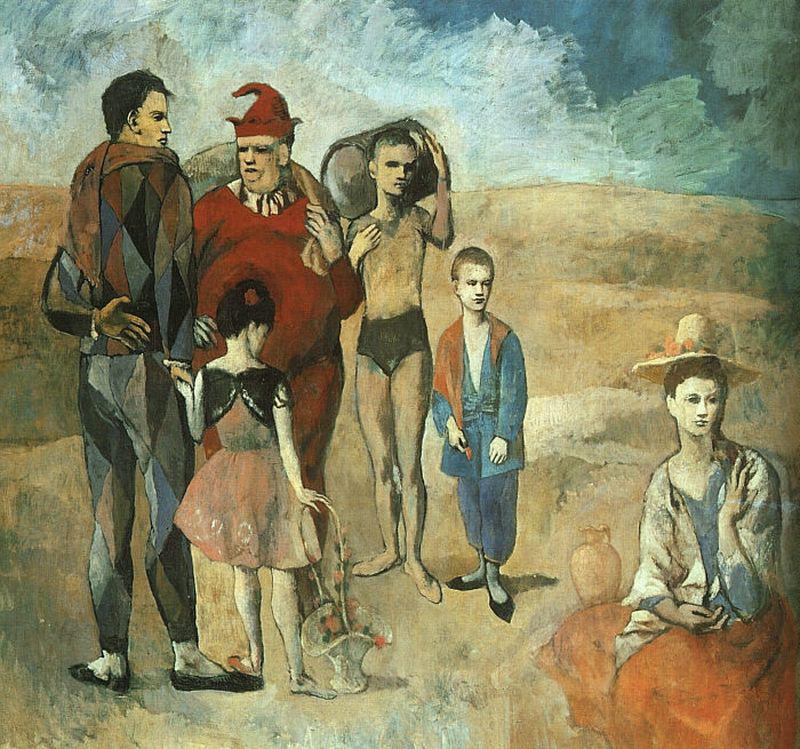
    Above: Les Saltimbanques, the painting by Picasso that inspred Lar Lubovitch’s newest creation, TRANSPARENT THINGS.

    Thursday November 15, 2012 – Three recent works by Lar Lubovitch comprised the programme tonight at Florence Gould Hall where Lar’s superb troupe of dancers held the stage to fine effect, abetted in the final work by excellent playing of the Debussy G-minor quartet by the Bryant Park Quartet.

    Opening with the ravishingly dark and lyrical LEGEND OF TEN, set to the Brahms F-minor quintet, the Lubovitch dancers showed from the first moment both their collective technical expertise and their individuality as poets of movement. In this dance of swirling and evocative patterns, the heartfelt music buoys the dancers throughout; from time to time a dancer will step forward and briefly pay reverence to the audience before melding back into the flow of the dance. The gorgeous and distinctive Lubovitch women – Nicole Corea, Laura Rutledge and Kate Skarpetowska – are partnered in ever-shifting match-ups by the beautiful men of the Company: Attila Joey Csiki, Reed Luplau, Brian McGinns, George Smallwood and Anthony Bocconi. A central pair – Elisa Clark and Clifton Brown – weave their ongoing pas de deux into the ensemble; tall and radiant, the couple bring an unusual sense of dignity to what might otherwise simply be a romantic duet. Clifton’s imperial wingspan and the hypnotic styling of his arms and hands are a blessing to behold, and Elisa matches him in expressive nuance. Compelling dance from all, and the work is surely one of Lar’s greatest masterpieces.

    377924_2509974742725_1469896582_n

    Darkness of a more jagged and comtemporary feel marks CRISIS VARIATIONS, in which a smaller ensemble of dancers – Nicole Corea, Laura Rutledge, Attila Joey Csiki, Reed Luplau and Anthony Bocconi – writhe and struggle against unseen demons whilst yet another of Lar’s imaginative duets – danced by the enigmatic Kate Skarpetowska and the dynamic Brian McGinnis – ebbs and flows among the struggling community. Kokyat’s image of Kate and Brian, above, captures one of the pas de deux’s most spine-tingling moments.

    What gives CRISIS VARIATIONS its unique flavour in the Yevgeniy Sharlat score; in this turbulent and entrancingly crafted music, individual instruments – harpsichord, saxophone, organ – lend a nightmarish gleam to the tapestry of movement. The ballet, though steeped in deep despair, is not without subtle hints of tongue-in-cheek self-pity.  

    The newest of Lar’s works, entitled TRANSPARENT THINGS, is a pure joy. Reid Bartelme’s costumes translate from the Picasso painting with remarkable faithfulness, and the dancers take to the mirthful and sometimes self-mocking characters of this vagabond troupe of entertainers with flair.

    Schreiber IMG_5214

    Attila Joey Csiki (above, Steven Schreiber photo) is perfect as the mercurial Harlequin, his solo dancing marked by the pure grace of his pliant style. Kate Skarpetowska and Laura Rutledge seem literally to have stepped out of the painting; Brian McGinnis is a tower of strength in his billowy red suit and Clifton Brown in simply marvelous to watch. Boysihly beautiful Reed Luplau brings a touch of innocence and a creamy, chiseled chest to his velvet-clad Blue Boy.

    Playing from memory, the musicans of the Bryant Park Quartet give a rendering of the Debussy score which ranges from sentimental to ebullient. Violinist Anna Elashvili seemed ready to spring from her chair and join the dance. At the close of the ballet’s third section, the dancers invade the musician’s space and are momentarily stilled; Attila lovingly rests his head against the cello. In this charming moment the marriage of music and dance are quietly celebrated. Brilliant!

  • Martha Graham Dance Company/Rehearsal

     Mg011

    Above: Katherine Crockett and Ben Schultz of the Martha Graham Dance Company rehearsing Graham’s PHAEDRA. Photo by Jade Young.

    Click on the images to enlarge.

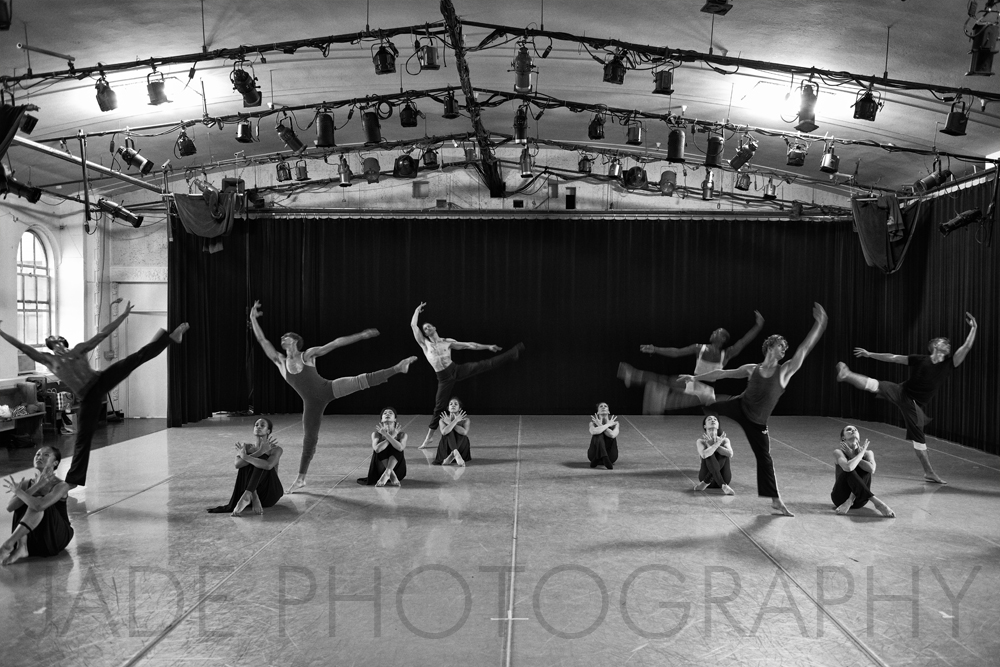
    Monday October 15, 2012 – The large and history-rich space at Westbeth which is now the home of the Martha Graham Dance Company has become one of my favorite and most meaningful dance destinations. On this late afternoon in mid-October, photographer Jade Young and I were invited to the studio where the Company were rehearsing two Graham works: RITE OF SPRING and PHAEDRA. RITE OF SPRING has not been performed for about twenty years, and PHAEDRA was last danced about a decade ago. Denise Vale supervises the revivals of the Graham repertoire, and watching her work is one of the main pleasures of spending time at Westbeth.

    In 2013 we honor the 100th anniversary of the the scandalous premiere of the Nijinsky/Stravinsky RITE OF SPRING which took place in Paris on May 29th, 1913. The ballet reached American shores in 1930 when Martha Graham danced the Chosen One in Massine’s 1920 realization of the piece. In 1984, Martha Graham’s own vision of RITE was given its world premiere at the New York State Theater. 

    Mg015

    At today’s rehearsal, which was run by Ken Topping, ensemble passages (above) were being worked on with attention to spacing and to the musicality of certain phrases. The score is of course notoriously difficult to count but dancers over the years have become accustomed to it.

    Mg02

    The ballet in Graham’s rendering is both a ritual and an intense dramatic narrative. From what I was able to observe today, it is a richly structured and detailed work which I cannot wait to see fully staged, costumed and lit. We’ll have the opportunity when the Graham Company appear at The Joyce February 20th thru March 3rd, 2013. They will also perform the work in North Carolina as part of a festival celebating one hundred years of RITE:  

    “Carolina
    Performing Arts
    at The University of North Carolina at Chapel
    Hill have announced an exceptional
    two-night program as part of their The Rite of Spring at 100 season. On April 26th and April 27th, 2013, Myth & Transformation
    by the renowned Martha Graham Dance Company will bring to a conclusion
    the performance season of this unprecedented nine-month festival
    celebrating the centennial of the premiere of the Stravinsky-Nijinsky-Roerich masterpiece.

    Myth & Transformation will feature performances of Graham’s powerful The Rite of Spring, which has not been seen by audiences in twenty years, and the much-beloved Graham classic Appalachian Spring;
    the world premiere of a work choreographed by Nacho Duato to music of Arvo Pärt, and performances by guest artist Wendy Whelan, principal
    dancer from the New York City Ballet.”

    That is exciting news indeed!!

    But: back to today’s rehearsal…after a break, a long scene from PHAEDRA was rehearsed. This Graham ballet was once deemed so shocking by two members of Congress that
    they protested the use of State Department funds for its performance on a
    Graham company tour in Europe. The two worthy Congressmen’s reaction was wrong-headed, since things do not end well for Phaedra; the gods punish her immoral longings. But apparently the two legislators did not stay at the performance long enough to find out.

    Mg09

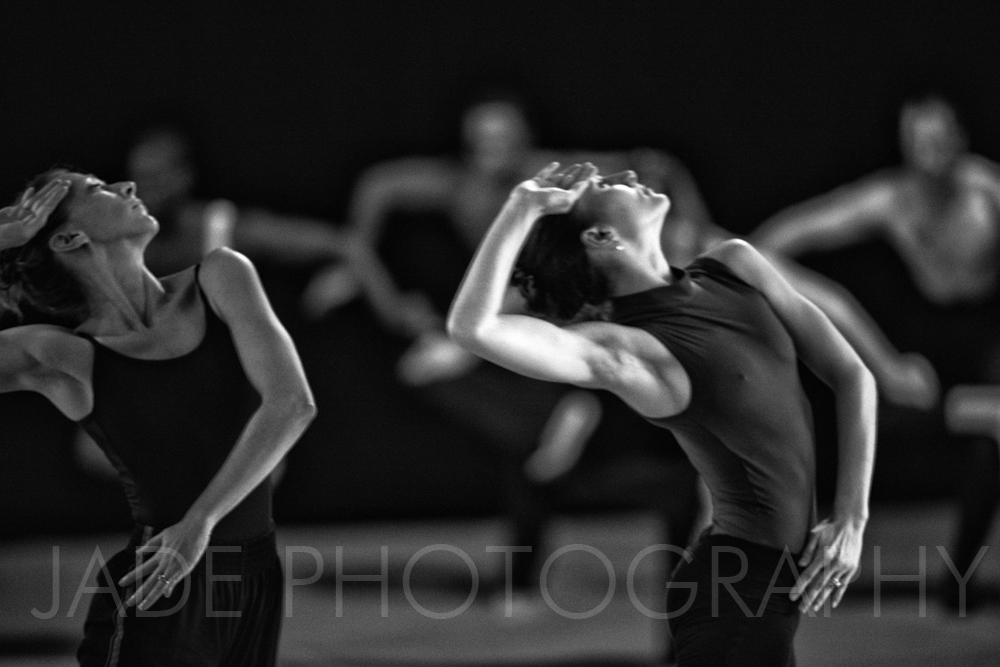
    But that seems like foolish political history now. Today we watched a quartet of Graham dancers bring the piece vividly to life, led by the remarkable Katherine Crockett (above) in the title-role. The ballet, set to a dramatic score by Robert Starer, tells of Phaedra’s obsession with her stepson Hippolytus. the dancers in the run-thru we watched were Katherine Crockett, Ben Schultz, Andrea Murillo and Mariya Dashkina-Maddux. They performed with the intensity one might expect in a staged performance.

    Mg018

    Katherine and Andrea, above.

    It was regrettable that Jade had to leave at this point, for a second cast of dancers for PHAEDRA led by Blakeley White-McGuire and Tadej Brdnik took over the space. We shall have to wait for another opportunity to photograph them. With their powerful and wonderfully indivdual personalities, the dancers of each cast brought out different aspects of the drama. I could have watched and watched and gone on watching…

    For that is the thing about these works and these dancers: an endless fascination both with the actual movement as we watch it, but also with the sense of dance history that one feels in the experience: a history in which Martha Graham wrote a bold and epic chapter.

    You can read more about Graham’s PHAEDRA here, with a very impressive album of production photos from the 2003 performances of the ballet at The Joyce.

    More of Jade’s images from this rehearsal will appear here soon.

  • Columbia Ballet Collaborative: Rehearsals

    L1030096

    Above: choreographer Lisa de Ribere works on a pas de deux to be danced by Rebecca Azenberg and John Poppe at the upcoming performances by Columbia Ballet Collaborative.

    Friday October 27th, 2012 – I stopped by at Barnard College where two of the five choreographers involved in the upcoming performances by the Columbia Ballet Collaborative were rehearsing. Lisa de Ribere is creating an ensemble work, while Emery LeCrone is reviving a solo piece originally made on Drew Jacoby, and now to be danced by Kaitlyn Gilliland.

    L1030068

    Lisa’s studio was my first stop; several dancers I know were there and she was sorting out a fast-paced section of her two-part ballet which uses music by John Pizzarelli (Traffic Jam) and Norman Dello Joio – an interesting pairing to be sure.

    L1030171

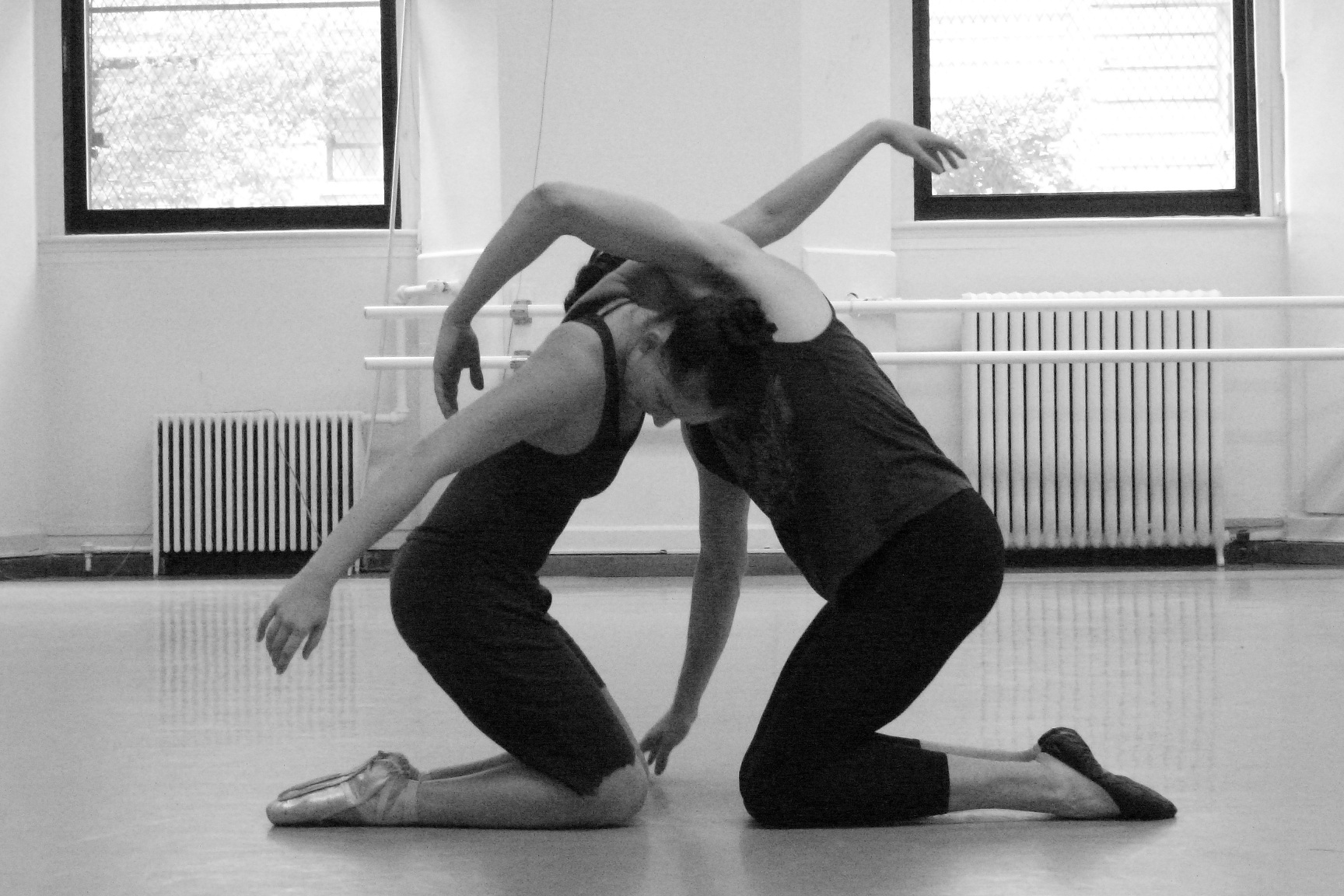
    At the start of the pas de deux (above) in which Rebecca and John slowly and warily investigate one another before moving on to a more intimate quality.

    L1030179

    Rebecca Azenberg & John Poppe

    Click on each image to enlarge.

    L1030233

    I then moved to the Streng Studio where choreographer Emery LeCrone (above) was working with one of Gotham’s most gorgeous dancers, Kaitlyn Gilliland, on a solo entitled ARIA.

    L1030605

    Kaitlyn Gilliland

    Set to music by the Balanescu Quartet, ARIA is a space-filling solo which suits Kaitlyn long limbs and her innate spiritual quality to perfection. Emery and Kaitlyn have an easy rapport and mutual appreciation, so the rehearsal was a particularly pleasant experience.

    L1030432

    Kaitlyn!

    The Columbia Ballet Collaborative‘s Autumn 2012 performances will take place at Manhattan Movement and Arts Center on November 16th and 17th. Details here. In addition to the works by Lisa and Emery, ballets by John Poppe, Nick Kepley and Daniel Mantei will be performed. I’m hoping to get to rehearsals of the three gentlemen’s creation in the next few days.

  • Ballet Next @ The Joyce/Program A

    BalletNext_1617

    Above: A Paul B Goode photo from Ballet Next‘s presentation of Alison Cook Beatty’s TINTINNABULI. Click on the image to enlarge.

    Sunday October 28, 2012 matinee – While the governor and The City and the MTA stoked fears of an apocalypse with the impending arrival of Hurricane Sandy, Ballet Next went calmly about their business today, presenting their scheduled matinee at The Joyce. The Company weathered their own small storm when one of their dancers sustained an injury, necessitating changes in Alison Cook Beatty’s TINTINNABUILI, the afternoon’s opening work. But if you hadn’t seen this piece in a rehearsal you’d never have known anything was amiss.

    I have had the pleasure of knowing Alison Cook Beatty as a dancer for the past couple of years, and was happy to learn that she’d been chosen to create a piece for Ballet Next. Alison started off on the right foor by choosing excellent music (Arvo Part) and then went on to create a very pleasing contemporary-style ballet. Inspired by the excellence of the dancers at her disposal (can a young choreographer ask for a finer leading lady than Michele Wiles?) Alison’s TINTINNABULI has a spiriitual quality stemming from the celestial music which was played live by an ensemble of violinists, with piano and cello.

    Opening in a striking diagonal of light, Michele Wiles dances an angular but still lyrical solo observed by Tiffany Mangulabnan and Stuttgart Ballet principal Jason Reilly. Tiffany and her two ‘sisters’ Kristie Latham and Lily Nicole Balogh seem like the three Fates, willing Michele and Jason into a union. In this hair-down ballet, the girls look gorgeous. Tiffany has two very fine solo passages, one spacious and other-worldly, the second a more intense and fiery ritual dance; in the latter, her hair took on a life of its own. The culminating pas de deux for Michele and Jason   features some heavenward lifts, while the trio of girls circle and bind the couple.

    As a choreographer, Alison has things well-in-hand, drawing on the music for inspiration at every turn. And the dancers did her proud wth their committed and passionate dancing. My only slight concern about the piece was that the second half stretched out a bit; this is music that can readily be compressed and I think I would have tightened it a little to make a more succinct statement. As Balanchine once said “…that I too could eliminate”.

    Margo Sappington’s ENTWINED began life as a sensuous Satie pas de deux. In the ensuing months, Sappington enlarged the work with a duet (Georgina Pazcoguin and Kristie Latham), a pas de trois for those two girls plus Charles Askegard, and a solo for Michele Wiles. The initial duet now conclude the ballet, danced tonight by the lovely Katrina Gonzalez with Charles Askegard giving another demonstration of the art of ballet partnering. With Ben Laude’s limpid Satie from the keyboard, the ballet sustained its atmosphere; in the end it is the original pas de deux that still seems to make the most striking effect.

    Mauro Bigonzetti’s LA FOLLIA has become Ballet Next‘s signature work, and rightly so. In this dynamic and demanding work, two ballerinas – Michele Wiles and Georgna Pazcoguin – sweep thru a series of angular combinations with super-sharp pointe work, meanwhile communicating with one another in an elaborate sign-language. It’s breathtaking, and was excitingly danced today by the two women, sending the crowd out to face the storm on an inspired and positive wave of Vivaldi.

    I truly enjoyed both programmes of Ballet Next this week, though I did rather miss having a more classical pas de deux in the repertory. When Michele and Charles dance WHITE SWAN together, it is really something. I hope they will bring that back, or work up another duet from the standard rep: it gives us the chance to savour their partnership, as well as providing a contrast to the new works they are creating.

  • Atlanta Symphony @ Carnegie Hall

    Polegato-Brett-Headshot

    Above: baritone Brett Polegato, one of tonight’s soloists at Carnegie Hall

    Saturday October 27th, 2012 -The Atlanta Symphony Orchestra brought three 20th century works to Carnegie Hall in a wonderfully crafted evening under the baton of Robert Spano. My front row seat put me right at the heart of things, beneath a row of lovely cellists that I could have reached out and touched. This was my third evening at Carnegie in a week’s time, and I felt so at home there.

    I chose this programme because I wanted to hear the Canadian baritone Brett Polegato; his voice intrigued me when I first heard him singing on a tape of the 1995 Cardiff Competition which my friend Mollie had so kindly sent me. It’s taken me all this time to hear him ‘in person’ and it was well worth the wait; my impressions of him from that tape proved totally valid: he’s a first-rate singer.

    But to start at the beginning, Mr. Spano opened the programme with Copland’s APPALACHIAN SPRING, by far the best-known of the evening’s three weeks. In classical music, familiarity can breed not so much contempt as a taking for granted of certain works. If you say ‘NUTCRACKER‘ or “Eine kleine nachtmusik‘, people will shrug and smirk and say “Again?” But these pieces are popular for a reason.

    Listening to the Atlanta players in the Copland, I realized again how really original and purely enjoyable this score is. And it put me so much in mind of my recent links with the Martha Graham Dance Comany and with the Japanese artist Isamu Noguchi who designed the sets for Graham’s iconic ballet. Tonight APPALACHIAN SPRING felt like the masterpiece that it is, so lovingly played.

    CHICHESTER PSALMS is one of the few Leonard Bernstein works that I admire, and possibly the only one that truly enjoy. I actually came to know this music thru Peter Martins’ ritualistc setting at New York City Ballet. Its rhythmic freshness and its heartfelt melodic strands make it so appealing, and tonight we had an adult male soprano rather than a boy treble; John Holiday’s gorgeous tone stole gleamingly into the huge Hall. His voice gave the music an erotic/exotic throb that a boy singer could never produce. The audience gave Mr. Holiday a rousing cheer as he bowed, and he very much deserved it.

    William Walton’s BELSHAZZAR’S FEAST was an early success for the composer and it sounded magnificent last night as played and sung by the musicians and chorus of the Atlanta Symphony. The work tells the story of the proverbial writing on the wall, and of Belshazzar’s demise and the triumph of godliness. It plays out strikingly, though it does seem to me that Walton became just a shade long-winded in the final pages of the score: he doesn’t seem to know when to stop. Be that as it may, it was an inspired performance all round.

    Brett Polegato’s noble tone sailed out into the Hall with warmth, focus and power, his exemplary clarity of diction making reference to the printed texts unnecessary. In the unaccompanied passage ‘Babylon was a great city…’ the singer forged a direct link with the audience, his voice speaking to us with remarkable directness and emotional force.

    The evening posed the question, why isn’t Brett Polegato at The Met? And why, for that matter, isn’t Mr. Spano there as well?  They are both masters of their respective crafts.

    1f318148667991b369f2f610fbbb8cfd

    You can experience their work on the Grammy Award-winning recording of Vaughan-Williams SEA SYMPHONY

    Tonight’s concert:

    Performers

    • Atlanta Symphony Orchestra
      Robert Spano, Music Director and Conductor
    • John Holiday, Countertenor
    • Brett Polegato, Baritone
    • Atlanta Symphony Orchestra Chorus
      Norman Mackenzie, Director of Choruses

    Program

    • COPLAND
      Appalachian Spring
    • BERNSTEIN
      Chichester Psalms
    • WALTON
      Belshazzar’s Feast
  • Ives 4th + Mahler 8th @ Carnegie Hall

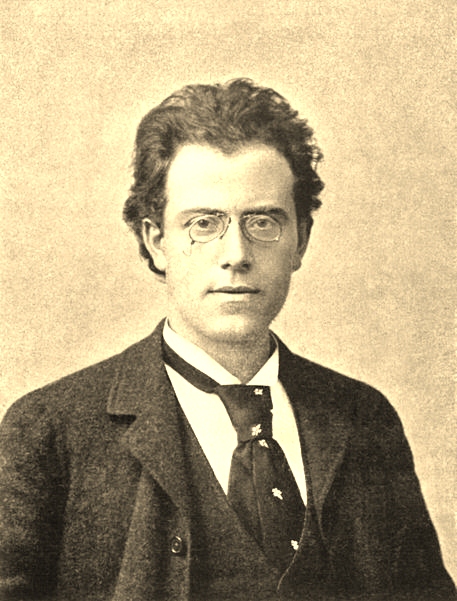
    Mahler 2

    Above: Gustav Mahler

    Friday October 26, 2012 – The  Collegiate Chorale and the American Symphony Orchestra teamed up at Carnegie Hall tonight for a symphonic double-bill, with a delightful ‘prelude’ in the form of Leopold Stokowski’s arrangement of The Star-Spangled Banner. I rarely have the opportunity to work symphonic concerts into my calendar of dance and operatic events (and I continue to suffer from a lack of chamber music in my diet). So I am grateful to the Collegiate Chorale and publicist Michelle Brandon Tabnick for this evening’s invitation.

    The evening marked the 50th anniversary of the American Symphony Orchestra and in celebration, tickets were sold at 1962 prices, with a $7.00 top. There was a nice atmosphere in the house and a warm reception for all the musicians involved.

    Maestro Leon Botstein swept his forces thru the ‘Stokowski’ Star-Spangled Banner with its wonderful deeper sonorities near the end.  Players and audience alike stood for the anthem, and I personally felt a pang of sadness at the state of our country today. But we won’t go into that here.

    The players then settled in and the Ives began. This is a fabulous score and I found myself smiling and even chuckling softly to myself as the work progressed: it takes itself so seriously, yet to me it abounds with wit and irony. It seemed clear that some in the audience had not previously encountered Ives’ work: they didn’t know what to make of it. But for me, this was 30-minutes of pure sonic pleasure.

    Ives

    Above: Charles Ives

    The wondrous layering of sound, the floating cacophonies wafting over the dense militaristic undercurrents, the dazzling individual instrumental voices shining forth: the ear is constantly titillated. In a stunning volte face, Ives gives us straightforward melody in the 3rd movement which must have felt like a sonic oasis to the uninitiated. Throughout, the piano (expert playing from Blair McMillen) gives the symphony the unexpected feel of a concerto trying to make itself heard thru the waves of sound. A terrific performances, and the players have my admiration for what must be a nightmare of counting.

    After intermission, the vast tapestry of the Mahler 8th unfurled itself in the venerable hall. Relentless in its cresting waves of vocal sound flooding over the massive orchestral forces, this is a work like no other. The two choruses simply pour it on all evening, whilst an octet of principal voices – the sopranos often kept in the upper reaches of their range – trade off solo passages of melodic intensity.

    Duncan-Tyler-01[Colin-Mills]

    Of the vocal soloists, three stood out: baritone Tyler Duncan (above, in a Colin Mills portrait) brought a welcome sense of lyric beauty to his solo. Basso Denis Sedov was equally fine, using his expressive hands to shape the music. In the taxing top soprano line, Rebecca Daviss’ voice gleamed beautifully all evening.

    Maestro Botstein was a few minutes into the symphony’s second half when he suddenly stopped; I could not hear his over-the-shoulder remark, but with a tap of the baton he started over. The performance then surged onward, and the audience stayed on at the end to cheer.

    • Blair McMillen, piano
    • Rebecca Davis, soprano
    • Abbie Furmansky, soprano
    • Katherine Whyte, soprano
    • Fredrika Brillembourg, mezzo-soprano
    • Susan Platts, mezzo-soprano
    • Clay Hilley, tenor
    • Tyler Duncan, baritone
    • Denis Sedov, bass
    • Brooklyn Youth Chorus
    • The Collegiate Chorale
  • Upcoming: Pontus Lidberg for MORPHOSES

    Morphoses02b

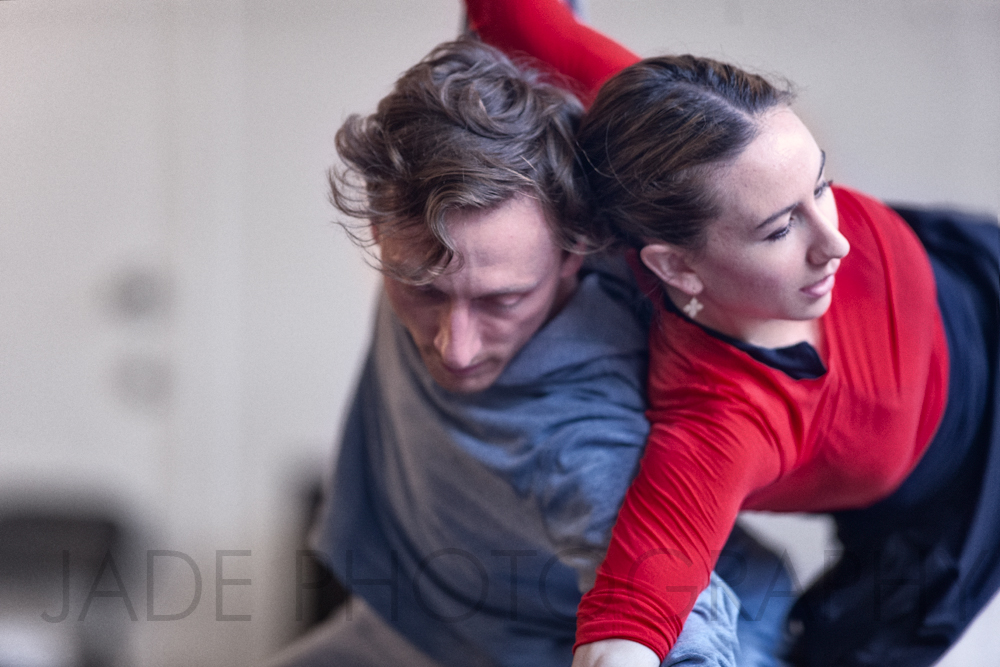
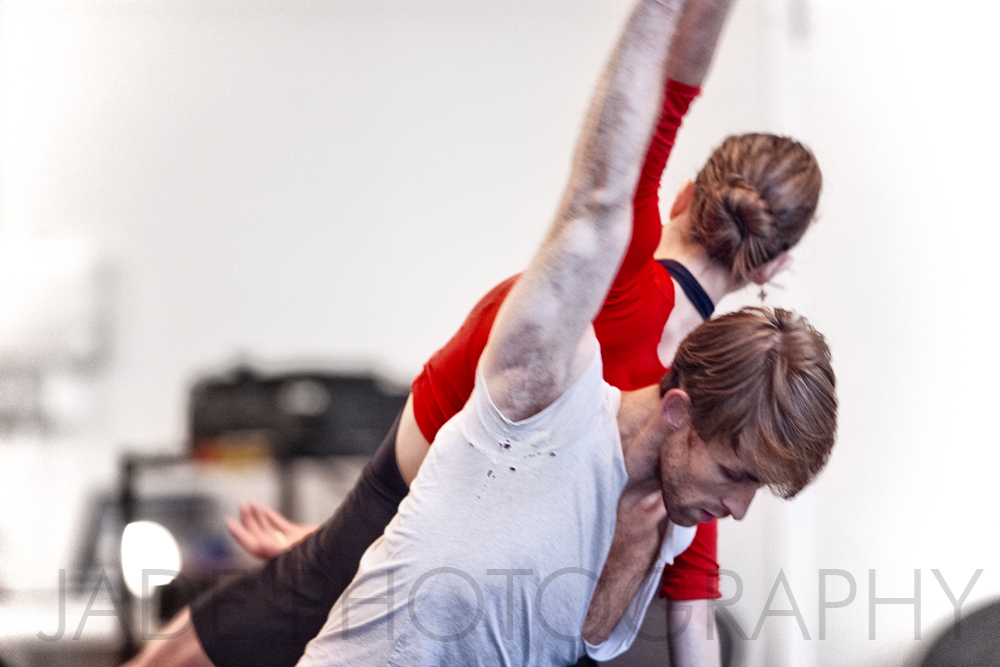
    Above: MORPHOSES rehearsal director Reid Bartelme and ABT’s Isabella Boylston in rehearsal for Pontus Lidberg’s WITHIN; photo by Jade Young. MORPHOSES will present Pontus’s evening of dance and film entitled WITHIN (Labyrinth Within) at The Joyce from November 7th thru 11th. Information and tickets here.

    The performances will open with the newly-staged ballet which has evolved from Pontus’s haunting film LABYRINTH WITHIN. Watch a brief trailer for the film – which features New York City Ballet principal Wendy Whelan, Pontus Lidberg and Giovanni Bucchieri – here. Following the ballet, the film will be shown.

    Morphoses03crop

    A couple of weeks ago, Jade and I went to a rehearsal of the ballet at the Gibney Dance Center. It happened to be Isabella Boylston’s (above) first rehearsal of the work;, and indeed it fell on a day of firsts since I had earlier watched the New York City Ballet‘s compelling soloist Adrian Danchig-Waing in his first-ever APOLLO rehearsal. Adrian is Isabella’s partner in the Pontus Lidberg work, so I felt like a bit of a stalker following him from one studio to another. 

    Morphoses01

    Isabella Boylston and Adrian Danchig-Waring, photo by Jade Young.

    Isabella worked with Reid Bartelme, Pontus’s rehearsal director, while Adrian perfected the partnering with Laura Mead, a lovely dancer I’d met earlier this year when she danced for Cherylyn Lavagnino. Laura will alternate with Isabella at The Joyce performances.

    6a00d8341c4e3853ef01676808dae9970b-800wi

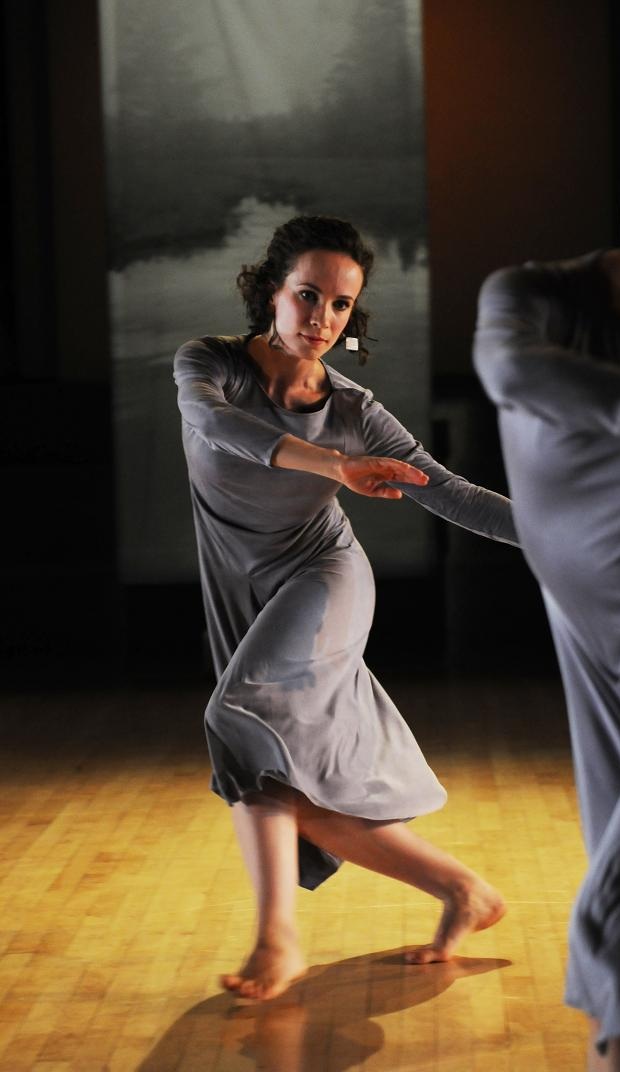
    Laura Mead, photographed by Kokyat.

    I was curious to find that a second couple are also involved in the ballet, since in the film it is definitely a romantic triangle (real or illusory). But Gabrielle Lamb – a favorite dancer of mine – and the handsome Berlin-born danseur Jens Weber were working on another pas de deux, Gabrielle wearing the stiletto pumps that Wendy Whelan wears in the film.

    Morphoses12c

    Gabrielle and Jens, photo by Jade Young

    Now I’m very curious to see how the two couples will be woven into the story once the ballet takes the stage, and also to find how the staged dance dovetails with the film.

    As the appointed studio time seemed about to run out, Pontus let the other dancers go but he stayed behind to work on his solo passages with Reid. Evening was falling outside, and the studio took on a very dreamlike atmosphere.

    6a00d8341c4e3853ef01348752c312970c-800wi

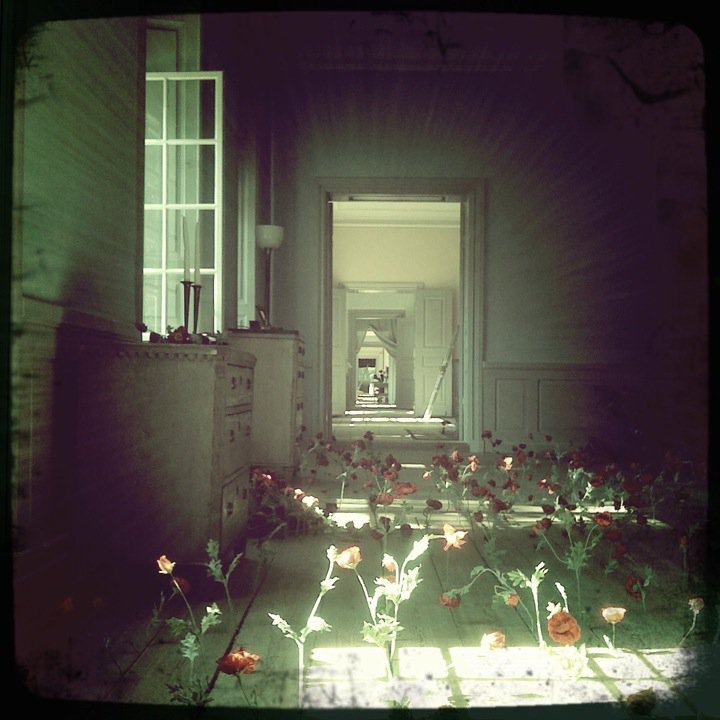
    If you have seen the film, you will recall the striking image of flowers growing thru the floorboards of the mysterious old castle where the film was shot; that’s a Wendy Whelan photo, above.

    Morphoses06b

    For today’s rehearsal, Pontus had brought his own flower. His dancing is so poetic, and in these last lingering moments of the rehearsal the outside world seemed to vanish and the beautiful dancer drew us into his dreamworld.

    Click on Jade’s images to enlarge.