~ Author: Mark Anthony Martinez II
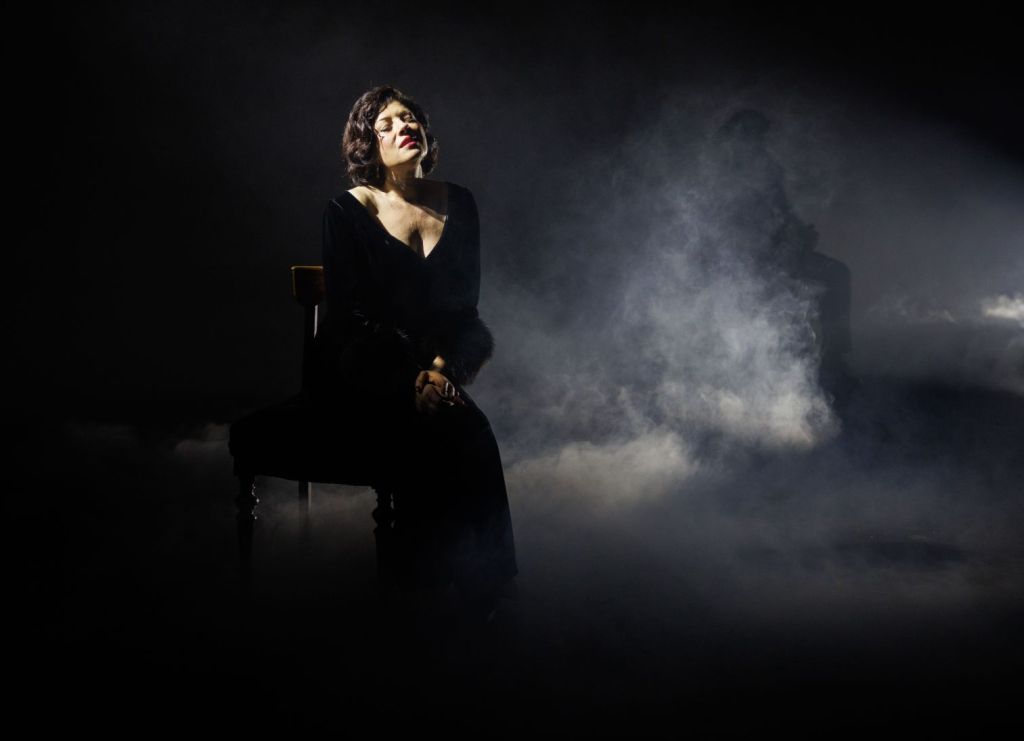
Above: Inna Dukach as Vanessa; photo by Maria Baranova
Saturday May 16th, 2026 – Heartbeat Opera’s VANESSA fantastically threads the line between beauty of music and captivating staging, while introducing audiences to a much lesser-known piece by Samuel Barber.
I last saw Heartbeat Opera’s production of MANON, and at times I still think of how entertaining and originally staged that French opera classic was to watch and experience.
Vanessa, adapted by Jacob Ashworth and newly arranged by Dan Schlosberg, is a much more stripped-down show. Directed by R.B. Schlather, with music direction by Jacob Ashworth, the production utilizes less of a vast set, but emphasizes the looming blankness in the plot itself with the very austere staging at the Baruch Performing Arts Center.
There was hardly any physical set aside from several chairs used throughout the show, but the intelligent use of spotlights made the shadows of the actors cast along the pure white wall act as a backdrop of sorts. In many ways, it reminded me of Alfred Hitchcock’s use of shadows to further tell the true story behind what characters are actually saying.
The story is a bit of a bizarre one, without much real backstory. I had assumed that it was based on some stage play popular at the time it was written, but after doing some research I found that there is no real source material for the libretto, written by Menotti. I did find it cute that Menotti, who was Barber’s long-term lover, wrote the libretto for his partner’s music, a musical factoid unknown to me until this point.
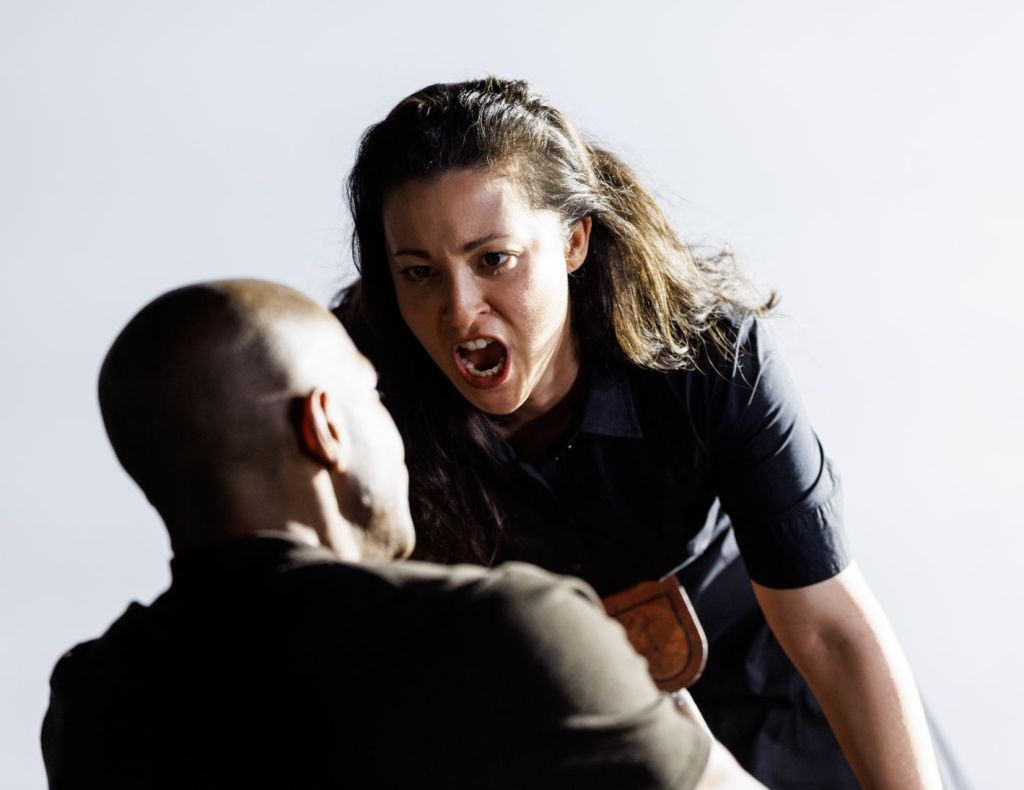
Above: Freddie Ballentine as Anatol and Kelsey Lauritano as Erika; photo by Maria Baranova
The plot of the show essentially follows a small family: Vanessa, played by Inna Dukach; her niece Erika, played by Kelsey Lauritano; and Vanessa’s frigid mother, who refuses to speak to her daughter, played by Mary Phillips. When the son of Vanessa’s old lover, Anatol, played by Freddie Ballentine, arrives, he comes to destroy the fragile fabric holding this hermetic family together. Eventually, the family doctor, played by Joshua Jeremiah, arrives and does nothing but add more drama and unresolved tension to an already uncomfortable family.
Vanessa has been waiting in her manor for 20 years for her long-lost lover, and forces the rest of the family to be in purgatory with her. The plot kicks off when Anatol, her now-deceased lover’s son, seduces both Vanessa and Erika on the first night that he arrives, sowing the problems that plague the characters until the very end of the show.
In many ways, the opera should be named Erika, because although the plot revolves around the titular character of Vanessa, the real protagonist of the show is Erika. Erika, played by Kelsey Lauritano, was the first person to enter the stage, carrying on a chair that she would later sit down on. Her acting from the beginning was wonderful, capturing the essence of a bored teenager who has nothing better to do than wait around for her kooky aunt.
Not only was Lauritano’s acting superb, but she also had such a beautiful mezzo-soprano voice with elegant control. Her diction was perfect, and could be understood even without the need for supertitles. The real musical highlight of the show for me was her aria, “Must the Winter Come So Soon?,” which came near the top of the show.
Vanessa, played by Inna Dukach, was a wonderful performer for the crazed title role. Dukach had the right voice to capture the manic tendencies of a woman who has shut herself out of the world for a lover who doesn’t even exist anymore. For the entire show, you can see the progression of Vanessa as a character, from truly a storm of a personality to someone who, by the end, has more control of herself, but still possesses that tempestuous craze underneath.
Ballentine, Phillips, and Jeremiah all played their respective parts wonderfully. Ballentine played the suave but snaky lover deftly, flipping from charming to menacing on a dime. Phillips, as the grandmother, played the dowager character extremely believably and, even when not the center of the scene, maintained her dour and at times concerned persona. Jeremiah was a great actor who played up the purely comic moments, like his solo with a very phallic champagne bottle, but also many moments of seemingly covert deviousness that were never fully explained.
Some of my favorite moments actually came from probably unintentional choices. Vanessa asks Erika early on in the show, “Why didn’t you join us?,” referring to her and Anatol, and Erika responds with, “Because you forgot to ask me.”
The reading of the lines felt almost absurdist in the best ways, sort of like a moment from a cult camp movie like Heathers.
I went to see the show with a friend of mine who is also an opera singer, but she was a lot more familiar with Barber’s vocal repertoire than I was. It was fascinating to hear her take on how different this operatic work by Barber was from his art songs after the show. The only piece that I’m quite familiar with is his Adagio for Strings, and in some ways this opera was a lot more similar to his sonically tonal art songs. There was a lot of unresolved tension in the music that mirrored the dramatic work underneath.
The only true moments of traditional tonality came with the final quintet at the end of the show, but even then, instead of ending at a place where it felt “at ease” when it seemed like it would, it continued and unraveled into the tense sound world of the previous 90 minutes.
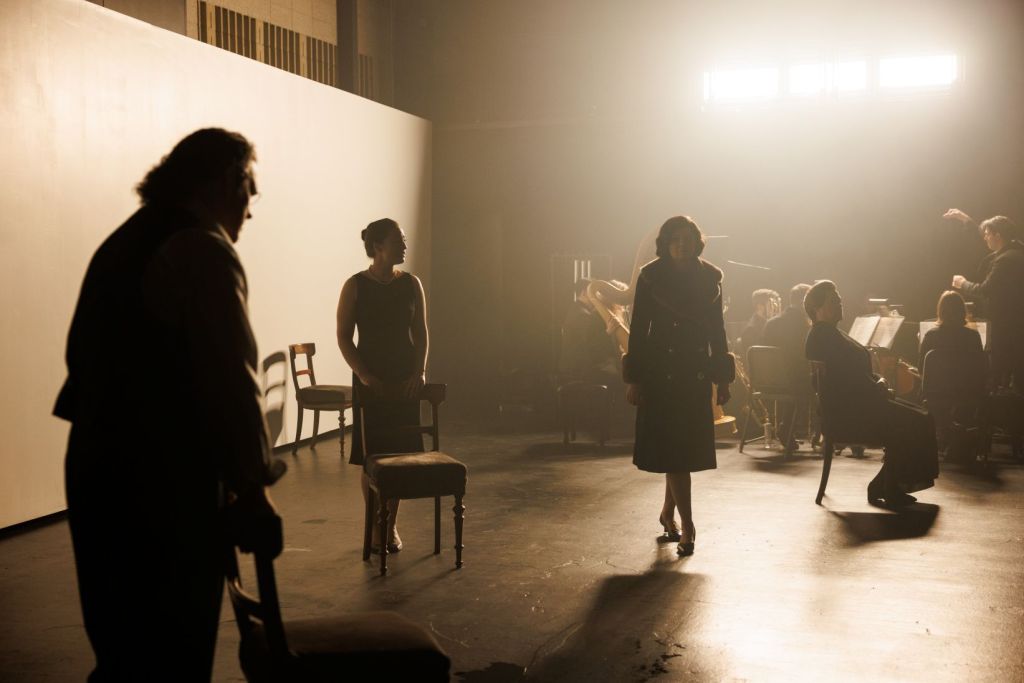
Above, production photo by Maria Baranova
Heartbeat Opera’s VANESSA is another standout in the New York opera scene, and a must go for people who want to see remarkable handling of an American operatic gem.
~ Mark Anthony Martinez II

