~ Author: Oberon
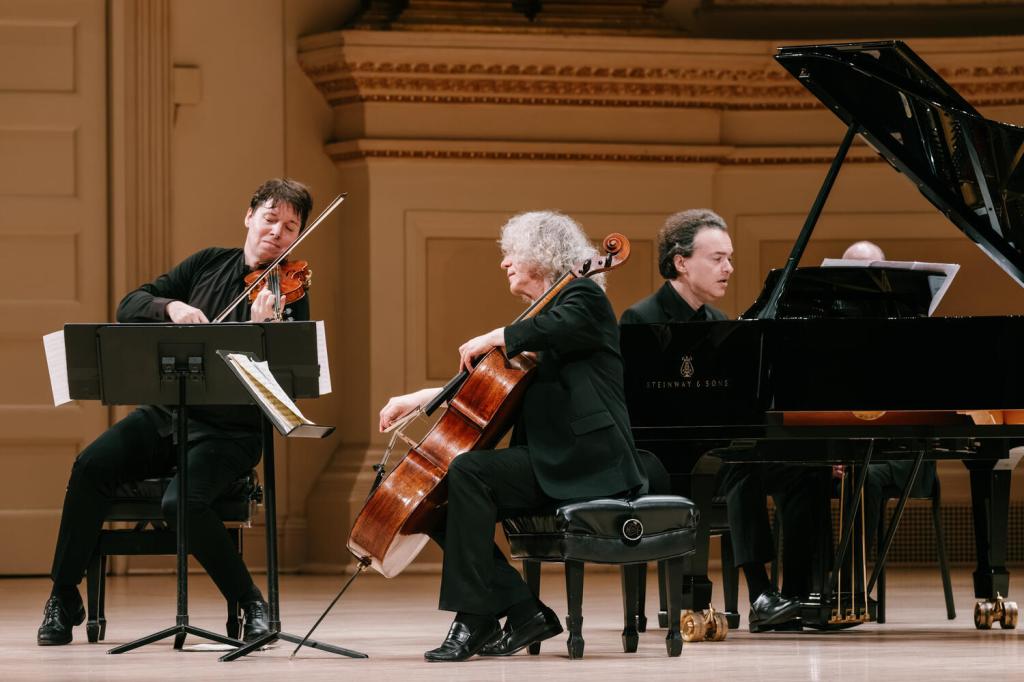
Above: Joshua Bell, Steven Isserlis, and Evgeny Kissin; photo by Fadi Kheir
Sunday May 31st, 2026 matinee – A terrific trio of musicians – Evgeny Kissin, Joshua Bell, and Steven Isserlis – took the stage at Carnegie Hall this afternoon for a concert that featured a rarely-heard work by Solomon Rosowsky and masterpieces by Shostakovich and Tchaikovsky.
Rosowsky’s Fantastic Dance on a Hebrew Theme premiered in 1919. A darkish opening passage from the piano is joined by the deep cello and then by some ‘subdued virtuosity’ from the violin. There is a buildup to the dance, which has a strutting feel. The mood swings between animated and languorous, with a variety of instrumental blends and rhythms. The music gets fast and furious before reaching a tranquil end.
Shostakovich’s Piano Trio No. 2 was then given a spell-binding performance by the three gentlemen. Having just heard Maxim Vengerov and Polina Osetinskaya give a stunning performance of the composer’s violin sonata, I was definitely in the mood for more.
The Andante begins subtly, with the Isserlis cello whispering some high harmonics. Mr. Bell’s golden-toned violin takes up a lyrical theme. Mr. Kissin introduces the piano, playing in the lower register; a feeling of loneliness emerges. To a pulsing rhythm from the strings, the piano remains shadowy. The darkness lifts when Mr. Bell’s violin goes soft and high. There is a rise in drama, and an off-kilter dance breaks out. There is a pluck-fest from the strings as the piano dances on.
The second movement, marked Allegro con brio, is sometimes referred to as a “black scherzo”; here the insistent rhythms, cascading scales, and deft pizzicati are always threatening to veer out of control. The music gets demented, dizzying, brilliant…
The Largo begins with grand piano chords; Mr. Bell takes up a simple melody, soon joined by Mr. Isserlis. This music is simply fantastic, with an extraordinary blending of the three timbres. A hushed ending reaches the depths of my soul. But without lingering, the final Allegretto strikes up. With the strings plucking and the piano in a dotty mood, a folkish beat takes over. Mr. Kissin brings in a familiar piano theme, laced with amazing subtleties. Mr. Bell offers an ironic tune whilst the Isserlis cello swirls and sways. The music gets huge, with cascading passages and high melismas from the Steinway. Plucked strings over deep piano passages seem to bring us back where we started.
The sublimely staggering playing of Mssrs. Kissin, Bell, and Isserlis produced the same audience reaction as the Vengerov/Osetinskaya duo had ignited with their sonata: people rose to their feet in admiration for the players…and the composer.
Following the interval, we heard Tchaikovsky’s Piano Trio, composed 1881-1882. The opening movement commences with a lamenting dialogue between the cello and violin over a somber stream of arpeggios from the keyboard. After the theme’s initial statement, the piano takes command: Mr. Kissin here is simply fabulous: epic playing of music which briefly calms only to become more passionate. We then transition to a new feeling, with Mssrs. Bell and Isserlis exchanging themes. The music becomes cinematic, then thoughtful and brooding; then Mr. Bell steps on the accelerator and the composer dazzles us yet again, before the duetting strings are heard over a calming piano.
The Theme and Variations section, introduced by Mr. Kissin, begins with a folksong-like melody; it will take us on a succession of adventures and mood swings. There are dances – a waltz, a fugue, a mazurka – and modes of exoticism, frivolity, and nods to the composer’s ballet scores. There are even sleigh bells. Though at times the variations felt like too much of a good thing, they were deliciously played.
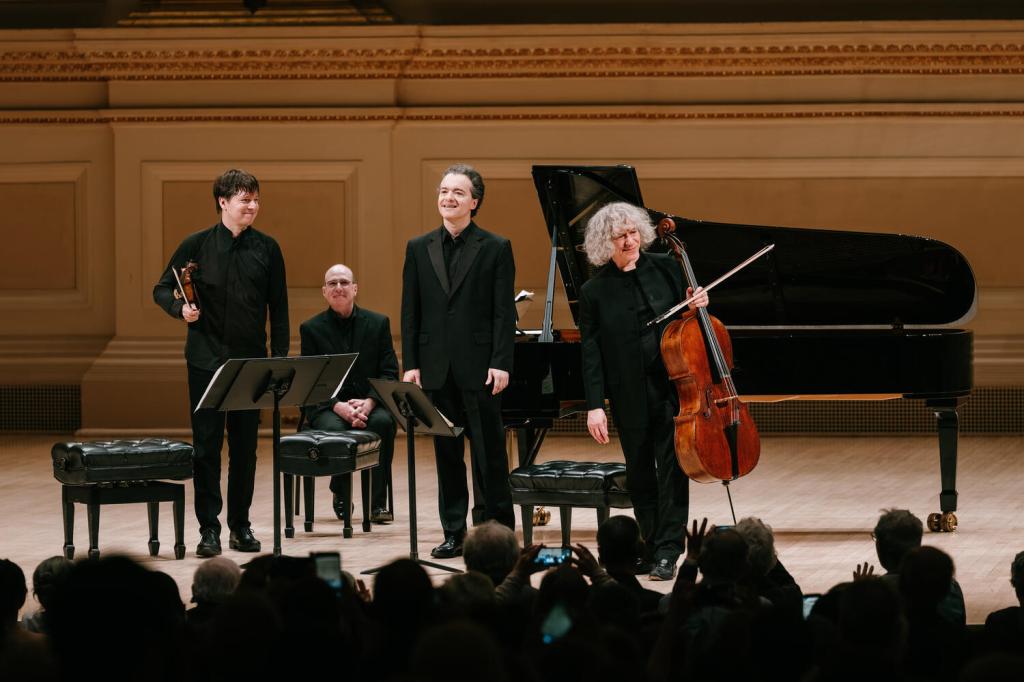
Above, the artists take a bow.
Performance photos by Fadi Kheir, courtesy of Carnegie Hall
~ Oberon

