Author: Philip Gardner

  • Ballet Hispánico @ The Joyce ~ 2019

    Jared Bogart and Melissa Fernandez (c) Paula Lobo

    Above: Jared Bogart and Melissa Verdecia of Ballet Hispánico; photo by Paula Lobo

    ~ Author: Oberon

    Wednesday March 27th, 2019 – Ballet Hispánico’s season at The Joyce offered a very strong program: Annabelle Lopez Ochoa has re-set her brilliant masterpiece Sombrerísimo, originally danced by the Company’s men, for an all-female cast; and Asian influences came into the mix with world premieres by Edwaard Liang and Bennyroyce Royon, each of which was highly successful in its own way.

    I last saw perform Ballet Hispánico in 2016, and there have been major changes in their roster of dancers since then. Watching the Company tonight at The Joyce, I realized how bad my eyesight has become over time; it’s much more difficult for me now to single out individual dancers, and to put names to faces.

    Edwaard Liang, formerly a soloist at New York City Ballet and now the Artistic Director of BalletMet in Columbus, Ohio, has established himself among the front rank of international choreographers; his works have been danced by the Bolshoi Ballet, Houston Ballet, Joffrey Ballet, Kirov Ballet, New York City Ballet, Pacific Northwest Ballet, San Francisco Ballet, Shanghai Ballet, Singapore Dance Theatre and Washington Ballet. Tonight, Ballet Hispánico opened their program with Liang’s El Viaje (“The Voyage”).

    Set to the lushly lyrical Ralph Vaughan Williams score Variations on a Theme by Thomas Tallis, and gorgeously lit by Joshua Paul Weckesser, El Viaje resonates with themes of emigration and cultural re-location, particularly of Chinese peoples; it speaks to me personally as I married one such emigrant. 
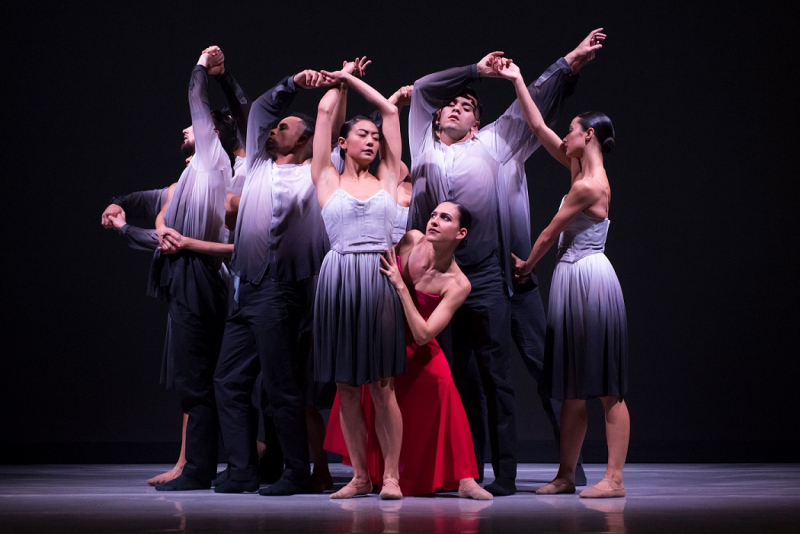
    Liang

    Above: from El Viaje, photo by Paula Lobo

    Melissa Verdecia, striking in a red dress, is spotlit facing upstage as the curtain rises. Such rushes into a high lift as the ballet begins. The dance has a ritualistic feel, and a strong architectural framework. Partnering motifs, performed by the couples in unison, underscore the sense of community. Solo and duet opportunities abound, in which the Hispánico dancers revel in their power and beauty, buoyed by the marvelous music. At the end, the dancers stand together, facing the sunrise, uncertain but hopeful. 

    Dandara

    Above: Dandara Veiga in El Viaje, photo by Paula Lobo

    Sombrerísimo was commissioned by New York’s City Center for Fall for Dance in 2013; I was present at the premiere, which was a huge hit with the audience. Choreographed for an all-male ensemble by Belgian-Colombian Annabelle Lopez Ochoa to a collage score by Banda Ionica, Macaco el Mono Loco, and Titi Robin, it of course now has a very different feel as danced by six women: Shelby Colona, Jenna Marie, Eila Valls, Gabrielle Sprauve, Dandara Veiga, and Melissa Verdecia. The movement ranges from swift and accented to cool and sexy, and there’s much by-play with the hats that inspired the ballet’s title. Joshua Preston’s lighting is atmospheric, and often produces a shadow-dancing effect. At the end, the girls toss their hats into the air while dozens of other hats fall from above.
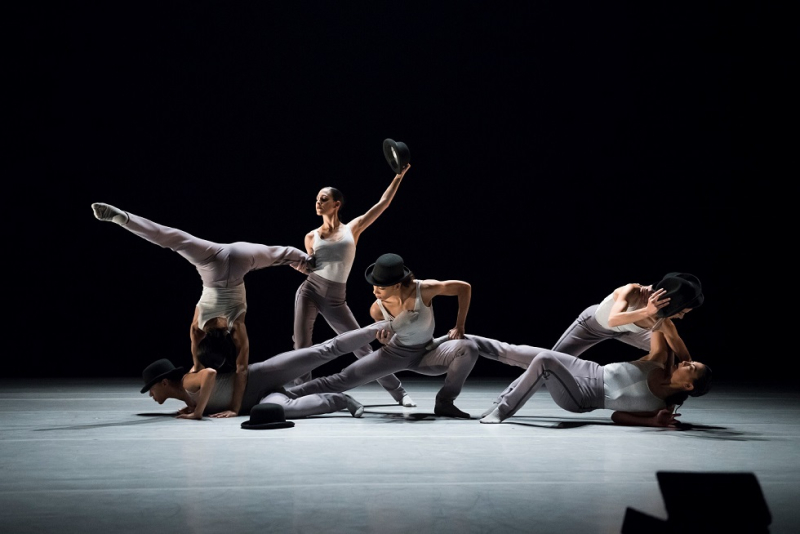
    Sombrero

    Above: the Ballet Hispanico women in Sombrerísimo, photo by Paula Lobo

    Bennyroyce Royon’s Homebound/Alaala is a danced memory-book of his homeland in The Philippines. On the other side of the world, in Bato, Leyte, mi amor de loin keeps me in daily touch with that world – a unique on-line love affair that made Benny’s ballet especially meaningful to me.

    Chris B

    Above: Chris Bloom in Homebound/Alaala, photo by Paula Lobo

    Opening with a dazzling stars-scape, the stage is full of boxes which the dancers carry, push, construct, take down, open, and close throughout the ballet. Perhaps they are boxes full of memories: some are marked Fragile. To popular songs of the Tagalog, the people work, relax, joke, flirt, and dream. Unison dance passages emphasize the sense of community, which is so very strong in the Filipino culture.

    Central to Benny’s ballet is a gay ‘cruising’ duet, performed in silence. The two men warily circle one another, unsure of a response. In an overwhelmingly Catholic society, being gay in The Philippines faces barriers to acceptance; President Duterte tends to send mixed messages on the subject. My Brix thankfully has the support of his family, which many young people in the life there do not.

    But, back to Bennyroyce’s ballet: flip flops are lined up as the finale is reached. While I might have wished for more dancing in this piece, I loved the music, the spirit of commitment from the dancers, and feeling the connection to my Tico…a love from afar.

    ~ Oberon

  • Bella Hristova @ Merkin Hall

    Hristova

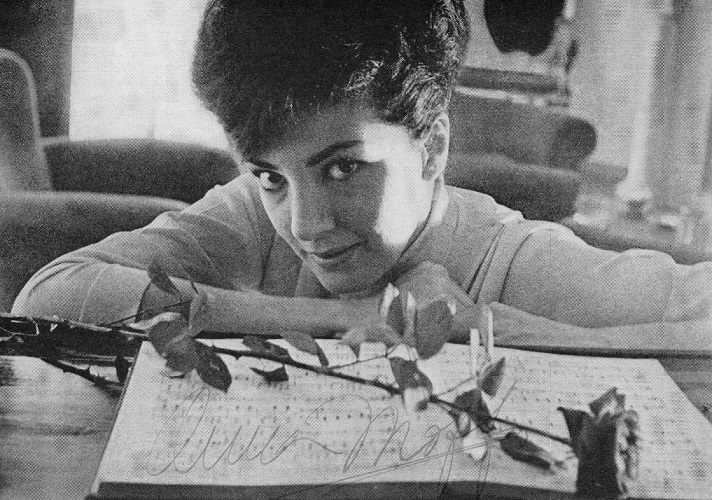
    Above: violinist Bella Hristova

    ~ Author: Oberon

    Tuesday March 26, 2019 – A thoroughly impressive and enjoyable evening at Merkin Hall, as Young Concert Artists presented violinist Bella Hristova in a recital that mixed the familiar with the rare. A striking Bulgarian-born beauty, Ms. Hristova had a perfect colleague in pianist Anna Polonsky; together, the two women evoked a shouting, standing ovation at the end of their program. 

    Glamorously gowned in black, Ms. Hristova seemed to have stepped off the fashion runway and onto the Merkin stage. The abundant richness of her tone – which maintains its allure throughout the dynamic range and even at speed-of-light tempos – is matched to a mastery of technique and a depth of emotion that makes her a paragon among violinists of the day. 

    Mlles. Hristova and Polonsky opened their imaginative program with Olivier Messiaen’s Theme and Variations, a work which deserves wider exposure. Composed in 1932 – nearly a decade before the composer’s monumental Quartet for the End of Time – the opening Thème has a dreamlike quality, with a sustained violin line and a marvelous role for the piano. The ensuing five variations bring a buildup of speed, tension, and drama which climax with the fourth – marked Vif et passionné – before calm descends in the final Tres modéré, with its sustained ending. At the Steinway, Ms. Polonsky brought a wonderful forward impetus as the first four variations progressed, whilst Ms. Hristova dispatched the swift passages and some lively trills with élan. The Vif et passionné movement found the violinist playing on high over accents from the keyboard: the music reaches a grand passion indeed. The return to a more peaceful mood was finely evoked by the two musicians. Insistent applause drew them back for a bow, the pianist’s red shoes an added delight to the evening’s visual aspects.

    In a violin ‘test piece’ sans pareil, Ms. Hristova dazzled the crowd with Ellen Taafe Zwilich’s Fantasy for solo violin. And a test piece it literally is, having been written by Ms. Zwilich as a compulsory work for the Indianapolis Violin Competition. From a passionate start, Ms. Hristova soars on high; later the music percolates, and there’s a touch of the blues. Stretches of coloratura were effortlessly dispatched, some of them extremely fast…and delicate. The music rises to a shining softness, then morphs into an agitato that develops into a rocking sway. Simmering down, Ms. Hristova plays high and sublime before the Fantasy‘s brilliant ending. The audience went wild for this exciting piece, again summoning Ms. Hristova back to bask in a wave of affection. I was hoping that the composer might be among us, so we could express our admiration. 

    There followed a thrilling rendering of the beloved Partita no. 2 in D-minor, BWV 1004, by J S Bach. Ms. Hristova was not only in total command of every aspect of this music, she brought a distinctive glow to it that made it seem ever fresh and vital. The thoughtful melody of the Allemande showed her radiant tone, pristine articulation, lovely phrasing and dynamics. What more could we ask? In the lively dance of the Courante, Ms. Hristova’s flowing musicality carried us along. The melancholy Sarabande was beautifully played, with exquisite touches, and in the Gigue, the reams of fiorature – played very fast – had true clarity, further enhanced by dynamic nuance. An astonishing display of virtuosity…a real treat!

    In the famous Chaconne which concludes the Partita, Ms. Hristova’s passionate playing – and her inspired control as she shaped her vision of this masterpiece – made me wish it could go on and on. The audience, having been held under her spell throughout, gave the violinist a fervent ovation, so eminently deserved.

    Annapiano

    Above: pianist Anna Polonsky

    Arnold Schönberg’s Phantasy for violin and piano, Op. 47, is a remarkable piece which I’d never heard before. After a jagged start, quiet settles briefly over a misterioso passage for the piano; this peace is broken by slashes from Ms. Hristova’s violin, and her isolated notes, plucked from the air. Music of near violence alternates with moments of gentle, somewhat eerie lyricism.

    With Ms. Polonsky playing twinkling notes in the upper end of the keybord, Ms. Hristova joins on the heights. After a whimsical passage, there’s sudden drama, followed by some sneaky music which then turns quite perky. Again, the lyric and the spiky take turns, becoming intense. A pulsating violin note creates a buzz. The Phantasy ends suddenly. 

    Olde World richness of musicality and grace marked evening’s final offering: Johannes Brahms’ Sonata no. 3 in D-minor, Op. 108. Of this familiar piece, I need only say that both violinist and pianist played with overwhelming tenderness and compelling beauty of sound. The hall felt like a haven for those of us seeking solace in a darkening world; for such moments of hope and contentment – however fleeting – I feel a deep gratitude.

    As the two artists beamingly acknowledged the wildly enthusiastic applause of the standing audience, there was no question that an encore was in demand. With sublimely poised lyricism, the players offered a Bach Largo that felt like a benediction, eliciting murmurs of admiration as the music came to an end.

    ~ Oberon

  • CMS: New Music @ The Rose Studio

    Commissions_pintscher_1024px

    Above: composer Matthias Pintscher

    ~ Author: Brad S. Ross

    Thursday March 21st, 2019 – Thursday was a unique night of sounds with the Chamber Music Society of Lincoln Center in the organization’s cozy and intimate Daniel & Joanna S. Rose Studio.  The all-contemporary music program, featuring four works written between 1983 and 2013, ran the gamut of cutting-edge of sonorities, offering its refreshingly engaged audience a small cornucopia of contemporary classical music.  It was also a heavily American program, featuring only a single piece by a European composer—something that can seldom be said of most music programmed at Carnegie Hall or the New York Philharmonic.  Performing that night of the CMS players were the pianist Micheal Brown, violinist Bella Hristova, violist Richard O’Neill, and cellist Mihai Marica.  Their playing was at such a high level of proficiency that one could be forgiven for scarily noticing the ease with which they navigated such technically demanding music.

    The evening began with some academic and mercifully brief opening remarks by the CMS Director of Artistic Planning and Administration Elizabeth Helgeson about the composition of the first two pieces.  Once finished, the players wasted no time diving into the first work of the evening:  Alexandra du Bois’s L’apothéose d’un rêve for Piano, Violin, and Cello.  L’apothéose d’un rêve, translated in English as “The Apotheosis of a Dream,” was originally commissioned by the pianist Menahem Pressler for the Beaux Arts Trio for the trio’s semicentennial in 2005.  The work is cast in five movements played without pause and features a musical voice much befitting its decidedly ambiguous title.

    Its tone is often longing and somber, lingering and dramatic—a stark contrast to the ferocity for which so many contemporary compositions have been known.  Light on extended technique, but rife with developed thematic material, du Bois achieved an almost tragic beauty in L’apothéose d’un rêve, evoking the dreamlike imagery of its name.  The third movement Molto vivo, with its arpeggiating piano lines, seemed almost to harken the swells of some discontented ocean.  The closing movement Misterioso ended with haunting and almost funereal bell tones on the piano as the strings suspended an eternal minor third above them.  Its beauty set a lofty standard for the works to come.

    Next was the revered octogenarian Charles Wuorinen’s Trio for Piano Violin, and Cello.  Composed in the summer of 1983, the piece was originally commissioned and performed by the Arden Trio.  It is cast in a single movement over approximately ten minutes, making it handily the most concise work of the evening.  Compared with the previous piece by du Bois, Wuorinen’s Trio was volatile and ferocious—rich with exquisite colors and textures that brought the most out of the ensemble.  The players had their best work out here and effortlessly demonstrated their expert musicianship on its numerous intricate runs, tightly dissonant intervals, and relentless difficult counterpoint.  It all culminated in an unsettling and richly dramatic ending that, in the best possible sense, left me wanting more.

    Helgeson returned to the stage for a few more brief words about the program and the performers soon launched into the third work of the evening: Matthias Pintscher’s Janusgesicht for Viola and Cello.  The German-born Pintscher, the sole aforementioned non-American on the program, composed Janusgesicht in 2001.  Its title refers to the god of Roman mythology Janus, whose two faces stair simultaneously in opposing directions.  Janusgesicht, as the composer writes, is “less about correspondence or communication among the two voices, but about the dissolution of one’s voice into the other.”  For this piece, the players thus faced away from each other as the lights in the hall were near-completely darkened, minus some ambient blue lighting cast upon the back wall.  Gimmicky as this setup may seem (I indeed had my doubts), it turned out to be one of the more interesting performances of the evening.

    Janusgesicht was understandably the most dissonant and atonal work of the night—no tone center was to be found amidst its eerie scratchings and unholy strikes as these two string players weathered some of the most discordant sonorities of the evening.  The work is characterized by myriad unnerving atmospheres, haunting silences, and arresting sonic textures, none of which ever outstayed their welcome.  Following a lugubrious and tantalizing final decrescendo, the performers froze in place for what must’ve been half a minute before finally lowering their bows to receive a well-earned applause.  Though it required patience and a mind considerably open to challenging music, Janusgesicht was well-worth the effort—the audience knew it, too.

    The fourth and final piece of the night was David Serkin Ludwig’s Aria Fantasy for Piano, Violin, Viola, and Cello.  Written in 2013, this quartet was the most recent composition of the program, though its roots stretched the furthest back of all. It was inspired, as the program indicated, by the opening and closing arias of Johann Sebastian Bach’s Goldberg Variations from 1741, but was pleasantly light on direct quotations.  Ludwig, who was present for the night’s proceedings, was humorously short-winded in a pre-performance talk about the work, quipping that “a composer should never speak for longer than the duration of the piece.”  What unfolded over the next sixteen minutes turned out to be a wild and adventurous combination of musical idea.

    Aria Fantasy began on a lullaby-like piano line accompanied by almost science fiction-like glissandi in the strings.  This unusual combination of pleasantly tonal melodies contrasted with obstinately discordant harmonies and modern musical techniques played like a dream that was equal parts pleasant and frightening.  After this eerie opening came a dramatic and eventful middle section (andanteadagio), followed by a growing momentum that built to a grand final section (con moto).  When the final diminuendo played the piece to its close (tempo di aria), the audience—including yours truly—was left wanting it to continue long after the piano’s final harmonic resolution.

    This was a resounding finale to a night of superb contemporary music—music that should be performed as often and as widely as anything by the late masters.  Other ensembles would do well to take their example and program more works by living composers.  If Thursday night’s enthusiasm was any indication, audiences are itching to hear it.

    ~ Brad S. Ross  

  • The Borodin Quartet ~ Chamber Music Society

    54390889_10156374663898666_1471336215130144768_n

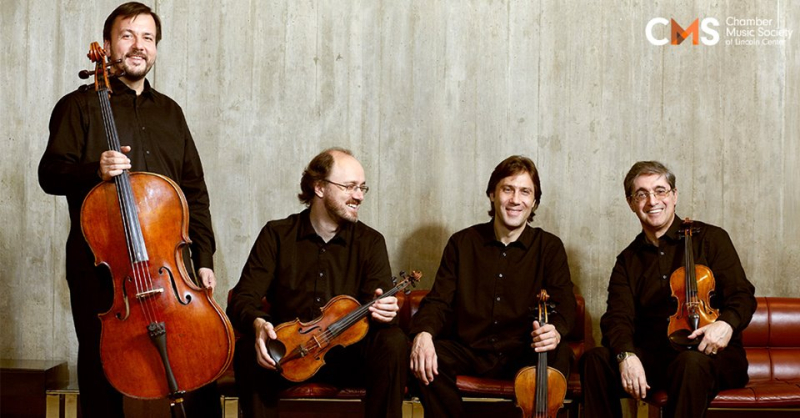
    Above: the members of The Borodin Quartet: Vladimir Balshin, Sergei Lomovsky, Igor Naidin, and Ruben Aharonian.

    ~ Author: Oberon

    Sunday March 24th, 2019 – For the grand finale of their Russian Panorama festival, Chamber Music Society of Lincoln Center welcomed The Borodin Quartet. Formed in 1945 by four students from the Moscow Conservatory, the Borodin are world-renowned for their interpretations of the Shostakovich quartets.

    The Frankfurter Allgemeine Zeitung said of The Borodin Quartet: “…here we have not four individual players, but a single 16-stringed instrument of great virtuosity.” Truer words have ne’er been written. The members of the Borodin are Ruben Aharonian and Sergei Lomovsky (violins), Igor Naidin (viola), and Vladimir Balshin (cello); seldom have I heard such an intrinsically beautiful blending of sound as in this richly rewarding concert.

    To open the program: Nikolai Myaskovsky‘s Quartet No. 13 in A-minor, Op. 86, written in 1949. A composer of vast output, Myaskovsky is not well-known outside Russia, where he is considered part of a triumvirate alongside Prokofiev and Shostakovich; Myaskovsky’s music is far more conservative than that of his two compatriots, and he disdained European influences. On the evidence of this 13th quartet, opportunities to hear more of his music would be most welcome.

    To a pulsing rhythm, a cello solo is passed on to the violin and then to the viola; immediately the unique sound of the Borodins captivates the ear. The themes of this opening Moderato entwine in a miraculous intermingling of the four instruments. A sense of urgency rises, then subsides as Mr. Aharonian’s violin sings a sad, sweet song. A fugue springs up, then the melodic flood resumes, sweeping on to a reverential ending.

    The Presto fantastico is a swift, scherzo-like affair with a driven accompaniment figure until things slow for a poignant melody from the violin and cello in turn. To a plucking motif, cellist Vladimir Balshin plays a melancholy air. The music then peps up, dancing along at increasing speed to a witty, plucked finish.

    The Andante con moto e molto cantabile is solemn and wistful: the signature feeling we associate with the most poignant Russian music. Cello and violin are again featured, and the movement ends in a benedictive state. 

    The energetic start of the Molto vivo offers perfect contrast: violin and cello passages – the violin sailing over dense harmonies – evolve to a delightful section for duetting violins as the lower instruments are plucked. Violin and cello resume their thematic game of tag; the violin duo revives itself, joined by cello and viola as the the music comes to an amusing end.

    Shostakovich’s Quartet No. 13 in B-flat minor, Op. 138, was composed in 1970. In this single-movement work, the viola takes a prominent role; the quartet further features moments when the players tap on their instruments with the wood of their bows.

    From the opening solo, violist Igor Naidin’s playing made a deep impression. As the other players join, dissonances crop up. The violin wanders above, the cello deep, the harmonies brooding. The violins duet, and the music turns searing before resuming is slow, darkish aspect. The high violin makes stuttering comments, and from dense dissonances the trilling viola emerges. Now the tapping starts. The higher voices commence a rhythmic pattern, with the cello sounding below. A sense of mystery develops, broken by insistent slashings. The the viola plays alone, the music rich and gloomy, and the violin on the rise. Cello and viola duet; the viola begins to ascend and – against the tapping – Mr. Naidin sounds simply ravishing. The music ends on high, sustained tones. 

    Following the interval, Alexander Borodin’s Quartet No. 2 in D-major, from 1881, was given a phenomenal performance. The opening Allegro moderato, with superb playing from Mr. Balshin, was a pure delight. The Scherzo, quite bubbly, brings out the familiar melody of “Baubles, bangles, and beads“, adapted in the musical Kismet. Lyricism and finesse sustain the ebb and flow before returning to the charm of the Kismet theme, underscored now by the insistent sound of the cello’s tones. There’s a sudden rush, to a sprightly finish…:”Wow!” is what I wrote here.

    The cello’s plushy resonance and the violin’s silken sweetness intoxicate us in the Notturno: andante: music of magical romance. As heart-on-sleeve theme follows gorgeous theme, the players outdo themselves: the violins ethereal, the cello stunning, as the music becomes truly sublime.

    A rather weird entr’acte introduces the Finale, with the cello setting the pace as the viola takes off. All play briskly, the music scurrying before turning lyrical. The “entr’acte” returns, feeling a bit out of place. Slow and fast passages alternate, leading to the dense finish with the violin poised in heaven.

    Tonight’s Alice Tully Hall audience were not about to let The Borodin Quartet go without an encore: insistent applause and cheers brought the players back to their chairs, where they offered a hauntingly beautiful rendering of Shostakovich’s Elegy for String Quartet: a perfect ending to a perfect evening. 

    ~ Oberon

  • The ASO Presents Martinů’s JULIETTA

    B martinu

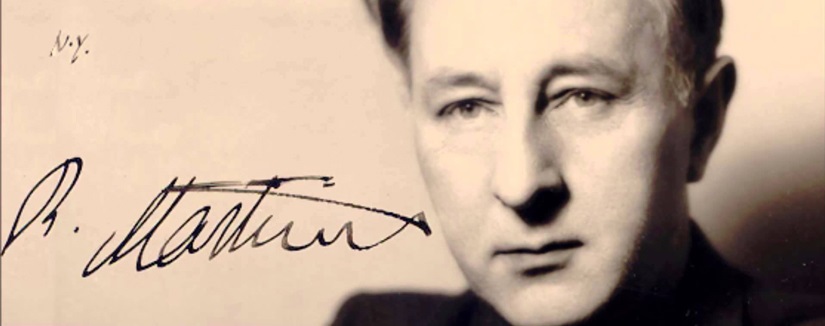
    Above: the composer Bohuslav Martinů

    ~ Author: Oberon

    Friday March 22nd, 2019 – Bohuslav Martinů’s opera JULIETTA in a concert presentation by The American Symphony Orchestra at Carnegie Hall, conducted by Leon Botstein. Based on the French play Juliette, ou La clé des songes (Juliette, or The Key of Dreams) by Georges Neveux, Martinů’s opera explores a world where dreams and reality converge.

    The plot of the opera was once described thus: “Michel Lepik, a bookbinder from Paris, is dreaming. Finding himself in a small seaside town, he sets out to look for a woman, Julietta, he’s absolutely convinced he met there three years before. The only problem is, everyone in the town has lost their memory. After a search, he finally finds her and tries to coax from her memories of their time together. Frustrated, he shoots her. But did it all really happen? Michel finds himself  in the “Central Office for Dreams”, where the nightwatchman tries to persuade him to leave…because, if he stays past the allotted time, he must stay forever.”

    While it was interesting to experience JULIETTA live, not all operas work well in a concert setting. The story is somewhat intriguing in its own right, but it seems to me that it cries out for an imaginative staging: it is not really a strong enough narrative to sustain interest over a three-hour span without some visual context. Beyond the leading roles of Julietta and Michel, the singers each portrayed multiple characters. A booklet with the full text was provided, but it is not easy to watch the stage, read the words, and take notes all at the same time. Also, throughout the performance, the sound of text booklets dropping to the floor was annoying.

    Martinů’s orchestration is sometimes fascinating, but only in the final moments of Act II did the opera draw me in musically. Much of the first act is given over to banter – some of it spoken, in English – and at times it felt more like a play or a Broadway show than an opera; I must say, in truth, it became tiresome after a while. At 10:00 PM, there was an intermission, with another act still to come. Knowing how whimsical the MTA is at night, I decided it was safest to leave Carnegie Hall at the point. Sure enough, I had an ordeal getting home.

    The orchestra played very well under Maestro Botstein’s detailed leadership; the score is strewn with brilliant little instrumental opportunities, which the players eagerly seized upon. Tenor Aaron Blake, slender and lively, impressed in the role of Michel. His music calls for plaintive lyricism but also power and passion. Mr Blake’s voice had the needed beauty of tone as well as the intensity required to give a truly impressive performance. In the title-role, the attractive soprano Sara Jakubiak sang with a warm spinto sound, making me wish the character had more extended passages of song. David Cangelosi, who has been so excellent as Wagner’s Mime and in other highlighted character roles at The Met, was simply superb as the Police Chief.

    Multi-tasking in myriad roles were: the comely young mezzo Rebecca Jo Loeb, the lively and boisterously endearing mezzo Raehann Bryce-Davis, the always-wonderful contralto Tichina Vaughn, Met stalwart and strong-voiced baritone Philip Cokorinos, the fine basso Kevin Burdette – who I heard many times in his Juilliard days – and the inimitable Alfred Walker, a vocal scene-stealer and impressive presence, with ultra-clear diction. A small vocal ensemble from the Bard Festival Chorale (James Bagwell, director) sang from stage right.

    I wish I could feel more enthusiastic about the piece itself; I also wish the ASO would start their performances at 7:00 PM, so as to end before the MTA makes getting home a chore.

    ~ Oberon

  • The ASO Presents Martinů’s JULIETTA

    B martinu

    Above: the composer Bohuslav Martinů

    ~ Author: Oberon

    Friday March 22nd, 2019 – Bohuslav Martinů’s opera JULIETTA in a concert presentation by The American Symphony Orchestra at Carnegie Hall, conducted by Leon Botstein. Based on the French play Juliette, ou La clé des songes (Juliette, or The Key of Dreams) by Georges Neveux, Martinů’s opera explores a world where dreams and reality converge.

    The plot of the opera was once described thus: “Michel Lepik, a bookbinder from Paris, is dreaming. Finding himself in a small seaside town, he sets out to look for a woman, Julietta, he’s absolutely convinced he met there three years before. The only problem is, everyone in the town has lost their memory. After a search, he finally finds her and tries to coax from her memories of their time together. Frustrated, he shoots her. But did it all really happen? Michel finds himself  in the “Central Office for Dreams”, where the nightwatchman tries to persuade him to leave…because, if he stays past the allotted time, he must stay forever.”

    While it was interesting to experience JULIETTA live, not all operas work well in a concert setting. The story is somewhat intriguing in its own right, but it seems to me that it cries out for an imaginative staging: it is not really a strong enough narrative to sustain interest over a three-hour span without some visual context. Beyond the leading roles of Julietta and Michel, the singers each portrayed multiple characters. A booklet with the full text was provided, but it is not easy to watch the stage, read the words, and take notes all at the same time. Also, throughout the performance, the sound of text booklets dropping to the floor was annoying.

    Martinů’s orchestration is sometimes fascinating, but only in the final moments of Act II did the opera draw me in musically. Much of the first act is given over to banter – some of it spoken, in English – and at times it felt more like a play or a Broadway show than an opera; I must say, in truth, it became tiresome after a while. At 10:00 PM, there was an intermission, with another act still to come. Knowing how whimsical the MTA is at night, I decided it was safest to leave Carnegie Hall at the point. Sure enough, I had an ordeal getting home.

    The orchestra played very well under Maestro Botstein’s detailed leadership; the score is strewn with brilliant little instrumental opportunities, which the players eagerly seized upon. Tenor Aaron Blake, slender and lively, impressed in the role of Michel. His music calls for plaintive lyricism but also power and passion. Mr Blake’s voice had the needed beauty of tone as well as the intensity required to give a truly impressive performance. In the title-role, the attractive soprano Sara Jakubiak sang with a warm spinto sound, making me wish the character had more extended passages of song. David Cangelosi, who has been so excellent as Wagner’s Mime and in other highlighted character roles at The Met, was simply superb as the Police Chief.

    Multi-tasking in myriad roles were: the comely young mezzo Rebecca Jo Loeb, the lively and boisterously endearing mezzo Raehann Bryce-Davis, the always-wonderful contralto Tichina Vaughn, Met stalwart and strong-voiced baritone Philip Cokorinos, the fine basso Kevin Burdette – who I heard many times in his Juilliard days – and the inimitable Alfred Walker, a vocal scene-stealer and impressive presence, with ultra-clear diction. A small vocal ensemble from the Bard Festival Chorale (James Bagwell, director) sang from stage right.

    I wish I could feel more enthusiastic about the piece itself; I also wish the ASO would start their performances at 7:00 PM, so as to end before the MTA makes getting home a chore.

    ~ Oberon

  • Matthias Goerne ~ Adams: The Wound-Dresser

    Goerne

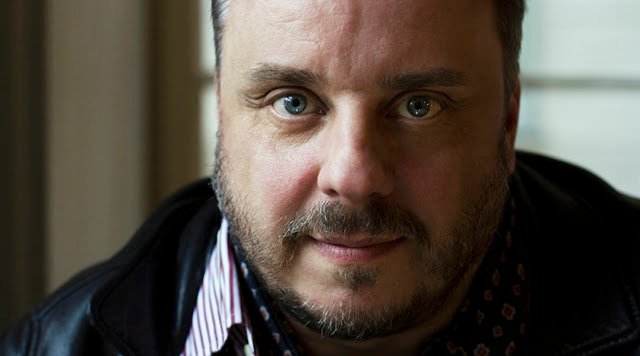
    Above: baritone Matthias Goerne

    ~ Author: Oberon

    Thursday March 21st, 2019 – This long-awaited concert featured The New York Philharmonic‘s Artist-in-Residence Matthias Goerne singing one of my favorite 20th-century vocal works: John Adams’ The Wound-Dresser. Music by Charles Ives and Johannes Brahms was also on the bill, with the orchestra’s Music Director, Jaap van Zweden, on the podium.

    Charles Ives’ mysterious Central Park in the Dark made for a strangely fascinating program-opener. If you’ve ever walked across The Park at night, this atmospheric and slightly creepy music – which at first drifts by like a cool nocturnal mist – perfectly summons up the surreal feeling of being alone in the huge City.

    The sound of Pascual Martínez-Forteza’s clarinet introduces a human element; the trumpet and a pair of pianos come into play, and there is a boisterous, off-kilter rendering of “My Ragtime Gal” and a noisy battering of percussion that makes you want to call 311. Then, slowly, the music fades into a dream. 

    Mr. Goerne then appeared for John Adams’ The Wound-Dresser. This work was composed for and premiered by the late, great American baritone Sanford Sylvan in 1989. The texts are from Walt Whitman’s poem of the same title. The poet took on the task of visiting the sick and dying soldiers in hospitals during the time of the Civil War.

    Composer John Adams said of this poem: “…(it) is the most intimate, most graphic, and most profoundly affecting evocation of the act of nursing the sick and dying that I know of. It is also astonishingly free of any kind of hyperbole or amplified emotion, yet the detail of the imagery is of a precision that could only be attained by one who had been there.”

    Mr. Goerne’s interpretation of this poignant work had an almost operatic feeling. One could say that his English diction had a ‘British accent’; for the most part, his enunciation was admirable, whilst overhead titles filled in any blanks. The sound of a dropped item in the audience at the very outset of the piece was the worst kind of intrusion, but Maestro van Zweden would not be deterred.

    The music at first evokes the tread of the nurse, walking the wards. Mr. Goerne’s voice at the start was deep and dark; the baritone’s great gift of a vast dynamic range meant that he could bring a haunting, unexpected pianissimo into the turning of a phrase, At some moments, feelings of anger rose in the voice: a righteous anger over the death and despair of war.

    The poignant descent of the basses before “I onward go“, the sheer lyric beauty of Goerne’s “One turns to me…”, and the unbearable tenderness of “…to die for you, if that would save you!“: these were but a few of the memorable moments in this moving performance. The singer’s powers of expression as he describes horrific afflictions, his passionate distress – leading to the haunting “Come, sweet death...” – and the miraculous sustained piano at “…in mercy…” draw us deeper and deeper into the poet’s thoughts.

    The lamenting violins, the deep-purple basses, the celesta-like intimations of angel wings, the plaintive high trumpet as the wounds are described – from these the music builds to a flood of anguish, to be overtaken by the high violins and their vision of heavenly rest. Surrounded by suffering, the nurseman sings: “I am faithful. I do not give out.” 

    The music grows huge, the voice now with an almost demented quality. Mindy Kaufman’s flute sounds forth, and the woodwinds take on the aspect of a choir. Mr. Goerne’s singing, so perfectly modulated, is heartbreaking. The gleaming trumpet sounds, the music rises on high.

    In the watches of the night, the poet/nurse sits by the dying men: “Some are so young. Some suffer so much.” And at the end, his story becomes personal: “Many a soldier’s loving arms about this neck have cross’d and rested. Many a soldier’s kiss dwells on these bearded lips.”

    A long silence followed this most moving performance. The composer joined Mr. Goerne and Maestro van Zweden onstage, with Mr. Adams summoning the orchestra’s principal trumpet, Christopher Martin, to rise for a bow. As so often after a memorable musical experience, part of me wanted to leave and hold onto the memory of it.

    But, following the interval, we heard a lustrous performance of Brahms’ Symphony No.1. It took Brahms nearly fifteen years to compose this, his his first symphony. He continually made revisions throughout this time-span, discarding pages, editing, and starting over from scratch. At the time of the premiere, Brahms worried whether anyone would like the finished work. But Hans von Bülow – a composer, conductor and pianist, just like Brahms – referred to the symphony as ‘Beethoven’s Tenth’. High praise indeed: and Brahms, now feeling confident after a positive public reception, wrote a second symphony the following year.

    Another “dropped item” made an unwanted dent in the score as the symphony began; I notice that people are now allowed to bring water bottles into the hall, and possibly these are contributing to what seems to be an increasing annoyance of extraneous sounds spoiling the music we’ve all come to hear.

    The first movement of the Brahms 1st was especially wonderful to experience tonight. Flautist Robert Langevin and clarinetist Anthony McGill were in for the concert’s second half, making beautiful music. The blended sound of the orchestra was so finely integrated, the horns sounded opulent, and the sense of longing in the music as the movement progressed was palpable.

    The Andante sostenuto, with Sherry Sylar’s lovely oboe solo, the satiny sound of the rising violin theme,  Mr. McGill’s pliant phrasing of the clarinet line, and Richard Deane’s velvety horn all highlighted the Autumnal beauty of the music. The ensuing Poco allegretto feels merely pleasant at first, but soon turns livelier. Again, Mr. McGill – and the Philharmonic’s grand bass players – gave much for us to enjoy.

    Sneaky plucking made a delightful impression in the concluding movement, wherein the horn, flute, and a brass choir each have their say before the familiar tune commences, carrying us on to the work’s vibrant finish.

    Under Maestro van Zweden’s leadership, The Philharmonic tonight played the Brahms as magnificently as I have ever heard them play anything – and that is saying a great deal. The sound was rich, profound, and heartfelt. The symphony unfolded naturally, unhurried but always alive, leading to a celebratory ovation at the end.

    ~ Oberon

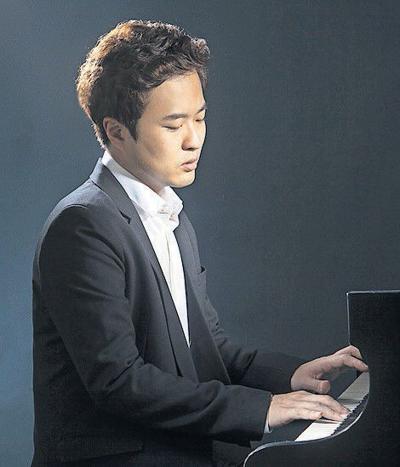
  • Pianist Dasol Kim @ The Morgan Library

    5bc8cc9dcb693.image

    Above: pianist Dasol Kim, photo by Christian Steiner

    ~ Author: Oberon

    Wednesday February 27th, 2019 matinee – Young Concert Artists presenting pianist Dasol Kim in a noontime recital at The Morgan Library. An imaginative program, superbly played in this intimate, high-ceilinged and sonically alive hall, made for a heart-warming experience on a chilly, overcast day. 

    Mr. Kim has been a prize-winner at numerous competitions. He has been a soloist with major orchestras in Europe and the USA, and his debut disc – of works by Robert Schumann – was released by Deutsche Grammaphon in 2015.

    Opening his recital at the Morgan this afternoon, the lithe-framed pianist displayed a wonderful sense of rhythmic vitality in Beethoven’s Piano Sonata No. 26 in E-flat Major, Op. 81a. The pulse of the music was finely set forth as the atmosphere moves from melancholy to triumphant to joyous. A loud, ill-timed cough from someone in the hall rather spoiled the ending of the first movement, but Mr. Kim was not fazed in the least and proceeded to a perfect rendering of the moody Andante espressivo, which shifts between pensive and hopeful passages. His playing here showed a wonderful delicate touch.  In the sonata’s final movement, the rapid passages were then effortlessly clear and vivid, with big attacks and fiorature aplenty. A sort of coda brings the work to a big end, and brought the first of the afternoon’s volleys of applause from the appreciative audience.

    Chopin’s Scherzo No. 4 in E Major, Op. 54, shows a certain motivic relationship to the Beethoven. Mr. Kim offered fanciful, jewel-like cascades of notes, laced with charming mini-pauses along the way. A sudden shift to sadness is a surprise; the music turns dreamy before returning to this sad theme, which Mr. Kim played so movingly. With a burst of passion, happiness returns. The piece ends grandly.

    Mr. Kim then offered an engrossing – indeed hypnotic – performance of Maurice Ravel’s astonishing Gaspard de la nuit. This most demanding of solo piano works was inspired by a book by Aloysius Bertrand (1807-1841) of the same name which contained verses, prose-poems, and drawings relating to fantasies of imps, devils, nymphs, ill-fated lovers, visions of death, and nightmares. Gaspard de la nuit is a nick-name for Satan.

    The opening movement, Ondine, tells of the attempt of the eponymous water nymph to draw her mortal beloved down to her submerged castle, from which they will rule the deep. Dasol Kim’s playing of the shimmering, rapturous fihurations was so evocative. Music of magical delicacy turns passionate; the pianist plays glittering scales as the sound builds, to be followed by a feeling of dreamlike drifting.

    The incredibly haunting Le gibet (The Gallows) depicts a hanged man silhouetted against the setting sun. This darkly hesitant, eerily beautiful music (so chillingly used in the noir vampire film, The Hunger) was a perfect vehicle for Mr. Kim’s mesmerisingly sustained interpretation: his sublime control here gave me the chills.

    After a sly start, Scarbo (an elusive dwarf who haunts dreams) turns into a high-velocity dance with cunning pauses and crafty mood swings. With dazzling dexterity, Mr. Kim portrayed this sneaky creature; the music turns ghostly before Scarbo vanishes quietly into the night.

    To end his program, Mr. Kim offered Nikolai Kapustin’s ‘Intermezzo’ from Eight Concert Etudes, Op. 40: a jazzy work played with a debonair lilt. The music speeds up, the pianist reeling off the lively, dancing passages with flair. This dazzling finale/encore elicited a standing ovation from the crowd.

    ~ Oberon

  • Oratorio Society: Sibelius ~ KULLERVO

    439px-Wettenhovi-Aspa _Kullervo_(Sibelius)

    Above: artwork by Georg Sigurd Wettenhovi-Aspa (1870-1946)

    ~ Author: Oberon

    Monday February 25th, 2019 -The Oratorio Society of New York presenting works by Berlioz, Debussy, and Sibelius at Carnegie Hall. The concert provided my first opportunity to experience Jean Sibelius’ epic choral symphony, Kullervo, live. The first half of the program was given over to two wonderfully atmospheric works featuring women’s chorus: Hector Berlioz’s “La mort d’Ophélie” from Tristia, and Claude Debussy’sSirènes from Nocturnes.

    Berlioz’s Tristia dates from 1842; the “Mort d’Ophélie” was written as a solo work, and later re-set for female chorus and orchestra. The attractive scoring of the 1849 version heard tonight brings thoughts of Les Troyens amd Les Nuits dété to mind; in fact, the composer seems to have anticipated the former and borrowed from the latter as certain motifs rise up. The women of the Oratorio Society Chorus harmonized lovingly, and the orchestra played to perfect effect.

    A song without words, the Debussy “Sirènes” (from 1899) evokes thoughts of the composer’s La Mer (of course) as well as of the haunting Pelléas et Mélisande, which the Met recently offered in a very fine performance.

    “Sirènes” surely cast a spell this evening, though the repeated themes made the piece stretch long after a bit. Still, there’s no denying the great appeal of this dreamy music. As the work moved towards its ending, a cellphone going off brought us back to reality all too abruptly.

    After a rather lengthy intermission, Jean Sibelius’ Kullervo received a superb performance under Kent Tritle’s baton. The male chorus of the Society was further fortified by the men of the Manhattan School of Music ‘s Symphonic Chorus: the combined choruses made an outstanding contribution to the performance, giving the audience cause to celebrate. The work calls for two vocal soloists, and both were marvelous: soprano Johanna Rusanen and baritone Takaoki Onishi.

    Composed in 1892, the five-movement work tells us of the mythic Kullervo, a complex, tragic figure from Finnish legend. The Introduction depicts the Finnish land and its people and introduces us to the main character. In the second movement, Kullervo’s childhood is evoked: haunted by tragedy from birth onwards, he spends his youth largely in slavery.

    The pivotal movement is the third, in which Kullervo meets and seduces (or rapes) a woman who is – unbeknownst to him – his own sister. When she learns the truth, the woman drowns herself. Kullervo laments his crime and his sister’s death; as atonement, he seeks death on the battlefield. But Death does not find him; he returns to the site where his sister died and, consumed by guilt, he falls on his sword.

    I must admit that the first two movements – very well played by the Society’s orchestra – left me with restless feelings. Full of themes, and finely orchestrated to boot, the music nonetheless seemed over-long; I kept eyeing that big chorus seated onstage, wanting them to burst into song. And when they did, the effect was thrilling: the signature choral motif – “Kullervo! Son of Kalervo!” – surges forth several times in the course of the work…and its every appearance makes the blood rush. This is, seemingly, the Scherzo of the piece.

    The two soloists have now taken their places onstage. Johanna Rusanen, a Finnish soprano who was a Young Artist at Berlin’s Deutsche Oper and has since made her mark in such roles as Venus, Ortrud, Isolde, and Marie in Wozzeck, is an intriguing stage presence with a clear-toned, full spinto sound that rang beautifully into the venerable Hall. Her long monologues were both vocally impressive and charged with dramatic accents as the character’s story unfolds. Ms. Rusanen’s voice struck me as one that should be heard at The Met. 

    The Japanese baritone Takaoki Onishi has fared well in several premiere vocal competitions. A Juilliard graduate, he was a member of the Ryan Opera Ensemble at Lyric Opera of Chicago for three seasons, where he sang several roles. His career mixes opera, concert, and recital, and I can’t wait to hear him again. A slender, handsome fellow who looks elegant in a tuxedo, Mr. Onishi possesses a baritone voice of fine quality, capable of expressive lyricism or of vivid declamation; the role of Kullervo demands both, and the baritone sang forth with distinction.

    Oratorio Society of NY at Carnegie Hall  2-25-19  photo by Anna Yatskevich  Manhattan School of Music 47166962492_8510b0d4bf_k

    During the long and loud ovation that followed, the soloists and Maestro Tritle were deservedly cheered, as were the the excellent singers and players of the Oratorio Society of New York. The above photo by Anna Yatskevich from the Manhattan School of Music captures the joy of the moment.

    Hearing the women sing Berlioz, and listening to the handsome voices of Ms. Rusanen and Mr. Onishi made me crave a concert performance of Berlioz’s Prise de Troie. How wonderful these two singers would be as Cassandra and Chorebus!

    ~ Oberon