Category: Dance

  • CAV Without PAG @ The Met

    Mascagni_428

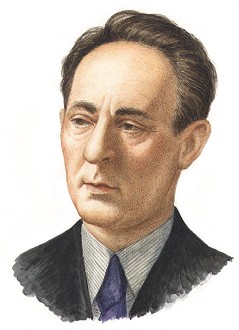
    Above: composer Pietro Mascagni

    Tuesday February 23rd, 2016 – Having looked at photos and video clips of the Met’s current productions of CAV and PAG, I had no desire to see a performance of the famed double bill in such settings. But I do love both operas, and so I opted for a score desk this evening. I knew in advance I would be leaving after CAV. The combination of Barbara Frittoli and Marco Berti in PAG didn’t appeal to me much, and though I would have liked to have heard George Gagnidze’s Prologo, that would have meant enduring a Gelb-intermission. So it was CAV and then a casa, a casa, amici.

    The Met has never felt emptier than it did tonight; I’ve seen some very sparse audiences in the last two or three seasons, but this was really depressing. To be sure, it was a star-less night; and ticket prices are high. But even on middling nights, the ‘affordable’ upper tiers of the House used to be reasonably full. Tonight, only a handful of people were sitting in the Balcony box and Family Circle box sections which are normally fully occupied by hard-core opera lovers. At the end of CAV, there was just barely sufficient applause to get the curtain back up for the bows.

    The reasons for the decline in attendance have been discussed at length on other sites; suffice it to say that The Met seems to be committing a slow suicide, and that no one seems to be doing an intervention.

    Liudmyla Monastyrska sang a good Tosca earlier this season, and it was to hear her Santuzza that I chose to go tonight. Tosca suits her better, or so it seems to me. In Santuzza’s music we are accustomed to an earthier, more chest-resonant sound than Ms. Monastyrska brought to the music of the hapless outcast. But she sang tonight with a fine sense of dynamic variety, and did some really nice lyrical singing in passages like “No, no Turiddu…” in her duet with the tenor and – even more expressively – at “Turiddu mi tolsi…” in the duet with Alfio. Her top notes are bright and house-filling, but with hints of a widening vibrato. In the curse, Ms. Monastyrska was convincing though without the deadly declamatory venom of a Simionato or a Cossotto.

    Brazilian tenor Ricardo Tamura, much maligned last season when he stepped in as Don Carlo for an ailing colleague while himself being under-the-weather, did a reasonable job as Turiddu tonight. He sounded throaty and a bit quavery in the offstage serenade, but once onstage he fared better. The singing is idiomatic, and he kept pace with the soprano in their big duet. Later, as he pleaded with Alfio to consider Santuzza’s fate if he, Turiddu, is killed, Tamura was very persuasive.

    The most idiomatic and vocally satisfying performance tonight came from baritone Ambrogio Maestri; his Alfio has the right vocal swagger and his top notes were full, ripe, and thrilling. My score refers Lola’s little entrance song as “Lola’s Ditty”; Ginger Costa-Jackson did a good job with it, throwing in some nice chesty insinuations along the way as she chided Santuzza. It’s always good to have Jane Bunnell in a cast. I’ve always liked her, and I still do.

    Fabio Luisi’s conducting was the evening’s biggest asset: his pacing was excellent, with an effective build-up to the Easter Hymn, and he refused to over-cook the famous Intermezzo, instead making it a touching musical statement. Throughout the evening, Luisi brought out little nuances in the score that hadn’t previously registered with me, and he maintained an alert balance between voices and orchestra, never swamping his singers.

    Kudos to the Met chorus, who made the Easter Hymn the musical focus of the evening. This great chorale always moves me in its expression of the simple and direct faith of the common folk. Tonight it reminded me yet again of how the great religions have been hi-jacked and politicized in recent years. These days, my own mother’s piety and kind-heartedness would be thought too mushy and weak. I often wonder what she would think of the current situation.     

    Metropolitan Opera House
    February 23rd, 2016

    CAVALLERIA RUSTICANA
    Pietro Mascagni

    Santuzza................Liudmyla Monastryska
    Turiddu.................Ricardo Tamura
    Lola....................Ginger Costa-Jackson
    Alfio...................Ambrogio Maestri
    Mamma Lucia.............Jane Bunnell
    Peasant.................Andrea Coleman

    Conductor...............Fabio Luisi

  • Ballet Academy East @ Ailey Citigroup

    12729135_10102663014065261_1219830271059168853_n

    Above: from Claudia Schreier’s ballet “Charge“, a Rosalie O’Connor photo

    Saturday February 20th, 2016 – Young dancers from Ballet Academy East appeared tonight in performance at Ailey Citgroup Theatre. Ballets choreographed by Ashley Bouder, Jenna Lavin, and Claudia Schreier were on offer, as well as George Balanchine’s classic “Raymonda Variations”, staged by Darla Hoover, BAE’s artistic director and a répétiteur for the Balanchine Trust.

    Though billed as a ‘studio showing’, the presentation was fully staged, with lighting and costumes. The house was packed, with some dance-world luminaries who teach at BAE among the crowd.

    Jenna Lavin’s “Barcarolle” opened the evening; set to the beloved music of the same title from Offenbach’s CONTES D’HOFFMANN, Lavin’s charmer of a ballet was danced by the youngest group of dancers on tonight’s programme: ages 10 to 12 years. The ballet’s three boys were showing early development of the courtly style which is an essential component to classical ballet, whilst the girls – in pretty pink tutus – danced with amiable grace.

    Ashley Bouder, principal ballerina with New York City Ballet, has choreographed “Mozart’s Little Nothings“, a ballet to the great composer’s “Les petits riens” for a cast of 13 BAE dancers ranging in age from 12 to 15. The choreography is elegant and well-structured – as perfectly befits the music. The girls wear white with violet ribbon trim, and the ballet has a classic hierarchy of principal couple, pas de trois, and corps de ballet. The dancing was accomplished, the young dancers successfully imparting a sense of both balletic decorum and the joy of performing, and celebrating in a wonderful ‘big circle’ moment. Ms. Bouder, with a beautiful baby bump, was greeted warmly when she took a bow at the end of her ballet. 

    Boldly and thrillingly choreographed for 22 of the school’s most technically advanced dancers, Claudia Schreier’s premiere, “Charge” calls upon her youthful cast for both strong traditional ballet technique and an unusually supple fluency of the upper body, with correspondingly fluid port de bras. “Charge” is set to the third movement of the contemporary Dutch composer Douwe Eisenga‘s piano concerto.

    Ms. Schreier showed a clear mastery of structure in deploying her large cast with consummate skill from start to finish in this exciting ballet. Opening with a single girl onstage, the choreographer commences to build her ballet with a duo, a trio, and a quartet of dancers arriving in succession, eager to dance. By the time the full cast are onstage, the choreography and Mr. Eisenga’s sparkling, dramatic score are whisking us along on an exhilarating ride.

    Charge” unfolds with a dynamic sense of the inevitable: the music propels Ms. Schreier’s choreography at every moment, and the dancers give it their all. So many highlights along the way: a passage for six boys is echoed by six girls; a stylized pacing motif; a grand circle that rushes to form and then vanishes just as quickly; an off-kilter pas de deux; four quartets in canon; fleeting solos; unusual lifts. Ms. Schreier miraculously managed her large cast – in a limited space – so compellingly that things never seemed over-crowded or chaotic.

    In sum, “Charge” writes another vivid page in Ms. Schreier’s dance diary: a perfect follow-up to the memorable works she presented on this very stage in August 2015. Kudos to the young dancers who illuminated “Charge” with their flair and commitment.

    After the interval, Ms. Lavin turned to Schubert’s piano trio # 2 in E- flat major, Opus 100, for the premiere of “(S)EVEN”. Three girls in blue and four is pale rose comprise the cast. Ensemble moments give way to a series of short solos performed on pointe, each tailored to the specific technical gifts and personality of the seven teen-aged dancers.

    Raymonda Variations”, one of George Balanchine’s signature ballets, offers the BAE dancers a showcase for their diverse lyrical and virtuosic gifts. Darla Hoover cast the Academy’s advanced students with a keen sense of showing them off to best advantage. The level of dancing was high, and was matched by the musicality and Romantic-era sensibilities of the performers.

    Alexander Glazunov’s music, exuding the perfumed elegance of a bygone era, is captivating – and surely inspired the young BAE dancers to put forth their charming and scintillating best. It must have been a thrill to dance Balanchine at a young age, and for a very receptive audience.

    Several individual dancers in tonight’s performance could be singled out for special praise, but I don’t feel it’s really beneficial to do so at a student performance. Everyone gave of his or her best, and these young talents seem to be in very good hands at Ballet Academy East.

  • New York Philharmonic: Bronfman/Valčuha

    Yefim bronfman

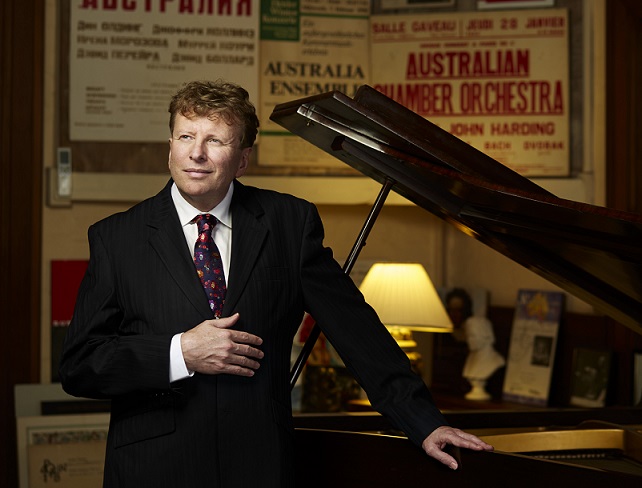
    Above: pianist Yefim Bronfman

    Thursday February 18th, 2016 – In recent seasons, as I’ve gradually moved away from opera and dance and into the realm of symphonic and chamber music, concerts featuring the great pianist Yefim Bronfman have consistently been outstanding events; we still talk about these evenings – and about the pianist – with great admiration and affection. To me, Mr. Bronfman is a unique musician: an artist in the highest echelon of great performers today.

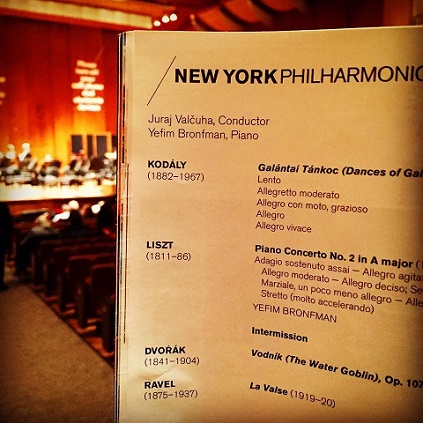
    This evening’s concert at The New York Philharmonic is something my friend Dmitry and I have been looking forward to since it was announced. Maestro Juraj Valčuha was on the podium tonight as Mr. Bronfman performed Liszt’s Piano Concerto #2 on a program that further featured works of Kodály, Dvořák, and Ravel.

    Opening the concert with Kodály’s Dances of Galánta; the Philharmonic had played this piece in 2013 and I was happy to experience this music again: it’s happy music!  Zoltán Kodály wrote his Dances of Galánta to celebrate the 80th anniversary of the Budapest Philharmonic Orchestra. Galánta is a small village in Hungary where the composer spent seven years of his childhood and where, thanks to the town’s popular gypsy band, the young Kodály became aware of of the style and motifs of gypsy music.

    Launched by a clarinet tune from the Philharmonic’s inimitable Anthony McGill, Dances of Galánta has a wonderful lilt and swagger. Flautist Robert Langevin and oboist Liang Wang pipe up charmingly, and the big, passionate main theme is irresistible. Maestro Valčuha – tall, handsome, and with an elegant baton technique – drew out all the vivid colours of the score, which ends with a romping folk dance.

    Mr. Bronfman then appeared, to a congenial welcome from the Philharmonic audience. Meticulous of technique and warmly confident in stage demeanor, the pianist’s performance of the Liszt Piano Concerto No. 2 was impressive in its virtuosic clarity and in its meshing of the piano line with the orchestra. Maestro Valčuha’s feeling for balance and pacing was spot-on. 

    The concerto, which Liszt tinkered with endlessly between 1839 and 1861, is particularly congenial to experience as it sweeps forward in one continuous movement over a span of about 20 minutes; yet it has the feel of a more traditionally structured concerto. Along the way, Liszt pairs the piano with various orchestral voices – a gorgeous piano/cello lullabye; rippling piano motifs as the oboe sings; high and delicate piano filigree over gentle violins; horns and cymbals sounding forth as the piano flourishes triumphantly. 

    Mr. Bronfman’s fluency in the rapid passages was a delight: sprightly in a high-lying scherzo passage, then swirling and cascading up and down the keyboard with joyous bravado. The concerto further alternates moments of big drama with passages of sheer melodic glow, all of which Mr. Bronfman delivered to us with his customary assurance and polish. 

    Audience and orchestra alike embraced the pianist with a prolonged ovation; an encore was given which elicited even more applause, and the affable Mr. Bronfman was called out twice again. Next season, he’s down for the Tchaikovsky 2nd with The Phil: it’s already on my calendar, circled in red. 

    Valcuha-Juraj

    Following the interval, Maestro Valčuha (above) and the Philharmonic players further displayed their cordial rapport in two well-contrasted “tone poems”:  Dvořák’s folkish and finely-orchestrated The Water Golbin (curiously enough, having its Philharmonic premiere tonight – some 120 years after it was written) and Ravel’s darkly magical La Valse, which always makes me think of Rachel Rutherford and Janie Taylor.

    While it seemed a bit odd not to have a symphony on the program, the two shorter works in the second half of the evening worked well together, were beautifully played, and allowed us to savor Maestro Valčuha‘s conducting from both a musical and visual standpoint.

    12742079_10153914529104761_5025851178161479995_n

    Photo by Dmitry.

  • The Orchestra Now (TŌN): Carnegie Debut

    Piers Lane 08_Keith Saunders photo

    Above: pianist Piers Lane, in a Keith Saunders photo; Mr. Lane was the guest soloist in this evening’s concert at Carnegie Hall

    Friday January 29th, 2016 – The Orchestra Now (TŌN) in their Carnegie Hall debut, playing works by Beethoven and his contemporaries, under the baton of Leon Botstein. Piers Lane was the soloist in Ferdinand Ries’ piano concerto #8, having its New York premiere tonight – some 190 years after it was written.

    The Orchestra Now is a new orchestra, comprised of young musicians who are transitioning from conservatory to career. With the women of the orchestra all wearing dresses in shades of blue, yet each one unique, the ensemble is as appealing to the eye as to the ear. 

    The program was perhaps more interesting as a concept than as a musical experience: the Cherubini overture was a good choice, and the Ries piano concerto was a pleasant surprise. But the longish Reicha symphony, having its US premiere tonight, meandered forward amiably enough but seemed something of a waste of preparation time for the young musicians since it’s unlikely they’ll ever be called on to play it again.

    278109.501

    Luigi Cherubini (above), best known for his opera Medea, was a composer greatly admired by Beethoven. Thus tonight’s program, subtitled Beethoven’s “Likes”, opened with the overture to another Cherubini opera, Les Deux Journées. This dramatic piece takes a while to gain traction, but it was well-played by the young musicians. 

    220px-Reicha

    Anton Reicha (above),
    an exact contemporary and good friend of Beethoven, left us a large catalog of chamber music as well as eight symphonies, eight operas, and some large-scale choral works. As professor of counterpoint and fugue at the Paris Conservatory, Reicha numbered among his pupils Berlioz, Liszt, Gounod, and Franck.
     
    Reicha’s 3rd symphony in F-major dates from the same year as Beethoven’s famous 5th, but that’s about the only thing they have in common. Aside from a rather nice clarinet solo in the Adagio, nothing in the Reicha really grabbed my attention. It’s an elegant work, and perfectly pleasant, but lacking in the peaks and valleys that make for a memorable symphonic experience. As Maestro Botstein remarked before he took up the baton for this work: “You’ll never hear it again!”
     
    EleveRies01
     
    Ferdinand Ries’ piano concerto No. 8 on the other hand was a lovely discovery. In his brief remarks prior to playing the concerto, pianist Piers Lane said the music would remind us of works by several other composers but that Ries (above) has crafted it in a way very much his own. He was right!
     
    The concerto’s manuscript  bears the inscription ‘Gruss an den Rhein‘ (‘Greetings From The Rhine’) – a tribute to the river Ries he grew up near – and indeed the first movement does evoke the gentle flow of the river along its broad banks. In the Larghetto that follows, there seems to be a heralding of the Romantic age in some of Ries’ very appealing melodic and harmonic writing. The concluding Allegro molto, its mega-abundance of rapid notes brilliantly tossed off by Mr. Lane, had the infectious and vivacious charm of an opera buffa cabaletta.  Throughout, the genial pianist made the strongest possible case for the concerto, winning the audience’s  joyous appreciation at the end.
     
    Sad to say, our enjoyment in experiencing this “new/old” concerto was compromised by a trio of young people who took seats in front of us as the houselights went down following intermission. They obviously had friends onstage – or perhaps they were members of the orchestra who were off-duty for the second half of the program –  and they spent the entire time-span of the concerto whispering and nudging one another while the girls shared a bottle of water. We decided to leave after the concerto, our evening having been spoilt by their thoughtlessness.

  • New Works By Parsons and Skarpetowska

    10666241_1219331334748018_437366971_n

    Wednesday January 20th, 2016 – The opening night of the Parsons Dance 2016 season at The Joyce. New works by David Parsons and Katarzyna Skarpetowska were on offer, as well as Robert Battle’s TRAIN, a revival of David Parsons’ UNION, and two of David’s signature classics: NASCIMENTO and CAUGHT.

    It was a grand night for dancing; each of the six works presented offered ample opportunity for the vibrant Parsons Dancers to dazzle us with their strength, passion, and fearlessness. If it’s true that there’s no rest for the wicked, then these dancers must be very naughty indeed. They danced full-out, with nary a hint of pacing themselves, all evening. The vociferous screams (yes, screams) of delight from the packed house at the end of each piece said it all.

    David Parsons and I go way back, to his dancing days with Paul Taylor’s company and his earliest explorings of the choreographic terrain at Jacob’s Pillow. Read a bit about this history here.

    ParsonsDanceSarahBravermanElenadAmarioEoghanDillonOmarRomandeJesusandGeenaPacare-1

    Above: dancers of Parsons Dance in a © Lois Greenfield photo. (Check out Ms. Greenfield’s latest book, Moving Still, here). These six dancers – Ian Spring, Omar Roman de Jesus, Geena Pacareu (back row), Sarah Braverman, Eoghan Dillon, and Elena D’Amario (foreground trio) comprised the cast of tonight’s opening work: David’s newest creation, FINDING CENTER. Having its New York premiere this evening, the piece is inspired by a series of paintings created in the 1980s by artist Rita Blitt.

    FINDING CENTER is danced to a laid-back score by Thomas Newman. Throughout the work, Ms. Blitt’s oval-shaped images – in vivid, ever-changing colours – are projected behind the dancers. Howell Binkley, David Parsons’ long-time lighting collaborator, again proved his essential value to the on-going success of the Parsons repertory: his lighting is always perfect. 

    Among the many arresting choreographic elements in this new work are unusual lifts of the women in seated positions. An adagio for Elena D’Amario and Ian Spring finds Mr. Parsons’ gift for inventive partnering at full-flourish: not only are there some gorgeous lifts, but twice Ian suspends Elena in a floating plank position, her body parallel to the floor and only inches away from it. Mlles. Braverman and Pacareu, squired by Eoghan Dillon and Omar Roman de Jesus, turned what might otherwise be considered ensemble roles into beautifully expressive moments.

    Photographer Travis Magee and I watched a rehearsal of David Parsons’ UNION a couple of weeks ago. This dancework premiered at the New York State Theatre in 1993 as part of an AIDS benefit gala. It marked a collaboration between the choreographer, composer John Corigliano, and fashion designer Donna Karan. 

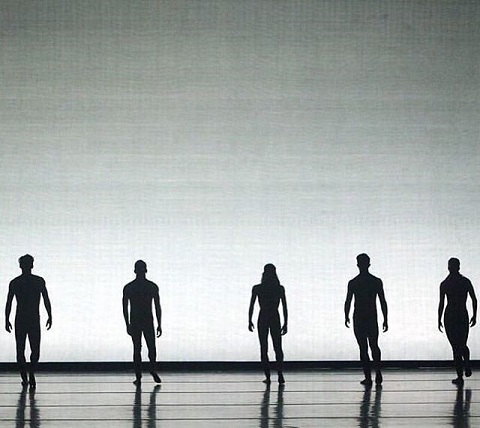
    The elegy from Mr. Corigliano’s Concerto for Clarinet and Orchestra creates an atmosphere of luminously pensive mystery…even before the dancing begins. The eight dancers, clad in Ms. Karan’s provocatively ‘nude’ costumes, enter in slow-motion from upstage left; they cross the diagonal and pause center-stage where they become entwined and entangled. Individual dancers rise out of the dense human hive only to inexplicably vanish again. Suddenly they begin to move faster, though the music maintains is eerie adagio tempo. As the music fades, the tribe gather their energy to continue their diagonal trajectory, moving toward some unknown fate.

    4Q5A7166

    Among the individual dancers in this work, Sarah Braverman stood out – as she had at the rehearsal (above, with Ian and Omar in Travis Magee’s photo) – for her ability to maintain a deeply feminine lyricism every moment she is onstage. Whether she’s dancing fast or slow, or being suspended upside down, Sarah is always hypnotic to watch. 

    It was also in UNION tonight that we met the two newest members of Parsons Dance

    Contemporary-Headshot

    …blonde and luscious Zoey Anderson…

    1bcb59_c1eea316b06946928d630cc7dc11189a

    …and Ahmad Simmons, a pillar of strength and a born mover.

    The evening continued: 

    IMG_7845-L

    Above: Elena D’Amario, in a Travis Magee portrait. Elena’s solo in Robert Battle’s TRAIN was simply thrilling.

    TRAIN is set to a blazing percussion score performed by Les Tambours du Bronx. It’s not about trains as a mode of transportation, but rather about training the body for rigorous sports activity. Here the dancers, whether in marching mode or sailing about the space in free-flowing passages, took on an almost animal intensity. Elena D’Amario’s solo, in which Mr. Battle makes uncanny demands on the dancer, was performed with Ellie’s trademark daring and all-out commitment, winning this beauteous dancer a forte round of cheers when she took her bows.

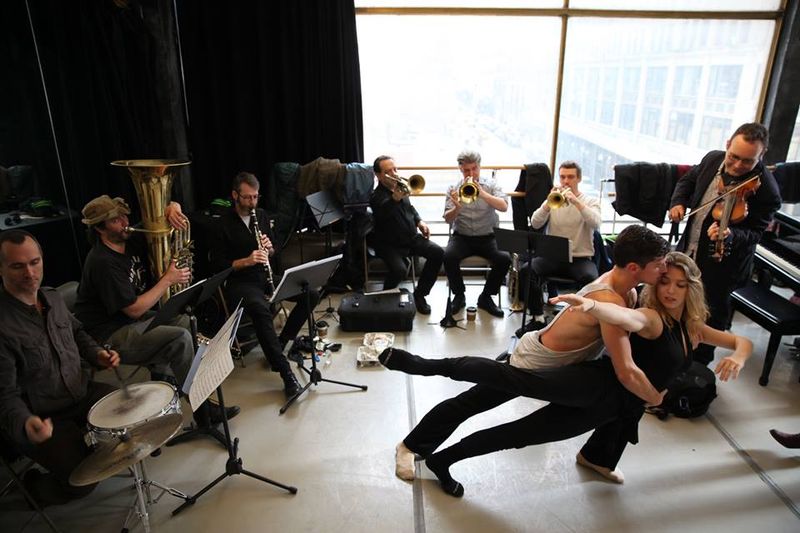
    Katarzyna Skarpetowska, a particular favorite of mine among choreographers currently on the scene, offered her latest creation, ALMAH, and added yet another feather to her cap with this finely-conceived and musically inspired work. Performing live, the musicians of Ljova dazzled us with their colourful playing. A felicitous soundscape – combining fadolin (an acoustic 6-string violin/viola/cello hybrid made by Eric Aceto), tuba, trumpet, bass clarinet, and drums – evoked beer gardens, country weddings à la LES NOCES, and visions of Russian villages and the people who live there. 

    Ms. Skarpetowska had wonderful dancers to work with – Elena D’Amario, Zoey Anderson, Eoghan Dillon, and Omar Ramon de Jesus – and she used the music as an inspiration for their rich and detailed movement, with some intriguing partnering motifs in the mix.

    12439263_10153886470290816_8879204900077223722_n

    Two pas de deux for Geena Pacareu and Ian Spring (above, rehearsing with the musicians of Ljova in a David Parsons photo) are high points in this excellent work; in the longer of the two, the voice of Inna Barmash cast a spell over the theatre with her one-word vocalise – talk about creating an atmosphere! – to which Ian and Geena responded with dancing that was truly heartfelt. 

    Ms. Skarpetowska took a bow to warmly affectionate applause at the close of this premiere of her newest piece, her silver shoes a charming touch. How I would love to see Kate working with oh-so-many dancers/dance companies…and most especially with the Martha Graham troupe. Let’s make it happen!

         Sarah1

    Above: beloved dancers Sarah Braverman and Ian Spring, in a Lois Greenfield photo 

    No Parsons Dance evening is complete without CAUGHT, the unique strobe-light solo that includes 100 jumps and leaves audiences in a stupefied state of “how-the-hell-did-he-do-that?” wonderment. I have seen it dozens of times and tonight, as always, I was thinking: “Oh…Caught…again!” and then moments later I was whooping and hollering along with the rest of the crowd.

    Ian Spring gave an astonishing performance; at first he moves slowly from one pool of light to another as Ljova intoned the opening phrases of the Robert Fripp score live. And then Ian takes off, flashing in and out of our vision in a series of perfectly timed snapshots. Like a dreamworld spirit, he pops up uncannily in various parts of the stage, seems to suspend himself above the floor, walks on air. Periodically the ‘real’ Ian materializes, as if he’d been standing still the whole time. Dazzled by the visual magic and by the dancer’s mouth-watering physique, the crowd went absolutely wild at the end while the sweat-drenched Ian – who, during his seasons with Parsons Dance, has developed into one of Gotham’s modern dance icons – basked in a standing ovation, casting a benevolent smile on the adoring throng.

    David Parsons’ sunny and seductive NASCIMENTO (1990) is always a perfect closing work. Here the dancers fill the music of Milton Nascimento – and David Parsons’ casually sexy combinations – with the effortless charisma that seems to be de rigueur for joining this elite dance family. Everyone has ample opportunity to shine – or glow, really – as they leap and sway to the tantalizing music, which includes some spine-tingly vocal passages. Meanwhile, the Binkley lighting scheme with its warm, rich colours, is an ideal setting.

    So many moments give NACSIMENTO its visual appeal: there’s a great passage when the girls race upstage and fly into Ahmad Simmons’ arms. And a simple but savorable section where Sarah Braverman wanders wonderingly among her colleagues who are hailing us from the shore with stylized arm gestures. Overall, it’s an irresistible piece performed by irresistible dancers.

    A few more images:

    Parsons-Dance-EoghanDillonCropped

    Eoghan Dillon, a young Irishman who is carving out his own niche in the Company…

    12301508_10208469285838489_3355607464700896826_n

    …and Geena Pacareu, the Spanish beauty, with Omar Ramon de Jesus, a sweetly sexy guy, and a suave mover; I borrowed this picture of them – on vacation – from Geena’s Instagram.

    4Q5A7096

    And finally…The Boss, getting everything perfect. Photo: Travis Magee.

    Parsons Dance continue their Joyce season thru January 31st. You’d better go see them!

  • Philharmonic Ensembles: In A Fishbowl

    Martinu
    Above: composer Bohuslav Martinů

    Sunday January 17th, 2016 matinee – Yet another highly enjoyable concert in the Philharmonic Ensembles series at Merkin Hall: artists from The New York Philharmonic performing chamber music in an intimate setting.

    These days, more than ever, I am looking to music to lift my spirits and help alleviate the symptoms of weltschmerz that threaten to overwhelm me. Feeling particularly low this morning, part of me wanted simply to stay home; but I headed down to Merkin and just a few moments into the opening Martinů, the dark pall began to lift. By the end of the concert, I felt fortified and ready to face another week. 

    MARTINŮ  –  Duo No. 1 for Violin and Cello, H.157
    Joo Young Oh, violin; Alexei Yupanqui Gonzales, cello

    The afternoon’s opening work was composed by Bohuslav Martinů in 1927 while he was living in Paris, studying with composer Albert Roussel. It’s a delightful two-movement piece – the first soulful, the second a lively dance. Superbly performed by violinist Joo Young Oh and cellist Alexei Yupanqui Gonzales, the slow movement impelled my rejuvenation process after just a few bars with its heartfelt melodies and lovely meshing of the two voices. In the second movement, a long cello solo was really a joy to hear; I thought the violin might have an equal opportunity, but instead the piece danced on to its ending. The two players had a fine rapport, the violinist reaching over to shift the cellist’s score as the cello ‘cadenza’ was launched. 

    John SICHEL  –  Fishbowl Diaries No. 3
    Vladimir Tsypin, violin; Blake Hinson, bass; John A. Sichel, narrator

    In something of a departure, John Sichel’s Fishbowl Diaries #3 featured a spoken narrative, delivered by the composer himself. The three short vignettes were accompanied by the Philharmonic’s Vladimir Tsypin, violin, and  Blake Hinson, bass. The first tale, entitled Heather From Card Member Services, was truly droll and had the audience laughing aloud. Juliet of The Rats, a story of thwarted infatuation in a laboratory setting, had Shakesperian allusions. The third and final setting, Dolphin Man: Mwa-ha-ha-ha-ha, struck close to home: it tells of that moment in childhood when those of us who are ‘different’ realize that people are laughing at us, either gently or cruelly. Mine happened when I was nine or ten years old, and it put a damper on my self-confidence that has stayed with me to this day. It’s kind of amazing that Mr. Sichel has hit this nail so perfectly on the head.

    DVOŘÁK  –  Piano Trio in E minor, Op. 90, Dumky
    Anna Rabinova, violin; Patrick Jee, cello; Wei-Yi Yang, piano 

    Totally engrossing, uplifting, and thought-provoking was the experience of hearing today’s playing of the Dvořák Dumky trio. “Dumka” literally means “thought”, and the word also refers to a type of Slavic folk-song that veers in mood from mournful to euphoric. Each of the six dumka that Dvořák has strung together for us in this imaginative and marvelous work is a feast in and of itself: poignant melodies abound, only to swirl unexpectedly into vigorous dance passages. 

    The music calls for both deeply emotional colours and exuberant virtuosity. Anna Rabinova’s passionately expressive playing of the violin line found a complimentary spirit in the rich piano textures of Wei-Yi Yang, whilst heart-stoppingly gorgeous tone from cellist Patrick Jee gave the music its soulful core. The three musicians moved me deeply in this fantastic performance. Bravi, bravi, bravi
         
    BEETHOVEN  –  Quintet for Piano and Winds
    Sherry Sylar, oboe; Pascual Martínez Forteza, clarinet; Kim Laskowski, bassoon; R. Allen Spanjer, horn; Yi-Fang Huang, piano

    Still more delights followed the interval with a performance of the Beethoven Quintet for Piano and Winds. Here, Yi-Fang Huang was the lyrically deft pianist, and the wind voices gave us an especially mellow blend in the Andante cantabile. R. Allen Spanger, who I met and enjoyed chatting with often while I was working at Tower (he’s an avid opera fan) produced that autumnally luminous sound that I always strove for in my horn-playing years but never achieved. The three reed players were congenially matched: Sherry Sylar (oboe), Pascual Martinez Fortenza (clarinet), and Kim Laskowski (bassoon) traded melodies and mingled their timbres in a performance rich in sonic rewards.

    We emerged from the hall into a gentle snowfall. The music had worked its magic. My sincere gratitude to all the participating artists.  

  • Graham Winter Intensive Showcase

    L1670767

    Friday January 15th, 2016 – Tadej Brdnik invited me to a showcase performance today at the Martha Graham Dance Company‘s home space on Bethune Street where participants in the Graham 2016 Winter Intensive showed a standing-room-only crowd what they’d been working on for the past three weeks.

    Following some solo composition studies and repertory excerpts, presented by the Graham school’s Yung Yung Tsui and Lone Larsen, choreographer Joshua Beamish had a group of male and female students demonstrate how dance can be developed from a single phrase. Maxine Sherman then presented several women in an excerpt from CAVE OF THE HEART; this solo was danced by the girls in unison and in canon. 

    The male contingent from the Intensive then appeared for CELEBRATION, a 1934 work which Graham set to music by Louis Horst. Graham originally created CELEBRATION with an all-female cast; Tadej has now been tasked with re-working it for a male ensemble. Fifteen men danced it today; it’s a very dynamic piece, showing Graham’s customary skill in structuring movement to achieve the maximum effect. Tadej mentioned that the choreography includes approximately 400 jumps, putting it into a special category alongside David Parsons’ CAUGHT.

    Among the dancers today, both male and female, some showed great promise.

    I always love being at Graham events, and was so happy to see – in addition to Tadej and Joshua – Denise Vale, Blakeley White-McGuire, Ying Xin, future maman Carrie Ellmore-Tallitsch, Abdiel Cedric Jacobsen, and Lloyd Knight. 

    I had planned to take lots of photos, but latecomers arrived and took seats to my immediate right, and I didn’t want to disturb them with my camera. So I have only the one image (at the top) of a dancer in her composition study at the start of the presentation.

  • At Year’s End

    6a00d8341c4e3853ef00e54f201b938834-800wi

    Above: Me and my friend Richard outside the Perry Street condo, shortly after I moved to New York City in 1998.

    Odd-numbered years are often unpleasant ones for me. Just after Thanksgiving, one of my oldest friends – Richard – was found dead in his apartment in Southington, CT. The news did not shock me, since he had been in declining health for months, and he had seemed unwilling to pursue medical treatment.

    Our friendship stretched back to 1976 when we were both working at the old Covenant Insurance Company in Hartford CT. We shared many adventures over the years, and we had a few fallings-out, though never anything that lasted more than a day or two.

    Up until the time of his death, we spoke twice a week by phone (he had never shown an interest in owning a computer) and when he failed to call me on the Saturday after Thanksgiving I knew something was wrong. I tried to call him but his voicemail was full. Then Suzanne contacted me with the news of his death.

    The fact that he’s no longer with us and that we’ll never again meet in New Haven for lunch or spend a day together here in the City has sunk in slowly. I continue to miss his slightly raspy voice on the phone, and the other day when the phone rang (it seldom does) I momentarily thought: “Ah…Richard’s calling… finally…” and then I remembered.

    During 2015, three people I am very close to lost people dear to them, all in sudden and unexpected circumstances. To Dmitry, Brix, and Ta-Wei go my sympathies…life will never be quite the same for us now, even though the deep initial sorrow will fade over the years to come.

    ~~~~~~~~~~~~~~~~~~~~~~~~~~~~~~~~~~~~~~~~~~~~~~~~~~~~~~~~~~~~~~~~~~~~~~~~~~~~~~~~~~~~~~~~~~~~~~~

    2015 also saw a major change in my blog which – as a retired person – occupies a great deal of my time. During their Winter season, I finally gave up on New York City Ballet. They had become increasingly random with their press tickets and since my calendar is so full and events planned weeks in advance, it became very frustrating to be told on a Monday that they couldn’t accommodate you that week, after you’d set aside the date just for them. 

    I withdrew from their press list and have only been back once since: for Jennie Somogyi’s farewell. I miss the dancers and the Balanchine rep terribly, but it became clear to me that the powers that be didn’t care if I came and wrote about their Company or not.  

    My plan now is to go to NYCB from time to time; I don’t mind in the least buying tickets though by the time casting is announced, affordable seats in parts of the house where I like to sit are usually unavailable.

    Of course, New York City Ballet was one of the main attractions for me in making the move to New York City. That I will now see them rarely is sad in a way, yet – like the Countess Olenska in THE AGE OF INNOCENCE – I must go where I’m invited. 

    Curiously, losing NYCB started to make me think about my blog’s dance coverage in general. I realized my interest had been flagging, in part because I simply saw too much dance and in a way a lot of it was starting to look (and sound) the same. Meanwhile I was finding The New York Philharmonic, Chamber Music Society of Lincoln Center, Young Concert Artists, and the American Symphony Orchestra were all offering truly exciting concerts, and were wonderfully welcoming and very appreciative of having their performances written about.

    Since these major classical music organizations – along with The Met (yes, I still go…often…but that’s a whole ‘nother story) – announce their programming months in advance, it makes it easy to fill up my calendar for the entire season…but leaves far less time for dance. 

    So…voilà…my dance blog has become a classical music blog. Dance will certainly not be written off entirely though: a handful of Companies whose work I have enjoyed over the last several seasons will continue to have their rehearsals and performances covered here.

    There is so much more I could say about this transition, but in fact I am simply following the natural flow of things and am finding myself deriving enormous pleasure and meaning in the eternal realm of great music.

    I cannot wait to flip my calendar to 2016, and I wish everyone a year full of music, hope, and love.   

  • At Year’s End

    6a00d8341c4e3853ef00e54f201b938834-800wi

    Above: Me and my friend Richard outside the Perry Street condo, shortly after I moved to New York City in 1998.

    Odd-numbered years are often unpleasant ones for me. Just after Thanksgiving, one of my oldest friends – Richard – was found dead in his apartment in Southington, CT. The news did not shock me, since he had been in declining health for months, and he had seemed unwilling to pursue medical treatment.

    Our friendship stretched back to 1976 when we were both working at the old Covenant Insurance Company in Hartford CT. We shared many adventures over the years, and we had a few fallings-out, though never anything that lasted more than a day or two.

    Up until the time of his death, we spoke twice a week by phone (he had never shown an interest in owning a computer) and when he failed to call me on the Saturday after Thanksgiving I knew something was wrong. I tried to call him but his voicemail was full. Then Suzanne contacted me with the news of his death.

    The fact that he’s no longer with us and that we’ll never again meet in New Haven for lunch or spend a day together here in the City has sunk in slowly. I continue to miss his slightly raspy voice on the phone, and the other day when the phone rang (it seldom does) I momentarily thought: “Ah…Richard’s calling… finally…” and then I remembered.

    During 2015, three people I am very close to lost people dear to them, all in sudden and unexpected circumstances. To Dmitry, Brix, and Ta-Wei go my sympathies…life will never be quite the same for us now, even though the deep initial sorrow will fade over the years to come.

    ~~~~~~~~~~~~~~~~~~~~~~~~~~~~~~~~~~~~~~~~~~~~~~~~~~~~~~~~~~~~~~~~~~~~~~~~~~~~~~~~~~~~~~~~~~~~~~~

    2015 also saw a major change in my blog which – as a retired person – occupies a great deal of my time. During their Winter season, I finally gave up on New York City Ballet. They had become increasingly random with their press tickets and since my calendar is so full and events planned weeks in advance, it became very frustrating to be told on a Monday that they couldn’t accommodate you that week, after you’d set aside the date just for them. 

    I withdrew from their press list and have only been back once since: for Jennie Somogyi’s farewell. I miss the dancers and the Balanchine rep terribly, but it became clear to me that the powers that be didn’t care if I came and wrote about their Company or not.  

    My plan now is to go to NYCB from time to time; I don’t mind in the least buying tickets though by the time casting is announced, affordable seats in parts of the house where I like to sit are usually unavailable.

    Of course, New York City Ballet was one of the main attractions for me in making the move to New York City. That I will now see them rarely is sad in a way, yet – like the Countess Olenska in THE AGE OF INNOCENCE – I must go where I’m invited. 

    Curiously, losing NYCB started to make me think about my blog’s dance coverage in general. I realized my interest had been flagging, in part because I simply saw too much dance and in a way a lot of it was starting to look (and sound) the same. Meanwhile I was finding The New York Philharmonic, Chamber Music Society of Lincoln Center, Young Concert Artists, and the American Symphony Orchestra were all offering truly exciting concerts, and were wonderfully welcoming and very appreciative of having their performances written about.

    Since these major classical music organizations – along with The Met (yes, I still go…often…but that’s a whole ‘nother story) – announce their programming months in advance, it makes it easy to fill up my calendar for the entire season…but leaves far less time for dance. 

    So…voilà…my dance blog has become a classical music blog. Dance will certainly not be written off entirely though: a handful of Companies whose work I have enjoyed over the last several seasons will continue to have their rehearsals and performances covered here.

    There is so much more I could say about this transition, but in fact I am simply following the natural flow of things and am finding myself deriving enormous pleasure and meaning in the eternal realm of great music.

    I cannot wait to flip my calendar to 2016, and I wish everyone a year full of music, hope, and love.   

  • Russian Jewish Composers @ ASO

    Leon-Botstein

    Thursday December 17th, 2015 – Tonight at Carnegie Hall, Leon Botstein (above) was on the podium for a program of music written by Russian Jewish composers between 1874 and 1921. Performed by the American Symphony Orchestra, the concert featured two U.S. premieres and one New York premiere, as well as Anton Rubinstein’s 2nd cello concerto with soloist István Várdai.

    Aleksandr Krein’s The Rose and The Cross (‘Symphonic Fragments after Aleksandr Blok’) was composed between 1917-1920, making it the newest work on tonight’s program. Blok was a great Symbolist poet and his mystical drama The Rose and The Cross went thru more than 200 rehearsals at the Moscow Art Theater but was never performed in public. The composer Krein was inspired by Blok’s writing and composed this suite to honor the poet. Tonight’s performance marked the suite’s New York premiere.

    The music, which shows traces of harmonic advancement over the other three – older – works played this evening, opens with a somber, rather creepy atmosphere. Later it will take on an almost cinematic feeling, with effects such as trumpet fanfares and shades of exotica from the harp. A songful melody becomes a recurring theme, and the suite rises to a triumphant conclusion depicting the “boundless energy of the heart that sings.” 

    Várdai István nagyfelbontású fotó

    The Hungarian cellist István Várdai (above) then took the stage for the evening’s one (somewhat) familiar work: the second cello concerto of Anton Rubinstein. The oldest and most conservative piece on tonight’s bill, it marks the pianist-composer as a pioneer, since he was the first major Russian composer to work in the concerto genre (Tchaikovsky’s violin concerto still lay four years in the future). Rubinstein draws upon a very ‘Russian’ sense of melody; the concerto is a vastly pleasing work, and one which places great demands on the soloist.

    Mr. Várdai, tall and youthful-looking, is an extraordinarily gifted musician and seemed to win the hearts of the Carnegie Hall audience this evening within moments of starting to play. His timbre has a lovely, deep-violet colour and his technique is refined in both agility and dynamic control. From his opening soulful song, the cellist moved thru a scampering passage and on to a strikingly brisk downhill scale that ended on a delicious trill. A second theme plumbs the most pungent depths before turning into a rapid dance.

    The concerto’s movements flow into one another, with a wind chorale signaling the start of the Andante; Mr. Várdai embarks on an optimistic melody but the composer cannot resist a desire to let the music dance. After a mini-cadenza, a jogging Allegro carries us along. The orchestral texture lightens, with cello filigree, then lapses into an interlude and grows quiet. Things slow down beautifully for another injection of melody and the cellist then serves up a more sustained cadenza before a final surge to the end.

    Mr. Várdai’s superb performance elicited a very enthusiastic response from the audience; I very much hope to have further opportunities to experience his artistry.

    Following the interval, Mikhail Gnesin’s From Shelley (‘Symphonic Fragment after Percy Bysshe Shelley’s Prometheus Unbound‘) had its U.S. premiere. Written between 1906 and 1908 this short (8 minutes) work was composed while Gnesin was studying with Rimsky-Korsakov. Its brevity precludes any real development of ideas, yet there is a fine sense of the theme blossoming, and some very nice writing for the horns and harp. The ending is, in a word, beautiful. 

    The U.S. premiere of Maximilian Steinberg’s first symphony raised the question: why did it take nearly one hundred and ten years for this symphony to reach us? It’s as exciting and finely-crafted as many other well-known symphonies; the composer appears to have drawn inspiration from such symphonists as Beethoven and Schumann, eschewing the Russian-nationalist influence of his teacher Rimsky-Korsakov. 

    Steinberg’s 1st has an animated, congenial opening with the immediate establishing of a rich theme that that put me in mind of – of all things – Humperdinck’s HANSEL UND GRETEL (“Der Wind! Der Wind!”); this theme will re-sound throughout the symphony. This is big, pleasing music with a variety of rhythmic patterns. The timpani lend a stately quality.

    In an exuberant Allegro vivace, the composer lightens things to a scherzo quality, later taking on a waltzy air. This second movement ends with Mendelssohnian charm.

    After a darkish start, the Andante features a clarinet theme which develops into a tutti passage. In a gentle acceleration, horns and oboe play a part, and then in a richer build-up the horns grow passionate. Horn and clarinet voices entwine; oboe and flute pipe up. The music becomes cinematic in sweep before receding to solo clarinet.

    “Der Wind! Der Wind!” is again evoked by horns and trumpets as the finale commences. The oboe speaks out, then the horns launch a fugue. As the Allegro moderato continues on, the music meanders somewhat, as though Steinberg was unsure how best to end the piece: but end it does – strongly. 

    Kudos to Maestro Botstein for assembling a rewarding program of relative rarities, for including the Rubinstein cello concerto (and Mr. Várdai’s excellent playing of it), and for bringing the Steinberg symphony to these shores.

    This evening’s repertory – click on each composer’s name for biographical information:

    Aleksandr Krein – The Rose and the Cross (N.Y. Premiere)
    Anton Rubinstein– Cello Concerto No. 2
    Mikhail GnesinFrom Shelley (U.S. Premiere)
    Maximilian Steinberg– Symphony No. 1 (U.S. Premiere)