Category: Music

  • Budapest Festival Orchestra ~ All-Mahler Program

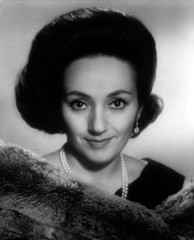
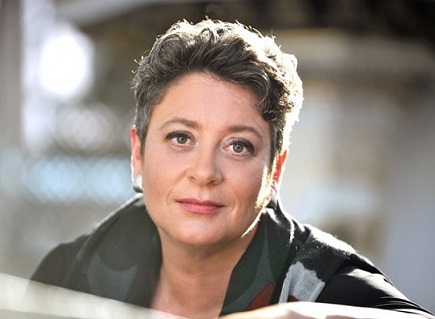
    Gerhild-romberger

    Above: contralto Gerhild Romberger

    ~ Author: Oberon

    Monday February 24th, 2020 – The Budapest Festival Orchestra, conducted by Iván Fischer, offering Mahler’s 5th symphony, preceded by the Kindertotenlieder, sung by Gerhild Romberger, contralto, in her New York debut. The program was part of Lincoln Center’s Great Performers series.

    Ms. Romberger – previously unknown to me – was revelatory. This was my third experience of hearing the Kindertotenlieder (Songs of the Dead Children) in live performance: previously, the grand Polish contralto Ewa Podles and the inimitable Russian baritone Dmitri Hvorostovsky had given enthralling interpretations of these evocative songs, each taking a rather operatic point of view. Ms. Romberger, more intimate and poetic in her approach, was deeply moving…and the voice fascinated me.

    Handsomely coiffed, and clad in black, the contralto took up the opening song, “Nun will die Sonn’ so hell aufgeh’n” (Now Will the Sun Rise as Brightly) following its haunting introduction from the winds. Her sound is rich yet contained, projecting a sense of calm despite the bleakness of the knowledge that the sunrise can no longer bring comfort. The horn and harp add to the wistful atmosphere, and the singer’s dreamy softening of the upper notes at “…die sonne..” is indeed magical. Ambiguously, the music shifts between minor and major.

    In “Nun seh’ich wohl, warum so dunkle Flammen” (Now I See Well Why Such Dark Flames) with its gorgeously expressive start, Ms. Romberger’s beauteous palette of soft colours was at play as she described the eyes of the children, and the premonition of their death. There is a sense of consolation in the orchestral writing, but it’s the desolate feelings that of loss permeates in the singer’s touching turns of phrase. Her hands, meanwhile, communicated her emotions in gracefully-shaped gestures.

    Wenn dein Mütterlein” (When Your Dear Mother) commences with oboe and bassoon, sounding rather doleful in a motif of intervals. Here Ms. Romberger’s gifts as a storyteller are to the fore, and her sense of gentle restraint in the upper reaches of the voice is endlessly evocative. The deep, rich sound of the Budapest’s basses sustaining the final note sent a chill thru me.

    In “Oft denk’ ich, sie sind nur ausgegangen” (Often I Think They Have Only Gone Out). Mahler again allows the music to wander between major and minor, underscoring the illusion that the children have only gone out for a walk. With sweet lyricism in her upper range, the singer seeks to reassure herself – and us – that all is well. Her singing here is simply sublime. But at last comes acceptance that the children have gone to another place, wherein there is the hope of one day be reunited with their parents.

    In diesem Wetter, in diesem Braus” (In This Weather, in This Torrent) tells of the stormy weather on the day of the funeral: restless, aggressive music. In resignation, Ms. Romberger sings that the children have found rest, and her vocal control and the somber yet luminous expressiveness of her singing here reached me at the depths of my soul: so hauntingly and gently she sang as the harp sounded. A horn chorale seemed like a benediction.

    Ms. Romberger was given very warm and sustained applause following her poignant performance: returning for a solo bow, the entire orchestra joined in a moving tribute to this remarkable artist. She and Maestro Fischer were called out yet again, and while I cannot imagine an encore following the Kindertotenlieder, we can surely hope that she and the Maestro will return to New York City soon, bringing us the RückertLieder…or the Wesendonck. I can only imagine what that would be like!

    During the interval, I remained under a sort of spell from this cherishable performance: I even thought of leaving, and taking my memories of it with me to some solitary place where I could continue to meditate on what I had heard.

    Of his 5th symphony, Gustav Mahler famously said: “…a symphony must be like the world; it must embrace everything.” Mahler composed this sprawling work during the summers of 1901 and 1902, while on holiday from his job as director of the Vienna Court Opera. Prior to beginning his fifth symphony, Mahler had met the beauteous Alma Schindler, daughter of a famous landscape painter. The composer proposed to her in the Autumn of 1901, and the symphony seems to mirror Mahler’s journey from sorrow thru the dreamworld of the Adagietto to a triumphant state of happiness with his beloved.

    The symphony’s brilliant opening trumpet fanfare, played with summoning clarity and force by Tamás Pálfalvi, gave notice that a sonically vivid performance lay ahead of us. As the first two movements of this very long symphony progressed, Maestro Fischer drew inspired – and inspiring – playing from the artists of the Budapest Festival Orchestra.

    In the Scherzo, Horn soloist Zoltán Szöke came forward and was seated next to the podium. He played splendidly, sometimes raising the horn’s bell to project the music with sumptuous power. But I must admit that during this movement – with its endlessly repeated 6 note motif, played as a fugue – Mahler fatigue started to set in. It began to have the feeling of the music being too much of a good thing.  

    The classic Adagietto, sometimes considered Mahler’s “greatest hit”, features strings and harp. The conductor summoned luminous textures from the musicians, creating a depth of beauty in which we could – for a few minutes – forget the dark dangers of living in today’s uncertain world.

    In the symphony’s concluding Rondo-Finale, the Maestro and his musicians swept the celebratory feeling forward, pausing only for a couple of rather gratuitous detours, and on to its epic conclusion. The audience’s response was tumultuous.

    For all the 5th symphony’s marvels, it was – for me – the Kindertotenlieder that gave this evening its particular glow. 

    ~ Oberon

  • Danish String Quartet ~ CMS Beethoven Cycle – Part 2

    Beethoven 250

    Author: Ben Weaver

    February 2020 – The Danish String Quartet continuing their Beethoven marathon at Chamber Music Society of Lincoln Center. Ben Weaver wrote about earlier concerts here, and he completes the story below:

    I suspect that the Danish String Quartet’s cycle of all 16 Beethoven String Quartets for Chamber Music Society of Lincoln Center in 2020 will long be remembered as one of this great organization’s finest moments. The raggedy long-time friends who make up the quartet (its two violinists and violist have been friends since childhood), with their casual wear, messy hair and reserved physical presence, may not at first glance strike one as deeply probing and philosophical musicians. But they are that, and more. The clean, beautiful lines they produce as part of the ensemble, with a full grasp of structure and context, could hardly be improved upon by another quartet. They truly are one of the finest chamber ensembles performing today.

    The cycle’s final concert featured Beethoven’s final two quartets: String Quartets Nos. 15 & 16. No. 16 being notable for being the very last piece of music Beethoven ever composed. (The only other thing he is known to have written is the alternative final movement to Quartet No. 13, replacing the Große Fugue.)


    With Quartet No. 15, Op. 131, composed in 1825-26, Beethoven created something unique in the canon: an extended, played-without-pause composition that is still divided into multiple (seven!) movements that are all connected to one another. The opening fugue morphs into a set of variations leading into a demented scherzo – so on and so forth. Almost as if recapping his life’s achievements and all the musical forms he has perfected, this may well be Beethoven’s version of “This is my life.” The Danish Quartet’s performance of this was ravishing, with stunningly sustained slow tempi over long periods, without ever losing focus or tension or structure. Violinists Frederik Øland and Rune Tonsgaard Sørensen, violist Asbjørn Nørgaard, and cellist Fredrik Schøyen Sjölin made time stop.


    The last Quartet No. 16, Op. 135, composed in 1826, would become Beethoven’s last completed composition. How does a musical giant, who has shaken the world, say goodbye? With another outburst, a challenge to the world? Hardly. Like the final Piano Sonata No. 32 – and so unlike the last Symphony No. 9 – Beethoven’s last will and testament is actually a thing of lyricism and beauty, not defiance (ok, with an occasional outburst of crankiness, like the opening pages of the last movement where anger quickly dissipates.) In all, perhaps knowing that is health was failing and that he may not have the strength to complete another piece of music, Beethoven seems to reminisce about his younger self and the music that he composed as a student of Haydn and when Mozart had only just died.


    The first movement opens with Viola leading a playful tune, like something Beethoven rescued from an early sketchbook: but with an old man’s wisdom tempering the enthusiasm. It’s like an echo of youth, playful but with a denser sound than a younger Beethoven would have employed, the viola and especially the cello better integrated into the ensemble instead of accompanying the violins. 


    The slow movement, Lento assai, tantalite e tranquillo, is one of those works of art shared with us by the gods. Rune Tonsgaard Sørensen on first violin in this performance (the two violinists alternated), as the more lyrical player, was the perfect musician to lead this magical piece. (I’d watched a performance of this movement on YouTube that was recorded in an airplane hangar. Someone wisely commented that even an airplane hangar could not contain everything this movement has to say.)


    And then the final movement – Allegro – pulls in ideas from the previous ones and then turns them into dance. It is the perfect ending, like Verdi’s “Falstaff” (still to come) or Shakespeare’s “The Tempest” (long past): to finish laughing and free would be the greatest gift of all.


    ~ Ben Weaver

  • Omer Quartet | Hanzhi Wang @ YCA

    Hanzhi+Wang

    Above: Hanzhi Wang

    ~ Author: Oberon

    Wednesday January 29th, 2020 – For this concert in their noon-time series at The Morgan Library, Young Concert Artists brought together the Omer Quartet and accordionist Hanzhi Wang in a wide-ranging program.

    Ms. Wang opened the performance with three Scarlatti keyboard sonatas, K. 9, 146, and 159. These amply displayed Ms. Wang’s agile technique and rhythmic control. Her swift filigree passages were deftly dispatched, and the rich sound of the instrument’s lowest range added an earthy dimension; in fact, the music took on an appealing – almost folkish – quality at times. Woven into the accordionist’s exhilarating playing were some wonderful subtle touches. Very quickly, Ms. Wang had audience in the palm of her hand.

    Alfred Schnittke’s Revis Fairy Tale, dating from 1978, is a suite of dances which – truly – made me feel like dancing. In the first of four movements, Chichikov’s Childhood, the music is quite melodious and feels traditional; here Ms. Wang’s broad dynamic range came into play. The second movement, Officials, brought SWAN LAKE to mind…specifically, the ‘four cygnets’ motif. The music takes on a more ‘modern’ feel, with discordant passages of jazzy angularity cropping up. Waltz has a somber start, and the melody is low-lying. Later, one feels the waltzers might be drunk…or dotty. After a rise of passion, the music turns dour and ends with a downward slide. The concluding Polka was a lot of fun, with Ms. Wang breezing thru the composer’s demands and winning a burst of enthusiastic applause. 

    Moritz Moszkowski’s Etincelles figured in Ms. Wang’s 2018 concert at Zankel Hall, and I enjoyed encountering it again today. Full of almost giddy scales, and covering the accordion’s very wide range, the piece is a charming showpiece for Ms. Wang, with a witty ending.

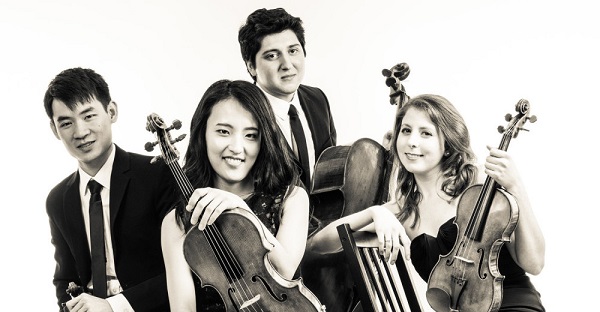
    Omer Quartet

    Above, the Omer Quartet: Mason Yu (violin), Jinsun Hong (viola), Alex Cox (cello), and Erica Tursi (violin).

    The Omer Quartet then took the stage for a very impressive performance of Haydn’s String Quartet in G-minor, opus 20, #3. The opening movement, Allegro con spirito, is full of mood swings. Immediately, the congenial blend of voices these players have achieved together assures us we are in for a treat. First violinist Mason Yu is a master of dynamic subtlety, and he and his colleagues illuminated the music in a perfectly-paced performance, with hints of hesitations here and there an added delight.

    In the Minuetto, Mr. Yu brings sweetness of tone to the poignant violin melody whilst the other players weave harmonies tinged with sadness. In the more optimistic interlude, things cheer up a bit although minor-key twinges continue to intrude. A return to the opening mood carries the music forward, but then it seems to stop in mid-phrase.

    Already at such a high level, the Omer Quartet went beyond in the Adagio, creating a palpably poetic atmosphere with playing of searing beauty. Emerging from the movement’s chorale-like opening, cellist Alex Cox commences a moving line that flows among lovely harmonies. Mr. Yu’s high pianissimo passages waft on the air, and violist Jinsun Hong and violinist Erica Tursi have opportunities to shine. Throughout, the cellist’s glowing tone and expressive phrasing are captivating.

    The final Allegro molto is animated – even agitated – veering between major and minor, with infinitesimal hesitancies along the way. The cumulative effect of the Omer’s Haydn this afternoon was both musically engrossing and emotionally gratifying. 

    Young Concert Artists composer Katherine Balch then introduced her work for string quartet, With each breathing, which she said was inspired by the notion of expressing aspects of the act of breathing in musical terms. The work’s title seemed somewhat ironic, but in fact the composer succeeded in her intent with music ranging from sighs and whispers to more labored and dramatic effects. The work’s exploration of textures was ideally set forth by the musicians of the Omer Quartet: a composer could not ask for better advocates.

    For the afternoon’s finale, excerpts from Five Tango Sensations by Astor Piazzolla brought together Ms. Wang and the Omer Quartet; this music had figured prominently in the accordionist’s 2018 Zankel Hall concert. With an intrinsic feel for both the allure and the danger that threads thru these tangos, the five musicians brought rich, haunting colours and irresistible rhythmic sway to the music.

    This highly enjoyable concert ended with the artists receiving a very warm ovation. The hall’s size and acoustic make it ideal for chamber music. And was that Anne-Marie McDermott seated a couple of rows in front of us?

    The performance was live-streamed, and may be seen here.

    ~ Oberon

  • All-French Program @ Chamber Music Society

    Paulhuang

    Above: violinist Paul Huang

    ~ Author: Oberon

    Sunday January 26th, 2020 – As darkness continues to settle over the world at an alarming rate, the reassurance of great music, poetry, and art becomes increasingly essential in keeping our spirits from being battered down beyond repair. Tonight’s program of music by three French masters, played with elegance and passion by a quartet of extraordinary artists, was an uplifting experience such as Chamber Music Society of Lincoln Center are wont to offer us.

    In her enlivening and reassuring speech of welcome, the Society’s co-Artistic Director (and tonight’s pianist) Wu Han spoke of the connection between the program’s three composers: Camille Saint-Saëns was the teacher of Gabriel Fauré, who in turn taught Maurice Ravel. Though the perfume of each work is distinctive, the feeling of a continuum was a key element as the evening progressed.

    Saint-Saëns’ Trio No. 1 in F-major for Piano, Violin, and Cello, Op. 18 (1864) opened the program, played to perfection by Wu Han (piano), Paul Huang (violin), and Clive Greensmith (cello). It is a work full of mood swings. The work’s opening Allegro vivace has a playful, exhilarating, dance-like feeling. Briefly rhapsodic, the music mostly maintains a lightness which the three players seemed to revel in. At the Steinway, the virtuosic keyboard passages were given a quicksilver feeling by Wu Han. The silent communication between the musicians was charming to behold as the work unfurled with a lively sense of optimism. 

    A sustained tone from Mr. Huang’s 1742 “ex-Wieniawski” Guarneri del Gesù is heard over Wu Han’s mysterious pacing motif as the Andante commences. The violin’s wistful song leads the music to a darker, more dramatic place. Clive Greensmith’s rich cello tone is heard in an exchange of phrases with the Huang violin, building to arching, gorgeous harmonies. Twinkling sounds from the piano underscore an à la Russe passage from the cellist which is taken up by the violin, Mr. Huang’s tone at its most alluring and silken. Fascinating subtle sounds shine from the keyboard; the violin has a sweetly rambling paragraph which morphs into a cello cadenza. In a da capo, the movement’s feeling of mystery returns, but is even more pronounced. The music, played with captivating nuance, moves to a fading end. As silence fell, my companion and I sighed from the sheer beauty of it all.

    The plucking, prancing Scherzo – alive with syncopated staccati – transforms into a swaying dance. The music romps along, witty and exuberant, with a da capo that leads to a false ending – the applause charmingly vetoed as the players hastily resumed in a dash to the actual finish line.

    The trio’s final Allegro opens with the violin and cello trading very brief phrases over a sparkling piano accompaniment. A unique series of slides up-and-down the scale becomes emblematic here: first played by violin and cello, and later by the piano, they create a slightly woozy effect. With a sense of hustle and flow, this Saint-Saëns masterpiece concluded, igniting the first of the evening’s enthusiastic ovations.  

    Mssrs. Huang and Greensmith returned for Maurice Ravel’s Sonata for Violin and Cello. In 1920, Ravel was asked by his publisher Durand to contribute to an issue of “La Revue Musicale“, dedicated to Claude Debussy. Included were the first movement of Ravel’s Sonata for Violin and Cello, as well as works contributed by Debussy’s friends Stravinsky, Satie, Dukas, Bartok and de Falla. This first movement of Ravel’s Sonata, of which the autograph is lost, was later expanded upon by the composer into a four-movement work which includes some tantalizing modernities in the writing.

    This Ravel work is rarely heard, and it seemed so fresh and contemporary in the hands of our two outstanding players this evening. Clocking in at twenty minutes, the sonata is in four brief movements. A touch of jazz can be felt in the opening Allegro, wherein the two impeccable musicians treated us to music with a feel of perpetual motion. Très vif describes the second movement, a pluck-fest that evolves into swift bowing. A bit of slashing is heard, followed by an almost boogie-woogie cello line and some delicious trills from the violin. After a slight lull, things pulse up again for a jazzy finish.

    Marked Lent, the third movement opening with a deep, searching cello passage. Following this is a pensive duet that has an oddly liturgical feel, and gets quite eerie. A rise in passion is temporary, for the movement ends with a air of quiet sadness; Mssrs. Huang and Greensmith displayed consummate control in sustaining the atmosphere here. The final movement, established by the rhythmic cello, is dancelike and fun; at its end, the two players were heartily cheered as they bowed to the house, and to one another. Excellent! 

    Following the interval, violist Matthew Lipman joined his colleagues in a gorgeous performance of Gabriel Fauré’s Quartet No. 1 in C-minor for Piano, Violin, Viola, and Cello, Op. 15 (1876-79).

    The rich opening of this piano quartet has a dramatic feeling, with the strings in unison. Mr. Lipman’s viola takes up a dipping motif, which is passed about as melodic strands develop. From the pianist, a solo is heard over sustained strings. Mr. Huang pursues the melody, so persuasively, as the movement flows along lyrically. Plucking sprightliness and brief disputes of rhythm mark the Scherzo, with its trio section offering a change of pace.

    Wu Han’s magical mastery of the softest dynamics becomes a key element in the Adagio. Cello, viola, and violin in turn are each heard in a rising passage before meshing in somber harmonies. An interlude, tinged with regret, is finely rendered. Again Wu Han’s exquisitely delicate lyricism can be savoured, drawing us into the poignant sadness that permeates this movement: the composer’s reaction to having been rejected in his romantic pursuit of Pauline Viardot’s daughter. 

    The energetic Allegro molto is not the music that concluded this work when it was premiered in 1880. Fauré replaced the movement in 1883, prior to the piano quartet’s publication in 1884. The replacement offers a rising motif which the string players constantly return to, and makes for an enjoyable finale. Still, we are left wondering what the original final movement was like.

    A packed Alice Tully Hall reverberated with applause and cheers as the musicians took their bows to a full-house standing ovation. The players responded to our acclaim by offering a lovely Schumann encore before sending us forth to face the realities of life with a renewed sense of hope.

    ~ Oberon

  • Met’s MAGIC FLUTE – Saturday Matinee

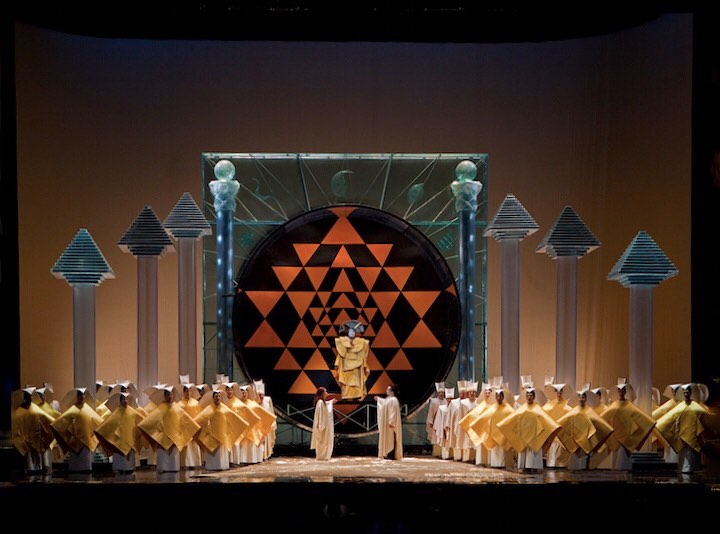
    Taymor Flute

    ~ Author: Oberon

    Saturday December 21st, 2019 matinee – The Met’s shortened, English-language version of Mozart’s DIE ZAUBERFLOETE may not be as musically fulfilling as hearing the original, but it does afford an opportunity to hear lots of voices – from Met veterans to newbies – in one fell swoop, and thus I am likely to go two or three times each season that it is on offer. Although the cuts are irksome, and Papageno is too much the center of attention, there’s still enough opportunities for the singers to make their mark.

    The House was full of children today, and with people who’d forgotten to turn off their cellphones. The kids were receptive during the music, but some longish stretches of dialogue prompted then to have audible monologues of their own. Is it really necessary, in a 100-minute reduction, to bring up the Seven-fold Shield of the Sun? I suppose it really doesn’t matter, since apparently this is the last season we’ll see this production. (Or might they have a new ZAUBERFLOETE, and keep this Taymor holiday season specialty around?)

    Lothar Koenigs was on the podium this afternoon; his tempi were mostly spot-on, but there were some places where stage and pit were not totally in-sync. The Three Genii were unfortunately a weak trio vocally, and at times sounded a little like The Chipmunks. The Three Ladies – Gabriella Reyes, Megan Esther Grey, and Renee Tatum – sounded good individually, but did not always mesh well; the conductor seemed at times to leave them adrift. (Is Megan Esther Grey related to the great Wagnerian soprano, Linda Esther Grey? I will try to find out.)

    Ashley Emerson’s Papagena managed to get the words across when doing her “old lady” voice: no mean feat. Once transformed, she sang brightly. Rodell Rosel was an audience favorite as the crafty Monastatos. The Priests (Christopher Job and Scott Scully) and Guards (Arseny Yakovlev and Jeremy Galyon) did well.

    Joshua Hopkins sang excellently as Papageno, and the audience loved him; his referring to the Priests as “coneheads” was priceless. David Portillo’s attractive tone and appealing lyricism made his Tamino a winning vocal presence, with a nice feeling of tenderness. In his scene with Patrick Carfizzi’s Speaker, to my mind the key to the whole opera, both singers were clear of diction and dramatic intent. Mr. Portillo’s “O endless night!” was moving; and later, his “Music is the heart’s true home…” seemed to express what this opera is all about.

    Joelle Harvey’s vocal shimmer at “Be truthful!” was engaging, as was her self-defense to Sarastro. She made a lovely, vulnerable impression in Pamina’s aria with her expressive dynamic palette and persuasive phrasing. At her “Tamino mine!” a sense of radiance was met by Mr. Portillo’s ardent response. The two sang gently and sweetly in the quartet with the Two Guards.

    Kathryn Lewek’s Queen of the Night gave the afternoon its spark; after swirling thru the coloratura of her first aria, she sustained the high-F: an exciting moment. Her “Wrath of Hell” had great accuracy and brilliance, the high-Fs slightly metallic but hitting the bullseye each time. On her final command, “Swear!”, the soprano took a soft attack and then swelled the note to white-heat. She won vociferous applause here, and again at her solo bow. She has amply proven herself in this demanding role several times; I hope now we can hear her as Lucia or Constanze. 

    Morris  r jpg

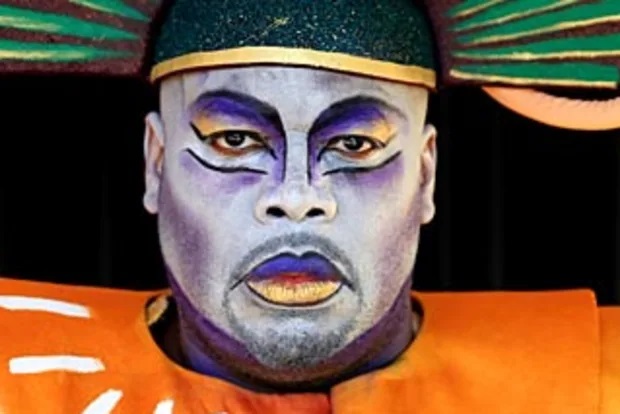
    Spectacularly anchoring the performance was Morris Robinson’s Sarastro: generous of tone, crystal clear of diction, and benevolent by nature. A grand performance from this formidable basso. Bravo!

    All afternoon, much of the spoken dialogue seemed over-wrought and campy; Papageno tended to shriek at the least provocation. David Portillo as Tamino spoke with a slight, charming accent: not amiss, as this prince has come from afar.

    ~ Oberon

  • Trifonov’s Scriabin @ The NY Philharmonic

    14c1e62d63f40ab53a8f7836fb151aeb.jpg.w=262

    Above: pianist Daniil Trifonov

    ~ Author: Oberon

    Friday November 29th, 2019 – The New York Philharmonic‘s Artist-in-Residence, Daniil Trifonov, performing the Scriabin piano concerto on a program with Tchaikovsky’s 5th symphony. The Philharmonic’s Music Director, Jaap van Zweden, was on the podium.

    This long-awaited performance was somewhat compromised for me due to a health issue my spouse was experiencing. I at first decided to skip the concert and let my friend Ben Weaver write about it, but after much discussion, I went to Geffen Hall for the Scriabin and left at intermission, asking Ben to let me know how the Tchaikovsky went.

    This was my first experience of the Scriabin concerto live, and Mr. Trifonov was absolutely spectacular from first note to last. After a brief elegiac orchestral statement, a pensive solo introduces the pianist. The music offers contrasting moods, which Mr. Trifonov and the Philharmonic artists savoured. Playing rippling figurations, Mr. Trifonov evoked a feeling of ecstatic glow; the music then turned cinematic.

    Splendid solo moments from Richard Deane (horn) and Pascual Martínez-Forteza (clarinet) added to the radiance of the performance. Playing in the Steinway’s very highest register, Mr. Trifonov gave the music “toy piano” feeling, which soon found a counter-balance in the Philharmonic’s plush-toned basses. The movement ends grandly.

    The quiet opening of the poetic Andante was marred by the inevitable cellphone ringing. There’s quite a long, lovely passage for strings before the pianist joins in. A solo from Mr. Forteza finds Mr. Trifonov adding a descant-like, bejeweled line. The mood shifts from lively to doleful, the basses and celli in a tutti passage of velvety depth.

    At times, the solo piano line seems to meander (over caressive strings) before finding focus in a wistful theme, to which Mr. Trifinov brought his trademark expressive feel for nuance. A pristine, sustained trill – a Trifonov delight – marked the Andante’s calm finish.

    The pianist then immediately launched the final Allegro moderato, wherein a romantic piano theme as well as phrases for horn and clarinet at times created a feeling of tender longing. 

    Suddenly there’s a full stop. The music then resumes, with piano, clarinet, and horn all actively engaged. Now there’s a bit of a letdown: the composer seems to be searching for the right ending. He finds it in an unexpected drumroll, and a sustained chord from the piano.

    Basking in an enormous flood of applause, the tall pianist made us wait for his reappearance, and then wait still longer for his dreamy, introspective encore.

    Quote
     
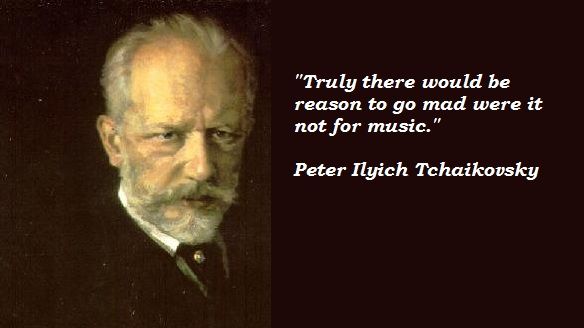
    Tchaikovsky’s 5th symphony won the enthusiasm of audiences right from its premiere performance in 1888. But the critics were less impressed, and this caused Tchaikovsky – upon hearing the piece in Prague a bit later – to question whether the 5th was as fine as he’d originally hoped it was. He eventually managed to banish his misgivings.
     
    The symphony’s second movement – steeped in Romanticism – shares its melodic birthright with the Vision Scene from the composer’s SLEEPING BEAUTY. I had been really looking forward to hearing this in the theater again, but that will have to wait until another time.
     
    Meanwhile, Ben Weaver has sent me a brief note, stating that “…the 5th was really good. The horn solo (I assume it was played by Richard Deane) was one of the best I’ve ever heard. And Anthony McGill impressed in the clarinet solo. Maestro van Zweden took the music at a nice clip, but never rushed it. Big, exciting climaxes! The orchestra played it as well as anyone I’ve heard.” [Coming from Ben, that’s high praise indeed!]
     
    Ben ended his message with: “The audience went nuts.” That made me really sorry to have missed it.

    ~ Oberon

  • Trifonov’s Scriabin @ The NY Philharmonic

    14c1e62d63f40ab53a8f7836fb151aeb.jpg.w=262

    Above: pianist Daniil Trifonov

    ~ Author: Oberon

    Friday November 29th, 2019 – The New York Philharmonic‘s Artist-in-Residence, Daniil Trifonov, performing the Scriabin piano concerto on a program with Tchaikovsky’s 5th symphony. The Philharmonic’s Music Director, Jaap van Zweden, was on the podium.

    This long-awaited performance was somewhat compromised for me due to a health issue my spouse was experiencing. I at first decided to skip the concert and let my friend Ben Weaver write about it, but after much discussion, I went to Geffen Hall for the Scriabin and left at intermission, asking Ben to let me know how the Tchaikovsky went.

    This was my first experience of the Scriabin concerto live, and Mr. Trifonov was absolutely spectacular from first note to last. After a brief elegiac orchestral statement, a pensive solo introduces the pianist. The music offers contrasting moods, which Mr. Trifonov and the Philharmonic artists savoured. Playing rippling figurations, Mr. Trifonov evoked a feeling of ecstatic glow; the music then turned cinematic.

    Splendid solo moments from Richard Deane (horn) and Pascual Martínez-Forteza (clarinet) added to the radiance of the performance. Playing in the Steinway’s very highest register, Mr. Trifonov gave the music “toy piano” feeling, which soon found a counter-balance in the Philharmonic’s plush-toned basses. The movement ends grandly.

    The quiet opening of the poetic Andante was marred by the inevitable cellphone ringing. There’s quite a long, lovely passage for strings before the pianist joins in. A solo from Mr. Forteza finds Mr. Trifonov adding a descant-like, bejeweled line. The mood shifts from lively to doleful, the basses and celli in a tutti passage of velvety depth.

    At times, the solo piano line seems to meander (over caressive strings) before finding focus in a wistful theme, to which Mr. Trifinov brought his trademark expressive feel for nuance. A pristine, sustained trill – a Trifonov delight – marked the Andante’s calm finish.

    The pianist then immediately launched the final Allegro moderato, wherein a romantic piano theme as well as phrases for horn and clarinet at times created a feeling of tender longing. 

    Suddenly there’s a full stop. The music then resumes, with piano, clarinet, and horn all actively engaged. Now there’s a bit of a letdown: the composer seems to be searching for the right ending. He finds it in an unexpected drumroll, and a sustained chord from the piano.

    Basking in an enormous flood of applause, the tall pianist made us wait for his reappearance, and then wait still longer for his dreamy, introspective encore.

    Quote
     
    Tchaikovsky’s 5th symphony won the enthusiasm of audiences right from its premiere performance in 1888. But the critics were less impressed, and this caused Tchaikovsky – upon hearing the piece in Prague a bit later – to question whether the 5th was as fine as he’d originally hoped it was. He eventually managed to banish his misgivings.
     
    The symphony’s second movement – steeped in Romanticism – shares its melodic birthright with the Vision Scene from the composer’s SLEEPING BEAUTY. I had been really looking forward to hearing this in the theater again, but that will have to wait until another time.
     
    Meanwhile, Ben Weaver has sent me a brief note, stating that “…the 5th was really good. The horn solo (I assume it was played by Richard Deane) was one of the best I’ve ever heard. And Anthony McGill impressed in the clarinet solo. Maestro van Zweden took the music at a nice clip, but never rushed it. Big, exciting climaxes! The orchestra played it as well as anyone I’ve heard.” [Coming from Ben, that’s high praise indeed!]
     
    Ben ended his message with: “The audience went nuts.” That made me really sorry to have missed it.

    ~ Oberon

  • The Soldier’s Tale @ Chamber Music Society

    McDermott_1600x660

    Above: pianist Anne Marie McDermott

    ~ Author: Oberon

    Sunday November 24th, 2019 – A thoughtfully-devised program this evening at Chamber Music Society of Lincoln Center gave prominence to the inspired – and inspiring – pianist Anne-Marie McDermott. Ms. McDermott has given me some of my happiest times at CMS, most memorably with her playing of Mozart’s K. 466 in May 2018: a performance which drew a vociferous ovation.

    Tonight, the pianist played in every work on the program, commencing with Beethoven’s Trio in B-flat major for Clarinet, Cello, and Piano, Op. 11 (1797) for which she was joined by the Spanish clarinetist Jose Franch-Ballester, and cellist Gary Hoffman, whose leap to prominence followed his 1986 win of the Rostropovich International Competition in Paris. Together, the three musicians filled Beethoven’s score with vibrant musicality.

    The timbres of the three ‘voices’ aligned perfectly, and rhythmic clarity was a hallmark of their performance. Dramatic accents cropped up in the opening Allegro con brio, to which a pensive interlude brings contrast.

    A waltz-like motif for the cello is taken up by the clarinet in the Adagio: a fine opportunity to savor the coloristic gifts of Mssrs. Franch-Ballester and Hoffman. Ms. McDermott brought gentley nuances to the mix, and, after a slightly darker passage, her delicacy of touch underscored Mr. Hoffman’s graciously expressive softness of melody.

    The trio’s finale is a theme-and-variations affair which gets off to a perky start. The first variation brings some elaborate piano passages, the second a cello/clarinet duo, and the third is fast and fun. After veering into minor mode for the fourth variation, the music proceeds to a passing about of the theme, a petite marche, some tickling trills from the keyboard, and a witty finish. 

    The concert’s centerpiece was a vivid performance of Igor Stravinsky’s L’Histoire du soldat (The Soldier’s Tale), in the trio version for violin, clarinet, and piano (1918, arranged 1919), Mr. Franch-Ballester brought two clarinets to the stage for this work, which commences with The Soldier’s March, filled with jaunty swagger and relentless piano. A bouncing piano figuration introduces The Soldier’s Violin, wherein Ida Kavafian’s bow dances across the strings, and the clarinet provides a sense of jollity. The music seems about to fade away until it hits a punctuating chord.

    A Little Concert brings swirls of notes, the piano rhythm pulsing along. The music has an ironic feeling, and turns insistent before its sudden end. A dance triptych (Tango, Waltz, Ragtime) finds Ms. Kavafian’s violin in waltzing mode, with rhythmic piano and commenting clarinet. The final movement of his colourful suite, The Devil’s Dance, has a wild streak. The three musicians seemed truly to enjoy playing this miniature masterpiece, which clocks in at a mere fifteen minutes but covers a lot of musical territory in its course.

    Following the interval, Ms. McDermott had the stage all to herself with some marvelous Mendelssohn: selections from Lieder ohne Worte (Songs Without Words). She chose numbers 1, 2, and 3 from the cycle which made for a nicely contrasted segment of the program. Her playing was both elegant and passionate, and her mastery of dynamics was very much to the fore.

    Bedřich Smetana’s Trio in G-minor for Piano, Violin, and Cello, Op. 15 (1855, revised in 1857) was written in memory of the composer’s four-year-old daughter Gabriela, who succumbed to scarlet fever in 1854.

    Thus, the work begins with Ida Kavafian’s playing of a violin solo of yearning tenderness, with a rise in passion which subsides to a cello theme and an ascending phrase for the violin. Suddenly, a forward impetus springs up, and the music gathers steam to a grand outburst. Following a brief violin cadenza, the string players introduce a buzzy agitato, over which Ms. McDermott plays some sparkling piano passages. The music grows rhapsodic, and grand passions burst forth before Mr. Hoffman’s lyrical cello and Ms. Kavafian’s shining violin conspire to play on our emotions. The Moderato assai comes to an emphatic, passionate conclusion.

    Bustling, almost furtive strings lend a scherzo-like feeling to the start of the second movement. Melodic motifs sing forth, building to grandeur before finding a quiet place to conclude. The three musicians dig in for the final Presto, for which Ms. McDermott sets a fast pace. In a reflective mood, Ms. Kavafian and Mr. Hoffman have appealing solo passages, and the pianist a thoughtful interlude.

    Now some fast plucking takes over, and the music dances along for a bit. But a calmer mood returns, with the music going deep. The trio ends grandly, with an affirmative air of hope springing from the ashes of tragedy.

    ~ Oberon

  • All-Beethoven @ Lincoln Center’s Great Performers

    66153624_23843479431240714_7828252017846910976_n.png

    ~ Author: Ben Weaver

    Wednesday November 20th, 2019 – Violinist Isabelle Faust and pianist Alexander Melnikov – long time musical partners – joined the celebrations of Beethoven’s 250th birthday as part of the Lincoln Center’s Great Performers series with an all-Beethoven recital at Alice Tully Hall. The 70-minute, no-intermission, program featured Beethoven’s last three violin sonatas.

    Composed in 1801-02 and dedicated to Tsar Alexander I of Russia, the three sonatas of his Op. 30 were Beethoven’s final word on the genre, even though he was only 31 years old. (In total, he composed 8 violin sonatas.) At this stage Beethoven had not yet written his Eroica Symphony (that would come 2 years later), changing the trajectory of the symphony and his own musical development

    Beethoven’s violin sonatas, like so much of his “early” music, look back on Mozart’s contributions to the genre, while at the same time developing new languages. Whereas Mozart’s violin sonatas were focused on the violin – with the piano as an accompaniment – Beethoven forced the piano into the spotlight, with a more prominent voice and bigger, more “symphonic” writing. In the sonata No. 6’s opening movement the violin seems to be playing catch-up with the piano in introducing the melodies. In the final movement, a theme and set of variations, the piano again dominates.

    While the following two sonatas give the violin a much bigger role, as performed by Isabelle Faust and Alexander Melnikov, the piano’s dominance was clear throughout the evening. Ms. Faust’s playing, quiet and brittle at times, with an edge to the tone, required the listener to lean in. She rarely demanded attention for her instrument or her playing; she is certainly not a “showboat” performer. Mr. Melnikov, a more aggressive player by nature, was the dominant force on the stage almost by default. The relaxed tempos set by the duo made clear this was not heaven-storming Beethoven.

    Sadly, as the evening progressed, the quiet playing by Faust, which I initially attributed to a “lean-in” personality, started to grow flat and dull. Whether drama or joy, one could hardly tell the difference. I almost got the sense that Faust was sight-reading the music, as if she’d hardly ever seen these notes before. (That’s clearly not the case: she and Melnikov recorded the complete sonatas for Harmonia Mundi some years ago and did so very well.) How unfortunate then that on this evening she was unable to gather enough spirit to help launch New York’s Beethoven year celebration.

    ~ Ben Weaver