Category: Music

  • The Schumann Quartet @ Chamber Music Society

    30738946_10155657104388666_6425725551075393536_n

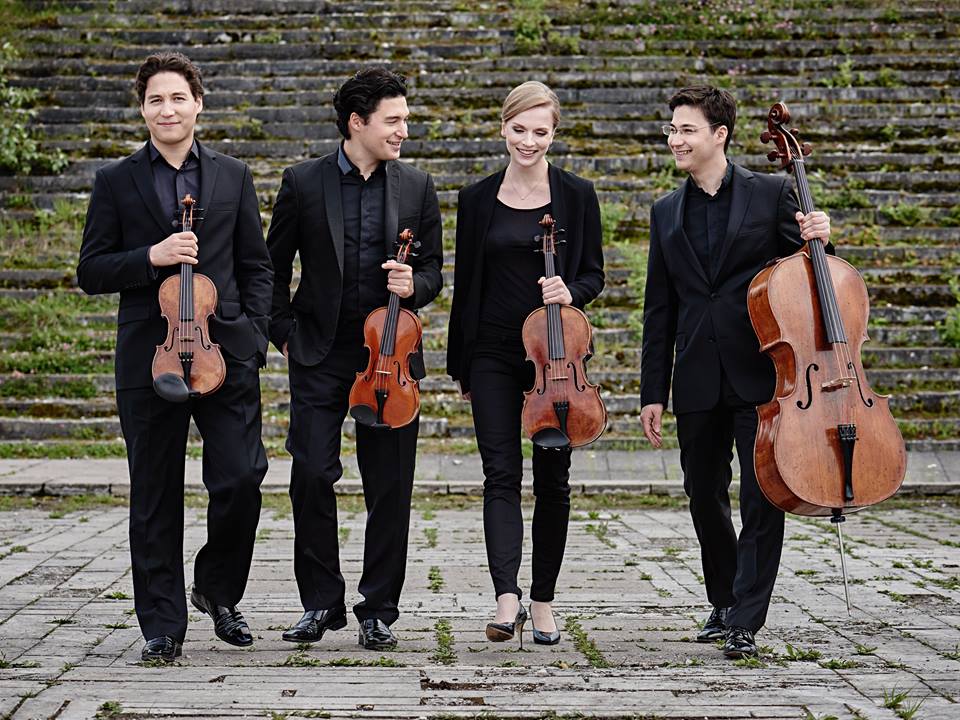
    Above: The Schumann Quartet

    ~ Author: Oberon

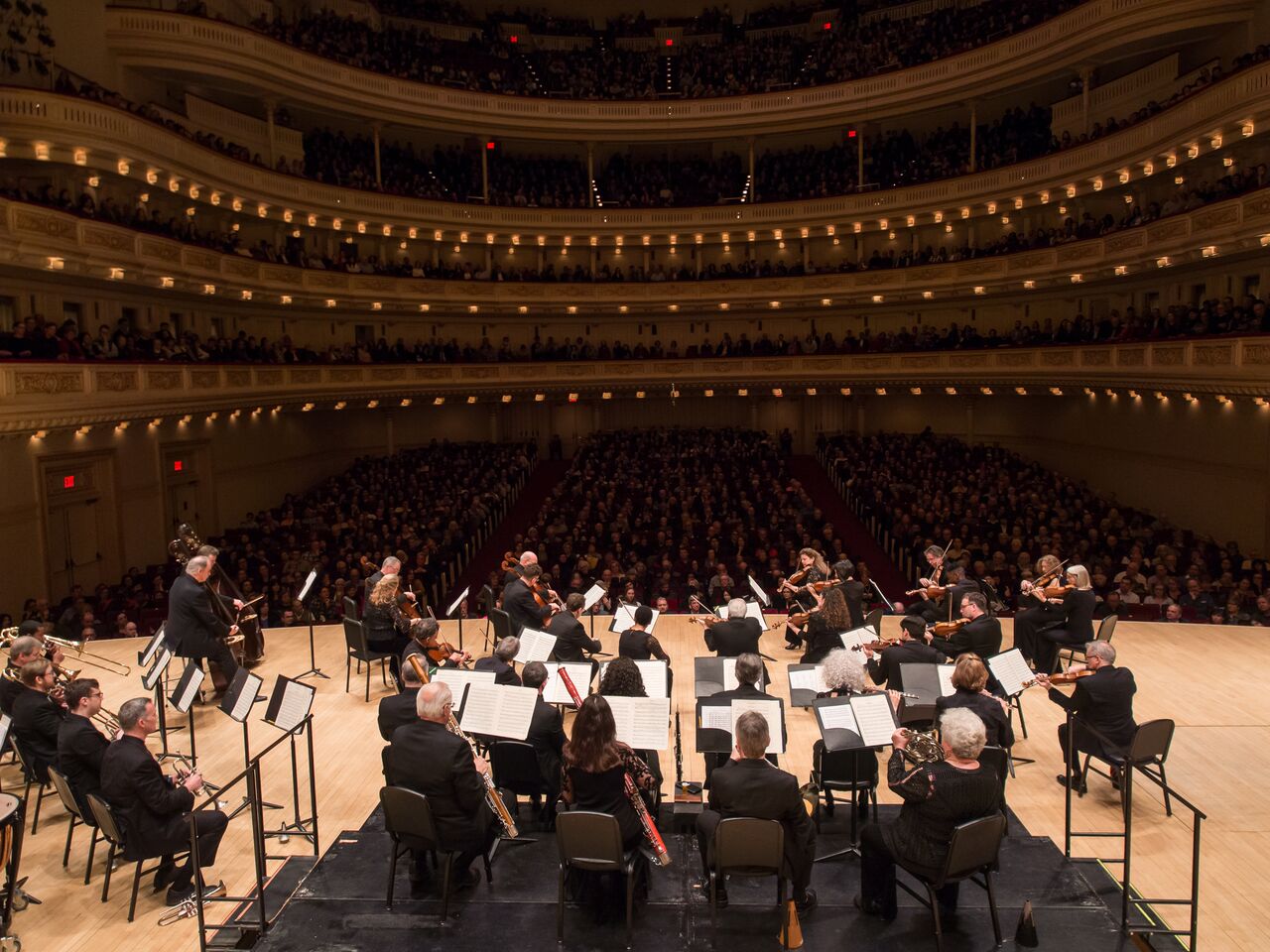
    Sunday April 29th, 2018 – The Schumann Quartet‘s finely-contrasted program at Chamber Music Society this evening brought us works composed in four different centuries, including the US premiere of a piece composed in 2006 by Aribert Reimann.

    One of the (many) nice things about attending Chamber Music Society frequently: your opinions on various composers change. Over the past few seasons, being exposed often to the music of Haydn has altered my feelings towards his music, which had always seemed to me attractive and well-crafted but lacking in the emotional qualities that make Mozart, Beethoven, and Brahms so satisfying. 

    So this evening’s opening Haydn – the Quartet in B-flat major for Strings, Hob. III:78, Op. 76, No. 4, “Sunrise” (1797) – didn’t give me the old reaction: “If only they’d programmed _____________ instead,” but rather a feeling of appreciation, especially as it was so finely played. Each member of the Schumann Quartet has a beautiful ‘voice’, and as they blended in this music the effect was heavenly.

    The “Sunrise” Quartet is indeed worthy of its name: seconds into the piece, an ascending phrase from the violin depicts the moment of dawning day. Soon afterward, the music turns lively, and the players show off their expert sense of timing. When the music turns darkish, the layering of the four musical lines is truly atmospheric.

    In the Adagio which follows, a lovely sense of calm pervades. The high violin sings serenely over the warmth of the lower mix; modulations are graciously set forth, the cello with glowing tone. The Menuetto has an oddly ‘Scottish’ feeling, and in a da capo, subtly charming hesitations are felt. The quartet then dove immediately into the final Allegro, ma non troppo – ‘non troppo‘ being the key, for the pacing had a gentle lilt. As things turn more lively, the harmonizing violins bring a witty touch. A sudden gear shift sets up a super-fast conclusion.

    The Schumann Quartet then moved on to Bartók: his Quartet No. 2 for Strings, BB 75, Op. 17 (1914-17), a wartime work which was given a remarkable interpretation by the young musicians: thoroughly engrossing.

    The Bartók 2nd’s three movements each seem to represent an emotional state: solitary life, joy, sorrow. An eerie sense of restlessness sets the mood of the opening Moderato; contrasting passages of intensity and somber beauty find the Schumanns at their most expressive, the probing cello making a special impression. Tonal richness wells up, angst and poignant longings are finely delineated. A rocking motif, plucked cello, duetting violins, and dusky viola drift thru our consciousness before the music takes on a searing quality. This subsides to movement’s sudden, near-silent finish.

    The Allegro is scrambling, animated, constantly pulsing. The Schumanns relish the passages of plucking with brief bits of melody tucked in. The music becomes driven, then suddenly stalls. Following more hesitations, staccati, and snatched commentary, energy is restored. Trilling, the music plunges on. But we are not there yet: another pause, and some agitato scurrying before a big finish. The rhythmic vitality of the Schumanns gave this Allegro just the perfect sense of dancing. 

    An alien sense of gloom descends over the concluding Lento as a bleak melodic motif is passed violin to violin to viola to cello. From muted, pensive blendings, the violin rises to the heights. Intense harmonies bring a density of sound that is suddenly stilled. From quietude, another unsettling passage builds. Plucked notes bring us to a whispered ending.

    Throughout the Bartók, I was deeply engaged by the Schumanns’ playing, sitting forward to catch every nuance. My focus was so intense that the hall and everyone around me seemed to vanish; it was just me and the music – a rare, profound feeling.

    I confess to never having listened to much of Aribert Reimann’s music; I took a recording of his opera LEAR from the library a few years ago and found it off-putting in the extreme. I cannot say that the composer’s Adagio zum Gedenken an Robert Schumann for String Quartet – in its US premiere performance this evening – did anything to make me want to explore more of the composer’s work, despite the excellence of the playing.

    Dark viola and cello and powerful staccati from the violins open the piece. The music becomes woozy; at times it sounds seasick. Moments of beauty in the richness of the lower voices, and high-lying phrases from the second violin are welcome. The cellist taps his cello. 

    From nowhere, a hymn-like melody appears, then goes askew; these motifs alternate for a bit before the music turns metallic. High violin notes and strange harmonies carry the 8-minute work forward. As an imagining of what music Robert Schumann in his madness might have heard in his head, Reimann’s Adagio is touching; this alone might make it worth hearing again in future.

    To round out the evening, Robert Schumann’s Quartet in F major for Strings, Op. 41, No. 2 (1842). This was Schumann’s first effort in the quartet genre, and both my companion and I had a sense that the composer was rather feeling his way into it: sometimes the flow of musical ideas seems a bit disjointed. However, there are plenty of passages to savour – and a wonderfully deft Scherzo – which the players brought forth in their polished, melodious performance.

    ~ Oberon
  • Fellner|Eschenbach|NY Philharmonic

    Till-Fellner Gabriela Brandenstein

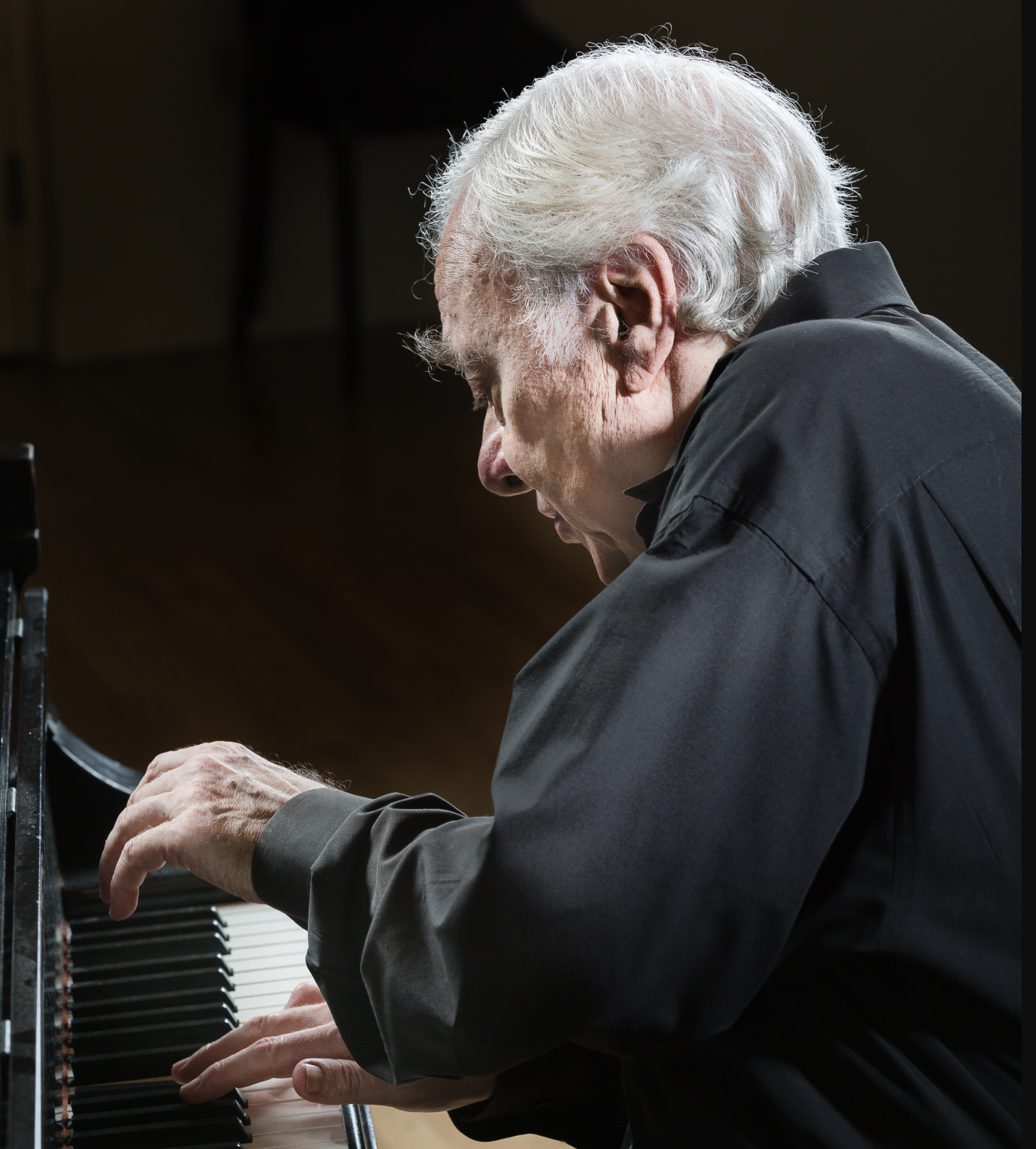
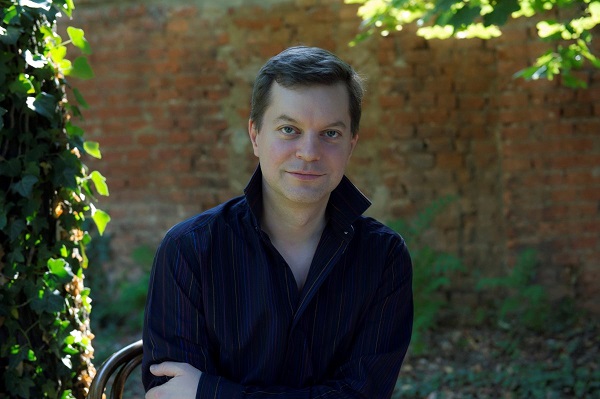
    Above: pianist Till Fellner, photographed by Gabriela Brandenstein

    ~ Author: Ben Weaver

    Saturday April 21st, 2018 – The great Austrian pianist Till Fellner made his belated NY Philharmonic debut last week with an unforgettable performance of Mozart’s Piano Concerto No. 22. Composed in 1785, while he was also composing Le Nozze di Figaro, the E-flat major concerto was following one of Mozart’s most famous works: the 21st concerto’s famous slow movement (two centuries later dubbed “Elvira Madigan” after it was used in a movie of that name.) 

    Whatever the 22nd lacks in fame, it most certainly is one of Mozart’s masterpieces. A big and extended orchestral introduction, which includes timpani and horns, leads to piano’s debut solo. There are several points in the concerto – not cadenzas – that showcase the piano playing without orchestral accompaniment. Mr. Fellner’s beautifully light and quick playing was superb. I have long been a big fan of is artistry: the clarity of his playing, the beauty of sound, perfectly controlled volume and runs, have long placed him among the best pianists of our time. In many ways he reminds me of Murray Perahia at his finest; that’s about the highest compliment I could pay a pianist. Fellner’s playing of this evening’s Mozart was as good as one could expect from anyone. Each note was like a pearl in sunlight. The depth of feeling in the leaping octaves of the slow movement were like love-sick sighs. I think this Andante may actually be Mozart’s most perfect slow movement. And the Allegro finale was thrilling, with some key contributions from flautist Robert Langevin and bassoonist Judith LeClair.

    Having a great concert pianist-cum-conductor Christoph Eschenbach on the podium was a great added bonus. Eschenbach, leading reduced forces of the NY Philharmonic, understands how to accompany the piano and showed extraordinary sensitivity, never rushing or fighting the solo instrument, allowing the piano to sing and lead. It was wonderful to finally have Mr. Fellner with the NY Phil, and I hope he will return regularly in the future.

    As an encore, Mr. Fellner played Liszt’s “Le lac de Wallenstadt” from “Album d’une voyageur“; he played it wonderfully.

    (Just as a side note: The magnificent final movement of the 22nd concerto was among works featured prominently in Miloš Forman’s film adaptation of “Amadeus.” The great Czech/American auteur, who also directed films  “One Flew Over The Cuckoo’s Nest” and “People vs. Larry Flynt,” and led the Columbia University film school for many years, passed away on April 13th.)

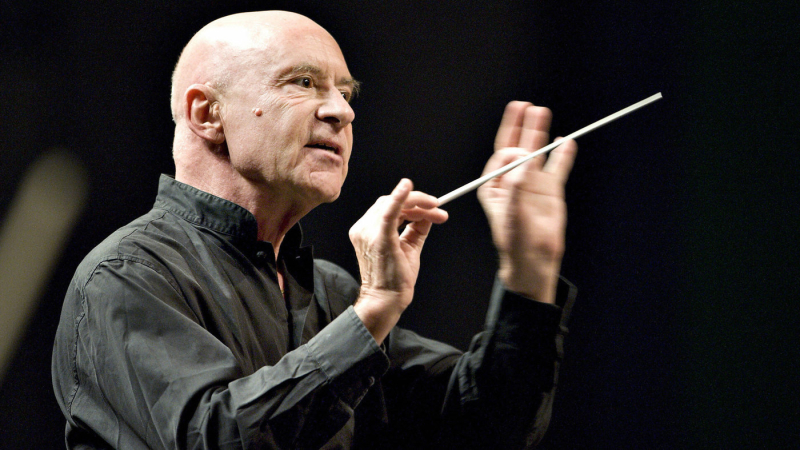
    Eschenbach

    Maestro Eschenbach (above) returned to the podium following the interval for Bruckner’s last, unfinished Symphony No. 9. In failing health for the entire composition of this work, Bruckner completed the first three movements and struggled with the finale for a year. He worked on it on the last day of his life, October 11, 1896. But he only left behind sketches (some fully scored) which were not enough for anyone to be able to legitimately piece together a full movement. (Though several have tried, none of the completions are more than curiosities.) Bruckner once suggested that his Te Deum should be performed as the finale if he did not finish the work; most people realize it was not a serious suggestion for a few reasons, one of which being that a choral finale would lead to comparisons to Beethoven’s 9th, which Bruckner would not have wanted. So the work is almost always performed in only three completed movements.

    The symphony begins with murmuring strings, interrupted by horns, like calls to battle. The brass section always gets big workouts playing Bruckner, and this evening they did not disappoint. Overall the orchestra were on spectacular form, and Maestro Eschenbach was able to corral the massive forces into a thundering wave. Bruckner had a truly unique gift for creating columns and walls of sound that sound like no one else’s. Many other composers could compose loud music, but there is something so unique and specific to Bruckner when he unleashes the full orchestra. As a listener, I often feel like I’m inside a cathedral and the walls are shaking with the voice of God. Of the great symphonists, Beethoven was able to represent musically the sounds of Earth. Sibelius is second to none to making us feel the chill of Mother Nature. Mahler could recreate the sounds of heaven. Shostakovich gave us sounds of man, in all his misery and triumph. Bruckner was a deeply religious man and I am not, but in these moments – and they exist in all of Bruckner’s works – I can imagine if God had a voice, he would sound like this.

    In the second movement, the Scherzo, the thundering march of doom is one of Bruckner’s most memorable moments. The relentless pounding of percussion and strings is stuff of nightmares. No doubt John Williams was aware of this Scherzo when he was scoring “Star Wars.” And the final Adagio is the perfect musical farewell, its conclusion sounding like a clock slowly running down.

    It is nice to have the orchestra seated on risers (a welcome change since Jaap van Zweden took over the Philharmonic as principal conductor) so one can see the various players in the back. Maestro Eschenbach also rearranged the cello and viola sections (for both Mozart and Bruckner) to have cellos on the right and violas in the middle next to the violins. Whether this was Eschenbach’s preference or a new full-time arrangement, we shall see.

    ~ Ben Weaver

  • Pierrot Lunaire @ Carnegie Hall

    ~Author: Scoresby

    Thursday April 19 2018 – On a rather chilly Spring day, Carnegie Hall’s Ensemble Connect had one of its last Weill Hall performances of the season. Every two years the ensemble changes over its fellows and this particular set of musicians will move on in June. As this is the last Ensemble Connect concert I was attending this season, it was interesting to see the contrast between when these players first joined and how they play now.

    The program began with Mozart’s incredibly difficult six movement Divertimento for Violin, Viola, and Cello in E-flat Major, K. 563. The program book seemed to have a typo, listing this work as only 15 minutes long (instead of 45) – perhaps thinking of one of the far shorter and earlier Divertimento for String Quartet. This is a virtuosic tour-de-force piece for all involved because it has incredible exposure for all the instruments, here Rebecca Anderson on Violin, Andrew Gonzalez on viola, and Julia Yang on cello. Ms. Yang’s warm, robust sound stood out immediately – she managed to blend well with Ms. Gonzalez and Ms. Anderson matching vibrato perfectly. 

    Screen Shot 2018-05-04 at 12.55.23 PM
    Above: Ensemble Connect

    Stylistically, the group kept the Allegro light and bouncing. During the Adagio Ms. Anderson’s solo passages were played with a touch of sweetness while Ms. Yang’s ascending cello motifs brought a touch of nostalgia. The Andante (the fourth movement) is a charming set of variations – while every instrument gets its line to shine most impressive were the blending between Mr. Gonzalez and Ms. Yang during the active violin variation. They created a supple backdrop for Ms. Anderson to play the sweet melody. In the fifth movement, the group let the music seemed to have fun with the light bouncy textures and brought the music’s humor out by letting the phrases breathe. The duet between Ms. Anderson and Mr. Gonzalez was fully of energy and light-hearted spirit. While there were a few technical glitches – it was a fun performance of a difficult work. 

    The after-intermission performance demonstrated how much the players in ensemble have grown – it was not only a successful performance of Schoenberg’s Pierrot Lunaire – but one of the best performances I’ve heard this year. The instrumentalists were Rosie Gallagher on flute, Bixby Kennedy, on clarinet, Mari Lee on violin, Madeline Fayette on cello, and Mika Sasaki on piano. As is tradition in Ensemble Connect, before the work began there was a short talk about the music – only here Mari Lee interviewed ‘Schoenberg’s Ghost’, who was wearing a Pierrot-like mask. It was a fun and creative way to introduce the music that a more traditional group wouldn’t have dared to do and Ms. Lee’s earnest questions gave both humor and seriousness to it. It seems Ms. Lee adapted some of the material from her own project Salon Séance for the interview.

    Pierrot is one of the landmark works of the twentieth century. Not quite theatre, not quite music – it lies somewhere in-between in a chamber setting. It was Schoenberg’s first major work using free atonality and is before he came up with his twelve-tone system. Musically it is a piece at the height of German Expressionism, set to the brooding poems of Albert Giraud to paint different fragments of the psyche. It feels at once dream-like and nightmarish with extremes of emotion. In order to enhance this feeling, the group used simple lighting to heighten the drama –  they turned off the regular house lights and replaced them with white spotlights during the first section, blood red lights during the second, and back to white spotlights for third. In this darker atmosphere with the glittering Viennese style chandeliers, one really felt immersed into Schoenberg’s world.

    Unfortunately soprano Mellissa Hughes who was originally supposed to sing the soprano part withdrew due to illness. Luckily, Ensemble Connect managed to get one of the most venerable Pierrot singers alive today: Lucy Shelton.  She was simply spellbinding and elevated the level of the young players to match her. In Columbine the Ms. Lee and Ms. Sasaki’s violin and piano duo gave heft to match Ms. Shelton’s Meine banges Leid (my pain) and immediately changed dynamics to match the zu lindern (soothing). Such precise dynamics from moments like that were the hallmark of this performance – but at the same time the players swelled to match the more crazed sections of the piece.  Ms. Shelton for her part, embodied the music taking a no-holds-barred style. Using hand gestures to and acting to portray the different facets of the characters, from the wisps of nostalgia in the last movement to the crazed laughter and anxiety in the Rote Messe to the cackling gossip in the Gallows Song, Ms. Shelton seemed like she was a witch reciting an incantation and with the dream-like lighting she was spellbinding. In the small hall, her voice filled the entire space and one felt completely immersed – it felt like she was telling you a story and drawing you into her world complete with horrors, traumas, sweetness, and nostalgia for the past. Rather than just a “crazy” approach as many singers bring to this piece, Ms. Shelton captured all the nuance of emotions embedded in both the text and music. Her yearning for the past in the end sounded sweet and  wistful as she whispered “And dream beyond for blissful stretches, O old perfume–from fabled times!”

    Screen Shot 2018-05-04 at 12.54.11 PM
    Above: Soprano Lucy Shelton

    The instrumentalists were no less into the music. While perhaps the could have captured some of the softer tones and romanticism in the third book, they were all precise and together.  A powerful moment at the end of the third movement, Ms. Gallagher’s impressive fluttering as Ms. Shelton sung “With a ghostly moonbeam” – Ms. Gallagher capturing the timbres with precise but soft tones. Ms. Fayette during her nervous outburst in Rote Messe mimicked Ms. Shelton’s crazed line. In the interlude before the last song of the second book, Mr. Bixby deep clarinet melded with Ms. Gallagher’s playing. In that last song, Ms. Lee captured the same timbre as Ms. Shelton’s singing – sounding like a dreamed echo. Ms. Sasaki let the piano. During Gemeinheit Ms. Fayette and Ms. Gallagher matched their vibrato perfectly, creating an ethereal dream-like texture. 

    In the Barcarole, Ms. Lee, Ms. Sasaki, and Ms. Gallagher created a disorienting backdrop of what sounded like a drunken boat ride. All in all, this group of musicians worked hard to create an excellent performance – a great end to the last Ensemble Connect performance in Weill.

  • Richard Goode @ Alice Tully

    ~Author: Scoresby

    Tuesday April 17 2018 – Oddly, I have never had the chance to hear the pianist Richard Goode before. While a seminal figure in the American piano scene, I always seemed to not be able to make his performances. Thus, I was grateful to hear him live first on Lincoln Center’s Great Performers Series in program that ran in chronological order (spare the encore) over 300 years of music history.

    The program opened with the Second and Third Pavians and Galliardes from Byrd’s My Ladye Nevells Booke of Virginal Music. While stunning music due to Mr. Goode’s pinpoint articulation – I couldn’t help but feel a layer was missing from the music by hearing it on the piano. The many trills and ornaments sound far heavier on a piano. Nonetheless Mr. Goode highlighted the harmonic progressions and layered the voicing so the audience could always hear the melody through those ornaments. In the Second Pavian, Mr. Goode let the large groupings of arpeggios having a flowing sound – he crafted melodic line to be joyous and full of energy. In the Galliarde to the Second Pavian, Mr. Goode loosened some and let the music have a more spontaneous feel, but still captured the dance form.

    The second work on the program was Bach English Suite No.6 in D minor, BWV 811. In the opening Prelude, Mr. Goode seemed to have an improvisatory feel to the music – a lot less structured than the Byrd earlier. As the prelude turned into a fugal section, Mr. Goode seemed to eschew the carefree style for rigid structured and lucidity. It was a wonderful transition that let him highlight the quiet beauty in the inner voices and left hand of this denser section. As the prelude escalated in intensity, he took advantage of the piano’s wide dynamic range to let it boom like an organ. Mr. Goode took a brisker pace for the later movements. This worked particularly well in the charming Gavotte I and II. With the speed of the trills and folk-like allure, the Bach seemed to echo the Byrd from earlier. This seemed quite intentional every part of the program seemed to be strung together with a few different ideas. In the speedy Gigue that ends the suite, Mr. Goode seemed to at once capture the rhythm and get into a more dancelike idiom. His left hand’s clarity is rare in a pianist and he used it to build the intensity in each of the scales, adding drama to this finale. Despite having a light touch to the keys, Mr. Goode seemed to be able to build a large sound without sacrificing clarity.

    Screen Shot 2018-04-23 at 4.44.32 PM

    Above: Pianist Richard Goode; photo credit: Steve Riskind

    The highlight of the program was hearing Mr. Goode’s interpretation of Beethoven Sonata No. 28 in A major, Op. 101. Mr. Goode was the first American pianist to record all 32 of Beethoven’s sonatas; his expertise in the music showed this evening. Mr. Goode’s style of playing seems to revolve around painting the exacting structure of the music, so in the Beethoven he eschewed some of the more sentimental elements of the work to do this. While I personally find it sometimes a bit cold, it is interesting to hear a fresh and insightful interpretation.  In the lyrical opening, Mr. Goode seemed to take a straightforward approach that pushed the music along. At first he kept his playing quiet and measured, but he seemed to emphasize the expansions into different registers and bell-like chords that appear littered through the work. While some pianists use these chords as a simple break, Mr. Goode made sure that each time they appeared they were a harmonic feature that drove the piece. Similarly as the first movement unfolded, he let the left hand’s drone sing clearly.

    The second movement is famous for its odd Schumann-esque march. Mr. Goode let the driving rhythmic structures take precedent, echoing the bell-like motif from the first movement. He also made sure all the jazzy riffs had spunk to them, which echoed the Debussy to come. The most fun part of the night was during the giant fugue that ends the work. Mr. Goode managed to make the exciting fugue have pristine clarity, only to be quiet in to the romantic opening of the piece. The humorous coda at the end of the work seemed to have a few audiences members smiling as he finished.

    The final work on the program (after intermission) were the Debussy Préludes, Book 2. Mr. Goode’s interpretation, while beautifully played, felt a little too monotone for my taste. Nonetheless, in the third image La puerta del vino, he managed to capture both the Spanish rhythms and bursts of different colors. The Ondine suited his style of playing well, letting each of the arpeggios ripple through with exacting phrasing. He capture the eccentricity of Hommage à S. Pickwick Esq. P.P.M.P.C., getting an earthier, Rachmaninoff- sort of sound. The tinkling of the folksy dance and humor during the contrasting section of the work harkened back to the Barqoue works earlier. It is clear that Mr. Goode manages to unify his programs by highlighting the common strands between works.

    The audience seems to love Mr. Goode, giving him a hearty ovation following the exciting Feux d’artifice. After all the applause Mr. Goode played an extended encore: Chopin Barcarolle in F-sharp major, Op. 60. While the perfect closing piece for the program (according to Mr. Goode’s remarks the Barcarolle was a favorite of Debussy’s) and a pleasurable indulgence it felt a little long-winded to add on to the end of the performance. Nonetheless, Mr. Goode’s playing was just as thoughtful and free as earlier, closing the recital on a high-note.

  • Tetzlaff @ Tully

    ~ Author: Scoresby

    Wednesday March 28th, 2018 – It is difficult to write about Bach’s Sonatas and Partitas for Solo Violin, especially live performances. It is stunning music with too many layers to write about, nearly impossible to play well live (recordings polish all the difficulties away), and something that many people are familiar with. Of course it is far harder to play them in an evening – the endurance required is a feat that few violinists attempt. As part of the Lincoln Center Great Performers series in Alice Tully Hall, violinist Christian Tetzlaff gave a solo recital of two thirds of the set. Mr. Teztlaff has a history of performing these works every few years in NY, he has played them twice in full at the 92nd Street Y before (both of which I regretfully missed) and just issued his second recording of the set last year. Thus it seemed like the perfect opportunity to sit down and listen.

    Mr. Tetzlaff was all business this evening, walking out on stage and starting to play the Grave of Sonata No. 2 in A minor, BWV 1003 before the audience had even stopped clapping. The audience took this entire movement before settling in (people were still rustling in their seats, whispering, etc…). He took a brisk tempo and sounded almost improvisatory with this opening. The sound was clean and had almost no vibrato. Without a pause he jumped straight in to the Fuga, making the two movements sound like something out of the Well-Tempered Clavier

    The fugue was orchestral in scale and each down-bow was emphasized to give the piece its own internal rhythm. The effect was hypnotic, drawing the listener into Mr. Tetzlaff’s world. While not clean playing by any means, that’s not the point when listening to Mr. Tetzlaff. He is able to build large structures without making the music sound pretentious – his playing is fluid and with ease all at once.

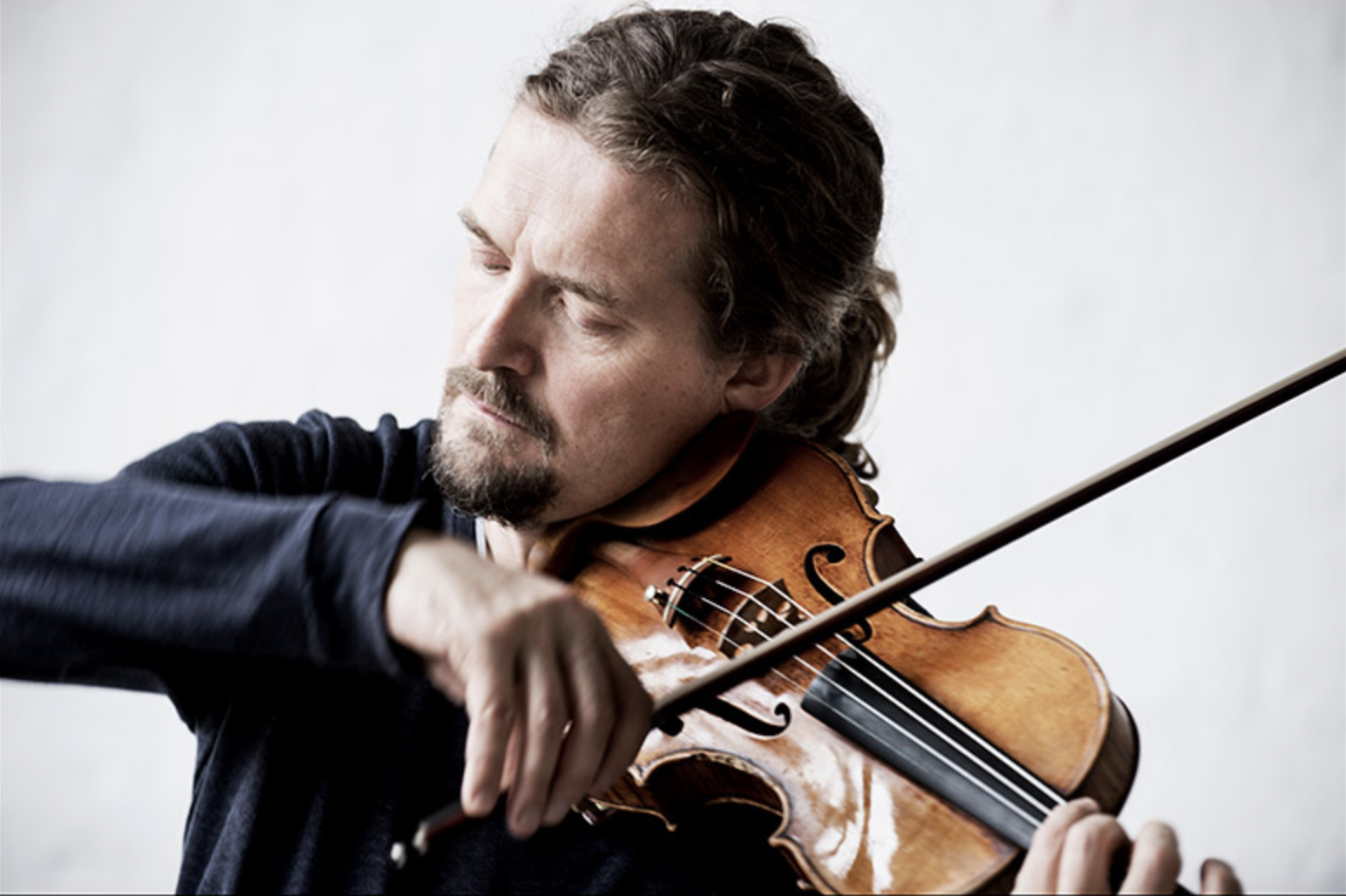
    Giorgia Bertazzi
    Above: violinist Christian Tetzlaff; photo credit: Giorgia Bertazzi

    The Andante was the highlight of the concert. Again a faster pace than is typically played, Mr. Tetzlaff used this to bring out the accompanying pulse in the bass. Just by playing it faster, the piece sounded more orchestral and unified without losing its charm. Many violinists eschew this pulse for the main melody, but Mr. Tetzlaff gave them equal importance making the melody sound like a baroque soloist sitting atop an accompanying recorder. Despite that large sonority, Mr. Tetzlaff was unassuming in his playing – not injecting anything besides bringing out that counter-melody. There was basically no tension nor ornamentation, just the soft padding of the pedal point and the beautiful melody sitting atop. It is moving to hear music played that joyously and humbly; the happiness was contagious.

    In the sunnier second half of the program with Sonata No. 3 in C major, BWV 1005 and Partita No. 3 in E major, BWV 1006, Mr. Tetzlaff was more at home. His unpretentious, almost folksy sound worked well with both of these works. The Fuga of Bach’s 3rd sonata is one of Bach’s most complex fugues. It starts with a simple theme that is put through the wringer of different techniques that would be difficult on a keyboard, let alone a violin. Mr. Tetzlaff navigated its complexity by highlighting the inner voices and given a soft bowing, making this work sound more intimate despite a slew of mistakes. The dense chords became chorale like. 

    The other highlight of the program was the fourth movement of this sonata. Mr. Tetzlaff played the Allegro assai with ease, eliminating all of the rough sonorities that torment other violinists. His tone was understated, quiet, and made every voice entirely visible. His bowing was magical to watch, it looked (and sound) as if there was no tension – just gliding through the technical piece like water pours into a glass. This allowed him to make each key shift stand out and take on its own timbre – a brilliant way of playing Bach. The last Partita fit Mr. Tetzlaff’s down-to-Earth sensibilities. He played with a delicate sensibility letting the music unravel on its own through various bursts of speed and thoughtful passagework. He eschewed almost all ornamentation and just played the music.

    After the performance one person nearby me said ‘Well, he can’t play all the notes’, to which I gladly agree. Instead his performance was human, vulnerable, and humble. In spite of some of his idiosyncratic rhythms, this performance showed that he is the antithesis of a virtuoso, something all too rare. 

    ~ Scoresby

  • YCA Presents Flautist Anthony Trionfo

    Anthonyhiresmattdine3

    Above: Anthony Trionfo, photographed by Matt Dine

    ~Author: Oberon

    Wednesday March 28th, 2018 – Young Concert Artists presenting flautist Anthony Trionfo at Merkin Hall. Mr. Trionfo is a musician of prodigious talent and scintillating personality; along with the excellent pianist Albert Cano Smit and a quartet of string players, he offered a wide-ranging, adventurous program combining the familiar, the rare, and the new.

    Gabriel Fauré‘s Fantasy in E minor, Op. 79, opened the evening. Mr. Trionfo’s shining tone and his feel for the sensuous undercurrents of the opening Andantino gave way, in the Allegro, to florid passages of crystalline coloratura. Mr. Cano Smit was the ideal partner here, his playing impeccably tailored, his seriousness of intent and commitment most welcome in such a young artist. 

    Returning alone to the stage, Mr. Trionfo gave a superbly confident performance of J.S. Bach’s Partita in A minor, BWV 1013. In this suite of dances, the flautist showed great subtlety and a multi-hued timbre that kept the music ever-alive. The Courante had a feel of birdsong, the Sarabande a forlorn air of touching simplicity. In the concluding Bourrée anglaise, the playing was light-filled and lovely.

    The New York premiere of drip/spin by Katherine Balch, the 2017 YCA Composer-in-Residence, was prefaced by Mr. Trionfo’s remarks about the ‘dew-drop necklace’ – silk threads and mucus droplets – with which the glow-worm attracts and entraps its prey. The perpetual motion of the piano part seems to envision the spinning toils of the glow-worm, whilst the sighs and blips from the flute depict the unsuspecting victim. Some of the piano keys have been ‘prepared’, adding a ghostly quality. The flute lingers on high, until an energy drain occurs. Then the piano begins a rolling motif; in its death throes, the preyed-upon flute goes wild, with harsh accents that finally sputter out.

    Al21165

    For the Chant de Linos by André Jolivet, a string quartet comprised of Mélanie Genin (harp), Aleksey Semenenko (violin), Ida Kavafian (viola) and Sang-Eun Lee (cello) joined Mr. Trionfo onstage. André Jolivet (1905-1974) composed this work on commission from the Paris Conservatoire in 1944 as a compulsory test piece for competitors in the Solo de Concours; the prize was won that year by Jean-Pierre Rampal. The work is a threnody (or lament to the dead) inspired by the story of Linos, son of Apollo. Linos taught Orpheus to play the lyre, and he was later killed by Heracles for criticizing him too much. André Jolivet was a composer inspired by the legends from antiquity; he wrote many chamber music works, eleven concertos, as well as orchestral and vocal music.

    The rich yet transparent textures of the strings are quite contemporary in sound yet they evoke a distant, mythic past. A dreamy passage for flute and harp draws us in; the music can veer from lyrical to explosive in the twinkling of an eye. A subtle flute solo leads to a darkish dance played by all. Things get a bit woozy before turning to lament; following a cadenza, the music dances onward with the flute trilling and piping. What a great idea to program this ensemble piece tonight: a wonderful opportunity to hear this music, and so beautifully played.  

    Albert cano smit

    Above: pianist Albert Cano Smit

    A fascinating performance of Lowell Liebermann’s Sonata for flute and piano, Op. 23, followed the interval. The opening Lento con rubato soon wraps us in the strange beauty of its misterioso atmosphere. Delicate sounds from the piano’s upper register are followed by a big outburst which subsides into ghostliness. Single notes struck by the pianist underscore a sinuous flute motif; then the flute sound turns big and piercing. Rippling piano figurations summon the flautist back to song, a gentle flow becoming a percolation. The haunting melody returns in all is mystery, and Mr. Trionfo’s flute makes a final ascent to a remarkably sustained note that tapers away.

    In the ensuing Presto energico, there is much bouncy, lively coloratura from the flute which Mr. Trionfo conveyed brilliantly, with lots of body English; meanwhile the piano writing is animated…almost wild. The music sails forward, with virtuosic playing from Mr. Cano Smit whilst Mr. Trionfo spins high flourishes with his flute. This work drew a very warm audience response, with the composer taking a bow to waves of enthusiasm.

    Ian Clark’s Zoom Tube again gave Mr. Trionfo the opportunity to demonstrate some of the various sound effects his flute could produce…like the Balch, but more extroverted and pop-oriented. He sometimes seemed to be producing two different sounds at the same time, ‘speaking’ or blowing air, playfully jazzing things up, even emitting a whooping scream at one point.

    Mr. Trionfo’s arrangement of the traditional Carnival of Venice provided an immensely enjoyable showcase for his virtuosity. After a captivating trill, the flautist embarked on a series of variations on the familiar tune: the blues, bel canto, jazz, a Latin lilt, ‘Casta diva‘, and on and on. Mr. Cano Smit was the perfect accomplice in this imaginative tour de force as the two players kept the audience thoroughly engaged with their technical dazzle and well-contrasted personalities.

    As an encore, Mr. Trionfo offered Debussy’s Syrinx, ending on a sustained, gossamer pianissimo.

    ~ Oberon

  • Lisa Batiashvili|ORPHEUS @ Carnegie Hall

    P1010052_preview

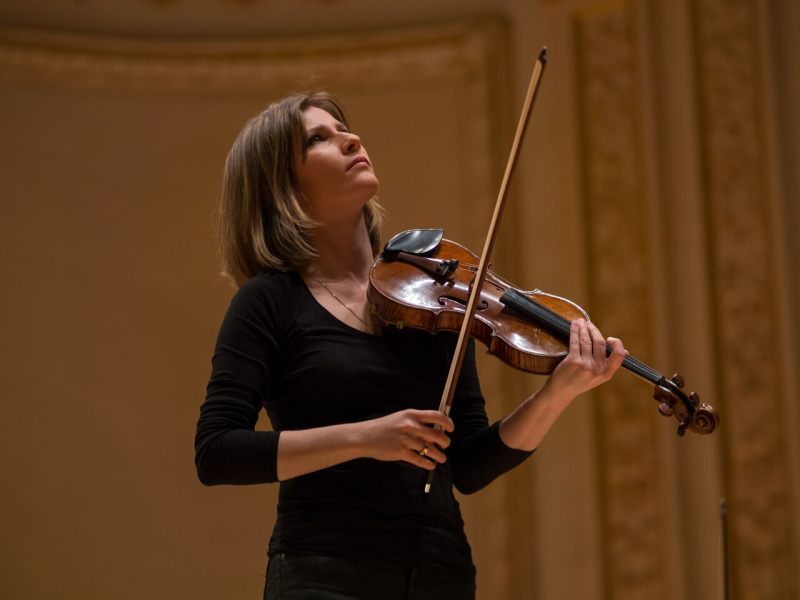
    Above: violinist Lisa Batiashvili, rehearsing for this evening’s concert with ORPHEUS; photo by Matt Dine

    ~ Author: Oberon

    Saturday March 24th, 2018 – My friend Dmitry and I are big fans of Lisa Batiashvili, so we were excited by this opportunity to hear her play the Prokofiev second concerto with ORPHEUS at Carnegie Hall. The program successfully blended works by Schubert and Prokofiev, and the comely violinist basked in a rock-star ovation after her dazzling performance.

    In 1823, Franz Schubert composed incidental music for Helmina von Chézy’s play, Rosamunde. The play was a failure, but Schubert’s music has come down to us across nearly two centuries. ORPHEUS opened their concert tonight with the play’s Entr’acte No. 1, commencing with a big, resonant sound that gave the illusion of a full symphony orchestra. The music has an air of theatrical drama, and there’s some lovely writing for clarinet. 

    Paul Chihara’s persuasive arrangement of Prokofiev’s Schubert Waltzes Suite, created specially for ORPHEUS, was highly enjoyable, and attractively played. Solo passages for oboe, flute, clarinet, and trumpet stood out. Mr. Chihara was present, and took a bow from the audience.

    P1010100_preview

    Above: ORPHEUS onstage at Carnegie Hall, a Matt Dine photo

    The two existing movements of Franz Schubert’s Symphony No. 8 in B Minor, D. 759 (Unfinished) were given plush treatment by the ORPHEUS forces, and again the clarinet, oboe, and flute soloists seized on their opportunities to delight us with melodious gems. The ensemble sound overall was vividly textured, with notable sonic warmth from the cellos, and the frequent repeats of the familiar theme of the Allegro moderato were so cordially played. A cellphone interrupted the Andante – twice! – spoiling the atmosphere; and no sooner had that distraction faded, than some poor bloke had a terrible coughing fit. It took all my powers of concentration to endure.

    After the interval, Ms. Batiashvili strolled onto the Carnegie Hall stage along with the ORPHEUS musicians – eschewing a star’s entrance – and proceeded to enthrall us with her commanding and emotionally vivid performance of the second Prokofiev violin concerto, Op. 63.

    P3240077_preview

    Above: Lisa Batasthvili playing the Prokofiev 2nd this evening; photo by Matt Dine.

    From her opening solo passage, Ms. Batiashvili’s playing seemed wonderfully at home, both in the embracing acoustic of the venerable hall and in the decidedly à la Russe qualities of the music. Her luminous tone in the sustained melodic passages and the clarity and deftness of her coloratura flourishes were captivating. A spidery motif over plucked accompaniment was subtly delivered, and – after a lamenting theme from the cellos and a march-like intrusion – she produced lively swirls of notes over a descending orchestral figure. As the violinist returned to the sweet, poignant melody heard earlier, we were on a Batiashvili high when the mood was broken by a moaning baby somewhere in the upper tiers. At moments like this, I seriously think about giving up concert-going.

    But Ms. Batiashvili drew us back into her world with her simply gorgeous playing in the Andante assai; the theme has a nostalgic glow and it sings over a plucked accompaniment. Sailing higher and higher, with spine-tingling glamour of tone, the violinist provided for us a transfusion of tranquility in a world going mad. The ensemble then take up the melodic passage as the violin plays pizzicati.

    The final movement, Allegro, ben marcato, brings us elements of the wit that Prokofiev can so magically integrate into his music: yet another reason he’s one of my top favorite composers. The castanets here always make me smile. Throughout this dance-like movement, it was as much fun watching the pretty violinist as listening to her. As this concerto reaches its lively finish, I always wish it had been longer.

    Ms. Batiashvili, looking lovely as ever in her wine-coloured gown, won an enraptured ovation from the crowd. She treated us to a delightful encore: the March from Prokofiev’s LOVE OR THREE ORANGES.

    P3240344_preview

    Above, mutual admiration: Lisa Batiashvili and the players of ORPHEUS. Photo by Matt Dine.

    ~ Oberon

  • Lifits @ Weill Hall

    ~ Author: Scoresby

    Friday March 23rd, 2018 – It is always a pleasure going to Carnegie Hall’s Distinctive Debuts series to hear new young musicians. This evening had the Uzbeckistani-German pianist Michail Lifits performing a short and somewhat eclectic program. The evening began with the last piano sonata that Schubert published in his lifetime: Piano Sonata in G major, D 894. Interestingly, this work was Schumann’s favorite Schubert piece. It is an unusual for younger musicians to program this work as it is one of Schubert’s most understated. Typically I am wary of hearing this piece played, as it can sound utterly repetitive in the wrong hands. Mr. Lifits proved otherwise, providing one of the most probing performances I’ve heard of the piece.

    The work commences with a serene chord pattern that serves as the base for the entire first movement. Mr. Lifits used a quiet and refined style of playing. There wasn’t much pedal; however, all of the voices were even. His tempo was quicker than some, but this only emphasized the song like quality of the music. After each restatement of this main theme, Mr. Lifits would slightly alter his voicing, throwing a different shade of color to this chord pattern. Over the course of the few minutes leading up to the dramatic downward scale that launches the piece forward, Mr. Lifits hand began to focus on clarifying the lower notes and murky inner-voices. Thus, with the tension set, he launched into that fateful downward scale creating one of the most dramatic moments of the evening. His sensitivity in dynamics let that moment feel like an awakening of sorts, after all the quiet lead up.  

    Screenshot 2018-03-25 at 2.35.22 PM

    Above: Pianist Michail Lifits, Photo Credit: Felix Broede

    After finally moving into this broader dynamic range, Mr. Lifits took full advantage. Through the first movement there are beautiful lieder-like sections. Here the piano had a softer sound, the melody in the right hand sounding like a singer playfully skirting atop a charming accompaniment. Each time the downward motif was repeated, Mr. Lifits increased the drama by adding slightly louder dynamics propelling the music forward.  

    In the main repeated chords, the lower basses gradually came into its own melancholy identity. Mr. Lifits wistful playing made this tinge become apparent through all the gracefulness above it. Finally, after transforming the almost repetitious theme for the last time the first movement came to delicate close. The audience was so enthused that they gave him a loud clap before letting him begin the second movement. I’ve never heard such a creative performance of that movement, that let each chord shine while at the same time pushing the music forward.  

    Mr. Lifits took a slightly faster approach for the second movement than one typically hears, which just increased the song-like quality inherent in this music. In the second minor theme that takes over this was particularly present. Despite some smudges in some of the scales and some technical issues, as a whole the second and third movements were still lovely.  

    Not pausing between any of the movements (perhaps out of fear that the audience would clap again, a good problem to have), he took a naïve jolly tempo for the last movement. Enjoying each ornamentation in the right hand and letting the music pop. I couldn’t but think that Schumann must have been inspired by this in his own Carnival. Regardless, I look forward to listening to Mr. Lifits’ Schubert CD (which includes this sonata). According to his biography he is recording an entire cycle of Schubert’s music and I look forward to hearing it all. 

    In the second half of the concert, there was a transition from the serene to the circus. First was the Shostakovich 24 Preludes, Op. 34 performed in succession without a break with Shostakovich Prelude and Fugue in D minor, Op. 87, No. 24. The Preludes are an earlier set of pieces which are classic Shostakovich joke-type pieces. While there are some serious moments, they are a study in comical miniatures for the most part. While I enjoy hearing a few of these, hearing all of them in succession was a little much for my taste (even as a devout Shostakovich lover).  

    Nonetheless, Mr. Lifits gave as good of a performance as one can expect, emphasizing the humorous sections of these pieces. In the second movement which is a burlesque sort of waltz, Mr. Lifits indulged in its off-kilter quality. He played up the various extreme dynamic changes in the wild moments. In the eighth movements riffs on jazzy themes, the piano here sounded like in a cabaret. The best part of the second half was the organ-like prelude and fugue. Mr. Lifits managed to coax all of the difficult voicing out of the fugue to create an intricate web of layers.  

    After such a well-played concert, Mr. Lifits offered Rachmaninoff’s showy arrangement of Kreisler’s Liebesleidwhich seemed inappropriate after all that came before. As a panacea to the Rachmaninoff, Mr. Lifits finished the concert with a second encore of Chopin’s posthumous Nocturne in C-sharp Minor which he played as well as the Schubert.

    ~ Scoresby

  • Mitsuko Uchida @ Carnegie Hall

    4929_6093_Uchida-Mitsuko_Decca_Marco

    Above: Mitsuko Uchida, photographed by Marco Borggreve

    ~ Author: Oberon

    Monday February 26th, 2018 – Mitsuko Uchida in an all-Schubert recital at Carnegie Hall. I had only heard Ms. Uchida performing live once before, on Bastille Day, 1989, at Tanglewood; that evening, she played the Ravel G-major concerto, with Seiji Ozawa conducting. In 2009, some twenty years after that Tanglewood encounter, Mitsuko Uchida was named Dame Commander of the British Empire by Queen Elizabeth II.

    This evening, Dame Mitsuko walked onto the Carnegie Hall stage to an affectionate round of applause. Clad in a black trouser outfit with a golden sash and gold shoes, she bowed formally to the crowd, put on her eyeglasses, and sat down at the Steinway. For the next two hours, the pianist filled the hall – and our hearts – with her renderings of three Schubert sonatas. Her playing was by turns dramatic and poetic, and there was a wonderful feeling that her interpretations were very much at home in the venerable space: we were literally enveloped in the music.

    Mitsuko Uchida is a true artist. She isn’t here to dazzle us with theatrics or with her own personality, but to bring us great music in all its clarity and richness.

    The ongoing discussion in the realm of classical music as to whether Schubert’s piano sonatas belong in the same echelon as Beethoven’s was continued in tonight’s Playbill and in remarks overheard in intermission  conversations around us. My feeling, based on limited experiences to date, is that Beethoven’s sonatas more often reach a spiritual depth which Schubert’s – for all their beauty and fine structuring – never quite attain.

    The evening opened with the C-minor sonata, D. 958. Ms. Uchida immediately commanded the hall with the sonata’s crisp, dramatic start. As she moved forward, I initially felt she was giving too much pedal; but this notion was soon dispelled. Flurries of scales were exhilarating, and dancing themes ideally paced. The movement ends quietly.

    The Adagio brings us the first of many melodies heard throughout the evening that remind us of Schubert’s stature as a lieder composer. From its melancholy, soft start, one can imagine a voice taking up the melody; Ms. Uchida’s songful playing underscored this vocal connection throughout the concert. Some unfortunate coughing infringed on the quietest moments, but the pianist held steady and the atmosphere was preserved.

    Following a Menuetto – its unusually somber air perked up by the Allegro marking – the sonata’s dancelike final movement feels almost like a tarantella. A marvelous lightness moves forward into alternating currents of passion and playfulness. Ms. Uchida’s tossing off of several flourishing scales was particularly pleasing. 

    The A-Major sonata, D. 664, published posthumously in 1829, has variously been dated between 1819-1825. Referred to as “the little A-major” it was the shortest of the three sonatas on offer tonight, and it’s a real gem.

    This sonata’s opening Allegro moderato commences with another ‘song without words’. The pianist moves from high shimmers to dusky depths of turbulence and back again. A hesitant, sighing start to the Andante soon develops gently into minor-key passages. Ms. Uchida’s playing has a rapt, dreamlike quality and a lovely sense of mystery here; this evolves to a heavenly finish. The final Allegro commences with rippling motifs; emphatic downward scales lend drama, while waltz-like themes entice us. Throughout, the pianist’s feeling for nuance continually intrigued.
     
    Following the interval, we had the longest of the program’s three sonatas: the G-Major, D. 894 (often referred to as the Fantasie-Sonata‘), which was composed in the Autumn of 1826.

    The ultra-soft opening of this sonata found Ms. Uchida at her most compelling. As the Molto moderato e cantabile unfolds, there are high, decorative passages interspersed with big, rumbling downhill scales and waltzy motifs. Again the pianist’s scrupulous attention to detail and her control of dynamics kept the hall mesmerized. In the Andante, Ms. Uchida savoured the calm of the opening measures. Then grand passions spring up, alternating with lyrical flows from minor to major. The soft ending of this Andante was magical.

     
    Heraldry sets off the Menuetto, Allegro moderato, which later lures us with a waltz. Ms. Uchida’s caressing of the notes as the music softens was sublime. The Allegretto, full of repeats, again reminded us of how marvelous this music sounded in the hall.
     
    Greeted with an exceptionally warm standing ovation, Ms. Uchida delighted us with a miniature encore – one of Arnold Schoenberg’s “Six Little Piano Pieces” Op. 19 – which took a about a minute to play. This witty gesture was a perfect ending to a great evening of music-making.  

    ~ Oberon

  • Pappano & Andsnes @ NY Philharmonic

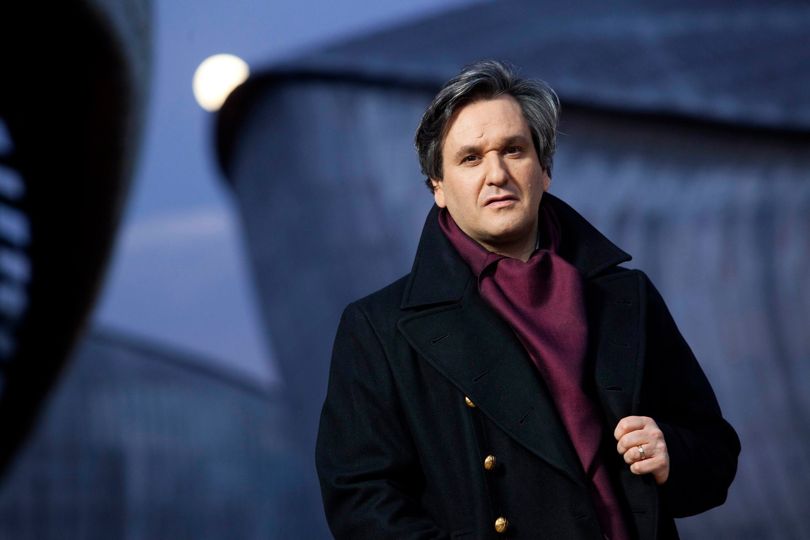
    Antonio-Pappano-conde-nast-traveller-28nov16-pr
    Above: Conductor Antonio Pappano; Photo Credit: Musacchio & Ianniello

    ~Author: Scoresby

    Thursday February 8th,  2018 – The New York Philharmonic seemed in good form at David Geffen Hall. They were led by the wonderful Antonio Pappano, who I had never had the opportunity to hear before. I also hadn’t heard any of the works on the program live, though I have heard them all via recording. Pianist Leif Ove Andsnes and resident NY Philharmonic organist Kent Tritle rounded out the program. It is interesting to have heard the Philharmonic after a long break, as both this time and last time I heard the playing seemed higher quality than I recalled. It will be interesting to see how the sound changes again next year when Jaap Van Zweden assumes his full music directorship.

    Ralph Vaughan Williams’s Fantasia on a Theme by Thomas Tallis opened the program. I was surprised to learn in the program notes that the last time this famous piece was performed was 20 years before – it seems unusual for a piece that is perhaps Vaughan Williams’s most well-known. The all string orchestra is divided into three distinct groups during this work, the normal string orchestra, a separate orchestra that acts as the melody center, and a string quartet consisting of the principal players. Here, Mr. Pappano put the melodic orchestra in a row behind the strings that played the background counterpoint.

    I’ve never been particularly fond of this work, while stunningly beautiful I don’t feel the music goes anywhere. Mr. Pappano convinced me of its beauty though – the slow moving textures almost sounded like a minimalist organ work. The basses and cellos truly sounded like the pedals of an organ while the other strings managed to capture the full nuances of the Phrygian scale that the Tallis themed is based on. All the strings sounded quite clean. Perhaps the most convincing moment was when Cynthia Phelps entered with her melancholic viola melody (6:05 in the video above) – she managed to make the entire room sing. The other quartet members did a good job blending with her, but that lonely call after the richness of what precedes it will remain with me for a long time.

    The second work on the program was the Britten Piano Concerto, Op. 13. It is a bit of an odd piece, structured in four movements and lasting about thirty-five minutes. While interesting to hear, it didn’t sound to me nearly as original as other Britten works. Sort of like a medley of Stravinsky, Shostakovich, and Prokofiev with some of Britten’s classic colorful instrumentation. Nonetheless, it is a fun virtuosic piece of music that really shows off an orchestra – even if not the most worthwhile music.

    Capture

    Above: Pianist Leif Ove Andsnes; Photo credit: Gregor Hohenberg

    Mr. Andsnes milked the virtuosic first movement for all that it had, ripping through opening lines and making it sound gritty. Mr. Pappano’s accompaniment was spot on with the percussion cued perfectly for the piano’s percussive chords. Nonetheless, the movement is almost clown-esque and this interpretation seemed a little subdued for the material. Mr. Andsnes did seem to revel in the Rite of Spring-like chords (or perhaps I am thinking that because I’ve been listening to his new recording with Marc-André Hamelin).

    The second movement is a little less chaotic than the first, the first few lines make it sound like one is in a jazz bar with people who are smoking. The bass is plucking away, while someone is lightly tapping on tambourine. The viola and clarinet exchange jazzy sounding lines. Ms. Phelps again did a fabulous job, here embracing that smoky texture as did Mr. Andsnes when the piano finally comes in to some music that sounds straight out of Prokofiev.

    Eventually this setting yields to another virtuosic theme that recapitulates parts of the first movement. The third movement is a theme and variations that grows progressively denser – while interesting, it doesn’t quite feel like it belongs. Britten wrote many years later to replace a different version and it is easy to tell. The finale is exciting and showy, both Mr. Pappano and Andsnes making the most of it.

    The second half of the concert was devoted to Saint-Saëns Symphony No. 3 in C minor, Op. 78 with Kent Tritle performing the organ. While a popular piece, it hasn’t been done at the NY Phil in 8 years and so I haven’t gotten the chance to hear it live before. In some ways though, I feel like I still haven’t heard the piece properly. Because Mr. Tritle was playing an electronic organ, some of the grandness of the work didn’t seem to be present – indeed my friend and I chuckled a bit when the electronic organ entered as it just didn’t sound right for such a delicately composed piece. That is no fault of the organist, however, it would be lovely if Lincoln Center built an organ in David Geffen Hall.

    Mr. Pappano programmed the Vaughan Williams well, it mirrors both the sound of the organ and structure of the Saint-Saëns making for a satisfying second half. Mr. Pappano brought an incisive and almost frenzied energy to the Allegro moderato in the first movement. The famous theme sounded buzzing with energy. Most impressive though were the clear textures in the massive fugue in the second movement, not a note was out of place, being both transparent and energetic. One effect that I had never noticed was Saint-Saëns dazzling use of pianos in the second movement’s presto. They are light and just a tinkle above the orchestra, but give it this glistening sonority that sounded to me like stained glass in sunlight. It was delightful to hear and I look forward to hearing Mr. Pappano again. He manages to choral the orchestra into action and get the best of its players.

    ~ Scoresby