Category: Music

  • From Cardiff ~ 2017: Excellent Massenet

    Kang_wang_profile

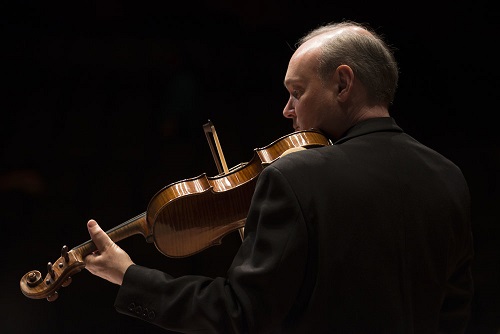
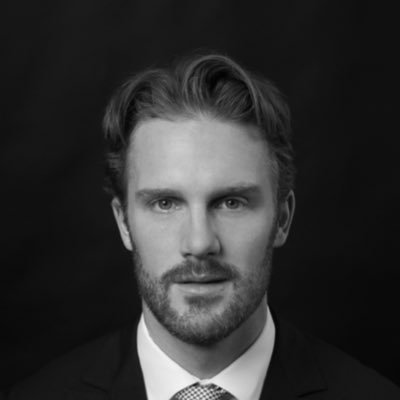
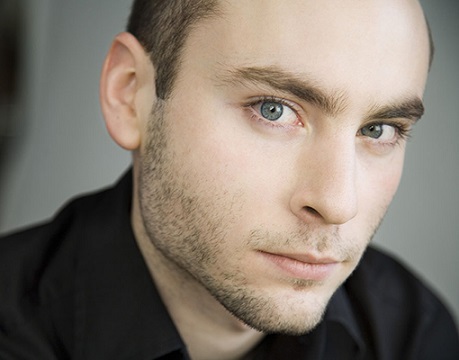
    At the fourth concert of the 2017 Cardiff Singer of the World Competition, exceptional performances of two arias from Massenet’s WERTHER were particularly gratifying. Tenor Kang Wang (above), who has sung an impressive Narraboth at The Met, delivered the poet’s lamenting Pourquoi Me Réveiller? with striking sincerity.

    Catriona-Morison

    Catriona Morison (above), from Scotland, moved me deeply with her sense of quiet desperation in Charlotte’s “Air des Lettres“. A superbly attractive woman, Ms. Morison’s voice and her emotional engagement in the character’s situation made her performance of this aria – which does not always work well out of context – as fine as any I can recall.

    UPDATE: Catriona Morison was co-winner – along with Mongolian baritone Ariunbaatar Ganbaatar – of the 2017 Cardiff Singer of the World Song Prize. Watch as Dame Kiri Te Kanawa presents the trophy here.

    Both Ms. Morison and and Kang Wang along are finalists in the competition for the Main Prize, as are Mr. Ganbaatar, England’s Louise Adler, and the American baritone Anthony Clark Evans.

    UPDATE #2: Hot off the press: Catriona Morison named Cardiff Singer of the World 2017!! Can I pick ’em or can I??

  • Calidore Quartet @ CMS

    Ps2Z7A8630-copy

    Above, the Calidore Quartet: Ryan Meehan, Estelle Choi, Jeremy Berry, and Jeffrey Myers

    Author: Scoresby

    Thursday May 18th, 2017 – The Calidore Quartet and violist Paul Neubauer in the first of two performances scheduled for this evening (the first at 6:30 PM, and the second one at 9:00 PM), marking the end of this season’s Rose Studio series at Chamber Music Society of Lincoln Center. The quartet consists of Jeffrey Myers and Ryan Meehan, violins, Jeremy Berry on viola, and cellist Estelle Choi. It was a short program of seventy minutes, without intermission, featuring two great works.

    First up was one of my favorite pieces in the genre: Ligeti’s 20-minute String Quartet No. 1 for Strings, “Métamorphoses nocturnes”. This piece is structured into different small character pieces, each propelling the theme posited in the first few notes forward. While it is a fantastic piece in its own right, it is stylistically quite different than the rest of Ligeti’s output, instead feeling like one of the Bártok quartets, if he had lived another ten years.

    Ligeti uses a variety of different effects through the piece and the quartet handled every challenge well. The music starts off with a dry mysterious introduction with various whole tone scales appearing and builds in a large crescendo to a rollicking theme that launches the piece forward into its other sections. The Calidore Quartet did a superb job of building from a whisper into a bang making the performance a thrill.

    Equally enjoyable was the way the quartet embraced all of the sound effects from string snaps to lightly played harmonics near the bridge. Multiple times I saw audience members craning their necks to see how the quartet was producing these otherworldly sounds. While some quartets emphasize the overlying structure, the Calidores focused individual characters of each section. This leads to larger dynamic and tempo contrasts. The languid night music sections became infused with color. My favorite part of the evening was during the section in which the first violin has a sustained trill while the rest of the quartet plays slow consonant chords – in the midst of so much else going on, this part felt like being elevated into a misty plain.

    Credit+Tristan+Cook

    Above: violist Paul Neubauer in a Tristan Cook photo

    The second piece on the program was Mozart’s Quintet in C major for Two Violins, Two Violas, and Cello, K. 515 with Paul Neubauer as the additional violist. I had never heard this piece and I found it quite intriguing. When I typically think of quintets, I picture one instrument that functions as a quasi-solo instrument. This piece is pure chamber music in that the distribution of voicing is more even.

    The tone of the strings here was warmer than in the Ligeti. Of particular note was the buttery round sound of Ms. Choi’s cello – she seems able to blend with every individual voice in the ensemble and supply a steady bedrock for the group to fall back on. The opening Allegro was delightful, they did an excellent job highlighting all of the inner textures that typically get brushed aside for melodic content.

    It was interesting to me that the players managed to have a smooth, legato tone throughout most of the work. Until the fourth movement where some particular sections require more articulation, it felt like one large lush body of sound (even during pizzicatos) without one harsh tone. One of the highlights was the third movement with its interruptions between Mr. Berry’s melody and Mr. Myers. They did a good job with the theatrics of cutting each other off, while still managing to match vibrato and style of playing. It was lovely to hear the difference in timbre between the violin and viola here.

    It is great being able to hear strings in a hall like this – it feels like being in someone’s living room in which you can hear every note. These players took advantage, really making every resonant note and dynamic shift count. While I enjoyed the performance, I would have preferred program order in reverse. It was hard for me as a listener to follow up an electrifying, colorful piece with something much more subdued and refined – even when it was as well played as it was here. Nonetheless, the members of the Calidore Quartet proved that they are well worth the acclaim and accolades that they have been receiving. It was a great way to end the last of the Rose Studio concerts for the season. 

    ~ Scoresby

  • Jerry Hadley

    Quartet

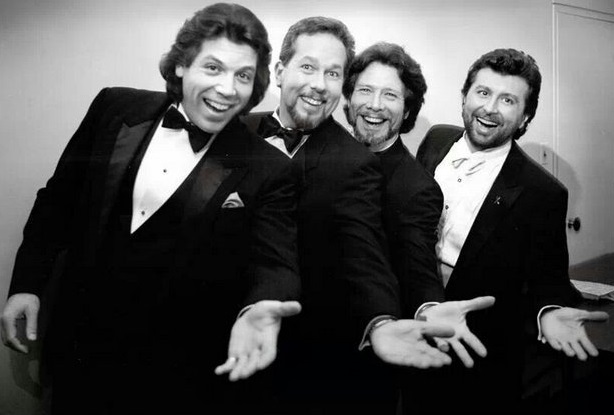
    Above, an all-star quartet: Thomas Hampson, James Morris, Samuel Ramey, and Jerry Hadley

    Back in 1980, at the New York City Opera, a young tenor singing the role of Gastone in TRAVIATA made me prick up my ears with his brief lines. It was Jerry Hadley. He is one of a four singers who captivated me initially in a small role and went on to a major career; the others were Samuel Ramey (1st Nazarene in SALOME), Kathleen Battle (Shepherd in TANNHAUSER), and Lisette Oropesa (Cretan Woman in IDOMENEO). They all became great favorites of mine.

    Hadley had a generous lyric tenor with an Italianate sense of warmth and passion. The voice was clear and ardent, and he looked good onstage. He sang quite a lot at New York City Opera – where I saw him as Alfred in FLEDERMAUS, as Faust, and Nadir in PECHEURS DES PERLES. I also was present when he sang the title-role in Mozart’s IDOMENEO (Strauss version) at the Mostly Mozart Festival.

    In 1987, Hadley made his Met debut as des Grieux in MANON and sang 125 performances there – in roles as diverse as Donizetti’s Edgardo, Mozart’s Ferrando and Don Ottavio, and Stravinsky’s Tom Rakewell. I saw him at The Met as Alfredo in TRAVIATA, Tamino in ZAUBERFLOETE, and Lensky in EUGENE ONEGIN. His final Met performances were in the title-role of Harbison’s THE GREAT GATSBY in 2002. He committed suicide in 2007, at the age of 55.

  • My Only Meyerbeer

    15780720_10209660094513178_5114976865812364173_n

    To date, this concert performance of LES HUGUENOTS presented at Carnegie Hall in 1969 is the only Meyerbeer opera I have experienced live. Listening to Lisette Oropesa’s recent performance of the aria “Robert, toi que j’aime” from ROBERT LE DIABLE put me in mind of that Carnegie HUGUENOTS which marked one of many high points in the era of Beverly Sills Mania.

    Die-hard Meyerbeer admirers continually clamor for more productions of his operas, yet to me they always seems like musically sprawling works wherein a few stimulating arias or ensembles are to be found amidst much that is merely workaday. Here is New York City, Meyerbeer fared quite well during the first 50 or so years at the Old Met, where productions of ROBERT LE DIABLE, LE PROPHETE, L’AFRICAINE and especially LES HUGUENOTS (the fabled ‘nights of the seven stars’) were given fairly regularly; but by the mid-1930s they all seem to have faded away. A production of PROPHETE – starring Marilyn Horne, Renata Scotto, and James McCracken – was given at the New Met in 1977 and repeated in 1979 before vanishing. 

    Over the years, I have made numerous attempts to connect with these antique operas: a recording of ROBERTO IL DIAVOLO from the Maggio Musicale 1968 with Scotto and Boris Christoff held by attention for a while, as did a video from San Francisco of L’AFRICAINE with Placido Domingo and the sultry-voiced Shirley Verrett. I bought the commercial recording of LE PROPHETE but never made it past the first LP before turning it over to the library.

    Sutherland had her HUGUENOTS at La Scala (with Corelli and Simionato driving audiences to distraction), and ROBERT LE DIABLE has been revived for Samuel Ramey and, more recently, for Bryan Hymel. 

    But, getting back to that 1969 HUGUENOTS at Carnegie Hall, my opera diary (volume 1) reveals that Licia Albanese, Régine Crespin, Bidu Sayão, and Dame Alicia Markova were among the audience.

    The evening essentially was a Sills triumph. She wore a queenly white and gold gown and sang all of Marguerite de Valois’ fanciful coloratura brilliantly, tossing off strikingly clear notes in alt and driving her fans to distraction. Here is a sample of Sills in this music:

    Beverly Sills – O beau Pays ~ LES HUGUENOTS

    There was also excellent singing from Justino Diaz as Marcel (who intones the old Lutheran hymn ‘A Mighty Fortress is Our God‘), and fine work from Thomas Jamerson (de Nevers) and Joshua Hecht (St Bris). As the desperate lovers, Angeles Gulin (Valentine) and Tony Poncet (Raoul) were less impressive. Despite some attractive passages, Gulin’s “almost painfully huge” voice was beset by pitch problems. Poncet, who had had an estimable career singing demanding roles from the French and Italian repertoire starting in 1957, had been in vocal decline. This performance was viewed as something of a comeback, but it was not very successful.

    Kay_Creed

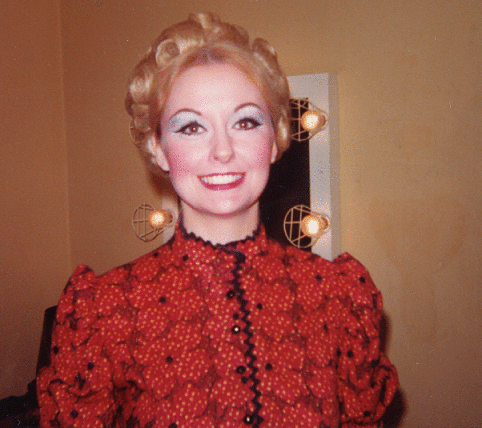
    The queen’s page Urbain was beautifully sung by mezzo-soprano Kay Creed (above, after singing Angelina in LA CENERENTOLA at NYC Opera). At the time, I had a huge crush on Ms. Creed, who in 1960 had been named Miss Oklahoma. I saw her many times at NYC Opera: as Suzuki, and as Maddalena, Siebel, Mlle. Clairon in CAPRICCIO, Cherubino, Annina in ROSENKAVALIER, and as Nancy in a delightfully-cast performance of ALBERT HERRING.

  • The St. Lawrence Quartet @ CMS

    SLSQ004_MBorggreve2017

    Above: the players of The St. Lawrence Quartet are Christopher Constanza, Lesley Robertson, Owen Dalby, and Geoff Nuttall; photo by Marco Borggreve

    Author: Scoresby

    Wednesday April 25th 2017 – On this rainy, dreary evening, the St. Lawrence String Quartet presented by Chamber Music Society of Lincoln Center, played a recital in Alice Tully Hall. Despite their notoriety, this was the first time I had the opportunity to hear the St. Lawrence String Quartet live. I’ve heard their recent recording of John Adams’s concerto Absolute Jest, so was intrigued to hear them perform Mr. Adams’s second string quartet.

    Luckily contrasting the weather outside, the first piece on the program was Haydn’s Quartet in C major for Strings, Hob. III:32, Op. 20 No. 2. In the opening moderato they had a light, tight style of playing. The playing was robust and resonant, it almost sounded like they were miked at time due to the quartet’s vibrato being well in sync.

    During the second movement of particular note was Mr. Constanza’s beautifully dark color, which blended well into the rest of the quartet. They seemed to savor the silences in the music, giving lots of space to the thick chords. The fugal fourth movement was the most satisfying, played with a large dynamic range leading to close out the piece. The playing was quick, light, and precise – though textually changed into a drier sound.

    John adams

    Above: composer John Adams

    The piece I was most curious about on the program was John Adams’s Quartet No. 2 for Strings, composed in 2014. The St. Lawrence String Quartet has had a long standing relationship with Mr. Adams in the past, writing his first string quartet, Absolute Jest, and this quartet for them. As a longtime John Adams fan, it was interesting to see how he continues to stylistically change even at the age of seventy. The first movement is based on the Scherzo from Beethoven’s penultimate piano sonata. Mr. Adams takes a fragment of the melody and puts it through a kaleidoscope of key, timbre, and rhythmic transformations with the music rarely seeming to slow. There are a few rhythmic and textual nods to the Große Fuge as well as small references to the last piano sonata and other late Beethoven works.

    While I typically think of Mr. Adams’s soundscape as open, here the writing was spidery and dense. For the most part, the instruments kept in similar ranges, never using extreme highs or lows. The cumulative effect felt claustrophobic. I appreciated Mr. Adams’s humor in taking these small fragments from Beethoven’s late period (which many scholars believe pushed tonality, rhythm, and structure forward) and pushing them through the wringer of different styles, expanding them further than Beethoven could have conceived. The players did well exhibiting all of the textual and rhythmic shifts – they performed in a wry way which made it easy to hear all of the textures in the dense writing.

    The second movement is based around a fragment from the opening of Op. 111. The start of the movement is much quieter than other parts of the piece, and the writing seems to open up a little here. They played with subtlety during the first part of the movement, before switching to an impressively nimble style for a virtuosic finish based around one of the Diabelli Variations.

    The second half of the program was also a work completely new to me: Saint-Saëns Quartet in E minor for Strings, Op. 112. Here the quartet was at their best. One of the most transporting moments of the concert were the opening chords of the first movement. Full of resonance with a mute on and playing the small ornamental flourishes that sounded like wisps from a cloud, the quartet managed to capture the French panache of Saint-Saëns’s writing.

    The performers painted the two contrasting themes in the first movement well, managing to be both sweet and dark. The St. Lawrence has impeccable pianissimos – really being able to make their instruments sing while being utterly clear. The writing of this quartet is both highly structured and romantically rich – a nice blend of two different styles. There are also hints of modernity peppered in, which seems unusual for Saint-Saëns.

    The third movement was performed beautifully, the most impressive part being the blending of the viola, second violin, and cello lines. While for the first part of the movement the instruments aren’t given more than accompanying lines – they managed to create a shifting backdrop for the solo violin line. Each chord was reminiscent of a master painter mixing and testing the gamut of colors. The pulsing finale was played with a muscly and full tone closing out the piece with flair.

    As a sweet encore, the Quartet offered the slow movement of Haydn’s Op. 20 No. 1.

    ~ Scoresby

  • Jonathan Biss|NY Philharmonic

    Jonathan_Biss_104_credit_Benjamin_Ealovega
    Above: pianist Jonathan Biss in a Benjamin Ealovega portrait

    Author: Scoresby

    Thursday April 20th, 2017 – The promising young conductor Courtney Lewis shared his New York Philharmonic subscription debut (he was the Assistant Conductor there from 2014 – 2016) with the pianist Jonathan Biss. The program was split between two orchestral works bookending two piano concerti. While individually the pieces were interesting, it was a little unclear how the program fit together. It was my first time hearing Mr. Lewis live and my first time hearing Mr. Biss in an orchestral performance – though I have enjoyed his solo performances in the past.

    The first selection on the program was Part Two Scene One of Berlioz’s Roméo et Juliette, Dramatic Symphony after Shakespeare’s Tragedy, Op. 17. The scene is broken down into a tone poem of sorts with the subtitles: Romeo Alone, Sadness, Distant Sounds of a Concert and a Ball, and Great Festivities in the Capulet’s Palace. While a Berlioz fan, I had never heard this particular work before. After last night’s performance I immediately went home and listened to the full piece online – it is some of Berlioz’s most original composing.

    1MlJi1ft

    Mr. Lewis (above) and the orchestra had superb dynamic control, starting from just a hush in the beginning that evoked a person meandering through a forest with the lighting shimmering and shifting under different trees. The music itself reminded me so much of the creeping chromaticism and lush sounds in Tristan and Isolde that I kept expecting to hear the famous Tristan Chord. Berlioz doesn’t go that far though, and instead the piece opens up into a great party scene.

    Mr. Lewis led this change in atmosphere marvelously – shifting from a tragic meditative walk into a brash, almost militaristic ball. This wasn’t light dance music in Mr. Lewis’s interpretation; instead, there were crashes and thumps with the percussion implying the coming tragedy. It was satisfying to see that the players seem to have genuine affection for him and it felt like they wanted him to succeed.

    Next on the program was the young composer Timo Andres’s The Blind Banister: Concerto for Piano and Chamber Orchestra with Jonathan Biss performing the piano part. The piece was composed as a companion piece to Beethoven Piano Concerto No. 2 in B-flat major, Op. 19 (on the program later), though as Mr. Andres admits in his notes there are few similarities other than a motif he takes from the cadenza of the Beethoven. Mr. Andres’s piece centers on downward/upward scalar motion and suspended seconds. It is tonal and has layers upon layers of atmosphere, with the piano a fabric holding it together. Mr. Lewis did a good job of highlighting different timbres in the score, while Mr. Biss gave the piece a dedicated performance. The woodblocks in the second movement were particularly fun to hear.

    The second half started with the underappreciated gem of the Beethoven Piano Concerti: No. 2 in B-flat major, Op. 19. I have always had affinity for this piece, being dainty and expressive at the same time. Mr. Biss was at his best in the first and last movements, playing with a touch as light as a feather. It was impressive hearing how he could change the color of a particular phrase with his changes in articulation, ranging from buttery legatos to harpsichord-like plucking.

    In the Adagio the orchestra shined – I thought the brass section sounded lovely with a warm sound. Mr. Biss played the dynamics of the adagio well, but didn’t have the same ease and gloss as he did in the first movement. The Rondo was played brusquely and with finesse; all of the structures were very tight. Mr. Biss did a good job of keeping the tune playful, making it sound like something someone could whistle. The orchestra gave an equally nimble performance.

    The final piece on this eclectic program was Elgar’s In the South (Alassio), Op. 50.  I’ve never had an affinity for Elgar before, but this unknown piece to me reminded me a lot of Strauss mixed with Italian folk tunes. Mr. Lewis played through the large swells of romanticism well. The quietest sections were the most memorable, with a charming duet between the harps and Associate Principal Viola Rebecca Young being a highlight of the evening. During the denser moments of the piece, some of the middle range instruments sounded muddy, but this is was due more to Elgar’s writing than Mr. Lewis’s conducting. Overall Mr. Lewis proved more than capable and demonstrated he is a flexible conductor well on his way to a major career. Mr. Biss lived up to his reputation as a fine Beethoven interpreter and a subtle artist. 

    ~ Scoresby

  • Violinist Simone Lamsma @ Weill Hall

    DSC7528_20
     
    Above: Simone Lamsma, photographed by Otto Van Toorn
     
    {Note: As I continue to cope with a severe lower back episode, please welcome guest-writer Scoresby, who will be covering some events in my absence and – hopefully – will continue to write for this blog in the future so that we may – between the two of us – cover even more concerts.}  
     
    Thursday March 30th, 2017 – The violinist Simone Lamsma performed a well-programmed Carnegie debut at Weill Hall with pianist Robert Kulek.

    While a well-known composer for his orchestral music, this was the first time I have heard a James Macmillan piece. It was a welcome introduction to his sound world. His Sonata for Violin and Piano, “Before the Tryst” is a 15-minute piece in one-movement that cycles through many different moods and colors. At its heart is a setting that Macmillan wrote in the early 1980’s of the Scottish poet William Soutar’s “The Tryst”. Previously, Macmillan used a melody from the setting in a shorter violin and piano work called “After the Tryst”.

    Before the Tryst” initiates with a whisper of violin harmonics and the percussive, almost inaudible, high reaches of the piano. Percussion and rhythm are vital to this piece – it almost feels like dance music. There are many trills (reminiscent of the opening of the Prokofiev sonata), slides, tone clusters, and other well used devices to paint a colorful canvas. While tonal, there are plenty of delicious dissonances.

    There are sections of lyric quiet punctuated with aggressively anxious lines. Fittingly, it reminded me of a young person anxiously falling into an all consuming love, feeling both drawn-in and cut off at the same time. It is certainly a worthwhile entry into the violin repertoire.

    Ms. Lamsma managed to dramatically capture all of the rhythms, particularly near the end. She played with a wonderfully scratchy, Stravinsky-esque tone. Mr. Kulek complemented this with a warm tone. The piece ends with a section of the violin hostilely interjecting long pauses until only the silence remains.

    Prokofiev Sonata No. 1 in F Minor, Op. 80 is one of my favorite pieces of music, so it is always a pleasure to hear a live performance. It is a later Prokofiev piece started in the backdrop of the Great Terror in 1938 and completed in 1946 – David Oistrakh and Samuel Feinberg performed the first and third movements at his funeral seven years later.

    Ms. Lamsma’s crafted a sarcastic edge and raspiness that served the piece well. In the first movement, she did an excellent job of keeping space and quiet within the piece – if played too quickly it can lose its brooding mood. One of the most successful parts of her recital was Ms. Lamsma’s virtuosic playing and fast tempo in the second movement. Mr. Kulek let loose in the fortissimos creating an urgent mood.

    In the third movement, Ms. Lamsma’s mute on the instrument along with her tone, almost made her sound like the ghostly playing of a 1940’s record. This movement is Prokofiev in one of his most impressionist idioms. As I was listening, I could almost imagine the static from an LP and sounds of rain patting a window on a dreary day. The last movement ended the sonata with fast, rhythmic pulses, which finally gave way to one last whispering statement of the first movement.

    Robert Kulek - 220a

    Above: Robert Kulek, photo by Brabander Fotografie

    After the intermission was Strauss’s Violin Sonata in E-flat Major, Op. 18. While I personally have never had an affinity for this piece, this reading did make me see how important the piece was to Strauss’s development for his later symphonic poems. The piece is written in three movements with a dense piano part that the violin soars over.

    Ms. Lamsma gave a muscular performance in all three movements, though managed to have still a spontaneous flair in the second movement. The violin playing had a warmer, fuller tone in the Strauss. At many points, particularly in the first and third movements, I felt as if this piece would work well as a concerto because the piano part has so much bundled in. Nonetheless, Mr. Kulek managed to give a transparent reading, with notably sensitive playing in the second movement.

    The romance of the Strauss balanced the heavier first half of the program well. Clearly this young artist has an eye for thoughtful programming. As an encore, the artists treated the audience to a bonbon in the form of Samuel Dushkin’s “Sicilienne” (after Romanze from Weber’s Violin Sonata, Op. 10, No. 1).

    ~ Scoresby

  • Sciatica

    Radiating-pain-sciatic-nerve

    UPDATE – 3/18/17 – I’m now in my 7th day of being virtually home-bound. The pain is pretty much steady; painkillers have helped me get thru the week…and I have a chiropractor who makes house calls! I so miss getting out, taking walks, having lunches with friends, and attending concerts and dance performances. 

    Meanwhile, if anyone knows an acupuncturist who might make a house call up here in Inwood, e-mail me at [email protected]

    March 11, 2017 – After intermittent sciatic problems over the past three or four years, I’m in the midst of an especially painful episode that is causing me to miss events, which is extremely frustrating for me. Sciatic pain is random and meds which might work one day do nothing the next. I’m dealing with it as best I can, and hope to be back on a normal schedule soon.

  • Mendelssohn’s Sorrow @ Chamber Music Society

    20170226_MS

    Above: the Schumann Quartet

    Sunday February 26th, 2017 – Following last week’s Chamber Music Society of Lincoln Center‘s program centering on joy-filled music by Felix Mendelssohn, we were back at Alice Tully Hall to experience the great composer’s more melancholy moods. With music of Bach and Schumann also on offer, we became acquainted with Schumann String Quartet, and could admire once again three artists whose CMS performances to date have given particular pleasure: violinist Danbi Um, cellist Jakob Koranyi, and pianist Juho Pohjonen.

    Juho_Pohjonen009_0

    Mr. Pohjonen (above) opened the evening with Bach’s Chromatic Fantasy and Fugue in D minor for Keyboard, BWV 903. The Finnish pianist’s elegance of technique and his Olde World mystique always summon up for me visions of pianists from bygone days performing in the drawing rooms of Paris, Budapest, or Vienna. But for all those dreamworld allusions, Mr. Pohjonen’s playing has vibrant immediacy and is very much of our time.  

    Mr. Pohjonen, in a program note, describes the Chromatic Fantasy as “labyrinthine”, and that it most surely is; but it’s a wonderful work to get lost in, and as the pianist drew us along the music’s sometimes eccentric, almost improvisational pathways, we could only marvel at the gradations of both subtlety and passion in his playing.

    The Schumann Quartet intrigued us from the very opening notes of their rendering of Mendelssohn’s Fugue in E-flat major. From her first phrase, violist Liisa Randalu drew us in; the three Schumann brothers – Erik and Ken (violins), and Mark (cello) – take up the wistful melody in turn. The music becomes gently animated, with the four voices blending serenely. Poignant colours from the rising violin and the honeyed resonance of the cello frame Ms. Randalu’s expressive playing. These textures will become key elements in the Schumann Quartet’s performance of the composer’s Quartet in F-minor, which followed immediately.

    Mendelssohn’s last completed major work, the F-minor quartet was composed in 1847. On returning to Frankfurt from a tiring stay in London in early May, the composer soon learned that Fanny, his beloved sister, had died of a stroke. Mendelssohn struggled that summer with work on numerous projects, but was only able to complete this final quartet, dedicated to Fanny’s memory. On November 4th, he died following a series of strokes. He was 38 years old.

    The F-minor quartet opens with scurrying attacks and a sense of restless energy. The music softens to a nervous pulsing as the cello sings from lyrical depths, with the luminous violin overhead. The movement then accelerates to a striking finish. The “scherzo” ironically mixes passionate phrases with delicate commentary. Viola and cello rumble darkly in the brief trio passage, then the tempest stirs up again before a little coda vanishes into thin air.

    A simple song that Mendelssohn and Fanny had shared in happier times memorializes their bond in the touching Adagio, which commences with a descending cello passage. The recollections evoked by the song, which is a sweet melody in its own right, are now tinged with sadness. Superbly controlled tone  from Erik Schumann’s violin was most affecting; the pulsing cello then heralds a surge of despairing passion.

    The finale is restless, at times verging on dissonant. Passing notions of lyricism are swept away, and wild passages for the violin warn of an impending disaster. This is a composer on the brink.

    The Schumann Quartet’s very impressive playing of this disturbing yet strangely beautiful piece earned them a very warm acclamation from the Tully Hall crowd. It is pleasing to know that they will be back with us next season in this same lovely space to share other aspects of their artistry – music from The Roaring Twenties on March 4th, 2018, and a full Schumann Quartet evening on April 29th, 2018, when they’ll play works of Haydn, Bartok, Reimann, and Schumann. 

    Following the interval, Mr. Pohjonen offered Robert Schumann’s Arabesque in C major for Piano, Op. 18. This episodic piece has a narrative aspect, though none is stated or even implied. Mr. Pohjonen relished the melodious themes that rise up, veering from major to minor as the Arabesque flows forward. Subtle passages become treasurable in this pianist’s interpretation, and the poetic finish of the work was lovingly expressed.

    Juho Pohjonen returned with his colleagues Danbi Um and Jakob Koranyi for Schumann’s Trio No. 1 D minor for Piano, Violin, and Cello, Op. 63.

    Danbi-Um-Banner_2

    Above: Danbi Um, photo by Vanessa Briceño

    Koranyi_Jakob_pc_Anna-Lena_Ahlström_1_72

    Above: Jakob Koranyi, photo by Anna-Lena Ahlström

    Ms. Um, lithe and lovely in a fair burgundy-hued gown, displayed the sweetness of tone that makes listening to her so enjoyable; Messrs Koranyi and Pohjonen are masters of dynamic nuance, and thus the three together delivered page after page of radiant, colorful playing. 

    The D-minor trio’s opening movement calls for rippling arpeggios from the pianist, expertly set forth by Mr. Pohjonen. Ms. Um and Mr. Koranyi harmonize and converse in passages which switch from lyrical yearning to emphatic declamation. A pause, and a new theme emerges: delicate at first, then turning passionate. A sense of agitation prevails in this movement, despite ‘settled’ moments: the three musicians captured these shifts of mood so well, and they savored the rather unexpected ending. 

    Marked “Lebhaft, doch nicht zu rasch” (‘Lively, but not rushed’), the scherzo has the feel of a scuffing, skipping dance. Rising and falling scales glow in the calmer interlude; but the dance soon strikes up again…and comes to a sudden halt.

    The trio’s third movement embarks on a disconsolate violin passage, played with affecting expressiveness and lovely control by Ms. Um. When Mr. Koranyi’s cello joins in, this simple melody becomes increasingly touching. A gently urgent central section reverts to the slow, sad gorgeousness so evocatively sustained by our three musicians, the cello sounding from the depths.

    The tuneful finale seems almost joyous, but shadows can still hover. The playing is marvelously integrated, becoming tender – almost dreamy – with smoothly rippling piano and the violin on the ascent. The themes mingle, developing into a big song. This simmers down briefly before a final rush of energy propels us to the finish. 

    I had felt pretty certain the Um-Koranyi-Pohjonen collaboration would produce memorable results, and I was right. We must hear them together again – soon – and let’s start with my favorite chamber works: the Mendelssohn piano trios. The audience shared my enthusiasm for the three musicians, calling them back for a second bow this evening.

    • Bach Chromatic Fantasy and Fugue in D minor for Keyboard, BWV 903 (before 1723)
    • Mendelssohn Fugue in E-flat major for String Quartet, Op. 81, No. 4 (1827)
    • Mendelssohn Quartet in F minor for Strings, Op. 80 (1847)
    • Schumann Arabesque in C major for Piano, Op. 18 (1838-39)
    • Schumann Trio No. 1 D minor for Piano, Violin, and Cello, Op. 63 (1847)
  • Mendelssohn’s Sorrow @ Chamber Music Society

    20170226_MS

    Above: the Schumann Quartet

    Sunday February 26th, 2017 – Following last week’s Chamber Music Society of Lincoln Center‘s program centering on joy-filled music by Felix Mendelssohn, we were back at Alice Tully Hall to experience the great composer’s more melancholy moods. With music of Bach and Schumann also on offer, we became acquainted with Schumann String Quartet, and could admire once again three artists whose CMS performances to date have given particular pleasure: violinist Danbi Um, cellist Jakob Koranyi, and pianist Juho Pohjonen.

    Juho_Pohjonen009_0

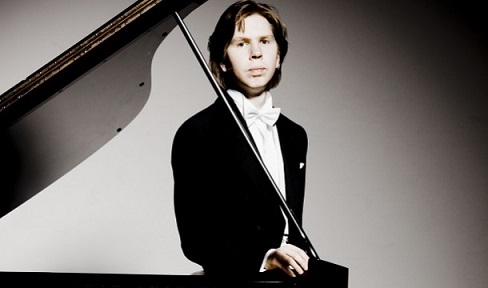
    Mr. Pohjonen (above) opened the evening with Bach’s Chromatic Fantasy and Fugue in D minor for Keyboard, BWV 903. The Finnish pianist’s elegance of technique and his Olde World mystique always summon up for me visions of pianists from bygone days performing in the drawing rooms of Paris, Budapest, or Vienna. But for all those dreamworld allusions, Mr. Pohjonen’s playing has vibrant immediacy and is very much of our time.  

    Mr. Pohjonen, in a program note, describes the Chromatic Fantasy as “labyrinthine”, and that it most surely is; but it’s a wonderful work to get lost in, and as the pianist drew us along the music’s sometimes eccentric, almost improvisational pathways, we could only marvel at the gradations of both subtlety and passion in his playing.

    The Schumann Quartet intrigued us from the very opening notes of their rendering of Mendelssohn’s Fugue in E-flat major. From her first phrase, violist Liisa Randalu drew us in; the three Schumann brothers – Erik and Ken (violins), and Mark (cello) – take up the wistful melody in turn. The music becomes gently animated, with the four voices blending serenely. Poignant colours from the rising violin and the honeyed resonance of the cello frame Ms. Randalu’s expressive playing. These textures will become key elements in the Schumann Quartet’s performance of the composer’s Quartet in F-minor, which followed immediately.

    Mendelssohn’s last completed major work, the F-minor quartet was composed in 1847. On returning to Frankfurt from a tiring stay in London in early May, the composer soon learned that Fanny, his beloved sister, had died of a stroke. Mendelssohn struggled that summer with work on numerous projects, but was only able to complete this final quartet, dedicated to Fanny’s memory. On November 4th, he died following a series of strokes. He was 38 years old.

    The F-minor quartet opens with scurrying attacks and a sense of restless energy. The music softens to a nervous pulsing as the cello sings from lyrical depths, with the luminous violin overhead. The movement then accelerates to a striking finish. The “scherzo” ironically mixes passionate phrases with delicate commentary. Viola and cello rumble darkly in the brief trio passage, then the tempest stirs up again before a little coda vanishes into thin air.

    A simple song that Mendelssohn and Fanny had shared in happier times memorializes their bond in the touching Adagio, which commences with a descending cello passage. The recollections evoked by the song, which is a sweet melody in its own right, are now tinged with sadness. Superbly controlled tone  from Erik Schumann’s violin was most affecting; the pulsing cello then heralds a surge of despairing passion.

    The finale is restless, at times verging on dissonant. Passing notions of lyricism are swept away, and wild passages for the violin warn of an impending disaster. This is a composer on the brink.

    The Schumann Quartet’s very impressive playing of this disturbing yet strangely beautiful piece earned them a very warm acclamation from the Tully Hall crowd. It is pleasing to know that they will be back with us next season in this same lovely space to share other aspects of their artistry – music from The Roaring Twenties on March 4th, 2018, and a full Schumann Quartet evening on April 29th, 2018, when they’ll play works of Haydn, Bartok, Reimann, and Schumann. 

    Following the interval, Mr. Pohjonen offered Robert Schumann’s Arabesque in C major for Piano, Op. 18. This episodic piece has a narrative aspect, though none is stated or even implied. Mr. Pohjonen relished the melodious themes that rise up, veering from major to minor as the Arabesque flows forward. Subtle passages become treasurable in this pianist’s interpretation, and the poetic finish of the work was lovingly expressed.

    Juho Pohjonen returned with his colleagues Danbi Um and Jakob Koranyi for Schumann’s Trio No. 1 D minor for Piano, Violin, and Cello, Op. 63.

    Danbi-Um-Banner_2

    Above: Danbi Um, photo by Vanessa Briceño

    Koranyi_Jakob_pc_Anna-Lena_Ahlström_1_72

    Above: Jakob Koranyi, photo by Anna-Lena Ahlström

    Ms. Um, lithe and lovely in a fair burgundy-hued gown, displayed the sweetness of tone that makes listening to her so enjoyable; Messrs Koranyi and Pohjonen are masters of dynamic nuance, and thus the three together delivered page after page of radiant, colorful playing. 

    The D-minor trio’s opening movement calls for rippling arpeggios from the pianist, expertly set forth by Mr. Pohjonen. Ms. Um and Mr. Koranyi harmonize and converse in passages which switch from lyrical yearning to emphatic declamation. A pause, and a new theme emerges: delicate at first, then turning passionate. A sense of agitation prevails in this movement, despite ‘settled’ moments: the three musicians captured these shifts of mood so well, and they savored the rather unexpected ending. 

    Marked “Lebhaft, doch nicht zu rasch” (‘Lively, but not rushed’), the scherzo has the feel of a scuffing, skipping dance. Rising and falling scales glow in the calmer interlude; but the dance soon strikes up again…and comes to a sudden halt.

    The trio’s third movement embarks on a disconsolate violin passage, played with affecting expressiveness and lovely control by Ms. Um. When Mr. Koranyi’s cello joins in, this simple melody becomes increasingly touching. A gently urgent central section reverts to the slow, sad gorgeousness so evocatively sustained by our three musicians, the cello sounding from the depths.

    The tuneful finale seems almost joyous, but shadows can still hover. The playing is marvelously integrated, becoming tender – almost dreamy – with smoothly rippling piano and the violin on the ascent. The themes mingle, developing into a big song. This simmers down briefly before a final rush of energy propels us to the finish. 

    I had felt pretty certain the Um-Koranyi-Pohjonen collaboration would produce memorable results, and I was right. We must hear them together again – soon – and let’s start with my favorite chamber works: the Mendelssohn piano trios. The audience shared my enthusiasm for the three musicians, calling them back for a second bow this evening.

    • Bach Chromatic Fantasy and Fugue in D minor for Keyboard, BWV 903 (before 1723)
    • Mendelssohn Fugue in E-flat major for String Quartet, Op. 81, No. 4 (1827)
    • Mendelssohn Quartet in F minor for Strings, Op. 80 (1847)
    • Schumann Arabesque in C major for Piano, Op. 18 (1838-39)
    • Schumann Trio No. 1 D minor for Piano, Violin, and Cello, Op. 63 (1847)