Category: Music

  • Britten & Mozart @ The NY Phil

    Inon barnatan

    Above: pianist Inon Barnatan

    Friday October 30th, 2015 matinee – Still recovering from the flu that forced me to miss some scheduled events, I went to The Philharmonic this afternoon knowing I might not make it thru the entire program. But I was very keen to hear Britten’s Sinfonia da Requiema work that is rarely doneand to hear pianist Inon Barnatan – the Philharmonic’s artist-in-association this season – playing Mozart’s Piano Concerto No. 23. At intermission I would decide about staying on for the Beethoven 5th.

    Last season conductor Jaap van Zweden impressed in a pair of NY Philharmonic concerts that included a magnificent Shostakovich 8th. This afternoon’s performance resoundingly re-affirmed all the positive elements in the conductor’s realm of thought and expression. He is business-like and devoid of theatricality, favoring instead a deeply probing approach to the music. Yet this is not detached, by-the-book music-making, for his interpretations seem flooded with emotion.

    The Britten Sinfonia da Requiem was written in 1940 while the composer and his partner Peter Pears were living in Brooklyn. Having left England as a conscientious objector, Britten accepted a commission (from the Japanese, ironically) and set about creating a work – drawing on Latin texts from the Mass for the Dead – that would commemorate the deaths of his parents and also serve as a pacifist’s response to the horrors of war.

    The Sinfonia is a magnificent piece, and I wish it would be performed more often so that music-lovers could become better acquainted with it. The work calls for a huge orchestra, including massed phalanxes of violins, violas, cellos, and double basses as well as a large brass contingent and doubled winds, with alto sax, bass clarinet, two harps, and piano adding unexpected hues to the sonic palette. 

    For the opening Lacrymosa, an initial boom! gives way to brooding; the violas lament and there is an unsettling heartbeat motif. Rampant horns herald a series of ominous chords and doom-ladened drumstrokes. In the Dies Irae which follows, the flutes and horns stutter; the strings take up a brisk, galloping figuration. The heraldic trumpets and the magnificent horns ring forth, and the saxophone brings in an unusual colour. The music becomes almost zany before dwindling to nothing as the work evolves into the final Requiem Aeternum. Harp and winds intone a gentle hymn, taken up by the pensive horns. Bassoon and bass clarinet lead us to an uplifting violin theme, tinged with sadness. The music builds to a huge hymn-like passage and then suddenly reverts to softness: plucked strings over sustained clarinet tones that simply fade into thin air. 

    The performance was utterly mesmerizing: absolutely gorgeous playing from everyone and all crafted into a splendid whole by Maestro van Zweden. For a passing moment I wondered how it might have been had Britten used a chorus in his Sinfonia, but then I realized he was right in keeping the words unspoken and letting the instruments sing.

    The Hall’s wonderfully efficient stagehands then reconfigured the seating and rolled the Steinway into place. Watching and waiting, I felt the contentment of being connected to great music played by great musicians: a feeling that deepened in the ensuing Mozart. 

    For Mr. Barnatan is nothing less than a wizard of the keyboard, and in this performance of the Piano Concerto No. 23, allied with Maestro van Zweden and cushioned by the genial Philharmonic strings and winds, was indeed magical. The pianist’s control over a vast dynamic range and the sheer fluency of his technique made an excellent impression from the moment he began to play. Mr. Barnatan chose to play the cadenza as Mozart set it in the score; it’s rather brief – as cadenzas go – but very appealing.

    The pianist now drew us deeper and deeper into the music with the poetic delicacy of his playing of the Adagio. His solo passages were luminous, and there was lovely support from the wind soloists. A spellbinding sense of dolorous quietude was summoned forth, and a passage of very simple piano statements over plucked strings was most effective.

    Then Inon launched a barrage of coloratura to introduce the Allegro assai. Here his playing became ever more magical as he wove a spell of soft enchantment: the finesse of swirl after swirl of delicate notes played at high speed. Called back twice to warm applause, the pianist had clearly cast a spell over the Hall, and I cannot wait to hear him again…could we have the Schumann perhaps?? 

    By now there was no question of leaving – sore throat be damned! and I hadn’t coughed once – and so I was treated to a Beethoven 5th far more beneficial than any medicine. 

    The Beethoven symphonies don’t always send me, but the 5th truly did today, for Maestro van Zweden and the Philharmonic artists simply soared thru it, with a real sense of the music blooming. I gave up taking notes;  aside from the scrawl “…deep resonance of sound!!…” my program page is simply covered with names and exclamation point: “Liang Wang!”…”Langevin!”…”LeClair!”…”McGill”…”the trumpets!”…”Carter Brey!”…and “Philip Myers!!!” 

    As the plush and regal themes of the third movement sailed forth, I felt yet again the thrill of being connected to music on such an elemental and immediate level. A quote from Robert Schumann in the Playbill so well captured what I experienced today listening to the Beethoven (well, to the entire program, really!) today: “This symphony invariably wields its power over people of every age like those great phenomena of nature that fill us with fear and admiration at all times, no matter how frequently we may experience them.”  

    Jaap-van-Zweden-c-Marco-Borggreve-XL

    Above: Jaap van Zweden in a Marco Borrgreve portrait

    A final word about Jaap van Zweden: in the three concerts he’s conducted here that I have experienced, he has shown a mastery of a variety of musical styles and a real affinity for making the familiar seem fresh. After the Beethoven 5th today, the audience gave him an especially appreciative ovation, laced with bravos. Coming out for a second curtain call, the Maestro signaled for the players to stand, but they all shook their heads and left him with a solo bow…and then they joined in the applause, tapping their bows and stamping their feet. It was a lovely moment. In their search for a new Music Director, The Philharmonic may have found their man.   

  • Prevailing Winds @ Chamber Music Society

    Romie

    Above: clarinetist Romie de Guise-Langlois 

    Sunday October 25th, 2015 – Kudos, yet again, to the folks at Chamber Music Society of Lincoln Center for putting together this imaginative program for which some of the outstanding wind players of the day gathered together to form a first-rate ensemble. The genial pianist Jean-Efflam Bavouzet brought his own magic to three of the four works presented.

    During the week leading up to this concert, some wonderful news came from the Society – I am sharing this directly from their press release: “Chamber Music Society of Lincoln Center has announced a $4 million unrestricted gift, the largest in its history, from long-time patron and devoted chamber music lover Jane Kitselman, who passed away on March 18, 2015, at the age of 87.  The formal announcement was made at a reception following the October 20th Chamber Music Society concert at Alice Tully Hall, which was performed in her memory.  Ms. Kitselman, a cellist, was especially fond of string quartet literature, and CMS is dedicating its forthcoming performances of the Beethoven String Quartet Cycle to her.  In addition, there will be an annual concert dedicated to Jane Kitselman, to be performed in perpetuity.”

    I couldn’t help but feel that this news, which people around us were discussing prior to the start of this evening’s concert, set the atmosphere in Tully Hall at an even higher degree of anticipation that usual.

    Ligeti’s Six Bagatelles, as performed this evening, are transcriptions by the composer from twelve piano bagatelles; these pieces are very short, lasting two to three minutes each. In the first bagatelle, Allegro con spirito, a playful, percolating rhythm charmingly peters out. The second bagatelle commences with a sad chorale which evolves with a variety textures and harmonies and ends on an ironic “beep”. In the third, Allegro grazioso, the flute sings over bubbling clarinet and bassoon and there’s a gorgeous horn passage. Bagatelle number four is an exuberant Presto ruvidi, vividly dance-like. The following Adagio, dedicated to the memory of Bela Bartok, begins as a somber dirge but is then enlivened when the flute speaks up; a repeated two note theme underlines an exchange of trills between flute and clarinet, and the piece ends on a benedictive chord. The last bagatelle, marked Allegro vivace, has a quirky start and then pulses along as the horn goes high and the piccolo pipes up. Things turn rather frenetic but in the end, a muted horn solo provides an unexpected finish. In these six Ligeti gems, we have met our five wind soloists and they have displayed their outstanding gifts of technique and artistry; they were called back for a bow.

    The least-known composer on the program today was surely Albéric Magnard; his life story ended tragically in 1914 when he stood his ground against the invading Germans and perished when they set fire to his house in Baron, France.

    In a program note, pianist Jean-Efflam Bavouzet spoke lovingly of the evening’s Magnard work: “I hope you will leave the concert with lasting memories of having discovered the captivating music of a hitherto lesser-known composer.” My hope, having heard this revelatory quintet, is that the Society will pursue and present other works from the Magnard catalog, which is sadly limited – by his tragic death – to only thirty compositions.

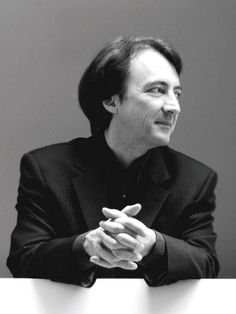
    Bavouzet

    Above: Jean-Efflam Bavouzet

    Knowing nought of Magnard’s music, I was thoroughly captivated this evening by his D-minor quintet for which the terrific pianist Jean-Efflam Bavouzet joined Mlles. O’Connor and de Guise-Langlois, Stephen Taylor, and Peter Kolkay. The music is intrinsically “French”, loaded with marvelous melodies, and Mr. Bavouzet proved the ideal maître of the keyboard to lead us on this magical journey.

    After an opening piano solo, the wind instruments trade themes over a rippling keyboard motif. Individual voices tantalize, such as in a plaintive passage for Mr. Taylor’s oboe and some delicious trills from Ms. O’Connor’s flute. An unexpected fugue is an intriguing highlight.

    In the ensuing slow movement, marked Tendre, Romie de Guise-Langlois stole my heart yet again with her deeply expressive playing of a poignant melody entwined in M. Bavouzet’s poetic piano sounds. This theme becomes passionate and then pensive; I found myself with tears running down my face from the sheer beauty of Romie’s playing. M. Bavouzet draws us on, though, with a solo passage which continues to ripple under a serene chorale from the winds. 

    Ms. O’Connor’s flute takes on a waltz-like air as she opens the third movement in tandem with M. Bavouzet; the pianist has another vivacious solo before the wind voices enter, evoking Springtime cheer. Mr. Taylor’s oboe seized upon an oddly Mid-Eastern-sounding theme, playing with great control. 

    By now I was thoroughly engrossed in this Magnard work, only to discover fresh vistas in the final movement, charmingly marked Joyeux. A jaunty oboe solo leads off, the other voices passing the idea around. Peter Kolkay’s amiable sustaining of single tones had an ironic quality, and Ms. O’Connor’s flute wafts over us. A mini-fugue is a fleeting delight, and a two-note theme somehow develops into a march. In a mellowing out, Mr. Kolkay’s bassoon glows in a superb passage with M. Bavouzet. The pianist then takes a dynamic lead thru a few small detours before all join in a final tutti melody. 

    Have I rambled on too long, sometimes shifting from past to present tense? It’s because, in remembering, I am still there. Does that make any sense? 

    Following the interval, the only work on the program somewhat familiar to me: the Rimsky-Korsakov B-flat major quintet. This piece was composed in 1876 for a chamber music competition held by the Russian Music Society, but its premiere was spoilt by some indifferent playing. Fortunately, the piece survived this fiasco, for it is – like the Magnard – a thorough delight.

    Following a speedy start, the bassoon draws us in. All the wind voices have their say, including a lovely dialogue between flute and bassoon. There’s a rush to the finish, and then the astoundingly plush sound of Radovan Vlatković’s horn intones a serene theme over M. Bavouzet’s piano.

    (I must pause here to say, as a frustrated high-school horn player, that Mr. Vlatković’s tone quality has the ideal Autumnal richness that always eluded me; his gorgeous playing here – all evening, in fact – made me envious. I even scrawled “I am jealous!” next to his name in my playbill.)

    But – moving on with the Rimsky-Korsakov – clarinet and flute trade dreamy phrases before the piano introduces a new theme, echoed by the ensemble. And then Mr.Vlatković chimed in again – spectacular sound – before the bassoon and clarinet meshed voices leading to a mellow end.

    The final Rondo: allegretto starts with a joy-filled skipping rhythm; there is bassoon irony as the voices swirl about before returning to the theme. Romie de Guise-Langlois brought forth a redolent, deeply ‘Russian’ theme which was passed to the horn. A sparkling flute cadenza and another clarinet passage carry the players to a final sprint. 

    Poulenc’s Sextet for Piano and Winds is a different kind of treasure: including elements of jazz, ragtime, pop songs of the interbellum era, high wit, and gentle sarcasm, there are also stretches of pure lyricism (a bassoon theme, for one) along the way. The players had a grand time of it, and the final Prestissimo felt like a transfusion, an antidote to the world-weariness that’s been creeping up on me of late. Great music, played as it was tonight, does one a world of good.  

    The Repertory:

    The Participating Artists:

  • Bychkov-Batiashvili-Capuçon @ The NY Phil

    Bychkov-semyon-batiashvili-lisa-capucon-

    Thursday October 22nd, 2015 – A Brahms-centric program at The New York Philharmonic this evening, with two of the Master’s most beloved works and an impressive contemporary work inspired by his music.

    Detlev Glanert’s Brahms-Fantasie is one of the most appealing pieces of ‘new’ music I have experienced in the current century. So much ‘classical’ music being written today is expertly crafted and impressive in a cerebral way, but little of it reaches the heart or soul. In this 12-minute, overtly Brahmsian homage, Mr. Detlev eschews the current trend for over-reliance on percussion for achieving effects, and he is unafraid of melody.

    After a dynamic opening statement, the music simmers down to a misterioso passage followed by a delicate section of single notes, quietly played. A dolorous theme develops, with a slow buildup to an episode of rhythmic grandeur. Following some rather gnarly phrases, a minor-key dance eventually gives way to a big turmoil of voices before settling back into simmering mystery. Near the end, a brass chorale takes on a gloomy aspect. Glanert shows his skill at creating varying moods, and the Philharmonic players made the most of the melodic opportunities afforded them, with Maestro Bychkov in sure and steady command.

    Next up was the Brahms “Double” concerto. “I have had the amusing idea of writing a concerto for violin and cello …If it is at all successful, it might give us some fun,” wrote Johannes Brahms to Clara Schumann in the summer of 1887.

    The two soloists – particular favorites of mine: violinist Lisa Batiashvili and cellist Gautier Capuçon – were warmly welcomed when they appeared onstage. As these two artists are as attractive to the eye as to the ear, we were in for a thoroughly absorbing experience. Mr. Capuçon’s soulful playing blends ideally with the silken style of Ms. Batiashvili, and as theme after theme was summoned up by these remarkable players – their voices echoing or entwining – the audience was drawn deeply into the music.

    The central andante was especially congenial this evening, with its beautiful opening melody which is played by the soloists and the strings, enhanced by the orchestra’s solo flute, bassoon, and clarinet. In the concluding movement, Batiashvili and Capuçon were at their most alluring as they introduced the familiar mellifluous second theme. The concerto then sailed on to its inspired finale; the audience erupted in hearty applause the moment the final note had sounded, and an enthusiastic ovation called the soloists and Maestro back twice. 

    Following the interval, we had the Brahms 1st symphony. The composer declared that this symphony, from sketches to finishing touches, took 21 years – from 1855 to 1876 – to complete.

    Here we could bask in Maestro Bychkov’s ideal pacing and his obvious affection for the music; he is a conductor who favors depth over theatricality. And so for 40 minutes we were immersed in this symphony with its wealth of themes and its somewhat Beethovian air. The inner movements were particularly impressive today: the wistful Andante sostenuto with its lovely duet for solo violin and horn, and the charming Allegretto. In the finale (and all evening, actually), Philip Myers and the Philharmonic horns produced wonderfully plush, resonant sound. And it is here that Brahms makes his most obvious salute to Beethoven with a majestic theme, first heard in the strings, that evokes the “Ode to Joy” from Beethoven’s 9th.

    Tonight’s Program:

    DETLEV GLANERT: Brahms-Fantasie
    BRAHMS: Concerto for Violin and Cello A minor op. 102 (Double Concerto)
    BRAHMS: Symphony No. 1 in C minor, Op.68

  • 2015-2016 Season Opens at CMS

    N C

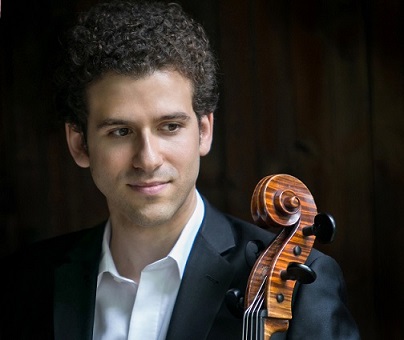
    Above: cellist Nicholas Canellakis

    Sunday October 18th, 2015 – Chamber Music Society of Lincoln Center opening their new season at Alice Tully Hall with a sold-out concert that played to a crowd of music lovers as attentive as they were appreciative.

    As is their wont, Chamber Music Society put together an impressive ensemble of musicians this evening; it was especially gratifying to hear cellist Nicholas Canellakis again after he had bowled me over with his playing of Leon Kirchner’s Music for Cello and Orchestra with the American Symphony Orchestra this past April. Mr. Canellakis played in all three works this evening – a triple treat.

    Over the course of the evening, three pianists took turns at the Steinway. After greeting the audience  tonight in her capacity as co-artistic director of the Society, Wu Han took her place at the keyboard and dazzled us yet again with her subtle, evocative artistry. She was joined for the opening Haydn trio by Ani Kavafian – in her 44th year (!) of participating in the Society’s concerts and playing with her characteristic super-fine style – and Mr. Canellakis, whose deep-burgundy cello resonance was amply pleasing.

    The blended timbres of these three ‘voices’ and the gracious communicative rapport they established immediately drew the audience into the music, setting the tone for the whole evening. Their deeply-felt playing of the central Andante gave way to the foot-tapping dance rhythm of the final Allegro, which they set forth with joyous vigor.

    The Mendelssohn D-major sextet sounded remarkably fresh this evening in a glowing performance of such dazzling clarity that the audience could barely suppress their delight, erupting in a gale of applause the moment the final chord was released. The players basked in a lively ovation, deservedly called out for a second bow.

    And what players! The velvety bass of Joseph Conyers set the groundwork for the piece, with Mr. Canellakis and violists Paul Neubauer and Matthew Lipman summoning up some exceptionally tender harmonies in the Adagio, where Chad Hoopes interjected some sweet violin solo moments. In his first concert with CMS, pianist Michael Brown’s rippling enticements and poised lyricism in the earlier movements gave way to thrilling virtuosity in the concluding Allegro vivace.

    This final movement, taken at an exhilaratingly speedy pace, found all the players reveling in the dancing spirit of the work. A sudden change of pace and mood brought out some of Mr. Brown’s most fabulous playing, and then the work sailed on to its invigorating end. The audience’s spontaneous reaction and their embrace of the players during the ensuing applause was both joyous and heartfelt.

    A tough act to follow, indeed; yet as pianist Anne-Marie McDermott led her colleagues out for the concluding Schumann, I felt certain we were in for yet another revelatory experience. And I was right.

    Here we could more extensively savour Mr. Lipman’s viola skills: this young musician, who made an impromptu CMS debut last season when he stepped in for another artist, displayed handsome tone and a smile that seemed to signal his delight in playing such great music for such an engaged audience. Ms. Kavafian, unspooling silken melodies, was amiably seconded by Mr. Hoopes, whilst Nicholas Canellakis polished off his evening with engaging, expressive playing. Ms. McDermott’s luxuriantly dexterous playing fell ever-so-pleasingly on the ear.

    In the first movement, cellist and violist participate in rise-and-fall scale motif, Mr. Lipman seeming to finish Mr. Canellakis’s sentences.The second movement begins hesitantly; the viola becomes prominent, and Ms. Kavafian plays high and sweet. A rising scale theme is passed from voice to voice. In the concluding movement, we are dancing again; but there’s a sudden volte-face, a slowdown where Ms. McDermott’s piano rumbles in some lower range scalework before the engines are revved up again and the piece dances on to the end.

    Another warm ovation, another double curtain call; and then out into the first chill of early Autumn.

    The Repertory:

    The Participating Artists:


  • Mariana Paunova

    Paunova_1

    The Bulgarian mezzo-soprano Mariana Paunova (above) made her operatic debut in 1977, as Pauline in PIQUE-DAME at the Spoleto Festival in Charleston, South Carolina. I saw her as Isaura in a concert performance of Rossini’s TANCREDI at Carnegie Hall in 1978, and she sang at the Met in 1979, as Olga in EUGENE ONEGIN.

    In 1983 I heard her as Laura in a broadcast of LA GIOCONDA from San Francisco and was very much taken with her darkish, plushy sound. In that same year, she recorded Dukas’ ARIANE ET BARBE-BLEUE for Erato, conducted by Armin Jordan.

    Paunova’s career continued apace in the US, Canada, Mexico, and Europe; she sang the role of La Comandante in Riccardo Zandonai’s I CAVALIERI DI EKEBU at Alice Tully Hall in 2000.

    Mariana Paunova taught at the Manhattan School of Music until her untimely death in 2002.

    GIOCONDA – Act II exc – M Paunova – Slatinaru – Bonisolli – Manuguerra – San F 1983

  • Camellia Johnson Has Passed Away

    C johnson

    News of the death of Camellia Johnson (above) eerily came on a day I had just been listening to her voice. In the course of my Summer project of transferring some of the rare items in my cassette collection to MP3, I had just come across a tape of parts of the Verdi REQUIEM in which Ms. Johnson is the soprano soloist. 

    The broadcast of this REQUIEM was something I came upon quite by chance; as the announcer was introducing the performance, I found myself with only one blank side of one tape to hand. I slipped it into the deck and decided to concentrate on recording excerpts in which the two women are prominent, Florence Quivar being a particular favorite of mine. Listen to what I preserved here:

    Verdi REQUIEM – excerpts – Baltimore 1994 – C Johnson Quivar Heppner G Relyea – Zinman

    In 1995, I had the good fortune to hear Camellia Johnson live at two different, wonderful venues. She sang with the Philharmonia Virtuosi at the Met Museum, and she gave a recital at Alice Tully Hall accompanied by Neal Goren. I remember being blown away by both the velvety warmth of her tone and her gift for finding a direct communicative channel to the audience. On both evenings she programmed Wagner’s Wesendonck lieder; at the Met concert, she gave a stunning performance of “To This We’ve Come” from Menotti’s THE CONSUL whilst with Mr. Goren she sang a lushly resonant “Du bist der lenz” from DIE WALKURE.  

    Camellia Johnson sang at The Met from 1985 thru 1994, debuting there as Lily in PORGY AND BESS. Her most frequent Met role was the Priestess in AIDA; she also scored a personal success with her sumptuous and emotionally charged singing of Madelon’s aria in ANDREA CHENIER.

  • CMS: Summer Evenings I

    54f4d4450aeee1.82526134

    Above: violinist Erin Keefe, photographed by Lisa-Marie Mazzucco

    Wednesday July 15th, 2015 – Chamber Music Society of Lincoln Center are presenting their inaugural Summer Series: three concerts at Alice Tully Hall. The scheduled programs feature works by the greatest composers played by some of the finest musicians of our time: a surefire recipe for success.

    Tonight’s opening concert was sold out, with music lovers outside Tully Hall pleading with anyone who might have a spare ticket. Onstage, as the house lights dimmed, the Society’s co-artistic director Wu Han welcomed us with her usual warmth and enthusiasm, ending her speech by wishing us all “…happy summer fishing…I hope you catch some trout!” – a reference to the program’s closing work, Schubert’s beloved “Trout” quintet.

    Erin Keefe and Juho Pohjonen then appeared for Mozart’s B-flat major violin sonata, K. 378. Ms. Keefe’s gown, in rich shades of tourquoise and purple, evoked Klimt: it appeared someone had thrown handfuls of gold dust onto the frock, giving it a shimmering sheen. Ms. Keefe plays as handsomely as she looks and – joined by Mr. Pohjonen, who was at the keyboard for all three works tonight – they set the evening on its way with their gracious rendering of the Mozart. 

    In the opening movement, Allegro moderato, the two players trade off cascading motifs. The heart of the sonata, the Andante sostenuto e cantabile, has a touching song-like quality which the violin introduces almost hesitatingly, the pianist seemingly completing each ‘sentence’. Later, the violin takes up a more sustained theme, the opening bars of which seem to have been drawn from the old Jesuit hymn ‘Schönster Herr Jesu’; we used to sing this tune in church under the title ‘Fairest Lord Jesus’, and hearing it again this evening gave the sonata a personal appeal.

    The concluding Rondo: Allegro had a joyous lilt and the players showed especial affinity for the sprightly, deftly driven final section. They linger momentarily as if thinking of going off on a different tangent, but instead they resume the original trajectory and there’s a charming rush to the finish line.

    Tonight’s performance of Beethoven’s piano trio in E-flat major (Op. 70, #2) kept me enthralled, both by the intrinsic beauty of the music itself and by the exquisite details brought forth by the three players: Mr. Pohjonen (piano), Paul Huang (violin) and Jakob Koranyi (cello).

    Juho Pohjonen is a poet of the keyboard; he seems both a wonderfully attentive colleague and a player whose musicality reaches us from his own personal dreamworld. Treading this line between keen awareness and a deep spirituality, this enigmatic pianist is always fascinating to encounter. Violinist Paul Huang, the youthful-looking but already superbly accomplished current holder of a prestigious Lincoln Center Career Grant, proved his capacity for keeping an audience of serious music aficionados under his spell at his Morgan Library recital earlier this year. Depth of expressiveness and poignant lustre of tone have set cellist Jakob Koranyi among the most admirable musicians of the day; his mastery of dynamic control, so often encountered in the Beethoven trio tonight, is a particular joy.

    Dressed in white dinner jackets, the three young men reveled in the slow melodic unfolding of the Poco sostenuto in the opening movement of the trio which had begun with an almost melancholy phrase from the solo cello which is taken up by the violin then the piano in turn. Beethoven’s heritage, as successor to Mozart and Haydn, illuminates the second movement; then the third seems to herald Mendelssohn with its lyricism and grace. In the Finale: Allegro, the three players produced a wealth of nuanced detail which was wonderfully fresh and luminous, and never for a moment seemed fussy or merely ornate. 

    In their revelatory performance, Messrs. Pohjonen, Huang, and Koranyi were truly inspiring; their generous playing and impressive artistry set this Beethoven firmly in the top echelon of memorable musical experiences of recent seasons.

    Schubert’s “Trout” quintet was sumptuously played by Ms. Keefe with Roberto Diaz (viola), Mr. Koranyi (cello), Timothy Cobb (double bass) and the luxuriant pianism of Mr. Pohjonen. Making their mark in the ensemble, Mr. Diaz’s caramel richness of tone and Mr. Cobb’s genial tread (and his amiable seizing of every melodic moment) meshed with Mr. Keefe’s arching lyricism, Mr. Koranyi’s striking opulence of expression, and the combination of delicacy and power in Mr. Pohjonen’s playing, to hold the audience in a state of receptive eagerness.

    The inclusion of a variations movement, where Schubert’s popular song “Die forelle” is heard in a variety of rhythms and textures, was part of the composer’s agreement with Herr Paumgartner, the wealthy amateur cellist who commissioned the quintet. Schubert then has the last word; after a false ending which – as usual – fooled the audience into premature applause, the composer tacks on an Allegro giusto which is both short and deliciously sweet.

    The Society’s remaining two Summer Series performances (July 19th and 22nd) are reportedly nearly sold out, but it’s worth a try by going on-line here, or by calling the Alice Tully box office (212-875-5788), or by going there in person. 

    The Repertory:

    The Participating Artists:

  • Hadelich/Honeck @ The NY Philharmonic

    Hadelich

    Above: violinist Augustin Hadelich

    Thursday May 28th, 2015 – Earlier this season, Dmitry and I heard Augustin Hadelich give a memorable performance of the Samuel Barber’s violin concerto at Carnegie Hall. I was keen to hear the violinist again, and tonight the opportunity came with his appearance at Avery Fisher Hall with The New York Philharmonic playing Mozart’s “Turkish” concerto. Manfred Honeck was on the podium, opening the evening with the FLEDERMAUS overture; following the interval, we had Brahms’ 4th symphony.

    The tuneful FLEDERMAUS overture was given a brisk, opulent rendition by the Philharmonic; Maestro Honeck gave this infectious music a vibrant sway, and Liang Wang’s oboe solo was a highlight. Toe-tapping and nodding in three-quarter time seized the audience, an inevitability whenever this overture is played.

    Mozart’s 5th violin concerto (K. 219) is popularly referred to as “the Turkish” though there’s little feeling of the exotic in the music until near the end of the final movement. Mr. Hadelich, who I feels ranks very high among today’s top violinists for sheer beauty of tone, made his mark immediately when the opening Allegro aperto movement is surprisingly interrupted for a radiant adagio theme for the soloist. In the slow movement – the Adagio proper – the violinist was at his most persuasively lyrical, his warmth of tone and innate sense of the phrasing giving enormous pleasure. The final movement seems pretty much a standard rondo until Mozart suddenly tosses in a sustained passage of witty “Turkish” music that he used so charmingly in The Abduction from the Seraglio. After this diversion, a minuet sweeps graciously by and the concerto ends gently.

    There’s a cadenza near the end of each of the concerto’s three movements, and as there are no ‘official’ versions for these miniature showpieces, Mr. Hadelich composed his own and they ideally showcased both his dulcet tone and his nimble technique.

    A warm reception from the audience drew an encore from the violinist: a staggeringly virtuosic Paganini piece with slithering mile-a-minute scale passages expertly set forth by Mr. Hadelich. The audience listened in awestruck silence to this coloratura display, then erupted in cheers; the soloist was called out twice to a standing ovation, which he so thoroughly merited. 

    Following the interval, Maestro Honeck and the orchestra treated us to a sonorous Brahms 4th. This symphony, full of inspiring melodies, sounded particularly plush tonight. The composer himself conducted the 1885 premiere of this, his last symphony, and since then it has stood among the great musical masterworks of all time…and it certainly seemed so tonight. Though sometimes described as ‘tragic’, the fourth symphony prompted Clara Schumann to write to Brahms with this summation: “It is as though one lay in Springtime among the blossoming flowers, and joy and sorrow filled one’s soul in turn.” That is exactly how I felt listening to it this evening.

  • Gerstein/Mälkki @ The NY Philharmonic

    Gerstein-slide-2015

    Above: pianist Kirill Gerstein, photographed by Marco Borggreve

    Saturday May 21st, 2015 – Pianist Kirill Gerstein returned to The New York Philharmonic for a series of concerts featuring his playing of the Brahms Piano Concerto No. 1. Conducted by Susanna Mälkki, the other programmed works were Brahms’s Variations on a Theme by Haydn and Jonathan Harvey’s Tranquil Abiding.

    The title Variations on a Theme by Haydn has stuck, even after modern scholarship has established that the theme was actually not by Haydn; instead it may have been drawn from an old pilgrim hymn known as “Chorale Sti. Antonii.”

    Brahms’s eight variations are well-contrasted in tempo and character; the music is perfectly pleasing and was of course beautifully played by The Philharmonic tonight. There is, however, little of emotional value here; Ms. Mälkki’s rather formal, almost military style of conducting suited the music well.

    Susanna_malkki

    Above: conductor Susanna Mälkki

    The conductor seemed far more distinctive in Tranquil Abiding, composed by Jonathan Harvey in 1998. In this imaginative, transcendent work which begins almost imperceptibly, the composer evokes the act of breathing with a continuous inhale/exhale motif developed thru sustained crescendos and decrescendos. The deep reverberations of the gong have a spiritual resonance, whilst fragmented warblings from the wind players refer to the natural world. After a turbulent passage, with the winds jabbering, the music settles back into calm; the high violins soar in ethereal radiance before fading to nothingness. This mystical work held the audience enthralled, and the conductor and players seemed deeply invested in its austere beauty.

    After the interval, Kirill Gerstein, Ms. Mälkki, and the Philharmonic gave a grand performance of the Brahms Piano Concerto #1. Right from the start, the conductor’s vividly dramatic view of the work evinced itself in glorious swirls of sound. The pianist, passionate and musically authoritative, wove the keyboard themes gleamingly into the orchestral tapestry; in the last of the first movement’s cadenzas, Mr. Gerstein’s playing had a particularly resonant appeal. The calm of the Adagio found the pianist at his most poetic; the movement ends with a feeling of deep serenity. But then immediately we are plunged into the boisterous finale with its gypsy colourings, the pianist tossing off brilliant passages with flair. The Philharmonic horns were having a fine night and added much to the enjoyment of the concerto.

  • All-Brahms @ Chamber Music Society

    Cho-liang lin

    Above: violinist Cho-Liang Lin

    Friday April 24th, 2015 – With their customary flair for matching great music with great musicians, Chamber Music Society of Lincoln Center put together an inviting all-Brahms programme and gathered a world-class ensemble to perform it. It would be fair to say this concert was a highlight of the season to date, but then that seems to be true of each of the Society’s offerings.

    Cho-Liang Lin has always been a particular favorite of mine; he boasts a wonderful discography, with his Stravinsky/Prokofiev disc one I especially like. Tonight he joined pianist Wu Qian for the opening Brahms work: the Violin Sonata in A major Op. 100.  The piece opens with brief, hesitant violin interjections before sailing forth into melody. The second movement – an unusual setting in which Brahms seems to combine an andante and a scherzo (and it works!) – opens with a theme of tenderness and longing, so expressively played by Lin and Qian. Later, when more animated passages arise, their clarity of articulation was most welcome. The serene melody recurs, with major/minor shifts giving an affecting quality. A plucky little dance makes for a sprightly interlude before returning to the andante where the violin now lingers on high. An unexpected little coda gives the movement a brisk finish.

    The sonata’s final movement opens with a poignant theme, lovingly ‘voiced’ by Mr. Lin while Ms. Qian’s piano ripples gently. The music becomes more animated – each player alternately carries the melody by turns – but retains its lyrical heart and eschews virtuosity in favor of something more heartfelt. A friend of the composer said: “The whole sonata is one caress,” and that’s how it seemed this evening in such a beautifully dovetailed rendering from our two artists.

    The Trio in C minor for Piano, Violin, and Cello dates from the same year as the sonata, and follows it immediately in the composer’s catalog of works. Both pieces were written while Brahms was on vacation (a ‘working vacation’, obviously) at Lake Thun, Switzerland; he is thought to have been inspired by the scenery, which is understandable: 

    Lake thun
    The Piano Trio No. 3 was a favorite of Brahms’ dear friend Clara Schumann; she is said to have turned pages for Brahms when he played the work with his two friends – the cellist Robert Hausmann and violinist Joseph Joachim.
     
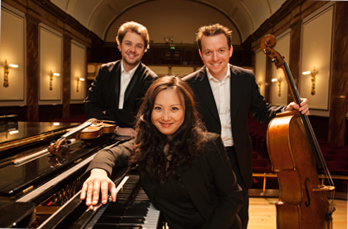
    This evening’s performance marked the Chamber Music Society debut of the Sitkovetsky Trio. Although  violinist Alexander Sitkovetsky has appeared with the Society before, tonight marked his first performance there with his established chamber music colleagues Richard Harwood (cello) and Wu Qian (piano). Their playing of the C-minor trio drew a well-deserved, vociferous reception from the Tully crowd.
    Concert_pic
     
    Above: The Sitkovetsky Trio
     
    In the Trio’s opening Allegro energico the three musicians got off to a grand start, the melodies pouring generously from the Brahmsian font. The blend of violin and cello was particularly enriching whilst at the Steinway, Wu Qian brought the same lyrical glow to the music that had made her performance in the sonata so impressive. A unison passage for violin and cello had a richly burnished quality, and all three players displayed both technical precision and real passion for the music.
     
    The charming and subtle second movement – Presto non assai finds the violin and cello plucking delicately; but beneath the lightness of touch there’s an inescapable quality of sadness. Then a feeling of gentle nostalgia develops in the Andante grazioso that follows, and the strings and piano trade expressive passages. This leads directly into the dynamic opening of the Allegro molto in which reflective phrases mingle with more extroverted ones; the trio concludes with in a rockingly positive mood.
     
    After the interval, we jumped back 20+ years in Brahms’ compositional career for the Sextet #2 in G Major (Opus 36); Mssrs Sitkovetsky and Harwood were joined by Cho-Liang Lin, violists Paul Neubauer and Richard O’Neill, and – fresh from his marvelous Carnegie Hall concerto debut – cellist Nicholas Canellakis. As the musicians settled in and did a bit of tuning, my level of anticipation shot up: we were in for something special.  

    When Brahms started work on his second sextet, it seems he was in a highly emotional state, having been secretly engaged to a young singer named Agathe von Siebold. Realizing that marriage was not for him, the composer sent her a brusque message terminating the engagement. But he managed to preserve the memory of his brief love in this second Sextet: the letters of Agathe’s name ‘spell’ a theme in the work’s first movement; he later wrote: “Here is where I tore myself free from my last love.”

    Paul Neubauer launched the performance with a gently rocking two-note motif in continuous repetition; this motif is later passed from one player to another, giving a continuity to the music. Outstanding beauty of tone from Nicholas Canellakis and plenty of viola magic from both Mr. Neubauer and the passionate Richard O’Neill as the melodies make the rounds of the ensemble, passing from artist to artist.

    The scherzo (rather restrained and thoughtful, actually) opens on high and features delicate plucking and curling drifts of melody. Halfway thru there’s a joyous dance which subsides into into rolling waves before its boisterous conclusion.

    Cho-Liang Lin’s playing had a searching quality in the opening of the Andante which wends its way at a stately pace thru rather doleful minor-key passages until there’s an unexpected lively outburst. Calm is restored, and now major and minor phrases alternate to lovely effect; Mr. Lin’s melodic arcs sailed sublimely over the finely-blended lower voices; the music becomes almost unbearably beautiful, leading to a peaceful coda. 

    In the final movement, a brief agitato introduction settles into a lilting flow with some lively interjections. The music cascades on: bold and sunny, its energy carries us forward with inescapable optimism. A perfect finale, and the Tully audience could scarcely wait til the bows were off the strings give the six superb players the standing ovation they so surely merited.

    The Repertory:

    The Participating Artists: