Category: Music

  • Hilary Hahn/Jaap van Zweden @ The NY Phil

    E0022344_23154243

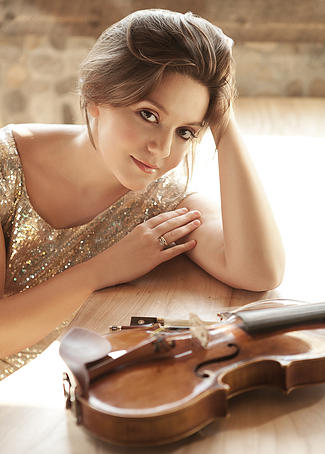
    Above: violinist Hilary Hahn

    Wednesday November 26th, 2014 – After experiencing conductor Jaap van Zweden’s performance of the Shostakovich 8th with The New York Philharmonic last week, I was very glad of the chance to attend a second concert under his baton. In addition, the evening provided my first opportunity to hear Hilary Hahn live.

    The evening opened with a genuine rarity: Johan Wagenaar’s Cyrano de Bergerac Overture which was inspired by Edmund Rostand’s play of the same name. The play premiered in 1897, the concert overture dates from 1905. The overture commences with a bold statement, then waxes poetical, romantic or swashbuckling by turns. It’s a melody-rich piece; though sometimes compared to the works of Richard Strauss, there’s no hint in the Wagenaar of the absonance that tends to crop up in some of Strauss’s works.

    Ms. Hahn then appeared for the Korngold violin concerto. Most widely known as a composer of film scores, Erich Wolfgang Korngold arrived in Hollywood in the 1930s, already an established classical composer. Themes from his movie scores found their way into his concert works; for the violin concerto, Korngold drew upon his music for the films Another Dawn, Juárez, Anthony Adverse, and The Prince and the Pauper. Jascha Heifetz premiered the concerto in 1947.

    Ms. Hahn looked fetching in a silvery-steely strapless gown; slender and elegant, she is as lovely to watch as to hear. In the concerto’s opening movement, much of it set in the violin’s high register, Ms. Hahn displayed a truly shimmering quality of timbre. In the second movement, Romance, she caught the quality of sehnsucht that the rapturous themes evoke; and in the quirky, devilish technical demands of the final Allegro assia vivace, she really went to town, dazzling us with her virtuosity.

    Ms. Hahn and Maestro van Zweden were greeted with sustained applause after the concerto; coming out for a second solo bow, the comely violinist took up her bow for a Bach encore. Tonight’s Playbill states that Hilary Hahn has not appeared with the NY Phil for a decade; she should immediately be signed for future appearances: she’s a treasurable player and we should have every possible opportunity to experience her artistry.

    Following the interval, Jaap van Zweden unfurled the Beethoven 7th for us. This symphony is just about perfect: neither too short nor too long, and especially appealing in its rhythmic variety. The symphony’s first movement opens slowly (marked ‘sostenuto‘…’sustained’) and then turns animated. The famiiar allegretto that follows – one of Beethoven’s most widely-appreciated passages – has a stately sway to it. The lively dance of the ensuing Presto propels us irresistibly to the finale with its exhilarating feeling of joyous abandon. The music sailed on with Maestro van Zweden, the  musicians, and Beethoven carrying the audience along on buoyant waves of sound. Richard Wagner called this symphony “the apotheosis of the dance itself…” and the audience responded with vigorous enthusiasm to the almost breathless pace which the conductor imposed in this uninhibited finale.

  • Mozart & Shostakovich @ The NY Phil

    Jaap

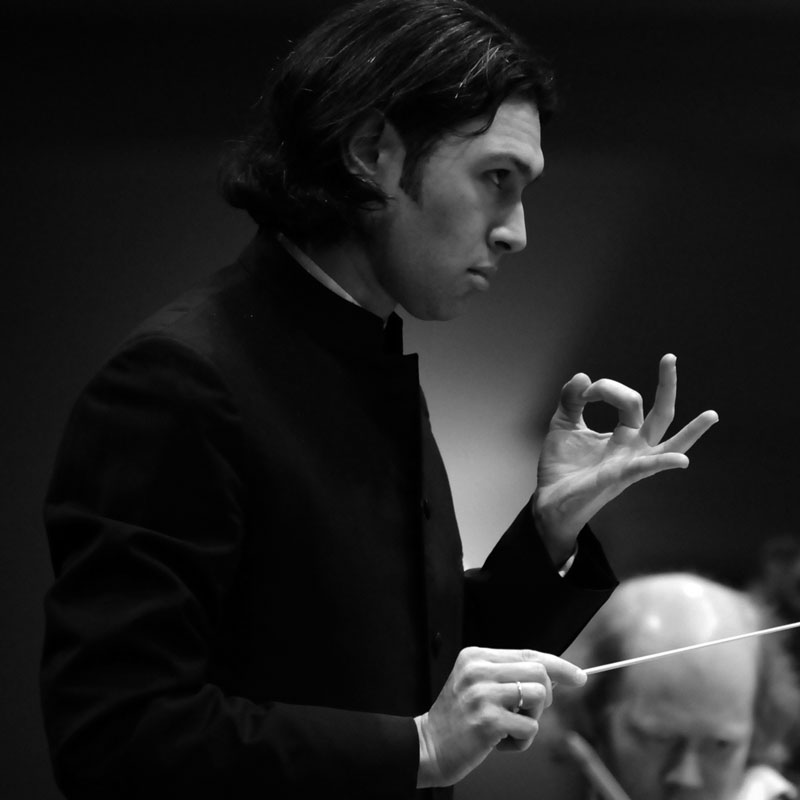
    Above: conductor Jaap van Zweden

    Saturday evening November 22nd, 2014 – Venturing out after my off-again-on-again cold caused me to miss some events earlier in the week, I found tonight’s finely-contrasted programme at the New York Philharmonic both soothing (the elegant, melodious Mozart) and grandly stimulating (the epic Shostakovich). It was all played to perfection, under the baton of Jaap van Zweden.

    Mozart wrote his Sinfonia Concertante for violin and viola sometime in 1779; the work is cast in three movements in the traditional fast/slow/fast concerto style, the soloists backed by a neat ensemble of two oboes, two horns, and strings. Although one of the composer’s most popular works, this was my first chance to exprience it live.

    1415-1120b

    Above: Sheryl Staples, Cynthia Phelps

    To play this Mozart masterwork, NY Philharmonic principals Sheryl Staples (violin) and Cynthia Phelps (viola) stepped forward, much to the delight of the orchestra’s many fans. The two women struck up a lovely rapport, trading themes with silken assurance and harmonizing gracefully. Maestro van Zweden propelled the ensemble forces with stately finesse; he did not seem pleased that applause rose up after the first movement (which also happened, more annoyingly, during the Shostakovich). In the quiet radiance of the second movement, the Andante, Ms. Staples intones the opening melody which Ms. Phelps then takes up with an alto resonance. Throughout the work, the two women and the Maestro showed spot-on dynamic control and a mutual sense of phrasing that gave this listener great pleasure.

    The stage setting was then re-configured to accommodate the large forces called upon by Dmitry Shostakovich for his 8th symphony, written in 1943. The composer was ever falling in and out of favor with Communist authorities; his 8th was basically proscribed as having no artistic value. This ban lasted nearly a decade, after which the symphony began to find its way. Along with Shostakovich’s other symphonies, the 8th now stands at the center of the symphonic repertoire.

    Tonight’s large audience at Avery Fisher Hall were clearly enthralled to experience to piece which, in the course of its sprawling hour-long duration, veers from the bleak to the savagely intense to a darkly luminous introspection.

    The half-hour opening movement is a masterful tone poem in itself; embarking on a slow build-up, it leads to fiendish outcries by the horns, massive percussive waves which evaporate only to recoil and strike again, and a marvelous, plaintive cor anglais solo. The second movement, an ironic dance with a piping flute, is followed by a second scherzo-like movement, a militaristc polka with a massive unison theme. The Largo transports us to a shadowed realm; the solo horn emerges, then flute, then clarinet; the winds take on a flutter-vibe, the clarinet returns. In the concluding movement, bassoon, flute, and cellos sing forth in succession; big, brassy waves of calamity strike, then the deep brass voices hum as the bass clarinet brings further riches. Solo violin, cello, and bassoon take turns, returning to a satiny violin passage. The massive forces are now quietened to a shimmer as the cello and double bass gently persuade us that rest, if not peace, may finally come.

    Maestro van Zweden wrought this wondrous music into a sonic mural in which the horrors of war and deprivation, the Devil dancing with Fate, and the human spirit’s will to survive are painted in rich colours. The many solo voices to which Shostakovich gave such expressive opportunities displayed yet again the unfailing grace and musical stature of the Philharmonic artists.

    Jaap van Zweden continues his work with the Philharmonic in the week ahead with a programme that features the Beethoven 7th along with Hilary Hahn playing the Korngold violin concerto. Details here. As we left the Hall tonight with the audience was heaping cheers on the conductor, I of course was thinking how much I’d like to hear him conduct some Wagner.

  • Dvořák/Schubert/Chausson @ CMS

    Ani-kavafian.jpg.pagespeed.ce.EDRXV6ZGFP

    Above: violinist Ani Kavafian, celebrating an important anniversary at CMS this season

    Sunday November 16th, 2014 – A concert both musically and emotionally rewarding at Alice Tully Hall today as Chamber Music Society of Lincoln Center presented works by three composers. In her welcoming speech, the Society’s co-Artistic Director Wu Han announced that the scheduled violist, Lawrence Power, would be unable to appear due to illness; in his stead, Matthew Lipman – slated to join CMS 2 next season – stepped in, making an immediate and very favourable impression in the concert’s opening work.

    The old letter in my book“, the first of four songs from Antonin Dvořák’s Cypresses which commenced the programme, gives the melody to the viola, and Mr. Lipman’s playing showed both winningly mellow tone and warmth of expression. In the company of seasoned chamber artists, he seemed entirely at home. The prominent violin passages in “Death reigns in many a human breast” and “You ask why my songs”  were played suavely by Ani Kavafian, celebrating her 35th season with Chamber Music Society. In “When your sweet glances on me fall“, Areta Zhulla (violin 2) and Gary Hoffman (cello) added their luxuriant voices to those of Ms. Kavafian and Mr. Lipman in a resonant meshing of timbres.

    172982_750

    Mr. Lipman (above) returned with Mlles. Zhulla and Kavafian, cellist Nicholas Canellakis, and double-bassist David Grossman for a poetic rendering of Dvořák’s Nocturne in B-major. Here Ms. Zhulla spun out a silken thread of lullabye whilst Mr. Grossman’s double-bass gently indicated the music’s heartbeat. In a rich blend of inner voices, Ms. Kavafian and Mssrs. Lipman and Canellakis sustained the atmosphere of reverie with their dreamy lyricism.

    F3f9ab_fad926d58fd0409da7bbd12fbd6428ab.jpg_srz_p_325_454_75_22_0.50_1.20_0.00_jpg_srz

    Above: Areta Zhulla

    While Schubert’s ‘Trout‘ quintet was undoubtedly a major draw for music-lovers today, it was a soul-stirring performance of Ernest Chausson’s Trio in G-minor that most truly moved me. Chausson’s music with its deep-lilac perfume always gets under my skin, and this trio is particularly affecting in its melodic allure and its build-up to rhapsodic climaxes.

    Th

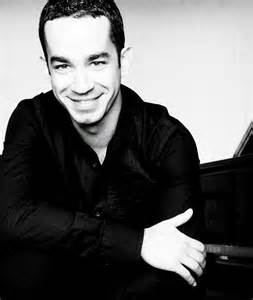
    Keyboard magician Inon Barnatan (above) cast a spell over the hall right from the start, with the misterioso opening of the trio elegantly intoned. As the work progresses, Ms. Zhulla and Mr. Canellakis sustained the feeling of rapture, their impassioned playing expanding the impression of yearning and melancholy in the third movement. Together they crafted an intensely rich sound, giving the illusion of a larger ensemble. Their heartfelt playing, and Mr. Barnatan’s evocatively nuanced piano line, really drew me in.

    8917fb601b89466fecca47f46bfa9edc.wix_mp_1024

    Above: Nicholas Canellakis

    As the Chausson surges forward in the waltz-like final movement, romantic tides rise up and we feel an expectation that things may end on an upbeat note; yet instead the composer takes a plunging chromatic descent into the darkish realm of the trio’s somber opening. The audience, having been held in the thrall of the three superb musicians, erupted in a gale of applause, recalling the players for an extra bow.

    For the programme’s finale, the Schubert “Trout“, Ms. Kavafian took the lead; Mr. Barnatan really went to town here, showing sparkling virtuosity. Matthew Lipman, Gary Hoffman, and David Grossman defined the music’s inspiring textures with a genial sense of community. The Theme and Variations section, based on that enduringly popular Schubert song “Die forelle” was especially gratifying, and the sold-out house seemed thoroughly engaged by this famiiar and ever-welcome masterpiece.

    The Repertory:

    The Artists:

  • Joshua Bell & The NY Philharmonic

    Joshua-bell_s345x230

    Thursday November 13, 2014 – Violinist Joshua Bell (above) plays the Glazunov violin concerto in a series of five concerts with The New York Philharmonic. Case Scaglione takes the podium for these performances, which also features Debussy’s Afternnoon of a Faun and Prokofiev’s symphony #5.

    My friend Monica and I attended the second evening of the programme; since we are both passionate ballet enthusiasts, we very much enjoyed experiencing the Debussy in a concert setting; we have often seen the Jerome Robbins setting of the work at New York City Ballet, and recently Boston Ballet brought their ‘original’ version to Lincoln Center.

    One of the composer’s most famous works, Claude Debussy’s Prélude à l’après-midi d’un faune referred to in this evening’s Playbill by its English title – premiered in 1894. The work is considered a turning point in the history of music: Pierre Boulez once said he considers the score to be ‘the beginning of modern music’. Tonight the Philharmonic gave a beautifully shaped rendering of this sensuous piece, which commences with the languid flute theme. Individual voices emerged dreamily from the overall soundscape and Debussy’s alluring colour scheme was indeed seductive. Neither Monica nor I could recall having previously heard the gentle chime of a triangle near the end of the piece; it seemed very prominent tonight. Case Scaglione rightly summoned the Philharmonic’s principal flautist, Robert Langevin, for a solo bow during the warm applause that greeted this opening work.

    Composer Alexander Glazunov (1865-1936) managed to endure ten years in Russia following the Bolshevik Revolution; he fled to Paris in 1928. His compositions from that point on are considered less impressive than his earlier works which include the richly melodic score for the ballet RAYMONDA, a suite from which was recently featured in ABT’s Autumn season at Lincoln Center.

    The violin concerto, Glazunov’s most frequently-performed work, was composed it in 1904. It is dedicated to, and was premiered by, the great Hungarian violinist Leopold Auer, the teacher of Heifetz, Milstein, and Elman, among others. Glazunov casts this concerto in an unbroken arc, with the three vari-paced movements subtly linked. A virtuosic cadenza carries us to the exuberant finale in which the soloist dazzles against a tapestry of orchestrated fireworks.

    Joshua Bell, taller than I had imagined and retaining a youthful energy of demeanor in his mid-40s, displayed the warmth of tone and the clear shimmer of upper-range diminuendo that are hallmarks of his playing. I was a bit surprised to note that he was using a score, but he handled it with casual assurance. Creating a fine rapport with conductor and musicians, Joshua drew the succession of themes in the opening movement into long, impeccably turned phrases; in the almost frantic pacing of the final allegro, he seized upon the sparkling coloratura passagework with thrilling dexterity. The crowd called him out for a well-deserved solo bow.

    After the interval, the Prokofiev: he wrote his fifth symphony during the summer of 1944, while staying at a dacha in the countryside outside Moscow. Having stored up his musical ideas over time, he wrote with speed and surety. The symphony was first performed in Moscow in January 1945 with the composer conducting.

    The first movement is dense of texture and thick with themes: there are five distinct tunes to be discerned, and the composer integrates them with skill. The movement closes on a grandiose note; I must say I wasn’t totally enamoured of this opening andante; it seemed a bit turgid and over-extended. But thereafter, the Prokofiev I have come to love was very much in evidence. The second movement in particular is a great delight with its relentless forward motion decorated by interjections of wit and melodic irony. The tempo gradually accelerates, almost to the point of veering out of control.

    The adagio conjures up the blend of unhappy romance and wistful tenderness we associate with the composer’s ROMEO AND JULIET, with a turbulent central passage. Then on to the final Allegro giocoso, where we again find Prokofiev at his most inventive, opening with an echo of the first theme of the first movement, and then a passage for the clarinet – Prokofiev at his most magical – superbly voiced by principal Anthony McGill. The symphony plunges forward to its conclusion, re-affirming the composer’s fixed positon in my constellation of favorite composers.

  • CMS: Brahms the Master

    Shifrin_david04RGB

    Above: clarinetist David Shifrin

    Tuesday October 21st, 2014 – The music of Johannes Brahms is well-represented at the great classical music venues of New York City this season. At the Philharmonic, Lisa Batiashvili just finished a series of concerts where she gave a resplendant reading of the composer’s violin concerto. Upcoming Brahms events on my calendar include Yefim Bronfman playing the piano concerto #2 with Riccardo Muti and the Chicago Symphony at Carnegie Hall (January 31st, 2015); a performance of the GERMAN REQUIEM at Carnegie with Daniele Gatti leading the Vienna Philharmonic (March 1st, 2015); an All-Brahms evening at Chamber Music Society on April 24th, 2015; and Jonathan Biss playing the piano concerto #1 with the New York Phiharmonic (May 21st – 23rd, 2015).

    Tonight at Alice Tully Hall, the artists of Chamber Music Society of Lincoln Center carried the Brahms banner high in an evening devoted to some of the composer’s most endearing, intimate works, all of which were composed during the final decade of his life. 

    My ability to concentrate was somewhat taxed this evening by small but pesky audience distractions, and an unfortunate late seating after the first movement of the opening work really broke the mood. But eventually the excellent music-making prevailed.

    Timothy Eddy launched the Trio in A minor for Clarinet, Cello and Piano, Op. 114, with the warmth and richness of his tone immediately evoking the sensations of tenderness and regret that will colour the entire evening. David Shifrin, in his 26th year of performing with the Society, called forth the plum-coloured resonance of his clarinet, and Shai Wosner – a pianist new to me – played with elegance and impressive dynamic control. The blending of the three instruments in the adagio was particularly heartfelt.

    Mr. Wosner returned for the Sonata in D minor for Violin and Piano, Op. 108, with violinist Erin Keefe who looked lovely in a midnight-hued pleated chiffon gown. The two musicians immediately established a fine rapport and together they poured forth the melodic themes in an unending stream of poignant lyricism. Ms. Keefe, in the sonata’s gently romantic adagio, moved compellingly from the delicacies of the initial passages to the more passionate expressions as the music flows forward. In the sentimental intermezzo that follows, both players ideally sustained the mood, carrying us into the finale where the two musicians spurred one another on with playing that managed to be both eloquent and lively.

    Shai_wosner

    After the interval, pianist Shai Wosner (above) took the stage alone for two brief solo keyboard works: the Intermezzo in E-flat major, Op. 117, No. 1, and the Rhapsody in E-flat major, Op. 119, No. 4. The Intermezzo’s melody is drawn from a lullabye associated with Lady Anne Bothwell, a young 16th century Scotswoman who was classically seduced and abandoned, singing to her infant son. Mr. Wosner’s refined playing here held the hall in a rapt silence before giving way to the grand flow of the Rhapsody. The two pieces, so contrasted yet linked by a common key, made for an intimate interlude before the concert’s closing work: the Quintet in B-minor for Clarinet, two Violins, Viola and Cello, Op. 115.

    Alexander Sitkovetsky (violin 1) and Mark Holloway (viola) joined Ms. Keefe, and Mssrs. Wosner and Shifrin for this richly melodic musical feast, the voices trading themes in this quintet with its somewhat unusual structure: it closes not with a vivid presto but with a set of variations – Mr. Shifrin’s clarinet in high relief – which end in an unexpectedly thoughtful state. Earlier, it was in the quintet’s adagio that the five players created some of the most luminous resonances of the entire evening. I wanted it to go on and on.

    Tonight’s Repertory:

    Participating Artists:

  • Unsuk Chin/Mahler @ The NY Phil

    Kari Kriikku

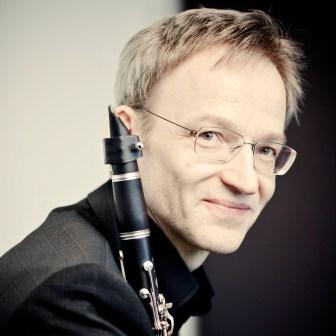
    Above: clarinet soloist Kari Kriikku

    Saturday September 27th, 2014 – The first subscription concert of the New York Philharmonic‘s 2014-2015 season featured a new clarinet concerto by the Korean composer Unsuk Chin and Mahler’s symphony #1. The Mahler evoked one of the most vociferous audience responses I’ve experienced since I started going to the Philharmonic frequently.

    A pre-concert mini-lecture-demo by Maestro Gilbert – with Mr. Kriikku giving some examples of the techniques called for by Unsuk Chin in the clarinet concerto – was somewhat spoilt by the distraction of late seating. Once the concerto proper started, all was well and the audience showed great attentiveness as this new sonic experience unfolded.

    Mr. Kriikku’s mastery of his instrument was beyond impressive; the clarinet truly became an extension of the artist. He showed an ability to sustain two tones at the same time, to make the ebony resonate at the faintest of volume levels, to wheeze and to squwak, and even to sustain long phrases seemingly without drawing breath.

    Ms. Chin draws from aspects of Asian folk music, overlain by textures of sound that are beyond contemporary. These layers are dense but drawn out by the Philharmonic musicians with sterling clarity. A vast array of percussion instruments are called into play, including a wine glass, a washboard, and two fishing reels. The soundscape veers from eerie near-silence to outbursts of intense shreiking from Mr. Kriikku.

    Overall, I felt the work (which seemed a bit too long at times) was more impressive than actually pleasing or meaningful. Surely it affords the player an opportunity to extend his range far beyond what might be considered to be in the realm of possibility. But, like much new music these days, neither the heart nor the soul were engaged. 

    The Mahler 1st, which premiered in Budapest in 1889, is classically referred to as “the Titan”; and while a programme note admonishes the listener from attaching that label to it, surely the final movement is a titanic experience.

    Back in 1889, the symphony had five movements instead of the four which we experience today. The composer deleted the original second movement – Blumine (‘Bouquet of Flowers’) – after the premiere, leaving us with the first movement in which Mahler represents “the waking of Nature after a long Winter” followed by a Scherzo (“The wind in my sails”). In the slow movement that comes next, solo double-bass sets forth the theme based on the French nursery song ‘Frère Jacques‘ (hearing it caused a rustle of appreciation among the audience): the movement depicts “The Hunter’s Funeral” with its vision of a hunter’s last cortege, the coffin drawn by animals. And at last we reach the epic graudeur of the finale which Mahler called “Dall’Inferno” – From Hell”: an outpouring of despair coming from a deeply wounded heart.

    These programmatic references in the end seem only to reflect Mahler’s desire to connect with the more conservative elements of his audience. The symphony is pure music, from start to finish, whatever allusions one might draw on hearing it. The orchestra gave a huge, glistening performance of the work, with the final movement being particularly magnificent. As the final chord resounded, the audience rose their feet in unison and commenced a long, loud ovation which Maestro Gilbert and the players truly deserved.

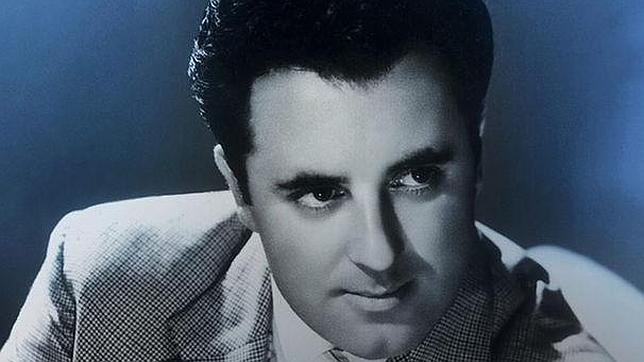
  • Carlo Bergonzi Has Passed Away

    Carlo-Bergonzi--644x362

    My all-time favorite tenor and one of the last surviving titans of the ‘last golden age’ of opera has passed away: Carlo Bergonzi.

    Bergonzi sang over 320 performances at The Met, debuting in AIDA in 1956 opposite the also-debuting Antonietta Stella. He sang his final Met performance in 1988 in LUCIA DI LAMMERMOOR. Over the years, Bergonzi – who started his operatic career as a baritone – gradually lost the ease and surety of his upper register, but stylistically he remained a paragon throughout his long career.

    When I started listening to opera at the age of 11, I had no idea of how long a singing career could last or how a voice would age. The first singers I fell in love with – Milanov, Tebaldi, Jan Peerce, Robert Merrill, Giorgio Tozzi : it seemed to me they were eternal, that they had always been singing and would always continue to sing, and that they would always sound exactly the same as they did on the first recordings I acquired. Imagine my despair when I discovered early on that two of my first idols, Jussi Bjorling and Leonard Warren, were already dead! 

    I last saw Bergonzi onstage in 1988 as Rodolfo in LUISA MILLER, one of his last Met performances. People were raving about the staying power of this 64-year-old primo tenore but to me the voice was sadly pallid. The style, however, was wonderfully intact: the generosity of line, the feeling for the language, the skillful mastery of dynamics. Despite his admirable ability to cope with the music technically, I was disheartened and left midway thru the evening. Twelve years later, I was living in New York City when Bergonzi announced he would sing Verdi’s Otello in a concert performance at Carnegie Hall. My friends, knowing of my great love for the tenor, assumed I would be there but I feared it would be an unhappy evening…and it was: beset by vocal problems, he was forced to withdraw after Act II.

    No, I would rather remember the great years, though in fact he was already well along in his career when I first heard him live in a concert performance of Catalani’s LA WALLY at Carnegie Hall in 1968. Appearing opposite Renata Tebaldi, Bergonzi managed to steal the show: he brought down the house after Hagenbach’s Act IV aria.

    At The Met I heard his superb Radames, once with Lucine Amara and once with Martina Arroyo. It was with Arroyo that he triumphed as Verdi’s ERNANI in a stellar performance that also featured Sherrill Milnes and Ruggero Raimondi. He was a generous-toned and poetic Andrea Chenier in a performance where Renata Tebaldi struggled vocally, only to cast off all reserve in the final duet where she and Bergonzi thrilled us with their passionate outpouring of sound. And the tenor managed to convey the youthful vigor and tenderness of Alfredo Germont opposite the moving Violetta of Jeannette Pilou.

    Listening to a matinee broadcast of TOSCA in 1975, I was dismayed to hear Bergonzi struggling with the top notes and fighting a losing battle, though he sang on to the end. He took a year and a half off (at least from the Met) returning in November 1976 as Radames opposite Rita Hunter. After a somewhat cautious but still impressively handled “Celeste Aida” Bergonzi went on to give a spectacular performance with some of the most generous singing I ever heard.

    And such generosity won him great acclaim in 1979 when he returned to a signature role, Riccardo in BALLO IN MASCHERA. His phenomenally sustained top notes, sometimes attained thru sheer will-power, and his matchless phrasing drew enormous ovations on both evenings that I attended: one performance with Teresa Zylis-Gara and another with Carol Neblett. In 1982 Bergonzi was still on impressive form in FORZA DEL DESTINO, and in 1985 he scored a grand success in a concert performance of Verdi’s GIOVANNA D’ARCO opposite Margaret Price and Sherrill Milnes. In every one of these performances, whatever slight misgivings one might have, his ever-persuasive style carried the day.

    But there was a final small chapter in my Bergonzi story: eight years after the MILLER that I walked out on, he appeared at James Levine’s 25th Met Anniversary gala, singing the aria from LUISA MILLER and the trio from I LOMBARDI. Massive demonstrations of love rained down on him and people raved about his longevity but for me, despite admiring his courage, he was a shadow of his glorious self. 

    But, I have lots of recordings (both commercial and live) to keep my favorite tenor’s voice ever in my ear. His early Decca aria recital has never – in my opinion – been matched by any other tenor’s, though some have come very close. Both his commercial BALLO recordings are superb. His Duke in RIGOLETTO (opposite Scotto and Fisher-Dieskau) is a fine document of Verdi tenor singing. In TROVATORE, PAGLIACCI, BOHEME and DON CARLO, he is The King. I deeply love his BUTTERFLY with Tebaldi, his TOSCA with a voice-in-peril Callas (she still has some magical moments though); and his lovely TRAVIATA with Montserrat Caballe. And I am particularly fond of Bergonzi’s splendid performance as Edgardo in the RCA LUCIA with Anna Moffo.   

    Carlo Bergonzi sings Tosti’s ‘Ideale’ here.

    Hail and farewell, Maestro. If there’s a heaven, you can teach the angels how to sing.

  • At Home With Wagner V

    Richard Wagner

    These days I hardly listen to anything but Wagner at home, and invariably it’s one of the RING Cycle operas. Thanks to my friend Dmitry I have a stack of CDs as yet un-listened-to. Today I’ve set out on a 1963 Bayreuth WALKURE, led with distinction by Rudolf Kempe, which starts with a truly urgent rendering of the ‘chase’ music that serves as the opera’s prelude. Although the sound quality is erratic, with some over-load and distortion, it’s certainly more than tolerable.

    Jutta_Mayfarth_Gutrune

    Pictured above, soprano Jutta Meyfarth – yet another ‘forgotten’ voice – may not have an ideally warm or expansive voice for Sieglinde’s music: her timbre is a bit hard. But she has a great way with words and she constantly is alert to the dramatic nuances of the music and words. I listened to the last scene of Act I, starting with Meyfarth’s whispered “Schläfst du Gast?”, several times, liking her more and more with each hearing. 

    Anita_iso

    The Finnish soprano Anita Välkki (above) tosses off one of the most brilliant renderings of “Ho-Jo-To-Ho!” that I ever heard. This under-rated soprano, her career overshadowed by the more famous Nilsson, Rysanek, Bjoner and Lindholm, has a bright and at times girlish vocal quality. In the Todesverkündigung” – the great scene in which Brunnhilde announces to Siegmund his imminent death – Välkki shows clarity of expression and considerable beauty of tone.
    Hoffman-Grace-08

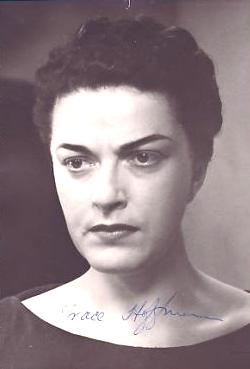
    Mezzo-soprano Grace Hoffman (above) rounds out a strong trio of female leads in this WALKURE.  Her wide-ranging voice, her intense sense of Fricka’s wronged dignity, and her verbal and dynamic alertness make a capital effect.

    Hans Hotter was in his mid-fifties at the time of this performance, and he had been singing Wotan for a quarter-century. If vocally he is a bit less fresh than in the 1953 Keilberth/Bayreuth performance, he is remarkably authoritative and relishes both the powerful and subtle moments of this great role.  

    Hans Hotter was vehemently anti-Hitler and when he was queried during the de-Nazification interviews following the end of the war as to why Hitler would have kept his recordings in his private collection, Hotter replied that the Pope had some of them, too.

    Gottlob Frick again fills me with admiration here, singing Hunding. A somewhat less-than-stellar Siegmund – Fritz Uhl – still has his moments, but though I don’t pretend to speak German, some of his diction seemed rather odd.

    The third act is strong, with Meyfarth convincing in Sieglinde’s distress and Välkki doing some warm, espressive singing from “War es so schmälich…” to her final plea with her father to ring the Valkyrie Rock with fire. Hotter is Wotan – yet again – with the power of his wrath slowly subsiding into the tenderness of a father bidding farewell to his beloved child. Perhaps no other singer has such an innate quality of heartbreak in the voice.

    ~~~~~~~~~~~~~~~~~~~~~~~~~~~~~~~~~~~~~~~~~~~~~~~~~~~~~~~~~~~~~~~~~~~~~~~~~~~~~~~~~~~~~~~~~~~~~~~~~

    KONIECZNY_web Lang_Petra

    Above:
    Tomasz Konieczny and Petra Lang

    The Polish bass-baritone Tomasz Konieczny made a magnificent vocal impression when he sang Jochanaan in Strauss’s SALOME in a concert performance by the Vienna State Opera at Carnegie Hall in March 2014. Konieczny is the Wotan in the recently released WALKURE on the Penta Tone label, part of a complete RING Cycle conducted by Marek Janowski and recorded in a series of live concert performances in Berlin starting in 2012.

    Very curious to hear Konieczny’s voice again, but not wanting to delve into the full WALKURE until I’d first had a chance to hear the RHEINGOLD, I listened to the final scene of the WALKURE as a free-standing excerpt. The bass-baritone sings powerfully and is a vibrant, dramatic presence especially as he takes his errant daughter Brunnhilde to task for having disobeyed his direct orders. Konieczny is quite splendid while letting off steam, though the poetry of the later scene where his bids farewell to Brunnhilde and puts her to sleep on the Valkyrie Rock is not quite yet in the singer’s expressive realm. He will doubtless attain that depth of understanding and an ability to communicate it as he sings the role in coming years. Marek Janowski’s conducting is alert and vivid, and Petra Lang – who has given some striking performances as a mezzo-soprano – now sings Brunnhilde. And if she does not seem destined to achieve the exalted echelon occupied by such great Wangeriennes as Nilsson, Behrens and Dame Gwyneth, Lang nonetheless makes a wonderful impression is her moving rendering of “War es so schmählich…” and is perfectly satisfying in the rest of the act.

    **********************************************************************************************************************************

    I acquired the first two acts of a Stockholm WALKURE from 1975 mainly to hear Barbro Ericson’s Fricka and to have a sampling of another voice that had eluded me til now: soprano  Siv Wennberg. Rudolf Kempe’s conducting again seems ideal. 

    Kempe has this music in his blood and gives yet another great reading of the score. Ms. Ericson, one errant top note aside, is a passionate and exciting Fricka. Neither Ms. Wennberg nor her Siegmund, Helge Brilioth, are likely to displace other favorite interpreters of these roles in the Völsungen sweepstakes, but both are very good story-tellers. Thru dynamic and verbal shadings, the soprano gives us quite an intriguing “Der Männer Sippe“, and – earlier – the tenor does likewise as he tells the story of how he came to be under Hunding’s roof. Mr. Brilioth will later have some pitch issues, and his cries of “Wälse!’ Wälse!’” suffer from very bad audio overload. Ms. Wennberg holds steady throughout the first two acts.

    As Brunnhilde, Berit Lindholm lauches a pert, eager “Ho-Jo-To-Ho“, and she makes a good impression in the Todesverkundigung: the very heart of the opera. David Ward, whose Wotan I so thoroughly enjoyed in the 1965 Covent Garden performance conducted by Solti, is understandably a bit less fresh vocally here in Stockholm ten years on, but he is still very impressive and expressive in his long monolog (so well-supportedby Kempe) and he gives a violently dismissive “Geh!” as he dispatches Hunding to his fate at the very end of Act II.

    R_Cederlof_Hunding

    The most surprising aspect of this performance is a superbly sung Hunding from basso Rolf Cederlöf (above). This is a voice I’d never heard before, and even as a name he was unknown to me. It’s a beautiful, deep, voluminous sound, and from his entrance the vocal ‘temperature’ of the first act rises: he seems to inspire Wennberg and Brilioth in their narratives…and in turn they are all inspired by Kempe.

    ~~~~~~~~~~~~~~~~~~~~~~~~~~~~~~~~~~~~~~~~~~~~~~~~~~~~~~~~~~~~~~~~~~~~~~~~~~~~~~~~~~~~~~~~~~~

    Bampton-glam-701475

    Continuing in WALKURE mode, I recently took from the library the 1947 discs of Toscanini rehearsing the first act of the opera for a concert perfomance. This issue is a favorite among collectors as it gives an aural portrait of the fiery conductor at work. The Sieglinde is Rose Bampton (above) and I was very much taken with her interpretation. Wanting to hear more of Bampton, I turned to a 1944 Met broadcast of WALKURE conducted by George Szell. This seventy-year-old performance begins with a breathlessly-paced prelude depicting Siegmund’s rush thru the forest; Szell brings the first act full circle with an equally speedy burst of energy in the postlude as brother and sister rush off to their unknown fate. 

    Lauritz Melchior, that tireless Wagner-machine, is Siegmund. The paragon of heldentenors, Melchior sang over 500 performances at The Met alone; his career there lasted nearly a quarter-century (debut in 1926). Like Toscanini – who keeps admonishing the orchestra players “piano! piano!” during the rehearsal – Szell draws out some remarkably intimate passages from both musicians and singers in Act I. Melchior is able to sing some beautifully supported piano passages, and also to cut loose with sustained powerhouse cries of “Wälse! Wälse!“. Alexander Kipnis growls darkly as an authoritative Hunding.

    Ms. Bampton’s singing sets her firmly alongside my favorite Sieglinde of all time: Johanna Meier. Bampton shares with Ms. Meier a deeply feminine sensibility as well as a feeling of great dignity, despite the hardships she has endured: married off against her will, and ill-treated by her abusive husband. Bampton’s wonderfully vivid diction, her ability to move the voice from subtle inflection to generous outpouring in the twinkling of an eye, and the overall appeal of her sound make for a winning combination in this role.

    One added sonic element is the subtle use of a wind machine during the prelude; and it cunningly is heard again when the doors to Hunding’s hut blow open just before the “Winterstürme”.

    K-Szell-w-manuscript-LR1

    I found myself being drawn deeper and deeper into this performance as Act II unfolded. Szell (above) seems, perhaps more than any other conductor I’ve experienced in the opera, to summon forth the various leitfmotifs and weave them ideally into the sonic tapestry. Thus the introduction to Act II presents the brass heralding the impending presence of Wotan and Brunnhilde whilst the strings yearningly deliver the theme of Sieglinde’s “Du bist der Lenz” (in a minor key) forecasting the theme of the entire act: the fate of the Völsung and his sister/bride; later, as Wotan and Fricka heatedly debate the issue, Szell brilliantly manages to support both sides of their argument thru orchestral underlining.
    07 Traubel in Walkure 1941

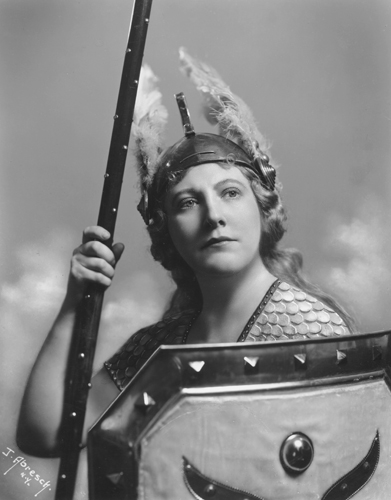
    Helen Traubel’s Brunnhilde (above) rings true with rich, warm tone: a lone clapper greets her appearance – a few other audience members gingerly join in (applause during a Wagner opera is pretty much frowned upon) – and she has a fine success with “Ho-Jo-To-Ho” despite a hint of shortness at the top of the range. The sound of her voice at times reminds me, curiously, of Eleanor Steber’s.

    Herbert Janssen’s Wotan is of the baritonal rather than basso persuasion: some of the roles lower notes are a bit of stretch for him. But he’s so completely at home in the role both verbally and vocally that it doesn’t matter. It’s not one of those grandiose Wagnerian voices, but has instead a dimension of the humanity that will eventually be the god’s undoing. Wotan’s monolog has some internal cuts, but Janssen sings it impressively and Traubel’s interjections are beautifully rendered.

    Thorborgfricka

    Kerstin Thorborg’s imperial Fricka (above) is vocally opulent, and she deals from strength in her confrontation with Wotan, thoroughly dismantling his every argument as their scene progresses; a wonderfully sung Wagnerian exchange by two seasoned interpreters. Melchior and Bampton arrive at the mountain pass, fleeing from Hunding. Their scene is vividly urgent and again Szell and his orchestra continually project the dramatic situation; Melchior’s Siegmund is finally able to calm his desparate sister-bride, setting the stage for the heart of the opera: the ‘Todesverkündigung’ (the Annunciation of Death).

    The Todesverkündigung is my favorite scene of WALKURE and my initial reaction on listening to the scene in this performance was of a slight letdown from all that had gone before. Szell and his orchestra did not seem to evoke the dreamlike quality needed (and there are a few bad notes among the brass players) and Melchior’s singing seemed factual and lacking in reverence to the demi-goddess who has appeared before him. I played the scene again a few hours later and found it far more impressive, especially as Traubel is so tonally secure and noble-sounding – at least until her cold façade begins to crumble in the face of Siegmund’s queries and his growing bitterness towards the deception he has been dealt. When the warrior tells Brunnhilde that he carries an invincible sword – Nothung – the Valkyrie replies: “He who bestowed it sends thee now death: for the spell he now takes from the sword!” her warning ricochets back at her when Siegmund cries: “This sword, given by a false man to a true one…!” The atmosphere is palpable, the scene as heart-breakingly beautiful as ever.

    The end of the second act in this performance is somewhat undermined by the voices of Hunding, Brunnhilde and Wotan being too far off-mike to make the needed impact.

    The third act opens with an exciting Ride of the Valkyries and an emotional rendering of the scene where Brunnhilde tells Sieglinde that Siegmund’s death was not in vain: she presents the unhappy widow with the pieces of the shattered Nothung and declares that Sieglinde, miraculously pregnant after only meeting her husband one day earlier, will give birth to the greatest of heroes: Siegfried. Mmes. Traubel and Bampton are very dramatically involved here, and both sing very well. 

    Traubel remains steady and impressive throughout the final scene with Herbert Janssen; the baritone’s voice has a steady beat to the tone – a kind of slow tremelo – that gives his singing of the opera’s heart-rending farewell of Wotan to his favorite daughter a wonderfully human dimension.
    Harshaw

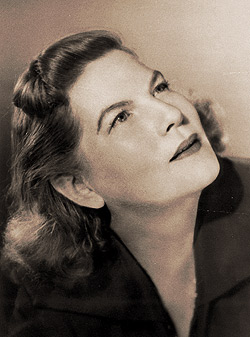
    Among  the Valkyries, the name Margaret Harshaw (above) stands out. She is Schwertleite here, as she was on many a Met evening over the years. In 1949 she moved on to Fricka and in 1954 she took on Sieglinde for the first time. And later in 1954 she assumed the role of Brunnhilde. It was in this last-named role that Harshaw sang in a Met WALKURE for the last time, in 1962. She took over the opera’s title-role that night in place of an ailing Birgit Nilsson. It was quite a night, as this descriptive review attests:

    Soprano Birgit Nilsson, scheduled to sing the role of Brünnhilde, had to bow out the evening before the performance. General Manager Rudolf Bing gave the role to soprano Margaret Harshaw, who was to have sung Sieglinde; into the Sieglinde role went soprano Gladys Kuchta. One of the Valkyries, mezzo Gladys Kriese, was ill with tracheitis: her part went to mezzo Ethel Greene, regularly a member of the chorus.
    Somehow, the opera got started on time. But in Act II, just when baritone Otto Edelmann seemed to be booming along comfortably in the role of Wotan, his voice began to fail. Edelmann withdrew at the end of Act II. He was replaced by baritone Randolph Symonette, who lasted on stage for only four minutes. 'It seemed to me like four hours,' said shaken conductor Erich Leinsdorf, later. It was apparent to Leinsdorf that Symonette 'could not get any music out of his throat.' When Symonette finally croaked out the line 'Aus meinem Angesicht bist du verbannt'('From my presence you are banished'), Leinsdorf ordered the curtain rung down.

    Conductor Leinsdorf started again after a jump of ten pages in the score to cut out some of the more tortuous vocal passages, and baritone Edelmann came on again as Wotan, in brighter voice after his rest. Happily, they all made it to the final curtain.

    "I felt like the pilot who decides on a crash landing," said Leinsdorf. "We made it without the plane going up in flames."

  • Beethoven Piano Concertos @ NY Phil III

    310696_2199382298108_399524588_n

    Wednesday June 25th, 2014 – The New York Philharmonic presenting the final programme of their 2013-2014 subscription season at Avery Fisher Hall; over the past two weeks, the orchestra have offered the first four Beethven piano concertos with Alan Gilbert on the podium and Yefim Bronfman at the Steinway. Tonight Mr. Bronfman played the 5th (‘Emperor’) concerto as the concert’s finale; earlier in the evening, he was joined for the Triple Concerto by the Philharmonic’s soon-to-retire concertmaster Glenn Dicterow, and the principal cellist Carter Brey join Mr. Bronfman. This same programme will be repeated on June 26th, 27th, and 28th, the final evening marking Glenn Dicterow’s farewell performance with the Philharmonic.

    The Triple Concerto (1804) opens with a traditional Allegro in which the solo voices are introduced one by one: the cello, then the violin, and finally the piano. In the Largo which follows (and is rather short), the concerto finds its heart with a melody, introduced by the cello, which displays the expressive richness that characterize the greatest passages of Beethoven’s works. Without pause, the final Rondo alla Polacca commences; again the insistently repeated phrases of the cello are prominent. This rondo features joyful themes seemingly inspired by Polish folk music, with lively shifts from major to minor.

    The performance, though thoroughly enjoyable, somehow never really developed a rapport between the three solo players, mainly due to the fact that Mr. Bronfman, of necessity, had his back to his string-playing collegues. Mssers. Dicterow and Brey were able to communicate directly with one another, whilst Mr. Bronfman was left in his own (beautiful) world.

    20130205193002_la-1337491-et-bronfman-1-lkh

    Following the intermission, Yefim Bronfman’s playing of the ‘Emperor’ concerto this evening was a superb finale to this NY Philharmonic Beethoven Concerto Festival. This majestic work was given a vibrant performance by the pianist and the artists of the Philharmonic, all wonderfully woven together by Maestro Gilbert’s baton.

    By this Saturday, Mr. Bronfman will have played on thirteen evenings over a three week period: an exhausting schedule, yet the pianist’s playing seemed awesomely fresh and vital tonight, with his uncanny mastery of dymanics always giving a shimmer to the sound. For all his technical brilliance, Bronfman’s playing also has a noble, heartfelt quality that makes his playing so deeply satisfying. The waves of applause that have engulfed him at each of these concerts have been very moving to experience. And it’s to our good fortune that he will be back at Avery Fisher Hall in late October 2014 playing the Bartok 3rd with Alan Gilbert on the podium. The dates are already on my calendar.

  • Benedetti/Jurowski @ The NY Phil

    Vladimir_Jurowski

    Wednesday May 21, 2014 – Vladimir Jurowski (above, in a Matthias Creutziger photo), who led a series of very impressive performances of Strauss’ DIE FRAU OHNE SCHATTEN at The Met earlier this season, was on the podium at Avery Fisher Hall tonight for his New York Philharmonic debut. The programme featured works by Szymanowski and Prokofiev. In the days just prior to tonight’s concert it was announced that the scheduled violin soloist, Janine Jansen, was indisposed and would be replaced by Nicola Benedetti.

    Arts_ents_benedetti__33199b

    Ms. Benedetti (above) hails from Scotland, of an Italian family. She trained at the Yehudi Menuhin School in Surrey and she maintains a full calendar of orchestra, chamber music, and recital engagements worldwide. A Decca recording artists, Ms. Benedetti takes an active role in music education and outreach. Tall and strikingly attractive, she was welcomed warmly by the NY Phil audience tonight following her excellent playing of the Szymanowski violin concerto #1. This was her Philharmonic subscription debut.

    Karol Szymanowski wrote this concerto #1 in 1916. In the course of his musical career, this Ukraine-born but definitively Polish composer progressed from a Late Romantic style of writing thru an embrace of Impressionism (and a flirtation with atonality) to a later period when folk/national music became a strong influence.

    Szymanowski’s violin concerto #1, often referred to as the “first modern violin concerto”  leaves aside the customary three-movement concerto structure and instead unfolds as a tone poem with the violin ever-prominent. Tonight’s performance was entrancing from start to finish, Ms. Benedetti showing great control in the sustained upper-range motifs that permeate the violin part: here she was able – at need – to draw the tone down to a silken whisper. The composer further calls for some jagged, buzzing effects as well as flights of lyricism from the soloist; a long cadenza requires total technical mastery. Ms. Benedetti delivered all of this with thoroughly poised musicality. Meanwhile the orchestra, under Maestro Jurowski’s baton, paints in a brilliant range of colours, periodically breaking into big melodic themes that have an almost Hollywood feel. Both the piece and tonight’s performance of it were thrilling to experience, and Ms. Benedetti truly merited her solo bow and the enthusiastic acclaim of both the audience and the artists of the Philharmonic.

    Following the intermission during which my friend Monica and I were enjoyably chatted up by a young reporter from the Times of London, Maestro Jurowski led a one-hour suite of selections from Prokofiev’s ballet CINDERELLA. This is a ballet I’ve never seen in live performance, though the music’s familiarity comes as no surprise. Tonight’s sonic tapestry of excerpts allowed us to easily follow the narrative, and the Philharmonic musicians gave full glory to the rhapsodic waltzes while individual players took advantage of the ballet’s numerous colorful, characterful solo vignettes. The marvelous, ominous tick-tock leading up to the stroke of midnight and the ensuing mad dash were all terrific fun. The score, full of romance, humour, and irony – and the charming introduction of maracas – provided a superb debut vehicle for Maestro Jurowski. Let’s hope he’ll be back at Avery Fisher Hall soon. And Ms. Benedetti as well.