Category: Music

  • Chamber Music Society/Season Finale

    Gilbert-kalish-8f09f8a16f90e3f2

    Above: pianist Gilbert Kalish

    Sunday May 18th, 2014 – With this concert of works by Mendelssohn and Brahms, the current season of Chamber Music Society of Lincoln Center at Alice Tully Hall came to a close. The Society’s programs – and the roster of incredible musicians they are able to draw from – have made CMS a key element in my musical life. It’s almost like going to church, but even more meaningful.

    Gilbert Kalish is such a pure musician. Nothing clutters up his delivery; he sits down and plays, opening a direct conduit between composer and listener. Kalish’s virtuosity is so assured and the emotive qualities of his playing so genuine that the music comes vividly and memorably to life. He opened today’s concert with a selection from Mendelssohn’s Lieder ohne Worte (‘Songs Without Words’); composed between 1829 and 1845, these melodious miniatures were published in eight volumes. Mr. Kalish’s sampler of four of the songs covered the 15-year compositional span and were performed with astute dynamic contrasts and a lovely lightness of touch.

    Waiting for the stage to be set for the string players, my friend Adi and I discussed which of the program’s two composers we preferred, and whether we’d rather take the music of Mendelssohn or that of Brahms to the proverbial desert island. I chose Mendelssohn – the man who wrote my very favorite chamber works (his piano trios); and a few minutes later, as the playing of the adagio from the Quintet #2 moved me to tears, I knew I was right. (Adi sided with Brahms…)

    The Mendelssohn Quintet #2, composed in 1845 – rather near the end of Mendelssohn’s too-brief lifetime – shows the composer’s continuing attachment to the Classicism of Mozart or Haydn while coloristically venturing deeper and deeper into the Romantic territory. It is perhaps his occupying this very bridge between two great eras in musical history that makes Mendelssohn so intensely appealing.

    The cellist Paul Watkins gave the music a velvety weight, and Arnaud Sussman took the viola 1 line with some lovely nuances. Violinist Philip Setzer and violist Richard O’Neill provided the inner voices – Mendelssohn keeps all the players singing throughout. For all the joy and clarity of the outer movements, it’s the adagio that gives this work its very special appeal. Here, violinist Shmuel Ashkenasi provided truly ravishing ascending phrases, soaring over the harmonies with poignant beauty of tone. This was the cause of my weeping today.

    After intermission, Mr. Kalish was again at the Steinway for two Brahms Intermezzi – pensive, bordering on melancholic – which bracketed his splendidly agile playing of the Capriccio in G-minor (Opus 116) where his dexterity took us on a whilrwind ride, letting us catch our breath in the melodic central passage. Again, his connection to the music and the deep sincerity of his playing were much appreciated.

    For the Brahms G-major Quintet (Opus 111), Mr. Setzer took the concertmaster post and all five of the musicians invested this music with glowing tone and intrinsic technical mastery. When Brahms submitted this quintet to his publisher in 1890, the score was accompanied by a message in which the composer suggested that this would be his final work. Fortunately he went on composing, producing several masterworks in the ensuing seven years until his death.
    48849_750

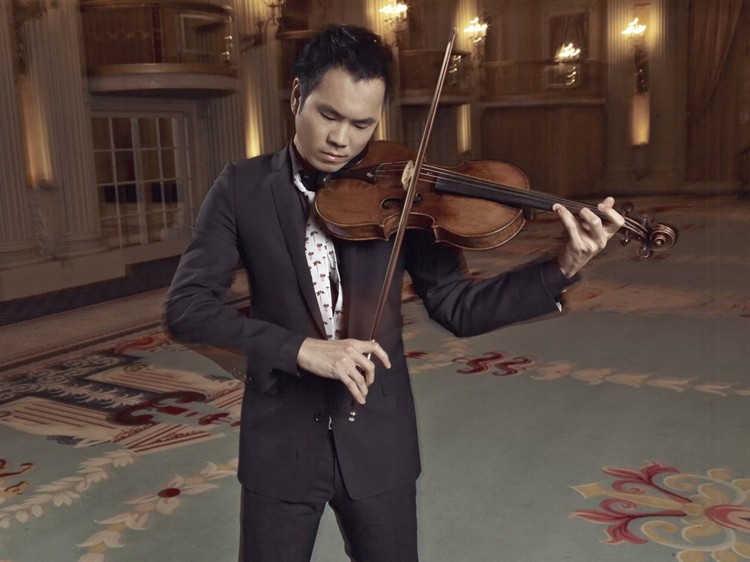
    Above: violist Richard O’Neill

    The Brahms G-major Quintet features a prominent role for viola 1, and today Richard O’Neill’s passionate playing was as inspiring to behold as to hear: gorgeous tone, impeccable technique. Reading up on Mr. O’Neill’s background, I came across this quote: “To violist Richard Yongjae O’Neill, music is like a religion in which Mozart and Beethoven are gods.” No wonder I feel such a connecton to his playing: we’re worshipers at the same altar.

    This evening’s participating artists:

  • Vivier & Bruckner @ The NY Philharmonic

    L1016697_(2)

    Above: conductor Manfred Honeck, photographed by Felix Broede

    Saturday March 29, 2014 – Tonight at The New York Philharmonic, Claude Vivier‘s ORION and Anton Bruckner’s Symphony #9 were played without intermission.  Manfred Honeck, music director of the Pittsburgh Symphony Orchestra, was on the podium; Maestro Honeck was replacing the originally-announced Gustavo Dudamel, who withdrew from these concerts due to illness.

    Claude Vivier, the Canadian composer of ORION, was murdered in 1983, having had a macabre premonition of his own death. This from the program notes:

    “When Claude Vivier was fatally stabbed in his apartment on the night of March 8, 1983, an unfinished manuscript for a choral work lay on his worktable: Crois-tu en l’immortalité de l’âme? (Do You Believe in the Immortality of the Soul?), which, according to The Guardian, is a dramatized monologue in which the composer describes a journey on the Metro during which he becomes attracted to a young man. The music breaks off abruptly after the line: ‘Then he removed a dagger from his jacket and stabbed me through the heart.’ “

    ORION, dating from 1979, drew inspiration from the composer’s journey from Asia to the Middle East in 1976, where he absorbed the sounds of the cultures thru which he passed. This dense and fantastical work, so sumptuously played by the Philharmonic, ranges from thunderous proclamations to arching melodic forays; gongs evoke distant temples and – truly unique – there are two vocal interjections (performed by a percussionist) which might be the cries of a muezzin or the calls of the starry hunter for whom the piece was named. As Vivier concluded his original program note for ORION: “Go and find out for yourself!”

    Vivier’s untimely and violent death finds a link – and a counter-poise – in the Bruckner 9th, the unfinished symphony on which Bruckner was at work on the day he died. He is said to have spent the morning at his Bösendorfer, going over sketches for the symphony’s finale. After taking a walk, he had a cup of tea and then took a nap from which he never awoke. What a nice, peaceful way to take leave…the very opposite of Vivier’s violent fate.

    “It will be my last symphony,” Bruckner had told a guest earlier in the creative process. At the time of his death, three movements were complete, and Bruckner had been working on the finale for months, leaving a large accumulation of sketches and thematic fragments. It’s a grand and glorious work, even without a ‘proper’ ending.

    The fervor of Bruckner’s religiosity is apparent from the start of the 9th symphony: both solemn and uplifting, the music ranges from broad statements to intimate vignettes – especially from the wind instruments; a passage of pizzicato strings one moment will give way to burnished, expansive themes the next. Climaxes build and evaporate, and chorale-like passages take on a spiritual glow.

    Over the course of the three movements, we will sometimes be reminded of such disparate composers as Wagner and Mendelssohn. The symphony as it stands ends on a note of serenity, leaving us to wonder what might have been if Bruckner had lived to complete a fourth movement.

    It goes without saying that the Philharmonic artists gave a performance of remarkably mellow beauty and rhythmic clarity; Maestro Honeck – tall and somewhat formal in demeanor – became wonderfully involved in the music; his conducting style is both passionate and animated, and devoid of melodrama. The audience saluted him with great warmth as he was called out for extra bows to a standing ovation. Let’s hope he’ll be back on the Avery Fisher podium soon.

  • Max Bruch’s MOSES @ Carnegie Hall

    Moses

    Thursday March 27th, 2014 – The American Symphony Orchestra and The Collegiate Chorale joined forces for a presentation of Max Bruch’s 1895 oratorio MOSES at Carnegie Hall tonight.

    Oratorios – basically operas without sets, costumes and with little or no dramatic inter-action between participants – became extremely popular in early 17th-century Italy; opera-lovers embraced the genre because of the Catholic Church’s prohibition of spectacles during Lent. Oratorio reached its apex during the time of Handel. In the late 19th century, Bruch was one of a handful of composers to continue working in this field and though it now seems a bit passé, oratorio remained viable throughout the 20th century, with works by such diverse composers as Stravinsky, Honegger, Penderecki, Golijov, and Sir Paul McCartney coming to fruition. In the 21st century, to date, Einhorn and Satoh have written oratorios.

    Bruch’s MOSES seems in part to have been written – with the encouragement of Johannes Brahms – as a rallying cry against the flood-tide of Wagnerism. Although Wagner had been dead for twelve years (and thus the music of the future was already in the past) when MOSES had its premiere (in 1895), music was already veering off in exciting new directions. To put Bruch’s work in a bit of context, Mahler’s 2nd symphony also premiered in 1895, and Claude Debussy had already written L‘après-midi dun faune (1894) and was at work on PELLEAS ET MELISANDE.

    That oratorio still appeals to audiences today was testified by the large, attentive and enthusiastic crowd at Carnegie Hall tonight. Bruch’s ‘conservative’ music shone beautifully in a finely-paced performance led by Leon Botstein. The American Symphony Orchestra and Collegiate Chorale lovingly embraced the work, and the three vocal soloists seized on the many opportunities for expressive singing which Bruch provided for them.

    Bruch draws upon four chronological events from the life of Moses to form the four parts of the oratorio. In the first, Moses is seen as the spiritual leader of his people receiving the Ten Commandments (which are nowadays considered the Ten Suggestions) on Mount Sinai. The second part revolves around the worship of the golden calf by Aaron, with the angry Moses lashing out at his brother and his renegade people.

    Following an intermission, we have the particularly impressive ‘Return of the Scouts from Canaan’ where the chorus and the male soloists did some truly impressive work. In the final part, commencing with a long funereal address by the Angel of the Lord, we witness the death of Moses who, having brought his people to the Promised Land, gives a final blessing to his followers; the oratorio ends with a choral lament.

    There are three soloists: Moses (bass-baritone), Aaron (tenor), and the Angel of the Lord (soprano). The libretto (in German, natürlich) is a mixture of paraphrase from the Old Testament and quotations from the Psalms. The chorus, in the role of the people of Israel, hold forth in much the same style developed in Mendelssohn’s great oratorio ELIJAH. The organ plays a prominent role, both as a solo instrument for recitatives or woven into the orchestral tapestry. The overall effect is rich, soul-stirring, and falls ever-so-pleasantly on the ear.

    Sidney Outlaw as Moses sang with dignity and increasing emotional power as the evening progressed; his baritone voice was able to successfully encompass the music which spans a wide range, including some resonant low notes. As the Angel of the Lord, soprano Tamara Wilson’s strong, vibrant soprano proved also capable of some shining piano notes in the upper range. She was especially moving in the solo which opens the oratorio’s final movement where she tells Moses of his impending death. Ms. Wilson’s performance made me think she might be a wonderful Ariadne in the Strauss opera.

    Tenor Kirk Dougherty made a particularly appealing vocal impression as Aaron; his voice is clear, warm and steady, filling the hall with expressive lyricism. He is able to generate considerable power without forcing and to develop a nice ping to the tone as the music rises higher. His big aria (“I go to the gates of Hell”) in the oratorio’s third part was the vocal highlight of the evening; as the text turns to pleading with Moses for forgiveness, Mr. Dougherty found a wonderful melancholy colour in his tonal palette, making me think what a very fine Lenski he might be. The aria even has a little ‘cabaletta‘ which the tenor dispatched with élan.

    Overall this was a very impressive evening: an opportunity to experience a rare work from out of the pages of musical history and to find its heart still beating and its drama still meaningful. In one ironic touch, despite the alleged ‘antidote-to-Wagner’ intent of the composer, I unmistakably heard a glimmer of a theme from – of all things – the Venusberg music from TANNHAUSERtwice. This little ambiguity somehow gave me a secret smile.

  • ANDREA CHENIER @ The Met

    Andre-chenier

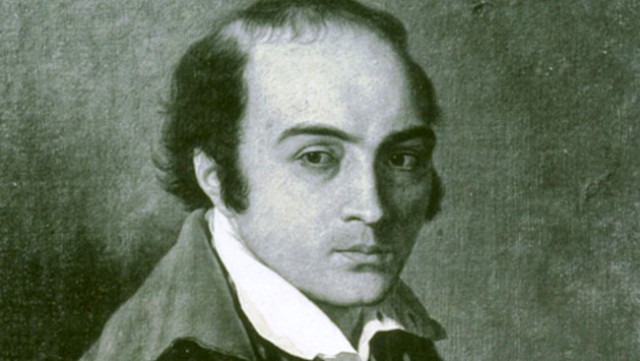
    Above: the poet André Chénier

    Monday March 24th, 2014 – Seeing the vast numbers of empty seats at The Met’s season premiere of ANDREA CHENIER tonight was disheartening. In my view, The Met has been in saturation mode since Gelb took over; there is just too much Met opera available in movie theaters and via Sirius, costing little or nothing to experience.

    Add to this the incredible operatic treasures to be found on YouTube these days – hundreds of complete operas from all over the globe and thousands of samples of great singers from all eras since the dawn of recording – to say nothing of CDs and DVDs, and it’s no wonder people are content to avoid paying Met prices and making an effort to get to the opera house.

    But of course getting your opera via a cinema or the Internet or other reproduction removes the key element of what makes live opera so thrilling: the sound of unamplified voices being projected into the vast, darkened space of the opera house. Once you compromise that, opera’s magic is diluted. Yes, it’s lovely for people who live in East Nowhere to be able to go to an HD performance, but it’s nothing like being in the opera house. 

    And the once-sacred twenty Saturday matinee radio broadcasts per season have been expanded to three or four times that many performances available thru Sirius all week, every season, many of them available free via live-stream. The old Texaco broadcasts – back in the heyday of Sutherland, Nilsson, Corelli and Tucker – would make people want to go to The Met; those broadcasts hooked thousands of people on opera for life. By their very rarity they were an enticement. Now, with so many broadcasts,  often featuring less-than-fabulous singing, the lure to actually go to The Met is less powerful.

    But, to the matter at hand: tonight’s CHENIER featured basically lyric voices – those of Patricia Racette and Marcelo Alvarez – in the main roles. Thus one would need a very considerate conductor to assure a successful performance; Gianandrea Noseda seemed to heedlessly swamp the two singers at the climaxes, forcing them to force. Mr. Alvarez emerged from this more successfully than his soprano colleague.

    In fact it was because of Ms. Racette that I nearly wrote off seeing CHENIER this season. She used to be one of my favorite sopranos: her Emmeline, Ellen Orford, Mimi and Violetta were all spectacular, and I liked her first foray into heavier territory – Elisabetta in DON CARLO – very much. Then she just seemed to go off, singing everything everywhere. The voice took on a wobbly quality, the vibrato becoming over-prominent and flatness creeping in. But when I heard her in a concert performance of Dallapiccola’s IL PRIGIONIERO in June 2013, I was quite taken with her way of handling verismo-style parlando so I thought she might be good in much of Maddalena’s music. And she was, up to a point.

    Racette’s first act tonight was lovely, she sounded youthful and vibrant. But then as the role progresses, spinto power is needed and when Racette turns to pressuring her voice, things go sour. Her ‘Eravate Possente!’ in Act II was finely rendered, and Mr. Alvarez replied with a honeyed ‘Ora soave’; but as the duet surged to its climax, Racette sounded strident above F and the duet’s final note was painful. Striving for vocal drama in Act III, Racette tried to beef up her chest voice. In the opening narrative of ‘La mamma morta’ she was really pushing things; as the line went higher, she sounded stressed and the climactic high-note was pretty painful. In the opera’s great concluding duet, both Racette and Alvarez were tested by the orchestra’s enthusiastic volume (where is Joseph Colaneri when we need him?). Racette’s tone was spreading as she pushed on, ending the opera on a desperate, flattish top B. Why she wanted to sing this role at this point in her career is a puzzlement; she simply put more wear and tear on an already weary voice.

    No one expected ringing top notes a la Corelli or Tucker from Mr. Alvarez, but the Argentine tenor would surely have had a better time of it with a more simpatico conductor. Alvarez’s voice is clear and warm, and he introduced many poetic effects into the music, magically at ‘O giovinetta bella’ in the Improviso,  at ‘Tu sarai poeta’ and ‘Io non ho amato ancor’ and throughout the ‘Ora soave’ duet in Act II. His farewell to life, ‘Come un bel di di maggio’ in the final scene, was the tenor’s finest work of the evening. Overall, it was a thoughtful, passionate traversal of the role, un-aided by his conductor.

    Zeljko Lucic as Gerard had nothing to fear from the waves of sound rising from the pit: the louder the orchestra played, the louder Lucic sang. It’s such a big, bold, authentic sound and I always want to love him, but enjoyment of his singing is compromised by his tendency to go flat. Thus it was an uneven and often maddening experience to hear him in this role that basically suits him very well. After some pitch straying in ‘Nemico della patria’, Lucic rose to a marvelous climax to the aria, and his narrative which follows where he tells Maddalena of his secret passion for her was superb. He won the evening’s loudest cheers at curtain call. If only…

    Of the many smaller roles in this opera, Margaret Lattimore stood out for her strong and melodious vocalism as the Countess de Coigny: expressive singing and a juicy chest voice. Tony Stevenson really sang L’Incredibile, and John Moore (Fleville), Dennis Petersen (Abbe), Jennifer Johnson Cano (Bersi), Robert Pomakov (Mathieu) and Dwayne Croft (Roucher) all fared well. Veterans James Courtney and Jeffrey Wells presided at the Tribunal wth chilling effect. In her Met debut, Olesya Petrova opened her Act III scene – so touching – with a sustained and beautifully tapered final note of the line ‘Son la vecchia Madelon’ and later she took a very fine soft top-G, as marked dolce in the score, at ‘Puo combattere e morire’. She deserved a round of applause – and bravas – but didn’t get it.

    CHENIER is a short opera, dragged long by two extended intermissions that drained the life out of it. In an odd moment, the applause after Act III had totally stopped and people were heading out when the bow lights came on and the singers trooped out for obligatory bows. It was just a little embarrassing. 

    Metropolitan Opera House
    March 24, 2014

    ANDREA CHÉNIER
    Umberto Giordano

    Andrea Chénier..........Marcelo Álvarez
    Maddalena...............Patricia Racette
    Carlo Gérard............Zeljko Lucic
    Bersi...................Jennifer Johnson Cano
    Countess di Coigny......Margaret Lattimore
    Abbé....................Dennis Petersen
    Fléville................John Moore
    L'Incredibile...........Tony Stevenson
    Roucher.................Dwayne Croft
    Mathieu.................Robert Pomakov
    Madelon.................Olesya Petrova [Debut]
    Dumas...................James Courtney
    Fouquier Tinville.......Jeffrey Wells
    Schmidt.................David Crawford
    Major-domo..............Kyle Pfortmiller

    Conductor...............Gianandrea Noseda

    375px-Plaque_André_Chénier,_Cimetière_de_Picpus,_Paris_12

    Above: a plaque at the Cimetière de Picpus honors the poet André Chénier

  • Schubert’s Octet @ CMS

    Schubert

    Above: Franz Schubert

    Sunday February 23, 2014 – A sold-out house at Alice Tully Hall as Chamber Music Society of Lincoln Center continued their series The Incredible Decade, featuring works composed between 1820 and 1830, with octets by Schubert and Mendelssohn.

    The evening didn’t quite turn out as I’d hoped; I’ve been fighting off a cold and I thought I had medicated myself sufficiently to get thru the concert. But about half-way thru the Schubert all the symptoms suddenly activated and – since I am always kvetching about people who come to performances when they are coughing – I thought the polite thing would be to leave at intermission. This choice was seconded by the presence of a fidgety woman next to me who kept poking me in the ribs with her elbow. I hated to miss the Mendelssohn – one of my favorite works – but in the end I think I made the right choice because by the time I got home I was really sick.

    At any rate, the performance of the Schubert octet in F-major was certainly worth my effort to attend; as is their wont, Chamber Music Society assembled a group of players of the highest calibre and their work – both as individuals and in ensemble – was dazzling. The vociferous ovation at the end was fully merited, the musicians called out twice as the audience’s cheering waves of applause swept over them.

    Schubert’s octet in F major, D. 803, was an ambitious project for the young composer. Sometimes viewed as a preparatory ‘outline’ for what would eventually become the Symphony No. 9 in C major, The Great, the octet in itself is a rewarding and innovative work. Performance timing of one hour makes this one of the longer chamber works in the active repertory; its six movements literally brim over with melodic and harmonic riches. The mood runs from sunshine to shadow and the work conveys Schubert’s musical and emotional ebb and flow; it’s a piece that calls for both vrtuosity and spiritual intention, and our stellar band of players tonight gave a performance that was nothing short of spectacular.

    D288FC0D-DBDE-8E54-239713E258DAC4D4

    I was particularly excited to encounter one of my favorite musicians, Alexander Fiterstein (above), whose prodigious talents as a clarinetist were very much an illuminating factor in this evening’s performance. In the Menuetto, Alexander and violinist Erin Keefe engaged in a courtly dialogue, and earlier in the Adagio it is the clarinet which first ‘sings’ the lovely melody. Ms. O’Keefe’s silken timbre was a joy to hear throughout, and her fellow string players – Sean Lee (violin), David Aaron Carpenter (viola), Jakob Koranyi (cello) and the Society’s formidable double-bass player Kurt Muroki – blended stylishly while the wind trio – along with Mr. Fiterstein – had Bram Van Sambeek (bassoon) and the matchless velvet of Radovan Vlatkovic’s horn playing. Having played the horn in high school, every time I hear Mr. Vlatkovic I develop a case of ‘timbre envy’. How does he do it? My timbre was always too trumpet-like. Special kudos to Mr. Koranyi as well: his ‘variation’ in the Andante was one of the outstanding passages of the evening.

    In her pre-curtain speech, co-Artistic Director of CMS Wu Han gave us the exciting news that subscription/ticket sales were already well ahead of projection for the 2014-2015 season.  Bravo CMS!

  • Bride of the Wind

    Th

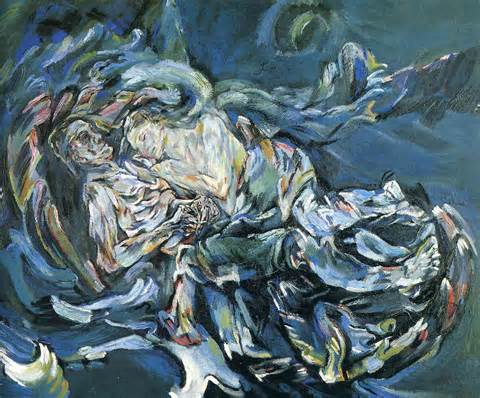
    Above: Oskar Kokoschka’s painting Bride of the Wind

    BRIDE OF THE WIND is a 2001 film by Academy Award-nominated director Bruce Beresford which brings to the screen the story of Alma (Schindler) Mahler-Werfel. Alma (played by Sarah Wynter) was one of the most renowned young beauties in turn-of-the-century Vienna, pursued by some of the most famous men in the city, including the artist Gustav Klimt (played by August Schmolzer). She finds herself drawn to the enigmatic composer/conductor Gustav Mahler (Jonathan Pryce) and they marry after she has agreed to his demand that she give up her own aspirations as a composer. Alma hid her compositions away and devoted herself to the self-centered genius Mahler; their’s was a loveless marriage, producing two children but leaving Alma bereft of affection.

    When their oldest daughter dies, Alma’s health breaks down. She goes to a sanitarium in the countryside to recover, and there she meets another patient, the young architect Walter Gropius (Simon Verhoeven). He is kind and attentive, and they begin an affair. Alma’s marriage to Mahler survives the composer’s discovery of her infidelity. When Mahler succumbs to heart disease, Alma marries Gropius, but their marriage lasts only a few years. Alma has been drawn to another man, the artist Oskar Kokoschka (Vincent Perez). Kokoschka is a bold, impetuous lover; his affair with Alma yields a renowned painting of her, nestled next to Kokoschka’s in repose, called Bride of the Wind. Alma becomes pregnant with Oskar’s child, but decides not to carry the baby to term.

    Alma returns to Gropius for a time, and Kokoschka sells the painting for enough money to buy a commission in the army. He is reported killed in action during World War I. Finally, after leaving Gropius – who has become prudish and possessive – Alma meets the author Franz Werfel (played by Gregor Seberg) whom she marries. In an odd twist,  Kokoschka returns, having miraculously recovered from his wounds; despite finding Alma now married to Werfel, Oskar still loves her and he creates a life-sized doll of her which takes everywhere with him.

    Meanwhile, Alma has at last found peace and fulfillment with Werfel; he discovers her long-hidden musical manuscripts and encourages her to to resume composing. The film ends with a scene from a 1925 recital at which soprano Frances Alda (played by Renee Fleming) performed Alma Mahler-Werfel’s songs for the first time in public.

    I’d quite forgotten how beautiful this film is: the cinematography seems to perfectly capture the architectural detail, art works and fashion of the era, and there are some evocative lighting effects: the simple motif of the sun shining thru a sheer window curtain moved me in a curious way. The opening scene, as Alma enters the shadowy foyer of a great mansion where a party is in progress, is stunning: what seems like a black-and-white shot suddenly delights the eye as she removes her black cloak to reveal a ruby-red gown; moving on to the ballroom, colour seeps into the entire scene.

    One scene after another – Klimt’s studio, the tiny cabin by a lake where Mahler composed, the idyllic sanitarium – lures us into this rich, luminous world; and of course the soundtrack, drawing upon works of both Gustav and Alma Mahler, is a major factor in the film’s romantic allure.

    968full-bride-of-the-wind-screenshot

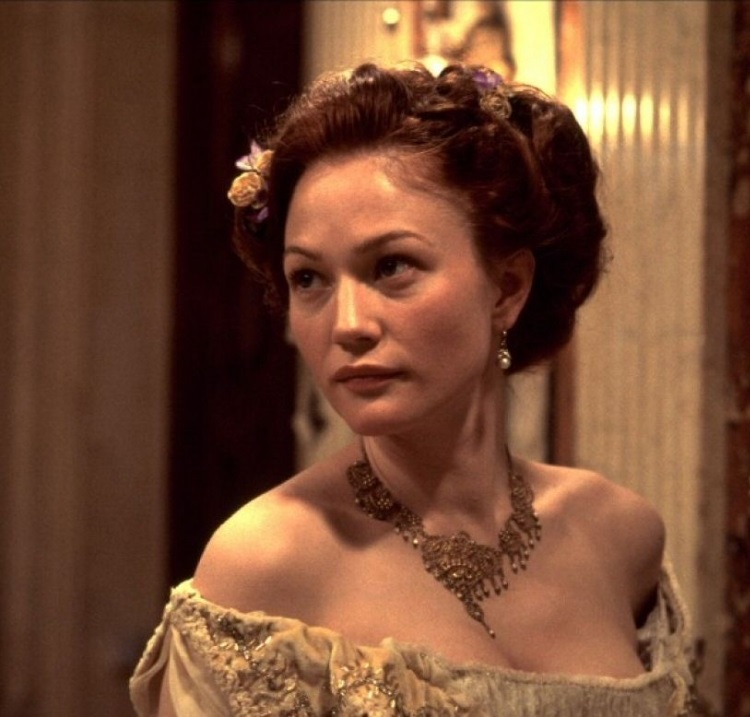
    Sarah Wynter as Alma (above) displays the character’s intelligence, grace and attractiveness which inspired masculine fervor and tenderness; her rather aristocratic exterior conceals a deep passion and a desire for intimacy. Wynter shines in every scene, a symbol of an elegant age. At certain angles, Jonathan Pryce looks uncannily like Mahler; a polished actor, Pryce seems to simply become the great composer. Mssers. Verhoeven and Perez are heart-throbs, each in his own way. All the character roles are finely played, and the whole film carries us back in time – to an era when I think I might previously have lived, such is my sense of déjà vu.

    Mahler-Werfel,_Alma_289

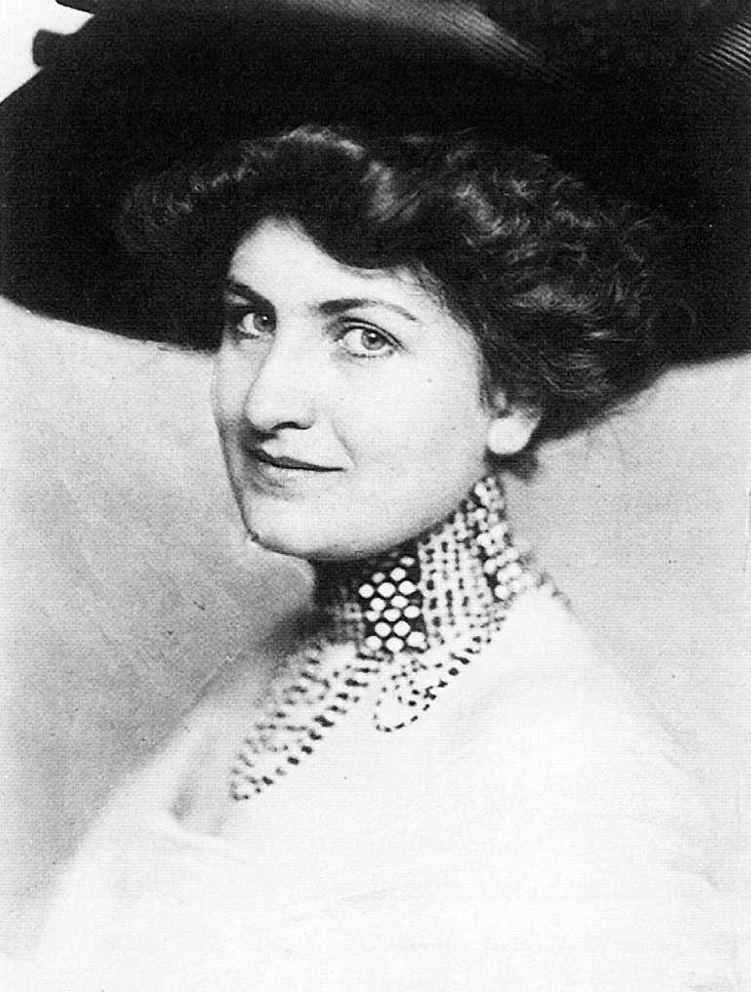
    Above: Alma Mahler-Werfel.

  • Classical Flowering @ Chamber Music Society

    Spohr

    Above: the composer Louis Spohr

    Sunday January 26th, 2014 – The recent snowstorm and its resulting impact on the MTA made me miss the Orion String Quartet’s program of Haydn and Mozart at Chamber Music Society of Lincoln Center on January 21st – a program that drew such a rush on the box office that it was repeated the following evening at the Rose Studio. Tonight, still in an Arctic deep-freeze, I made it to Alice Tully Hall for Classical Flowering, a performance which brought together ten superb players in the following program:

    The three works, all written within a twenty-year span, made for a genuinely pleasing experience in the peaceful ambiance of Alice Tully Hall: a refuge not only from the Winter weather but also from increasingly dark and upsetting world events. 

    Schubert’s Trio in B-flat major is an incomplete composition; only the first movement (and some thirty-nine bars of a second, slower one) has come down to us. Perhaps the 19-year-old composer intended to return to the work at some point but – with his active musical imagination – countless other projects took up his time. So we are left with this very appealing single movement, a beautiful prelude to the two larger works on tonight’s program. Elmar Oliveira, Cynthia Phelps and Nicholas Canellakis played superbly and the piece was over almost before it began. But Ms. Phelps and Mr. Canellakis were with us all evening – playing in all three offerings tonight – and Mr. Oliveira returned for the closing Beethoven.

    Louis Spohr, the least-well-known of today’s three composers, received a commission in 1813 from  Johann Tost, a wealthy merchant and amateur musician, for a chamber work featuring both winds and strings. Spohr thus penned his Grand Nonetto, one of the few of his compositions to remain in active repertory over the ensuing two centuries.

    The Nonetto‘s opening Allegro draws upon a lyrical main theme first heard as a four-note motif at the work’s very beginning. The second movement is an Allegro Scherzo comprising two trios: the first with the violin prominent in a dance-rhythm called the landler, and the other featuring the wind voices. This is followed by an Adagio with song-like themes played alternately by strings and winds; then the Nonetto reaches its finale in a sonata-form movement with tuneful episodes calling forth the solo voices from the ensemble.

    A remarkable ensemble of musicians took the Tully Hall stage for the Spohr: the strings arranged on our left and the woodwinds on our right. And in the center, Radovan Vlatkovic with his horn; for it is the horn that gives this work its special, burnished glow. Mr. Vlatkovic’s mellow playing was a delight here, and then later – in the Beethoven – he surpassed himself. Marvelous inter-action among the string players: the excellent violinist Arnaud Sussman taking the lead with Cynthia Phelps, Nicholas Canellakis and Kurt Muroki giving clarity to the inner voices; across the way, the regal flautist Tara Helen O’Connor  piped beautifully in her melodic flights. Romie De Guise-Langlois displayed impressive breath-control in the flowing clarinet passages; Stephen Taylor (oboe) and Peter Kolkay (bassoon) played with fluent expression.

    Beethoven’s Septet in E-flat Major, written in 1799, was the oldest work on the program today. In six movements, this work was one of Beethoven’s most popular during his lifetime, though he is said to have wished it had been burned. Luckily, he didn’t get his wish and the Septet comes down to us today as an outstanding musical delight.

    The six-movement structure has the flavour of a classic divertimento. The third movement, the most popular section of the work, is an adaptation of the minuet from the composer’s Piano Sonata in G major; the fourth movement is a series of variations in which each player has the opportunity to shine. The Septet‘s final movement features a violin cadenza, delivered today with silken virtuosity by Elmar Olveira.

    The audience – a full house held in rapt attentiveness throughout the program – gave the collective of magical music-makers a rousing ovation at the end of the concert, calling the players out for an extra bow. The Beethoven was outstanding in every regard and special kudos to cellist Nicholas Canellakis for his finely-wrought solo passage in the fifth movement and to Mr. Vlatkovic’s wonderfully plush horn-playing, especially in the last three movements. Ms. De Guise-Langlois and Mr. Kolkay were the polished woodwind voices, and along with Messrs. Oliveira and Canellakis, Cynthia Phelps and Kurt Muroki made a string quartet of the highest calibre. A brilliant performance overall.

    The evening’s participating artists:

  • RHEINGOLD from Australia

    Das Rheingold

    The State Opera of South Australia mounted Australia’s first home-grown production of Wagner’s RING Cycle in 2004; conducted by Asher Fisch and directed by Elke Neidhardt (who recently passed away), the production – which made international operatic headlines – was recorded live and issued on CD in excellent sound.

    I’d already heard and enjoyed Act I of the production’s WALKURE and was equally impressed by the RHEINGOLD. Mr. Fisch, leading the Adelaide Symphony, has an sense of pacing the work that seems at once propulsive and spacious, and he revels in revealing layers of the orchestration that make the opera seem fresh. The playing is rich and there’s a fine sense of grandeur and sonic depth.

    The cast for the most part is very fine, and the Alberich – John Wegner – is simply superb. This bass-baritone, with a 25-year career in the opera world, knows the ins-and-outs of this treacherous role and sings it with power and passion.

    John Bröcheler – who I heard as Don Giovanni and Nabucco at New York City Opera in the 1980s – is a somewhat blustery Wotan; his singing is not always beautiful but it’s surely characterful…a god drunk on his own power. Excellent giants (Andrew Collis and David Hibbard) and Mime (Richard Greager), and a vocally alluring Erda (Liane Keegan). Christopher Doig (who passed away in 2011) steers a middle ground between lyric and dramatic-character tenor as Loge. The Rhinemaidens are well-blended and along with Mr. Wegner they make the opera’s opening scene vivid, finely abetted by the conductor.  

    WAGNER Das Rheingold Asher Fisch, conductor; John Bröcheler (Wotan); John Wegner (Alberich); Christopher Doig (Loge); Richard Greager (Mime); Andrew Collis (Fasolt); David Hibbard (Fafner); Elizabeth Campbell (Fricka); Kate Ladner (Freia); Liane Keegan (Erda); Timothy DuFore (Donner); Andrew Brunsdon (Froh); Natalie Jones (Woglinde); Donna-Maree Dunlop (Wellgunde); Zan McKendree-Wright (Flosshilde)

  • In The Silence of the Secret Night

    Dima

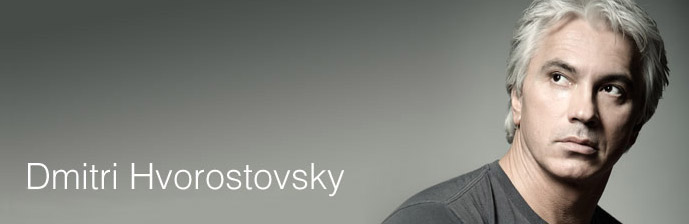
    Dmitry Hvorostovsky sings Rachmaninov’s In The Silence of the Secret Night from a 1990 recital. This was not long after he had won the 1989 Cardiff Singer of the World Competition.

  • Celebrating Britten @ The NY Philharmonic

    2926592313

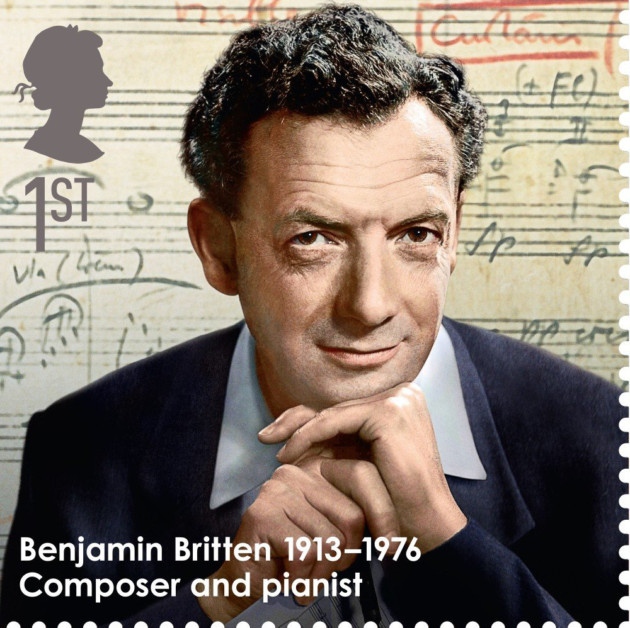
    Thursday November 21, 2013 – The New York Philharmonic‘s celebration of the 100th anniversary of the birth of Benjamin Britten was a lovely fête which brought forth the composer’s familiar Serenade for Tenor, Horn and Strings and the less-frequently-performed Spring Symphony.

    The performance took on added drama when the scheduled tenor was forced to withdraw for health reasons literally on the eve of the concert. This caused the Philharmonic to launch a desparate search for tenors who could 1) sing this demanding music and 2) were available on such short notice. Things turned out very well indeed, with a disarmingly attractive performance of the Serenade by Michael Slattery and a thoroughly impressive rendering of the Spring Symphony by Dominic Armstrong who, as Maestro Alan Gilbert told us, had never so much as looked at the score til the morning of the performance.

    The richly emotional Serenade for Tenor, Horn and Strings opens and closes with solo passages for horn which are played without use of the valves that stabilize pitch. The instrument is difficult enough to play as it is – I know: I played horn in high school – but Britten throws in this extra complication to render the sound with a ‘hunting horn’ ambiance. Thus the Philharmonic’s formidable principal horn, Philip Myers, appeared onstage with two horns – one for the Prologue and Epilogue, and the second ‘normal’ horn for the remaining movements of the work.

    Britten sets the Serenade’s poems, which span five centuries of English verse, in the upper range of the tenor voice; this gives the music an air of rather eerie innocence, yet the singer must also show great maturity in terms of both technique and sensitivity to the texts. The vocal movements are: “Pastoral” (with text by Charles Cotton), a hymn to sunset which sounds like a lilting lullabye; “Nocturne” (to words by Alfred, Lord Tennyson), where the horn calls echo as evening falls over the land; William Blake’s “Elegy”, which addresses a dying rose and is tinged with plaintive melancholy. In the Serenade‘s most unsettling passage, to an anonymous 15th-century text, the “Dirge” is a fugue of relentless, creeping madness evoking the fires of Hell which will ‘burn thee to the bare bone…and Christ receive thy soul’ (this song haunts me for days everafter whenever I hear it). In sharp contrast, Ben Jonson’s “Hymn” is light-hearted and upbeat, bringing the singer’s task to an ‘excellently bright’ conclusion. As the voice falls silent, the offstage horn closes the Serenade on a benedictive note.

    M slattery

    I had heard tenor Michael Slattery (above) often during his time at Juilliard, and was pleased to be present at his impromptu Philharmonic debut tonight. Slender and boyish in his elegant tux, Michael took the high tessitura in stride, with many felicitous passages of vocal color and inflection: his diction was clear and touchingly expressive. Philip Myers played with gleaming, burnished tone and exceptional power in the phrases that serve as a counter-poise to the voice. Maestro Gilbert drew evocative playing from the string ensemble, and the entire performance had a nocturnal incandescence that was truly pleasing. Michael Slattery reacted with disarming sincerity to the audience’s warm applause, being called out with Mr. Myers and the conductor for extra bows.

    The Spring Symphony was commissioned by the Koussevitzky Music Foundation and is dedicated to Serge Koussevitzky and the Boston Symphony Orchestra though it was actually premiered at the Conncertgebouw in Amsterdam during July 1949 before its American premiere the following month at Tanglewood by Koussevitzky and the BSO. Britten calls for a huge orchestra, adult and children’s choruses, and three vocal soloists. The score is dazzling in its range of instrumental colours and textures, and the texts include both hymns of praise to the coming of Spring and some charming moments of levity in depicting day-to-day happenings. This work is quintessentially British: the poems invoke English pastoral imagery and the deftly ‘sudden’ ending – “And now, my friends, I cease” – is punctuated by a  plump C-major chord.

    Maestro Gilbert marshalled his forces for a thoroughly impressive and enjoyable performance: a special “hurrah” for the Brooklyn Youth Chorus who are called upon to both sing and whistle. The ‘save the day’ performance by tenor Dominic Armstrong revealed an attractive voice with mastery of dynamics and colours as well as of textual incisiveness that belied his unfamiliarity with the work. The slender and very pretty soprano Kate Royal has a feather-light lyric soprano and sang charmingly while the distinctive voice of Sasha Cooke – heard only two days earlier at Chamber Music Society – stood out for glowing tone and poetic resonance.

    This was my first time experiencing the Spring Symphony – I’d never even heard it on a recording – and it was a very good idea of Maetro Gilbert’s to choose it as a birthday salutation for the composer, for it is not often performed.

    I must register one tiny complaint – nothing to do with the music or the musicians – but I do wish that plastic water bottles could be banned from the concert stages. In the ‘old days’ small tables were set next to the soloists’ chairs with glasses of water which the singers could sip decorously between numbers. Now we have a distracting ritual of bending over, uncapping the bottle and gulping away like basketball players on the bench. The ‘old way’ of hydrating is much more elegant, and far less conspicuous.