Category: Opera

  • Sumptuous Strings @ Chamber Music Society

    Photo

    Above: violist Yura Lee

    Sunday May 22nd, 2016 – Bringing together a sextet of first-class string players, Chamber Music Society of Lincoln Center presented the final program of their Alice Tully Hall season (a program which will be repeated on Tuesday, May 24th); music by Richard Strauss, Brahms, and Dvořák was on offer.

    In Richard Strauss’s intimate opera CAPRICCIO, a rehearsal of Flamand’s newly-composed string sextet is in progress as the curtain rises on the salon of the Countess Madeleine’s château. As the opera evolves, the Countess will be called upon by her rival suitors – the composer Flamand and the poet Olivier – to answer the eternal question, “Which is the greater art, poetry or music?”, and thus to determine which of the two gentleman she favors. The opera, which includes the beloved Moonlight Music and ends with the Countess’s ravishing final aria, has been a vehicle for such beloved sopranos as Lisa Della Casa, Dame Kiri Te Kanawa, and Renee Fleming.

    It was a real treat to hear the string sextet this evening in a concert setting, and especially as it was given such a radiant performance by today’s ensemble…an ensemble of stars. Erin Keefe, wearing a striking pleated gown of gunmetal grey which set off her auburn hair, displayed (all evening, really) her ability to spin out magical phrases over a vast dynamic spectrum: she can taper her tone down to a shimmering piano/pianissimo only to soar in full-bodied melody moments later. Across from Ms. Keefe, Yura Lee, in a deep persimmon shawl and be-jeweled stilettos, summoned heartfelt sounds from her viola. A delicious “trembling” motif heralded Nicholas Canellakis’ solo, with his lustrous depth of tone.

    As Wu Han remarked in a program note, one of the things players love most about performing string sextets is: you have a mate playing the same instrument sitting next to you. And when – as in today’s Strauss – these are musicians of the calibre of Ani Kavafian (violin), Matthew Lipman (viola), and David Finckel (cello), the level of music-making is off the charts. Such gorgeous and immaculate blendings of sound, and such congenial lyricism.

    From the Strauss, so deeply engaging both musically and emotionally, the players turned to Johannes Brahms’ String Quintet No. 1. This piece was a particular favorite of the composer himself, or at least that is the impression he gave in writing this to his publisher: “You have never before had such a beautiful work from me.”

    Ms. Kavafian took the lead here, playing with her signature grace and expressiveness; she and Ms. Keefe formed a de luxe violin duo, their voices mingling with engaging clarity and savoring their many pinpoint dynamic nuances. In the melodically abounding first movement of this work, Yura Lee’s viola sings – three times – a melody that brings to mind some of the composer’s most beloved lieder. At one point, Yura and Ani ‘converse’ with one another. Nick Canellakis’s cello gives the music its resonant grounding, whilst Mr. Lipman’s evident enjoyment of the music he is playing makes him a musician as pleasing to watch as to hear. 

    In the quintet’s second movement, the instrumental voices created a lovely chorale-like atmosphere; a more animated interlude soon gives way to a return to wistfulness, and then fades mysteriously away. For the concluding Allegro energico, the five players could cavort amiably thru the rhythmic shifts with zestful playing and much mutual eye-contact as the piece sailed on to its merry conclusion.

    Following the interval, Antonin  Dvořák’s Sextet in A-major, with its goodly portion of folkish elements, found all six players on optimum form. Right from the start, with Erin Keefe’s shining tone in the opening theme, one could sense we were in for a special treat. Nick Canellakis took up the melodic thread as the Allegro moderato proceeded thru some very imaginative harmonies.

    [A cellphone went off, but at least it was between movements…and it was a ‘classical-music’ ringtone.]

    In the second movement, Dumka: Elegie; Poco allegretto, a dance which is at once both droll and dolorous is heard. The music has a sad gypsy lilt. David Finckel’s cello sets up a treading motif, over which a lament from his fellow players suggests a walk to the graveyard. In a swift change of mood, the Furiant: Presto is lively as fleeting snatches of melody pass from voice to voice. A swaying feeling pervades the music.

    The resonantly poetic sound of Matthew Lipman’s viola sets forth the theme of the final movement; variations follow where we could again savour the silver-lit sheen of Ms. Keefe’s playing and delight once more in her ability to colour phrases with her dynamic gradations.

    A sprightly dance gives way to a thoughtful cello theme from Mr. Canellakis; things intensify before subtle turns of phrase draw us to a lingering fade-out. Ms. Keefe weaves a new variation on the melody as Mr. Finckel and the violas offer plucking support. And then a high-energy dance bursts forth, only to accelerate to double-time before an urgent rising motif sends us on to a grand finish.

    The players were called out twice by the delighted audience; both the players and their admirers seemed reluctant for the concert – and the season – to end.

    Now we will have a hiatus from CMS concerts, though the musicians we’ve come to love will stay busy playing here, there, and everywhere worldwide. For the second year, the Society will offer a Summer festival at Alice Tully Hall – details here – which will help to sustain us til the Autumn.

    The Repertory:

    The Participating Artists:

  • The Last Song of Richard Strauss

    Jeritza strauss

    Above: Maria Jeritza, in costume for The Egyptian Helen, with Richard Strauss

    Richard Strauss’s Vier letze lieder were for many years thought to have been the composer’s last completed work. But in November of 1948, the composer wrote a song entitled Malven (“Mallows”); he dedicated it to soprano Maria Jeritza and sent her the only known copy.

    The manuscript turned up Mme. Jeritza’s papers following her death in 1982. Read an article about the discovery of the Malven here

    The world premiere of Malven was given at a New York Philharmonic concert (that I attended) in 1985. Dame Kiri Te Kanawa was the first to sing the song in public; as Malven had never been orchestrated, Dame Kiri was accompanied by pianist Martin Katz. The program further included the soprano’s sterling performance of the Vier letze lieder, conducted by Zubin Mehta.

  • Encore: ELEKTRA @ The Met

    Mask-of-agamemnon

    Above: The Mask of Agamemnon

    Saturday April 30th, 2016 matinee – Since ELEKTRA is one of my favorite operas – sometimes I think it is my favorite opera – I planned to see The Met’s new production of it once, and then to hear it again from a score desk.

    Some people had issues with the voices of Nina Stemme and Adrianne Pieczonka at the production’s Met premiere on April 14th: squally, shrill, and flat were among descriptive words I heard being tossed about. There were also complaints that Waltraud Meier, as Klytemnestra, was “inaudible” or at least seriously under-powered vocally. So when my friend Dmitry and I attended the second performance on April 18th, we were pleased to find that both Stemme and Pieczonka sounded much better than we’d been expecting, and that Meier, though vocally restrained when compared to such past exponents of the role as Resnik, Rysanek, Fassbaender, Christa Ludwig, or Mignon Dunn, was able to make something of the music thru diction and vocal colour.

    This afternoon, the three principal women all seemed rather out of sorts vocally. Stemme sounded frayed and effortful, the highest notes sometimes just a shade flat and her vibrato more intrusive than at the earlier performance. Ms. Pieczonka was likewise on lesser form, tending to sound shrill under pressure, and the voices of both sopranos seemed smaller and less free that I remembered. Ms. Meier was – honestly (and I am a big fan of hers) – nearly inaudible much of the time; a lot of her verbal detail didn’t penetrate the orchestra. (Since the performance was being broadcast, undoubtedly Ms. Meier made a much more vivid impression over the airwaves).

    Stemme and Pieczonka did achieve a higher level as the afternoon wore on; their most exciting singing came after the murder of Aegisth and on thru to the end of the opera. But compared to their earlier performance, they were both a bit disappointing. Of course, we have to take into account that these are two of the most fearsome and challenging roles in the soprano repertoire, and are being sung over a huge orchestra in a vast space. The wear and tear on their instruments must be incredible.

    The audience at large were undeterred by concerns over vocal matters, and they lustily cheered the three women at the curtain calls; the ovation for Ms. Stemme – well-merited for her generosity and courage – was enormous, and the house lights were turned on so she could see everyone standing and screaming for her.

    For me, it was the opera itself – and Esa-Pekka Salonen’s conducting of it – that made the performance memorable. The orchestra played spectacularly, and if Maestro Salonen sped thru some of the music (the Recognition Scene seemed really fast) it sort of added to the sense of exhilaration I was experiencing just from hearing the opera live again. 

    Eric Owens made an outstanding impression as Orestes today; his first lines established a powerful and rather creepy vocal presence, and at “Lass den Orest…” he was truly splendid. He has the right amplitude for this music in this house, and was deservedly hailed at his solo bow. 

    Special mention to Bonita Hyman for her rich, deep contralto singing as the First Maid, and to the remarkable Roberta Alexander, who again made such a moving impression as the Fifth Maid, a Chéreau ‘invention’ that paid off handsomely.

    Metropolitan Opera House
    April 30th, 2016 Matinee

    ELEKTRA
    Richard Strauss

    Elektra....................Nina Stemme
    Chrysothemis...............Adrianne Pieczonka
    Klytämnestra...............Waltraud Meier
    Orest......................Eric Owens
    Aegisth....................Burkhard Ulrich
    Overseer...................Susan Neves
    Serving Woman..............Bonita Hyman
    Serving Woman..............Maya Lahyani
    Serving Woman..............Andrea Hill
    Serving Woman..............Claudia Waite
    Serving Woman..............Roberta Alexander
    Confidant..................Susan Neves
    Trainbearer................Andrea Hill
    Young Servant..............Mark Schowalter
    Old Servant................James Courtney
    Guardian...................Kevin Short

    Conductor..................Esa-Pekka Salonen

  • Mafalda Salvatini

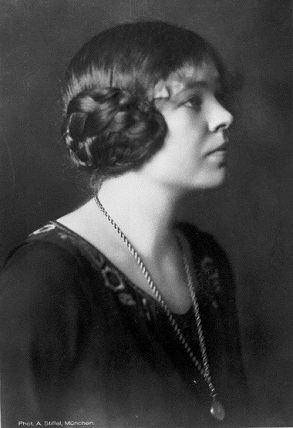
    Mafalda Salvatini

    Above: soprano Mafalda Salvatini

    Having been a devoted opera-lover for over half a century, it’s quite unusual for me to encounter a singer I never heard – and rarer still to find one I’ve never heard of.

    The lovely photo of Mafalda Salvatini (above) sent me on a research quest. Italian-born (in 1886), Salvatini studied with Pauline Viardot and Jean de Reszke. Her career was centered in Berlin, where she made her operatic debut in 1908 as Aida, opposite Enrico Caruso. Among the roles she sang were Tosca, Santuzza, Carmen, Senta, and Turandot. She later appeared at Paris, Vienna, Riga, Dresden, and at La Monnaie, Brussels. She retired from the stage in 1932. 

    Salvatini made a few recordings of arias, sung in German. She was the mother of famed set and costume designer Rolf Gérard. At the outbreak of World War II, she took refuge in Switzerland, where she died in 1971.

    Mafalda Salvatini – Lieblicher Mond~from Dvorak’s RUSALKA


  • The Romantic Viola @ Chamber Music Society

    042416_TRV

    Sunday April 14th, 2016 – No fewer than eight violas were in play on the Adrienne Arsht Stage at Alice Tully Hall this evening as Chamber Music Society of Lincoln Center offered an exceptional program, curated and head-lined by Paul Neubauer (above), in which the viola was heard in music by seven different composers (plus one anonymous composition). The program ranged from mid-19th century works to a world premiere by Joan Tower, who was present and took a bow…and got a kiss from Mr. Neubauer.

    A Robert Schumann rarity and a fantasy-suite by August Klughardt were the first two works on the program; written about twenty years apart, the two pieces each call for violist, pianist, and a woodwind collaborator. It was our good fortune this evening to have clarinetist Romie de Guise-Langlois and oboist James Austin Smith joining Mr. Neubauer and pianist Alessio Bax. Both Mlle. de Guise-Langlois and the dapper Mr. Smith are elegant players, and both are blessed with astonishing breath control.

    Romie-de-guise-langlois-155x232

    Above: Romie de Guise-Langlois

    The Schumann opens like a breath of Springtime. Clarinet and viola pass melodies back and forth, eventually honed down to a dialogue where they finish one another’s sentences. Underscored by Mr. Bax’s immaculate playing, Mlle. de-Guise-Langlois’ and Mr. Neubauer’s blend of timbres was most appealing. The second movement veers from march-like to moments of ironic deftness to a free flow of song, which the pianist takes up. Poignant and pensive, the third movement has a touch of mystery; here Mlle. de Guise-Langlois was able to sustain long lines with total control, tapering the tone into a sweet blend with the Neubauer viola. The animated fourth movement – which pauses midway thru for a gently-paced passage – was as pleasant to watch as to hear, as the eye-to-eye contact of Romie and Paul was keenly focused; Mr. Bax’s piano provided added joy.

    James-sq

    Above: James Austin Smith

    The slender frame and expressive face of James Austin Smith might have graced the salons at Kellynch Hall or Pendersleigh Park: a youthful, romantic figure. His playing also has an Olde World geniality: dulcet of tone and (as with Mlle. de Guise-Langlois) blessed with an uncanny ability to spin out long lines. In August Klughardt’s Schilflieder, Mr. Smith established at once an ideal rapport with Paul Neubauer.

    The first of the five “fantasies” opens with solo piano, soon joined by the plaintive oboe and the soulful viola; the second brings the restless viola into harmonizing with the oboe. Mr. Bax’s dreamy playing leads off the third movement, with the viola and then the oboe singing sadly and tenderly; the pianist’s sense of delicacy was a lovely asset here. The fourth movement begins dramatically, with viola and oboe sounding forth over a rippling piano motif.

    Mr. Smith’s formidable breath control was much admired in the closing movement; the atmosphere is poetic and sustained, the viola wistful. A nicely-turned cadenza for oboe led to the end of the work with a very sustained joint oboe/viola note. 

    Both the Schumann and Klughardt were brand new to me, and both made me wonder why we don’t hear them played more often. Of course, the Gordon Jacob piece for eight violas will always be a rarity, simply because the logistics of getting eight first-rate violists together to rehearse and perform it would take some doing. Mr. Neubauer was able to call upon his viola-playing colleagues to assemble a classy octet – including Cynthia Phelps, the NY Phil’s principal violist. Ida Kavafian and Daniel Phillips, more usually seen with their violins, took up violas to join in the fun tonight. Along with Mr. Neubauer, Hsin-Yun Huang, Richard O’Neill, Lawrence Dutton, and Pierre Lapointe formed a very impressive ensemble.

    This Suite for Eight Violas, composed in 1976, created quite a buzz. It opens with a unison “Russian” theme, the eight voices blended in song. The second movement, Scherzo and Drone, is a sprightly romp: a folk-dance with a sly finish. Sweet sadness prevails in the Chorale: Lento. Richard O’Neill then kicked off the closing Tarantella with swirling rushes of notes alternating with gentler interludes. A broad melody sweeps us thru to the end. The audience, clearly relishing the combined talents of these eight artists, sent up an enthusiastic ovation. 

    Following the interval, Paul Neubauer appeared alone onstage. 

    I love Joan Tower’s music, and I really enjoyed hearing tonight the two solo works she wrote expressly for Mr. Neubauer, the second of which was having its world premiere. Simply Purple is deceptively simple; a slowly rising scale, with a deep sense of mystery pervading, must be delivered with consummate control and subtle dynamic variants. The premiere, Purple Rush, is a scurrying downward swirl; it goes low and dusky, with cascades of notes and shimmering, slippery slides. Mr. Neubauer’s mastery held the audience throughout; and it was so nice to see Ms. Tower there, sharing the applause with the violist.

    Jennifer_Johnson_Cano

    Stepping across the Plaza from The Met, where she has been appearing as Emilia in Verdi’s OTELLO, mezzo-soprano Jennifer Johnson Cano (above, in a Fay Fox photo) sang the two Brahms viola songs, the only music on the program that I was familiar with. A comely young woman with a voice to match, Ms. Cano’s warm, even tone and her natural feeling for the words – and for finding beautiful hues to express them – provided a most appealing rendering of these two familiar and beloved melodies. She formed an immediate rapport with Mr. Neubauer as they faced one another across their music stands; their blend of timbres was a pleasure to hear, and Mr. Bax, at the Steinway, continued to take a major role in the proceedings with his lustrous playing. May we have Ms. Cano back please – and soon! – perhaps for the Wesendonck Lieder?

    Photo_abax

    Above: Alessio Bax, a superb pianist who played in six of the works on offer this evening

    A flash of Spanish light and colour is welcome on any concert program; tonight, Joaquín Turina’s Escena andaluza proved yet another notable discovery. An opening cascade from the piano becomes a caress. Ms. Kavafian and Mr. Phillips are back with their violins now, and together with Richard O’Neill (viola),  Paul Watkins (cello), and Mr. Bax at the piano they catch the music’s sensuous moodiness and underline Mr. Neubauer’s tonal affluence ideally. Outstanding playing from Romie de Guise-Langlois put the final flourish on this miniature Andalusian tone poem.

    A lilting and passionate violin solo (Ms. Kavafian) is answered by Mr. Watkins’ velvety cello; Mr. Bax’s keyboard shifts between the insinuating and the rhapsodic, and there’s a flurry of string instruments being plucked.

    Ms. Kavafian opens the second section of the Turina playing in the high range. The music glides from sly seduction to rising desire and on to a shimmering glow before the pianist – abetted by the clarinet – urges us to surrender to our passions.

    The same ensemble from the Turina remained onstage for Hermann Schulenberg’s Puszta-Märchen; they were already seated and raring to go. But where was Paul Neubauer? The ensemble struck up – a gypsy romance – and Mr. Neubauer stepped from the wings, already playing, and strolled down the steps and into the audience. He stopped next to me and my friend Claudia Schreier and – fixing me with an intense gaze – played a dusky, wine-drenched melody with great passion; I could actually feel the resonance of the music rising from the viola. He then locked eyes with Claudia and continued to play, totally by instinct. Momentarily he walked away, but then came back to us to continue his serenade. After a few moments he turned his attention to the usherette and played to her on intimate terms.

    Onstage, his colleagues were continuing to play while keeping one eye on the wandering minstrel. Suddenly they switched to a brilliant czardas; Mr. Neubauer returned to center-stage, playing on with virtuoso élan, and evoking swirling roulades from Romie’s clarinet. The music halted as all the players stomped their feet, and the audience burst into applause.

    Mr. Neubauer’s arrangement of Rumanian Canary, with its bird-song ‘cadenza’, was the concluding delight of the program. This led to a joyous standing ovation, and the players being called out twice.

    Being serenaded by Paul Neubauer is something I’ll always remember: an unexpected and charming episode in my life – a life that remains full of surprises. 

    The Repertory:

    The Participating Artists:

  • Matinee @ The Met: OTELLO

    Hibla

    Saturday April 23rd, 2016 matinee – I went to this performance of OTELLO at The Met expressly to hear Hibla Gerzmava (above) as Desdemona. Feeling no need to see the production, I took a score desk. Since I could not see the stage, I missed a cast change that took place spontaneously between Acts III and IV.

    Aleksandrs Antonenko started out strongly, seeming to be in better voice as Otello than at the earlier performance I had heard; but by the end of Act III he was taking stuff down an octave and speaking the lines. A substitute sang Act IV while Antonenko acted the role.

    CK24Try3SVw

    The cover, named Francesco Anile (above), sounded more Italianate and his vibrato was less prominent than Antonenko’s; but since I was unaware of the change, I just thought – from what I was hearing – that Antonenko had gotten a second wind and was making a final push. A spokesperson for the Met came onstage before the curtain calls started to explain what had happened (this was also needed for the radio audience). Then Antonenko and Gerzmava bowed together…she seemed to be trying to console him…and finally Anile came out in jeans and sneakers with an old robe thrown over his shoulders.

    Antonenko’s uneven performance in the first half of the evening included a some really nice passages mixed in with the more effortful ones. But I wondered – as I had at the earlier performance I saw – whether he merited a new production (for an opening night) at The Met, considering his less-than-stellar vocalism. Since Domingo retired the role, only Johan Botha has been more than a serviceable Otello at The Met. Heppner, Galouzine, and Cura were variable, at best. Without a world-class exponent of the title-role around these days, new productions seem unwarranted.

    Ms. Gerzmava’s voice is beautifully ‘present’ in the big Met space. Her singing has a darkish glow, she phrases appealingly, and incorporates piano effects nicely, if rather sparingly (I kept hoping for more). A trace of sharpness was evident here and there, and the final A-flat of the Ave Maria would have been more effective if held just a bit longer.

    As has sometimes happened before at The Met, the sound of voices from the lighting bay in the auditorium’s ceiling ruined much of the Willow Song and Ave Maria; it was around the same time that a cellphone also went off.

    All of the wonderful things about Željko Lučić – the authentic Met-sized voice, the uninhibited range, the dramatic nuances he brings to his singing – are undone by continuous problems of pitch. So many thrilling moments in Lučić’s Iago today were offset by his seeming inability to control this serious defect.

    Chad Shelton’s Roderigo stood out – both in terms of voice and inflection – among the supporting cast today. Jennifer Johnson Cano (Emilia), Alexey Dolgov (Cassio), Jeff Mattsey (Montano), and Tyler Duncan (A Herald who is ready for bigger roles) all did well. And that beloved Wotan and Hans Sachs, James Morris, was warmly greeted at his curtain call in the role of Lodovico.

    Conductor Adam Fischer set the opera on its way with a stimulatingly powerful treatment of the storm music; The Met chorus and orchestra were ship-shape all afternoon. 

    A fun article about Signor Anile’s stepping in here.

    Metropolitan Opera House
    April 23rd, 2016 matinee

    OTELLO
    Giuseppe Verdi

    Otello..................Aleksandrs Antonenko/Francesco Anile (Act IV)
    Desdemona...............Hibla Gerzmava
    Iago....................Zeljko Lucic
    Emilia..................Jennifer Johnson Cano
    Cassio..................Alexey Dolgov
    Lodovico................James Morris
    Montàno.................Jeff Mattsey
    Roderigo................Chad Shelton
    Herald..................Tyler Duncan

    Conductor...............Adam Fischer

  • Sibelius & Mahler @ The NY Philharmonic

    Hampson

    Above: baritone Thomas Hampson

    Friday April 22nd, 2016 matinee – A matinee performance by The New York Philharmonic pairing the Sibelius seventh symphony with Mahler’s Das Lied von der Erde. Alan Gilbert was on the podium, with soloists Stefan Vinke and Thomas Hampson singing the solo parts in the Mahler.

    The two works made an ideal pairing; the Sibelius 7th (first performed in 1925 under the title Fantasia Sinfonica) lasts only about 20 minutes and is written as a single-movement. From its opening rising scale which blooms into regal theme, the symphony compensates for its relative brevity with music of almost cinematic breadth. Abundant in melody, the piece has an Autumnal quality; though Sibelius would live until 1957, he wrote very little music after 1926. This last symphony is both serene and passionate; it leaves us wondering ‘what might have been’ if he had continued writing.

    The Sibelius was played with savourable richness by the Philharmonic artists today, and Maestro Alan Gilbert was very much in his element here; following the interval, players and conductor were joined by the two vocal soloists and a thrilling performance of Mahler’s Das Lied von der Erde commenced. 

    Still recovering from the sorrow of his daughter’s death, Mahler learned in 1907 that he was suffering from a heart condition that would, within four years, prove fatal. In The Song of the Earth, the composer’s awareness of the possibility of an approaching end prompted the composition of a great hymn to Nature and to the sheer ecstasy of living. Drawn from The Chinese Flute, a collection of ancient Chinese poems translated by Hans Bethge, the six ‘songs of the Earth’ speak of drunken defiance of impending death, of the solitary life, of the transience of youth and beauty, and of a friendship which endures beyond parting and into eternity.

    The tenor is allotted the more extroverted songs; the first, third, and fifth. Stefan Vinke’s formidable power and stamina proved equal to the fierce demands Mahler’s vocal writing places on the singer: high in tessitura and including exposed, sustained notes in the topmost range, the tenor’s muscular singing was just what’s needed. An occasional trace of pitchiness didn’t detract from Mr. Vinke’s generous singing. And I must note the lovely violin theme from Frank Huang in the fifth song, “The Drunkard in Spring“.

    (Note: it’s just been announced that Stefan Vinke will be replacing Johan Botha when James Levine and The Met Orchestra perform excerpts from Wagner’s RING Cycle at Carnegie Hall on May 26th. Christine Goerke is the soprano soloist.)

    Both mezzo-sopranos and baritones have performed the ‘other’ solo role in Das Lied von der Erde the formidable Margarete Matzenauer sang it at the NY Philharmonic premiere in 1929. Today, it was baritone Thomas Hampson whose strikingly expressive singing moved me and my companion to a tearful state as the work came to an end.

    I have admired Thomas Hampson since his Met Auditions win in 1981; among his many Met roles that have particularly impressed me have been: Count Almaviva, Billy Budd, Posa in DON CARLO, Werther, Eugene Onegin, Wolfram in TANNHAUSER, Amfortas, Iago, and – most surprisingly and most recently – Wozzeck. He walked onstage today – tall, handsome, and elegant in a tux – with an amiable self-assurance that made me think we were in for something special; Hampson delivered an intensely satisfying performance. 

    Liang Wang’s oboe solo at the start of “The Solitary One in Autumn” signaled a turn of mood from the boisterous drinking song with which Mr. Vinke had launched the cycle. As Mr. Hampson began to sing of his loneliness and weariness of spirit, his marvelous gift for poetic expression as well as the inherent beauty of his vocal timbre drew me into the music; the external world faded, and the music became the reality.

    Midway thru the fourth song, “Of Beauty“, a big dance-like theme erupts, and the baritone seemed ready to dance himself. His singing was characterful and, as the music simmers down, he did some lovely heady effects as well an plunging into basso territory briefly.

    It was in the final song, “Farewell”, that Mr. Hampson’s performance put me over the edge. Liang Wang’s oboe and Robert Langevin’s flute establish a wistful mood. The baritone’s thoughtful and sustained singing is beautifully enmeshed in some wonderful playing from the winds; oboe and harp unite; horn, cello, bassoon, and bass clarinet add poignant colours to the canvas. “All longing has become a dream,” sings the poet.

    In a spine-tingling moment, Mr. Hampson’s tone adopts a ‘dead’ emptiness, matched by plaintive flute. “I wanted to bid my friend a last farewell!” – how many of us have sadly been deprived of just such an opportunity! Mandolin and celeste are heard, as if from out of a dream of past happiness. “Where are you going, and why must it be?” asks the forlorn friend as the parting draws nigh, and they share the stirrup cup. The song ends with an affirmation of faith in life’s renewal, but even here there’s an illusive feeling. Nature holds sway with the “…luminous blue of distant space…everywhere, forever… forever and ever….”

    Alan Gilbert’s baton was suspended in air as the music faded to silence. An ovation of particular warmth ensued, with the maestro, the singers, and the musicians basking in the joy of having shared in a magnificent collaboration.

  • Great Performers: Matthias Goerne

    M Goerne

    Above: Matthias Goerne

    Wednesday April 20th, 2016 – Baritone Matthias Goerne offered a program of songs by Eisler, Schumann, and Wolf, with Alexander Schmalcz at the Steinway. The recital was part our Great Performers at Lincoln Center subscription series.

    In the congenial setting of Alice Tully Hall, we experienced a lieder recital like no other I have ever attended. Rather than singing neat sets of songs by each composer and walking offstage after each group, only to return in a couple of minutes for another segment, Mssrs. Goerne and Schmalcz remained onstage throughout each half of the program. At the end of each group of songs by one of the evening’s composers, applause was forestalled by silent signals from the singer and by the pianist keeping his hands poised over the keyboard. Thus each half of the program flowed seamlessly, coughing and quiet chatter between sets was avoided, and the focus on the music itself, without the distractions of the recitalist’s comings and goings, made for an intense and amply rewarding listening experience. The individual songs became part of a vast sonic canvas of myriad colours. 

    This innovative presentation created an opportunity to experience the Goerne voice and artistry in two long arcs of song. And what a voice it is: in over five decades of listening to singing in the realms of opera and classic song, only two or three voices have been so captivating just as sound. Mr. Goerne is blessed with an enormous vocal range, from the depths of basso-darkness to a secure, blooming, and captivating upper register. His mastery of dynamics is nothing less than awesome: thunderous, hall-shaking phrases can be succeeded by the most delicate of sustained piano effects, whilst at mid-volume, the sound with it’s magically manipulated vibrato is almost unbearably beautiful. 

    Mr. Goerne is a singer who gets physically involved in his songs: gestures and indeed full-body moves seem to flow with utter naturalness from his deep emotional commitment to what’s being sung. Thoroughly lacking in pretense, he allows us into his private world where we can commune with the composers thru the singer’s personal involvement. Goerne’s generosity both of voice and of spirit makes him an artist you want to experience time and again.

    With the Goerne voice ideally partnered by Mr. Schmalcz’s lyrical attentiveness at the piano, the music-making was so totally pleasing that it hardly mattered what was being sung, or that the numerous (and short) Eisler songs are less involving musically than those of Schumann or Wolf. It was just such an immersive pleasure to bask in the heart-healing tone and exquisite expressiveness that filled the blessèd space.

    When it was announced that songs by Wolf would be on the program, I hoped to see that composer’s timelessly touching Anakreons Grab listed – alas, it wasn’t included in the printed program. But it made for a gorgeous encore, sung and played so poetically:

    "Here, where the roses bloom, and the ivy embraces the laurel,
    Where the turtledove murmurs, and the cricket sings -
    What grave is this, that the gods 
    Have so kindly graced with vines and flowers?
    It is Anacreon's resting-place. Spring, Summer, and Autumn did that poet enjoy; And now from Winter, at last, this mound protects him."  

  • American Visions @ CMS

    Randall-Scarlata

    Above: baritone Randall Scarlata

    Tuesday May 19th, 2016 –  Chamber Music Society of Lincoln Center offering a diverse program of ‘Americana’. On entering the auditorium at Alice Tully Hall tonight, we found the stage filled with a vast array of percussion instruments; these were set up in four “territories”, each to be managed by a specific musician in the program’s second half: a spectacular performance of a fascinating work by George Crumb. 

    In the midst of all the chimes, gongs, and other percussive paraphernalia, the sleek Steinway was parked. Pianist Michael Brown took the driver’s seat and set the evening on its way with Louis Moreau Gottschalk’s The Union, Concert Paraphrase on National Airs for Piano. Composed in 1862 by the wildly popular Gottschalk, this 9-minute fantasia weaves together arrangements of Hail Columbia, Yankee Doodle Dandy, and The Star-Spangled Banner. The work’s virtuoso demands were a stroll in the park for Mr. Brown, who simply rippled off the composer’s flourishing flights and furbelows with sprightly brilliance. This patriotic little gem sparkled on New York’s Primary Day.

    Mr. Brown returned immediately to perform Antonin Dvorak’s Sonatina in G-major with violinist Chad Hoopes. Written (swiftly) in New York City in 1893, this attractive piece was the composer’s opus 100, and he chose to mark that milestone by writing a work for his two children: Otilie (a 15-year-old pianist) and young Antonin (aged 10, and already a capable violinist); the sonatina was first performed at Dvorak’s home on East 17th Street, right here in Gotham.

    Mssrs. Hoopes and Brown found this Dvorak work most congenial; their performance was finely coordinated and together they gave us a savorable rendering of the folkish elements which are so typically Dvorakian. In the work’s four movements, both lyricism and dexterity are called for, and the two musicians polished off the music with style and flair.

    A group of songs by Charles Ives were then performed by baritoneRandall Scarlata and Gilbert Kalish. These two expert artists have worked together frequently and their rapport is a delight to witness. Randy Scarlata’s wide-ranging voice, his fluency of language, and his natural gift for making it seem like he is singing just to you have always given his performances a special appeal – starting back in his Juilliard days, when I first met him and we began a friendship that has been sustained over the years.

    The six Ives songs Randy programmed tonight showed the many felicities of his vocal and interpretive style, and Mr. Kalish was the ideal collaborator. The soft ending of “The Things Our Father’s Loved” was haunting; the ironic sense of triumph of “In Flanders Field” showed vocal expressiveness at its finest. A music hall feeling is evoked in the narrative “Charlie Rutlage” which covers many moods and at one point erupts in a huge tumult; “The Indians” veers from the dramatic to the pensive. A particularly masterful rendering of “The Housatonic at Stockbridge” opened with Mr. Kalish’s atmospheric piano introduction; the music is then taken up by Randy with finely-inflected phrasing and spine-tingling dynamic control. “The Circus Band”, a jolly tongue-in-cheek affair, calls for a baritone who is also an actor, and it ended the evening’s first half vividly.

    So lovely and pleasant to simply sit in the hall during the interval, watching the percussionists as they made sure everything was in place for the work about to be performed: George Crumb’s American Songbook II: A Journey Beyond Time.

    I can hardly begin to describe the effect of this ingenious and truly splendid work. The composer, with his ever-rich musical imagination, has taken some of the best-beloved spirituals and spun them into a sound tapestry that is nothing less than magical. The work calls for four top-flight percussionists, a pianist of consummate skill who is willing to extend his range beyond the keyboard, and a great communicator as vocal soloist. CMS brought together just such a remarkable ensemble tonight, and the result was both aurally dazzling and rich in spiritual reward.

    Each of the four percussion players – Christopher Froh, Ayano Kataoka, Eduardo Leandro, and Ian David Rosenbaum – had his or her own island kingdom of instruments to preside over. An open-topped piano awaited Gil Kalish, with a pair of small mallets and an odd conch-like horn set out for him: things most pianists have no use for. At the center of it all, Randy Scarlata, ready to pour his heart and soul into the eight timeslessly powerful songs that Mr. Crumb had arranged for this epic work.

    Otherworldly sounds transport us immediately; as the work progresses, the textures developed by the percussion orchestra will chill, delight, and fascinate us. The baritone voice emerges from this soundscape in the haunting melody of “Swing Low, Sweet Chariot” – Randy Scarlata at his expressive best. Mr. Kalish must reach into the piano to pluck the strings, and meanwhile the percussionists are setting up echo effects and rich reverberations. The chimes of midnight sound, uncanny deep resonances glow and fade, ghostly shimmers hang in the air. Randy’s control of finely-honed piano demi-tints gave me goosebumps as the ‘sweet chariot’ vanished into the mists.

    Bizarre rhythms and noisy cacophony signal ‘the walls come tumbling down’ in “Joshua Fit de Battle ob Jerico”; Mr. Kalish’s horn bleats desperately, Randy Scarlata’s voice rages and exhorts. Things fade away before a big bang of an ending. Tremendous!

    Soft chimes lend an air of mystery to Randy’s poignant singing of “Steal Away”. This is followed by the impulsive rhythms of “Rock My Soul” in which Randy sings, speaks, and whispers in turn. An instrumental interlude (“The pregnant earth : a Psalm for Noontide”) brings forth delicate effects. Here Mr. Kalish alternately plays and plucks the strings of the Steinway while the four percussionists seem to vie in a contest to see who can play most quietly. Kozmic softness!

    Marimba and rattles set the rhythmics of “Sit down, Sister!”, in which the pianist also has a say. Randy sings “I just got to heaven and I want to look around!”; the song then teases forward until he shouts “Sit down!” This is punctuated by a sonic boom.

    Soggy chimes make us think of weeping; “Nobody Knows the Trouble I See” laments, with Randy’s voice low and mournful. The stage lights inexplicably dimmed to darkness by mistake midway thru this song; the music halted but light was soon restored and the musicians picked up where they’d left off. Eerie echoes are heard.

    A deep growl…a thudding drum…a welter of gongs and chimes: “Let My people Go!” This is “Go Down, Moses”, robustly declaimed by Randy Scarlata, and it is big singing indeed. The music is ominous but fades to a long, reverberant end.

    Gongs and chimes, chirps, and the sound of tinkling broken glass create a halo of mystery around Randy’s plaintive singing of “Sometimes I feel like a Motherless Child”. After a last percussive power burst, Mr. Kalish brings forth some extremely delicate playing, and some eerie tapping. The singer turns to parlando with “Motherless children have a hard time…a long way from home”: eventually Randy hums wordlessly as the music fades sway into thin air.

    The audience seemed spellbound by the Crumb work; it is not easy music, but instead unsettling, thought-provoking, and richly rewarding in its own way. I was so grateful for this opportunity to experience it, and in such a thoroughly impressive and moving performance.

    The Repertory: 

    The Participating Artists:

  • The Young Björling

    1467513_330_449

    Jussi Björling’s was the first tenor voice I fell in love with. After I had discovered opera in 1959, my parents gifted me with a two-LP set of excerpts from RCA’s Verdi and Puccini catalog. The singers on those records –  Licia Albanese, Roberta Peters, Zinka Milanov, Jan Peerce, Robert Merrill, Leonard Warren, and Giorgio Tozzi, in addition to Björling – assumed god-like status for me.

    It was the plaintive sweetness of Björling’s voice that really ignited my imagination; and thru the ensuing years, it has often been the tenors – Tucker, Bergonzi, Corelli, Vickers, Pavarotti, Domingo – who provided the greatest thrills and chills in the many performances I have seen and heard.

    In the early 1930s, Björling made his first aria recordings, in Swedish. On a quiet afternoon yesterday, I was listening to – and savoring – the youthful lyricism of this remarkable voice; he had turned twenty in 1931:

    Jussi Björling – TOSCA aria – in Swedish

    By the end of that decade, Björling’s career was well underway, his voice was in full bloom, and he was singing in Italian:

    Jussi Björling – O Paradiso – L’AFRICANA

    He made many recordings in the ensuing years, including the Verdi REQUIEM under Fritz Reiner, which was recorded in June 1960; three months later, Björling died.

    Björlings_grav

    The great tenor was buried at Stora Tuna in the Dalarna province of his native land.

    Two decades before the Reiner recording of the REQUIEM was made, Björling recorded the Ingemisco from the Verdi masterpiece:

    Jussi Björling – Ingemisco – from Verdi REQUIEM