Category: Opera

  • Castle

    Img5128595_n

    Would someone kindly buy Moritzburg Castle for me? It was built near Dresden by Duke Moritz of Saxony in the 1540s. I would like to live here with several of my friends, each of whom will be provided his/her own room. We’ll have dance studios created in those two small, square buildings on either side of the main driveway where my choreographe/friends can create.

    There’s a Baroque chapel on the premises where we’ll have choral and chamber concerts, and if there isn’t a theatre in or near the castle, we’ll have one created so we can present dance, opera and annual performances of CYMBELINE.  Artists, photographers, poets and film-makers can come there to do their work in peace. There will be a big library and an even bigger kitchen, where my friend Janusz will be in charge of the daily menu. And I’ll finally learn how to play the violin and to play tennis. 

  • Mozart’s Last Aria

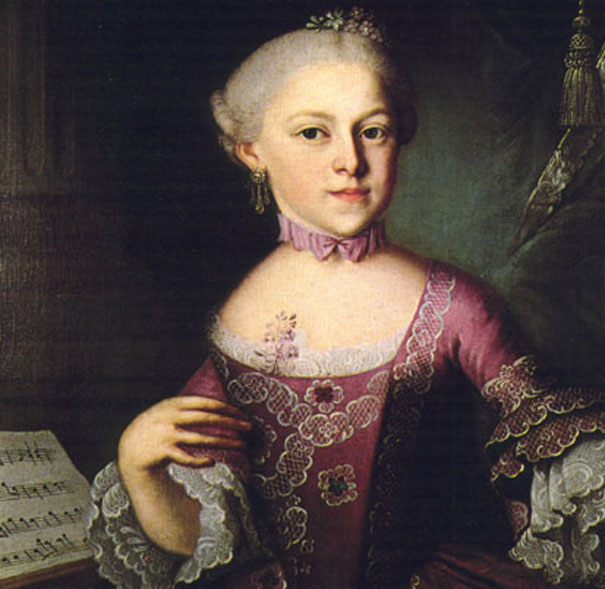
    Nannerl

    Above: Maria Anna (Nannerl) Mozart 

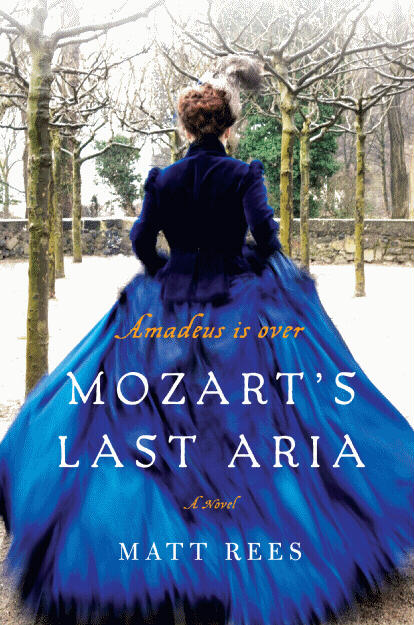
    After recently watching the film Mozart’s Sister, my curiosity was piqued about Mozart’s older sister Nannerl, herself a talented musician forever in the shadow of her genius-brother. Matt Rees’s novel MOZART’S LAST ARIA popped up on my radar, and I grabbed a copy from Amazon; admittedly the book’s attractive cover was an added incentive:

    Mozarts Last Aria.US

    Nannerl, four-and-a-half years older than Wolfgang, was considered a musician of equal talent to her brother. As their father carted them all over Europe, playing for royalty, Wolfgang began to eclipse his sister in notoriety.

    Both children began to compose, Wolfgang openly and Nannerl furtively. Wolfgang admired and encouraged his older sister’s work. At a
    concert, when Wolfgang announced that the piece he had just played was
    written by his sister, their father Leopold was furious. He ordered Nannerl never to
    compose music again because in the 18th century, women did not become
    composers.

    Thereafter, Leopold focused all his attentions on Wolfgang, leaving Nannerl at home, taking only her brother on tour, and forcing her to give piano lessons to wealthy students to finance Wolfgang’s travels. Nannerl became depressed, and in the years that followed the close relationship of brother and sister faded, especially once Wolfgang had married Constanze.

    In 1784, Nannerl had married the magistrate Johann Baptist Franz von Berchtold zu Sonnenburg; they lived in St. Gilgen and she did not see Wolfgang again. In the novel, which begins with Nannerl, having received a letter from Constanze informing her of Wolfgang’s death, leaving St. Gilgen for Vienna in an effort to learn the facts surrounding Wolfgang’s untimely demise.

    Of course, there have always been rumours that Mozart was poisoned – namely by the rival composer Antonio Salieri. There is no verifiable evidence of this, but the myth has persisted anyway.

    Constanze’s letter to Nannerl hints at foul play. This induces Nannerl’s trip to Vienna where she runs up against a wall of silence and deception. Attempting to ascertain who might have had cause to desire her brother’s death – the jealous husband of one of his amours?  a
    sinister creditor?  a rival composer? or those involved in the secret and banned acttvities of the Masons? – Nannerl finds her own life endangered.

    At a soiree where Nannerl dresses as her brother and plays one of his compositions for an elite assemblage, the culprit is unmasked. But many questions remain, and as Nannerl slowly sorts things out, a complex web of duplicity and political intrigue is revealed.

    In reality, Nannerl did not travel to Vienna following her brother’s death. But in using her as the axis of his novel, the author has crafted a finely-paced murder mystery into which real personages from the time – including Emanuel Schikaneder, librettist of Mozart’s “Masonic” opera THE MAGIC FLUTE – are introduced. The novel would seem well-suited to a cinematic treatment: a beautiful period piece with a host of brilliant character roles and a built-in soundtrack of some of the greatest music ever written.

  • Somogyi’s Back! @ NYC Ballet

    6a00d8341c4e3853ef0153941ab8d8970b-800wi

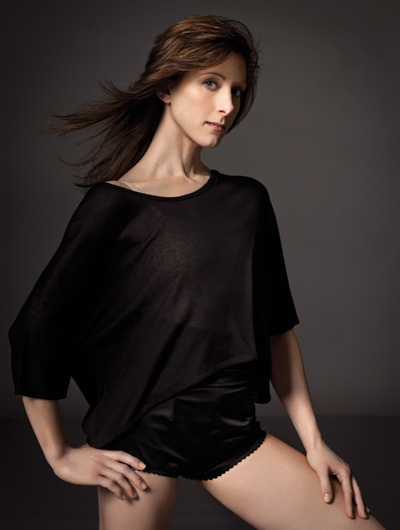
    Above: NYCB‘s Jennie Somogyi in a Henry Leutwyler portrait

    Tuesday May 21st, 2013 – Principal dancer Jennie Somogyi has returned to New York City Ballet after being sidelined with an injury for several months. Tonight was my first chance to see her since her return and she gave a super-charged performance in Ulysses Dove’s RED ANGELS. NYCB cognoscenti scatttered throughout the house gave her a hearty cheer when she stepped out for her bows. It’s wonderful to have her back.

    The house was fairly full tonight – including about half of the Fourth Ring – though I know there were people outside who really wanted to come in but who could not afford the available tickets. I’m going far less often myself, because it’s just out of comfortable reach financially.

    Guest conductor Leif Bjaland opened and closed the evening conducting two great scores: Tchaikovsky’s Serenade for Strings and Stravinsky’s Firebird. In the Tchaikovsky, he gave a somewhat more spacious feeling to the music than we’ve heard here in recent seasons: the fast passages were lively but not frantic, and he was adept at bringing out the inner voices that intertwine in the serenade’s melodic arcs.

    Curtain-rise for SERENADE still puts a lump in my throat; despite a couple of tiny faux pas tonight the ballet was beautifully danced, and of course it’s a corps watcher’s paradise. The recent promotion of some of the Company’s loveliest ballerinas to soloist means that we’ll see these girls less frequently onstage; but tonight three of them – Ashley Laracey, Lauren King and Georgina Pazcoguin – retained their familiar places in this Balanchine masterpiece.  The entire ballet was a feast for my opera glasses as one appealing vision after another moved across the stage in their swirling pale plue tulle.

    Sara Mearns danced with silken beauty, handsomely partnered by Jonathan Stafford. Ashley Bouder’s marvelous sense of the music allows her to sail on the score’s melodic ebb and flow, pausing here and rushing forward impetuously there; her peerless technique and expressive face invest the role with many felicitous details. Rebecca Krohn gave a radiant performance, her lyricism at full-flight and so attractive to behold. It seems to me that both Ashley and Rebecca would be ideal in the ‘waltz girl’ role, and I’m hoping they’ll each have the opportunity soon. Adrian Danchig-Waring made a striking impression both in physique and face; his deep immersion in the ballet’s unspoken drama was spell-binding.

    So exciting to see RED ANGELS again; it’s a favorite ballet of my friend Arlene Cooper, and I was glad to spot her from above this evening. Mary Rowell has played every performance of this ballet that I have ever experienced and she’s phenomenal, turning her electric violin into both a percussive and melodic vessel. In sleek physique-defining red body tights, the four dancers appear in introductory solos, then in duets, second solos, and a brief coda for all.

    Amar Ramasar gave a magnificent, stellar performance of expansive and space-filling dance wedded to undeniable sex appeal. Jared Angle has followed in the footsteps of Peter Boal as the Company’s most poetic male dancer; in this case it’s poetry with an edge and Jared reads it with power and clarity. Teresa Reichlen’s long-limbed amplitude and cool allure are perfect here, dancing with sharp attack and soaring extension. Ms. Somogyi, her body in Olympian condition, was intense and keenly aware of the sensual energy that pulses thru the Einhorn score. Throughout, the four dancers communicate in a rich gestural dialect. Mark Stanley’s lighting is a major factor. The audience whooped it up for these exciting dancers and their vivid one-woman rock band.

    Clothilde Otranto took up the baton for a definitive change of pace with the Tchaikovsky Pas de Deux. Andrew Veyette stepped in for Joaquin de Luz and won continuous rounds of applause for his swift and scintillating turns and leaps while the charm and delicacy of Megan Fairchild’s dancing exuded lyric grace, reaching an apex in a set of delicious fouette turns in the coda. The audience loved them, and rightly so.

    Maria Kowroski’s imperial Firebird was the perfect finale for this parade of super-dancers. The elegant ballerina shaped the elusive avian creature into a poetic statement, creating a compelling reverie in the haunting Berceuse. Earlier, her fluttery evasions and eventual taming were finely wrought in gesture and expression and – needless to say – her long legs are an exceptional asset. I love Jon Stafford in this ballet (he replaced Ask LaCour tonight) for his sense of wonderment and almost naive heroism. He and Savannah Lowery as the captive princess gave a charming account of their courtship, surrounded by a bevy of maidens consisting of some of my favorite ballerinas. The girls – I know – take this scene with a tongue-in-cheek quality. For me it’s quite beautiful, as is the Stravinsky score – his finest in my view, and wonderfully played tonight under Mr. Bjaland’s baton.

    SERENADE: Mearns, Bouder, Krohn, J. Stafford, Danchig-Waring [Guest Conductor: Bjaland]
    RED ANGELS: Reichlen, Ramasar, Somogyi, J. Angle  [Solo Violin: Rowell]
    TSCHAIKOVSKY PAS DE DEUX: M. Fairchild, Veyette   [Conductor: Otranto]
    FIREBIRD: Kowroski, J. Stafford, Lowery, Catazaro [Guest Conductor: Bjaland]

  • Hampson/The Jupiter Quartet @ Alice Tully Hall

     Hugo Wolf

    Above: the composer Hugo Wolf

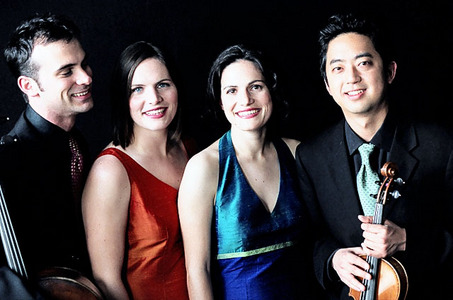
    Sunday April 28, 2013 – The Chamber Music Society of Lincoln Center presented a programme of works spanning three centuries; the Jupiter String Quartet and the celebrated baritone Thomas Hampson collaborated in a new work by Mark Adamo (NY Premiere), and the Quartet played Wolf, Schubert and Webern before rounding out the evening with Wolf songs sung by Mr. Hampson.

    Large_Jupiter quartet6

    The Jupiter String Quartet opened the programme with Franz Schubert’s quartet in E-flat major, written when the composer was 16 years old. The players immediately displayed the warm, Autumn-gold sound that they would sustain throughout the concert. The melodies of this youthful work of the composer were wafted into the hall with generous lyricism; in the adagio especially, violinist Nelson Lee’s persuasive turns of phrase had a bel canto polish.

    Anton Webern’s Langsamer Satz (‘Slow Movement’) was composed in 1905 but never publicly performed in the composer’s lifetime. Dating from the period before he embraced his twelve-tone destiny, this brief quartet was written when Webern was 22 and exploring a relationship with his cousin Wilhelmine, who he eventually married. The music is in full-blown Romantic style; its heart-on-sleeve emotional quality tinged with a trace of melancholy was lovingly captured by the Jupiter players. 

    Hampson_acosta_5

    Thomas Hampson, photo by Dario Acosta

    I’ve been following Thomas Hampson’s career since I first heard him at the annual Winners Concert of the Metropolitan Opera National Auditions in 1981. He seems to be the only singer from among that year’s winners to have developed and sustained a major international career. Among his many roles at The Met since then, several have ranked high among my memorable operatic experiences, most especially his Count Almaviva, Billy Budd (a spectacular performance all round, in 1992), Onegin, Posa, Werther, Wolfram in TANNHAUSER, and Amfortas in PARSIFAL. In recent seasons, he has explored the heavier Verdi roles; I was very impressed with his Iago just a couple of months ago.

    Today in Mark Adamo’s ARISTOTLE, Hampson’s voice seemed remarkably fresh and showed nary a trace of the passage of time. It was completely and marvelously satisfying vocalism from a singer who has passed the thirty-year mark of his career. Blessed from the start of his singing career with an immediately identifiable timbre, the baritone today sang with warmth, a broad dynamic palette, impressive sustaining of phrase and keen verbal clarity (no need for us to refer to the printed texts). This was singing of the first magnitude.

    Mark Adamo’s ARISTOTLE can already be ranked as a 21st century vocal masterpiece. Set to a poem by Billy Collins, the work is about the passage of time and the stages of life. It resonates on a personal level, especially for those of us moving into the later decades of our span. Mark Adamo’s writing and the playing of the Jupiter Quartet provided Mr. Hampson with a marvelous vehicle in which the singer’s artistry is fully presented. 

    The poet’s text is imaginative, funny, poignant; opening candidly with “This is the beginning…almost anything can happen…” each of the works three ‘movements’ describes the experiences – from epic to mundane – that colour our lives as time passes. “This is your first night with her, your first night without her” is a touching wrinkle in the first section. 

    “This is the middle…nothing is simple anymore…” sets forth this memorable line: “Disappointment unshoulders his knapsack here and pitches his ragged tent.” And finally at the last: “And this is the end, the car running out of road, the river losing its name in an ocean…” Singer and players joined to create a memorable musical experience, the baritone’s incredible sustaining of the work’s final lines truly magical. The composer, seemingly overwhelmed by emotion, was called up to the stage and joined the musicians in receiving a sustained applause.

    The second half of the evening was given over to works of Hugo Wolf, commencing with his brief and melodic Italian Serenade, played by the Quartet. Thomas Hampson then offered a set of the composer’s songs. With the exception of Anakreon’s Grab – which was the concluding work on today’s printed programme – I have never really been drawn to Wolf’s lieder, despite many attempts over time to make a connection. The first two songs today were rather jolly, and then the singer and musicians moved into deeper and darker territory, which proved very pleasing indeed. And yet it was still the calm beauty of Anacreon’s Grave that moved me the most. As an encore, Wolf’s “Der Rattenfänger”, based on the tale of the Pied Piper, was given a vivid theatrical treatment by singer and players. 

    The works on today’s programme:

    Schubert: Quartet in E-flat major for Strings, D. 87, Op. 125, No. 1 (1813)

    Webern: Langsamer Satz for String Quartet

    Adamo: Aristotle for Baritone and String Quartet (2012, CMS Co-Commission, New York Premiere)

    Wolf: Italian Serenade for String Quartet (1887)

    Wolf: Selected Lieder for Baritone and String Quartet

  • New York Choral Society: A SEA SYMPHONY

    Ship at sea

    Thursday April 25, 2013 – “Behold the sea!” is the ecstatic phrase intoned by the chorus at the start of Ralph Vaughan Williams’ epic A SEA SYMPHONY. This evening the New York Choral Society offered this masterpiece at Carnegie Hall, along with Beethoven’s CALM SEA AND PROSPEROUS VOYAGE.

    The Beethoven unfortunately went for naught this evening because the people seated behind us could not settle themselves during the marvelous hush of the work’s opening section; they continued to squirm and whisper throughout the 8-minute duration of the piece. Fortunately we were able to move further down our row to a quieter place for the Symphony.

    A SEA SYMPHONY, which premiered in 1910 (on Vaughan
    Williams’ 38th birthday; and he conducted the premiere himself),
    established the composer as a legitimate successor to Edward Elgar in
    the pantheon of British musical giants.

    There are four movements:

    I. A Song for All Seas, All Ships – Moderato maestoso
    II. On the Beach at Night, Alone – Largo sostenuto
    III. Scherzo: The Waves – Allegro brillante
    IV. The Explorers – Grave e molto adagio – Andante con moto

    In A Sea Symphony, Vaughan Williams evokes the days when Britain ruled the waves and her Empire spanned the planet. It is a sweepingly heroic pæan to the world’s oceans and sailors, the Walt Whitman texts summoning up visions of billowing sails and flags flying aloft: …”of dashing spray
    and the winds piping and blowing”.

    Tonight’s performance unfurled splendidly under David Hayes’ baton; the shining qualities of the Vaughan Williams score emerged through the finely-textured playing of the musicians and the rich harmonies of the choral writing. Chorus and orchestra have the symphony’s Scherzo all to themselves and delivered optimum music-making in this evocative passage.

    Actress Kathleen Turner, with her signature huskiness of voice, read the Whitman poems before each of the symphony’s four movements. Clad all in black and taking on a professorial aspect as she donned her eyeglasses, she was a lecturer whose stance and gestures took on a seasoned and theatrical expansiveness as the evening progressed.

    The raven-haired soprano Jennifer Forni appropriately chose a very pretty aquamarine gown for tonight’s concert; the singer, who recently debuted at The Met as the First Esquire in the new production of PARSIFAL, displayed an unusually rich quality in her lyric-soprano voice. She sang with clarity, warmth and an attractive upper register. Undoubtedly she’ll be asked for spinto roles thanks to the unexpected and appealing density of her timbre; I hope wisdom will prevail and that she will move carefully into the repertory, assuring herself of a sustained career. The soprano’s singing was well-matched by the baritone Jordan Shanahan; his performance managed to tread a fine line between boyish eagerness and a more mature sense of vocal dignity. His poetic rendering of “On the beach at night, alone” was a highlight of the evening. Mr. Shanahan’s vocal power and clarity were in ample evidence, and when the two singers joined in unison during the symphony’s final movement, the combined effect of their voices was particularly pleasing.

    NYCSchorus

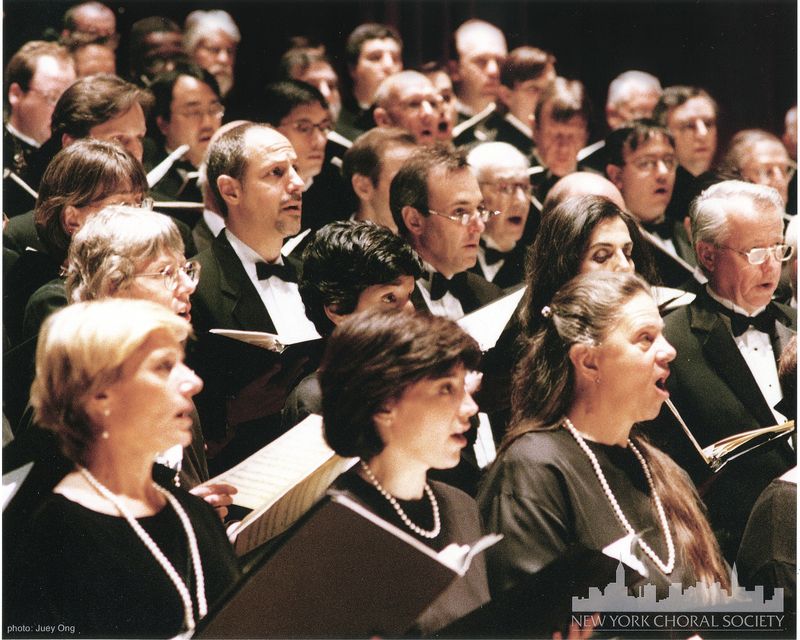
    Founded in 1958, the New York Choral Society have presented many of the masterworks in the choral genre, as well as offering eleven world premieres; and they have commissioned works by Paul
    Alan Levi, Morton Gould, Stephen Paulus, and Robert De Cormier. I love these lines from the Society’s mission statement:

    “Our passion is music.

    Our belief is that choral music lifts the human spirit. It is a language that spans borders and cultures.

    Our goal is inspiring and excellent performance.

    Our great hope is that future generations will share our passion for choral singing.”

    Dance-lovers who follow my blog will note with pleasure that the long listing of choral artists of the Society includes the name of the great ballerina Martine van Hamel. I’ll never forget a conversation I had with her one day when I was working at Tower; she was seeking some choral music on CD and explained to me that she’d been taking voice lessons and had joined the Society, pursuing a fresh aspect in her artistic career. I had to smile when I saw her name listed in the Playbill this evening, bringing back memories of that lovely encounter.

    The concert’s participating artists were:

    David Hayes, Music Director and Conductor

    Kathleen Turner, speaker

    Jennifer Forni, soprano
    Jordan Shanahan, baritone

    Chorus and orchestra of the Society

  • Oratorio Society: Britten’s WAR REQUIEM

    White_dove.23095031_std

    Monday April 22nd, 2013 – The Oratorio Society of New York presented a performance of Benjamin Britten’s WAR REQUIEM at Carnegie Hall this evening. 

    One of the greatest and most meaningful choral works ever created, the WAR REQUIEM was commissioned for the re-dedication of Coventry Cathedral in 1962; the church had been almost totally destroyed by German bombs in 1940. Britten, a life-long pacifist, drew on the poetry of Wilfred Owen
    – who had been killed in 1918 (one week before the Armistice ended the war) at the age of 25 while fighting in France
    – as well as the texts of the Latin mass for the dead in setting his
    masterpiece. Though deeply spiritual in atmosphere, Britten intended the
    WAR REQUIEM to be a secular work.

    The Oratorio Society, one of New York City’s oldest cultural treasures, traces its history back to 1873. Founded by Leopold Damrosch, the Society presented their first concert on December 3,
    1873. One year later, on Christmas night, the Society began what has become an unbroken
    tradition of annual performances of Handel’s Messiah. In 1891, the Oratorio Society participated in the opening concert of what is now Carnegie Hall.

    The chorus and musicians of the Society under Kent Tritle’s baton tonight unfurled the sonic tapestry of Britten’s creation in a performance which greatly satisfied both the ear and the soul. In the composer’s structuring of the REQUIEM, the large chorus and orchestra – supporting a soprano soloist – sing the Latin texts of the mass while a chamber orchestra (led by David Rosenmeyer) accompanies the tenor and baritone soloists whose words come from the poetry of Wilfred Owen. From high up in a side balcony, the voices of children from the choir of Saint John The Divine (directed by Malcolm Merriweather) provide an angelic sound, accompanied by a small organ.

    Britten’s score, richly textured, amazes in its rhythmic and instrumental variety. Marked by off-kilter harmonies and shifting tonalities, the music is grand and theatrical one moment and poignantly stark and personal the next. The juxtaposition of public mourning and private grief – and of the liturgical and poetic texts – give the REQUIEM its unique resonance.

    Of the three vocal soloists, soprano Emalie Savoy (currently a Met Young Artist) revealed a sizeable lyric instrument with a blooming high register and a capacity to dominate the massed choral and orchestral forces. Tenor John Matthew Myers sang with a plaintive, clear and warm timbre while baritone Jesse Blumberg gave a wonderfully expressive rendering of the texts, his voice hauntingly coloured in his long final solo.

    At the close of the piece, all the participants were warmly lauded by the audience.

    “My subject is War, and the pity of War.
    The Poetry is in the pity…
    All a poet can do today is warn.” ~ Wilfred Owen

    Now, nearly a century after the poet’s warning, mankind continues to use war as a means of settling religious and ideological differences. This evening’s concert fell on Earth Day, reminding us of the fragility of the planet on which we all live. Only by turning away from gods and politics – those great dividing forces – can we hope to find a path into a safe and meaningful future. Like the poet’s two soldiers from opposing armies who find themselves dying side by side in a ditch far from their homes as the REQUIEM draws to a close, we must learn to embrace our common humanity before it’s too late.

    The evening’s participating artists will were:

    Kent Tritle, conductor
    David Rosenmeyer, chamber orchestra conductor
    Emalie Savoy, soprano
    John Matthew Myers, tenor
    Jesse Blumberg, baritone
    Choristers of the Cathedral of St. John the Divine,
    Malcolm Merriweather, conductor
    Chorus and Orchestra of the Society 

  • Wagner in Spain

    315687_10151564040474941_234279829_n

    My beautiful soprano-friend Erika Wueschner is currently in Barcelona singing Freia in DAS RHEINGOLD at the Gran Teatre del Liceu. In this production photo Erika is with the Japanese mezzo-soprano Mihoko Fujimura, who is singing Fricka. More details here. Watch the finale of the opera here.

  • AIDA at the Teatro Colon 1968

    Arroyo10

    This 1968 performance of AIDA from the Teatro Colon, Buenos Aires, cropped up on the Opera Depot website and thought the combination of Martina Arroyo (above) and Carlo Bergonzi as Aida and Radames would be exciting to hear, since they are two of my all-time favorite Verdi singers. Both are in prodigious voice, providing phrase after phrase of wonderfully generous vocalism. My thanks to Dmitry for making me a copy.

    Martina Arroyo never made a commercial recording of AIDA, and Bergonzi’s Radames on the Decca label (with Tebaldi) was recorded in an unusual acoustic which even later tampering-with could not make really enjoyable. So it’s wonderful to have this live recording from the Colon in perfectly good sound and with both singers on impressive vocal form.

    Teatro Colon, BA

    The Teatro Colon (above) is a vast house (1,000 standees may be accommodated), and over the years has been rated high acoustically by singers and listeners alike. On this evening in 1968, the crowd surely senses that they are hearing teriffic vocalism from Arrroyo and Bergonzi and they repay the singers with generous ovations throughout the performance.

    Bruno Bartoletti is on the podium; over the years I have heard performances conducted by this man that seem ideal and others that are less inspiring. For this AIDA he sets a generally fast pace (the ballet segments are wickedly speedy – I would not want to have been dancing in this performance!) but he certainly gives his singers a lot of leeway, and they enjoy lingering on high notes and having the opportunity to sustain favorite phrases.

    There are some off-notes and a few unhappy bits from the pit musicians, and one jarring passage in the Tomb Scene where Bartoletti inexplicably rushes ahead of Bergonzi who is in the middle of some raptly poetic music-making; it takes a few bars to get things back in sync.

    Carlo-Bergonzi

    Carlo Bergonzi (above) has always been my personal king of tenors; yes, I know all his flaws and yes, he went on singing too long after he should have stopped. But in his heyday he was just so thoroughly pleasing to listen to, his marvelous turns of phrase and beautifully sustained vocalism always make me feel…happy. The beauty of hearing the Italian language wrapped in Bergonzi’s plangently expressive sound has always given me particular joy; even now, if I’m feeling blue, I’ll reach for that first Decca recital disc and soon I’m transported out of myself and basking in the music that has kept me – both spiritually and psychologically – on an even keel all these years. His singing in this AIDA is simply marvelous to experience: the unstinting generosity of both voice and style, the many small touches of sustained notes and his lovely colourings of the words in a rich emotional palette. It’s Verdi tenor singing at its best.

    Martina Arroyo is in glorious voice also, rich and even throughout the role’s vast range. If she does not employ the ravishing piano effects that some sopranos have in this music, we are amply compensated with the velvety splendour of Arroyo’s sound and her plush phrasing, as well as her dramatic awareness which never carries her to excess. In this grand performance, the great Martina rises to the high-C of ‘O patria mia’ – a note which has defeated many a soprano – with blessed assurance and sustains it with glorious ease. In the opera’s concluding Tomb Scene, she and Bergonzi trade passages of soul-pleasing Verdi vocalism, and together they sustain their final joint phrase seemingly beyond the realm of human possibility.

    Cvejic

    The Serbian mezzo-soprano Biserka Cvejic (above) is probably not on anyone’s list of top-ten mezzos; yet if she had been the Amneris in either of the last two AIDAs I heard at The Met, I would have been satisfied. It’s a crusty, Old-World sound with an ample and pleasing chest register and higher notes sometimes approached from below. Cvejic has the role well in hand and if her singing doesn’t rise to the level of the soprano and tenor, neither does she let down her side of the triangle.

    Cornell MacNeil is a powerful, dramatic Amonasro and I was surprised to find Nicola Rossi-Lemeni listed as Ramfis: this basso – a famous stage-creature of the 1950s – is surely nearing the end of his singing career by 1968. If not vocally prime, he surprises with some very robust moments (‘Immenso Ptah!’) and makes an authoritative impression.

  • At Home With Wagner II

    Wagner-02

    More Wagnerian treats have come my way, thanks to Opera Depot and to Dmitry’s generosity in making me copies. I have a ‘new’ (to me) TANNHAUSER, and an Act I of WALKURE, and a complete GOTTERDAMMERUNG to enjoy on these long Winter afternoons.
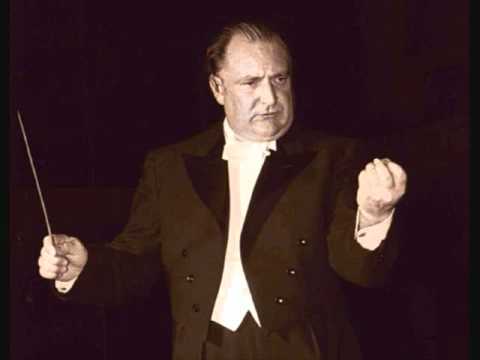
    0

    I played the WALKURE Act I first; it comes (as does the GOTTERDAMMERUNG) from a 1959 Covent Garden RING Cycle conducted by Franz Konwitschny (above). This Cycle does not seem to be readily available in the USA, but it was on special offer at Opera Depot so Dmitry snatched it up since one can never have too many RING Cycles.

    Konwitschny opens with a superbly-paced prelude; it’s slightly on the fast side but gives an uncanny feeling of relentless pursuit: Siegmund is the prey and little does he know that he’ll find shelter in the very home of his pursuer. Ramon Vinay, who sang Siegmund in the 1953 Keilberth RING from Bayreuth, sounds more baritonal here – six years later – and tends he to be a bit more declamatory in his approach. Amy Shuard, who was to be Brunnhilde for Solti at Covent Garden in 1965 seems to me better suited to Sieglinde. She has a nice feeling of womanly lyricism in her voice and is especially moving in the passage where she asks Siegmud to stay with her and await Hunding’s return. Later, Shuard scores again with a wonderfully pensive quality at “O still, lass mich der Stimme lauschen!”. She has a few passing moments of flatness in the middle register, and Vinay is taxed by his final “…Walsungen Blut!” But overall they are quite exciting, and Kurt Boehme is a strong. dark-hued Hunding. Some random off-notes from the orchestra; the sound quality is quite good overall.

    ~~~~~~~~~~~~~~~~~~~~~~~~~~~~~~~~~~~~~~~~~~~~~~~~~~~~~~~~~~~~~~~~~~~~~~~~~~~~~~~~~~~~~~~~~~~~

    Taking a break from the RING, I moved to the 1965 Bayreuth TANNHAUSER. Andre Cluytens gives a well-paced reading of the score, and the sound quality of the recording is more than acceptable. Wolfgang Windgassen, then 50-years-old, takes on the arduous title-role; as he begins to sing there is a sense of strain, but he somehow manages to get the voice in gear and though there are moments when he seems tested, his knowledge of the role and of his instrument manage to sustain him through the first two acts. The strenuous demands of the Rome Narrative sometimes cause the tenor to sound as if he’s at the outer edge of his vocal possibilities, and although he steers thru the music without disaster it’s not pleasant to listen to. The fact that Tannhauser is exhausted and on the brink of madness can serve to cover some of the moments of vocal peril, but in the end it’s not something to listen to more than once. 

    Leonie Rysanek sings with her usual intensity and command of the upper range, and she uses a broad dynamic palette quite impressively. There are moments when she sounds unstable, notably in the Act III prayer which is taken quite slowly. In 1964, the soprano had had something of a vocal crisis which affected her performances in OTELLO and DON CARLO at The Met. At the end of the 1964-65 season she was gone from the Met for nearly a year (including the very Summer of this Bayreuth TANNHAUSER) and when she returned to New York City she seems to have given up nearly all of her Italian roles (aside from Tosca – though she later took on Medea, Gioconda and Santuzza, but not at The Met). She continued to sing Elisabeth in TANNHAUSER for twenty more years, including a stunning performance in San Francisco in 1973, and an impressive Met broadcast in 1982. This Bayreuth ’65 Elisabeth is perhaps not her finest rendering of the role, but it’s pretty exciting nonetheless. 

    Ludmila Dvorakova’s huge, over-ripe sound amply fills the role of Venus though her singing will not be to all tastes, and basso Gerd Neinstedt makes a strong impression as Biterolf in the scene of the song contest.
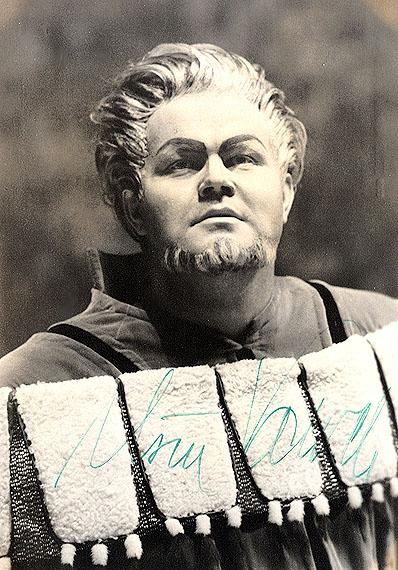
    Talvela4

    What makes the performance worthwhile are the performances of Martti Talvela (above) as the Landgraf Hermann and Hermann Prey as Wolfram. Talvela is on spectacular form, his commanding voice – marked by just a trace of the vocal ‘whine’ that was something of trademark – is thrilling to hear he welcomes the guests to the Watrburg and sets forth the framework of the contest. It was such a pleasure to hear this voice again.

    H prey

    Hermann Prey (above) as the steadfast Wolfram, who gallantly sets aside his own feelings for Elisabeth in view of her clear preference for Tannhauser, sings with lovely lyricism and expressiveness; a couple of the lowest notes of the Evening Star are a bit of a downward stretch for him, but for tenderness and poetic resonance his is a peerless incarnation of the role. Both Talvela and Prey have voices instantly recognizable, and their contributions to this performance are superb.

    ~~~~~~~~~~~~~~~~~~~~~~~~~~~~~~~~~~~~~~~~~~~~~~~~~~~~~~~~~~~~~~~~~~~~~~~~~~~~~~~~~~~~~~~~~~~~

    Thomas-Marjorie-03[771]

    Back to the ’59 Konwitschny Covent Garden RING Cycle for GOTTERDAMMERUNG in which the first voice we hear is that of Marjorie Thomas (above) as the First Norn. I had not been aware of this singer previously, despite her substantial career, and she makes a wonderful impression in thei opening scene of the RING‘s final opera – a scene I greatly enjoy both for its atmosphere and the vocal opportunities afforded the three singers. Her sister-Norns are Monica Sinclair – a mezzo who later joined Joan Sutherland’s touring Company and whose prodigious breath control makes her an unusually interesting Bradamante on the Sutherland recording of ALCINA – and soprano Amy Shaurd, who doubles as Gutrune here and later went on to sing the Brunnhildes.

    Wagner legends Astrid Varnay and Wokfgand Windgassen pour their hearts out in the prologue duet. Varnay is a soprano I sometimes find oddly matronly and overblown but here she is in very fine voice, moving from strength to strength as the opera progresses. I hear some similarities between her voice and that of Regina Resnik; does anyone else?  Windgassen is unfortunately not at his best in this performance. His voice is unsettled, his phrasing wayward. In this repertoire one has to allow for off-days; it”s just too bad this was a performance being preserved for posterity. Hermann Uhde (Gunter) and Gottlob Frick (Hagen) are simply magnificent, and Shuard is an ample-toned Gutrune, sometimes a shade off pitch.

    Stravinsky_und_boese1

    Ursula Boese (above, with composer Igor Stravinsky) is a rich-toned Waltraute, sometimes putting me in mind of Rita Gorr. Ms. Boese’s voice sometimes takes a moment to tonalize on a given note, giving a slight feeling of pitchiness, but overall she is impressive in her long scene with Varnay.

    Kraus-Otakar-01[Alberich-099]

    As Act II begins, the Czech-born baritone Otakar Kraus (above, great photo as Alberich) sings the role of the dwarf who appears to his son Hagen in a dream, singing with mysterious, haunted tone. This sets the stage for one of the most thrilling readings of the cataclysmic events of this singular Wagnerian act that I have heard. If only Mr. Windgassen had been on peak form on this day, we’d have been left with a veritable masterpiece. The tenor does sing powefully and doesn’t shrink for the demands, but moments of strain and rhythmical variances detract a bit from the overall sweep of the act.
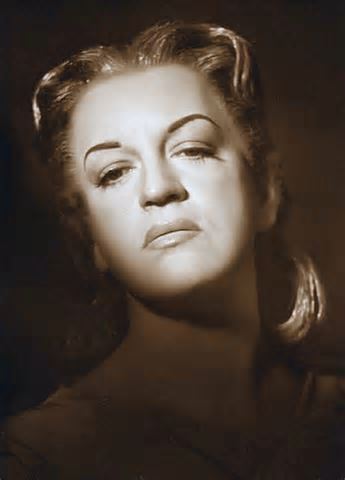
    Th

    Astrid Varnay (above) is simply thrilling in this demanding music; her voice – not so much the timbre but the way she sings – continues to remind me a bit of Resnik. The top is earth-shattering and her expressively dramatic vocal thunderbolts are astounding in their bright, steady power. Along with her 1953 ELEKTRA this is my favorite Varnay recording I’ve heard to date. Gottob Frick is imperterbably sinister and grand as Hagen, and if the notion that Gunther’s undoing could be described as heartbreaking, you hear it magnificently here in Hermann Uhde’s uncanny vocal portrayal.

    I’ll confess to skipping over some of the final act, since Windgassen is so out-of-sorts. The Rhinemaidens – led by the girlish-sounding Joan Carlyle singing along with star-in-the-making Josephine Veasey and Marjorie Thomas, who fills out her evening by adding the third Rhinemaiden to her First Norn.

    Varnay’s Immolation Scene begins triumphantly. The diva is in huge and secure voice, and her characteristic tendency to sometimes approach a high note from below doesn’t bother me, since she always gets where she’s going eventually. In her deeply felt and lyrical singing of “Wie Sonne lauter strahlt mir sein Licht…” Varnay wins my heart entirely. A bit later though there is a jarring parting of ways between singer and orchestra: Varnay seems absolutely in the right to my ears (not having a score to hand), but a few measures of musical mayhem ensue before things are set to rights. Thereafter traces of fatigue creep into the soprano’s vocalism, but by this time she’s delivered so much marvelous singing that we can’t help but be swept away in admration for her overall performance.

  • Score Desk for DON CARLO

    L1070620

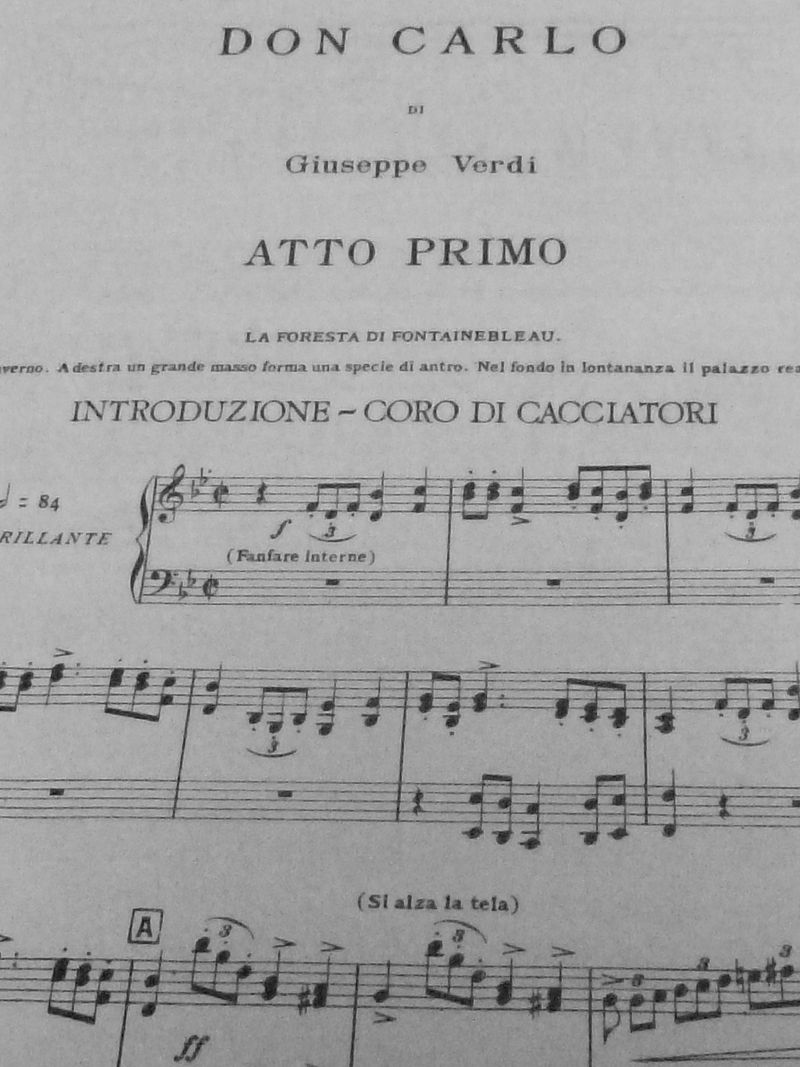
    Monday February 25th, 2013 – A powerful line-up of male principal singers drew me to this performance of Verdi’s DON CARLO at The Met. The women in the cast seemed less interesting by far; having seen the production before – and feeling no need to see it again – I took a score desk and settled in.

    DON CARLO was for years my favorite opera, but then the German repertory began to edge out the Italian in my heart and soul. Now ARIADNE AUF NAXOS, ELEKTRA and DIE WALKURE are in a sort of three-way tie for the top spot. But I still love DON CARLO and always go when it is performed. I’m not crazy about the Fontainebleau scene, and I never watch the Auto da Fe since the sight of people burning other people alive for the greater glory of some fiendish imagined god (or rather, to maintain the power of the men who created him and sustained the myth thru blood and force over the centuries) is revolting.

    Negative reviews of Loren Maazel’s conducting and of Barbara Frittoli’s singing as Elisabetta had me thinking in advance that this might be a partial CARLO for me. Added to the prospect of two Gelb-intermissions, and the fact that I was already feeling tired when I got there, it seemed that a very long evening was loooming ahead. But I found myself drawn in by the opera itself, and I always enjoy the experience of being in the House with the score in front of me. I stayed to the end and on the whole felt it was a very good evening, particularly thanks to the superb performances of Dmitry Hvorostovsky and Ferruccio Furlanetto as Posa and Philip II respectively.

    To be sure, some of Maestro Maazel’s pacing was slow. To me his conducting registered a measured sense of grandeur and dignity, and of events unfolding with a sort of epic inevitability. Often considered Verdi’s most purple opera – the colour of royalty evoked in sound – I felt Maazel’s concept worked well: there were lively passages along the way, and his Auto da Fe scene was amply majestic and well-structured. For the most part he kept his singers at the forefront; in a few places they needed all their reserves of breath to sustain the line thru the slow tempi. But, following the score, I thought the conductor had things well in hand.

    Maazel experienced some boos at his solo bow; I wonder if it was pre-meditated since it seemed to be coming from one area of the Family Circle. Recently while my friend Dmitry and I were having a pre-PARSIFAL supper, I could overhear a woman in the next booth telling her companion that she was planning to boo conductor Daniele Gatti. If she did, it got lost in the cheers. Maazel’s conducting was quirky but worked well to my ears; the only potentially boo-able performance was that of Ms. Frittoli but the audience tolerated her with polite applause.

    I find the Fontainebleau scene a needless introduction to the evening. Verdi sanctioned its elimination for performances in Italy following the premiere in Paris where five-act operas were de rigeur. Some people say, “Oh, it gives the opera context!” Undoubtedly. But we lived without it for years, savoring the gloriouly dark horn theme which opens the four-act version and immeditely sets us in the mood for this opera about royalty and religion. Tonight, with Ms. Frittoli sounding very wary, the scene seemed even more expendable than ever. It makes for such a long night, even under the best of circumstances.

    The soprano’s perilous performance serves as a reminder that a vocal career is short enough without quickening its demise by singing roles that are too heavy. Ms. Frittoli will be remembered in New York City for her exquisite singing as Desdemona in 1999; she was also a particularly fine Mimi, and as recently as 2005 she managed an impressive Fiordiligi by manipulating the dynamics to control the effects of a widening vibrato. But singing things like the Verdi REQUIEM and Donna Anna have taken their toll on her lyric instrument. Tonight the vibrato was painfully evident even at the piano level. She managed to avert disasters, though a high B-flat in the quartet was scary and she could not sustain the floated B-natural in the final duet, on “…il sospirato ben”, one of the role’s most affecting moments. Overall it was sad to experience this voice in its current state. The news that she’ll be singing Tosca later this year in Europe does not bode well.

    These performances of Elisabetta were originallly slated for Sondra Radvanovsky; when Sondra moved to BALLO instead, the Met turned to Ms. Frittoli. They should have cast about for a more appropriate alternative. When I think of the wonderful Elisabettas I have experienced – Caballe, Kabaivanska, Freni, and  Radvanovsky as well as Marina Mescheriakova’s flawless Met debut in the role – Ms. Frittoli’s pales into a haze.

    Anna Smirnova’s voice does not always fall pleasantly on the ear, being rather metallic. But she is a skilled singer who managed the filagree of the Veil Song very well and pulled out all the stops for an exciting “O don fatale” with brazenly sustained high notes. 

    Don Carlo is a bit heavy for Ramon Vargas but this very likeable tenor sang quite beautifully through most of the evening. His voice is clear and plaintive, his singing stylish and persuasive. Only near the end of the opera did a few signs of tiredness manifest themselves. His delicious singing of “Qual voce a me del ciel scende a parlar d’amore?” in the love duet was a high point of the evening.

    Eric Halvarson’s Inquisitor was powerully sung and stood up convincingy against the overwhelming Philip II of Ferruccio Furlanetto. The two bassos had a field day, trading thunderbolts in their great confrontation. Basso Miklos Sebestyen was a very impressive Friar (the Ghost of Charles V), drawing a round of applause fo his sustained low F-sharp in the St. Juste scene of Act I. Jennifer Holloway was a very fine Tebaldo but Lori Guilbeau, who has a pretty sound, seemed not to be well-coordinated with the pit as she sang her offstage lines as the Celestial Voice.

    The towering magnificence of Dmitry Hvorostovsky‘s Posa and Ferruccio Furlanetto‘s Philip II put the performance on a level with the greatest Verdi experiences of my opera-going years. Dima’s singing was velvety and suave, his breath-control mind-boggling, his singing affecting, elegant and passionate by turns. His high notes were finely managed and marvelously sustained.

    Mr. Furlanetto’s glorious singing is a throwback to the days when great Italian voices in every category rang thru the opera houses of the world.  Now nearing his fortieth year of delivering generous, glorious vocalism, the basso’s dark and brooding tones fill The Met with a special sonic thrill. His singing, so rich and deeply-felt, can thunder forth at one moment and then draw us in with hushed, anguished introspection the next. From first note to last, Furlanetto’s Philip II was simply stunning. His hauntingly tender musing on the phrase “No…she never loved me…her heart was never mine…” just before the epic climax of his great monolog moved me to tears.

    There were huge eruptions of applause and cheers after both the baritone and the basso finished their big arias; but applause nowadays tends to dwindle rather quickly and the days of show-stopping aria ovations are largely a thing of the past. 

    There were lots of empty seats which surprised me: with this starry assembly of male singers and the season’s biggest name from the conducting roster involved, I expected a fuller house.

    Dima2

    Dmitri Hvorostovsky

    Furlanetto

    Ferruccio Furlanetto

    Metropolitan Opera House
    February 25, 2013

    DON CARLO
    Giuseppe Verdi

    Don Carlo...............Ramón Vargas
    Elizabeth of Valois.....Barbara Frittoli
    Rodrigo.................Dmitri Hvorostovsky
    Princess Eboli..........Anna Smirnova
    Philip II...............Ferruccio Furlanetto
    Grand Inquisitor........Eric Halfvarson
    Priest Inquisitor.......Maxime de Toledo
    Celestial Voice.........Lori Guilbeau
    Friar...................Miklós Sebestyén
    Tebaldo................ Jennifer Holloway
    Count of Lerma..........Eduardo Valdes
    Countess of Aremberg....Anna Dyas
    Flemish Deputy..........Alexey Lavrov
    Flemish Deputy..........Paul Corona
    Flemish Deputy..........Eric Jordan
    Flemish Deputy..........Evan Hughes
    Flemish Deputy..........Joshua Benaim
    Flemish Deputy......... David Crawford

    Conductor...............Lorin Maazel