Blog

  • Balanchine Classics @ NYC Ballet

    4852307_orig

    Above: Ashley Bouder and Andrew Veyette in DONIZETTI VARIATIONS; photo by Paul Kolnik

    Wednesday January 28th, 2015 – So pleasing to savour another all-Balanchine programme at New York City Ballet. Tonight’s line-up featured some prominent debuts, and there was excellent work from the soloists and corps. The audience, perhaps affected by the winter chill, didn’t seem to display the enthusiasm that the performance merited, and it wasn’t til the end of the evening that they finally roused themselves from their lethargy to give Teresa Reichlen and Adrian Danchig-Waring a well-deserved round of cheers for their joint debut in CHACONNE.

    DONIZETTI VARIATIONS is always a joy to experience, especially when it is danced with such flair and fabulousness as it was tonight by Ashley Bouder and Andrew Veyette. Ashley was beyond awesome and amazing (those two over-used words, but here thoroughly apt). Her dancing has reached a pinnacle of technique, artistry, and grace; but since she seems to take herself to ever-higher levels from season to season, it won’t surprise me if she continues to ascend. Tonight she was thrilling in her fluent rendering of the steps, her innate sense of stagecraft, and her sheer joy at being able to dance like this.

    Few danseurs could hold their own onstage with such a paragon, but Andrew Veyette managed to do just that, filling the space with his virtuoso feats yet also displaying a cordial lyricism in his partnering as well as a wry bit of humour when inter-acting with the corps. Team Bouder-Veyette simply danced up a storm.

    Outstanding corps dancing in DONIZETTI tonight: Mr. B gives them a lot to do and they went at it with élan. Caught without my opera glasses, I was left to admire their dancing from a distance: Mllles. Adams, Dronova, Gerrity, Johnson, Kretzschmar, and Segin along with those three genial virtuosos: Alberda, Applebaum, and Schumacher.

    LA VALSE looks gorgeous with its recently-freshened costumes. It opens with a delectable trio of “Fates” – Marika Anderson, Gretchen Smith, and Lydia Wellington; they immediately drew us into the ballet’s atmosphere with their glamorous mystique. 

    Three pairs of soloists then engage us with some marvelous dancing: Lauren King and Antonio Carmena are suave and lyrical whilst the vibrant partnership of Georgina Pazcoguin and Sean Suozzi generated a very special electricity. Ashley Laracey (surely a candidate for the leading role in this ballet) was so lovely in her solo, and she and Zachary Catazaro were another marvelous match-up. Zachary, with the poetic appearance of a 19th century romance-novel heart-throb, really commanded the stage in his extended scene with Marika, Gretchen, and Lydia.

    Sara Mearns brought a voluptuous quality to the role of the doomed girl; any ballerina taking on this iconic part must contend with memories of Rachel Rutherford and Janie Taylor, each of whom owned it during their NYCB careers. Sara, ever-lovely to watch, already draws a convincing portrait of the girl’s mixture of vanity, vulnerability, and palpitating curiosity. More nuances will doubtless develop as she goes deeper into the role (this was her debut). Tyler Angle was pale and distraught as her lover – what a courtly presence he can create – and Justin Peck, livid of visage, portrayed Death in a tour de force performance of frightening stillness and surety of domination.

    In CHACONNE we could welcome the debuts of Teresa Reichlen and Adrian Danchig-Waring, those gorgeous creatures. As a counter-poise to SERENADE, the ballerina in CHACONNE first appears with her hair down, a Grecian goddess wandering through Elysium; later she reappears in full ballerina mode: hair up, and wearing a bejeweled wisp of a frock. Tess was radiant throughout: so expressive, and with her revelatory extension. Adrian looks like Apollo re-incarnated.

    The two dancers experienced a minor partnering glitch late in their first duet, a spot where others have glitched before. They covered it beautifully, but it left me wondering what is happening here choreographically that causes the problem (my fourth time to see it happen, in exactly that same spot) and whether it might be altered slightly to assure a smooth transition.

    Thereafter Tess and Adrian were truly splendid: wonderful mutual rapport, with their dancing elegant and so musically inspired. They built their duet – where they exchange solo passages while the other observes – with dazzling assurance and together they shook the audience out of its collective winter dream into a well-deserved round of cheers.

    In the pas de trois, Aaron Sanz re-affirmed his nobility and long-limbed grace, dancing with the queenly Gwyneth Muller and – a rising favorite of mine – Claire Kretzschmar: all three so appealing to behold. Lauren King and Antonio Carmena sustained the excellent impression they’d made in LA VALSE with a polished performance of their CHACONNE pas de deux which features fast-paced, rather tricky partnering elements. In the pas de cinq, Indiana Woodward brought a light freshness to her supple dancing. And in the finale, some expert demi-soliste dancing from Ashley Hod, Unity Phelan, Devin Aberda, and David Prottas. 

    So nice to run into Jessica (Sand) and Casey Blonde, and Carol Weil tonight!

    DONIZETTI VARIATIONS: Bouder, Veyette

    LA VALSE: *Mearns, *T. Angle, *J.Peck, Kayali, King, Carmena, Pazcoguin, Suozzi, Laracey, Catazaro, Smith, Wellington, Anderson

    CHACONNE: *Reichlen, *Danchig-Waring, King, Carmena, Muller, Kretzschmar, Sanz,*Woodward, Hod, Phelan, Alberda, Prottas

  • Gallery: Intermezzo Dance Company

    _G1A1695

    Above: Amber Neff, Abi Stafford (NYC Ballet principal), and Shoshana Rosenfield in Craig Salstein’s THE MYTH OF SISYPHUS; photo by Sarah Sterner

    On January 17th and 18th, 2015, Intermezzo Dance Company, founded and directed by ABT soloist Craig Salstein, offered a programme of works by five choreographers at Columbia University’s Miller Theatre. The theme of the evening, From Myth to Philosophy, was echoed in a gallery of artwork by four New York City-based artists in the theatre lobby.
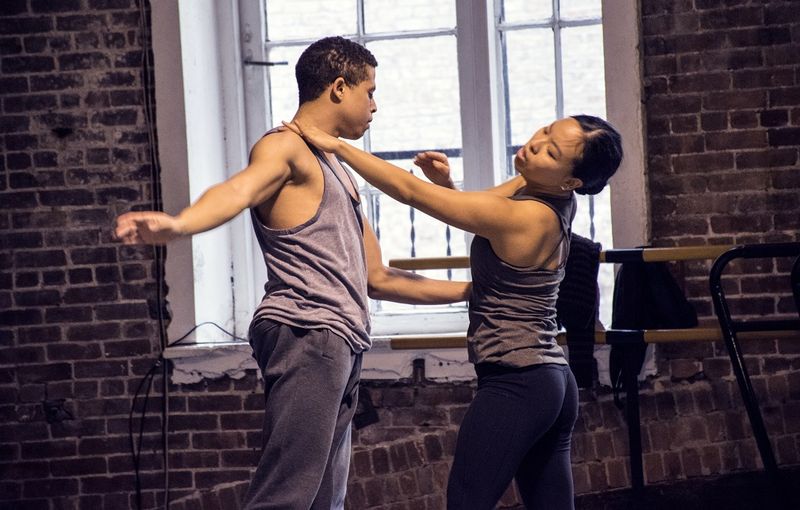
    Since I was involved in the planning stages of the programme, I feel I cannot write a review per se, beyond saying that the five ballets were well-contrasted in style and music, and that there was some very fine dancing to be seen.

    Photographer Sarah Sterner has provided some images from the Myth to Philosophy programme, and I am sharing them here as a representation of the works performed and the dancers who took part:

    _G1A1565

    Mauro Villanueva in Craig Salstein’s THE MYTH OF SISYPHUS

    _G1A1640

    Amber Neff in Craig Salstein’s THE MYTH OF SISYPHUS

    _G1A1376

    ABT’s Nicole Graniero with the Intermezzo ensemble in Gemma Bond’s MYTHOLOGY

    _G1A1343

    Tanner Schwartz in Gemma Bond’s MYTHOLOGY

    _G1A1800

    Rina Barrantes, Alfredo Solivan, and Temple Kemezis in Cherylyn Lavagnino’s HERA’S WRATH

    _G1A1850

    Temple Kemezis and Rina Barrantes in Cherylyn Lavagnino’s HERA’S WRATH

    _G1A1953

    Kaitlyn Gilliland in Adam Hendrickson’s BLACK IS THE COLOUR OF MY TRUE LOVE’S HAIR 

    _G1A1147

    Kaitlyn Gilliland in Adam Hendrickson’s BLACK IS THE COLOUR OF MY TRUE LOVE’S HAIR

    _G1A2021

    Nicole Graniero (ABT) in Ja’ Malik’s JOURNEY TO PANDORA

    _G1A2102

    Oliver Swan-Jackson in Ja’ Malik’s JOURNEY TO PANDORA

    _G1A2300

    Rina Barrantes, Nancy Richer, and Giselle Alvarez in Ja’ Malik’s JOURNEY TO PANDORA 

    _G1A0781

    Nicole Graniero in Ja’ Malik’s JOURNEY TO PANDORA

    All photos by Sarah Sterner.

  • Winter Heavens

    422971_2844873634988_1570027611_n

    Winter Heavens

     gif
    George Meredith (1888)
     
    “Sharp is the night, but stars with frost alive
    Leap off the rim of earth across the dome.
    It is a night to make the heavens our home
    More than the nest whereto apace we strive.
    Lengths down our road each fir-tree seems a hive,
    In swarms outrushing from the golden comb.
    They waken waves of thoughts that burst to foam:
    The living throb in me, the dead revive.
    Yon mantle clothes us: there, past mortal breath,
    Life glistens on the river of the death.
    It folds us, flesh and dust; and have we knelt,
    Or never knelt, or eyed as kine the springs
    Of radiance, the radiance enrings:
    And this is the soul’s haven to have felt.”

  • Afternoon Salon @ Lydia Johnson Dance

    LJD37

    Above: Lydia Johnson Dance‘s Brynt Beitman, Laura DiOrio, Blake Hennessy-York, and Sarah Pon; photo by Dmitry Beryozkin

    Sunday January 25th, 2015 – Lydia Johnson Dance offering another event in their Salon Series this afternoon at the Gelsey Kirkland studios; arriving guests got to watch part of a Company class led by the Australian dancer/actor Reed Luplau; excerpts from Lydia Johnson’s danceworks (including a work-in-progress) were performed by the Company, followed by a discussion of the influence of classical ballet on the performing of contemporary dance.

    LJD02

    Reed Luplau (above) performed with Lydia Johnson Dance in 2012, dancing in Lydia’s SUMMER HOUSE and CHANGE OF HEART, and he continues to work with LJD in a teaching role. In 2013, Reed had a principal role in the award-winning film FIVE DANCES. He is currently in rehearsal to reprise the role of Bosie (which he created) in Theodore Morrison’s opera OSCAR with Opera Philadelphia

    Images from Reed’s Company class: 

    LJD006

    LJD009

    Above: Chazz McBride and Oliver Swan-Jackson take a flying leap; Oliver has just signed on with Lydia Johnson Dance 

    LJD004

    Above: appearing for the first time with Lydia Johnson Dance, Katie Keith Dettling and Grant Dettling have had only a couple of LJD rehearsals to date but they very kindly agreed to be part of today’s Salon presentation

    LJD01

    Above: Reed Luplau

    The first of the afternoon’s danced excerpts were then presented: from WHAT COUNTS, set to jazz-based music by The Bad Plus. Here are some moments from this work, which is set for five dancers:

    LJD13-2

    Above: Girl’s trio – Sarah Pon, Laura DiOrio, Katie Lohiya

    LJD13-1

    LJD07

    Lift: Chazz Mcbride, Sarah Pon, Blake Hennessy-York

    LJD09

    All that jazz…Katie…

    LJD12

    …Chazz…

    LJD11

    …Sarah…

    LJD10

    …Laura.

    LJD15

    Central to WHAT COUNTS is a pas de deux danced by Blake Hennessy-York and Sarah Pon (above).

    LJD16

    Blake and Sarah were married in September 2013; there’s a gorgeous portfolio of their wedding photos – some of which I’d never see before! – here.

    BARRETTS MILL ROAD: A REMEMBRANCE is Lydia’s lyrically nostalgic 2013 dancework set to piano works by Wolfgang Amadeus Mozart. Katie Keith Dettling and Grant Dettling – another married couple! – performed an excerpt from this work today, having only just begun working on it a few days earlier. They showed the serene confidence of beautifully-trained dancers, accustomed to dancing together:

    LJD19

    LJD23

    LJD25

    The afternoon’s final dance offering was of excerpts from a new work-in-progress which uses music by  Mark Mellits and Osvaldo Golijov. Calling fora  large ensemble, the piece features a lot of partnered sequences. Here are some images from this new creation:

    LJD27

    Brynt Beitman, Laura DiOrio, Blake Hennessy-York, Sarah Pon, Chazz Mcbride, Min Kim

    LJD28

    Chazz Mcbride, Min Kim

    LJD32

    Brynt Beitman, Blake Hennessy-York

    LJD35-1

    Chazz and Min

    LJD35-2

    Chazz and Min

    LJD35-3

    Chazz and Min

    LJD36

    Brynt, Laura, Blake, Sara

    LJD38

    Laura, Brynt, Sarah, Blake

    LJD39

    Sarah and Blake

    LJD46

    Above: At the end of the presentation, the dancers posed for a photo with Lydia Johnson Dance founding Board member Rayna Pomper who, with her husband Marc, held the first party in support of LJD 15 years ago. Left to right: Min Kim, Chazz Mcbride, Laura DiOrio, Katie Keith Dettling, Grant Dettling, Ms. Pomper, Oliver Swan-Jackson, Katie Lohiya, Blake Hennessy-York, Sarah Pon, Brynt Beitman, and Reed Luplau. 

    All photography by Dmitry Beryozkin.

    The works performed today will be seen on February 28th, 2015, when Lydia Johnson Dance appear at the South Orange Performing Arts Center in New Jersey. Details here.  

  • Vengerov/Long Yu @ The NY Philharmonic

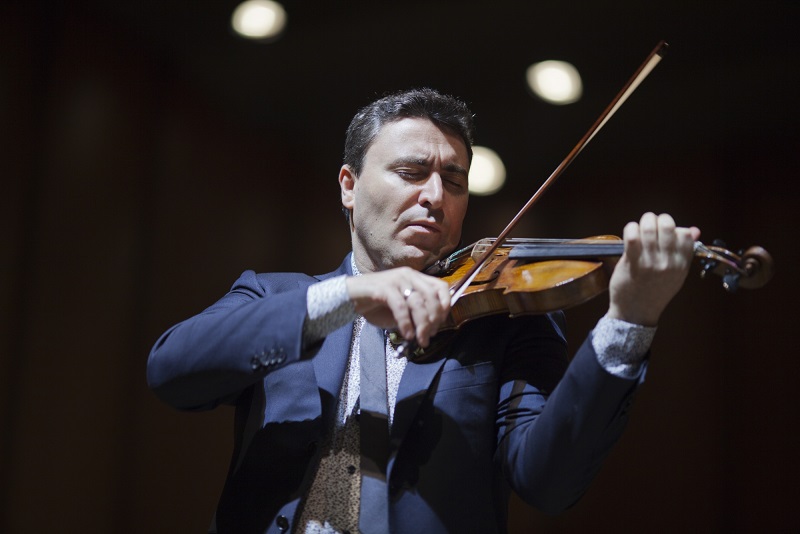
    Vengerov-5

    Above: violinist Maxim Vengerov

    Friday January 23rd, 2015 – A “Russian Night” at The New York Philharmomic, with Maxim Vengerov as soloist for the Tchaikovsky violin concerto, followed by the Shostakovich 5th symphony. Long Yu was on the podium for what proved to be one of the outstanding concerts in an already-outstanding NY Phil season.

    The Tchaikovsky violin concerto makes extreme demands on the soloist. Tchaikovsky wrote it for (and originally dedicated it to) Leopold Auer, who declared it unplayable; though eventually Auer mastered it, the premiere went to Adolf Brodsky. Since then, it has become a repertory staple, in part because players want to show their mastery of it and in part because it is such a melodically entrancing piece.

    Of the concerto’s 1881 premiere in Vienna, the critic Eduard Hanslick wrote that “…the violin was not played but beaten black and blue”. Mr. Vengerov’s playing was not violent, but in the intense passages where the notes fly off the strings at the speed of light one could imagine how the piece must have both astounded and baffled both musicians and audiences as the concerto began making its way into the international repertoire.

    Vengerov, in the violin’s first statements, showed an Old World warmth of timbre and a seductive sense of legato, while the orchestra brought a rich density of sound to their familar themes. As the technical fireworks loom up, the violinist dazzled with his accuracy and speed; in the cadenza there were a couple of wiry notes at the top of the register but these were swept aside by a masterful, uncannily sustained trill. Sailing forward, Vengerov continued to move us with his poignant expressiveness in the lyrical passages whilst evoking our smiling admiration for his brilliant dexterity in the blazes of fiorature.  As he finished in a blaze of glory, the audience erupted in shouts of rejoicing and a full standing ovation ensued. After bowing repeatedly, Vengerov gave us an encore: a Bach adagio that showed his heartfelt artistry to perfection.

    Longyu

    Following the interval, Long Yu (above) led a grand and deeply satisfying of the Shostakovich 5th. This symphony marked the composer’s efforts to mollify the Soviet government following Joseph Stalin’s scathing denunciation his opera Lady Macbeth of Mtsensk District in 1936. Overnight Shostakovich had  become a persona non grata. He knew that his next symphony, the 5th, would be crucial if he was to continue his career. Although the 5th did indeed win a resounding success and salvage his reputation with the Soviet, he continued to fall in and out of favor with the government for years to come.

    This is a symphony overflowing with marvelous thematic material. Conductor Long Yu painted a magificent sound canvas, drawing all the rich and varied voices of this incredible orchestra into a cohesive and beautifully-shaped whole. Shostakovich’s orchestration is highly imaginative and constantly allures the ear with such vivid interjections as piano, harps, and xylophone. As the vast array of string players sail thru some really marvelous passages, whether plucked (in the witty Scherzo) or richly bowed, the composer provides the horns and trumpets with triumphal opportunities – resoundingly seized tonight – and there are splendid gems for solo winds: flute (Robert Langevin), clarinet (Anthony McGill), Liang Wang (oboe) and Kim Laskowski (bassoon). The outstanding playing of our acting concertmaster Sheryl Staples was rightly recognized by Long Yu as he presented her in a solo bow, greeted with ‘bravas‘ from the crowd. Everyone in the hall had swept to their feet after the final chord echoed, hailing the orchestra, the conductor, and the resounding genius of Shostakovich.

    A splendid night of music-making then, with the promise of much more to come in this Philharmonic season.

  • Tawny Chapman Residency @ CONTINUUM

    L1530798

    Above: Tawny Chapman with CONTINUUM‘s Donna Salgado, Vanessa Salgado, Courtney Sauls, Laura DiOrio, and Dorrie Garland 

    Wednesday January 21st, 2015 – Backhausdance, a California-based company, performed at Joyce SoHo (boy, do I miss that place!) in 2010. I liked their programme a lot, and so I was glad today to have a chance to meet Tawny Chapman from Backhausdance while she’s in NYC as artist-in-residence at Donna Salgado’s CONTINUUM Contemporary Ballet.

    “It’s not what you look at that matters, it’s what you see.” – Henry David Thoreau. That quote was a springboard to what Tawny and the CONTINUUM dancers were working on, constructing signature phrases that evolved into dance.

    L1530821

    Dorrie Garland and Courtney Sauls

    L1530747

    Vanessa Salgado

    L1530908

    Laura DiOrio

    L1530724

    Courtney Sauls

    L1530634

    The group

    Dorrie and Courtney worked together on a duet created to be danced in a very limited space. Some photos from this duet may be found in this Facebook album.

    Backhausdance will be performing at the Schimmel Center in New York City on February 27th and 28th, 2015. Details here. Very much worth seeing! 

  • NYCB: Opening Night|Winter Season 2015

    Balanchine-Stravinsky-1965

    Above: George Balanchine and Igor Stravinsky

    Update: Happy Birthday Mr. B ~ January 22nd!

    Tuesday January 20th, 2015 – An all-Balanchine evening to open the New York City Ballet‘s Winter 2015 season. In the days leading up to the performance there were several changes to the originally-announced casting, and it all turned out very well. Clothilde Otranto was on the podium to bring us the three contrasting scores, and the spirit of Balanchine hovered overall. 

    SERENADE received a performance aglow with lyricism; having recently heard the score played at Carnegie Hall, I was again thinking how Balanchine’s choreography is so intrinsically linked to the music: when you hear it played anywhere you immediately see the dance.

    Sterling Hyltin graced the enchanting melodies with her unique mixture of sophistication and impetousity; I wonder what perfume Mr. B would have chosen for her? There was a wonderful chemistry between Sterling and Robert Fairchild, especially in the passage where he pursues her around the stage: she draws him onward, elusive but always looking back to gently reassure him. This was just one of many such nuanced moments in their partnership tonight. As the ballet seems to take a darker turn, Sterling’s vulnerability came into play…so movingly. During the intermission, we sought superlatives to describe this ballerina’s performance: yet none seemed to suffice, really. So we simply basked in her beautiful glow.

    Erica Pereira could celebrate her birthday a day early with a new role: the Russian Girl, to which she initially brought an airy charm; as the ballet progressed, Erica found deeper hues of feminine resonance in her role. She was especially lovely in the opening of the third movement, dancing with the her four sisterly demi-solistes (Mlles. Adams, Dronova, Mann, and Sell) and later, her lustrous black hair flowing free, Erica rushed into Ask LaCour’s waiting arms with a sense of urgent grace.

    Teresa Reichlen, after swirling thru her elegant pirouettes earlier on, drew sighs of admiration for her sustained supported arabesque in the final movement, always a heart-filling moment. She danced radiantly, whetting the appetite for her upcoming debut in CHACONNE.

    Throughout the ballet, the corps ballerinas provided so many moments to savour, both as individuals and in the ensemble passages which Mr. B wove for them with such an imaginative sense of visual poetry. I wanted to throw roses onstage for all of them.

    AGON tonight was a triumph, with a powerful performance of the central pas de deux by Maria Kowroski and Amar Ramasar. At their charismatic finest, these two dancers displayed the amazing stretch, uncanny pliability, and dynamic counter-balances that Mr. B demands of them. Their bold physicality clearly captivated the crowd who wouldn’t stop applauding until Maria and Amar had bowed three times.

    Andrew Veyette’s wonderfully strong and supple dancing and his brazen high kick put a personal stamp on his solo. The masculine vigor of his presence held our focus whenever he was onstage. Likewise, Megan LeCrone made an excellent impression with her poised, steady balance and authoritative movement. Demi-solistes get to shine in AGON and tonight we had Lauren King, Ashley Laracey, Devin Alberda, and Daniel Applebaum all on peak, opening-night form. The quirky Stravinsky score continues to prick up our ears, no matter how many times we’ve heard it.

    That bountiful ballerina, Ashley Bouder, took command of the opening movement of SYMPHONY IN C. Dancing with her emblematic generosity, technical dazzle, and a touch of playful rubato, she not only illuminated the Allegro Vivo but continued to dance with outstanding clarity and musicality in the ballet’s demanding finale. Chase Finlay kept pace with her and was a handsome-as-ever cavalier. Particular pleasure was derived from watching the two ballerina demis in this opening movement: Claire Kretzschmar and Meagan Mann. They have a lot to do and they did it brillliantly.

    Sara Mearns, dancing with velvety sumptuousness and her own particular mystique, was partnered with gallant grace by Jared Angle. They made the Adagio – one of the wonders of Balanchine’s world – as breath-taking as it should be, with a slow, gorgeous melt into the final pose. Their artistry and lyrical poise made this duet a bulwark of beauty in a darkening world. 

    Further illumination came as Lauren Lovette and Gonzalo Garcia filled the space with swirling vibrancy in the Allegro Vivace. They are a marvelous match-up: a fetching ballerina and a prince of a cavalier. Let’s see them together again soon: so many possibilities.

    Brittany Pollack opened the finale with some sparkling combinations, soon joined by the fascinating Adrian Danchig-Waring, a man who mixes classicism and dynamic strength in perfect measure. The stage then filled with all my beloved NYCB dancers and the evening swept on to its imperial conclusion.

    A word of praise for all the demi-solistes in the Bizet; their role in this ballet is so much more than decorative. So thanks to all: Meagan and Claire (already noted for their excellence), Andrew Scordato, Joshua Thew, Jenelle Manzi, Sarah Villwock, Lars Nelson, Devin Alberda, Mary Elizabeth Sell, Gretchen Smith, Peter Walker, Daniel Applebaum, Alina Dronova, Ralph Ippolito, Troy Schumacher and Kristen Segin (who had also made her mark in SERENADE)…and indeed to everyone who made this a grand night for dancing.

  • LA BOHEME @ The Met

    Jean_Francois_BORRAS_2

    Monday Jaunary 19th, 2015 – When my friend Lisette was appearing in WERTHER at The Met in 2014, she spoke well of the tenor Jean-François Borras (above) who was covering the title-role and who ended up singing one performance. Now he is back for three performances as Rodolfo in LA BOHEME and I decided to try it, especially after some soprano-shuffling brought Marina Rebeka into the line-up as Musetta.

    Overall it was a good BOHEME, though somewhat compromised by the conducting of Riccardo Frizza who had fine ideas about tempo and some nice detailing but tended to give too much volume at the climaxes: this might have worked had the principals been Tebaldi and Tucker, but not for the current pair of lovers. Mr. Borras wisely tried to resist pushing his voice; Kristine Opolais, the Mimi, was having other problems so riding the orchestra was the least of her worries. It was Ms. Rebeka who ended up giving the evening’s most stimulating performance, along wth baritone Mariusz Kwiecien, an outstanding Marcello.

    Following her well-received Met RONDINEs, Ms. Opolais became something of the darling of The Met, especially when – last season – she sang back-to-back performances of Butterfly and Mimi. I heard one of the Butterflies which was marred by some sharpness of pitch. A glance at her bio reveals that she has already sung roles like Tosca, Manon Lescaut, Shostakovich’s Lady Macbeth, Jenufa, even Aida, all of which seem to me ill-suited to what is essentially a lyric voice. Tonight much of her singing was tremulous and pallid, and the tendency to go sharp spoiled several potentially attractive passages. One hears that The Met plans new productions of MANON LESCAUT, RUSALKA, and TOSCA for her (there are even whispers of a new THAIS); unless she can somehow repair her over-spent voice, I can’t see how she’ll get thru these demanding roles in the Big House. Anyway, she seems now to have been usurped as the talk-of-the-town soprano by Sonya Yoncheva…one wonders what new productions she has been promised. Meanwhile it’s sad to hear Ms. Opolais – who might be (have been?) a lovely Pamina, Liu, and Micaela – having pushed herself into inappropriate repertory at the cost of vocal stability.

    Mr. Borras gave such an appealing performance that the conductor’s lack of consideration was particularly unfortunate. The tenor’s warm timbre falls most pleasingly on the ear, and he had so many felicitious phrases to give us, and some lovely word-colourings. After the orchestra encroached on the climax of “Che gelida manina” – which the tenor managed nonetheless – I enjoyed the way he handled Rodolfo’s little melodic gems at Cafe Momus, and his persuasive vocalism in Act III was a balm to the ear, especially the lingering bitter-sweetness of his hushed “…stagione dei fiori…”

    Latvian-soprano-Marina-Rebeka

    Ms. Rebeka (above) was the most marvelous Musetta I have encountered since Carol Neblett’s sensational debut at New York City Opera in 1969. Her voice gleaming and generous, Ms. Rebeka seized the stage in no uncertain terms, really making something out of the super-familiar Waltz which she climaxed with a smile-inducing diminuendo on the top-B. She went on to thrill the ear in the ensuing ensemble, and she was excellent in Act III.

    Mr. Kwiecien gave a first-rate performance as Marcello. In this music, he can spend his voice generously without having to be concerned with sustaining a full title-character evening, something he’s never had quite the vocal and theatrical presence for, despite his undoubted appeal. Tonight, it was ample-toned, warm singing from note one, and an extroverted, somewhat ‘mad-artist’ view of the character handsomely presented. Would that he’d had a Mimi to match him in the Act III duet. But he and Borras were both superb in their scene, in which they almost came to fisticuffs before Rodolfo finally admitted the truth about Mimi’s illness and his hopeless state of poverty. Kwiecien then melted into the caring ‘best friend’ that makes Marcello a standout portrait in these scènes de la vie de bohème.

    Alessio Arduini (Schaunard) and David Soar (Colline) gave attractive vocal performances despite the conductor’s trampling on some of their lines; they were charming during a mini-food-fight at Cafe Momus.

    Some of the staging at the Barrière d’Enfer didn’t enhance the narrative: Mimi reveals her eavesdropping presence not by an attack of coughing – such a moving device – but by stumbling down the staircase and collapsing melodramatcally at the door to the inn. Later, too many by-standers surround Marcello and Musetta as they argue, and the ever-so-moving reconciliation of Mimi and Rodolfo is marred by Musetta grabbing a passser-by and kissing him lavishly: this gets a wave of unwanted laughter during one of the opera’s most poignant moments.

    The first intermission was debilitating; these extended breaks always drain the life out of the evening, and the better the performance the more annoying they are. And seat-poaching is so unattractive, especially when it causes a disruption if there’s an unexpected seating break – as tonight between the garrett and Momus.

    But BOHEME still casts its spell, as it has for me ever since I first heard it on a Texaco broadcast 53 years ago to the day, with Lucine Amara and Barry Morell as the lovers. The Beecham recording remains my touchstone document of this heart-rending score. Tonight’s audience, quite substantial by current standards, embraced the classic Met production warmly.

    Metropolitan Opera House
    January 19th, 2015

    LA BOHÈME
    Giacomo Puccini

    Mimì....................Kristine Opolais
    Rodolfo.................Jean-François Borras
    Musetta.................Marina Rebeka
    Marcello................Mariusz Kwiecien
    Schaunard...............Alessio Arduini
    Colline.................David Soar
    Benoit..................John Del Carlo
    Alcindoro...............John Del Carlo
    Parpignol...............Daniel Clark Smith
    Sergeant................Jason Hendrix
    Officer.................Joseph Turi

    Conductor...............Riccardo Frizza

  • Trifonov Triumphs @ The NY Phil

    Daniil-Trifonov

    Above: pianist Daniil Trifonov

    Tuesday December 30th, 2014 – My final musical event of the year. Avery Fisher Hall was packed with avid music-lovers as the Spanish conductor Juanjo Mena (NY Philharmonic debut) took the podium for the opening work, Capriccio espagnol by Nikolai Rimsky-Korsakov. 

    Painted in vibrant colours and dancing in dazzling rhythms, this Capriccio is a vivid evocation of Spain. Finding inspiration in Spanish folk songs, Rimsky-Korsakov cast the piece in five continuous  movements: Alborada (“morning song”); Variazoni; again Alborada; “Scene and Gypsy Song”; and the fabulous Fandango Asturiano (a dance popular in northern Spain) which features the lilting sonic illusion of guitars being strummed to the jaunty clicking of castanets. The work features prominent passages for the solo violin, Sheryl Staples winning a round of ‘bravas‘ as the conductor led her forward a solo bow at the end. Likewise Carter Brey (cello), Robert Langevin (flute) and Anthony McGill (clarinet) were all embraced by the enthusiastic crowd. And the horns were having a fine night of it. Señor Mena’s debut was off to an auspicious start.

    Kudos to the Hall’s stagehands who re-configured the seating and parked the Steinway front-and-center in the twinkling eye.

    The appearance of the boyish Daniil Trifonov was warmly greeted; with a charismatic air of mystery, this pale young man seemed to summon up imaginings of such great pianistic wonders as Chopin and Liszt who, if we believe what is written, could cast a spell over the multitudes with their virtuosic musical wizardry and their spiritual connection to the piano itself. Mr. Trifonov was so clearly enamoured of the keyboard, caressing it with his elegantly styled hands, nearly putting his ear to the keys as if they were whispering secrets to him. Intense when in motion, he seemed to be under in the piano’s thrall, unable to resist it, like an obsessive lover. If all of this sounds high-flown, it’s thoroughly true – though of course it would all be for nought if he lacked the technical mastery to match his physical passion. But…he has massive technique: he seems to burn with it, in fact. 

    So it became both an aural and a visual fascination to experience his playing tonight, playing that was beautifully embraced by the orchestral sound under Maestro Mena’s articulate leadership. For all the spectacular fluency of Trifonov’s agility as his hands whisked magically up and down the keyboard, it was in the central Andante that his mystic conversation with Rachmaninoff reached us most affectingly: especially in the gentle hush of the long, slow ascent at the end.

    Hailed by the crowd, the pianist gave us a solo encore played with delicate rapture. You can get a sense of the spell Daniil Trifonov casts with his playing here. And this quote from a Playbill article about the pianist says so much about him as an artist:  “…he approaches his work almost as a mission, and has compared the classical performer to a pastor and the performance space to a temple of art. He is ever mindful of the audiences who, he believes, need to experience something profound and meaningful in every concert.”

    Mena

    Above: conductor Juanjo Mena

    Maestro Mena has an Old World aura about him: passionate yet gentlemanly. His rendering of the Tchaikovsky 6th (Pathétique) symphony had great melodic breadth as well as a sense of nobility. From Judith LeClair’s pensive opening bassoon passage, the symphony bloomed sonically with some truly splendid playing by the Philharmonic’s richly gifted artists. In the midst of so much fabulous music-making, one moment stood out as exceptional: Anthony McGill’s truly remarkable – whispered – playing of the clarinet theme near the end of the first movement. This was some of the purest and truest music-making I’ve ever experienced: how daring of Mr. McGill to play it ppppp…and how gorgeously he succeeded!

    The symphony’s final movement, the Adagio Lamentoso, was choreographed (more as a ritual than an actual ballet) by George Balanchine; seeming to be the choreographer’s farewell to the world, it was performed only once during his lifetime, at the New York City Ballet’s 1981 Tchaikovsky Festival. Longtime NYCBalletomanes have different memories of repeat performances, but it’s most likely true that it was seen again – just once – after Balanchine’s death, danced as a memorial. I never saw it, but I wish that I had.

  • AIDA @ The Met: First of Two

    Tamara_wilson

    Monday December 29th, 2014 – A chance to hear two new-to-The-Met sopranos in the title-role of Verdi’s AIDA within the space of five days. Tamara Wilson (above) made an auspicious House debut last week; I caught up with her tonight. On Saturday, another soprano, Marjorie Owens, is scheduled for a single performance as the Ethopian princess. Score desks were the solution for this thrice-familiar production, the $12 price tag meaning I needn’t feel I’m throwing money away if I decide not to stay for the whole thing. Despite numerous distractions and some sub-par singing from other cast members, I was determined to hear Tamara’s “O patria mia”, so I stuck with it…and it was worth the wait.

    Tamara Wilson made an excellent impression earlier this year in a performance of Max Bruch’s oratorio MOSES at Carnegie Hall. Her Met debut came about when she was called upon to replace Latonia Moore in this series of AIDAs, Ms. Moore being pregnant. I was very glad to hear Ms. Wilson again so soon, and her performance overall was truly impressive. 

    The house seemed fuller than on many recent evenings, and the performance begain auspiciously with an evocative playing of the prelude. Marco Armiliato, both here and in last week’s TRAVIATA, seemed to be taking a more thoughtful approach to these two operas he’s conducted so often; in the past his Verdi has often felt perfunctory and over-emphatic. This season he seems more tuned-in to the niceties of the scores.

    Marcello Giordani’s voice sounded wobbly and unsuppported as the opera began. He has absolutely no resonance in the lower range now, tending to ‘speak’ the words rather than sing them. In the past, his powerful upper-middle and high registers have managed to compensate for this fault, but tonight the top notes had a steady beat and a glare that was unpleasant. “Celeste Aida”, a tenor test-piece that can defeat even singers on top form, was touch-and-go tonight as Giordani tried to a get a line going with little success. The climactic B-flat veered sharp. Two shouts of ‘bravo‘ and tepid applause.

    Violeta Urmana, after several seasons of singing soprano repertoire with variable success, has reverted to singing Amneris. Her tone was unsteady, with an unpleasantly wide vibrato. The voice is unrecognizable as belonging to the same woman who was a thrilling, contralto-rich Kundry in her Met debut in 2001. The wear and tear of such demanding roles as Isolde, Aida, Gioconda, and Odabella have worn the velvet off the tone and it was sad to hear her unpleasant singing tonight. She has power, and all the right instincts, but the voice just won’t cooperate.

    At last some balm for the ear as Ms. Wilson arrived onstage; it’s a pleasing sound, a full-lyric-to-spinto voice with Met-filling amplitude and clarity. Her phrasing and dramatic nuances served the music very well, and I very much anticipated her “Ritorna vincitor” which she began excitingly by seizing the opening phrase the moment the preceding ensemble had ended. With this impetus, she was making a fine expressive effect with the music when suddenly the sound of loud talking from the lighting bay in the auditorium ceiling broke the spell. This problem has cropped up many times at the Met over the years, but this was by far the most blatant and disruptive incident. People around me began to mutter and whisper; one man went in search of an usher to complain. Meanwhile the soprano’s “Numi pieta…” went for nought.

    The talking continued throughout the quiet opening of the Temple scene – maring Jennifer Check’s attractive voicing of the chant of the Priestess – and throughout the ballet interlude. At last the strong-voiced Ramfis of Dmitry Belosselskiy re-captured our attention: the light in the bay was extinguished and the music again became our focus. Mr. Giordani was in such pallid voice in this scene that I truly expected him to withdraw at the interval.

    After a coma-inducing forty-minute intermission, the house lights dimmed very slowly and I was sure an announcement of a new tenor was forthcoming. But no, the show went on with Giordani.

    Ms. Urmana managed by hook or by crook to sing Amneris’s tricky “Ah, vieni…vien amor mio” entrances, but it was Ms. Wilson who carried the scene between the rivals. Ms. Urmana’s voice, which has shrunk in size, was sometimes covered by the orchestra; a few of her dramatic interjections showed the desired spark, but mostly she seemed to be just getting by in parlous voice. Ms. Wilson’s “Pieta ti prenda del mio dolor..” was beautifully voiced, but Urmana’s spreading tops really deterred from their duet. Once Urmana made her exit we could finally savour Ms. Wilson’s heartfelt, dynamically poised reprise of “Numi pieta…”

    For the Triumphal Scene ballet I stood up to see if I could spot any of my dancer-friends doing the very animated Ratmansky choreography. The wigs and makeup are very disguising, but I did find Emery LeCrone at last, which made me smile.

    Once the dust had settled after the ballet and parade, the tensions and inter-play of the ensuing ensemble were quite vivid. Giordani was at sea, talking his lines, but the two bassos (Mr. Belosselskiy and Soloman Howard as the King) were nicely sonorous. The entrance of Amonasro showed off George Gagnidze’s power and dramatic word-colouring, whilst Ms. Wilson was able to sail nicely over the orchestra and massed chorus, taking a shining top-C at the climax of the great concertato. After Amneris has been awarded to Radames, the concluding ensemble went forward with a real swing to it and here Mr. Giordani’s voice perked up and he hurled forth some stentorian B-flats. Ms. Wilson was not to be out-sung, and Ms. Urmana and Mr. Gagnidze and the bassos all got into it, with an exciting result.

    I managed to survive the second intermission by chatting up a nearby Chinese boy who proved both knowledgeable and charming. It’s so nice to find a young person with a genuine interest in this dying art form.

    At last the gentle introduction to the Nile scene was heard (the orchestra doing a fine job all evening) and we were treated to a poised rendering of “O patria mia” with Ms. Wilson very attentive to the markings in the score (which I was following closely); she took an unusually powerful approach to the low-range phrase “No…no..mai piu, mai piu…” and moments later made a shining ascent to a silvery and sustained high-C; it’s been a while since I’ve heard a soprano carry this off so well. Then a wonderful swelling tone on the high-A reprise of ‘O…patria mia…” and then the final float tapering off. Excellent! 

    George Gagnidze brought crisp dramatic accents to Amonasro’s attempts to ensnare his daughter in his plan for revenge; Ms. Wilson, nicely lyrical at first, became more intense as she realized what her father’s intentions were. The baritone rose to an excitingly loud and sustained “…dei Faraoni tu sei la schiava!” and then summoned up a persuasive legato for “Pensa che un popolo…vinto…straziato.”

    Arriving to meet his beloved, Giordani did his best singing of the evening, perhaps inspired by the soprano in their duet. Tamara’s spun-silk phrasing of “La tra le foreste vergine…” had a seductive glow and the tenor tried hard to match her for phrasing and nuance, doing the best he could with a fractured instrument. And then Ms. Wilson floated up to a dreamy high B-flat.

    After their well-voiced stretta, the drama quickly built with Gagnidze’s revelation and his urgent plea that they should flee. Giordani belted out “Sacerdote! Io resto a te!” with as much authority as he could summon, but it wasn’t enough.

    Much as I wished to hear Tamara Wilson in the Tomb Scene, the thought of Urmana and Giordani slugging it out in the Judgement Scene (my favorite scene in all Verdi) proved too daunting, so I snuck out and headed home. I hope the soprano got the ovation she so truly deserved.

    Note: I sent a message of complaint to The Met early the next morning about the disruption from the lighting bay and received almost immediately a reply that there had been a “flood” which caused emergency repairs to be made during the opera and the workmen had been talking. A flood, in the lighting bay, next to the chandeliers in the ceiling of the opera house?  OK, if you say so. But the sound of talking from that location has spoiled several Met performances over time and I find it hard to believe that this wasn’t just another incident of someone working in the bay, babbling away to a colleague or on his cell-phone. 

    Monday December 29th, 2014

    AIDA
    Giuseppe Verdi

    Aida....................Tamara Wilson
    Radamès.................Marcello Giordani
    Amneris.................Violeta Urmana
    Amonasro................George Gagnidze
    Ramfis..................Dmitry Belosselskiy
    King....................Soloman Howard
    Messenger...............Eduardo Valdes
    Priestess...............Jennifer Check
    Dance...................Jennifer Cadden
    Dance...................Scott Weber

    Conductor...............Marco Armiliato