Blog

  • 12 Solos by Andrea Gise

    1905126_300

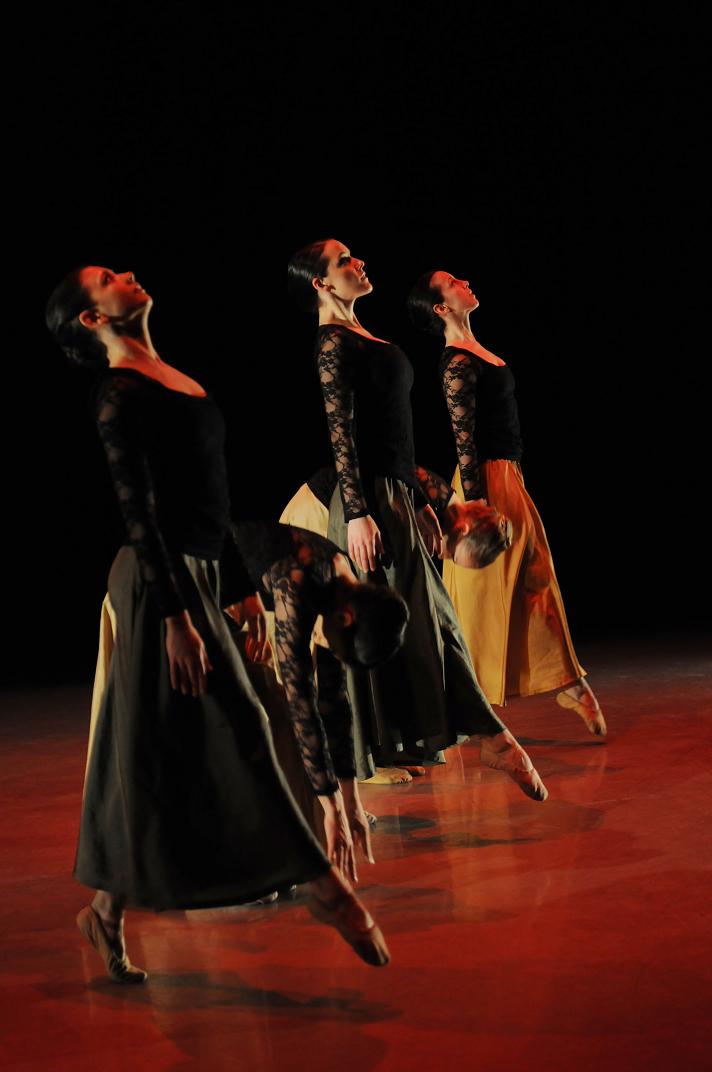
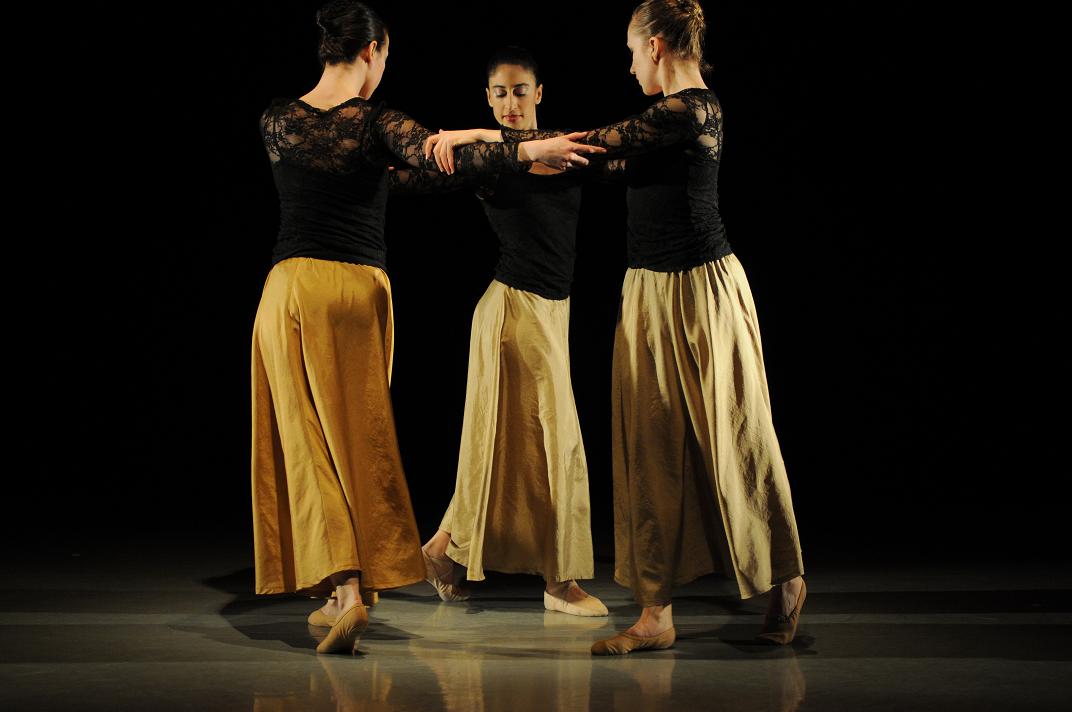
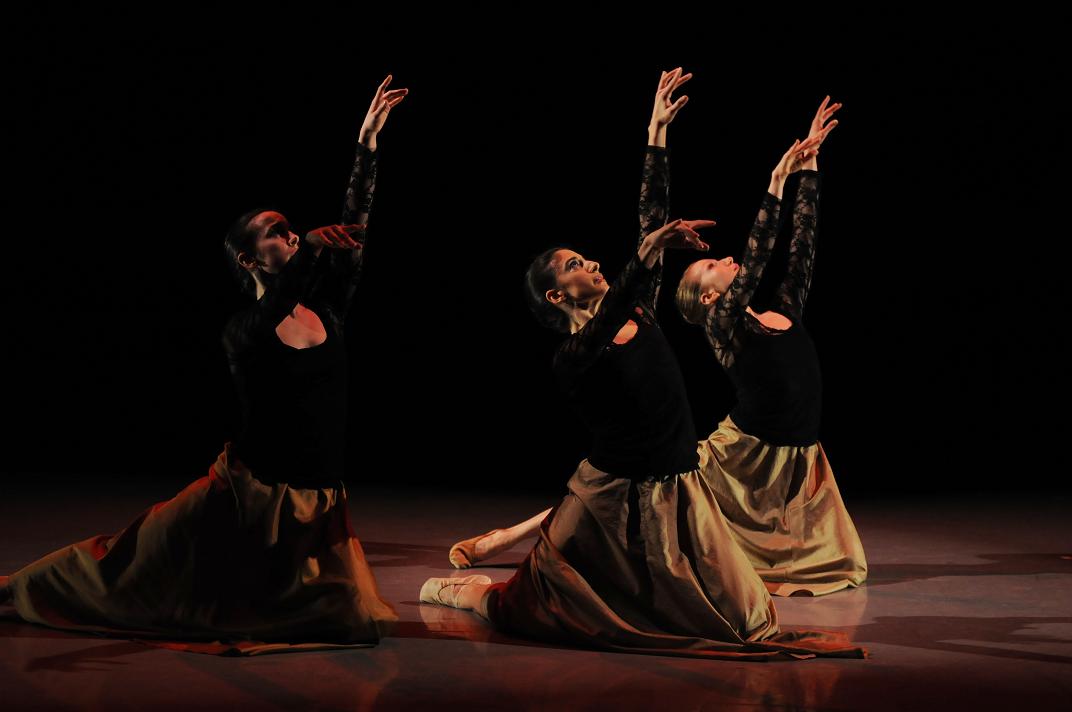
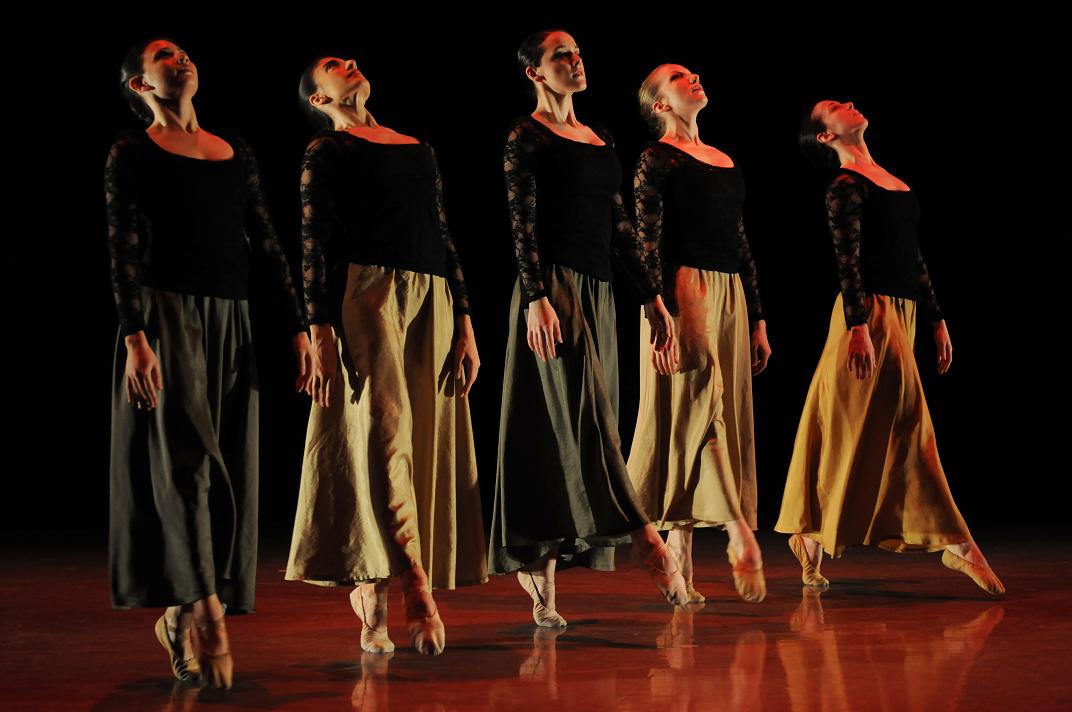
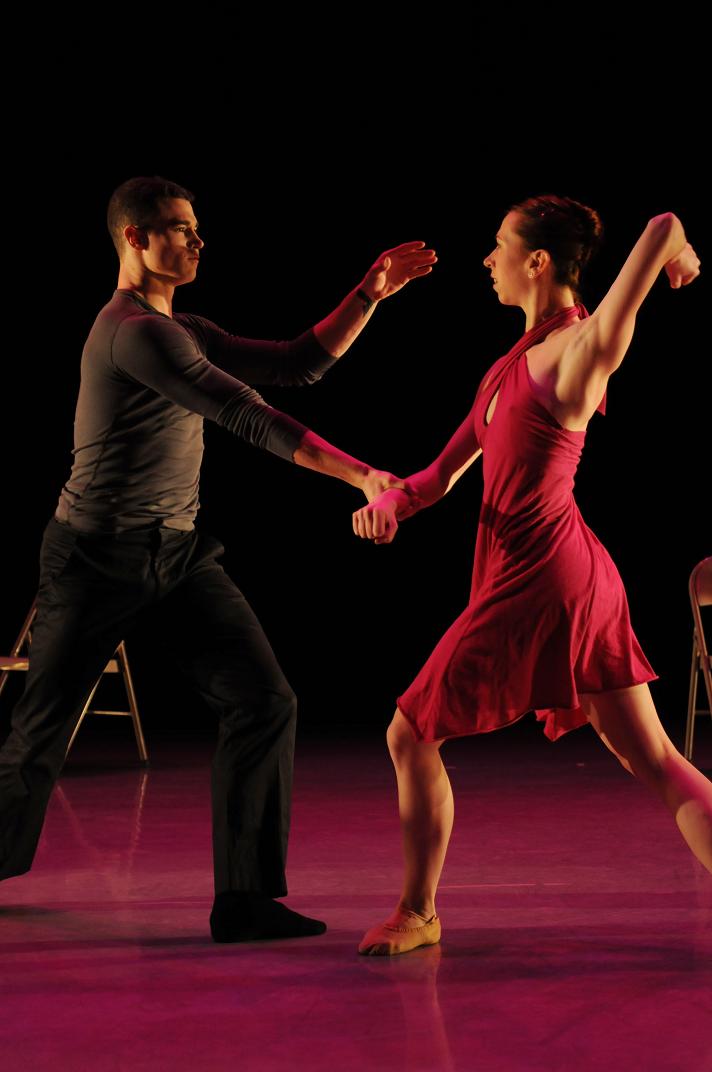
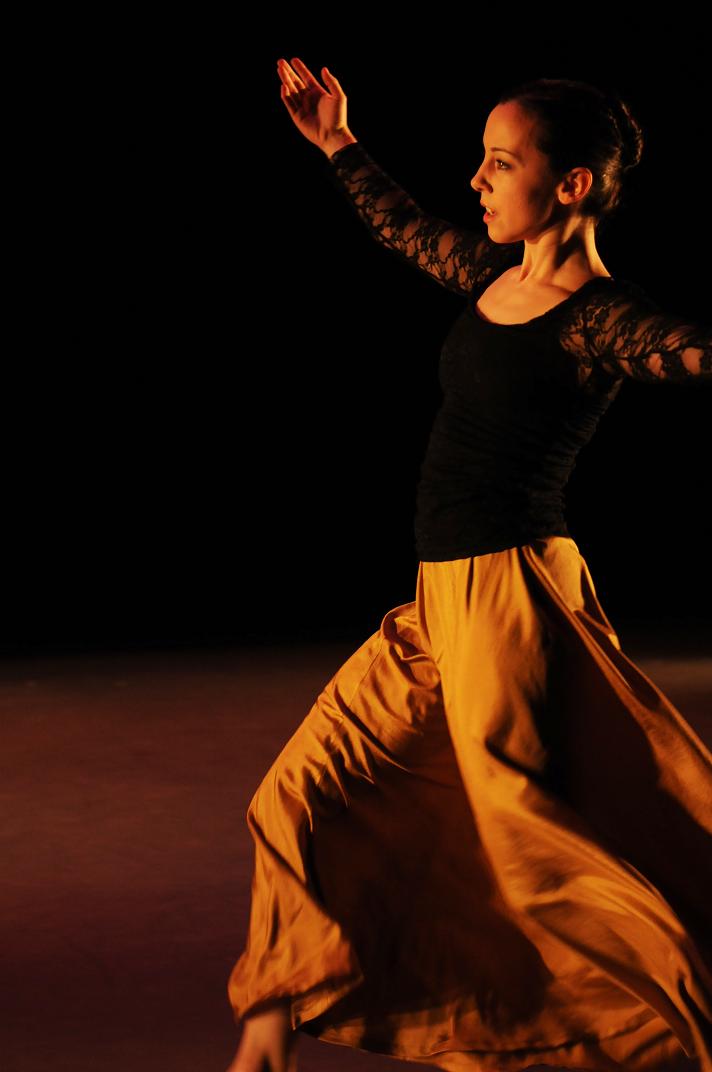
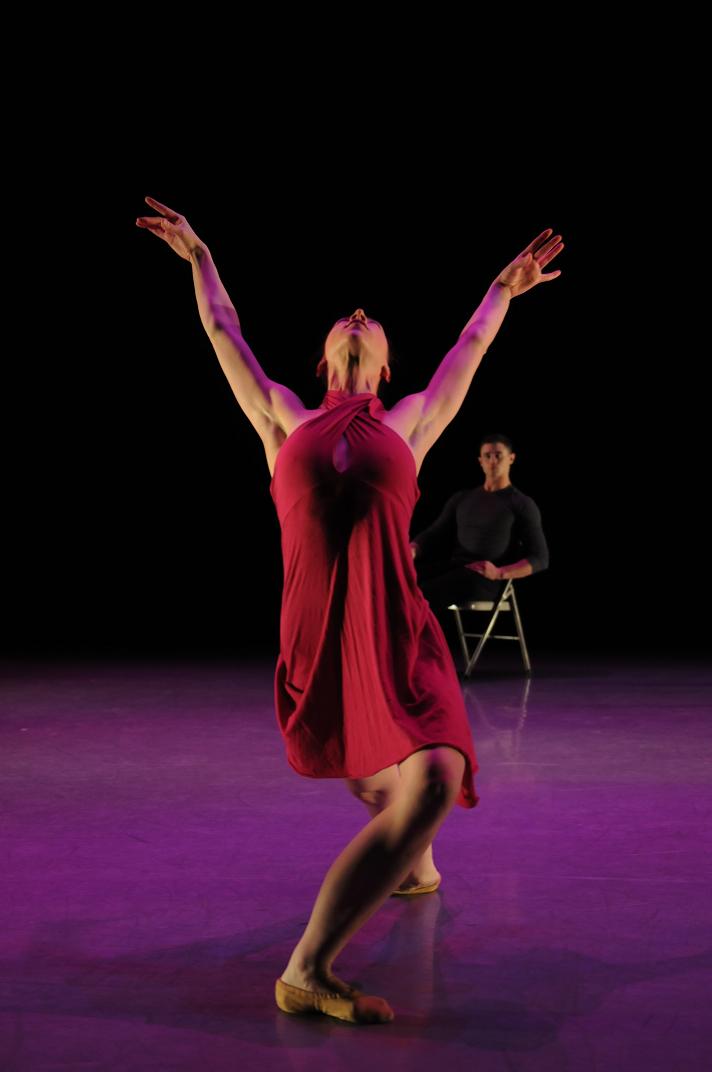
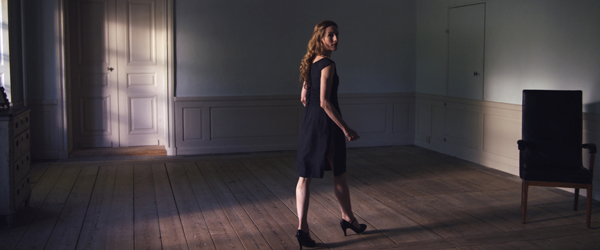
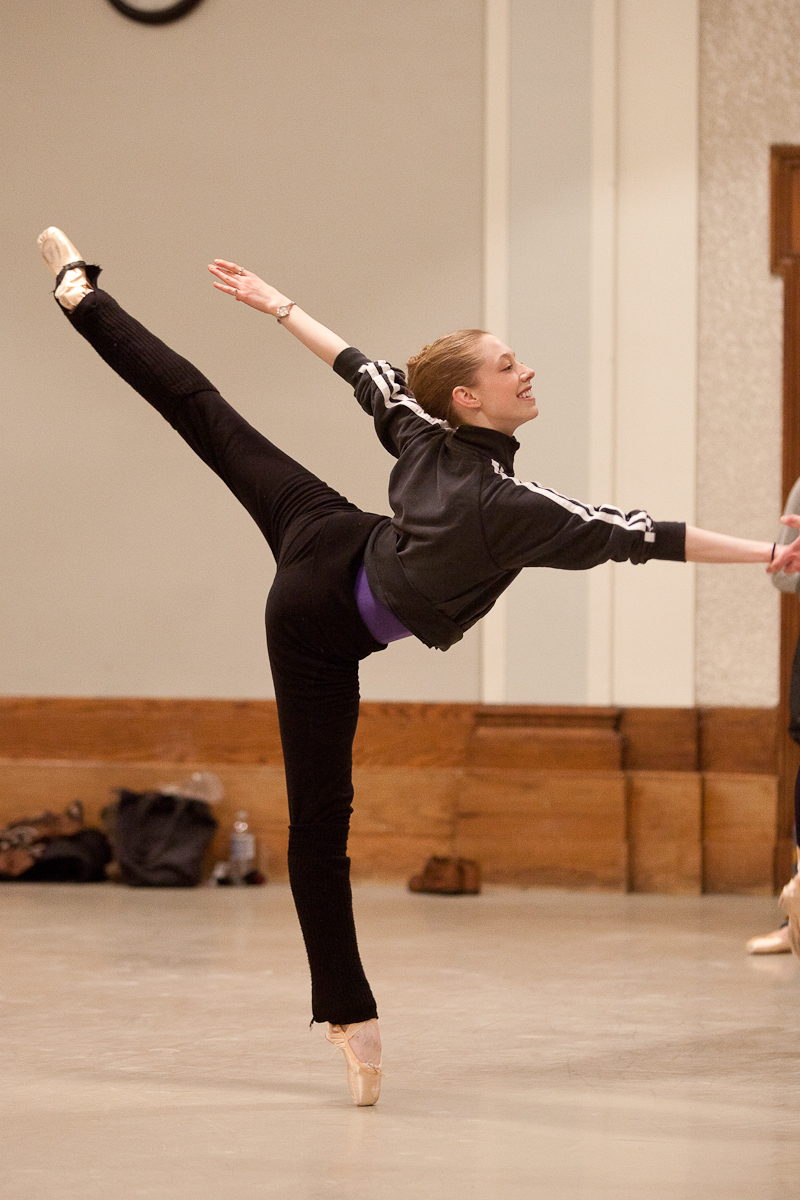
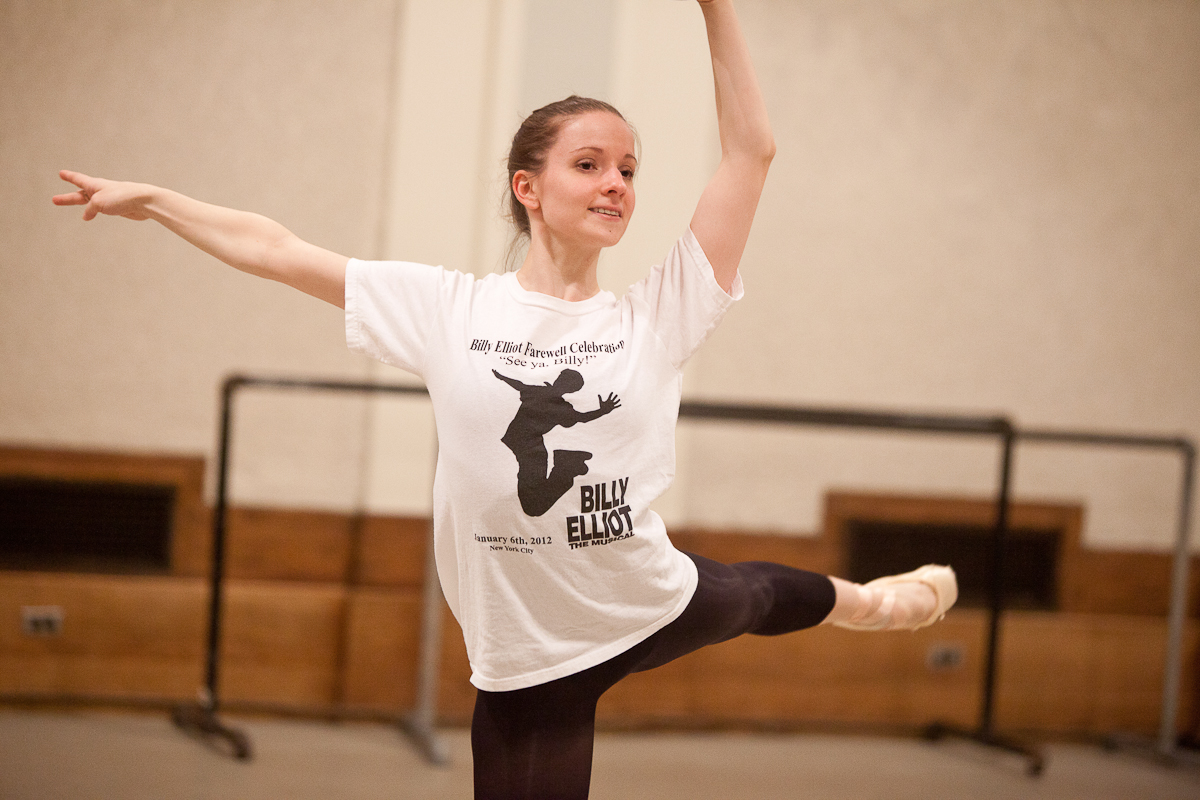
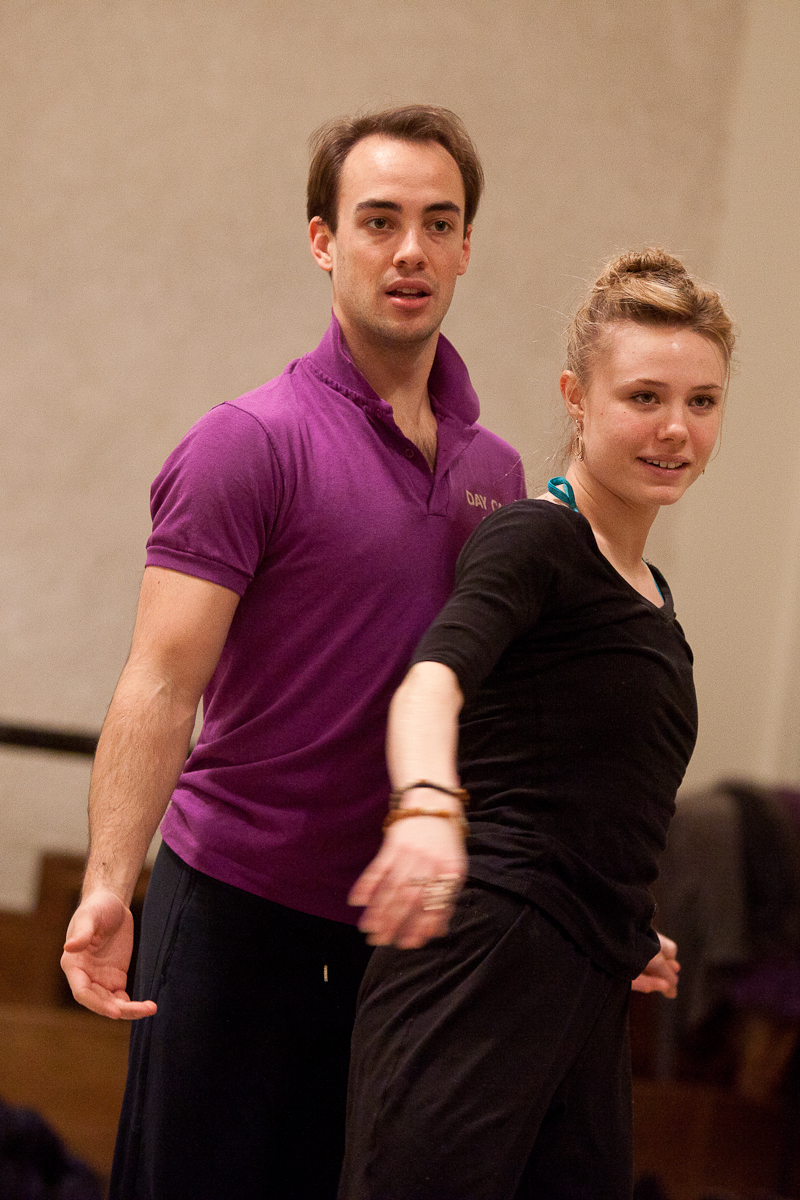
    Tuesday November 29, 2012 – For the past year, choreographer Andrea Gise (above) has been creating a series of dance solos at a rate of one per month. Tonight at the Red Bean Studios, she unveiled the results of this project. In addition to new choreography, each solo was performed to new music.

    Scanning the list of participating dancers and composers I was surprised to see only two familiar names: Christina Ilisije (of Parsons Dance) and composer/performer Marlon Cherry, so there were lots of new movers and music makers to meet. Waiting for the performance to begin, the atmosphere was casual: dancers warmed up or mingled with the composers and audience members, removing the boundary between performer and viewer. A couple of the dancers ran thru their solos. Then everyone settled down to watch.

    Two of the solos were presented on film, the rest performed live. The dancers wore simple practice clothes and the lighting was uncomplicated; all focus was on the dance and the music. Certain movement elements ran threadlike thru the various solos; the dancers utilized the space in varying capacities from work to work. One solo flowed into the next as each dancer stepped into the space. This was dance in its most immediate and pure form.

    The variety of music was impressive; Andrea spoke later of having made a lot of the choreography without reference to the completed scores. That surprised me since so much of the evening seemed like a happy marriage of movement and sound.

    It’s maybe a bit unfair to single out individual performances since everyone participating – both dancers and composers – made fine individual impressions. But I don’t think anyone would begrudge mention of Pat Catterson’s performance of fight v. flight, the longest of the solos. Pat was the only dancer “over 30” among the cast and her solo was both physically demanding and emotionally varied.

    In Christina Ilisije’s solo bad cog, the dancer showed her trademark fluency of movement to a percussive/industrial score (with electrc guitar coming in later) by Philip Knowlton. Marlon Cherry’s opening piano theme evolved into moody, jazzy music while the lovely Remi Harris made her moves dovetail to the rhythmic patterns: this was image control. Two solos for men found Andrea Gise’s choreography at its most inventive: a sleep-study called non-disclosure act danced by Joshua Tuason, and a brilliant theatrical vignette entitled slick, performed by Felix Hess. From among the colorful palette of music we were hearing, Kristen Kairos’ work for two flutes was especially evocative as danced by Jennifer Eisenberg in quell

    The other dancers on the programme were Joanie Johnson and Joey Kipp (both on film), Ryan McNally (who opened the live show with a strong performance), and three distinctively beautiful women: Morgelyn Tarbeth-Ward, Ali Skye Bennett and Zoe Blake.

    In a Q & A at the end of the presentation, Andrea spoke of first being influenced by her reactions to the Gulf oil spill when undertaking this project: not just the spill itself but the resulting media coverage and efforts by government agencies to downplay the situation. We who had watched the dancing mentally began to filter back thru the evening to make connections between the dance and the theme. The seemingly abstract danceworks then took on other layers of meaning. She was wise, though, not to reveal too much until we’d seen the performance, thus allowing everyone to find their own reference points among the movement and the music.

  • The Current Sessions

    IMG_0312

    Monday November 28, 2011 – Down to the Wild Project in the East Village (or would we say NoHo?) for The Current Sessions, a programme featuring works – both live and on film – by nine choreographers. The Wild Project venue is a very neat space for dance, seating about 90 people in raked rows. The lobby is small, immaculate, welcoming – with a ‘garage door’ that I imagine would be open on Summer evenings. Earlier in the day, photographer Nir Arieli and I had watched the dress rehersal where he recorded the images you see here. 

    Photo at the top from Allison Jones’ Listen to Me.

    The evening gave me an odd sensation: I was by far the oldest person in the audience. Aside from Kokyat and I, it was a twenty-something crowd: swigging form beer bottles, they were attentive and enthusiastic. The danceworks were created and performed by people of their generation with music that suits their frame of reference. All the works presented – even the witty ones – showed seriousness of creative intent as well as committed and always enjoyable dancing. The sold-out crowd were keenly receptive to it all.

    IMG_0062

    In her solo a room, home Jenna Otter used the space beautifully and set a standard for the works to come. At close range, the dancer’s breathing became part of the texture of her performance as she veered from restless to subdued. Her excellent choice of Bach was the only nod to anything remotely classical in terms of music this evening, however I would like to express a hope that dance artists will stop using Glenn Gould’s versions of Bach with the pianist’s vocal ‘commentary’ always a distraction. There are a million recordings of all things Bach. Choose a different pianist.

    IMG_0202

    In a duet by choreographer Allison Jones, dancers Hayley Jones and Amir Rappaport put their intimate and intense relationship on public view. Entitled Listen to Me, this duet on the surface is about two friends each trying to make a point. But there’s a sexual undercurrent as well, of control and of unspoken passion. The two dancers were beautifully expressive of the work’s wide-ranging emotional setting. The music was pleasant, innocuous, forgettable – a drawback shared by by most of the rest of the works we saw all evening.

    Here are more of Nir’s images from Listen to Me:

    IMG_0240

    IMG_0367

    IMG_0380

    Above: from Allison Jones’ Listen to Me.

    IMG_0396

    In the solo Ragerian’s Vignettes, Genna Baroni showed an interesting mixture of technical strength and personal modesty. This dichotomy made her quite fascinating to watch, with the dancer immersed in herself though also warily aware of the audience. Again the music was simply there, neither enhancing nor distracting from the dance.

    IMG_0525

    Above: Genna Baroni

    IMG_0685

    Bennyroyce Royon’s duet Wander seems to portray a couple in an on-going relationship who have lost their focal point. As they vocalize their thoughts, which shift from the mundane to the profound, they move around one another, close but not connecting. Clad in casual summer-wear, Benny and his partner Marie Zvosec look great together. Benny’s choice of a sentimental waltzy song from Pale White Moon suits him and Marie very well here.

    IMG_0753

    In the end, they find a new beginning.

    A brief film 4PLAY from Yarden Raz concluded the first half of the evening. It had a Chaplinesque feel to it.

    At the dress rehearsal, dancers Christopher Ralph and Gregory Dolbashian had simply marked thru Jonathan Royse Windham’s Oh! Darlin’ so that I really couldn’t get a feeling for what it would be like. But at the actual performance, Jonathan delivered a truly droll performance of this little vignette about a boy’s livelong love for his teddy bear. As Chris and Greg removed layers of Jonathan’s clothes, starting with his jammies, the dancer aged perceptibly. By the end, he was a bent old man…but still steadfastly attached to his bear. The familiar Beatle tune gave the piece an ironic twist.

    IMG_0970

    In Alexis Convento’s raucously charming duet la baggare, rival French femme fatales (dancers Allison Sale and Lynda Senisi, above) each attempt to get the upper hand in this fast-paced romp with a Moulin Rouge feeling.

    IMG_0795

    Allison and Lynda gave their on-going competitive spat a distinctive flair.

    Jordan Isadore’s two-part film SARA began with a blonde-wigged dancer striking balletic poses, perfectly in sync to an antique music box. This truly funny flick gave way to a four-panel display of two dancers shot from four different angles; this was amusing for a minute, then went on too long. Brevity is still the soul of wit.

    IMG_1399

    In the end, it was Yin Yue’s mysterious and well-crafted we have been here before that stood out among the evening’s offerings in its use of more than two dancers and its darkish, dreamy atmosphere. An abstract work, we have been here before shows Yin Yue’s fine sense of structure and – in addition to her own dancing, which has a specific perfume – her choice of persuasive individual fellow dancers to shape her work: Sarah F Parker, Jacqueline Stewart, Grace Whitworth and Daniel Holt.

    IMG_1454

    Daniel Holt in Yin Yue’s we have been here before.

    All photography by Nir Arieli.

  • Another Work by Theyre Lee-Elliott

    IMG_0668

    One of my blog readers has sent me this image of a poster designed by Theyre Lee-Elliott for Southern Railway. An article with more of the artists’s design work here.

    Oberon’s Grove has developed into something of a Theyre Lee-Elliott meeting place since I first carried an article about one of his works in 2009. Follow this link to further links about the artist.

  • TAKE Dance @ WestFest/Rehearsal

    Copy of 5

    On December 10th, the men of TAKE Dance will perform the dazzling quartet from Takehiro Ueyama’s SALARYMAN at WestFest as part of the four-night celebration of dance at the Cunningham Studio at Westbeth, 55 Bethune Street in Manhattan.

    SALARYMAN premiered in May 2011 and was received with great enthusiasm; another opportunity to see the complete work arises this Winter when TAKE Dance appear at Baruch Performing Arts Center, February 8th – 12th, 2012. Details to follow.

    Copy of 6

    Kokyat’s photos here are from a studio rehearsal for the SALARYMAN quartet on November 26th at DANY Studios. The dancers are John Eirich, Kile Hotchkiss, Clinton Edward Martin and Kei Tsuruharatani.

    Copy of 1

    John Eirich, Kei Tsuruharatani

    Copy of 10

    Kyle Hotchkiss, John Eirich

    Copy of 8

    Clinton Edward Martin

    Copy of 16

    Bump

    Copy of 11

    Swirl

    Copy of 2

    The dance is breathless in its energy and relentless in its pacing.

    Copy of 15

    Choreographer Take Ueyama giving notes, with dancer Kei Tsuruharatani.

    All photos by Kokyat.

  • Beijing Dance Company @ Alice Tully Hall

    BDC 3 Warriors photo

    Friday November 25, 2011 – Beijing Dance Company are on a US tour this month; having danced in Boston, Pittsburg, and Washington DC they are at Alice Tully Hall for a four-performance run. There’s been something of a Chinese invasion here of late: Cloud Gate and Beijing Dance Theater have recently been at BAM, and the National Acrobats of the People’s Republic of China put on a vastly entertaining single show at Brooklyn College last month. The trend continues in January with performances of THE PEONY PAVILION by the China Jinling Dance Company at Lincoln Center. Information here.

    The works presented tonight by Beijing Dance Company were inspired by Chinese folklore and myth, dating back hundreds of years BC. Of the ten danceworks presented, most had a sentimental feeling underscored by the traditional-sounding music. Only in the final Yellow River could one sense a slight break with tradition. As one colorful work followed another, the excellence of the dancers and their commitment to dance was strongly evident.

    References to iconic cultural elements abound: calligraphy, bamboo, the crane, the butterfly, flying fairies, the terra-cotta warriors, Bhuddist rituals. Costumes were rich in detail though sometimes a bit garish while a series of projections which set the tone of each piece might have been even more effective if the colours had been more subdued. 

    My favorite work of the evening was Free and Unfettered Spirits in which the men of the Company seemed at one with nature; wearing mossy-green full-sleeved costumes the brotherhood danced their rites in an outdoor setting. Earlier, in her solo Flying Fairy, dancer Zhao Qiao manipulated the super-long sleeves of her dress in mesmerizing swirls and flourishes. The most powerful and exciting dance came from the four men who appeared as warriors (top photo) in Emperor Qin’s Soldiers; their fusion of kung fu, acrobatics and ballet elicited a loud ovation.

    Perhaps the best-known work on the programme was The Butterfly Lovers, a Romeo and Juliet tale of forbidden love. Very well-danced, this work at times veered into the realms of cloying sentimentality; it is a little too long and the choreography sometimes seemed thinly stretched over the music. Nevertheless, the dancing was excellent.

    The audience for the most part were attentive and enthusiastic – except, of course, the young boy sitting near us who squirmed and muttered throughout the first half without any admonishment from his mother. Most dance programmes are not for kids, especially one like this which is somewhat stately in its pacing and musical presentation.

  • Lar Lubovitch’s MEN’S STORIES/Gallery

    Copy of 3

    On November 19th. Kokyat photographed the Lar Lubovitch Dance Company in a performance of the choreographer’s MEN’S DANCES. Read about the evening here.

    Copy of 1

    Clifton Brown, Brian McGinnis, Milan Misko

    Copy of 4

    Jason McDole

    Copy of 6

    Attila Joey Csiki

    Copy of 8

    Clifton Brown

    Copy of 9

    Reed Luplau, Jason McDole

    All photos by Kokyat.

  • LA BOHEME @ The Met

    Boheme1112.02

    Tuesday November 22, 2011 – Soprano Hei-Kyung Hong sang her first Met Mimi in 1987. Tonight, nearly a quarter-century later, she was repeating her classic interpretation. Along with Liu in TURANDOT, Mimi is a role that Ms. Hong has put her very personal stamp upon over the years. Photo by Cory Weaver/Metropolitan Opera.

    The Korean soprano’s voice remains a pure lyric instrument; over the years she never attempted to move into spinto territory and so the sound retains its shimmering silvery quality. Those who like big, lush outpourings of tone in Mimi’s music should look elsewhere: Hong’s Mimi is vocally delicate, vulnerable and wistful, as befits the character’s health and situation. She has long-since mastered the art of expressive portamento and of shading the words with emotional demi-tints. Thus in her long Act I narrative ‘Mi chiamano Mimi’ we are drawn into the story of this poignant character whose illness and poverty have not dampened her love of life and her constant hope for rebirth every Springtime. 

    I live alone, quite alone…
    There in my little white room
    I look out upon the roofs and the Winter sky.
    But when the thaw comes
    The first sunshine is mine…
    The first kiss of April is mine!”

    Interrupted by Rodolfo’s friends calling from below, the poet turns to see Mimi standing in the moonlit squalor of the garrett:

    “Oh lovely girl, oh sweet face
    bathed in the soft moonlight.
    In you I recognize
    the vision of love I’ve always dreamed of!”

    For those of us who still believe in love at first sight, this is the moment. As Mimi and Rodolfo leave arm in arm for the Cafe Momus, Hong’s long high-C floats into the House, and you think it can’t get any better than this.

    But it does: Hong’s third act is a masterpiece of vocal and dramatic portraiture. In a wintry setting near the Barriere d’Enfer, Mimi comes in search of her estranged lover, hoping Marcello will know where she can find him. The desperate fragility of Hong’s singing in the duet with Marcello, where her illness and her impending fate tear away at the painter’s kind heart was so moving, surpassed moments later as the soprano sang ‘Addio senza rancor’, her simple and humble farewell to Rodolfo who she thinks she will never see again.

    The romance is salvaged though: they will stay together until April comes again. But this will be Mimi’s final Springtime. After further quarrels and another separation, Rodolfo despairs of ever seeing her again. But Mimi comes back to the garret in the end, to die. As the other Bohemians go off to find medicine, a muff for her cold hands, and a doctor, the dying Mimi tenderly comforts her distraught lover. After a final lyric outpouring, Hong’s voice ebbs away to whispers as she falls asleep for the last time.

    6a00d8341c4e3853ef010536aacfcb970c-800wi

    Dmitri Pittas was the evening’s Rodolfo and while he could not match his Mimi in terms of vocal finesse or expressiveness, his appealing portrayal of a passionate young man unsure of himself and his new-found romantic feelings, was touching. The interesting dynamic created by the soprano and tenor tonight was that she was the one with a romantic history and he was the novice, trying to deal in reality with emotions he had previously only expressed in his poetry. Pittas has an appealing, Italianate sound and if he could not match the likes of a Pavarotti, a Corelli or a Tucker in this music, he gave his all in a committed performance that – dove-tailed with Ms. Hong’s tenderness and delicacy – generated an atmosphere of intimate romance.

    Index

    An outstanding vocal performance tonight from Alexey Markov. As the painter Marcello, the baritone upheld the excellent impression he had made as Chorebus in LES TROYENS at Carnegie Hall in March 2010. The voice is warm, sizeable and speaks well in the big House. We should hear him at the Met more frequently, where is would be most welcome in any number of roles.

    The other singers in this evening’s performance all fared well: Susanna Phillips was an engaging Musetta, though I wish she had done more singing and less ‘characterization’ during her famous Waltz where there was too much vocal mugging and winking and not enough sheer voce. She was better in the opera’s last two acts. Basso Matthew Rose, towering over the rest of the cast physically, sang his Coat Aria very well, and Patrick Carfizzi was a good Schaunard. It seemed to me that the philosopher and the musician might be lovers in the current staging though comic hijinx served as a cover for their embraces – until the end. Christian Jeong was a clear-voiced Parpignol; the toy-vendor now has an elaborate horse-drawn cart with which to lure in the kiddies. 

    On the podium Louis Langree seemed to favor slowish tempi but that simply served to allow the perfume of certain phrases to linger on the air. Despite moments when he allowed the orchestra to cover his essentially lyric cast of singers, the conductor and his orchestra did much to enhance the poetic atmosphere that the principal couple onstage were generating.

    Curtain-rise at Cafe Momus still evokes a big round of applause but the current staging has diluted some of the effectivenes of the scene. Several waiters and customers spent much of their time on the floor, trying to look up Musetta’s skirts. 

    Metropolitan Opera House
    November 22, 2011

    LA BOHÈME
    Giacomo Puccini

    Mimì....................Hei-Kyung Hong
    Rodolfo.................Dimitri Pittas
    Musetta.................Susanna Phillips
    Marcello................Alexey Markov
    Schaunard...............Patrick Carfizzi
    Colline.................Matthew Rose
    Benoit..................Paul Plishka
    Alcindoro...............Paul Plishka
    Parpignol...............Christian Jeong
    Sergeant................Jason Hendrix
    Officer.................Richard Pearson

    Conductor...............Louis Langrée

    I’ll never forget my first experience with listening to the whole of LA BOHEME in a Metropolitan Opera Texaco radio broadcast in January 1962. Lucine Amara and Barry Morell were Mimi and Rodolfo; my most vivid recollection of that performance was experiencing the opera’s final scene as the winter twilight descended outside. I was alone in the big house, just as I was alone in my life at that time. But I was beginning to get a sense for what was ahead for me: romance, passion, a more expansive world where I could be myself. It took years and many setbacks, but I did eventually find my path.

    I don’t look much like a lover these days, but the feelings are all still there. Maybe that’s why I always weep as Mimi awakens briefly from her death-like rest to bid a final farewell to Rodolfo:

    Are they gone? I was only pretending to sleep –
    because I wanted to be left alone with you.
    I have so many things I want to tell you,
    but really only thing: as huge as the ocean,
    deep and infinite as the sea…
    You are my love and my whole life!

    Some of my long-time opera friends wonder why I still bother going to performances. It’s for moments like these. And for voices like Hei-Kyung Hong‘s.

  • Ballet Next/Photos

    WhiteSwan_0338_retouch

    Images by Paul B. Goode from the dress rehearsal for the premiere performance by BALLET NEXT. Above: Michele Wiles and Charles Askegard in the White Swan pas de deux.

    Entwined_1217_retouch

    Jennie Somogyi and Charles Askegard in Margo Sappington’s Entwined.

    LaFollia_1976_retouch

    Michele Wiles and Drew Jacoby in Mauro Bigonzetti’s La Follia.

  • Ballet Next!

    Mcl2223

    Monday November 21, 2011 – In one of the most-anticipated dance events of recent seasons, BALLET NEXT have made their world debut with a single calling-card performance at The Joyce. The theater was filled to over-flowing and many luminaries from the Gotham dance scene were on hand, lending the evening a special air of excitement. Rehearsal photo of Michele Wiles and Charles Askegard at the top by Nir Arieli. Click on the images to enlarge.

    In the Summer of 2011, two of ballet’s premiere dancers made their farewell appearances with their respective resident companies: Charles Askegard had a full-scale grand gala as his last performance with New York City Ballet. But ABT‘s Michele Wiles simply slipped away without fanfare, leaving New York balletomanes wondering why.

    Not long afterward came the announcement that these two tall and tremendously talented artists would be launching their own ballet company: Ballet Next. Their plan: to present classic and new works with world-class dancers, calling upon top choreographers of the day and working with live music. Tonight their initial offering was an emphatic success.

    _MG_8729

    As the audience settled into expectant silence, the ensemble of musicians struck up the White Swan prelude and moments later Michele Wiles (above, in rehearsal) made Odette’s iconic entrance to a burst of applause. Then Charles Askegard stepped onstage; the audience greeted him affectionately. The two dancers look so very fine together, with Michele’s long limbs shaping the classic poses with finesse and Charles giving a textbook lesson in the art of partnering: ardent but never fussy. Their partnership immediately made me start making a list of works I want to see them dance together: the BAYADERE Shades pas de deux comes first.

    The first half of the evening was devoted to the classics and to Tchaikovsky; Ballet Next‘s musical director Elad Kabilio and his fellow musicians now introduced the Act III pas de deux from SLEEPING BEAUTY. San Francisco Ballet‘s delicious petite etoile Maria Kochetkova was exquisite as Aurora and New York City Ballet’s Joaquin de Luz was her blindingly handsome Prince. Their partnership had the youthful charm and elegance that makes the balletomane’s heart beat the faster; they held their finely-shaped final fish dive (of three) to the delight of the crowd. In their solos, the two dancers swept thru the demands with flair, re-uniting for a bravura coda. Their lovely performance extended to their gracious bows.

    _MG_8937

    From ABT, soloists Misty Copeland (rehearsal image, above) and Jared Matthews gave a joyous, space-filling performance of Balanchine’s Tchaikovsky Pas de Deux. The Joyce stage could barely contain their ebullient dancing; their easy rapport as partners and the speed and clarity of their solo dancing won the audience’s vociferous approval.

    Following the intermission, Ms. Kochetkova re-appeared in a whimsical costume: pink body tights, a head-wrap, and half a tutu. She danced a Jorma Elo solo entitled ONE OVERTURE set to music of Mozart and Biber. This solo calls for pure classical technique applied in off-kilter, witty combinations as the dancer occasionally whisks offstage only to re-appear. In the pit, Ben Laude switched from piano to harpsichord for an authentic Baroque texture. The choreography is clever and unusual but the piece is a trifle too long.

    _MG_7393

    For Satie, Mr. Laude reverts to the piano and the curtain rises on New York City Ballet principal Jennie Somogyi with Charles Askegard (rehearsal photo, above) to dance a Margo Sappington duet, ENTWINED. This work is stylized in its shaping but there are erotic undercurrents in play, as one might expect from the choreographer who gave us Oh! Calcutta! The two dancers, in sleek body tights, look fantastic together. I hope Ms. Somogyi is at the top of Ballet Next‘s list of dancers for future return engagements; there are so many things I would love to see her dance. It was fun to see Ms. Sappington joining the dancers onstage at the end.

    Misty Copeland then returned to dance a solo, ONE, choreographed by Robert Sher-Machherndl to music by Max Richter. In this solo, Misty showed off the power of both her technique and her ability to hold the audience in the palm of her hand. The choreography was not memorable, and the piece went on a bit longer than necessary, but as a vehicle for the dancer all was well.

    _MG_8961

    Above: Michele and Misty taking a break at rehearsal.

    The musicians then struck up Vivaldi’s beloved La Follia and the curtain rose on Michele Wiles and Drew Jacoby crouching in a pool of light. The two leggy ballerinas then took off in Mauro Bigonzetti’s demanding and fast-paced choreography, dancing in sync or in solo passages. Bigonzetti keeps throwing steps and gestures at the two girls; they take it all in stride and keep sailing on the music.

    _MG_8301

    “Faster!”, Drew Jacoby (above, in the studio) called out to the musicians at a rehearsal I attended, although she was already moving at high velocity. In her solo Michele spun some silky pirouettes; there’s some very quirky footwork in the finale which then seems to evaporate at the girls return to their opening pose.

    _MG_8265

    Above: Michele Wiles rehearsing the Bigonzetti.

    As all the dancers came out to bow, I was thinking of the endless possibilities for future Ballet Next programmes. With their extensive network of friends who are also great dancers, Michele and Charles can call upon stellar line-ups in the wink of an eye. There’s a vast store of established works that they can dance, both popular and forgotten, which will fare well in their live-music settings. And there are many choreographers I’d like to see them working with – Jessica Lang, Melissa Barak, Emery LeCrone, Edwaard Liang, Andonis Foniadakis, Pontus Lidberg, Justin Peck and Luca Veggetti come immediately to mind. Let’s see what’s next for Ballet Next.

    The rehearsal photos included here are by Nir Arieli.

  • Fall for Dance 2011 Program II

    Copy of 38

    Above: Clifton Brown and Yuan Yuan Tan in Kokyat’s image from a rehearsal of Jessica Lang’s AMONG THE STARS. More photos from this rehearsal will be found here.
    Sunday October 30, 2011 – The Fall for Dance 2011 festival continues with:

    PROGRAM II
    Vertigo Dance Company, Mana (adapted for Fall for Dance); Noa Wertheim, choreographer
    Drew Jacoby, Bloom; Andrea Miller (Artistic Director of Gallim Dance), choreographer
    Jessica Lang Dance, Among the Stars; Jessica Lang, choreographer
    Richard Alston Dance Company, Roughcut; Richard Alston, choreographer

    Manajpg-192d50ffae90605c

    In Noa Wertheim’s MANA (photo above by Gadi Dagon), Vertigo Dance Company from Israel featured eight dancers in dark-toned long tunics, skirts and wide-legged trousers dancing before a beautifully lit silhouette/facade thru the door of which they come and go. With folk-like motifs of circular patterns and casually organized duets, the movement feels both spontaneous and ritualistic. Ran Bagno’s mid-East fusion score is rhythmically varied with some quirkly instrumentation; it is pleasantly innocuous and eventually unmemorable. The dancing was excellent and the dancers deserved the enthusiastic response of the audience, but the work would make a more persuasive statement if it were pared down a bit. It gives the impression of someone who goes on talking after his point has already been made.
    Ffd11_2

    The imperial contemporary ballerina Drew Jacoby (this year’s calendar girl for Fall for Dance, in a Lois Greenfield photo above) then danced a new solo created on her by Gallim Dance‘s Andrea Miller. Entitled BLOOM, set to music of Radiohead, the solo finds the dancer on a blue-lit stage in a gossamer cerise frock; dancing bare-footed rather than in toe-shoes gives the ballerina a vulnerable look. Swirling thru windswept patterns that propel her around the space, Drew is restless and relentless. Elements of classic ballet technique are subtly spun into the choreography – big jete, attitude turns – and are executed at high velocity. In moments of relative calm the dancer seems aware of the audience but is then propelled on her way again, at times almost against her will. The curtain falls but Drew continues to dance at the lip of the stage and eventually sails back into the re-opened space. The solo personifies the dancer as a force of nature and is a wonderful Drew Jacoby portrait; we get to see Drew again at the Festival in Pontus Lidberg’s Faune (November 1st & 2nd).

    Copy of 12

    Yuan Yuan Tan, principal ballerina of San Francisco Ballet, and Clifton Brown, beloved Alvin Ailey star since 1999 and now a guest artist with that Company, created quite a stir as they danced Jessica Lang’s mystically luminous duet for star-crossed lovers, AMONG THE STARS. Above, the two dancers at a recent studio rehearsal, photographed by Kokyat.

    The duet draws upon the legend (found in many cultures) of Altair, a lowly herdsman who dared to love Vega, daughter of a goddess. They are punished by being transformed into stars separated by the vast river of the Milky Way, But it is said that the Goddess of Heaven, out of pity, decided to let them unite once a year on the seventh day of the seventh lunar month as she was touched by their devotion.

    Poetic images of tenderness and longing fill this pas de deux, which Ms. Lang has set to music of Ryuichi Sakamoto. Yuan Yuan Tan and Clifton Brown danced with poignant lyricism, the ballerina’s compelling technical mastery wedded to her delicately nuanced gesture and expression while Mr. Brown was the epitome of masculine grace. The audience, spellbound by the piece and by these two magnificent artists, erupted in a frenzied ovation as the dancers stepped forward to bow.

    1287A4

    ROUGHCUT, performed by the Richard Alston Dance Company, closed the evening. It was perhaps impossible to imagine something that could follow the sublime dancing of the Lang duet; in the event the Alston piece gave the right counter-balance of mood but stretched out beyond its viability as the choreographer worked to fill the two long Steve Reich pieces with dance. In the end it seemed too much of a good thing.

    Clarinetist Roger Heaton and guitarist James Woodrow played the demanding Reich scores live, standing at either side of the proscenium. The nine Alston dancers gave unstinting energy and flair to the choreographer’s spirited, driven combinations, soaring about the stage in spacious leaps and turns. There were passages of near-respite in some solo and duet segments but the onrush of movement never abated. As the dancers were rightly hailed at the end, I was thinking how much ROUGHCUT reminded me of some of David Parsons’ fast-paced works. But David would have known when to get out the scissors.