Category: Dance

  • NY Philharmonic Ensembles: International Feast

    Liang

    Above: The New York Philharmonic’s principal oboist Liang Wang

    Sunday November 20th, 2016 – Music by French, Russian, German, and English composers was on offer this afternoon as a stellar ensemble of players from The New York Philharmonic took the stage at Merkin Hall. The group included some of the orchestra’s principals; the playing was divine, and all four works on the program were new to me.

    The matinee opened with the String Trio of Jean Françaix, composed in 1933. Françaix was a child prodigy, writing his first music at age 6 and being published at age 10. His String Trio exemplifies the Neo-classical style which was enjoying favor at the time he wrote it; it consists of four movements, two of which are played with the strings muted. The excellent players – Shanshan Yao (violin), Peter Kenote (viola), and Qiang Tu (cello) – were clearly having a good time with this music, and their enjoyment was transmitted to the audience, who seemed quite taken with the piece.

    The opening Allegretto vivo is a witty conversation among the three players; it has a gentle sway and a touch of jazz. With the musical lines in a state of perpetual motion, there is a sense of delicate charm in play. The following Scherzo – un-muted – is a sprightly dance played with a breezy ‘je ne sais quoi‘ quality. Plucking motifs and changes of pace eventually lead to a congenial if quirky waltz. The mutes are on for the Andante, which commences with wistful harmonies. Ms. Yao leads off with a sweet/sad song, taken up by Qiang Tu’s savorable cello and then by Mr. Kenote’s warm-toned viola: so lovely to hear each voice in succession. In a return to C-major, with the mutes set aside again, the lively start of the finale has an effervescent feeling (Mr. Kenote, in his opening remarks, spoke of a cancan). Things slow down a bit, with the violin playing over a plucked accompaniment. The pace then reaches sizzling speed, subsiding to lethargy before re-bounding to briskness and an actual march before vanishing on a surprisingly soft pizzicato. Such a fun piece! 

    Living in Paris in 1924, Sergei Prokofiev accepted a commission to compose a ballet for a touring  troupe; the director asked for a short work for five instruments with a simple plot revolving around life with the circus. Prokofiev produced a quintet for the players the director had on hand: oboe, clarinet, violin, viola, and double bass. The ballet’s title was Trapeze. Since assembling this particular complement of instruments isn’t always easy, the work is not often performed; hearing it today made me wonder what the choreography would have been like.

    Drawing from the Philharmonic roster, the instrumentation was handily (and expertly) filled out by a lively group of players, led by Anna Rabinova (violin), with Vivek Kamath (viola), Blake Hinson (bass – he also introduced the work) and wind virtuosos Sherry Sylar (oboe) and Pascual Martinez Forteza (clarinet).

    The music definitely has a ‘circus’ atmosphere. A feeling of urban bustle with a slightly Mid-Eastern tinge pervades the opening movement, with oboe and clarinet vying phrase for phrase; the viola and then the violin join the fun, and the bass induces a lumbering motif. The music stalls, and turns pensive before bursting into a fast, flashy dance with violin screeching at us. The striding bass returns us to the opening oboe theme.

    In the second movement, the bass growls at us and there’s an off-kilter feeling. The clarinet moves from burbling sounds to straightforward song; discord resolves into a major chord. The third movement, with a steady pacing, finds the clarinet and oboe trading sound-bytes; a swirling turbulence ensues.

    In the fourth movement, an Adagio, the oboe sounds a bit ominous; the clarinet trills, the violin shivers, the bass creeps about. A violin melody melds into a dense tutti, with the oboe prominent. The plucking bass introduces the light-hearted fifth movement, with ironic gestures from the clarinet and oboe. The strings pluck and slash before Mr. Forteza’s clarinet polishes things off in fine style.

    The final Andantino is whimsically dirge-like; there are clarinet cascades and the oboe gets insistent; the tread of the bass signals a minuet reprise. Suddenly alarms sound, and the piece rumbles raucously to a sudden end.

    Several pages of Beethoven’s Quintet in E-flat major (originally penned in 1793) had gone missing by the time Leopold Zellner took up the task of ‘resuscitating’ it in 1862. Zellner relied strictly on the material evidence he found in Beethoven’s drafts in preparing a performing edition.

    This work utilizes another off-beat assemblage of instruments: three horns, oboe, and bassoon. The horns – Richard Deane, R Allen Spanjer, and Howard Wall – enter in turn; their music veers from jaunty to Autumnal mellowness. As the work progressed, it became evident that the oboe was taking the most prominent position in terms of melodic opportunity: Liang Wang, the Philharmonic’s principal oboist, demonstrated both his striking virtuosity and his coloristic phrasing throughout the piece. Kim Laskowski’s bassoon seemed mostly limited to echo effects and to joining the horns; I kept hoping for a paragraph from her, but only a few phrases peeked thru the full-bodied sound of the horns.

    A horn chorale initiates the Adagio maestoso, with the oboe again very much to the fore – and so attractively played by Mr. Wang. The concluding Minuetto begins brightly and brings us some really rich horn blends. Mr. Wang’s playing was exceptional, and it was a real pleasure to watch and hear him play his extended role here this afternoon, after so often enjoying his solo moments in the big repertory at Geffen Hall.

    The Philharmonic’s principal horn, Philip Myers, introduced the concluding work – Ralph Vaughan Williams’ D-major Quintet – with a genuinely amusing speech in which he lamented the relative scarcity of chamber works featuring the horn and spoke of how he seized on the opportunity to play the Vaughan Williams today…which he did, to perfection.

    Ralph Vaughan Williams’ Quintet in D-major had been withdrawn from circulation by the composer. He instructed his first wife not to publish it, but his second wife went ahead and did so, and thus we have this unusual work to enjoy today, more than a century after its premiere.

    A deluxe quintet of Philharmonic artists gathered to perform the piece: alongside the resplendent sound of Mr. Myers’ horn, principal Anthony McGill’s clarinet playing was simply dazzling; violinist Lisa Kim (violin) and cellist Eileen Moon (my artistic crush) seized on the string passages to fine effect, whilst John Novacek underscored the ensemble beautifully from the keyboard, and relished his solo moments with some very cordial playing.

    The four-movement quintet opens with an Allegro moderato initiated by clarinet and piano. A rolling theme for the ensemble sets up a round-robin of voices: piano, violin, clarinet, a horn summons, and cello speak up in turn. Things turn big and emphatic, and Phil Myers’ lush playing here was really grand, with Mr. Novacek ideally supportive. Cello, violin, and clarinet have another say before a shimmering motif from Mr. Novacek and a sustained phrase from Mr. Myers bring the movement to a close.

    The second movement takes the form of an intermezzo; it has the feel of a Viennese waltz. Ms. Moon’s cello blends with the piano; later, Myers and McGill play in unison as the music sails on, with the piano taking up the waltz while Ms. Kim plays elegantly, incorporating a brief cadenza.

    The velvety sound of the Myers horn sets up the Andantino, with Mr. Novacek’s evocative playing and another lovely passage from Ms. Kim leading into a melodic outpouring from all the voices. Fanfare-like motifs sound forth, and then a rich blending of timbres to savor. The horn plays over a rolling cello figure, and the music turns quite grand. Clarinet and violin descend, and the horn and piano glow gorgeously in a nostalgic theme.

    The final Allegro molto induces toe-tapping from note one. Big horn-playing reigns, the clarinet and violin lead a merry dance, and a McGill cadenza with a perky trill delights us before the quintet reaches its boisterous end.

    The Repertory:

    FRANÇAIX – String Trio
    PROKOFIEV – Quintet in G minor for Oboe, Clarinet, Violin, Viola, and Double Bass
    BEETHOVEN – Quintet in E-flat major for Oboe, Three Horns, and Bassoon
    VAUGHAN WILLIAMS – Quintet in D major for Clarinet, Horn, Violin, Cello, and Piano

    The Participating Artists:

    Richard Deane, horn

    Pascual Martínez Forteza, clarinet

    Blake Hinson, bass

    Vivek Kamath, viola

    Peter Kenote, viola

    Lisa Kim, violin

    Kim Laskowski, bassoon

    Anthony McGill, clarinet

    Eileen Moon, cello

    Philip Myers, horn

    John Novacek, piano

    Anna Rabinova, violin

    R. Allen Spanjer, horn

    Sherry Sylar, oboe

    Qiang Tu, cello

    Howard Wall, horn

    Liang Wang, oboe

    Shanshan Yao, violin

  • Frank Huang Plays Bruch @ The NY Phil

    Frank Huang

    Thursday October 27th, 2016 – The New York Philharmonic‘s concertmaster, Frank Huang (above), dazzled the audience at Geffen Hall tonight with his playing of Bruch’s first violin concerto; the highly enjoyable program also featured works by Bartók and Dvořák; Pablo Heras-Casado was on the podium.

    Béla Bartók’s Dance Suite opened the evening. These delightful dancing miniatures display the composer’s signature inventiveness in terms of colour and rhythm whilst providing numerous opportunities for individual players to shine: it’s a wonder they are not programmed more often. Maestro Heras-Casado seemed to have the lilt and sweep of the music in his blood, and the orchestra gave a vibrant performance every dance-step of the way.

    Written in 1923, the suite is listed as being in six movements, though they seem – with a brief pause here or there – to flow into one another. A droll bassoon theme starts things off; the horns sound and the string players tap their bows on their instruments. Big energy develops, only to subside. Lovely passage for violins and harp, the clarinet interjects, and a merry jogging sets forth. Ear-tingling combinations – oboe and bass clarinet, flute and harp – keep cropping up, as do the piano and celesta. A wind choir leads into a high violin passage (Sheryl Staples, tonight’s concertmaster) and when things turn dreamy, Cynthia Phelps’ viola mingles with the harp. Big brass plunges in, and the music takes on a bouncing swagger.

    This suite made an outstanding impression. I do regret that I cannot name the individual players of the various solo wind passages; tonight more than ever I wished these sections of the orchestra were on risers so we could watch them as they play. I did get a glimpse of Liang Wang, who played the numerous Bartok solo phrases with his customary clarity and warmth…wonderful!

    Mr. Huang then appeared for the Bruch. We are accustomed to seeing him as a somewhat reserved figure in his role of concertmaster; stepping into soloist mode, Mr. Huang becomes very animated, bending and swaying as the music impels him. His passionate performance was captivating both to hear and to watch.

    A recording of the Bruch #1 was the first non-operatic CD I ever bought – paired with the Barber concerto, and played by Anne Akiko Myers. The Bruch was thus familiar to me well before I ever ventured to listen to the Tchaikovsky, Sibelius, or Beethoven concerti; and this evening’s performance – my first time experiencing it live – reminded me of what a great piece it is. 

    From the concerto’s initial rising solo passage, Mr. Huang’s tone was most alluring: lustrous at all dynamic levels, and displaying a sensuous quality which he allowed to permeate the music in just the right measure, at just the right moments. A sentimental melody gives way to a filigree of rising trills, and a blend with horn is simply gorgeous. Rising and descending scales from the violin develop into a sweeping orchestral passage. A two-part cadenza and the poignant melody that follows found Mr. Huang at his most persuasive. Excellent!

    The Prelude has flowed directly into the Adagio, making a very long ‘play’ for the soloist, and causing the composer to wonder if he ought not refer to the whole work a fantasy rather than a concerto. He was persuaded otherwise by the great violinist Joseph Joachim.

    In the concluding Allegro energico, Mr. Huang took up the familiar dancelike theme with a nice gypsy swing; decorative threads of coloratura were un-spooled by the violinist with elegant virtuosity, his tone ever-lovely and his articulation showing effortless clarity. The audience, one of the most attentive in recent memory, were clearly much taken with Mr. Huang’s performance: vociferous bravos filled the hall from the moment the concerto ended, and at his solo bow the whole house stood up and cheered whilst his colleagues onstage joined enthusiastically in the ovation.

    Heras- casado

    Following the interval, Maestro Haras-Casado (above) and the players treated us to an outstanding performance of the Dvořák 7th. This familiar work seemed fresh and vital this evening, with plenty of expert solo playing along the way – though the horns were running hot-and-cold throughout. The big, yearning theme of the first movement was especially pleasing to hear tonight, as was the woodwind chorale over plucking strings in the Adagio. Things turn blithe in the folk-dance flavor of the Scherzo, but the composer turns more pensive again as the Finale commences. The rise of a Slavonic march, and the taking up of a new, lyrical theme, led onward to the symphony’s optimistic conclusion.

  • Recital: Violinist In Mo Yang

    Maxresdefaulta

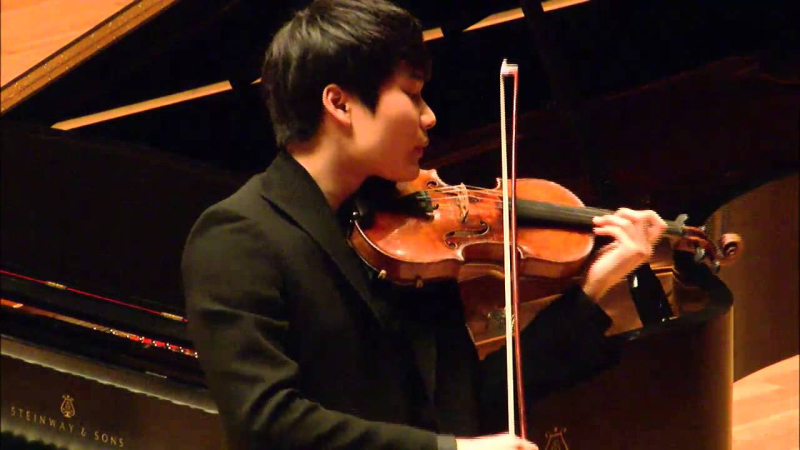
    Above: violinist In Mo Yang

    Tuesday September 27th, 2016 – In Mo Yang, a young violinist of Korean heritage, in recital with pianist Renana Gutman at Merkin Hall.

    It’s only rarely that I do something really spontaneous; my schedule is always so full (and commitments made so far in advance) that there are seldom any opportunities to do things that haven’t been planned weeks in advance. But as I was researching something on the Merkin Hall website, I noticed a violin recital listed for this afternoon. The repertory looked very inviting and there were still a few tickets available, so I headed downtown. It was an impressive and thoroughly enjoyable concert in every regard.

    In Mo Yang is the First Prize Winner of the Concert Artists Guild Competition. In 2015, he also earned First Prize at the 54th International Violin Competition “Premio Paganini” in Genoa, Italy, marking the first time since 2006 that the Paganini Competition jury has awarded the top prize.

    In Mo Yong, in addition to a very impressive technique, has the gift of playing from the heart. After only a few measures of the opening Bach, I knew I was in the presence of a musician of the finest calibre; by the end of the recital, his name was hovering in my highest echelon of favorite musicians.

    The forlorn beauty of the opening theme of the Adagio of Bach’s solo Violin Sonata No.1 in G minor immediately revealed the key elements of In Mo Yong’s playing: radiant and sweetly resonant tone, a mastery of dynamic finesse, innate expressiveness, and seamless phrasing. In the second movement, a minor-key dance, the violinist produced cascades of notes with admirable clarity. A sense of grace tinged with sadness marked his playing of the Siciliana, and in the final Presto, he reeled off reams of coloratura, perfectly defined and beautifully articulated, creating a magical atmosphere.

    Pianist Renana Gutman then joined In Mo Yang for the violin sonata of Leoš Janáček. Ms. Gutman’s poised musicality and her attentiveness to details of phrasing were a great boon for the young violinist.

    As In Mo Yang noted in his remarks, the flow of lyricism in this Janáček work is constantly interrupted by injections of turbulence or wit. There was a wondrous immediacy to the playing of the two musicians, drawing us in to the many felicities of this quite extraordinary piece. The opening Con moto found the violinist’s passion well met by the pianist’s sense of rapture, right from the outset. In the Ballada that follows, the shimmering piano sets off the singing violin. Sustained beauty of tone as the music’s passion soars, then sinks into a delicate reverie. In Mo Yang ended this movement on an exquisitely sustained, evaporating high note.

    In the Allegretto, the music is agitated and pensive by turns; these the mood swings were well-captured by our two players. The concluding Adagio begins hesitantly; then an enchanting melody looms up, only to stall and then re-start. A vibrant theme over glimmering piano leads to alternating passages of agitation and calm before the piece reaches its hushed ending. Splendid playing from In Mo Yang and Ms. Gutman: a really impressive performance.

    Karol Szymanowski’s setting of three ‘Paganini’ caprices followed the interval. The first, in D-major, features a high, sweet melody which gives way to an energetic passage before returning to its initial mood. In Mo Yang’s lingering final note was a moment of pure poetry. The second caprice, in A-major, begins in a state of musical density. The violin ascends to a high, aching theme which increases in passion; here In Mo Yang’s mastery of control in the stratospheric register was so evocative. The most familiar of the three caprices, the A-minor, is loaded at first with brisk, swirling motifs. Its sparkle and ironic wit suddenly go deep and mysterious, then things get playful, and then dreamy. This traversal of moods was finely differentiated by the two musicians. After some dazzlingly ping-y plucking from the violin, there’s a false ending; In Mo Yang then ascends again to the high, hazy glow of his upper range before charging on with Ms. Gutman to the grand finale.

    All of the qualities that make Felix Mendelssohn one of my favorite composers were evidenced in his violin sonata in F major, written and premiered in 1838. It was not published in the composer’s lifetime, but was ‘rescued’ in 1953 by Yehudi Menuhin, who accordingly tinkered with it before having it published.

    After a gallant piano introduction opens the Allegro vivace, a pulsing motif develops as the piano and violin alternately switch from melody to rhythm. Charming variants of major and minor keys – and a lovely sense of Mendelssohnian flow – gave me a lot of listening pleasure.

    Ms. Gutman sounds a low song which the violin takes up as the central Adagio casts its spell. Such expressive playing here; and then the music sails forward. And yet again, the heart-rending quality of In Mo Yang’s upper-range playing was a marvel.

    Joyous flights of fancy abound in the concluding Assai vivace, the players shifting effortlessly between liveliness and subtlety. With stunning dexterity, In Mo Yang reveled in high-velocity playing here that filled me with smiling admiration. 

    Sheer gorgeousness to end the afternoon: a Karl Schumann romance was offered as an encore: exceptional playing with a high emotional value.

  • Batiashvili|Tchaikovsky|NY Philharmonic

    Batiashvili - gilbert

    Saturday September 24th, 2016 – Lisa Batiashvili‘s appearances with The New York Philharmonic are always red-letter events; the mutual admiration society that the luminous violinist has formed with Maestro Alan Gilbert invariably results in something very special, and tonight their entente cordiale produced a magnificent rendering of the Tchaikovsky violin concerto.

    When I arrived at Geffen Hall, the atmosphere was already abuzz: “Sold Out” signs were just being posted, and a long line of music-lovers hoping for returns was forming. A packed house always creates its own sense of excitement, and when the ever-elegant Ms. Batiashvili strode onto the stage in a stunning black gown with a bejeweled bodice, the welcome was wonderfully warm. Forty minutes later, the violinist was basking in an epic full-house ovation.

    It was another female violinist, Maud Powell, who helped popularize the Tchaikovsky concerto – a concerto at first thought by some to be unplayable. Ms. Powell played the New York premiere of the piece in 1889 with the New York Symphony (which merged with the Philharmonic in 1928); tonight, Lisa Batiashvili carried the banner to new heights.

    In the concerto’s opening movement, Ms. Batiashvili combined passionate lyricism with subtle turns of phrase; her coloratura was fleet and fluent, her shaping of phrases so innately appealing. When Alan Gilbert’s full orchestra entered for the big tutti passage, visions of the grandeur of the Romanov court were evoked. Ms. Batiashvili’s cadenza sounded a bit modern (“…to old-fashioned ears…”, as Mrs. Manson Mingott would say) and her playing of it most impressive: superb control of dynamics and a stunningly sustained double trill which led to a poignant restoration of melody. After treating us to some sizzling fireworks, the violinist sailed graciously into an affecting theme before ascending to some very delicate high-register passages and thence to the movement’s final flourishes.

    Playing with a melancholy pianissimo, Ms. Batiashvili created a very poetic atmosphere of sadness as the Canzonetta/Andante began. Her tone became incredibly soft, with a lovely sheen to it, while the audience held their collective breath to savour every moment of it.

    There’s a direct path into the concerto’s finale, which commences with an intense invitation to the dance, followed by a playful second theme. Relishing these shifts of mood, Ms. Batiashvili sounded gorgeous in a deep-lyric interlude and brilliant in some decorative filigree that followed. On to the final sprint, where the fiery glow of the violinist’s passionate playing swept all before her, igniting an ovation and delighted cries of “Brava!” as the entire audience rose to acknowledge Ms. Batiashvili’s truly thrilling performance.

    Lisa was called out for a solo bow – huge din of cheers and thunderous applause – then returned again with Maestro Gilbert, who signaled the wind soloists (who had made such distinctive impressions in the final movement) to rise. The mutual affection of violinist and conductor was movingly evidenced as they embraced and walked off together. But still the ovation would not subside, and the radiant soloist re-appeared for another solo bow, with her onstage colleagues joining the tribute and the audience getting gleefully boisterous. 

    During the course of the concerto, the marvelous rapport between Ms. Batiashvili and Maestro Gilbert was as endearing to the eye as their playing to the ear: as the music wove its spell, they seemed engaged in a pas de deux which swayed on the ebb and flow of Tchaikovsky’s balletic score. Bravi!!

    Enjoy a bit of Lisa’s playing here.

  • …And All That Djazz @ NCB

    14199168_10154473099603571_6069759855082671756_n

    Friday September 16th, 2016A sold-out house this evening as Miro Magloire’s New Chamber Ballet presented their season-opening program. At a time when I am covering far less dance than in the past, Miro’s work – his choreography, his musical choices, and the dancers and musicians who bring the ballets to life – continues to draw me to his performances and rehearsals. Tonight’s program was one of the finest I have experienced at New Chamber Ballet: wonderfully diverse in the music presented, expertly danced by a quintet of distinctive ballerinas, and played by a violinist and pianist who seem to thrive on the stylistic range and technical challenges of the music Miro selects.

    Variety is the spice of life, and it is also – from a musical point of view – an essential element in putting together an evening of dance. Miro will sometimes provoke New Chamber Ballet‘s faithful followers with the thorniness of a score he has decided on; inevitably, his rightness of judgment wins out. These contemporary pieces are counter-balanced by more ‘accessible’ music – tonight, Tartini and Ravel – thus turning the evening into a audio roller coaster. We are along for the ride, which can be quite exhilarating, and the NCB musicians make it all so rewarding. 

    Opening the evening was a trio, Silk, which premiered in 2006. Doori Na’s playing of the Sonata VII for solo violin by Giuseppe Tartini was stunningly virtuosic. The violinist had a long evening ahead of him, playing in all four works; in the Tartini, he poised himself at a very high level of technique and artistry, and then incredibly soared upward from there. The Ravel that ended the evening was – to use a 60s phrase – mind-blowing.

    In Silk, the three dancers – Elizabeth Brown,Traci Finch, and Cassidy Hall – appear in Candice Thompson’s ice-blue, skirted leotards. They commence with slow ‘plastique’ port de bras and poses that might have been inspired by a Grecian urn. A sense of calm pervades their unison trio. There’s a silence as things are re-set for a charming, light-filled allegro.

    Striking poses in unison, the girls commence an andante which features a simply gorgeous Tartini melody, superbly intoned by Doori. Cassidy Hall has a long solo, danced beautifully, while Traci and Elizabeth stand back-to-back, swaying gently, and curling their hands in a subtly expressive motif. 

    Elizabeth and Cassidy sit in a stylized pose as Traci dances an impressive solo with lots of intricate pointe work and a sense of urgency. In a striking passage, Traci balances on both pointes as her upper body sways and angles itself off-kilter. Doori hones his tone down to a thread before it goes deep: this music is so demanding!

    Elizabeth Brown, a dancer of unique qualities, has solo passages laced into a spacious trio; as the pace of the music slows and then revs up again, Elizabeth executes lyrical turns and unusual, quirky footwork. The three girls dance in unison, with fast moves to slow music. Silk goes on to a sprightly conclusion.

    Thumbnail_IMG_0872_edited_sm

    Above: Cassidy Hall and Sarah Atkins in Upon My Wings; photo by Amber Neff

    In the first of the evening’s two premieres, Upon My Wings, Doori Na again made a vivid impression in the music of Reiko Fueting: tanz.tanz was composed for solo violin as an homage to Bach’s famous Chaconne. This ballet, originally entitled Tanz Tanz, was commissioned by the Columbia Ballet Collaborative, where it premiered in 2014.  For his own company, Miro has distilled the dancing to a duet for Sarah Atkins and Cassidy Hall.

    Skittering sounds from Doori’s violin find the two dancers balancing against one another’s bodies. They kneel and sway. The choreography features the intimate and physically taxing same-sex partnering that Miro has been exploring of late: for example, Sarah being rotated by Cassidy in an off-center balance.

    The violin stutters and buzzes, and Doori shows his mastery with some ultra-soft playing, so subtle and shining. The girls echo one another in turns as the music goes Bachian; the ballet ends in silence.

    Yellow-Rose-Red-Blue, the evening’s second premiere, marks Miro’s third collaboration with composer Michel Galante; the work is made possible by a grant from the O’Donnell-Green Music and Dance Foundation. 

    Thumbnail_IMG_0970_edited_sm

    Above: Amber Neff, Cassidy Hall, and Traci Finch in Yellow-Rose-Red-Blue; photo courtesy of New Chamber Ballet

    The ballet’s title derives from the colours of Sarah Thea’s stylish and usual costumes: mock-turtle-neck designs with long, gossamer slit-skirts. These elegant frocks add to the airy feeling of the space-filling choreography. Pianist Melody Fader joins Doori Na to play Galante’s very demanding score.

    As Amber Neff and Cassidy Hall engage in more of Miro’s intense partnering, the music is almost immediately fiendish: deep piano and growling violin. Things turn waltzy, and the girls pair off and circle the stage in a movement motif that is half-waltz and half-galop. The music continues to engage us: somehow, Doori is able to produce a deep, gritty sound as if he was drawing his bow across sandpaper. The dancers gather in a circle, raising their arms in a reverential gesture.

    Amber and Cassidy, standing back-to-back, wrap one another en attitude, and bend apart. The four dancers form a chorus line; the music grows agitated, and the girls rush off into a space-filling chase-about. Their paths cross; poses are struck while the others dance on. They re-form the celebratory circle, reaching for heaven. In an allegro rush, the dancers conjure up a galloping pace, drawing from a repeated note on Melody’s keyboard. 

    Yellow-Rose-Red-Blue: it’s complicated, both musically and choreographically. It will take further viewings to delve into its riches, and I feel certain we’ll be seeing it again soon. Tonight’s premiere certainly was provocative, and I look forward to this ballet’s future evolution. 

    Concluding the evening was Djazz. Set to Maurice Ravel’s sonata #2 for violin and piano, the ballet was commissioned by Leslie and Richard Curtis. Here designer Sarah Thea had the three dancers – Sarah Atkins, Traci Finch, and Amber Neff – in dark-coloured leotards to which long fringes have been attached. This gave the girls a “flapper” look which meshed well with Ravel’s jazz-tinted score; when doing fast turns, the fringe flared out, giving an added air of animation.

    Sarah Atkins leads off the dancing, soon joined by Traci Finch and Amber Neff; their contrasting personalities are engaging. Miro’s choreography here again calls for tricky partnering, as well as jazz-inspired swaying and sauntering. At the end of the first movement, the dancers wilt; at the end of the second, they sleep. In the finale, the dancing becomes very animated, with high-kicking extensions on display and brisk steps woven into the pulsating music.

    In the Ravel, the musical achievement of Doori Na and Melody Fader was extraordinary; I can honestly say I’ve never heard this piece played better. It’s such incredible music: rhythmically captivating, veering from assertive to misterioso, and rich in irony. Doori and Melody were rightly cheered by the full house as the evening drew to its close.

    Dancers: Sarah Atkins, Elizabeth Brown, Traci Finch, Cassidy Hall, and Amber Neff
    Musicians: Melody Fader, piano & Doori Na, violin

  • …And All That Djazz @ NCB

    14199168_10154473099603571_6069759855082671756_n

    Friday September 16th, 2016A sold-out house this evening as Miro Magloire’s New Chamber Ballet presented their season-opening program. At a time when I am covering far less dance than in the past, Miro’s work – his choreography, his musical choices, and the dancers and musicians who bring the ballets to life – continues to draw me to his performances and rehearsals. Tonight’s program was one of the finest I have experienced at New Chamber Ballet: wonderfully diverse in the music presented, expertly danced by a quintet of distinctive ballerinas, and played by a violinist and pianist who seem to thrive on the stylistic range and technical challenges of the music Miro selects.

    Variety is the spice of life, and it is also – from a musical point of view – an essential element in putting together an evening of dance. Miro will sometimes provoke New Chamber Ballet‘s faithful followers with the thorniness of a score he has decided on; inevitably, his rightness of judgment wins out. These contemporary pieces are counter-balanced by more ‘accessible’ music – tonight, Tartini and Ravel – thus turning the evening into a audio roller coaster. We are along for the ride, which can be quite exhilarating, and the NCB musicians make it all so rewarding. 

    Opening the evening was a trio, Silk, which premiered in 2006. Doori Na’s playing of the Sonata VII for solo violin by Giuseppe Tartini was stunningly virtuosic. The violinist had a long evening ahead of him, playing in all four works; in the Tartini, he poised himself at a very high level of technique and artistry, and then incredibly soared upward from there. The Ravel that ended the evening was – to use a 60s phrase – mind-blowing.

    In Silk, the three dancers – Elizabeth Brown,Traci Finch, and Cassidy Hall – appear in Candice Thompson’s ice-blue, skirted leotards. They commence with slow ‘plastique’ port de bras and poses that might have been inspired by a Grecian urn. A sense of calm pervades their unison trio. There’s a silence as things are re-set for a charming, light-filled allegro.

    Striking poses in unison, the girls commence an andante which features a simply gorgeous Tartini melody, superbly intoned by Doori. Cassidy Hall has a long solo, danced beautifully, while Traci and Elizabeth stand back-to-back, swaying gently, and curling their hands in a subtly expressive motif. 

    Elizabeth and Cassidy sit in a stylized pose as Traci dances an impressive solo with lots of intricate pointe work and a sense of urgency. In a striking passage, Traci balances on both pointes as her upper body sways and angles itself off-kilter. Doori hones his tone down to a thread before it goes deep: this music is so demanding!

    Elizabeth Brown, a dancer of unique qualities, has solo passages laced into a spacious trio; as the pace of the music slows and then revs up again, Elizabeth executes lyrical turns and unusual, quirky footwork. The three girls dance in unison, with fast moves to slow music. Silk goes on to a sprightly conclusion.

    Thumbnail_IMG_0872_edited_sm

    Above: Cassidy Hall and Sarah Atkins in Upon My Wings; photo by Amber Neff

    In the first of the evening’s two premieres, Upon My Wings, Doori Na again made a vivid impression in the music of Reiko Fueting: tanz.tanz was composed for solo violin as an homage to Bach’s famous Chaconne. This ballet, originally entitled Tanz Tanz, was commissioned by the Columbia Ballet Collaborative, where it premiered in 2014.  For his own company, Miro has distilled the dancing to a duet for Sarah Atkins and Cassidy Hall.

    Skittering sounds from Doori’s violin find the two dancers balancing against one another’s bodies. They kneel and sway. The choreography features the intimate and physically taxing same-sex partnering that Miro has been exploring of late: for example, Sarah being rotated by Cassidy in an off-center balance.

    The violin stutters and buzzes, and Doori shows his mastery with some ultra-soft playing, so subtle and shining. The girls echo one another in turns as the music goes Bachian; the ballet ends in silence.

    Yellow-Rose-Red-Blue, the evening’s second premiere, marks Miro’s third collaboration with composer Michel Galante; the work is made possible by a grant from the O’Donnell-Green Music and Dance Foundation. 

    Thumbnail_IMG_0970_edited_sm

    Above: Amber Neff, Cassidy Hall, and Traci Finch in Yellow-Rose-Red-Blue; photo courtesy of New Chamber Ballet

    The ballet’s title derives from the colours of Sarah Thea’s stylish and usual costumes: mock-turtle-neck designs with long, gossamer slit-skirts. These elegant frocks add to the airy feeling of the space-filling choreography. Pianist Melody Fader joins Doori Na to play Galante’s very demanding score.

    As Amber Neff and Cassidy Hall engage in more of Miro’s intense partnering, the music is almost immediately fiendish: deep piano and growling violin. Things turn waltzy, and the girls pair off and circle the stage in a movement motif that is half-waltz and half-galop. The music continues to engage us: somehow, Doori is able to produce a deep, gritty sound as if he was drawing his bow across sandpaper. The dancers gather in a circle, raising their arms in a reverential gesture.

    Amber and Cassidy, standing back-to-back, wrap one another en attitude, and bend apart. The four dancers form a chorus line; the music grows agitated, and the girls rush off into a space-filling chase-about. Their paths cross; poses are struck while the others dance on. They re-form the celebratory circle, reaching for heaven. In an allegro rush, the dancers conjure up a galloping pace, drawing from a repeated note on Melody’s keyboard. 

    Yellow-Rose-Red-Blue: it’s complicated, both musically and choreographically. It will take further viewings to delve into its riches, and I feel certain we’ll be seeing it again soon. Tonight’s premiere certainly was provocative, and I look forward to this ballet’s future evolution. 

    Concluding the evening was Djazz. Set to Maurice Ravel’s sonata #2 for violin and piano, the ballet was commissioned by Leslie and Richard Curtis. Here designer Sarah Thea had the three dancers – Sarah Atkins, Traci Finch, and Amber Neff – in dark-coloured leotards to which long fringes have been attached. This gave the girls a “flapper” look which meshed well with Ravel’s jazz-tinted score; when doing fast turns, the fringe flared out, giving an added air of animation.

    Sarah Atkins leads off the dancing, soon joined by Traci Finch and Amber Neff; their contrasting personalities are engaging. Miro’s choreography here again calls for tricky partnering, as well as jazz-inspired swaying and sauntering. At the end of the first movement, the dancers wilt; at the end of the second, they sleep. In the finale, the dancing becomes very animated, with high-kicking extensions on display and brisk steps woven into the pulsating music.

    In the Ravel, the musical achievement of Doori Na and Melody Fader was extraordinary; I can honestly say I’ve never heard this piece played better. It’s such incredible music: rhythmically captivating, veering from assertive to misterioso, and rich in irony. Doori and Melody were rightly cheered by the full house as the evening drew to its close.

    Dancers: Sarah Atkins, Elizabeth Brown, Traci Finch, Cassidy Hall, and Amber Neff
    Musicians: Melody Fader, piano & Doori Na, violin

  • Claudia Schreier’s SOLITAIRE @ Vail

    Unity Phelan, Zachary Catazaro and the Catalyst Quartet in Claudia Schreier's Solitaire. Photo by Erin Baiano (3)

    Above: New York City Ballet’s Unity Phelan and Zachary Catazaro in the pas de deux from Claudia Schreier’s SOLITAIRE; photo by Erin Baiano for the Vail International Dance Festival

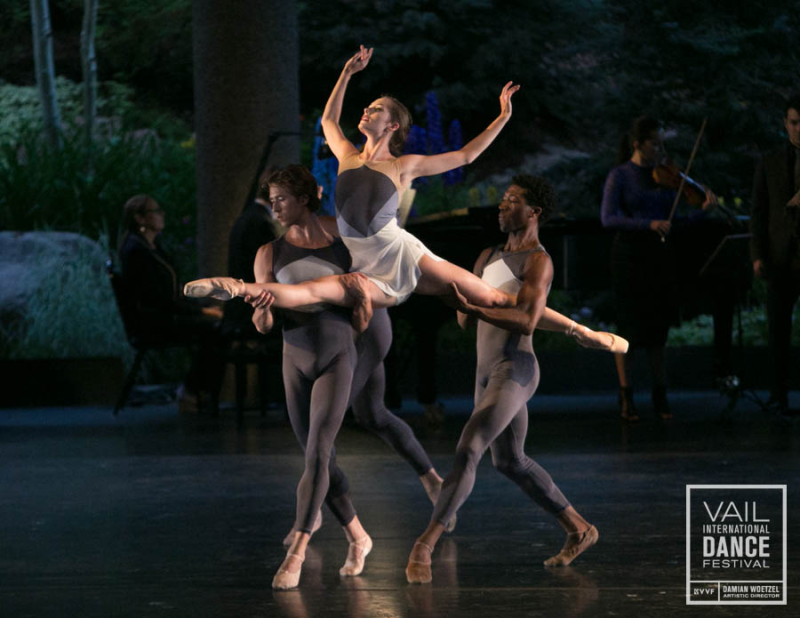
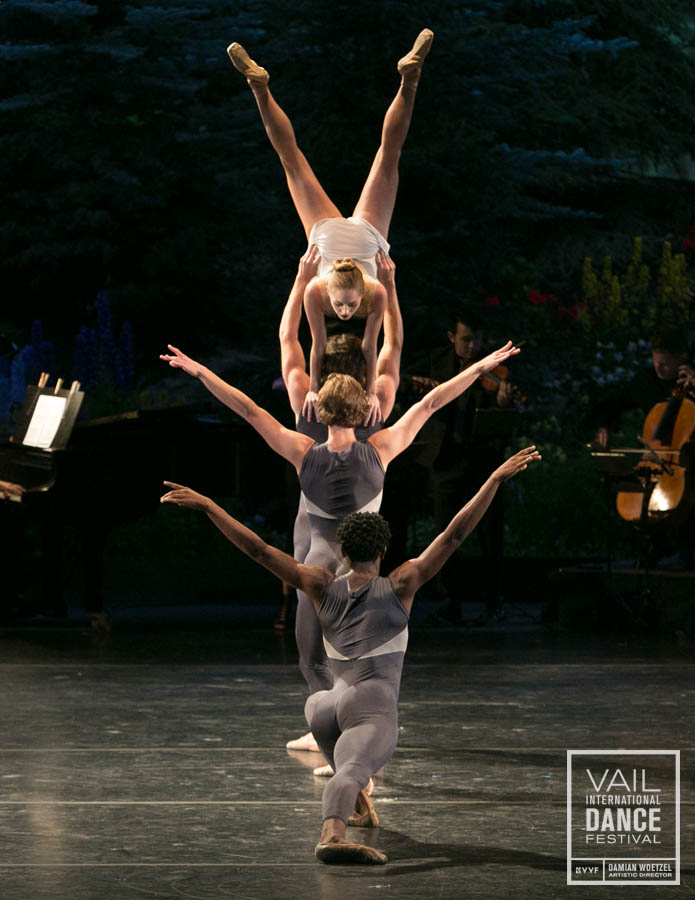
    SOLITAIRE, the newest ballet from choreographer Claudia Schreier, premiered at the Vail International Dance Festival on August 8th, 2016. The ballet was danced by Unity Phelan, Zachary Catazaro, Joseph Gordon (all of New York City Ballet) and Da’Von Doane (of Dance Theater of Harlem). The music, by Dmitri Shostakovich and Alfred Schnittke, was performed live by New York City Ballet‘s pianist deluxe Cameron Grant, and the Catalyst Quartet.

    I’m so pleased to share this video recording by Nel Shelby Productions of this new ballet’s world premiere performance: LINK

    Erin Baiano photographed the premiere of SOLITAIRE, and here are some of her wonderful images:

    Unity Phelan, Joseph Gordon, Da'Von Doane, pianist Cameron Grant and the Catalyst Quartet in Claudia Schreier's Solitaire. Photo by Erin Baiano

    Above: Unity Phelan, with Joseph Gordon and Da’Von Doane

    Unity Phelan, Zachary Catazaro, Joseph Gordon and Da'Von Doane in Claudia Schreier's Solitaire. Photo by Erin Baiano

    Above: a pose from SOLITAIRE‘s first section

    Unity Phelan, Zachary Catazaro and the Catalyst Quartet. Photo by Erin Baiano

    Above: Unity Phelan and Zachary Catazaro in the pas de deux

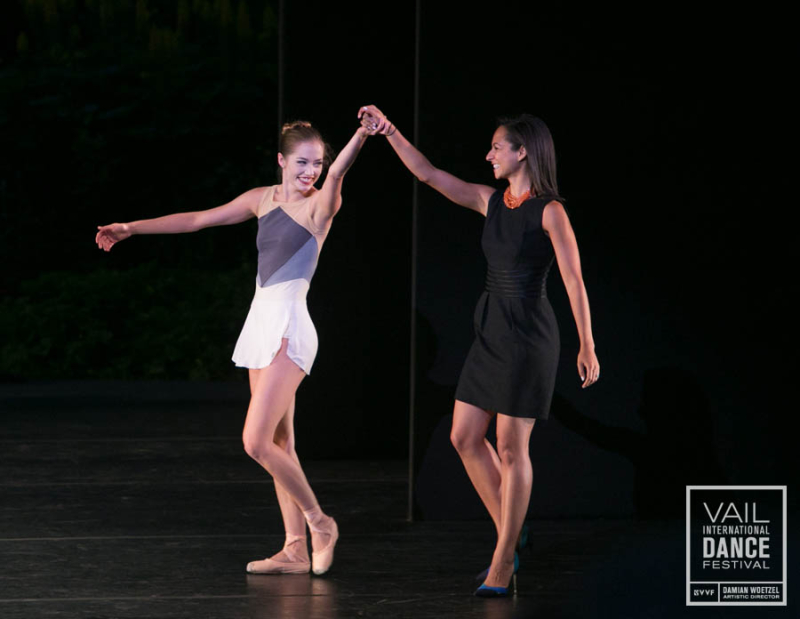
    Unity Phelan and Claudia Schreier bowing at the Vail International Dance Festival

    Above: ballerina Unity Phelan and choreographer Claudia Schreier take a bow following the premiere of SOLITAIRE, which drew a standing ovation from the Vail audience.

    All production photos by Erin Baiano.

  • Joshua Bell @ Mostly Mozart

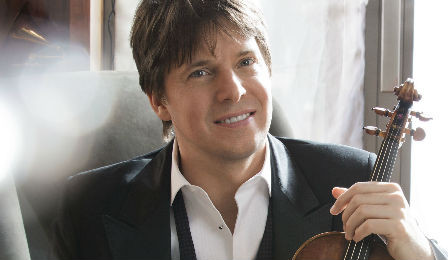
    Joshua-Bell

    Above: violinist Joshua Bell

    Wednesday August 17th, 2016 – Geffen Hall was packed to the rafters for Mostly Mozart tonight: all the stage seats were taken, and there was a line for ticket returns: could it have had something to do with Joshua Bell being the scheduled soloist?  Mr. Bell certainly impressed in his performance of Mozart’s 4th violin concerto, and the program overall was highly enjoyable.

    Any hearing of Felix Mendelssohn’s overture to A Midsummer Night’s Dream is bound to summon up visions of Balanchine’s enchanted forest – it’s quite amazing, in fact, when you think of the amount of narrative and dancing Mr. B was able to fit into this 12-minute overture, without ever for a moment seeming over-busy. The Mostly Mozart Orchestra coped well with the brisk tempi set by the youthful-looking conductor, Matthew Halls, and it was so much sheer fun to hear these familiar themes played live again. I must mention Jon Manasse’s lovingly-phrased clarinet solo.

    Joshua Bell then appeared to a warm greeting from the crowd. In this rendering of the Mozart violin concerto #4 in D-major, the violinist and the conductor formed a steady rapport. Unobtrusively using a score, Mr. Bell launched the solo line in the stratosphere and went on to play the Allegro vivace‘s capricious music with easy aplomb. There’s a lot of high-velocity coloratura in play here, and it culminates with a florid, witty cadenza of Mr. Bell’s own design.

    On a high, sweetly sustained note, Mr. Bell lures us into the Andante cantabile; the melody eventually dips into a lower range where his playing a balm to the ear. An elegant ‘interlude’ has a different sort of appeal; then the main theme recurs, before the violinist ascends to another high-lying cadenza. 

    After an elegant start, the Rondeau turns sprightly – a delicate mini-cadenza teases us and then there’s another more extended cadenza. The soloist joins the massed violins in a sort of chorale, and Mr. Bell continues to seize opportunities for yet two more cadenzas, the first having an ironic buzzing quality.

    As ever, Mr. Bell’s physically engaged playing is as enjoyable to watch as to hear. The random smudged note here or there was nothing to deter from the ongoing sweep of his music-making, and though I agreed with my companion that the cadenzas sometimes seemed rather too ‘modern’, they gave the performance an individuality that was refreshing in its own right.

    Beethoven’s overture to Coriolan, Op. 62, was the composer’s first opportunity to write for the stage, and his success has kept the overture in the repertory. Originally conceived as a prelude to the play of the same title by the composer’s friend Heinrich Joseph von Collin – a theatrical success in Vienna in 1802 – the overture didn’t appear until 1807, when the play’s popularity had waned. It seems that only one performance of the play with Beethoven’s overture took place: on April 17th, 1807. After that, the eight-minute overture went on to thrive as a concert number.

    This evening’s performance was finely-wrought by Maestro Halls, and most attractively played. The contrasting themes of anger and tenderness express the theme of the play: the betrayal of his duty as a Roman general by Coriolanus, and his mother’s entreaties to abandon his plan to lead the enemy forces in an attack on Rome. Her pleading is effective: Coriolanus abandons his scheme and faces his punishment.

    A warm and appealing performance of Beethoven’s “little” symphony – the 8th – concluded the evening on an optimistic note. The last time I heard this symphony performed live was in December 2013 when the Spanish conductor Rafael Frühbeck de Burgos, then in his 80th year, led the New York Philharmonic in the work and left my friend Dmitry and I with wonderful memories of the highly-respected Maestro, who passed away in June 2014. We still speak of that Philharmonic concert with special affection. 

    Timed at around twenty-five minutes, this four-movement symphony flies by: there’s no adagio to make us stop and ponder, but rather a charming and often witty flow of themes with the congeniality of dance rhythms ever-ready to buoy the spirit.

    A lively podium presence, Maestro Halls was well in his element here, and the musicians seemed fully engaged in this music which successfully blends elegance with folkish gaiety. The horns sounded plush, and again Mr. Manasse made his mark: an outstanding musician.

  • L.A. Dance Project @ The Joyce

    Helix2a

    Above: Stephanie Amurao and Aaron Carr of L.A. Dance Project in Justin Peck’s HELIX; photo by Rose Eichenbaum

    Wednesday July 27th, 2016 – First off, I must heap praise on the dancers of L.A. Dance Project: throughout this long, uneven program at The Joyce, their energy, commitment, sexiness, and spirit kept us engaged, even when the choreography lapsed. Some of these dancers are familiar to me: Stephanie Amurao (she danced briefly with TAKE Dance), Morgan Lugo (he danced in Luca Veggetti’s BACCHAE for Morphoses in 2011); and Aaron Carr (formerly of Keigwin & Co); then there’s Anthony Bryant, a lovely guy I’ve known via Facebook and who I have now met as both a dancer and friend.

    The Joyce was packed – so nice to run into Denise Vale of the Martha Graham Dance Company! – as works by Sidi Labri Cherkaoui, Martha Graham, Justin Peck, and The Project’s director Benjamin Millepied were offered up.

    Mr. Cherkaoui – whose ORBO NOVO for Cedar Lake Contemporary Ballet in 2009, and SUTRA, seen at the White Lights Festival in 2010, linger in the memory – gives us HARBOR ME, a darkish piece set to music by Park Woojae. This work may be danced by three men or three women: tonight, it was the female trio: Stephanie Amurao, Julia Eichten, and Lilja Rúriksdóttir. The music features poignant cello passages; each of the three women has a solo, then trios develop in which they form languid structures. The music pulses up, with a mid-Eastern feel. The women dance a trio in a pool of light, conversing in gestures. The ballet starts to feel overly drawn-out: the alternation of solos and trios becomes repetitive, and there’s a bit too much floorwork. In the end, it’s the compelling dancing that saves it. 

    After the first interval, MARTHA GRAHAM DUETS proved a welcome change of pace. The three pas de deux were culled from a 1957 Graham documentary, A Dancer’s World, and are performed to piano music by Cameron McCosh from the film’s soundtrack. White Duet is now familiar to Graham devotees in its incarnation as part of Diversion of Angels; Star Duet and Moon Duet have not been seen since the 1960s.

    Developing the Graham style takes years for a dancer, and so one could not expect tonight’s sextet of dancers to look like the members of the current Graham company – people who are deeply invested in the Graham technique. Instead, a beautiful fusion has been achieved, and it’s simply wonderful to be seeing these duets performed with such lustre: Rachelle Rafailedes and Nathan Makolandra looked divine in the stylized White Duet, here danced in Janie Taylor’s sleek costumes, recalling the Balanchine black-and-whites.

    The delights of Star Duet were served up by Stephanie Amurao and Anthony Bryant. There are kick-lifts and arabesque balances, and then things get playful: Stephanie stands on Anthony’s thighs as he revolves in a gentle plié. In Moon Duet, Morgan Lugo looks like a young god. He and Julia Eichten gorgeously conveyed a sense of wonderment and quiet ecstasy as their duet unfolds.

    Justin Peck’s HELIX was far and away the most impressive of the program’s three new works. In her costume designs for this ballet, Janie Taylor puts the dancers in grey but playfully adds powder-blue socks. Esa-Pekka Salonen’s score is eminently dance-worthy and Justin’s choreography evolves naturally from the music. But for the lack of toe shoes, this piece is brilliantly balletic…with a contemporary twinge.

    At curtain-rise, three couples stand back-to-back. Then movement bursts forth: tricky footwork and complex partnering mark the three duets that Justin has created, and the dancers dive right in, vibrant and assured. When the music gets big, the dancers go still and then strike poses. A series of exuberant solos follows. Urgent comings and goings engage the eye, and then: everyone collapses. The crowd went wild, showering the dancers with applause. Kudos to all: Laura Bachman, Anthony Bryant, Nathan Makolandra, Robbie Moore, Rachelle Rafailedes, and Lilja Rúriksdóttir.

    Following a second intermission, Benjamin Millepied’s ON THE OTHER SIDE brought the full Company on in a colour-filled dancework set to piano music by Philip Glass. The ballet was premiered about a month ago at Sadler’s Wells, and perhaps it was scheduled for its Joyce performances without sufficient thought as to how it would fit in the program. Basically, it’s fatally over-extended.  

    ON THE OTHER SIDE starts more than promisingly – and it’s danced superbly from start to finish – but it simply goes on and on. Each segment, and the music that supports it, is more than pleasing to watch and hear, but after a while one could sense the audience’s impatience and desire for an ending. The dancers labored valiantly and never for a moment let the choreographer down; eventually my companion and I were feeling numb. 

    When the curtain finally fell, the dancers were warmly applauded but the rabble-rousing ovation they so deserved was dampened by the fatigue that had set in watching this last ballet. With judicious cutting, ON THE OTHER SIDE could still be a viable work; as it stands now, it’s as exhausting to watch as some of Twyla Tharp’s over-extended creations.

  • Young Dancers from Syria

    12865119_1468299850.7734

    UPDATE: The fund-raising was successful!

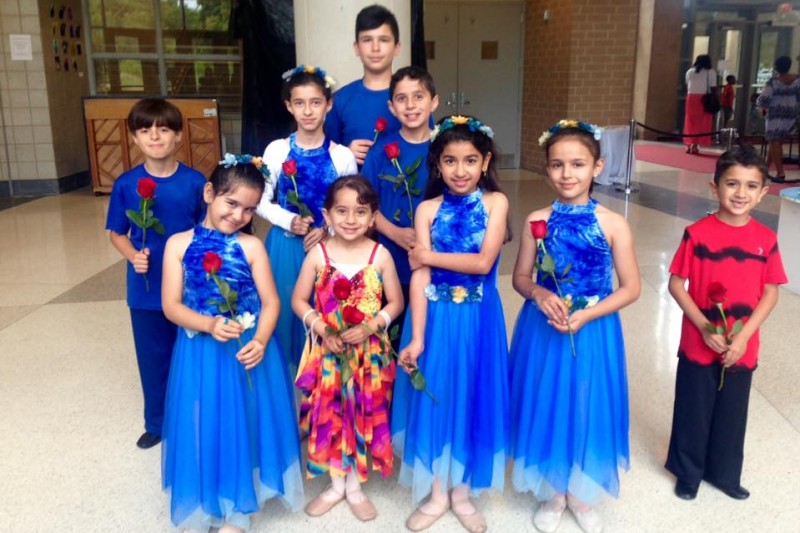
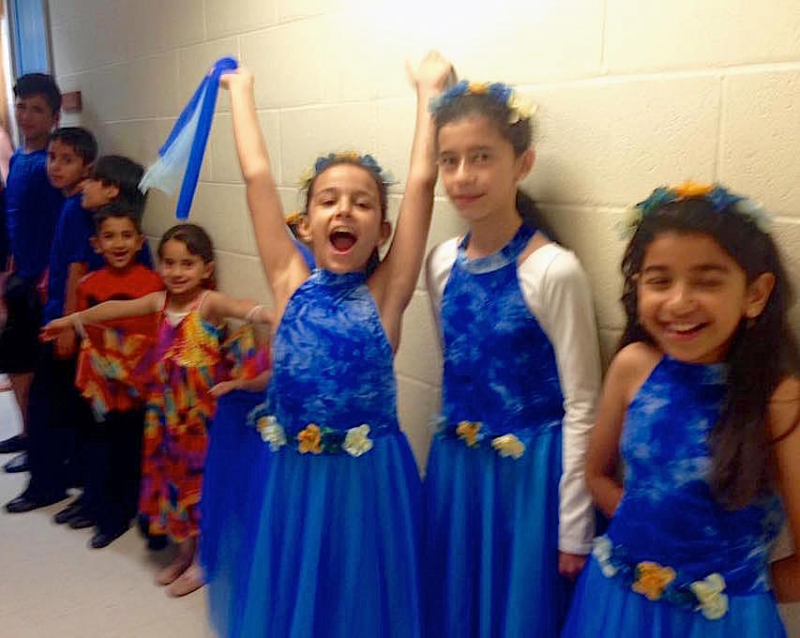
    My dancer/friend Joanna Priwieziencew has created a GoFundMe campaign to help nine youngsters who have been re-settled in Chicago from their native Syria. Over the past couple months, these lovely kids have had dance workshops generously donated by Shawn Lent and other volunteers at Performing Arts Limited; now Joanna’s mission is to enroll them for regular classes in the coming school year.

    Choreographer Brian Carey Chung shared these words in greeting these students: “Good luck, young ones! All of life is within the dance. If you practice, pay attention, and take to heart the music inside you, all of life’s lessons (how to be courageous, generous, disciplined, creative, graceful, a leader who also knows how to follow, etc.) can be learned.”

    12865119_1469399417.4922_updates

    UPDATE: The goal was reached…and the kids are happy. Thanks everyone!